
What Size Are Postcards? Standard Dimensions Explained


The standard postcard is 4" x 6", but sizes run all the way to 6" x 9". Here is every dimension, what it is best for, the USPS rules, and how to set up your file so nothing gets trimmed.
The standard postcard size is 4" x 6", which qualifies for the lowest USPS postcard rate. Common alternatives are 4.25" x 5.5", 5" x 7", 5.5" x 8.5", and 6" x 9". Larger cards still mail without an envelope, just at the First-Class letter rate. Add 0.125" of bleed on every side and keep text 0.125" inside the trim line so nothing gets clipped.
Quick answer
Postcard sizes at a glance
The standard postcard size is 4" x 6", the most common format for direct mail, event invitations, and promotional campaigns. Postcards also come in 4.25" x 5.5", 5" x 7", 5.5" x 8.5", and 6" x 9". Your choice depends on your message, your mailing budget, and how much visual real estate you need. 4OVER4.COM offers all of these sizes across 60+ paper types, so you are never boxed in.
How big are postcards, really?
If you have ever asked what size are postcards, the answer is not a single number. It is a range. The standard postcard size of 4" x 6" covers most everyday mailings, while larger formats like 5" x 7" or 6" x 9" give you room to make a bigger impression. The size you pick shapes everything from postage costs to design layout to how the recipient responds.
This guide breaks down each postcard size, when to reach for it, and how to set up your files so nothing gets trimmed off. Whether you are sending a quick thank-you note or a full-color promo mailer, you will find the right fit here. Grab a head start with 4OVER4.COM Design Templates, add a scannable link by learning how to add a QR code to your postcards, and see how to earn coins toward your next print order.
The standard postcard size and every option worth knowing
The standard postcard size is 4" x 6". It is the format most people picture, and it is the one USPS treats as a standard mailer, which earns the lowest postage rate. It is compact, easy to design, and fits neatly in a mailbox without folding. For a high-volume direct mail campaign on a budget, this is your go-to. But 4" x 6" is not the only option, so here is every common postcard dimension.
4.25" x 5.5", the compact card. This size matches a standard A2 envelope opening, so it is popular for personal correspondence, RSVP cards, and small event invitations. The smaller footprint keeps costs low and works well when your message is short. Think appointment reminders, thank-you notes, or save-the-dates. Because it is slightly smaller than the standard card, it reads more like a note from a friend than an ad, which helps it get read instead of tossed.
4" x 6", the standard. This is the workhorse. It qualifies for USPS First-Class Mail postcard rates, which keeps your per-piece cost as low as possible. You get room for a strong headline, a single image, and a clear call to action on the front, plus contact details and a short message on the back. Real estate agents use it for just-listed mailers, restaurants use it for seasonal menu promos, and nonprofits use it for donation appeals. If you are building other pieces for the same campaign, our how to make flyers guide covers the companion format.
5" x 7", the sweet spot. Need more room than 4" x 6" without jumping to a large-format piece? The 5" x 7" postcard is the middle ground, giving you roughly 40% more printable area than the standard size. That means bigger images, more copy, or both. It is a favorite for event invitations, product launches, and photo-heavy designs, and it still qualifies for standard letter-rate postage when mailed without an envelope, though it costs more than the 4" x 6" rate.
5.5" x 8.5", the half-page powerhouse. Exactly half of a standard letter-size sheet, this size gives you serious design real estate. It is large enough for a small map, a coupon, detailed product info, or a mini menu, and it stands out in the mailbox because it is noticeably bigger than what most people receive. Direct mail marketers reach for it when they want the impact of a flyer with the simplicity of a postcard. Pairing it with a folded piece? Our how to fold a brochure guide covers the companion.
6" x 9", maximum impact. The largest common postcard size dominates a stack of mail. You can fit multiple images, longer copy, tear-off coupons, or a perforated business card section. It is popular for grand openings, major sales events, and political campaigns. The trade-off is higher postage, since it mails at the letter rate rather than the postcard rate, and higher printing cost per unit. When you need maximum visibility, though, 6" x 9" delivers.
Choosing the right postcard size for your project
Size is not just about how much space you have. It shapes three things: postage cost, design impact, and recipient behavior. For high-volume direct mail where cost-per-piece matters most, stick with 4" x 6" and save on both printing and postage. For invitations and announcements that should feel special, go 5" x 7". For sales promos that need room for details, product images, or coupons, 5.5" x 8.5" or 6" x 9" makes sense.
Think about what happens after delivery too. A 4" x 6" card might get pinned to a fridge. A 6" x 9" card might get propped up on a counter. The size you pick shapes how people interact with your piece long after it lands. For more project guidance across formats, browse our guide hub or the wider marketing materials lineup.
File setup and bleed requirements for each size
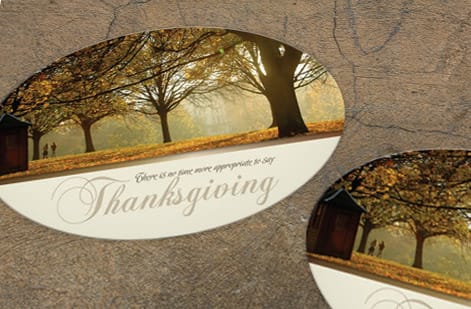
Getting your file dimensions right is the difference between a clean print and a card with awkward white edges. Every postcard needs bleed, the extra image area beyond the trim line that gets cut off during production. Standard bleed is 0.125" (one-eighth inch) on each side.
Document sizes with bleed. For a 4" x 6" postcard, set your document to 4.25" x 6.25". For 5" x 7", build the file at 5.25" x 7.25". For 5.5" x 8.5", that is 5.75" x 8.75". And for 6" x 9", your document needs to be 6.25" x 9.25". Keep all important text and logos at least 0.125" inside the trim line so nothing gets clipped, set your resolution to 300 DPI, and work in CMYK for accurate color.
Design considerations by size. Smaller postcards (4" x 6" and 4.25" x 5.5") look best with a single focal image and minimal text, so do not cram too much in. Larger sizes (5.5" x 8.5" and 6" x 9") can carry more complex layouts, but they still need a clear visual hierarchy: one dominant element, supporting details, and a clear call to action. If you are coordinating other formats, our how to make envelopes guide helps you match sizes, and how to clean rubber stamps keeps your return-address stamp printing sharp.
USPS mailing requirements by postcard size
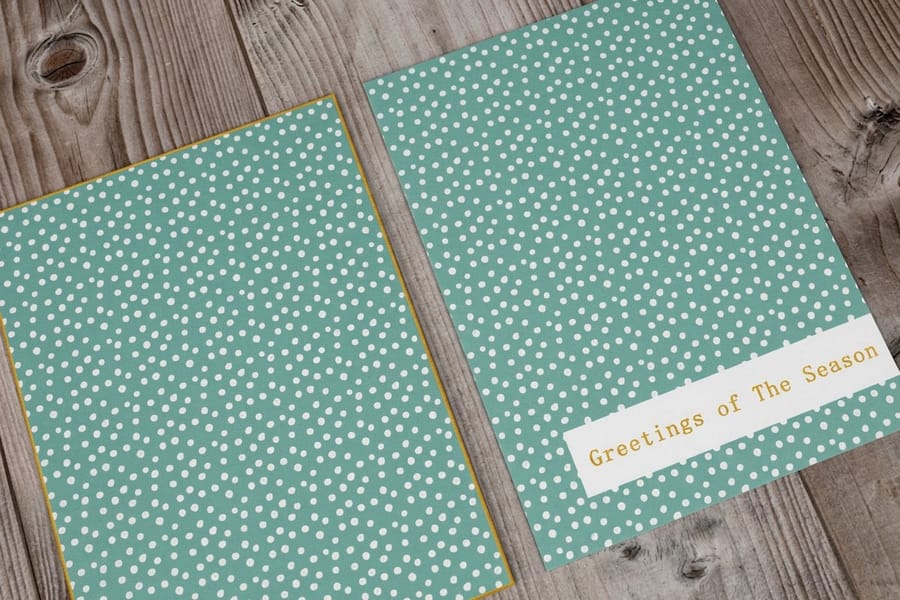
The United States Postal Service has specific rules about what qualifies as a postcard for mailing. To earn the cheapest postcard rate, your piece has to hit these marks.
- Minimum: 3.5" x 5", anything smaller will not be accepted.
- Maximum for the postcard rate: 4.25" x 6" and no thicker than 0.016".
- Rectangular with a length-to-height ratio between 1.3 and 2.5.
Anything larger than 4.25" x 6" still mails fine, just at the First-Class letter rate instead of the postcard rate. That distinction matters when you are mailing thousands of pieces, because a few cents per card adds up fast at scale. For a mailer people keep even longer, you can also explore custom magnets as an alternative format.
Paper weight and thickness by postcard size
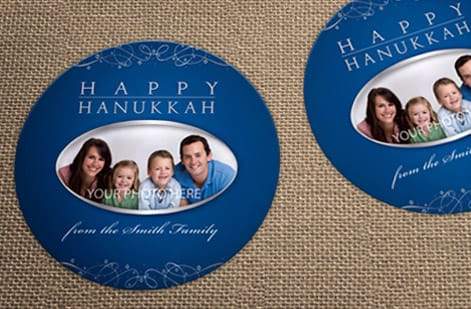
Size and paper stock work together. A flimsy 6" x 9" postcard feels cheap, while a rigid 4" x 6" card feels premium. Here is how to match them.
14pt cardstock is the standard for most postcards. It is sturdy enough to survive the mail without bending and thick enough to feel like a real card rather than a flyer, roughly the weight of a cereal-box panel but stiffer. 16pt cardstock adds noticeable heft, about the thickness of a credit card, which suits 5" x 7" and larger sizes where you want the piece to feel solid. It is a great match for invitations and premium brand mail.
32pt ultra-thick stock is a statement, roughly three times the thickness of a standard business card. At that weight even a 4" x 6" postcard feels like a luxury item, so it is ideal for VIP invitations, high-end brand promos, or any time you want someone to pause. 4OVER4.COM carries all of these weights across every postcard size, plus specialty options like kraft, linen, and pearl finishes.
Sizing mistakes that ruin postcard projects

The most common mistake when figuring out what size are postcards is ignoring bleed entirely. Designers set up a file at exactly 4" x 6" with a background image running edge to edge, then wonder why a thin white border shows up after printing. Always add 0.125" of bleed on every side.
The second mistake is choosing a large size without checking postage first. A gorgeous 6" x 9" postcard printed 5,000 times can double the postage compared to the 4" x 6" the sender assumed they were paying. Do the math before you commit. Third, do not place text too close to the edge. Even with proper bleed, cutting has a small tolerance, so keep text at least 0.125" inside the trim line. 4OVER4.COM provides free proofs so you can catch these issues before they get expensive.
Finally, do not forget USPS address placement rules. On a mailed postcard, the right half of the back is reserved for the address, postage, and barcode, so design your back layout around that space from the start.
Postcards worth printing at 4OVER4.COM
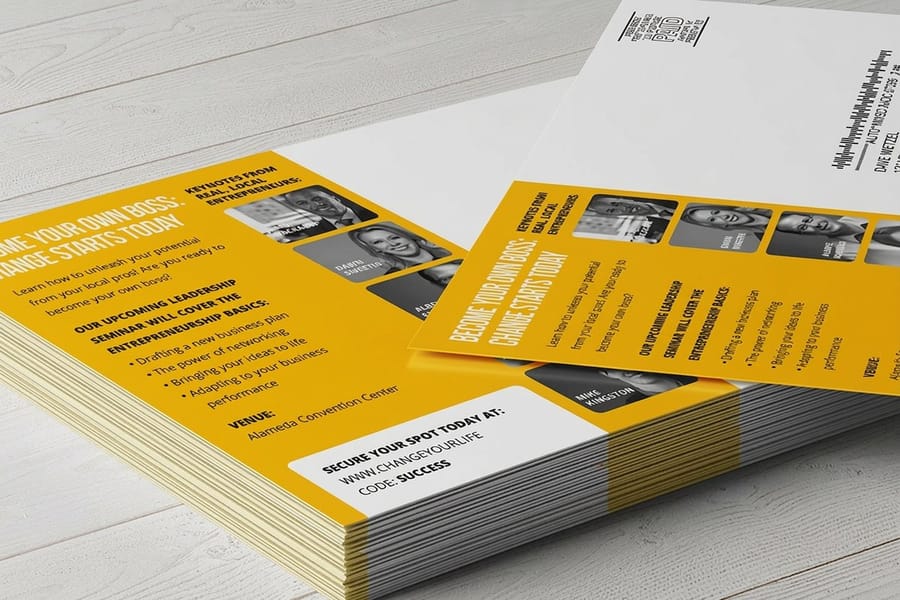
Now that you know what size are postcards and which dimensions fit your project, it is time to pick a product. 4OVER4.COM prints standard postcards in every size covered here, from 4" x 6" up to 6" x 9", plus direct mail postcards that arrive ready for your mailing list. Want something that stops people mid-sort? 3D lenticular postcards add motion and depth that a flat card cannot.
If you would rather start from a print-ready layout, grab a free blank sized with bleed and safe zones already built in, like the 3D lenticular postcard template or a banner stand template for the display side of your campaign. Every stock and size ships with the same crisp color and fast turnaround, so your mailer looks the way you designed it.
Specs and pricing
Standard postcard specs and pricing
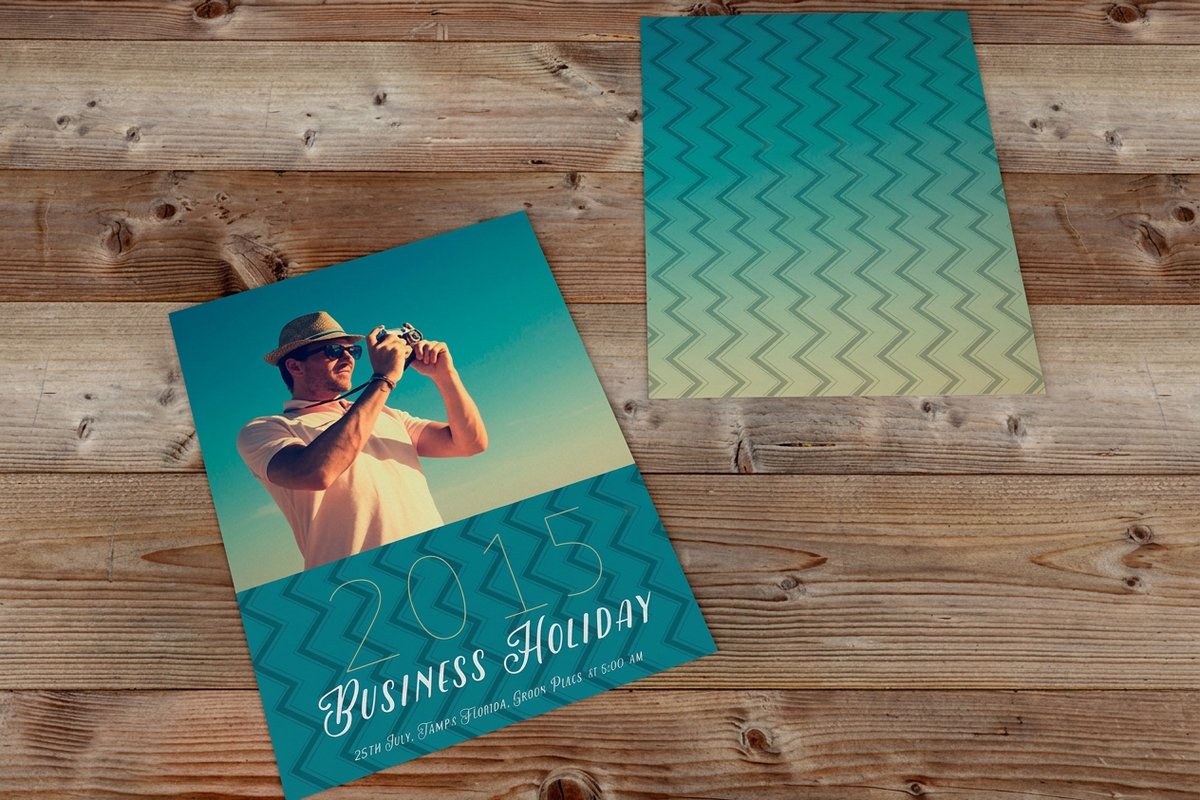
Here is what a made-to-order postcard gives you at 4OVER4.COM, with live specs and price-per-unit straight from the configurator across every size and stock.
| Quantity | Price Per Unit | Total |
|---|---|---|
| 50 | 33.0¢ | $16.48 |
| 100 | 24.2¢ | $24.16 |
| 200 | 15.9¢ | $31.86 |
| 300 | 12.8¢ | $38.45 |
| 400 | 11.3¢ | $45.04 |
| 500 | 10.3¢ | $51.62 |
| 600 | 9.89¢ | $59.31 |
| 700 | 9.57¢ | $67.00 |
Print it
Postcards worth printing at 4OVER4
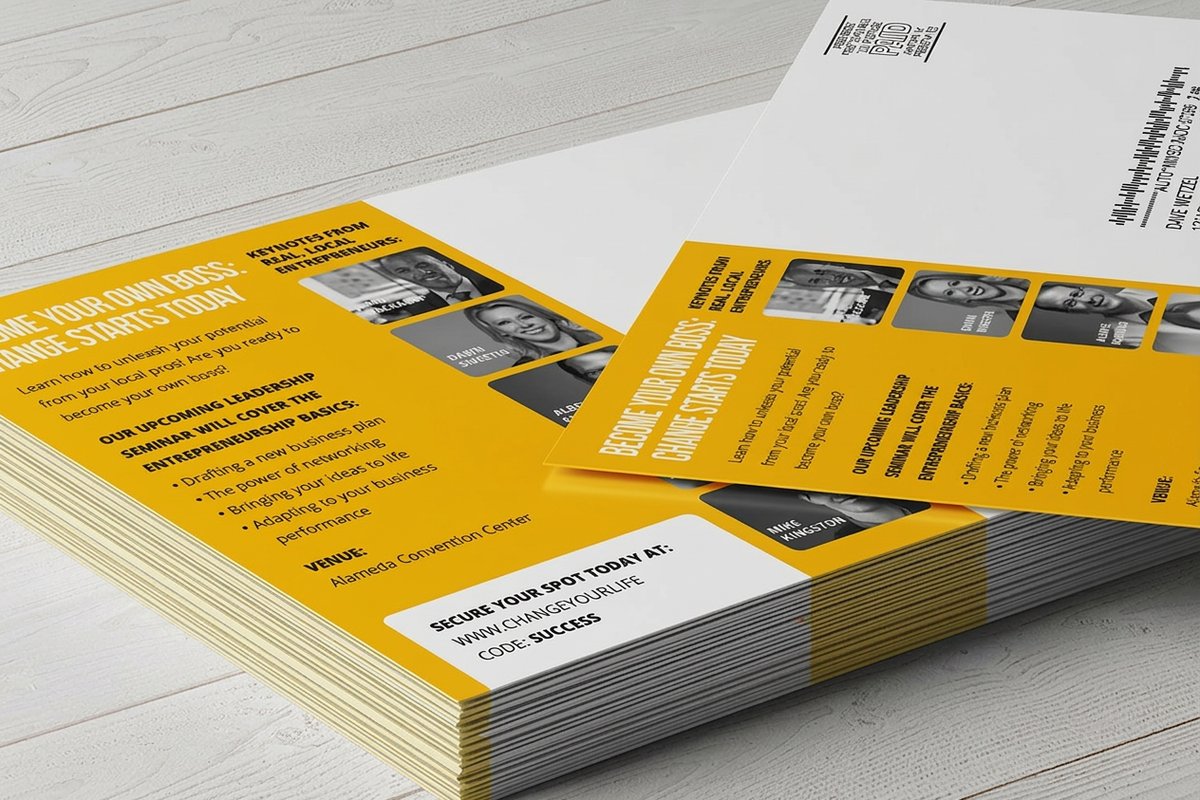

Wally explains postcard sizing
Pick the size for the message, not the other way around
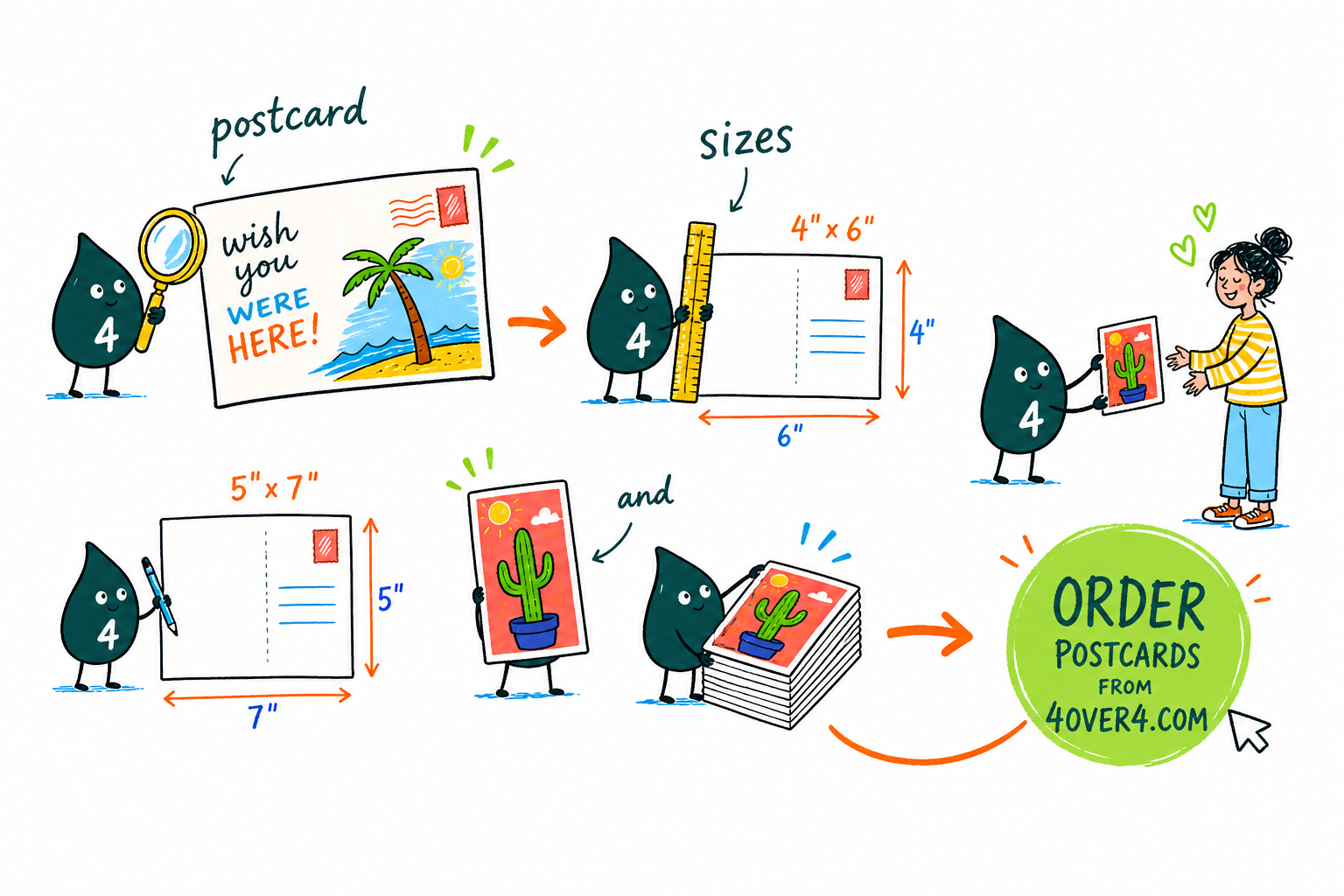
Wally thinks of a postcard size as a stage: a 4x6 keeps the show tight and the postage cheap, while a 6x9 gives your headline room to shout for the price of letter-rate postage. Match the card to the job, build in the bleed, and pair the stock to the size so the piece feels the way it looks. When you are ready, 4OVER4 prints every size on 60+ papers with fast turnaround.
Order postcards →See it in use
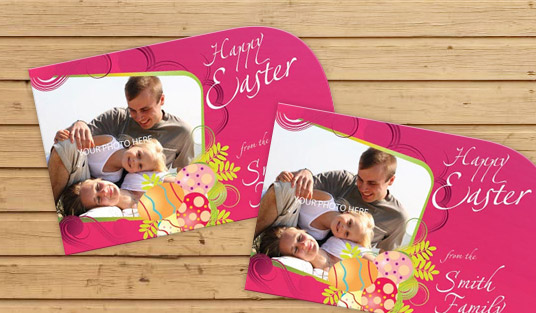
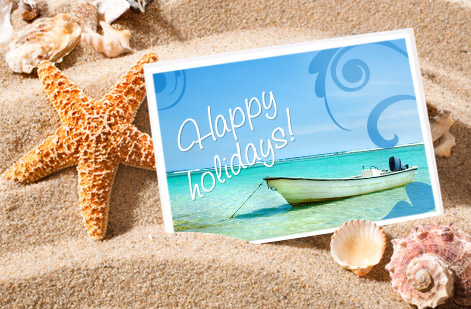
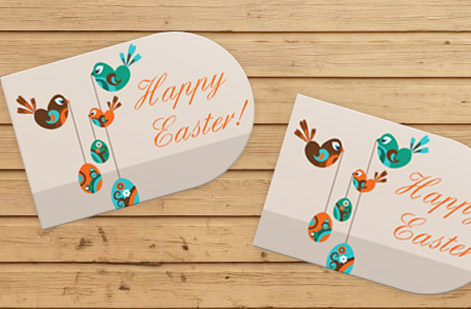
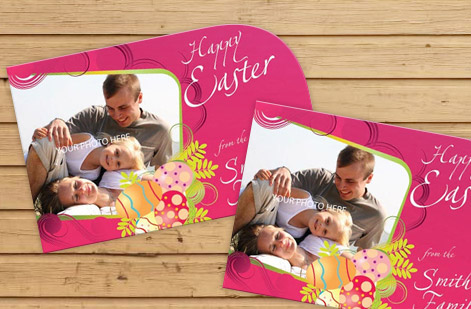
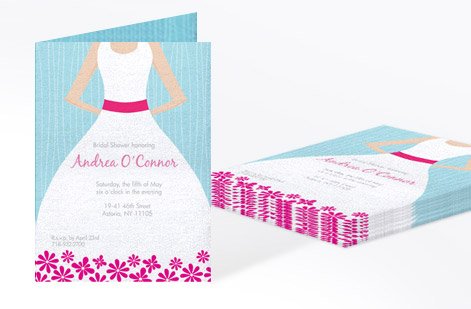
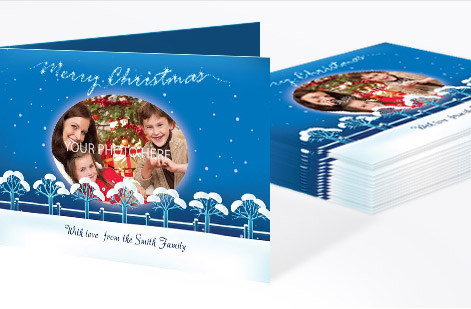
Real postcard work, printed in-house


Explore more
Where to go next
By the numbers
Printing you can count on at 4OVER4
Common Questions
Your postcard size questions, answered
What is the standard postcard size for mailing?
The standard postcard size is 4" x 6". It is the most widely used format and qualifies for the lowest USPS postcard postage rate. Your piece must fall between 3.5" x 5" at the minimum and 4.25" x 6" at the maximum to earn that rate. Anything larger mails at the First-Class letter rate.
How big are postcards compared to regular paper?
A standard 4" x 6" postcard is about one-quarter the size of a letter sheet (8.5" x 11"). A 5.5" x 8.5" postcard is exactly half a letter sheet. The 6" x 9" format is the largest common option and covers roughly two-thirds the area of standard paper.
What size postcard should I use for direct mail marketing?
For budget-conscious, high-volume campaigns, use 4" x 6" to get the cheapest postage. When you need more space for images, coupons, or detailed messaging, 5.5" x 8.5" or 6" x 9" gives you room to work with. The higher postage cost often pays for itself through better response rates.
Do I need to add bleed to my postcard file?
Yes. Add 0.125" of bleed on all four sides. That means a 4" x 6" postcard file should be 4.25" x 6.25". Bleed prevents white edges from appearing after the card is trimmed. Keep important text and logos at least 0.125" inside the trim line too.
Can I mail an oversized postcard without an envelope?
Absolutely. Postcards up to 6" x 9" can be mailed without an envelope. They just will not qualify for the discounted postcard rate if they exceed 4.25" x 6", so larger cards mail at the First-Class letter rate. Add a QR code to your postcard so recipients can scan and respond instantly.
What paper thickness works best for postcards?
14pt cardstock is the industry standard for mailed postcards, durable enough to survive postal sorting without bending. For a premium feel, 16pt matches the thickness of a credit card. And 32pt ultra-thick stock turns a simple postcard into a keepsake-quality piece that people hold onto.
Get Started
Ready to print your postcards?
Pick your size, choose your stock, drop in your design, and we print a crisp, mail-ready postcard that lands the way you planned.
Legal Disclaimer
Gold Standard guarantees apply to all standard orders placed through 4over4.com. Price match requires verifiable proof of a competitor's published price for an equivalent product with matching specifications and turnaround time. Satisfaction guarantee covers manufacturing defects and print quality issues. Contact support with order number and documentation. On-time delivery rate based on tracked orders 1999 to 2026. Individual results may vary based on shipping carrier performance.
