
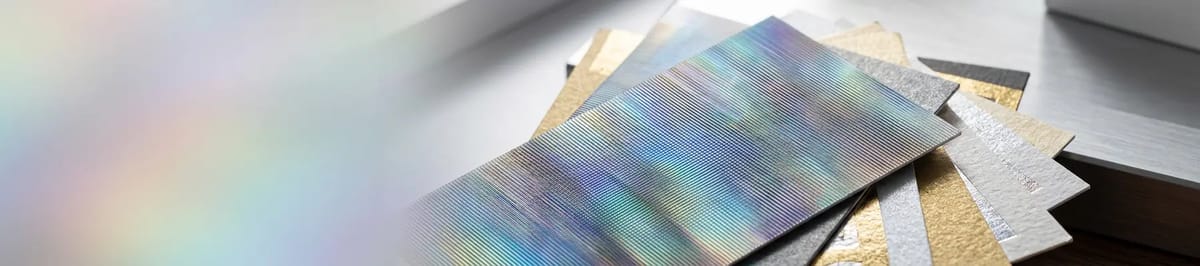
Lenticular Printing Collection
3D, flip and motion effects that move as the viewer does. Eight lenticular products, from business cards and posters to stickers, printed in full color.
8 products available
★ 4.8/5 from 10,000+ Reviews • 110% Price Match • Free ProofsShop All Lenticulars

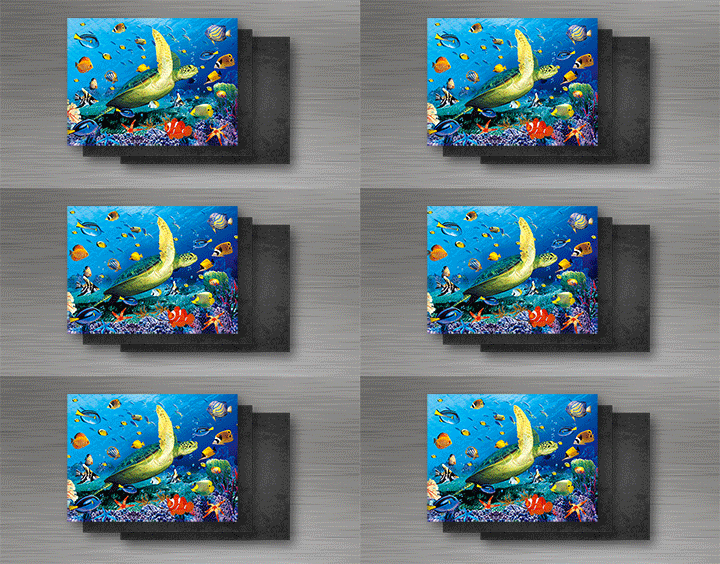
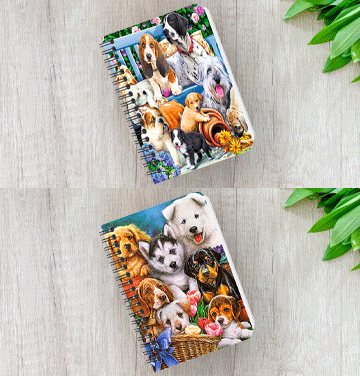

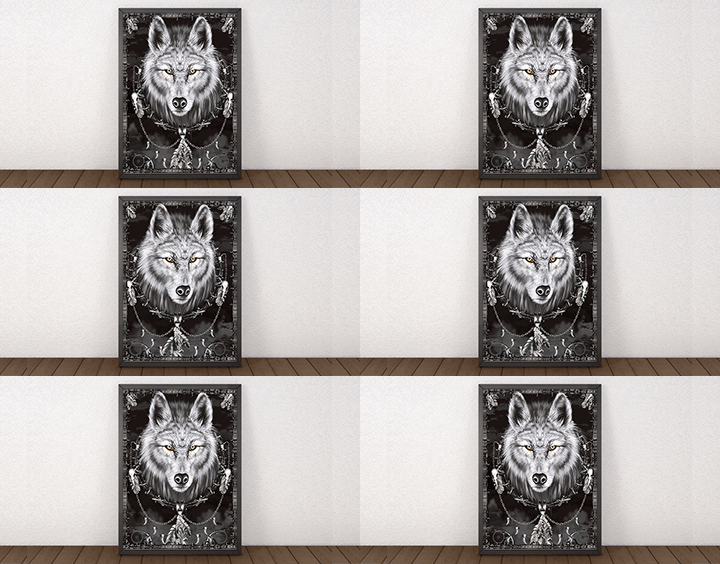
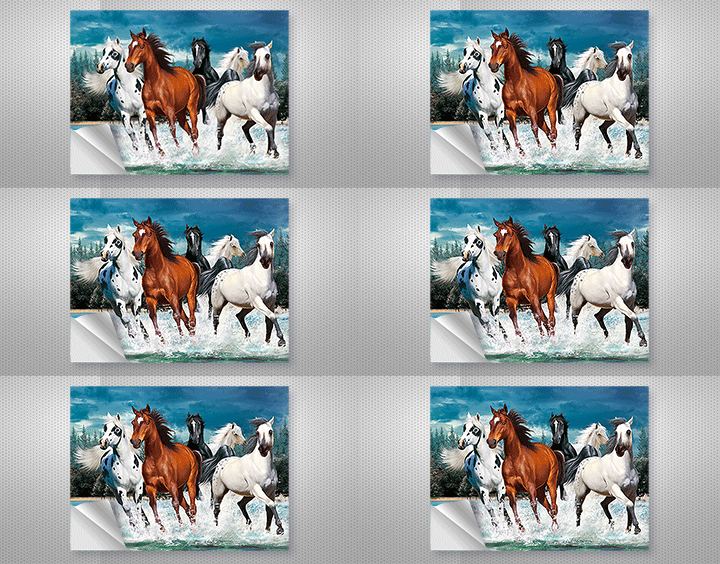
Watch the stories
Lenticular Printing at a glance
- Eight lenticular formats in one collection: 3D Lenticular Business Cards, Bookmarks, Greeting Cards, Magnets, Notebooks, Postcards, Posters, and Stickers.
- Choose your effect (flip, 3D depth, animation, or morph), set the number of flips, and pick the direction, top to bottom or left to right.
- Lenticular items need extra production time for lens alignment, and Same Day Printing is available on select products when you're on a deadline.
- Every piece is built on 31pt lenticular lens stock, printed 4/0 or 4/4, with add-ons like rounded corners, hole drilling, and scoring depending on the product.
- Green Printing options run across the catalog, and every order is backed by the 5 Gold Guarantees. 4OVER4's on-time delivery record across every order is 99.8%.
Watch Lenticular Printing in action
Real product walkthroughs from across the category. 8 videos to explore.
Print That Moves When You Tilt It
Lenticular printing turns flat cards and prints into pieces people can't put down. Tilt one and the image shifts, flips, or animates right in your hand. 4OVER4.COM runs a full lineup of lenticular products, from 3D Lenticular Business Cards and 3D Lenticular Bookmarks to 3D Lenticular Magnets, Notebooks, and Posters, each built on precision lens technology that adds real depth and motion to print.
This is the category where static print becomes something people interact with. Brands use it to stand out at trade shows, and artists use it to sell merch that gets noticed. Whatever you're printing, the lens does the work of stopping people mid-glance.
How Lenticular Printing Creates Motion
Lenticular printing combines two or more images under a ridged plastic lens. As you move the piece, the lens reveals different slices of the artwork, so the print appears to animate, morph, or pop out in 3D. It's applied optics on paper and plastic, not a gimmick.
You have a few effects to choose from. Flip alternates between two images, which suits before-and-after reveals or bilingual messaging. A 3D effect adds depth, so a logo or subject floats above or sinks below the surface. Animation strings multiple frames into motion, and morph transitions one image smoothly into another. On many products you can also set the number of flips and the direction, top to bottom or left to right.
4OVER4.COM handles the technical side, the interlacing, lens matching, and registration, so you upload artwork and choose your effect rather than becoming an optics expert. Select items also qualify for Same Day Printing when you're on a deadline.
Where Lenticular Products Earn Their Keep
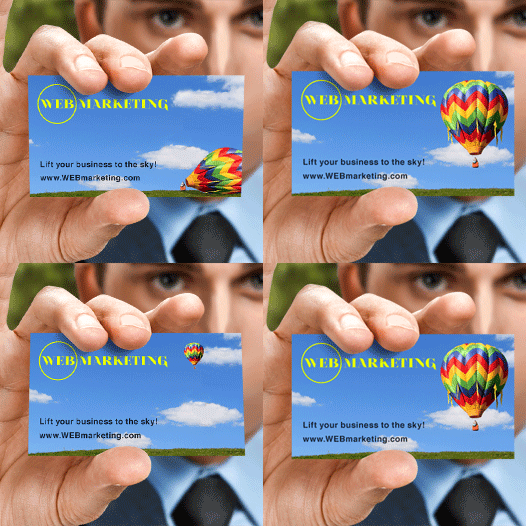
Lenticular printing works best when you need someone to pause and remember you. At trade shows, a 3D Lenticular Business Card gets tilted, shown to a colleague, and pocketed instead of tossed into a stack. In retail, counter cards and shelf talkers with a flip effect tell a product story without words.
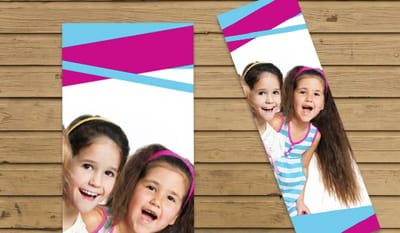
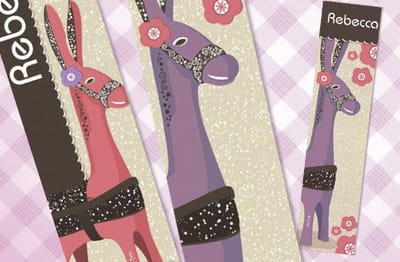
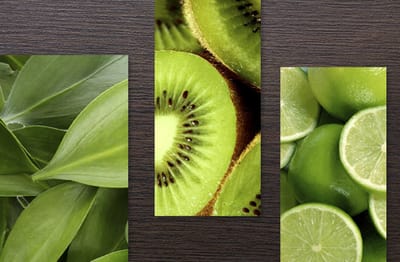
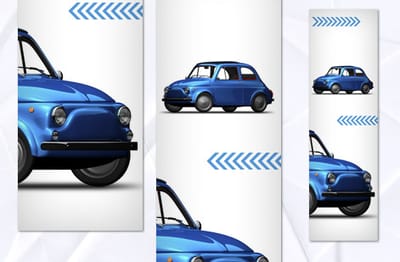
Schools and libraries hand out 3D Lenticular Bookmarks as reading incentives that survive backpacks and lockers. Direct mail campaigns use 3D Lenticular Postcards that get opened and examined when every other piece in the box is flat cardstock. Even 3D Lenticular Stickers and Magnets turn everyday surfaces into small moving billboards.
Getting Sharp, Clean Results
Lenticular effects reward a few simple habits. Match the effect to your message first. Use flip for before-and-after, 3D for a floating logo, and animation for a sequence like a bouncing ball or turning pages.
Keep artwork bold and high contrast. Fine text, thin lines, and subtle gradients can get lost between lens transitions, so lean on large fonts, solid colors, and clear subjects. Supply high-resolution files, 300 DPI or higher at final size, because every pixel gets split across viewing angles.
Always request a proof before a full run. Effects can read differently in person than on screen, and a proof lets you check alignment, color, and effect quality, which matters most on rigid pieces like 3D Lenticular Magnets.
Why Order Lenticular From 4OVER4.COM
Lenticular printing demands precision most shops can't hold. Lens alignment, interlacing accuracy, and color registration all have to be dialed in, or the effect falls flat. 4OVER4.COM has been printing for over 25 years and serving more than 150,000 businesses, and the lenticular line reflects that experience.
Every order is backed by the 5 Gold Guarantees covering quality, price, delivery, service, and satisfaction, with a 99.8% on-time delivery record. Green Printing options are available across the catalog too, so you can add motion to your marketing without dropping your sustainability standards.
What You Pay For in a Lenticular Run
Lenticular costs more than flat print because you are buying an optical part, not just ink on paper. Every order carries the ridged lens, the interlacing work that cuts your images into strips behind it, and a registration step that lines the two up tightly enough that the strips land under the right ridges. Miss that alignment and the effect ghosts, so the lens and the press run are matched for each job.
Across the eight products here, 3D Lenticular Greeting Cards open the collection at $631.57 and 3D Lenticular Business Cards start at $690.88. Rigid and large formats sit higher, with 3D Lenticular Postcards from $1,097.28 and 3D Lenticular Magnets from $1,316.96. Each figure is the starting price for the smallest run of that product, so the cost per piece drops as the count climbs. Budget lenticular the way you budget a booth, then hand the pieces out where they count.
Building the Frames Behind the Effect
Choosing an effect is the easy half. Supplying the right source files decides whether the finished piece reads clean. A flip needs two finished images at the same size and resolution, laid out so the subject sits in roughly the same spot in both, because a subject that jumps between frames looks like a misprint instead of a transition.
A 3D effect works best from a layered file with the subject separated from its background, since the depth is built by shifting those planes against each other. An animation needs every frame in order, named so the sequence cannot be misread, and four to eight frames usually beats twenty, because each extra frame takes a thinner slice of the same lens. A morph wants a clean start and end image with matching framing. Whatever the effect, build the frames at final size before you upload rather than scaling them up later.
How to do lenticular printing at home?
You can buy blank lenticular sheets and interlacing software and run them through a desktop inkjet, and hobbyists do. The hard part is registration. The printed strips have to line up under the lens ridges to a tolerance a home printer cannot hold, so the effect usually ghosts or blurs toward the edges. Home kits suit one-off experiments rather than anything you hand to a customer.
How expensive is lenticular printing?
In this collection prices start at $631.57 for 3D Lenticular Greeting Cards and reach $1,316.96 for 3D Lenticular Magnets, with the other six products in between. Each figure is the starting price for the smallest run of that product, and the cost per piece falls as the quantity goes up. The lens material and the extra setup on press are what put lenticular above standard cardstock printing.
How can I create a lenticular image?
A lenticular image is not one picture. It is several pictures cut into strips and interleaved so the lens can show one set of strips at a time. You create it by deciding the sequence first, whether that is two states for a flip or a short run of frames for motion, then exporting each one as a separate file at final size. The interleaving itself, called interlacing, is done in prepress against the exact lens being used, so you never have to generate it yourself.
Are holographic and lenticular the same thing?
No. Holographic printing uses a foil or film with a diffraction pattern that splits light into rainbow colors, and the image underneath stays the same. Lenticular puts two or more separate images under a ridged lens, so what you see changes with the viewing angle. Holographic gives you shine, lenticular gives you a second picture.
Wally helps you choose the right lenticular product
Match the effect to your message, then order.
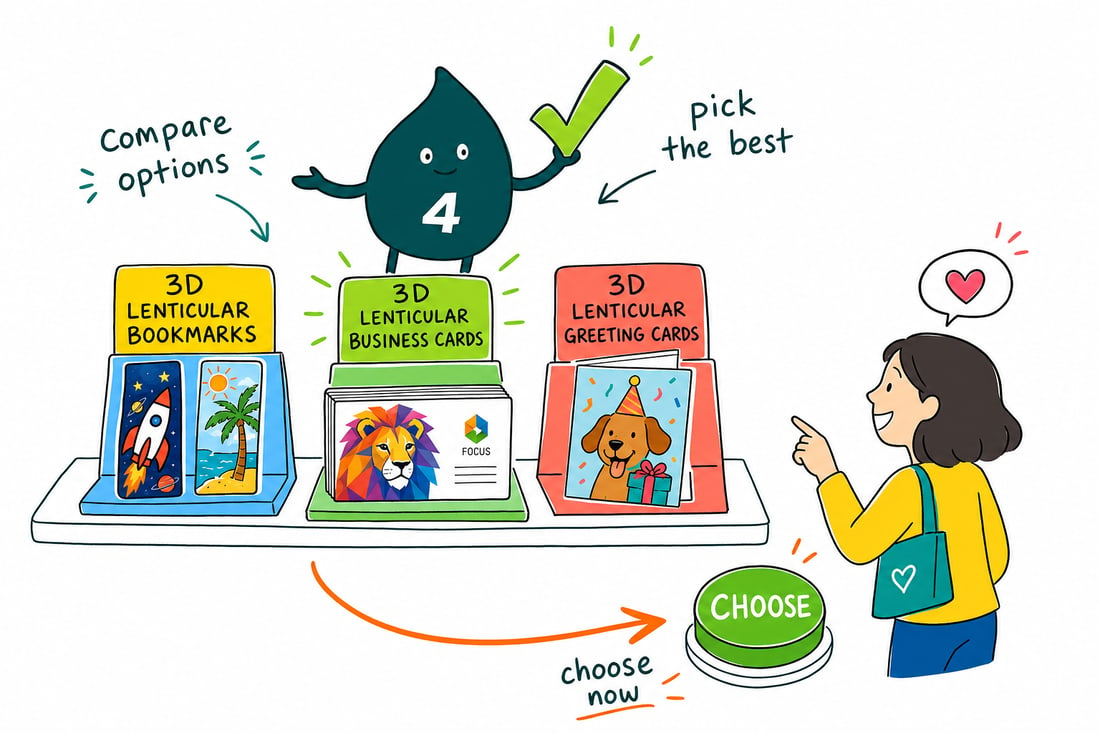
Wally lines up the popular lenticular formats, business cards, bookmarks, magnets, postcards, and more, so you can see how flip, 3D, and animation effects differ. He helps you match the right product and effect to what you're promoting, then send it straight to print.
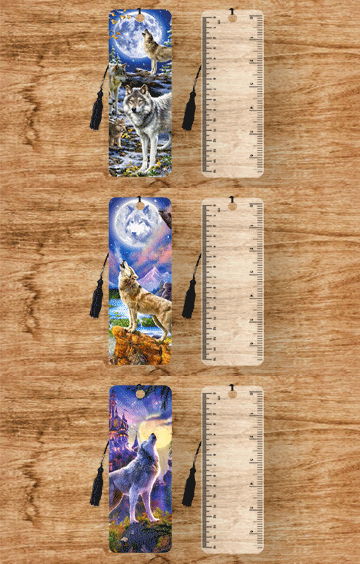
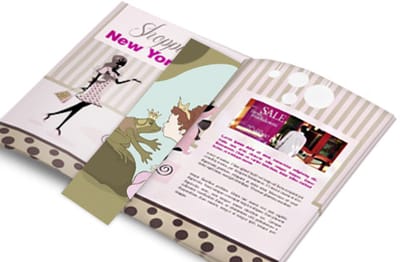
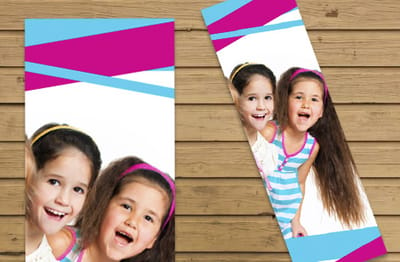
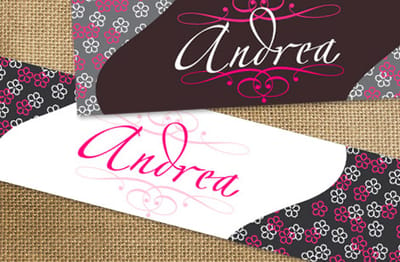
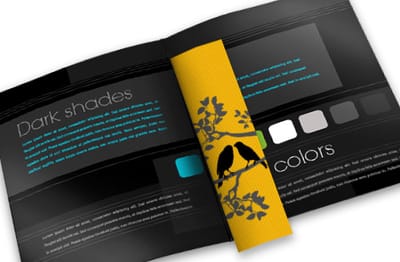
Real Bookmarks Our Customers Printed
Lenticular Printing pricing at a glance
Tap any card to open the full pricing infographic. 8 guides across the category.
Lenticular Printing FAQ
What products come with lenticular printing?
The collection covers eight formats: 3D Lenticular Business Cards, Bookmarks, Greeting Cards, Magnets, Notebooks, Postcards, Posters, and Stickers. Each one uses the same precision lens technology, so you can carry one moving effect across a whole campaign.
What material are lenticular products printed on?
Lenticular pieces are printed on 31pt lenticular lens stock, a ridged plastic lens bonded to your interlaced artwork. You can print the front only (4/0) or both sides (4/4) on most products.
What lenticular effects can I choose from?
You can pick flip, which alternates between two images, 3D depth, animation across multiple frames, or morph, which blends one image into another. On many items you also set the number of flips and whether the effect runs top to bottom or left to right.
How long does lenticular printing take?
Lenticular items take a bit longer than flat printing because of the lens alignment and registration step. Turnaround varies by product and quantity, and Same Day Printing is available on select items when you need them fast.
Is there a minimum order, and does ordering more lower the price?
Order quantities vary by product, and lenticular runs cost more per unit than flat print because of the specialty lens material. Per-unit pricing drops as quantities rise, so bulk orders for events or campaigns make the most financial sense. Check each product page for its exact quantities.
How do I prepare artwork, and can I get a proof?
Supply high-resolution files at 300 DPI or higher at final size, keep designs bold and high contrast, and start from the product-specific template. Always request a proof, which 4OVER4.COM provides, so you can confirm alignment, color, and effect quality before the full run prints.
Related reading
