
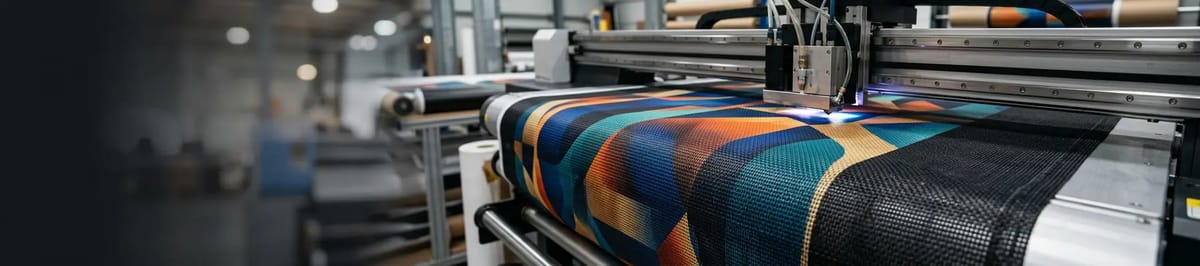
Mesh Printing Collection
Mesh printing on perforated vinyl lets wind pass through instead of catching it, for fence wraps, building facades and stadium rails.
1 product available
★ 4.8/5 from 10,000+ Reviews • 110% Price Match • Free ProofsShop All Meshs





Watch the stories
Mesh Printing at a glance
- The collection centers on custom Mesh Banners printed on 8oz perforated vinyl, a lightweight material built for outdoor fence wraps, building signage, and event banners.
- The perforated surface lets wind pass through instead of catching it, cutting wind load so your banner stays put in gusty conditions where solid vinyl would tear.
- Order a single banner or multiple panels, four to six will typically cover a full fence perimeter, with the per-unit cost dropping on larger runs.
- Finishing includes grommets at the corners or every 2 feet, hems on the top and bottom or all four sides, and pole pockets from 1.5 inches up to 4 inches.
- Every order includes a free digital proof and is backed by the 5 Gold Guarantees. Across 4OVER4 orders, 99.8 percent arrive on time, and more than 10,000 reviews of all products average 4.8 out of 5.
Watch Mesh Collection in action
Real product walkthroughs from across the category. 1 video to explore.
Custom Mesh Printing for Outdoor Signage That Breathes
Mesh printing gives you a lightweight, wind-resistant material built for outdoor banners, fence wraps, and building signage. The surface is perforated, so air passes straight through and your graphics stay put even when the wind picks up. 4OVER4.COM has been printing since 1999, more than 25 years of work serving over 150,000 businesses with bold signage that holds up outside.
Whether you're wrapping a construction fence or hanging a banner on a stadium rail, mesh is the go-to. It's tough, it reads clearly from a distance, and it won't act like a sail in a storm. The collection centers on custom Mesh Banners, and everything below helps you set yours up right.
What Makes Mesh the Right Choice for Your Signage?
Mesh uses a woven vinyl material with small perforations across the surface, typically covering about 30 to 50 percent of the area. Those holes let wind pass through instead of catching it. A solid vinyl banner can rip, buckle, or pull down its hardware in a gust. Mesh doesn't have that problem.
Your colors still print vivid and sharp. The ink coverage is dense enough that the eye reads the image as solid from a normal viewing distance, so you get full visual impact with a fraction of the wind load. Every order runs on high-resolution digital printing, which keeps logos, photos, and text crisp.
Where Mesh Fits Compared to Other Materials
Think of mesh as the outdoor specialist. Solid vinyl is fine for indoor banners or short displays in calm weather. But if your sign is going on a building facade, a fence line, or any exposed spot, mesh is the smarter pick. It's lighter, more wind-resistant, and still delivers strong graphics.
Real-World Uses for Mesh Banners
Mesh isn't a niche product, it's a workhorse for anyone advertising outdoors. Here's how different crews put it to work.
Construction Site Branding
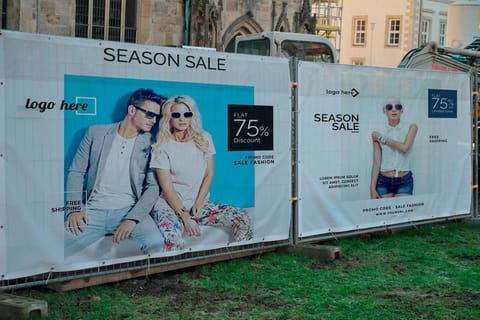
Contractors and developers wrap chain-link fencing with custom Mesh Banners that carry the company logo, project renderings, and contact info. A branded fence wrap turns an eyesore into a marketing asset. Order four to six panels and you can cover a full perimeter that earns thousands of daily impressions from passing traffic.
Outdoor Events and Festivals
Event planners hang mesh along stages, vendor rows, and entry points. The material handles wind without heavy reinforcement, so a banner at a food festival or concert keeps sponsor logos visible all weekend with no tearing and no flapping loose.
Sports Venues and Stadiums
Athletic facilities wrap mesh around outfield fences, bleacher rails, and parking structures. The perforated surface handles the constant wind exposure of open-air venues, and the color accuracy holds up in those high-visibility placements.
Getting the Best Results from Your Mesh Order
Mesh printing is straightforward, but a few smart choices during setup make a real difference in how the finished banner looks and lasts.
Design for the Perforations
Small text and fine lines can get lost in mesh material, so stick with bold fonts and high-contrast color combinations. If your logo has thin strokes, thicken them before you send the file.
Size It for the Location
Mesh banners are usually read from a distance, across a street or from a moving car, so bigger is usually better. Scale your graphics for readability from at least 20 to 30 feet away. A good rule of thumb: every inch of letter height buys you about 10 feet of readability.
Plan Your Finishing
Grommets, pole pockets, and hemmed edges all change how you mount the banner. Grommets work for fence mounting, pole pockets are ideal for hanging between posts, and sealed hems reinforce the edges. Specify what you need when you order so installation goes smoothly.
Why 4OVER4.COM for Your Mesh Printing
Mesh is a product where quality control really matters. A poorly printed banner fades fast, bleeds color in the rain, or tears at the grommets. Every mesh order here runs through a quality check before it ships, with colors matched to your proof, grommets reinforced, and hems sealed.
If something isn't right, the 5 Gold Guarantees have you covered: quality, price match, on-time delivery, customer service, and satisfaction. With more than 10,000 reviews and a 4.8 out of 5 average, buyers rate their mesh orders on print quality, outdoor durability, and accurate color on perforated material.
Banner Mesh and Screen Printing Mesh Are Different Materials
One word covers two trades. The mesh in this collection is a woven vinyl banner material with perforations across the face, printed digitally and hung outdoors so wind passes through the holes. Screen printing mesh is a fine polyester fabric stretched over a frame, and nothing is printed on it at all. It is the stencil that other ink passes through on its way to a shirt or a poster.
The numbers people search for belong to that second trade. A mesh count of 110 or 160 threads to the inch describes a screen and tells a screen printer how much ink will pass. Banner mesh is described by its perforation instead, the share of the surface left open to the air.
If you came looking for screens and squeegees, this is the wrong shelf. If you need a printed banner that will not behave like a sail, you are in the right place.
Sizing a Mesh Banner for Its Viewing Distance
Letter height decides whether a mesh banner works, not banner size. The rule this page runs on is one inch of letter height for every ten feet of reading distance, so start from where the reader stands and work back to the sheet.
| Read from | Smallest letter height | Typical placement |
|---|---|---|
| 20 feet | 2 inches | Entry gate or vendor row |
| 30 feet | 3 inches | Fence line along a sidewalk |
| 60 feet | 6 inches | Stadium rail or bleacher wrap |
| 100 feet | 10 inches | Building facade or road frontage |
Headline first, then everything else. Set the biggest line by the table, give the second line half that height, and cut whatever does not survive. Mesh Banners start at $75, so going one size larger costs less than a banner nobody can read.
Can I screen print fabric at home?
Yes, with a frame, a stencil, a squeegee and a way to cure the ink, which for small jobs means a heat press or a hot iron. The setup suits shirts and tote bags in small numbers. It is a separate craft from the banners in this collection, which print digitally on perforated vinyl at sizes no home rig handles.
What is the purpose of a mesh screen?
A mesh screen holds the stencil in screen printing. Ink is pulled across the frame and passes through the open areas of the fabric onto the surface below, and the thread count controls how much ink gets through. It plays no part in banner printing, where a digital press puts the image straight onto the mesh vinyl.
Can you screen print mesh?
Screen printing onto perforated banner mesh is impractical, because the holes let ink drop through instead of holding a clean edge. Digital printing is the standard for this material, which is why every mesh banner here runs on high resolution digital equipment. That keeps logos, photos and small type crisp on a surface that is partly open air.
Wally helps you choose the right Mesh Printing
Match the size and finishing to where your banner will hang.
Wally lines up the popular mesh options, from grommets and hems to pole pockets, so you can see which setup fits a fence wrap, a stage banner, or a stadium rail. He points you toward the size and finishing that hold up outdoors, then you drop in your artwork and order the banner that matches your job.
Mesh Collection pricing at a glance
Tap any card to open the full pricing infographic. 1 guide across the category.
Mesh Printing FAQ
What material is mesh printing on?
Mesh banners print on 8oz perforated vinyl, a woven material with small holes covering roughly 30 to 50 percent of the surface. Those perforations let wind pass through, which is why mesh is the standard choice for fence wraps, building banners, and any exposed outdoor location.
What size should I order for outdoor signage?
Mesh banners are usually read from a distance, so scale your design for readability from at least 20 to 30 feet away. A useful rule is that every inch of letter height gives you about 10 feet of readability, so for most outdoor placements bigger is better.
How long does an order take, and do I get a proof?
Every mesh order includes a free digital proof so you can confirm your design before production starts. Across 4OVER4.COM orders, 99.8 percent arrive on time.
What finishing options are available for mesh banners?
You can add grommets at the corners only or every 2 feet for fence mounting, hems on the top and bottom or all four sides for reinforced edges, and pole pockets from 1.5 to 4 inches for hanging between posts. Pick your finishing based on how and where the banner will hang, and specify it when you order.
Is there a minimum, and how many banners do I need?
You can order a single Mesh Banner or a full set of panels. To wrap an entire construction fence or venue perimeter, most buyers order four to six panels, and the per-unit price drops as the quantity goes up.
What file format should I submit for mesh printing?
Send a high-resolution PDF, AI, or PSD file at a minimum of 150 DPI for large-format mesh, with at least 0.5 inches of bleed on all sides. Because the material is perforated, bold fonts and high-contrast colors reproduce far better than thin lines or small text.
Related reading
