
Business Card Size Guide to Every Dimension


Standard cards are 3.5 by 2 inches, the size of a credit card. Square, folded, slim, mini, custom, and European formats each fit a different brand. Here is every dimension, with the file setup for each.
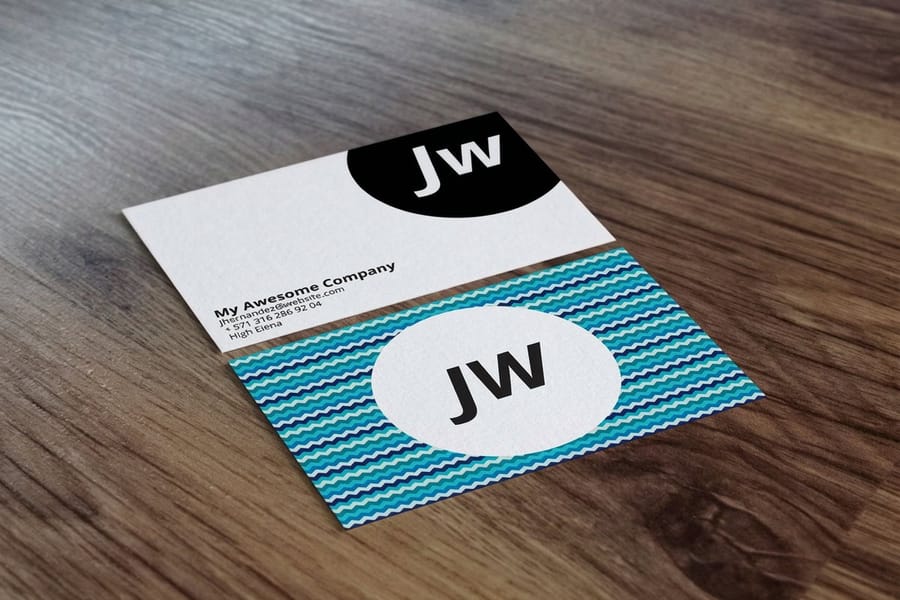
The standard U.S. business card is 3.5 by 2 inches, the same footprint as a credit card. Set your print file to 3.75 by 2.25 inches to include a 0.125 inch bleed, keep text 0.125 inches inside the trim, and export at 300 DPI in CMYK. Square (2.5 by 2.5), folded (3.5 by 4), slim (3.5 by 1.5), and European (3.346 by 2.165) sizes each fit a different brand.
Quick reference
Every business card size at a glance
Standard cards are 3.5 by 2 inches and fit any wallet. European runs 3.346 by 2.165 inches, square is 2.5 by 2.5, folded opens from 3.5 by 4 to a 3.5 by 2 pocket size, and slim is 3.5 by 1.5. Whatever size you pick, build the file with a 0.125 inch bleed, keep text inside the safe zone, and export a 300 DPI CMYK PDF. 4OVER4.COM customers who size their files right get crisp, edge-to-edge cards on the first run.
Why business card size matters more than you think
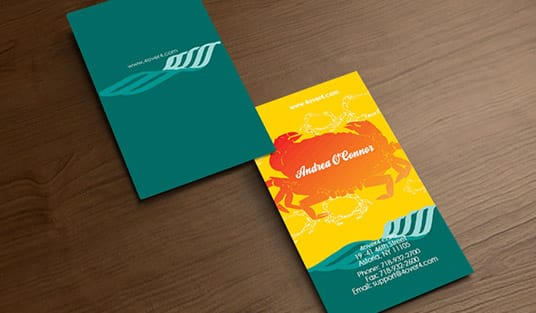
Your business card is often the first physical thing someone holds from your brand. The size you pick shapes how it feels in the hand, whether it slides into a wallet, and how your whole design comes together. Choose the wrong dimensions and the card gets tossed. Choose the right ones and it stays in rotation for months.
This guide walks through every standard and non-standard business card size worth considering, which formats fit which industries, and how to set the file up so it prints clean. If you are also planning other print pieces, our guide on how to fold a brochure covers complementary collateral, and how to clean rubber stamps keeps the rest of your desk tools sharp.
4OVER4.COM has been printing cards since 1999, and the sizing advice below comes from decades of real production, backed by more than 10,000 customer reviews. Let us get into the numbers.
The U.S. standard business card size: 3.5 by 2 inches
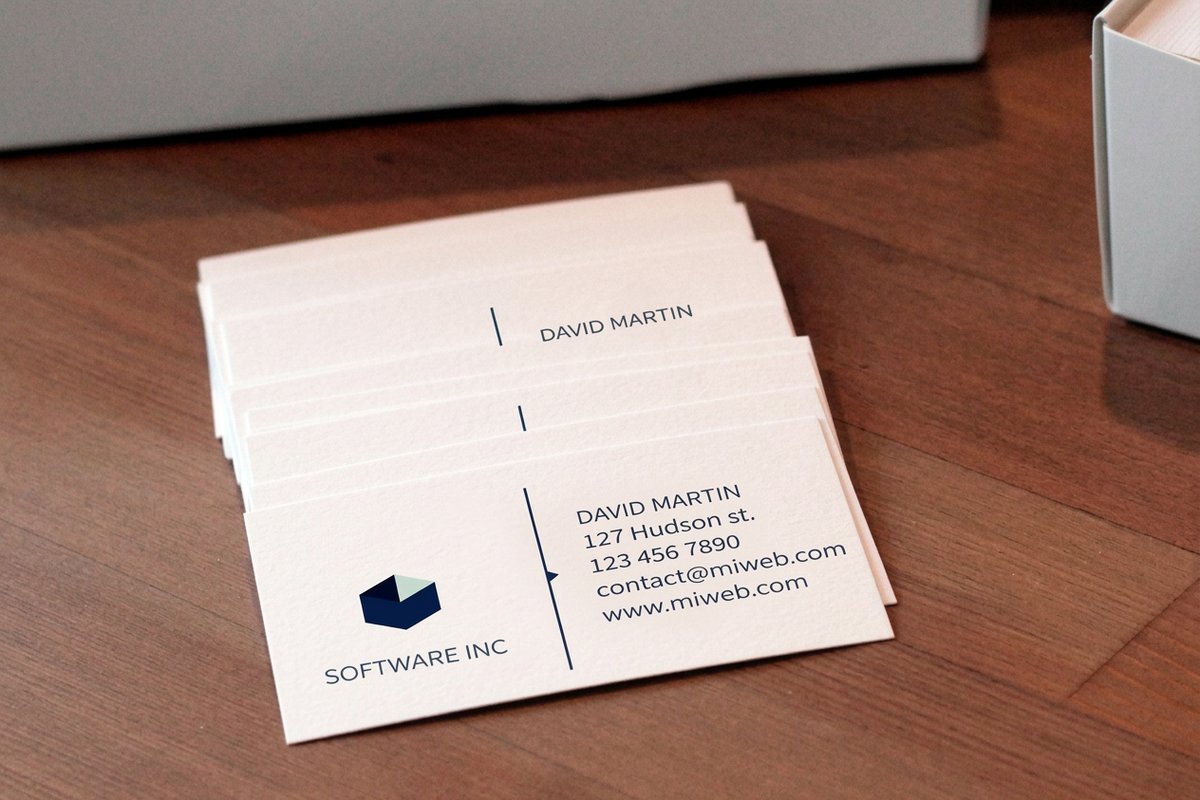
The most common business card size in the United States and Canada is 3.5 by 2 inches (89 by 51 mm). It is the default for a good reason. It matches a standard credit card, so it slides into any wallet, cardholder, or Rolodex without trimming or folding. If you are unsure which size to use, start here.
The 3.5 by 2 format gives you enough room for your name, title, contact details, logo, and a short tagline. It is the size that printers, designers, and recipients all expect. Most blank templates at 4OVER4.COM are built around this dimension, so file setup stays straightforward.
For the print file, set the document to 3.75 by 2.25 inches. That extra 0.125 inches on each side is your bleed. Bleed makes sure that when the card is trimmed to final size there are no white edges where your background color or image should reach. Keep all important text and logos at least 0.125 inches inside the trim line, which is the safe zone.
European, square, and folded business card sizes
The European standard business card measures 3.346 by 2.165 inches (85 by 55 mm), slightly narrower and taller than the U.S. card. If you operate internationally or attend trade shows in Europe, this size keeps your cards consistent with the holders recipients already carry. The difference is subtle, about 0.15 inches narrower and 0.165 inches taller, but it matters for cardholders built to European dimensions.
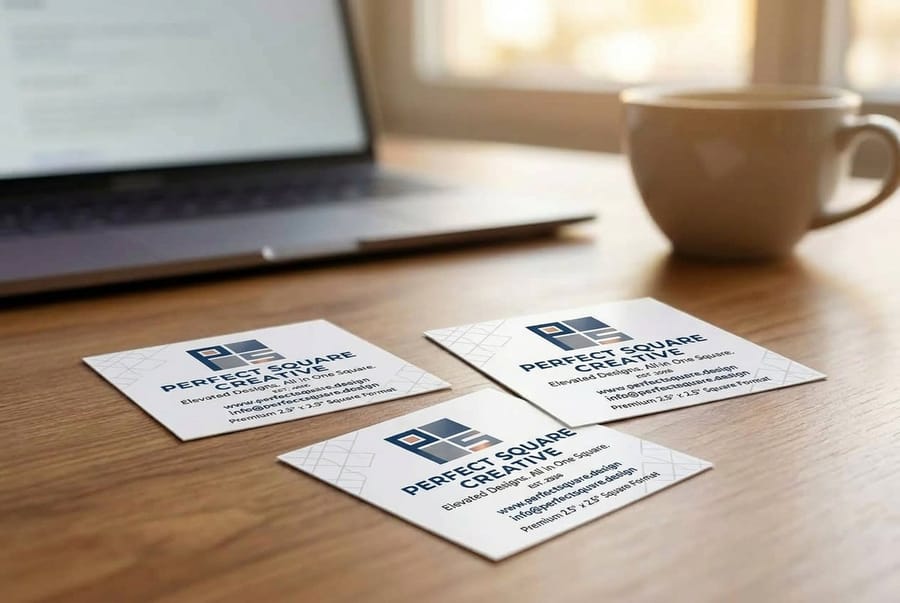
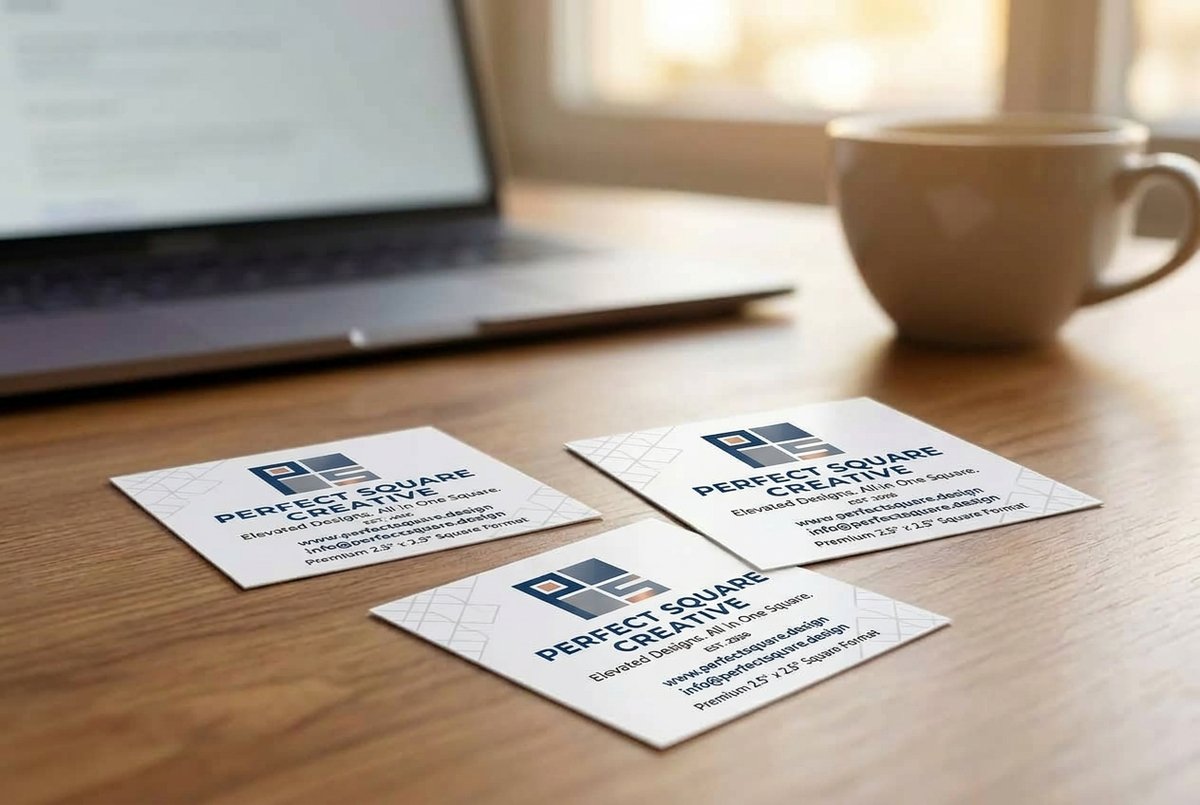
Square cards break the mold. The most popular square format is 2.5 by 2.5 inches, though 2 by 2 inches is common for a more compact option. Hand someone a square card and they notice, because it does not drop neatly into a standard holder, and that is the point. Photographers, designers, and creative agencies gravitate to it. The trade-off is less text space, so a clean logo, your name, one phone number, and a website is usually all that fits comfortably. A 2.5 by 2.5 card needs a 2.75 by 2.75 inch document with the same 0.125 inch bleed on all sides.
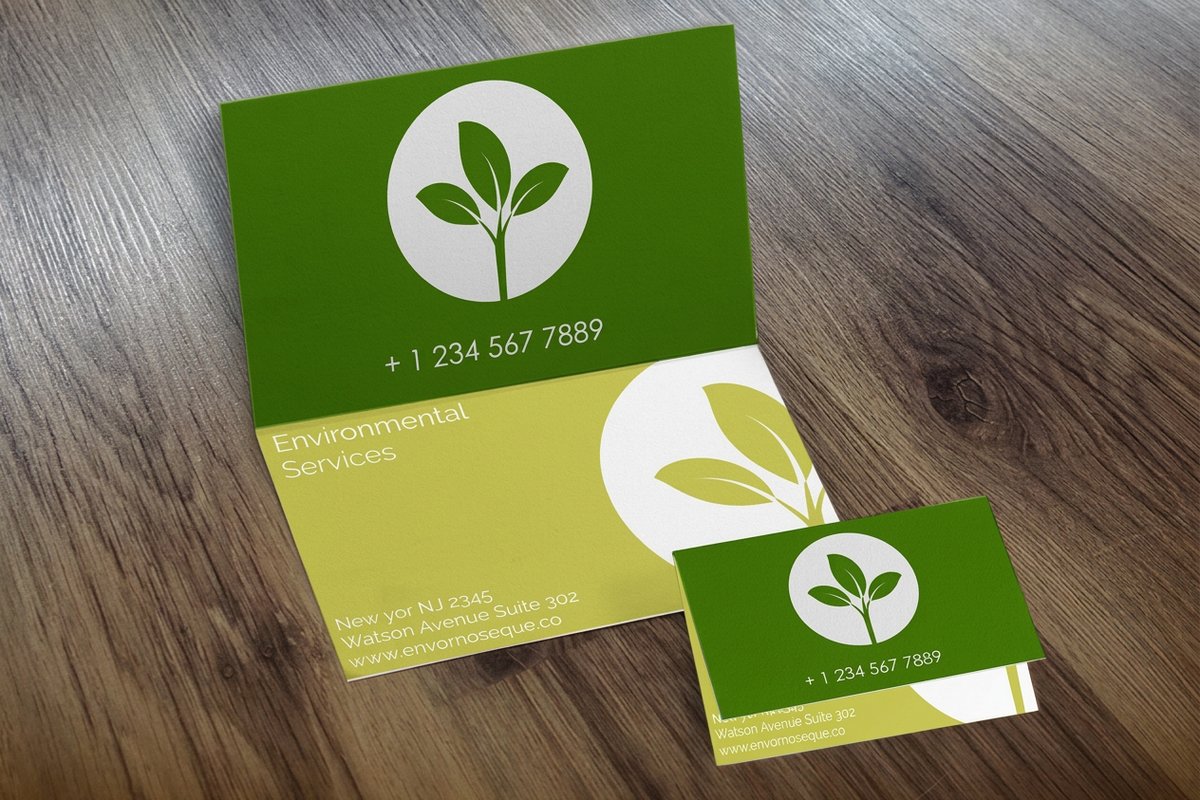
Folded cards give you double the real estate. The flat size is 3.5 by 4 inches, folding down to the standard 3.5 by 2 inches, so you work with four panels instead of two. This suits appointment cards for salons, mini menus for restaurants, service lists for contractors, or a small portfolio for creatives. Place the fold line at exactly 2 inches from the top or the left so content that crosses it stays aligned. Our full guide hub has dozens more how-to reads if you are building a wider print kit.
Slim, mini, custom, and die-cut business cards
Slim cards typically measure 3.5 by 1.5 inches. They are narrower than standard cards and read as modern and minimal, a business card that borrowed its shape from a bookmark. Mini cards run smaller still, usually around 3 by 1 inch or 2.75 by 1.125 inches, and they are popular with DJs, musicians, and fashion brands. A name, a handle, and a QR code might be all one needs. Both formats grab attention, but they demand tight, intentional design because every millimeter counts.
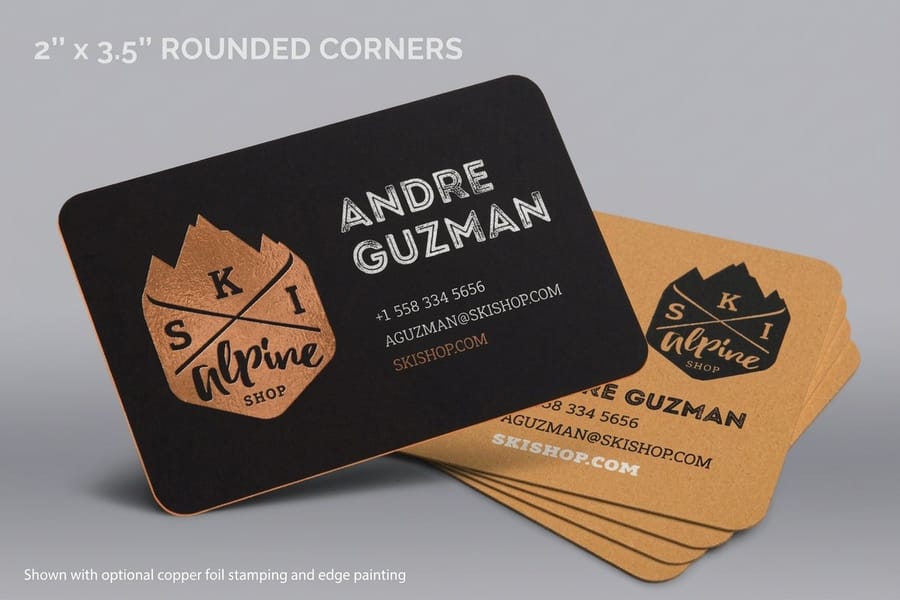
Not every brand fits a rectangle. Die-cut cards can be shaped into circles, ovals, leaf shapes, guitar picks, houses, or nearly anything a designer can draw. Dimensions vary with the shape, but most die-cut cards stay within a 3.5 by 2 inch bounding box so they remain practical to carry. Custom rectangular sizes are possible too, whether that is a 4 by 3 inch photography card or a tall 1.5 by 3.5 inch vertical. Confirm your dimensions before designing, since custom sizes can carry different pricing and turnaround.
If you want the wow factor cranked up, 3D lenticular business cards print motion graphics directly on the card, so the artwork shifts as it tilts.
How to choose the right business card size
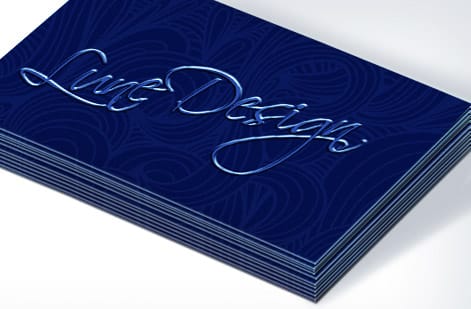
Start with function and ask three quick questions. Does it need to fit a wallet? Stick with 3.5 by 2 or the European standard, because anything larger gets left behind. Do you need extra space for information? Go folded, since four panels leave room for appointment slots, QR codes, maps, or a service menu. Is standing out your top priority? Square, slim, mini, or die-cut all signal creativity, as long as your essential details still fit.
Industry matters too. Lawyers, accountants, and financial advisors almost always use standard-size cards because it matches the professional tone their clients expect. Photographers, event planners, and boutique owners have more room to experiment with square or custom shapes.
If you are building a full print kit, keeping the card at standard size simplifies the whole system so everything aligns. Match it with custom envelopes and letterhead, and if you are also running flyers, a consistent look across every size builds recognition fast.
Business card file setup: bleed, safe zone, and resolution
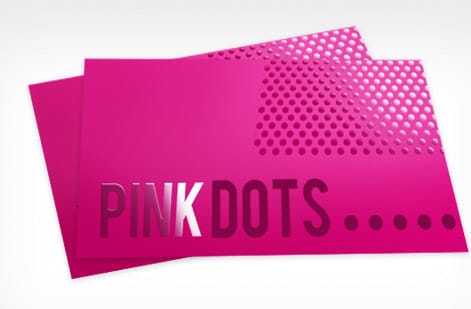
No matter which size you choose, the same file rules apply to every business card. Get these right once and every reorder prints clean.
- Bleed: add 0.125 inches on all sides beyond the trim line so there are no white edges after cutting.
- Safe zone: keep text and logos at least 0.125 inches inside the trim line, because anything closer risks getting clipped.
- Resolution: 300 DPI minimum. Lower resolution looks blurry in print even when it looks fine on screen.
- Color mode: CMYK, not RGB. Screens use RGB and presses use CMYK, so design in CMYK from the start to avoid color shifts.
- File format: PDF is preferred because it preserves fonts, colors, and layout exactly as you designed them.
Download-ready blank templates for the most popular sizes let you drop in your design and skip the setup math. For a print format that pairs well with cards at events and trade shows, our guide on custom magnets covers another crowd favorite.
Sizing mistakes that ruin business cards
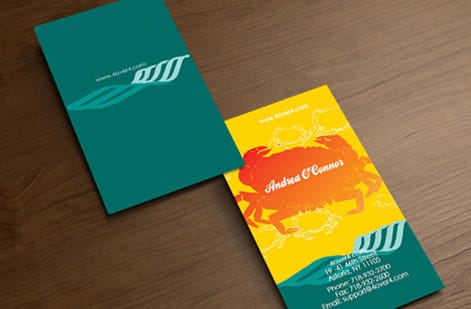
Even experienced designers slip up on business card dimensions. These are the errors 4OVER4.COM sees most in uploaded files, and each one is easy to avoid.
Forgetting the bleed. This is the number one mistake. If your background color or image runs to the edge, you need 0.125 inches of bleed on every side. Without it, thin white lines show along the edges after trimming, and it looks sloppy.
Placing text too close to the edge. The trim line is not a suggestion. Text or logos within 0.125 inches of the trim can get partially cut off, so keep everything important inside the safe zone.
Designing in RGB instead of CMYK. That bright blue on your screen can print as a dull purple. Always design in CMYK for accurate printed color.
Using the wrong dimensions for international cards. A U.S. standard card at 3.5 by 2 inches does not match the European standard at 3.346 by 2.165 inches, so double-check which size your recipients expect. And never ship a file under 300 DPI, because it will look fuzzy the moment it hits the press.
Picking cards worth printing once you know your size
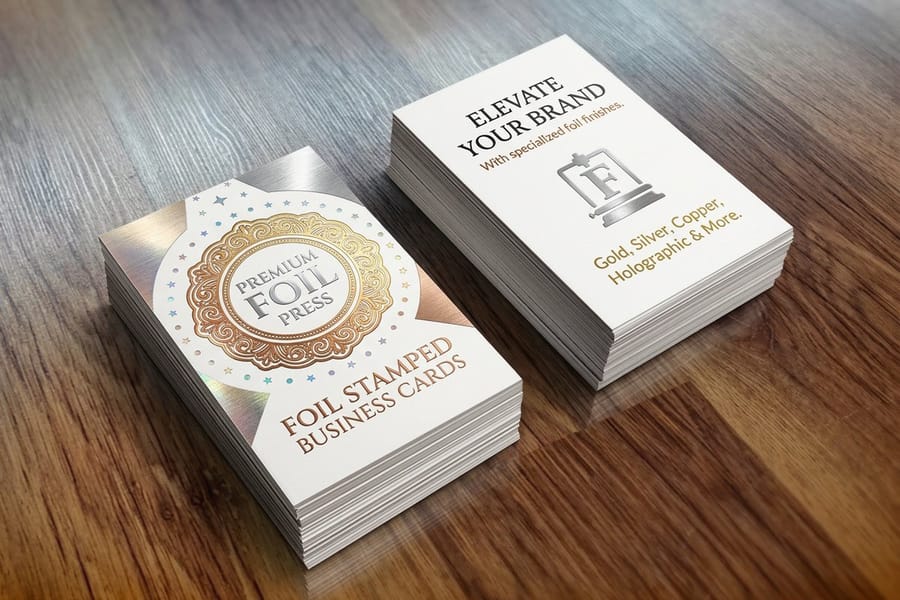
Now that you know which business card size fits your brand, it is time to choose a product. 4OVER4.COM carries more than 1,000 products with options across every size in this guide. A few things worth weighing before you order:
- Portability: the standard size at 3.5 by 2 inches fits most wallets and holders, so it is easy to carry.
- Design: the size shapes the layout, so some art sits better on a square 2 by 2 card or a folded card than on a standard one.
- Cost: standard cards are more cost-effective than larger or custom sizes, so weigh your budget.
- Uniqueness: a standard card reads as professional, while a custom shape reads as creative and memorable.
Want to test the waters first? Free business cards let you proof your design on real stock before you scale to a full run. And if sustainability matters, the green printing line offers recycled and responsibly sourced stocks in standard and custom sizes, so you do not trade quality for a lighter footprint.
Specs and pricing
Standard business card specs and pricing
Here is what a made-to-order standard business card gives you at 4OVER4.COM, with live specs and price-per-unit straight from the configurator.
| Quantity | Price Per Unit | Total |
|---|---|---|
| 100 | 17.6¢ | $17.57 |
| 200 | 11.5¢ | $23.07 |
| 300 | 9.15¢ | $27.46 |
| 400 | 7.96¢ | $31.86 |
| 500 | 7.25¢ | $36.26 |
| 600 | 6.77¢ | $40.64 |
| 700 | 6.43¢ | $45.04 |
| 800 | 6.18¢ | $49.43 |
Print it
Cards worth printing once you have picked a size
Start from a template
Free business card size templates
Download a ready-made layout at the right trim and bleed, drop in your design, and you are ready to print.


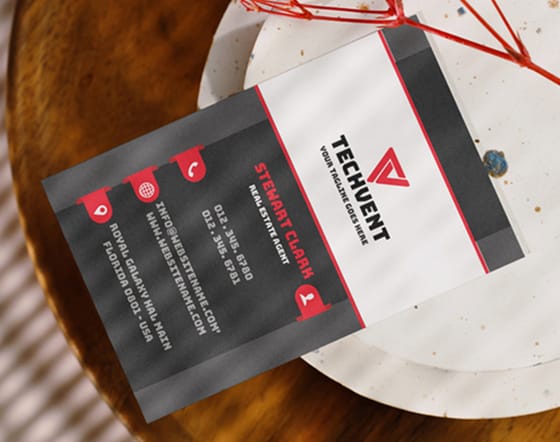
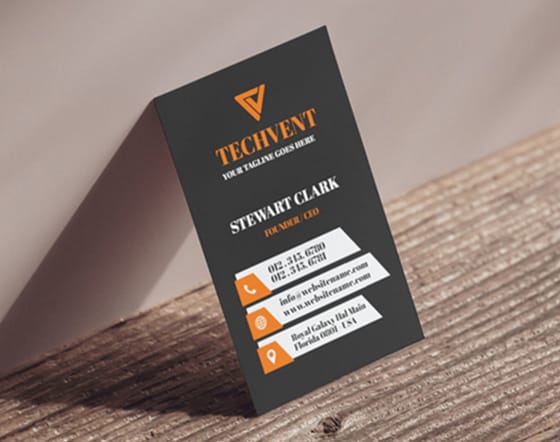
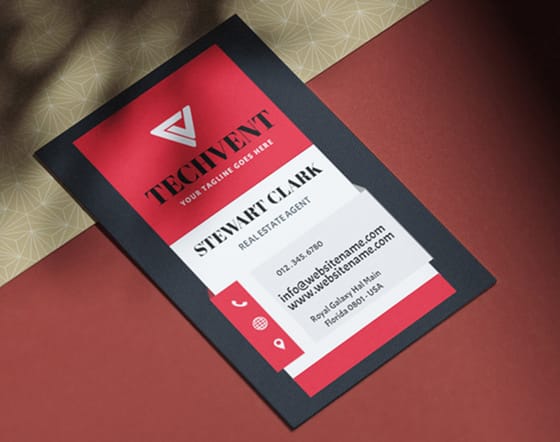
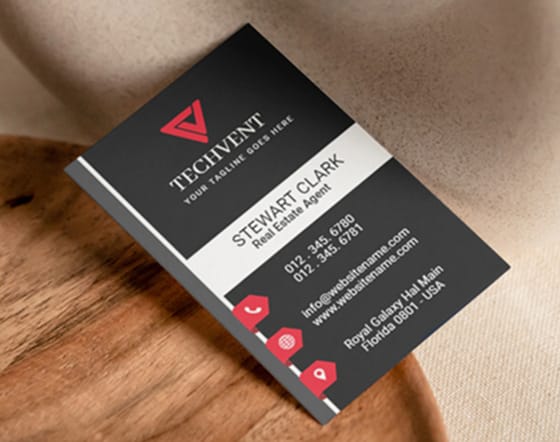
Wally explains business card sizes
Match the size to the pocket and the brand
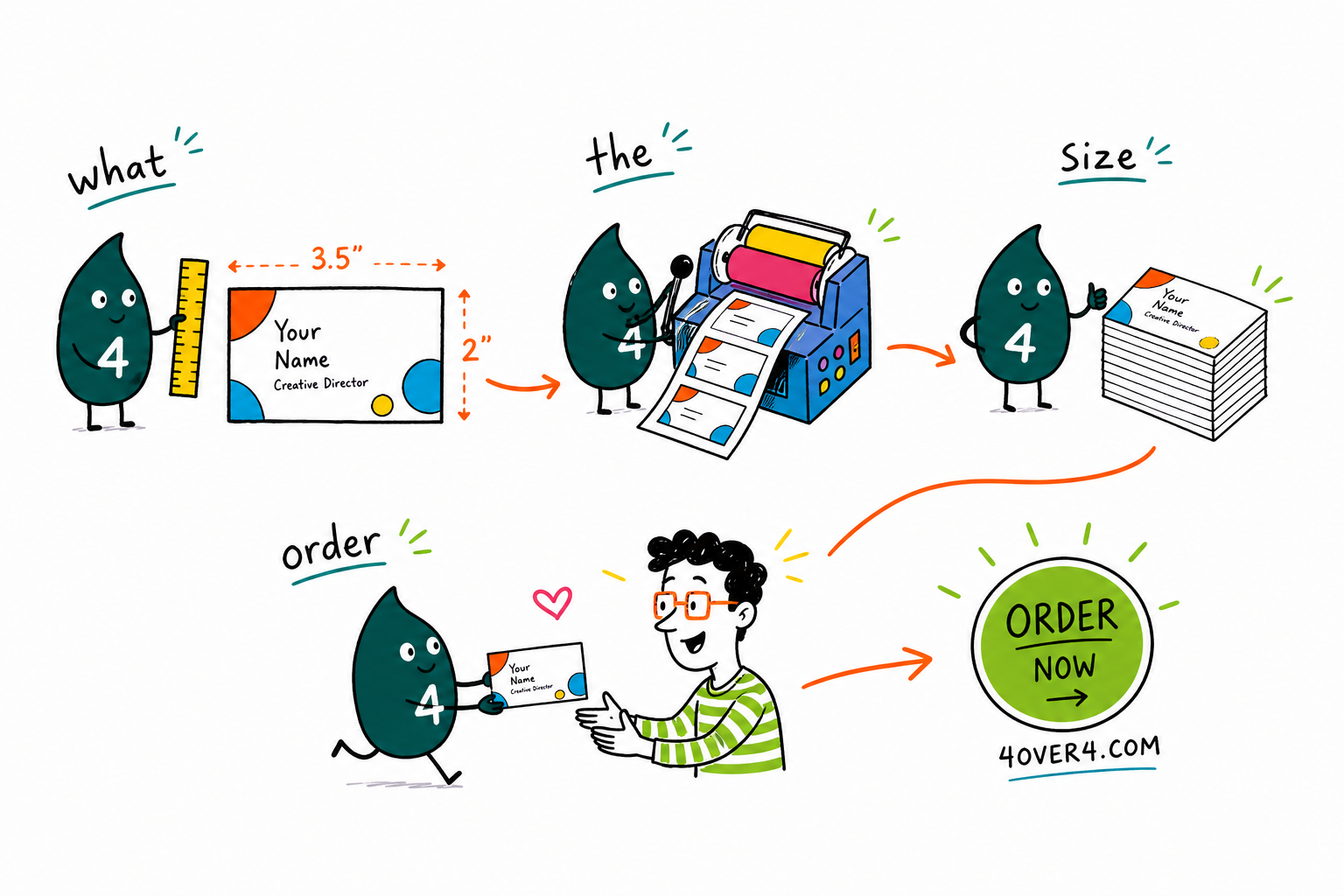
Wally sizes a card the way a tailor sizes a jacket: the standard 3.5 by 2 inches fits every wallet, but square, folded, and mini each make a different first impression. Pick the size that fits how people will carry your card, then build the file at the right trim and bleed so it prints edge to edge. When you are ready, configure your exact size and stock at 4OVER4.
Order business cards →See it in use
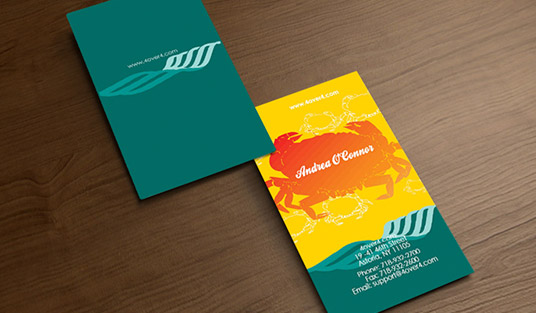
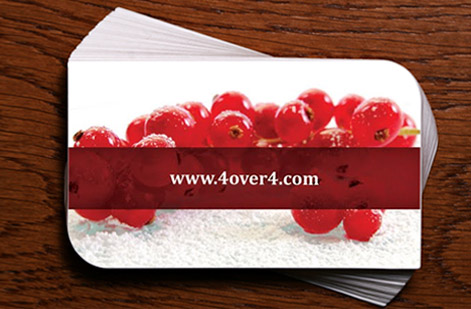
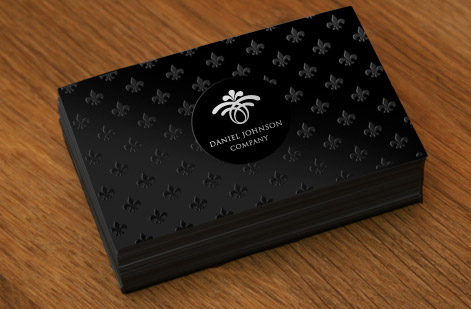
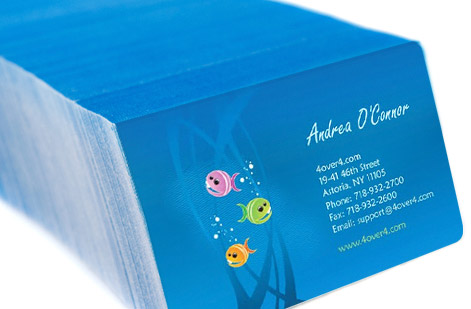
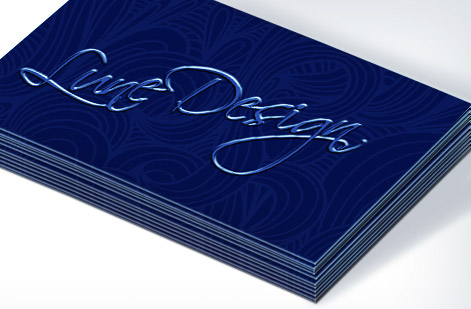
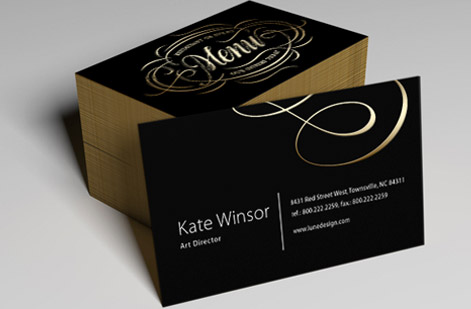
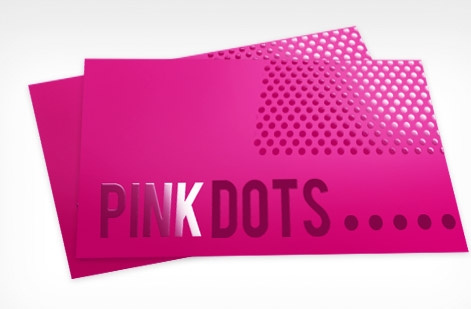
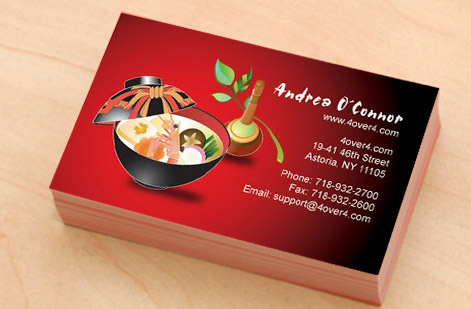
Real business card work, printed in-house
Explore more
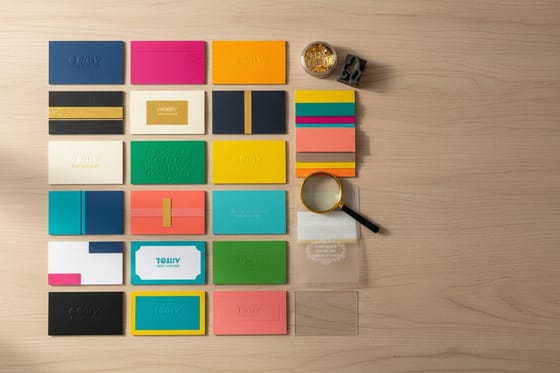
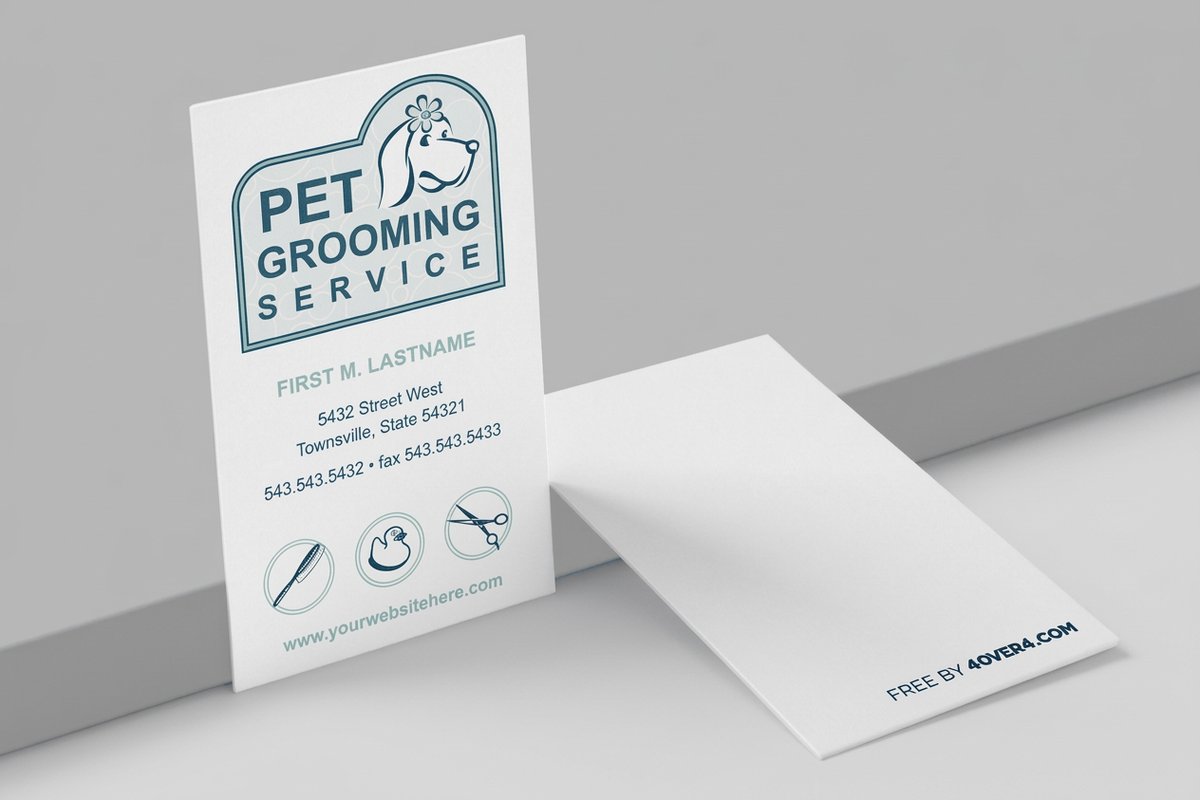
Where to go next

By the numbers
Printing you can count on at 4OVER4
Common Questions
Common questions about business card sizes
What is the standard business card size in the United States?
The standard U.S. business card size is 3.5 by 2 inches (89 by 51 mm). It matches the footprint of a credit card, so it stores easily in wallets and standard cardholders. Most printers, 4OVER4.COM included, use this as the default for a business card order.
What size should my design file be for a standard business card?
Set your document to 3.75 by 2.25 inches so it includes the required 0.125 inch bleed on all four sides. The final trimmed card is 3.5 by 2 inches. Keep every piece of text and each logo at least 0.125 inches inside the trim line so nothing gets cut off.
Are square business cards a good idea?
Square cards, usually 2.5 by 2.5 inches, are a strong pick for creative professionals who want to be remembered. They do not fit a standard cardholder, which can be a plus or a minus depending on your goal. If memorability matters more than convention, square works well for photographers, designers, and artists.
What is the difference between U.S. and European business card sizes?
The European standard is 3.346 by 2.165 inches (85 by 55 mm), which is slightly narrower and taller than the U.S. standard. If you do business internationally, printing cards in both sizes keeps your card fitting local cardholders and meeting regional expectations.
Can I order a custom-sized business card from 4OVER4.COM?
Yes. 4OVER4.COM supports custom dimensions and die-cut shapes beyond the standard sizes in this guide. Circles, ovals, rounded corners, and freeform shapes are all possible. Confirm your dimensions and the pricing before you start designing, because non-standard sizes can carry different turnaround times.
What resolution should my business card file be?
Design at 300 DPI minimum. Lower resolution files look blurry or pixelated in print no matter how sharp they look on screen. Export as a CMYK PDF for the most accurate color reproduction and the cleanest type.
Get Started
Ready to print your business cards?
Pick your size, drop in your logo and details, and we print crisp, edge-to-edge cards on the stock you choose.
Legal Disclaimer
Gold Standard guarantees apply to all standard orders placed through 4over4.com. Price match requires verifiable proof of a competitor's published price for an equivalent product with matching specifications and turnaround time. Satisfaction guarantee covers manufacturing defects and print quality issues. Contact support with order number and documentation. On-time delivery rate based on tracked orders 1999 to 2026. Individual results may vary based on shipping carrier performance.
