
Sandwich Business Cards and the Layered Design Explained


Two printed sheets, one colored core, one card that gets kept. A sandwich business card bonds three layers into a thick, rigid card with a stripe of color around every edge. Here is how the layers work and where they win.
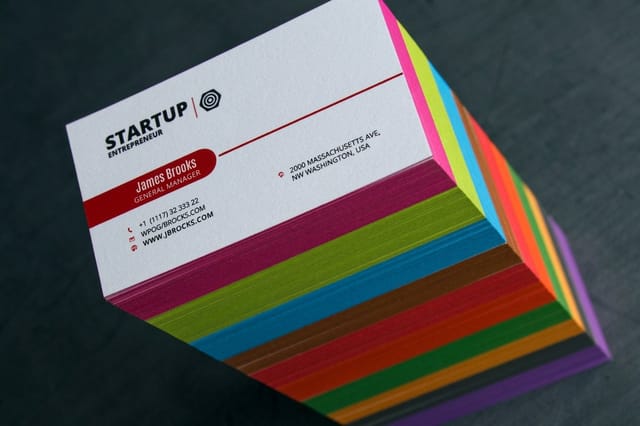
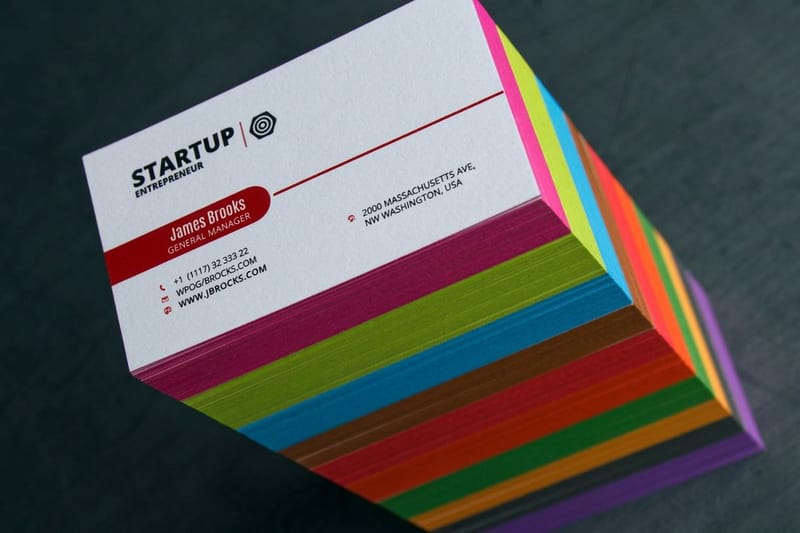
A sandwich business card is a triple-layered card: two printed outer sheets bond around a colored inner core, so the finished card runs about 32pt to 40pt thick with a visible stripe of color on every edge. The core adds weight, contrast, and a premium feel, while the outer layers carry your full-color design and any finish you like, from soft-touch to foil.
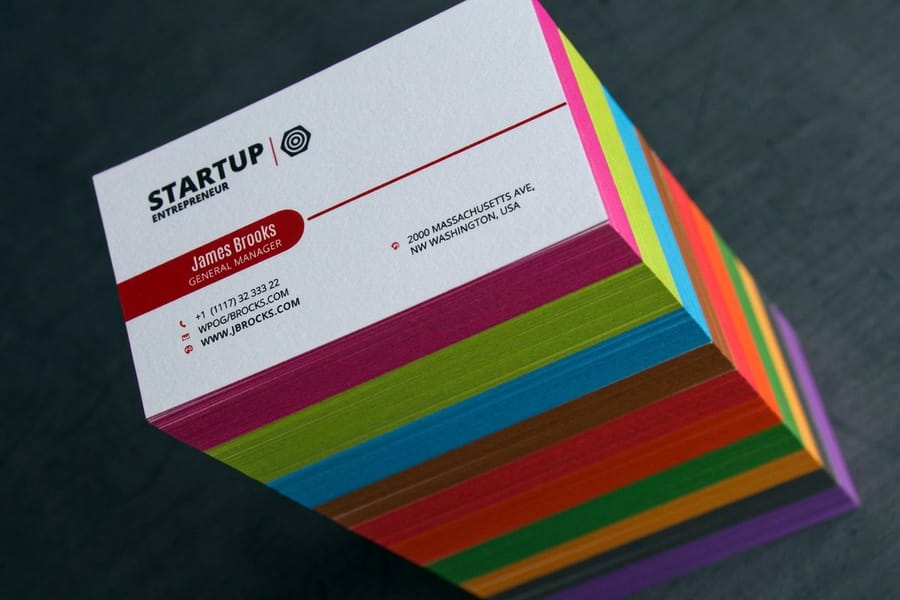
Quick tips
Quick tips for ordering sandwich business cards
Pick the core color first, keep the surface clean, and order samples before a full run. A sandwich business card wins on feel, so choose a core that matches or contrasts your brand, leave generous margins, and set 0.125 inch bleed on every side. Let the thickness and the colored edge do the talking. 4OVER4.COM prints these layered cards across 60+ paper types with finishes from soft-touch to foil.
Watch it printed
See layer cake business cards on the press, in 139 seconds
Side by side
Sandwich card vs standard 14pt card
The numbers behind the feel, taken from the two configurators.
| Attribute | Sandwich card | Standard 14pt card |
|---|---|---|
| Total thickness | Roughly 32pt to 40pt once the three sheets are bonded | 14pt, a single sheet |
| Number of layers | Three: printed face, colored core, printed back | One |
| Core color options | Five seam colors, chosen separately from the printed art | None, the stock is one color all the way through |
| Edge appearance | A stripe of core color runs around all four edges | The cut edge matches the stock, so it disappears |
| Finishes available | Standard finish, on five Prestige Collection stocks | Standard finish or high gloss UV, across 73 stocks |
| Minimum quantity | 50 | 100 |
Order sandwich business cards
Layer cake business cards print two full-color faces around your choice of core seam color. Pricing starts at $39.11 for 50, and it moves live as you change stock, seam color and quantity.
Configure layer cake business cardsWhy a sandwich business card gets kept, not tossed
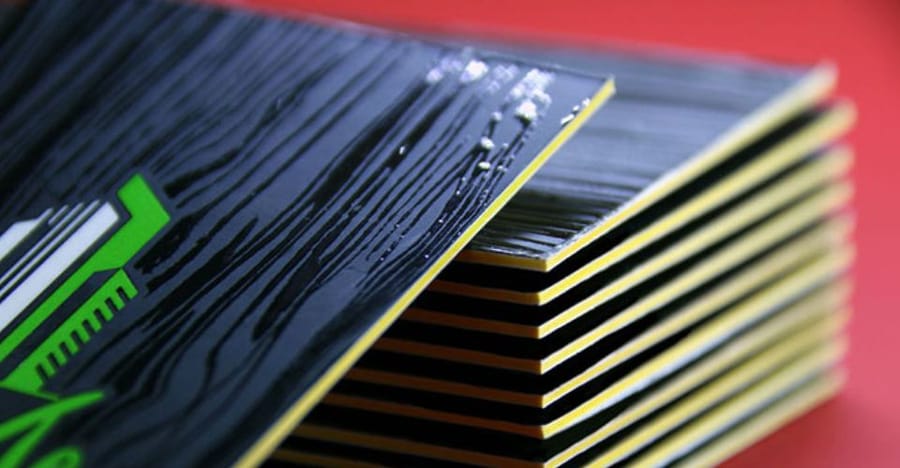
Most business cards get tossed within a week. A sandwich business card does not. That colored edge peeking out between the layers catches the eye before anyone reads your name, and that one detail moves your brand from forgettable to premium in the time it takes to shake a hand.
Hold one and you feel the difference right away. Two printed outer sheets bond around a colored inner core, so the card carries real weight and a visible stripe of color around every edge. That tactile moment builds trust before a single word is exchanged, which is exactly why 4OVER4.COM keeps printing them as one of the most requested specialty formats after more than 10 billion cards since 1999.
Ready to start? Build your layout in the online designer, browse real client work in the showcase gallery, and know that every order is covered by our 5 gold guarantees.
How a sandwich business card is built, layer by layer
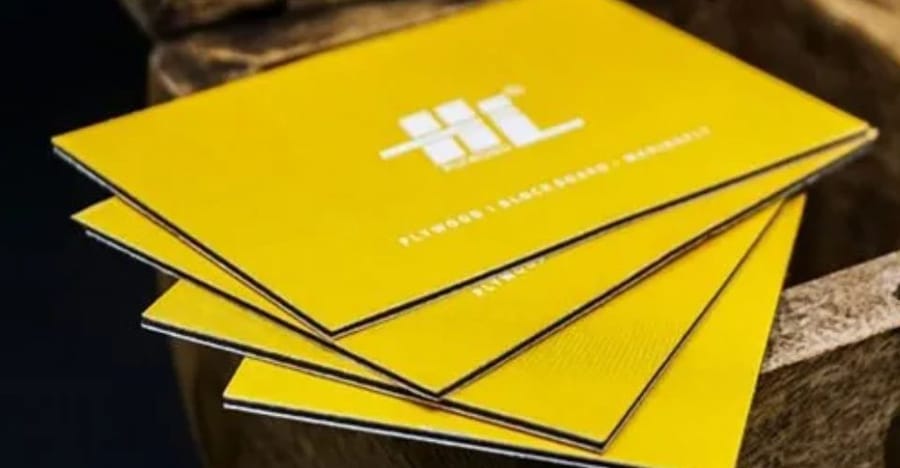
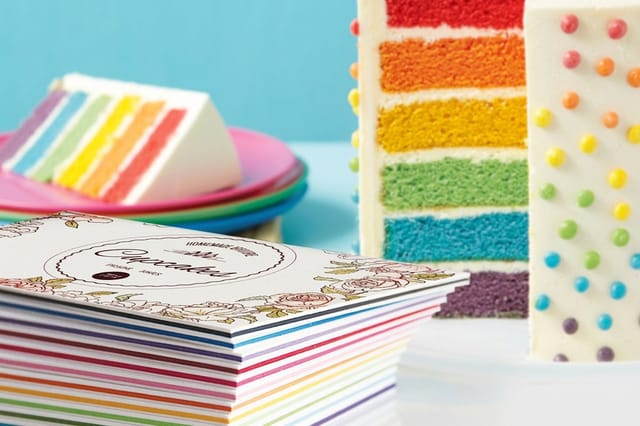
A sandwich business card uses a triple-layer construction. Two printed outer sheets get laminated around a center core, and that core is usually a different color or material. The bonding turns three sheets into one rigid card that runs roughly 32pt to 40pt thick, about three times a standard business card.
The front layer carries your primary design, your logo, name, title, and contact details, printed in full CMYK. The core layer is the signature element, a solid block of color like black, red, gold, blue, or green that adds weight and that distinctive edge stripe. The back layer matches the front for print quality, so you can run a second design or keep it minimal with a website and a QR code.
Because the core is bonded rather than printed, its color reads on every edge at once. If you love that colored-edge effect, painted edges reach a similar look a different way, and our guide on how to make painted edge business cards walks through both routes.
Why the layered build changes how people react
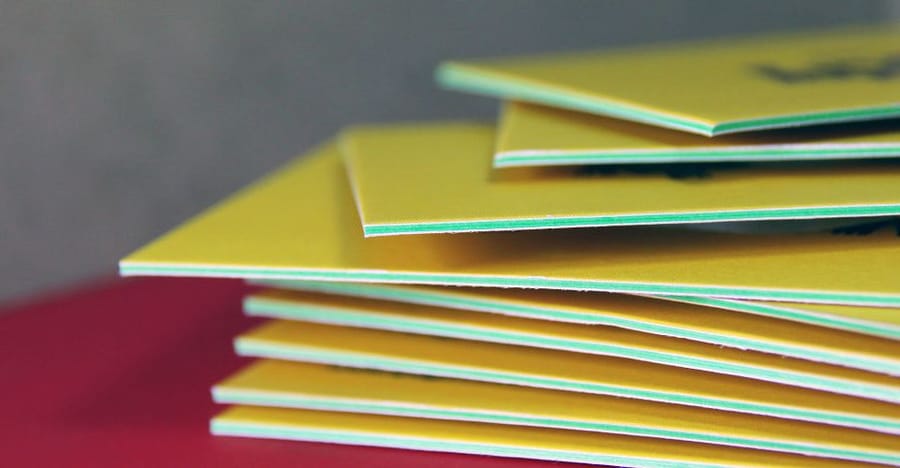
Thickness communicates quality, and that is psychology more than opinion. When someone receives a card that feels hefty and rigid, they read it as a business that invests in details. A flimsy card whispers budget. A sandwich business card says you do not cut corners.
Durability is real too. Standard 14pt cards bend, crease, and show wear fast. A triple-layered card holds its shape in wallets, pockets, and desk drawers, so your contact details stay legible and your design stays crisp for months. Choosing the right stock is half the battle, and our guide on choosing the right cardstock compares weight and texture across 60+ paper types.
Who gets the most from a sandwich business card
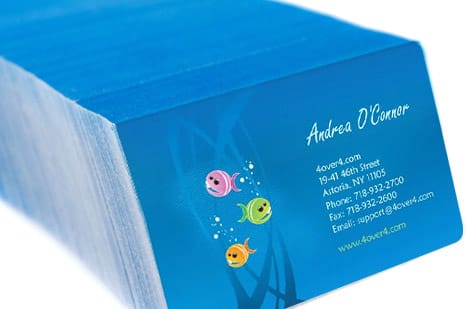
Not every business needs a triple-layered card, but some roles gain far more from one. Luxury and high-end brands, from fine dining to boutique hospitality to high-end consulting, need a card that matches their positioning, and a gold or black core reinforces that message before you speak.
Creative professionals like designers, photographers, and architects turn a bold core color into a portfolio piece that proves they care about craft. Networking-heavy roles such as sales reps, recruiters, and founders hand out dozens of cards a week, and the colored edge is what makes yours the one people pull out later. Attorneys, financial advisors, and consultants get quiet credibility from a subtle navy or charcoal core.
Pairing cards with matching stationery makes the whole set land harder. Our guide on how to make envelopes helps you build a coordinated kit, and the showcase gallery shows how other brands tie it together.
Designing your card: start with the core color
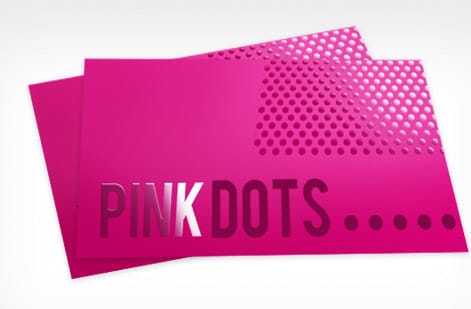
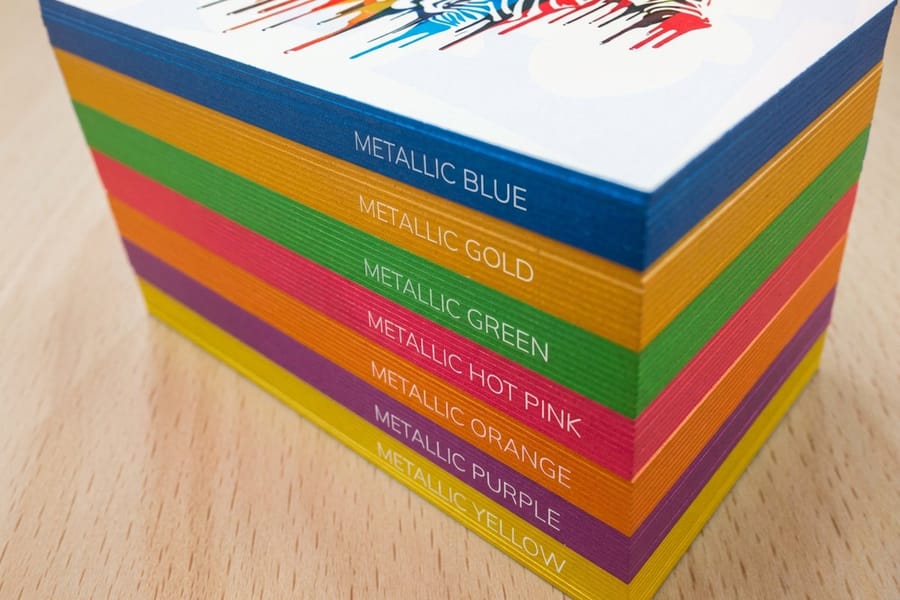
The core color is the single most important design decision, because it is visible from every edge and frames your entire layout. Match your primary brand color for a cohesive look, run a contrasting color to create tension at the edge, or go metallic in gold, silver, or copper for an unmistakable luxury feel. Black reads sleek and modern, while a white core frames a dark outer design like clean architecture.
Keep the surface clean and uncluttered. The card is already a statement piece thanks to its thickness and colored edge, so leave generous margins and let the layers carry some of the weight. Use one side for essential contact details and the other for a bold logo at scale, since people naturally flip a thick card over to examine it. For a first draft, the online designer gets you to a print-ready file in minutes, and you can learn the same layout habits in our how to make flyers guide.
Finishes that flatter the layered look
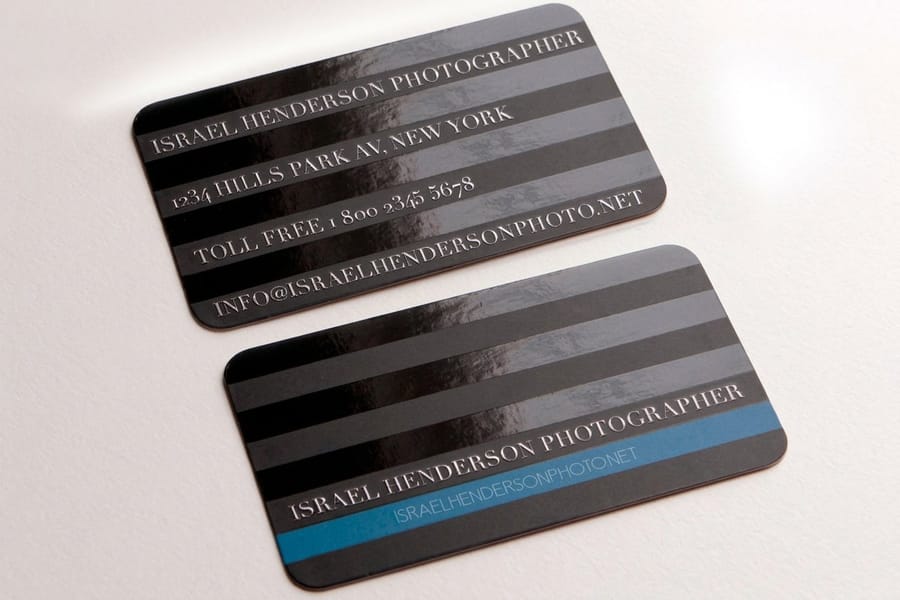
The outer layers of a sandwich business card accept the same finishes as any premium card, and each one plays off the layers differently. Soft-touch matte creates a velvety surface that begs to be handled, and paired with the card's thickness it becomes a genuinely tactile experience. Our guide on soft touch laminated cards covers how that film adds durability too.
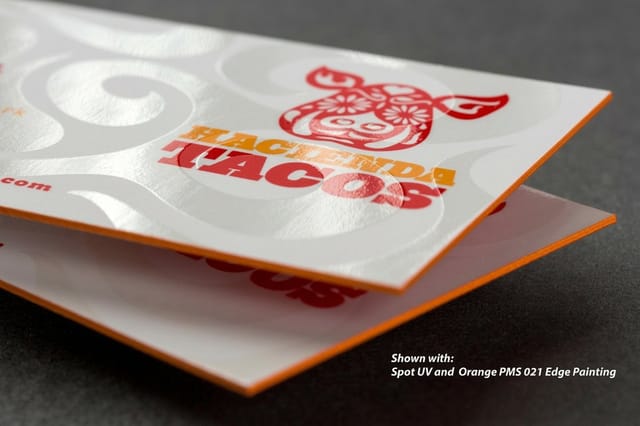
Spot UV gloss highlights one element, usually your logo, with a raised glossy coating while the rest stays matte, and the contrast is striking. Foil stamping on the outer layers paired with a matching metallic core creates a cohesive luxury effect, and our guide on foil accents on a business card shows how the metallic finish is applied. Embossing or debossing adds one more layer of texture to an already dimensional card. Not sure which to pick? Order free samples and feel the difference in hand before you commit.
Sandwich vs standard and ultra-thick cards
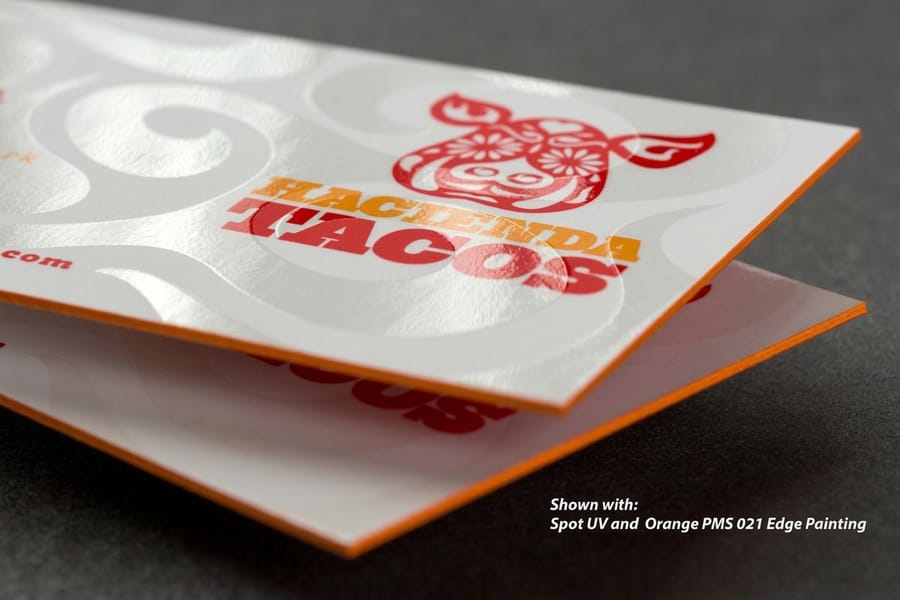
A standard 14pt or 16pt card is the industry baseline, functional and affordable, but it bends easily and disappears in a stack. An ultra-thick 32pt card adds serious weight and resists bending, yet it stays a single solid color throughout with no edge contrast. A sandwich business card matches or beats the thickness of a 32pt card and adds the colored core, so you get heft plus an edge stripe that single-layer printing cannot replicate.
If motion is more your style, 3D lenticular business cards shift as you tilt them, and they pair well with a sandwich card in the same networking kit. To get sizing right before you order either one, our guide on standard versus custom business card sizes lays out every format.
Mistakes to avoid when ordering
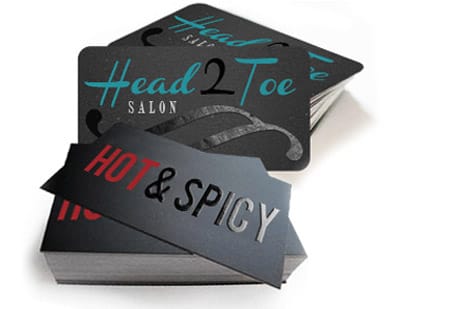
Even people who understand the format make avoidable errors. The most common one is ignoring the core color and defaulting to white, which misses the entire point. Pick a color that means something for your brand. The second is overdesigning the surface, because the thickness and colored edge already command attention, so cramming both sides with text and logos just creates noise.
Watch your setup too. Forgetting bleed and margins risks cutting into important elements once the bonded card is trimmed, so always set 0.125 inches of bleed on every side. Choosing clashing finishes, like a glossy laminate over a matte-textured core, feels disjointed. And ordering without samples is the classic regret, since colors look different on screen than in hand. Want to get hands-on with layouts first? Grab a starting point from our black business cards template or the 3D lenticular business cards template.
Wally explains the sandwich card
Three layers, one unforgettable edge
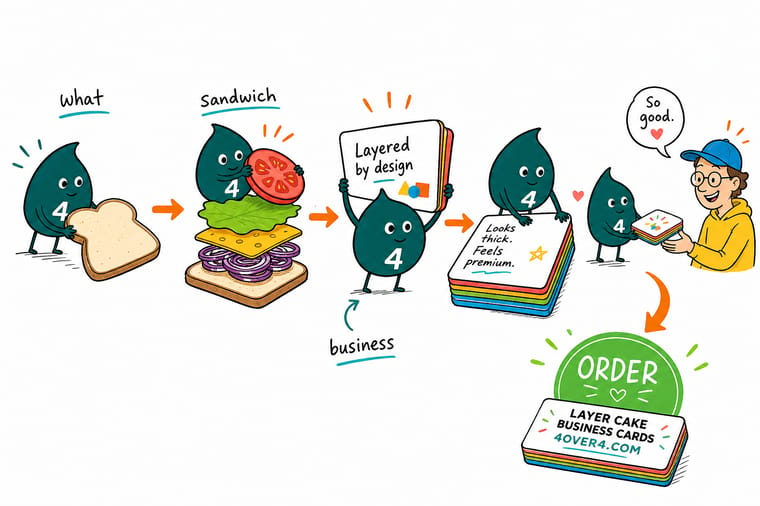
Wally treats a sandwich business card like a tiny club sandwich: two printed slices of design with a bright colored core in the middle. That core is the whole trick. It adds heft, contrast, and a stripe of color around every edge, so the card feels premium before anyone reads a word. Pick a core that means something for your brand, keep the surface clean, and let the layers do the talking.
Order layered business cards →Specs and pricing
Layered business card specs and pricing
Here is what a layered, made-to-order business card gives you at 4OVER4.COM, with live specs and price-per-unit straight from the configurator.

| Quantity | Price Per Unit | Total |
|---|---|---|
| 50 | 78.2¢ | $39.11 |
| 100 | 67.8¢ | $67.85 |
| 200 | 53.0¢ | $106.03 |
| 300 | 47.7¢ | $143.16 |
| 400 | 39.5¢ | $158.17 |
| 500 | 33.9¢ | $169.66 |
| 600 | 30.0¢ | $180.28 |
| 700 | 27.3¢ | $190.87 |
Print it
Order layered and specialty business cards at 4OVER4
See it in use
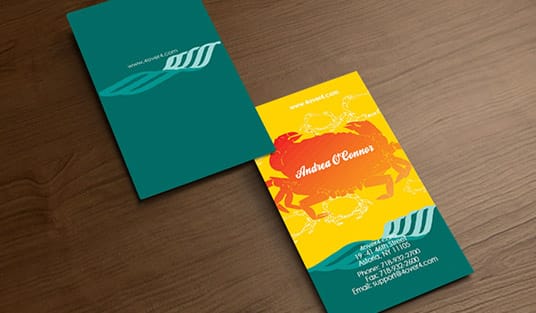
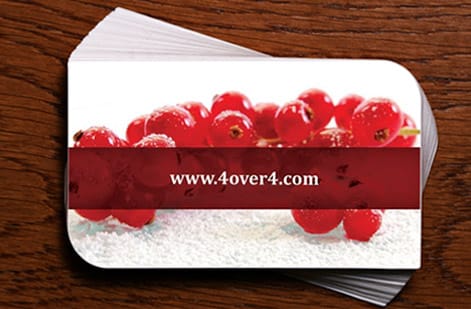
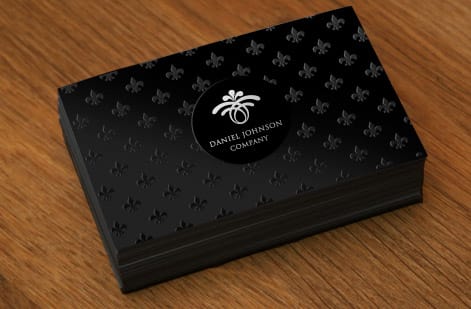
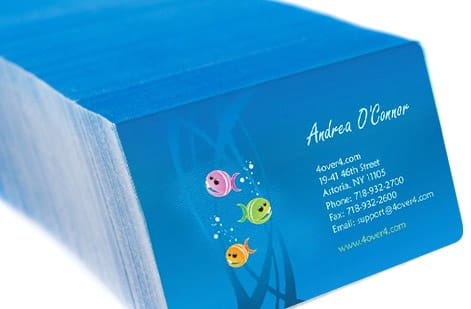
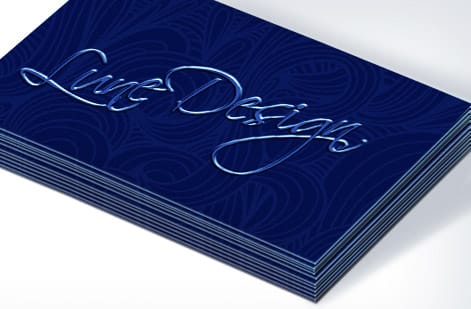
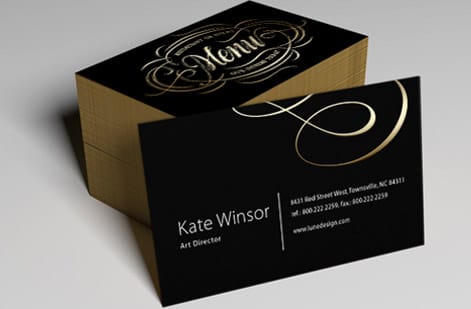
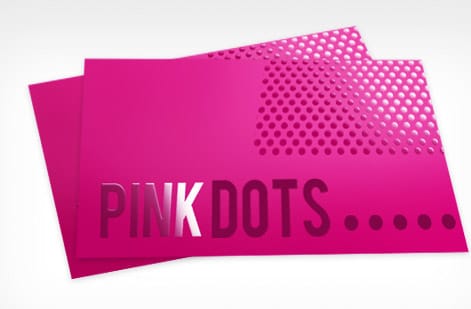
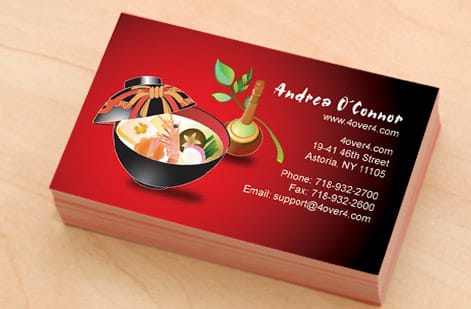
Layered business cards our customers ordered
Explore more
Where to go next


By the numbers
The bonding and cutting a sandwich card needs
Common Questions
Common questions about sandwich business cards
Is a sandwich business card the same as a duplex card?
Close, but not the same. Duplex means two sheets bonded back to back, often in two different colors, so the card is thick with a two tone edge. A sandwich card is a triplex build: two printed sheets around a separate colored core, which is what gives it the single stripe of color around every edge and the 32pt to 40pt thickness. Layer Cake Business Cards, from $39.11, are the sandwich build with a choice of seam color.
Is there a template for sandwich business cards?
Yes, and it is the same as any standard business card template: 3.5 by 2 inches at trim, 3.75 by 2.25 inches with 0.125 inch bleed, CMYK at 300 DPI, front and back as separate faces. The core color is chosen when you order, not drawn in the file, so leave it out of the artwork. Start from the black business cards or 3D lenticular blank templates on this page, or build the layout in the online designer.
What exactly is a sandwich business card?
A sandwich business card is a triple-layered card made by bonding two printed outer sheets around a colored inner core. The result is a thick, rigid card with a visible stripe of color along every edge. It is called sandwich because the build mirrors bread, filling, bread. 4OVER4.COM prints these across multiple core color options to match any brand.
How thick is a sandwich business card compared to a standard card?
A typical sandwich business card ranges from 32pt to 40pt, roughly three times the thickness of a standard 14pt card. A standard card is about as thick as a cereal box panel, while a sandwich card feels closer to a credit card or thicker, noticeably hefty in the hand.
Can I choose any color for the inner core layer?
You can choose from a range of core colors including black, red, blue, green, gold, silver, and white. The available palette depends on current stock, so it is worth checking the latest options or ordering samples. Most brands find a close match to their primary color within the standard selection.
Are sandwich business cards more expensive than regular cards?
Yes, they cost more than standard single-layer cards because of the extra materials and the bonding process. The gap varies by quantity, and the per-card cost drops a lot at higher volumes. For brands focused on premium positioning, the added cost per card is small next to the impression it creates.
Do sandwich business cards work with special finishes like foil or embossing?
Yes. The outer layers accept the same finishes as any premium card, including spot UV, foil stamping, embossing, debossing, and soft-touch lamination. Combining a specialty finish with the colored core creates a multi-sensory card that flat printing cannot match.
How should I set up my design file for a sandwich business card?
Set up your file like any business card: CMYK color mode, 300 DPI resolution, and 0.125 inch bleed on all sides. Design the front and back as separate faces. The core color is selected during ordering, not in your file, and 4OVER4.COM handles the bonding and trimming.
Get Started
Ready to order a layered business card?
Pick your stock, choose a core color, drop in your design, and we bond a thick, premium card that gets kept.
Legal Disclaimer
Gold Standard guarantees apply to all standard orders placed through 4over4.com. Price match requires verifiable proof of a competitor's published price for an equivalent product with matching specifications and turnaround time. Satisfaction guarantee covers manufacturing defects and print quality issues. Contact support with order number and documentation. On-time delivery rate based on tracked orders 1999 to 2026. Individual results may vary based on shipping carrier performance.
