
Soft Touch Laminated Cards for Feel, Finish and Function


A thin matte film heat-bonded over your printed card gives it a velvety, anti-glare surface that resists fingerprints and scuffs. Here is how the finish works, who it suits, and how to order it right.
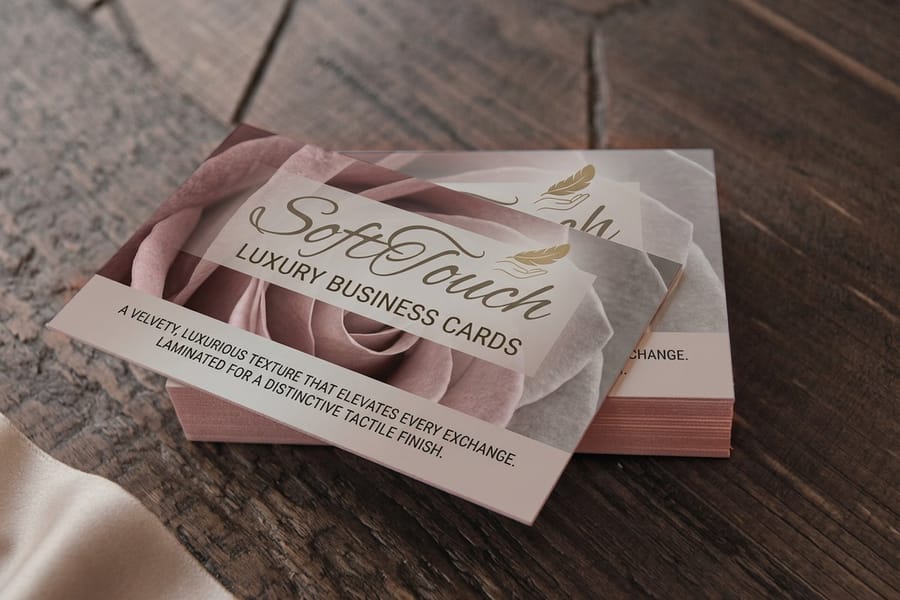
Soft touch laminated business cards are cards coated with a thin matte polypropylene film, heat-bonded over the printed sheet, that creates a velvety, anti-glare surface people cannot stop touching. The film resists fingerprints, scratches, and scuffs, deepens dark colors, and keeps small text readable in any light. It pairs beautifully with spot UV, foil, and embossing. We run it on 14pt for volume, on 16pt at about credit-card thickness for most professionals, and on 32pt ultra-thick stock when the card has to feel like a statement, and it works best on 16pt or thicker.
Quick tips
Quick tips for soft touch laminated cards
Choose soft touch when you want a card people remember by feel. Print on 16pt or thicker stock, lean into dark colors, and add one spot UV or foil accent for gloss-on-matte contrast. Design at 300 DPI with proper bleed, and if you need to write on a card, laminate one side only. 4OVER4.COM offers the finish across 60+ paper options with a 4.8 star rating from 10,000+ reviews.
Why soft touch lamination changes how people experience your card
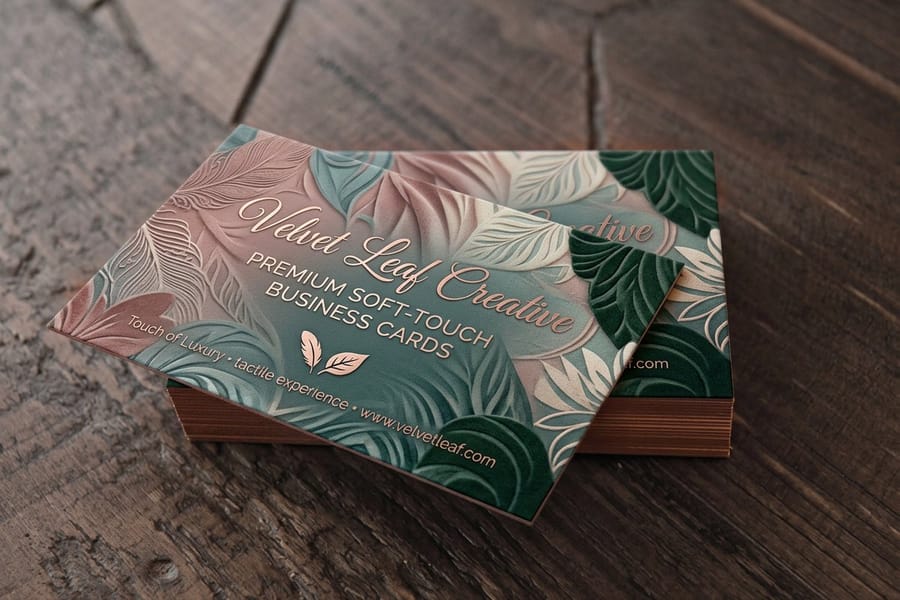
Soft touch laminated cards are business cards wrapped in a thin matte laminate film that turns the surface velvety and anti-glare. Run a thumb across one and most people pause. That pause is the whole point, because a card someone keeps touching is a card they keep instead of a card they recycle.
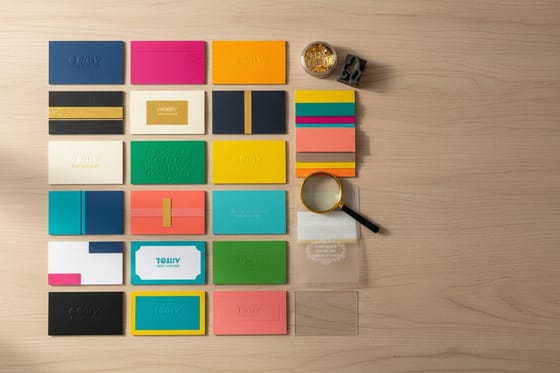
The finish reads as quality before anyone reads your name. 4OVER4.COM has printed 10 billion cards over 25 years, and soft touch stays one of the most requested finishes for people in real estate, beauty, finance, and creative work. It layers beautifully with foil, spot UV, and embossing when you want to go further. Browse the Showcase for real soft touch cards in action, or grab ready-to-edit layouts from Design Templates.
This guide walks through how the finish works, when to use it, which paper stock to pair it with, and the mistakes that quietly ruin a good card. If you also keep other print tools around the studio, our quick notes on how to clean rubber stamps are worth a look.
How soft touch lamination works and why it feels so different
Soft touch lamination is a finishing step, not an ink or a coating. After your artwork prints in standard CMYK on your chosen stock, a thin polypropylene film with a matte texture is heat-bonded to one or both sides of the card. That fused layer is what creates the velvety surface, and it is a physical layer, not a spray.
The result feels like suede. There is no glare, no oily fingerprints, and a soft resistance under the finger that makes people want to keep handling it. That sensory reaction is exactly what separates soft touch from ordinary matte or gloss lamination. For a plain-language primer on the finish itself, read what a soft touch business card is, then use the thickness ladder below to pick the weight.
Soft touch vs gloss vs matte, the real difference
Gloss lamination gives a shiny, reflective surface. Colors pop hard, but fingerprints show up fast, so it suits photo-heavy or bold graphic designs where color vibrancy matters most.
Standard matte lamination cuts the shine and lowers glare. It is a step up from an uncoated card, yet it stays flat to the touch. Soft touch goes further and adds the rubbery, velvety texture people link with luxury packaging like high-end cosmetics or premium tech boxes. The anti-glare surface also keeps small text easy to read under any light, and the scuff resistance keeps cards looking fresh after weeks in a wallet.
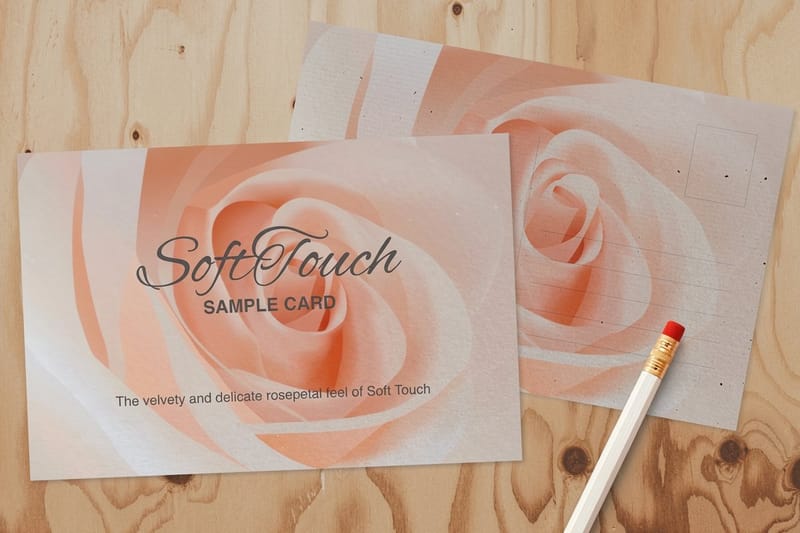
Want the same finish on other pieces? The soft touch printing collection carries the velvet feel across postcards, bookmarks, and more, and the guide hub covers folding, envelopes, and the rest of your print kit.
Who should reach for soft touch laminated cards
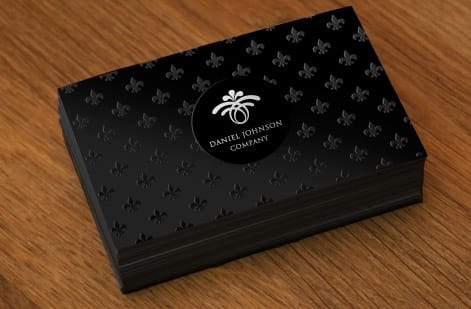
This finish is not for every job, and that is the point. Soft touch signals that you sweat the details. Here is where it works hardest:
- Real estate agents handing cards to buyers at open houses, where the tactile card is the one that stays in a pocket instead of the recycling stack.
- Beauty professionals and salon owners who want the brand to feel as polished as the service.
- Financial advisors and attorneys, where trust matters from the first handshake and understated elegance does the talking.
- Creative directors and designers whose card should prove their taste before the portfolio ever opens.
- Startup founders pitching investors, where a thick, soft card at a networking event reads as ambition.
Building a wider kit alongside the cards? Learn how to make flyers and how to fold a brochure so every piece matches the card in someone's hand.
Pairing soft touch with foil, spot UV, and more
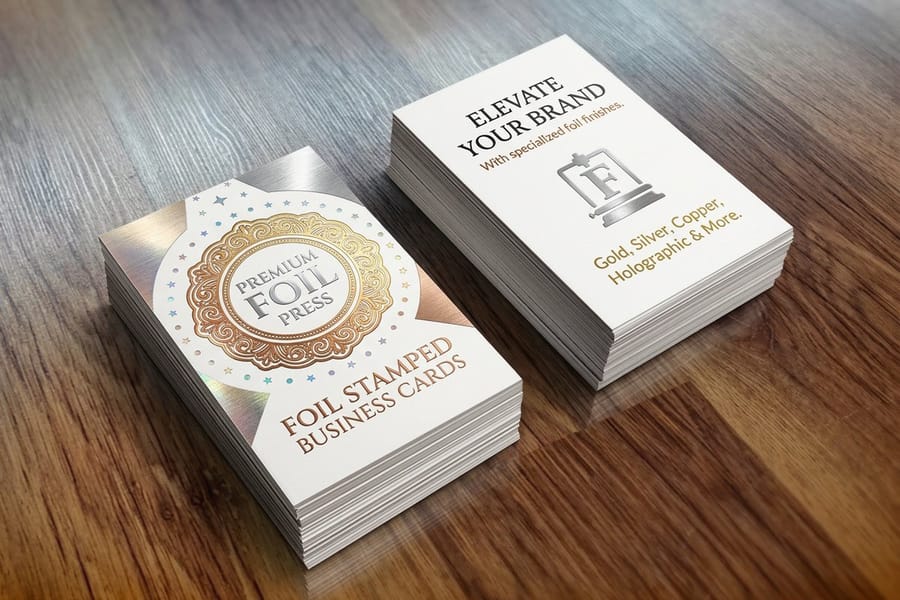
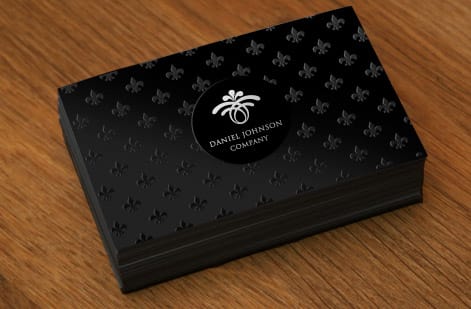
Soft touch is strong on its own and unforgettable in combination. The classic pairing is soft touch plus spot UV, where a glossy raised logo or pattern sits against the matte velvet background and the contrast grabs attention with every touch.
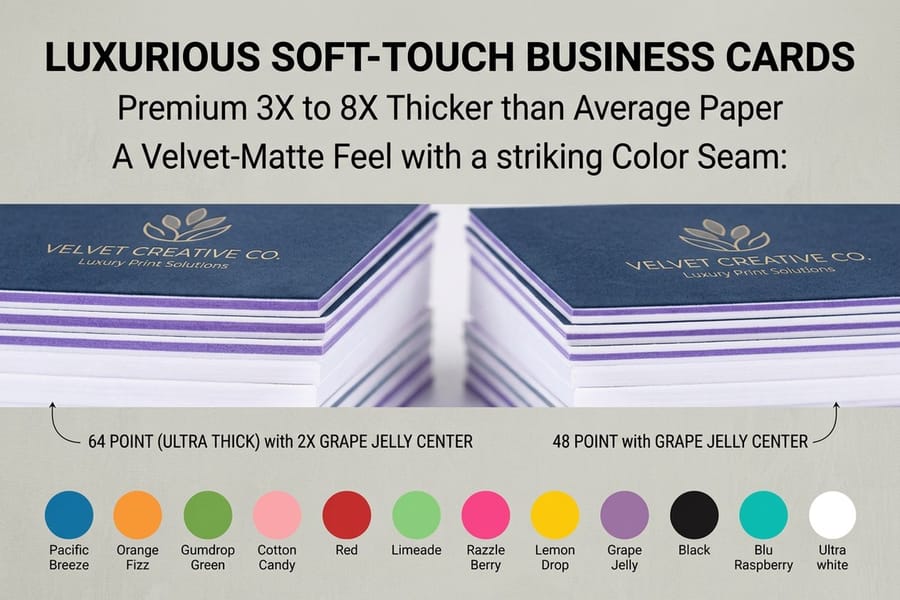
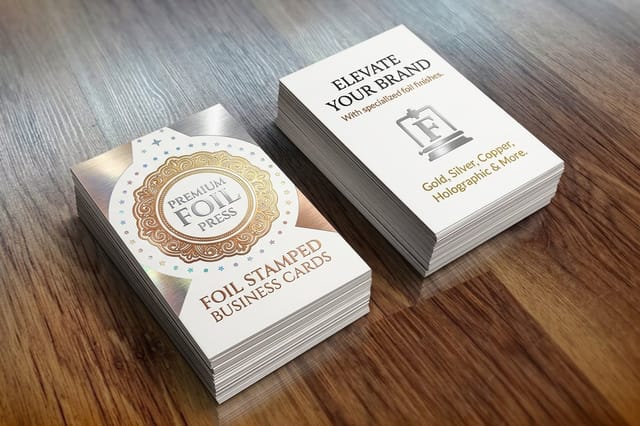
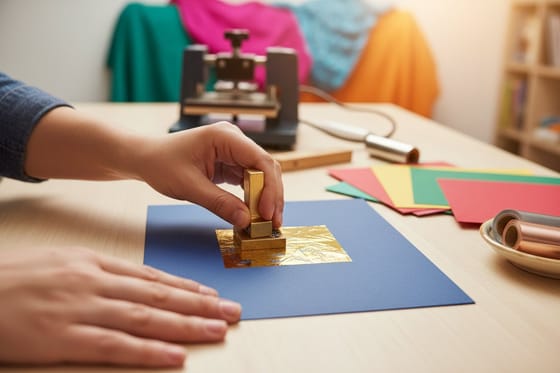
Soft touch plus foil stamping presses metallic gold, silver, rose gold, or holographic foil into the matte surface, and the flat background makes the foil shimmer even more. Add embossing or debossing and the card turns multi-dimensional, with your logo standing off the velvet. Edge painting on a thick soft touch card even gives a striking colored side profile when the cards stack on a table.
If you want to explore the raised-gloss look on its own, see our note on what foil stamping is, order it directly on foil stamped business cards or spot UV business cards, and for a see-through alternative material look at 30mil clear plastic cards.
Choosing the right paper stock for soft touch
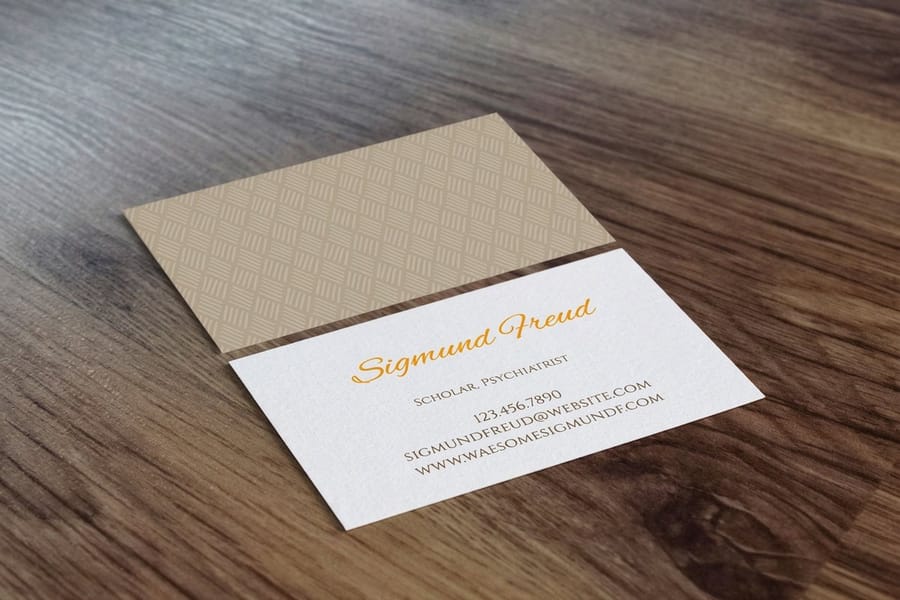
The stock under the film matters as much as the finish on top. Soft touch works best on thicker cards because the film adds rigidity and weight that boost the premium feel.
14pt cardstock is the standard starting point and already feels richer than an uncoated 14pt card once the velvet film goes on. 16pt lands around credit-card thickness and is the sweet spot for most professionals, thick enough to impress and affordable enough for large runs. 32pt ultra-thick stock is triple the standard thickness, does not bend, and sits in the hand like a statement, which is why luxury real estate and high-end consulting reach for it. Once you know your weight, order soft touch laminated business cards in that stock and the film is applied as part of the run.
Set your artwork up right before ordering with free files from Blank Templates, or start from the soft touch business cards template and the gloss laminated business cards template.
Which soft touch thickness should you choose, 16pt to 80pt
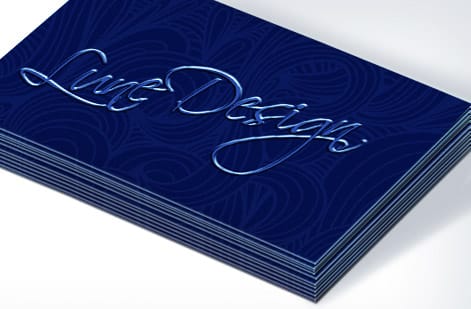
Soft touch business cards at 4OVER4.COM run in five thicknesses, from a slim 16pt to a furniture-thick 80pt. Your pick depends on the impression you want to make and how the card gets used day to day, so match the weight to the room it will land in.
| Thickness | How it feels | Best for |
|---|---|---|
| 16pt | The slimmest option, light in a pocket | High-volume networking where you hand out dozens of cards and do not want a bulging pocket |
| 32pt | The sweet spot, sturdy enough to impress without bulging a wallet | Real estate agents, consultants, and creative directors |
| 48pt | Noticeably thick, people register the weight before they read your name | Luxury brands and high-end services |
| 64pt | A bold choice that barely bends, signals permanence and confidence | Boutique hotels, fine dining, and premium retail |
| 80pt | The thickest option, the card itself becomes the conversation | Brands where the card is part of the brand story |
Two rules of thumb. Thicker stocks at 48pt and up hold their shape and skip the curved bend that thinner cards pick up in a wallet. And in a premium market, going too thin for the job undercuts your brand to save a few dollars, so a 16pt card still feels nice but will not carry the weight of a 32pt or thicker option. Prefer a see-through or motion effect instead? Silk laminated business cards give a smoother laminate contrast, and 3D lenticular business cards add motion a soft touch card cannot match.
Design tips that make the velvet finish sing
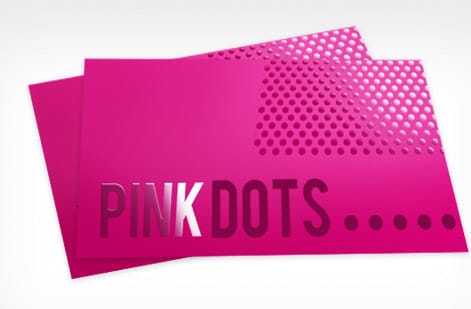
Designing for soft touch takes a slightly different eye than gloss or uncoated stock. Dark colors shine here. Deep blacks, navy, charcoal, and rich burgundy look incredible under the matte film, which deepens dark tones into a saturated, almost inky quality. Light pastels work too, but the drama peaks with darker palettes.
Let the texture breathe. The finish itself is a design element, so clean layouts with generous space read best and busy patterns only compete with the feel. If you add spot UV, pick one element to gloss rather than coating everything. And keep type readable, since the anti-glare surface already helps, so a clean sans-serif at a sensible size makes your contact details effortless in any light.
Ready-to-customize options live in Design Templates, matching envelopes are covered in how to make envelopes, and the wider soft touch printing collection shows what else takes the same velvet film.
How durable are soft touch laminated cards
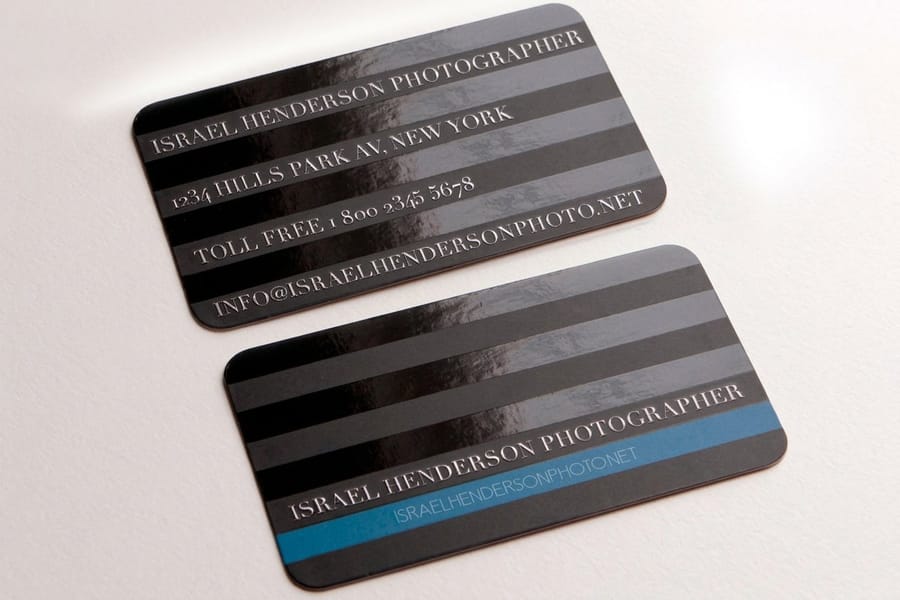
Very. The lamination film is a protective barrier against everyday wear, so the card that leaves your hand looks the same weeks later in someone's wallet.
- Scratch resistance, so the film absorbs contact without showing marks.
- Fingerprint resistance, unlike gloss, so the card stays clean-looking after handling.
- Scuff resistance against other cards, keys, and phone screens.
- Light moisture resistance, so a few drops of water will not ruin it.
- Color protection, since the film slows the UV fading that dulls uncoated prints.
The one trade-off is writing. A regular pen slides right off the film, so if you need a writable area for appointment times or notes, leave one side unlaminated. See real customer examples in the Showcase gallery for inspiration on how businesses use the finish.
Once you feel the finish on a card, you will want it across the whole kit. 4OVER4.COM runs the same treatment on soft touch postcards, soft touch hangtags, and soft touch bookmarks, so every piece in your business stationery set feels the same in hand.
Mistakes that quietly ruin soft touch cards
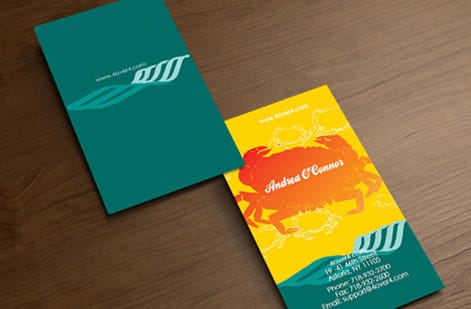
Even people who know the finish trip over a few errors. Low-resolution artwork is the big one, because soft touch does not hide flaws, it highlights them. There is no gloss reflection to distract the eye, so design at 300 DPI minimum with proper bleed.
Laminating both sides when you need to write on one is another common miss, since ballpoint and gel pens will not take to the film. Choosing thin stock below 14pt makes the card feel flimsy and defeats the rigidity the finish is meant to add. And overloading the design with too many colors and gradients competes with the texture, so keep it clean and intentional and let the feel be the feature.
Two more that cost people a reprint. Skipping the proof: always review your free proof before you approve, because the film deepens dark tones and what looked right on screen can shift on the sheet. And overcrowding the layout: cram every handle, QR code, and tagline onto one side and you bury what makes the card special, so edit hard. For questions about mixing foil or spot finishes, the help center has answers.
Best card options for a soft touch finish
With the finish clear, the strongest match at 4OVER4.COM is soft touch business cards, built on premium stock with the velvet film ready to go. Pair the same finish thinking with spot UV business cards, or step into laminated looks with gloss laminated business cards. Browse the full range in business card printing.
A soft touch card protects against chipping and wear, resists scuffs, scratches, and fingerprints, and carries a rubbery grip that reads as premium. When you order, mind the size so there is room for name, logo, and contact details, choose a hard and durable stock, and lock the color to your brand so nothing fights your message. Need cards fast? Same day printing keeps the finish and the deadline. Want another way to spread your logo? See how to make custom magnets.
Soft touch specs at a glance
| Stock weight | Laminated sides | Finishes it takes | Best for | What to watch |
|---|---|---|---|---|
| 14pt | One or both | Soft touch film, flat color, simple type | Volume runs and handouts | The film adds rigidity, so it beats bare 14pt, but the card still flexes |
| 16pt | One or both | Soft touch with spot UV, foil, embossing | Most professionals, about credit-card thickness | Laminate one side only if anyone needs to write on the card |
| 32pt | Both | Soft touch with spot UV, foil, embossing and debossing | Luxury real estate and high-end consulting | Dark colors go deeper here than on any lighter stock, so proof the blacks |
Wally explains soft touch
The finish people feel before they read your name
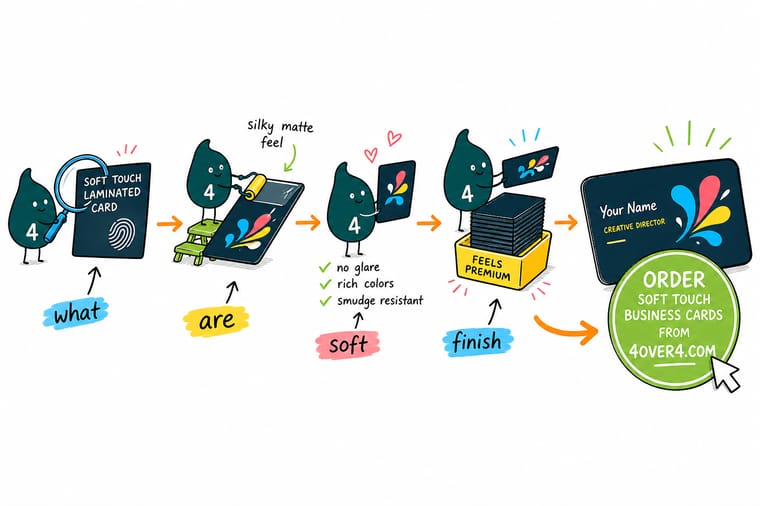
Wally treats soft touch like a handshake you can feel. The velvet film is what makes someone pause on your card instead of filing it away, so lean into dark colors, a thick 16pt or 32pt stock, and one glossy spot UV accent for contrast. Skip the urge to laminate a side you need to write on, and let the texture carry the premium message at 4OVER4.
Order soft touch cards →Specs and pricing
Soft touch business card specs and pricing
Here is what a made-to-order soft touch business card gives you at 4OVER4.COM, with live specs and price-per-unit straight from the configurator, next to standard and spot UV cards for comparison.
| Quantity | Price Per Unit | Total |
|---|---|---|
| 50 | 80.6¢ | $40.28 |
| 100 | 76.7¢ | $76.65 |
| 200 | 59.9¢ | $119.74 |
| 300 | 53.9¢ | $161.67 |
| 400 | 44.9¢ | $179.65 |
| 500 | 38.3¢ | $191.60 |
| 600 | 33.9¢ | $203.60 |
| 700 | 30.8¢ | $215.58 |
| Quantity | Price Per Unit | Total |
|---|---|---|
| 100 | 17.6¢ | $17.57 |
| 200 | 11.5¢ | $23.07 |
| 300 | 9.15¢ | $27.46 |
| 400 | 7.96¢ | $31.86 |
| 500 | 7.25¢ | $36.26 |
| 600 | 6.77¢ | $40.64 |
| 700 | 6.43¢ | $45.04 |
| 800 | 6.18¢ | $49.43 |
| Quantity | Price Per Unit | Total |
|---|---|---|
| 500 | 15.4¢ | $76.88 |
| 1,000 | 8.96¢ | $89.63 |
| 2,500 | 5.36¢ | $133.98 |
| 5,000 | 4.30¢ | $214.84 |
| 10,000 | 3.43¢ | $342.67 |
| 15,000 | 3.32¢ | $497.53 |
| 20,000 | 3.26¢ | $652.41 |
| 25,000 | 3.21¢ | $802.87 |
Order it
Order soft touch laminated business cards online
Two decisions and you are done. Pick the stock first: 14pt for volume, 16pt at about credit-card thickness for everyday professional cards, 32pt ultra-thick when the card has to land like a statement. Then pick the sides: both sides for the full velvet effect, or one side only if you need a back that takes pen ink for appointment times. Larger runs bring the per-unit price down, and the price table above pulls live per-unit pricing straight from the configurator. On a deadline? Same day printing keeps the finish and the date. Never held the film before? Start with free samples.
Print it
Order soft touch and finish-forward cards at 4OVER4
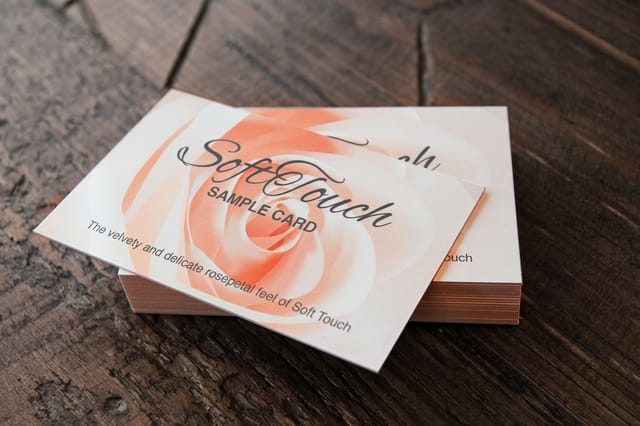
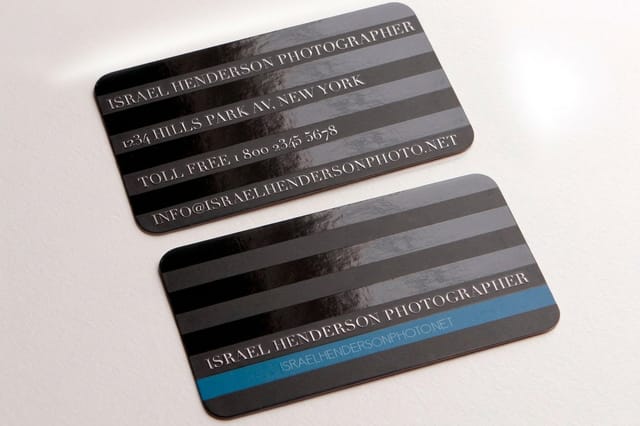
See it in use
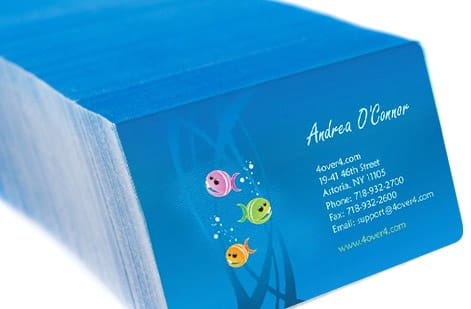
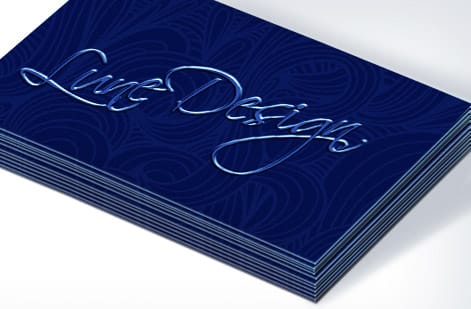
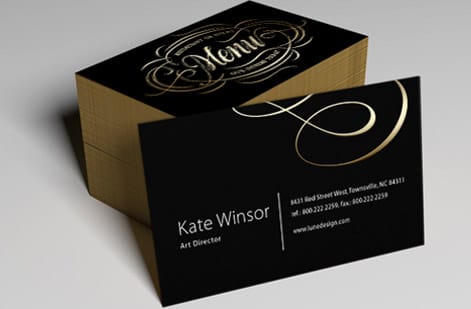
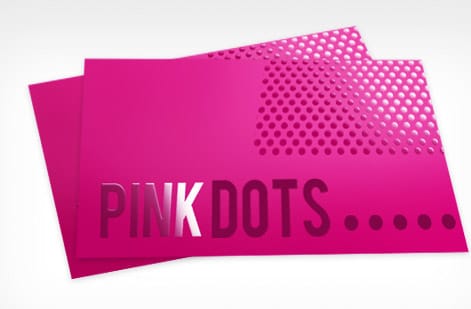
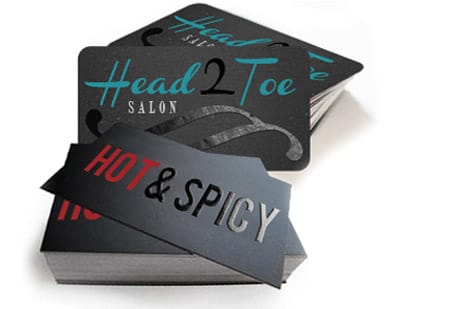
Soft touch cards we printed and laminated
Explore more
Where to go next
By the numbers
Soft touch, one finish among 60+ paper types
Common Questions
Common questions about soft touch laminated cards
What does soft touch lamination feel like on a business card?
Soft touch lamination feels like velvet or suede. It creates a smooth, matte surface with a subtle rubbery grip, similar to premium cosmetics packaging. 4OVER4.COM applies it with a heat-bonded polypropylene film that resists fingerprints and scratches while keeping that distinctive tactile quality.
Can you write on soft touch laminated cards?
Not with a standard pen, because the film repels ink. If you need a writable area for appointment times or notes, request lamination on one side only. The uncoated side takes pen ink normally while the front keeps its velvety soft touch finish.
Is soft touch lamination the same as matte lamination?
They are different. Standard matte lamination reduces glare and adds a flat, non-reflective surface. Soft touch goes further with a textured, velvety feel you can physically sense when you hold the card. Both are anti-glare, but only soft touch delivers that luxury tactile experience.
How much do soft touch business cards cost?
Four things move the price: the stock weight, whether the film goes on one side or both, the quantity, and any spot UV, foil, or embossing on top. The price table on this page pulls live per-unit pricing from the configurator for soft touch, standard, and spot UV cards side by side, so you can see the gap between them before you order, and the per-unit price falls as the quantity climbs.
Should I laminate one side or both sides?
Both sides for the full effect, because a card that is velvet on one face and bare on the other feels unfinished the moment it is turned over. Choose one side when the back has to take pen ink, for appointment times, a table number, or a loyalty stamp. The laminated front keeps its velvety finish either way.
Can you add spot UV on top of soft touch lamination?
Yes, and it is the pairing that makes the finish worth paying for. The gloss sits on the matte film, so a logo or a single line of type looks wet against a surface that is not. Pick one element to gloss rather than coating everything, because the contrast is the effect.
What paper thickness works best with soft touch lamination?
16pt cardstock is the most popular choice at about credit-card thickness. For a luxury feel, 32pt ultra-thick stock creates a rigid, solid card. 14pt works for budget orders but will not deliver the same premium impression. The film adds slight thickness to whatever stock you choose.
Does soft touch lamination work with foil stamping and spot UV?
Yes, and these combinations are among the most popular at 4OVER4.COM. Spot UV creates a dramatic gloss-on-matte contrast. Foil stamping in gold, silver, or rose gold pops even more against the matte background. Embossing and edge painting also pair well for a multi-sensory card.
How long do soft touch laminated cards last?
Much longer than uncoated or standard coated cards. The film protects against scratches, scuffs, light moisture, and UV fading, so cards stay looking fresh after weeks in a wallet or card holder. The finish is built to outlast the networking event by months.
How thick can a soft touch business card go?
4OVER4.COM offers soft touch business cards in five thicknesses, from a slim 16pt to a furniture-thick 80pt. 16pt suits high-volume networking, 32pt is the sweet spot for most professionals, 48pt and 64pt read as luxury and barely bend, and 80pt turns the card itself into the talking point.
Which soft touch thickness suits which industry?
Real estate agents, consultants, and creative directors reach for 32pt. Luxury brands and high-end services such as fine dining, boutique hotels, and premium retail move up to 48pt or 64pt, where the weight registers before anyone reads the name. Choose 80pt when the card is part of your brand story. Thicker stocks at 48pt and above also resist bending and warping in a wallet.
Get Started
Ready to order soft touch laminated cards?
Pick your stock, drop in your design, and we print a velvety, scuff-resistant card people remember by feel.
Legal Disclaimer
Gold Standard guarantees apply to all standard orders placed through 4over4.com. Price match requires verifiable proof of a competitor's published price for an equivalent product with matching specifications and turnaround time. Satisfaction guarantee covers manufacturing defects and print quality issues. Contact support with order number and documentation. On-time delivery rate based on tracked orders 1999 to 2026. Individual results may vary based on shipping carrier performance.
