
How to Choose the Right Cardstock for Your Business Card


Thicker stock feels premium, coated finishes make color pop, and uncoated stays writable. Weight, coating, finish, and texture are the four dials, and 18pt Kraft to 45pt Cotton is the range.
To choose the right cardstock for a business card, start with weight: 14pt is standard, 16pt feels like a credit card, and 32pt reads premium. Pick coated stock for vivid color and photos, or uncoated for a writable, understated feel. Layer on a finish (gloss, matte, soft-touch, or spot UV) and a texture (linen, kraft, or cotton) to match your industry, then order a sample before the full run.
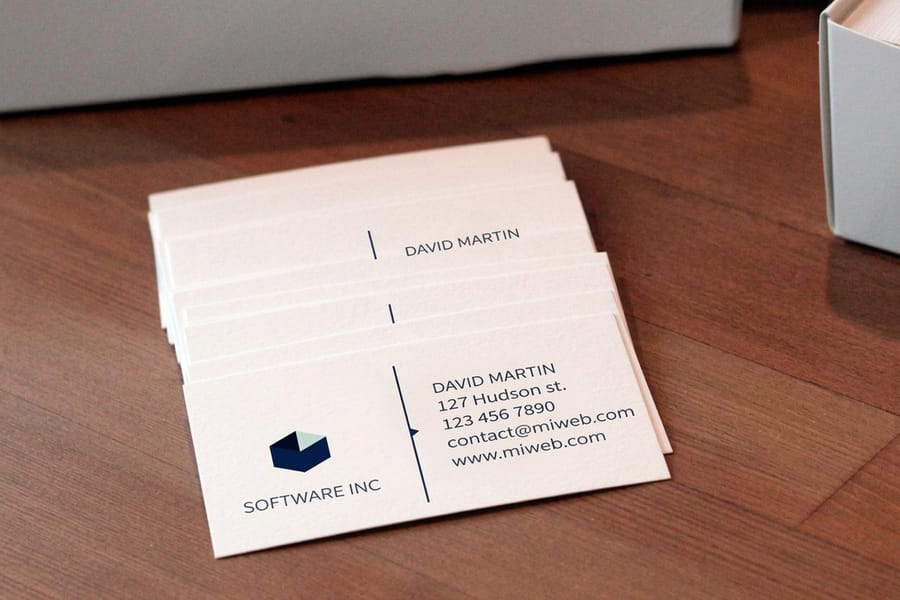
Quick tips
Quick tips for choosing your business card cardstock
Business cards are printed on cardstock, most often 14pt to 16pt coated stock, which is roughly the weight of a 100 lb cover sheet and about twice the thickness of standard copy paper.
Start with weight, then coating, then finish. Use 16pt for a professional feel or 32pt for a luxury impression. Choose coated stock for bold color and photos, and uncoated when you need a writable card. Add a finish and texture that fit your industry, and always request a physical sample before a full run. 4OVER4.COM customers who match the stock to their brand hand out cards people actually keep.
Paper types
The 5 types of business card paper
Coated
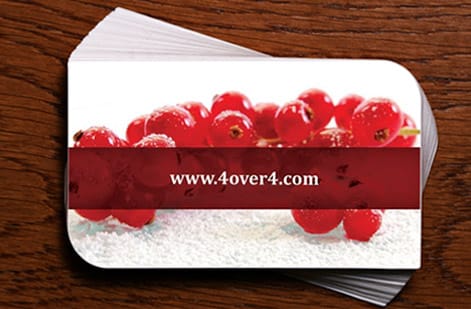
Coated stock carries a thin clay layer that keeps ink sitting on the surface instead of soaking in. It feels smooth and slightly slick, and it is what most cards are printed on. Color is the reason: photos stay sharp, dark solids stay dark, and a brand red comes back as the red you approved. The trade-off is that pen ink beads on it, so nobody is writing a note on the back. It suits photographers, real estate agents, restaurants, and any brand whose card is carrying an image.
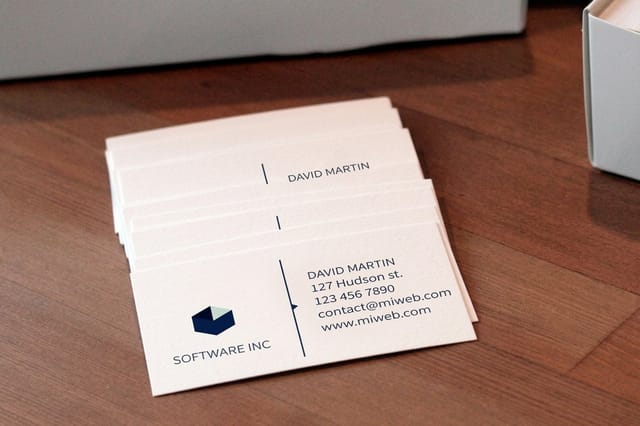
Order coated standard business cards
Uncoated
Uncoated stock has no surface layer, so the paper fiber is what you touch. It reads warm and honest rather than slick, and ink sinks in slightly, which softens color by a few percent. That softness is the point for some brands, and the practical advantage is that you can write on it with any pen. Consultants, lawyers, tradespeople, and anyone who jots a mobile number on the back get real use out of it.
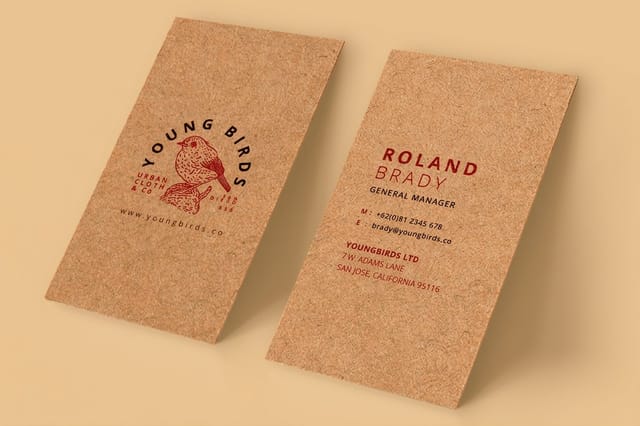
Order uncoated kraft business cards
Textured
Textured stock is pressed with a pattern, most commonly linen, so the card has a fine woven grain you feel before you look. It slows the handoff down for half a second, which is exactly what you want. Fine detail and photographic images lose a little crispness across the grain, so texture pairs best with clean type, a logo, and generous space.
Order linen textured business cards
Recycled
Recycled cardstock is made with post-consumer fiber and prints with a slightly softer, warmer surface than virgin stock, which suits sustainability-led brands that want the material itself to carry the message. Expect a marginally less white base and a small amount of visible fiber, both of which read as deliberate rather than cheap when the design leans into them. Dark ink on a natural base is the safest route, since very light tints can disappear into the warmth of the sheet.
Order recycled kraft business cards
Specialty, including plastic
Specialty stocks step outside paper altogether, from plastic and clear cards to metal, and they trade a higher unit cost for a card nobody throws away. Plastic survives a wallet, a pocket, and a spilled drink. Clear plastic turns your logo into a window. These are the cards people keep on a desk instead of in a drawer, which is the whole argument for the price.
Why your business card paper choice matters more than you think
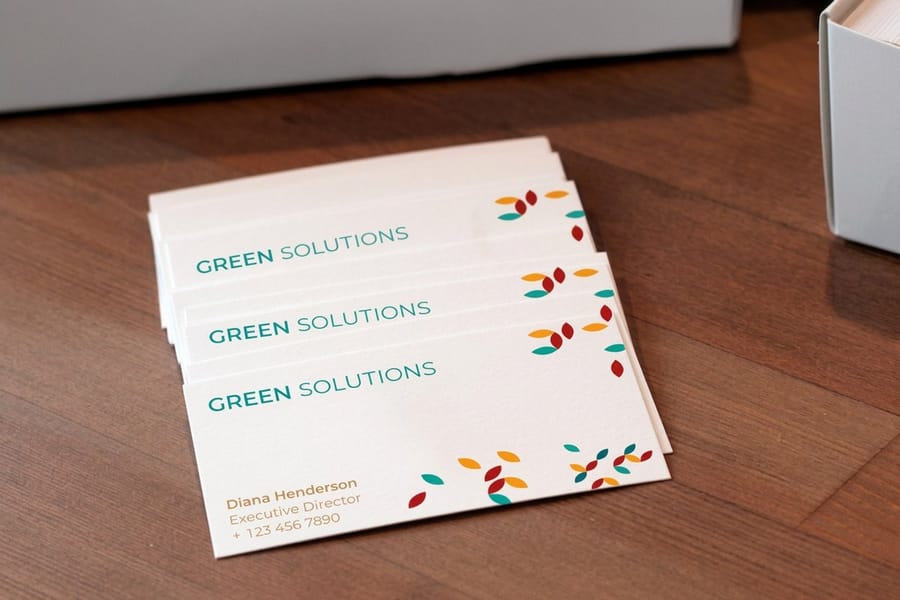
People judge a business in seconds. A flimsy card whispers "cheap," while a thick, textured card tells someone you mean business. That snap judgment lands before anyone reads your name or title, which makes the cardstock behind your business cards a branding decision, not just a printing detail.
This guide walks through every paper type, weight, finish, and coating so you can choose with confidence. An open house and a conference floor make the same demand: the stock has to carry the impression you want to leave. Browse the Showcase to see how different paper choices actually look in hand.
Working on other print projects too? Our Online Designer builds a card from scratch in the browser, and if you like a hands-on approach our guide on how to clean rubber stamps covers another handy print skill. 4OVER4.COM has printed more than 10 billion cards, so we know which stocks work best for which moment.
Coated vs. uncoated cardstock, the fundamental choice
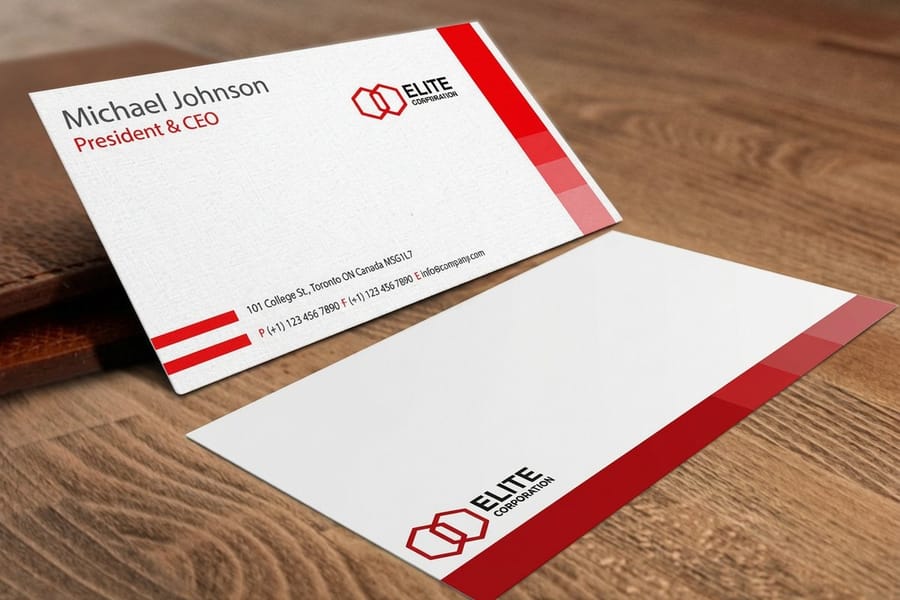
Every business card paper sits in one of two camps, coated or uncoated. This is the first call you make, and it shapes everything after it.
Coated cardstock has a smooth, sealed surface, so ink rests on top instead of soaking into the fibers. Colors look vivid and sharp, photos reproduce beautifully, and logos pop. If your design leans on bold graphics or full-color imagery, coated stock is the natural fit. The trade-off is writability, because ballpoint ink beads and smears on that slick surface, which makes handwritten notes awkward.
Uncoated cardstock has a natural, porous surface that absorbs ink, giving text a softer look and gently muted color. It feels warm and organic, and you can write on it easily. For attorneys, consultants, and accountants who value a classic, understated look, uncoated stock sends exactly the right signal. To compare finishes side by side, browse the Showcase gallery of real customer cards.
Understanding cardstock weight and thickness
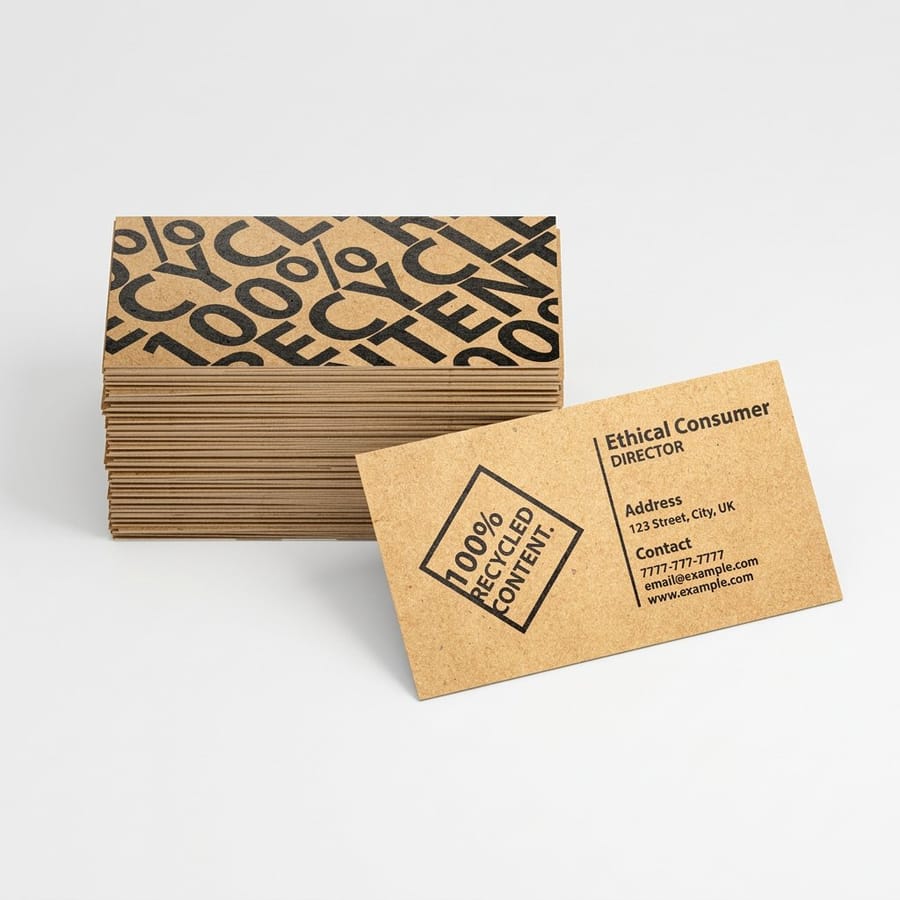
Weight and thickness get mixed up constantly, so let us clear it up. Weight is measured in points (pt) for cover stock, where one point equals one thousandth of an inch. The weights you will meet most often are:
- 14pt cardstock. Standard weight, close to the card you would get at a quick-print shop. Budget-friendly and perfectly solid for high-volume handouts.
- 16pt cardstock. A clear step up, roughly the thickness of a credit card. Sturdier, more professional, and the sweet spot for most businesses.
- 32pt cardstock. Ultra thick, about three times a standard card. When someone takes it, they feel it, and that says premium without a word.
Here is a simple way to picture it. Hand someone a 14pt card and they glance at it. Hand them a 32pt card and they turn it over between their fingers. That tactile beat is what turns into a memory. For other projects that live or die by the right paper weight, see our guide on how to make flyers.
Matte, gloss, and specialty finishes
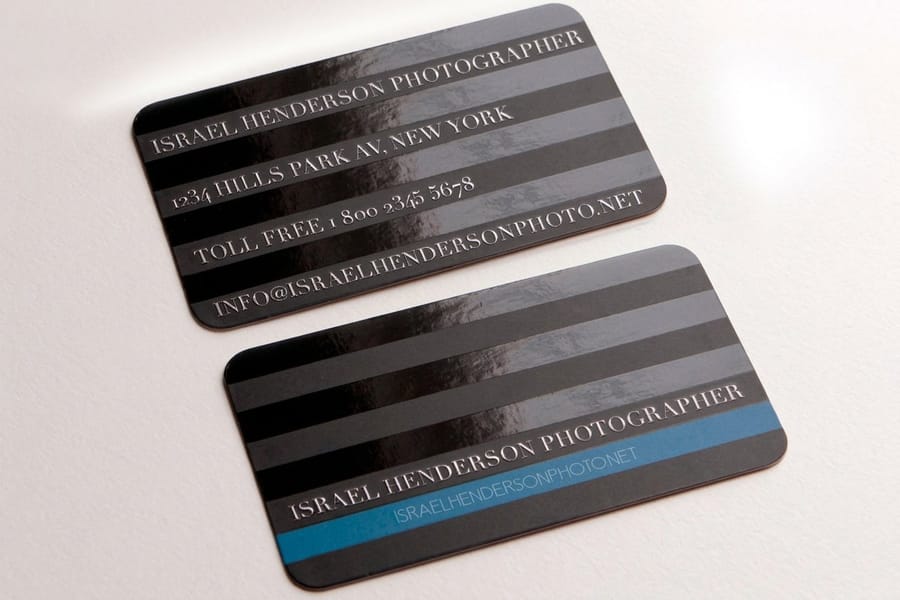
Once you have chosen coated or uncoated and settled on a weight, the finish adds the final layer of personality.
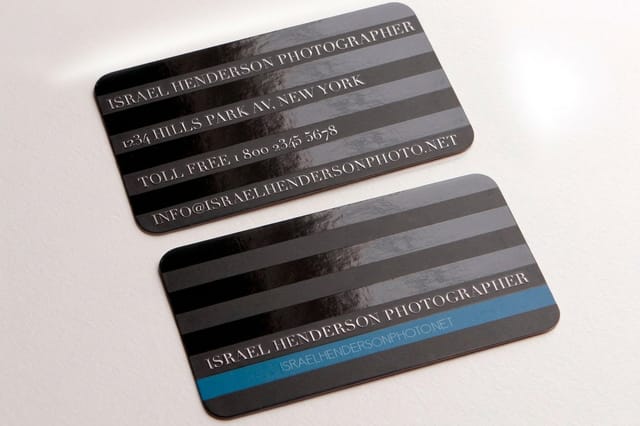
Gloss finish gives the card a shiny, reflective surface where color looks its brightest. It reads bold and works well for photographers, designers, and event planners, though fingerprints show and glare can creep in under harsh light.
Matte finish is smooth but non-reflective. It reads sophisticated and modern, keeps text easy on the eyes, and photographs cleanly for social posts, which makes it a safe pick across almost any industry.
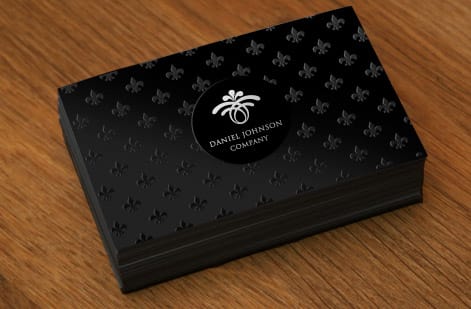
Soft-touch (velvet) finish is the tactile showstopper. Run a thumb across it and you feel a suede-like texture that people hold onto longer, and that lingering touch builds a stronger memory of your brand.
Spot UV pairs matte and gloss on one card, a matte base with your logo or name coated in a glossy layer. The contrast adds dimension without adding thickness. For even more visual punch, 3D lenticular business cards take motion effects further, and a full spot UV business card makes the effect the star.
Textured cardstock options
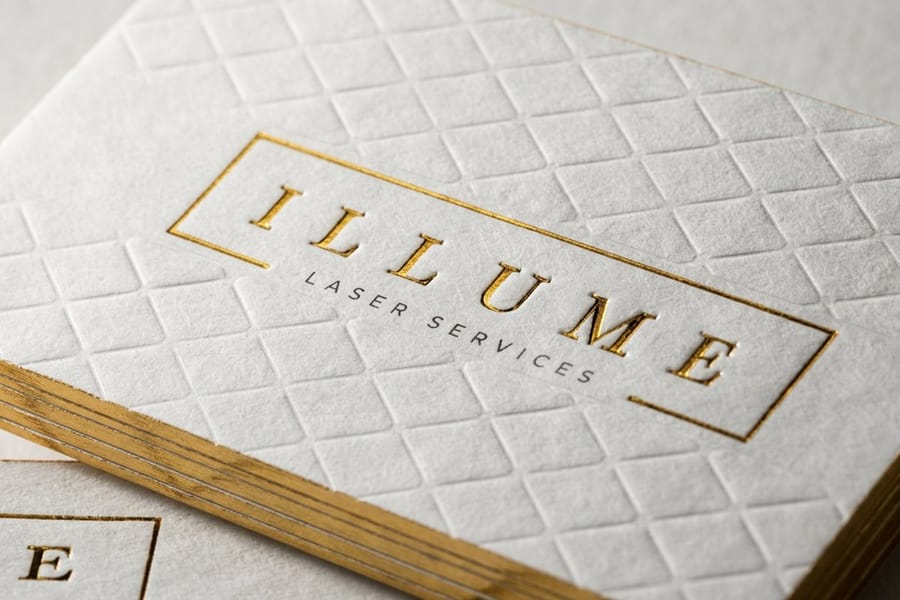
Texture adds a physical dimension flat stock cannot match. When fingers cross a textured card, it registers in the brain differently than a smooth one.
Linen texture carries a subtle crosshatch that mimics woven fabric. It feels classic and traditional, which suits law firms, financial advisors, and established businesses that want to signal stability.
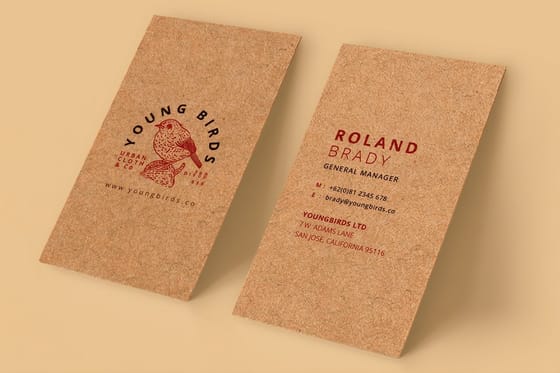
Kraft cardstock has a raw, natural brown look that eco-conscious brands, artisan shops, coffee roasters, and organic companies love. The earthy surface communicates authenticity without a single word. A dedicated kraft business card leans all the way into that story.
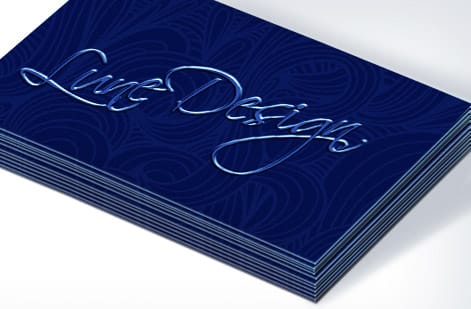
Cotton cardstock feels rich and hefty. Made from cotton fibers instead of wood pulp, it has a distinctive softness that luxury services and creative professionals gravitate toward, because it feels expensive for the simple reason that it is. See it on a cotton business card.
Need your files set up correctly for textured stock? Download ready-to-use files from our Blank Templates page, including black business cards, so your artwork prints cleanly on any stock you pick.
How to match cardstock to your industry
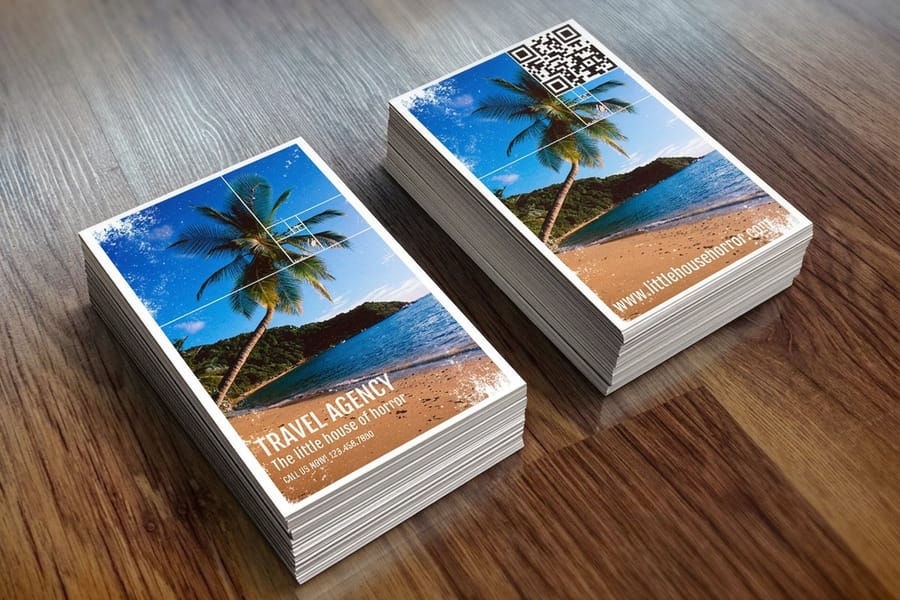
Do not just pick what looks nice. Pick what says the right thing to your specific audience.
Real estate agents. Go 16pt or 32pt in gloss or matte. Buyers and sellers judge attention to detail, and a thick, polished card signals competence. Put a headshot on gloss stock so the photo stays sharp.
Creative professionals. Designers, photographers, and artists should show off here. Soft-touch matte, spot UV, or textured cotton proves your eye. Your card is a portfolio sample, and a dull card from a creative reads as a red flag.
Restaurants and hospitality. Uncoated or kraft stock shines, since guests may jot a reservation time or a menu tip on the back. Keep it writable and warm, and matte photographs well for social sharing.
Tech startups. A clean matte finish on 16pt stock feels modern and minimal, as streamlined as your app, with soft-touch coating adding a premium note without the flash.
Legal and financial services. Uncoated or linen-textured stock in heavier weights fits conservative fields, where a linen 16pt card with embossed lettering reads as trustworthy and permanent. For matching client materials, see our guide on how to make envelopes.
Color reproduction across different stocks
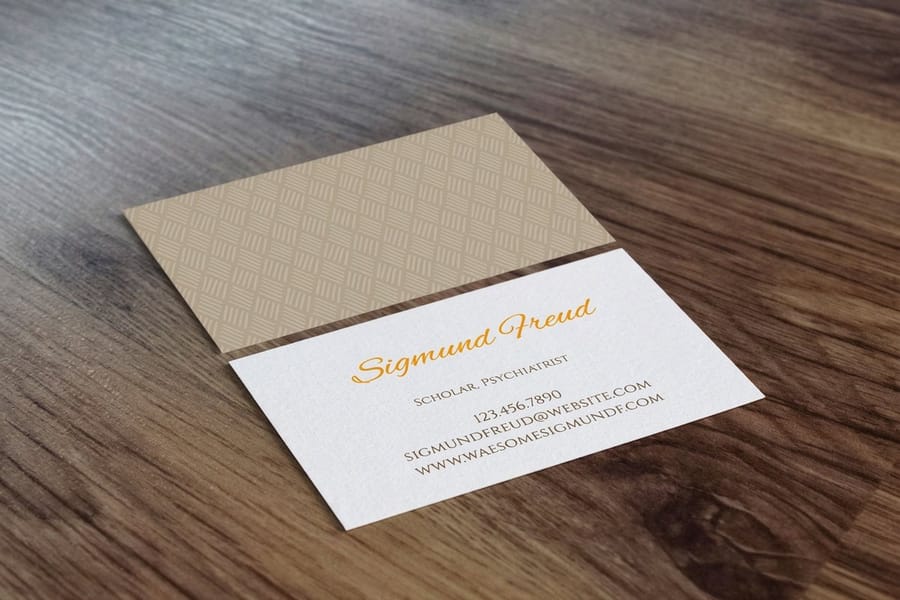
Your design may look perfect on screen, but the stock changes how color lands in print, and that catches a lot of people off guard.
On coated stock, color stays true to your file. The sealed surface blocks ink absorption, so what you see on the monitor is close to what you hold. CMYK values reproduce accurately, gradients stay smooth, and fine detail stays crisp.
On uncoated stock, color shifts darker and slightly muted as the paper drinks in the ink. A bright red on screen can read like brick red on the page, so plan ahead and push your values roughly 10 to 15 percent brighter in the design file to compensate.
On kraft stock, the brown base touches everything. White does not exist on kraft, since white areas show as the paper's natural brown, so design with the brown as part of your palette and lean on bold, dark inks. For more setup help across projects, our guide hub covers brochures, magnets, and more.
Durability and longevity considerations
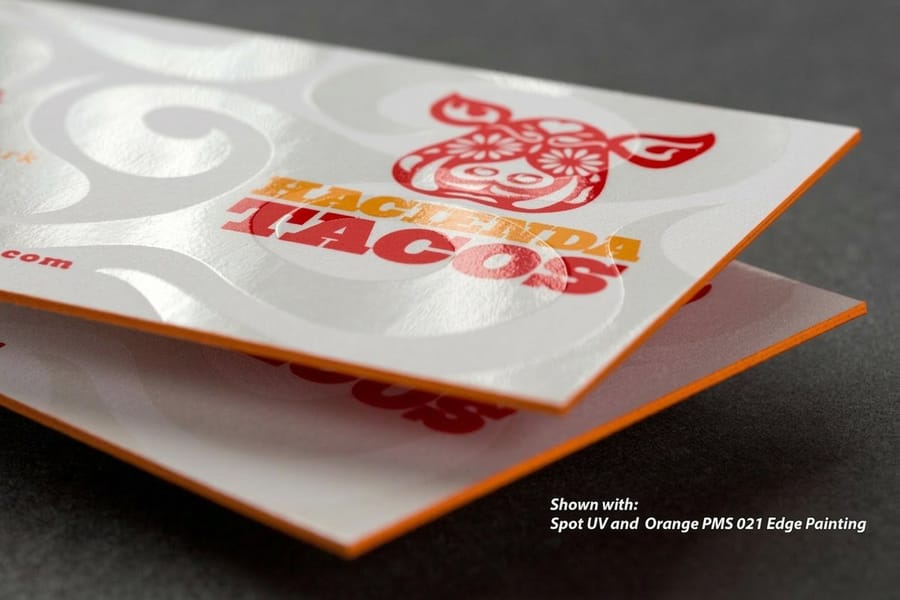
A card that falls apart in a wallet is worse than no card at all, and stock choice decides how long yours survives.
Coated cards shrug off moisture, stains, and everyday wear better than uncoated options, because the coating acts as a protective barrier. If your cards will live in pockets, wallets, and car dashboards, coated stock holds up longer.
Thicker stocks at 16pt and above resist bending and corner dings. A 14pt card can pick up soft, bent corners within days of wallet life, while a 32pt card stays rigid and sharp for months. Matte or gloss lamination adds one more shield against scuffing and fading, and for a small extra cost it is usually worth it. If you want it fast, same day printing ships within hours, and our guide on how to fold a brochure helps with matching brand pieces. Planning promo add-ons? See how to make custom magnets for complementary items.
Cardstock mistakes that make a business card look cheap
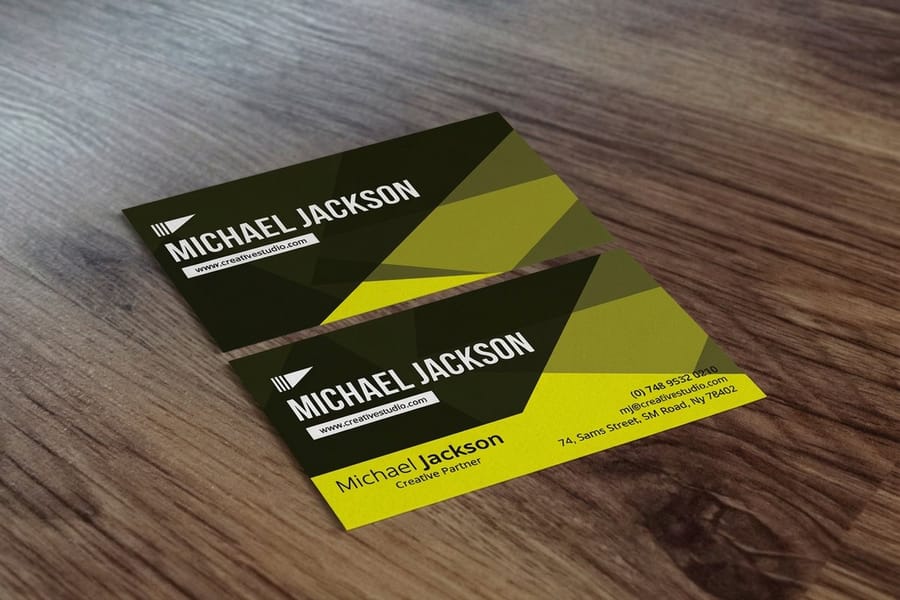
The wrong stock wastes money and quietly hurts your brand. Here are the misfires people make with business card paper, and how to sidestep them.
Going too thin to save a few cents. A 10pt or 12pt card feels like a flyer, and flimsy cards get tossed. Spend the extra pennies on 14pt at a minimum, and 16pt if you can.
Choosing gloss for a text-heavy design. Glare makes small type hard to read on glossy stock. If your card is mostly words with few graphics, matte or uncoated is the smarter pick.
Ignoring the writability factor. Salespeople, consultants, and service pros often jot notes on a card. If that is you, skip a fully coated gloss finish and leave one side uncoated or matte.
Skipping the sample. Screen color lies and paper feels different than you imagine, so order a sample before a full run. You can grab free paper samples and confirm the feel with your own hands first.
Wally explains cardstock
The paper does the talking before you say a word
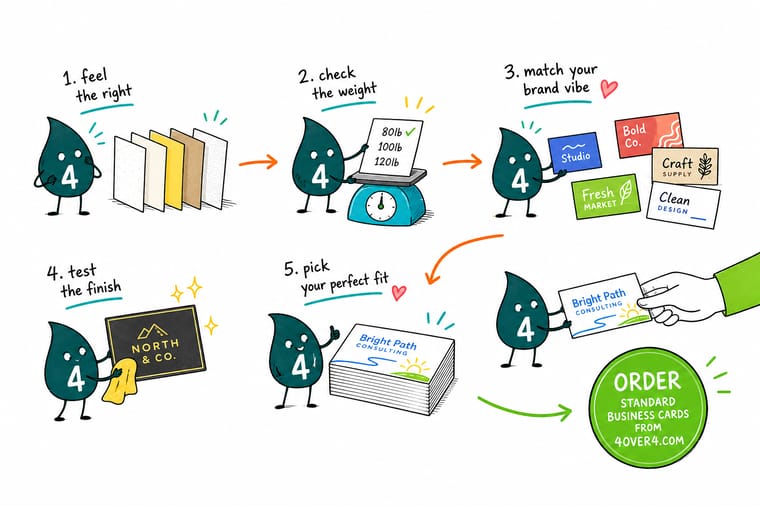
Wally treats a business card like a handshake you can hold. A thin card gets a glance and a 32pt soft-touch card gets remembered, so the stock is doing branding work before anyone reads your name. Start with weight, pick coated for color or uncoated to write on, then add the finish and texture that fit your world. When you are ready, order a sharp, made-to-order card built to your exact design at 4OVER4.
Order business cards →Specs and pricing
Standard business card specs and pricing
Once you have picked your stock, here is what a made-to-order standard business card gives you at 4OVER4.COM, with live specs and price-per-unit straight from the configurator.
| Quantity | Price Per Unit | Total |
|---|---|---|
| 100 | 17.6¢ | $17.57 |
| 200 | 11.5¢ | $23.07 |
| 300 | 9.15¢ | $27.46 |
| 400 | 7.96¢ | $31.86 |
| 500 | 7.25¢ | $36.26 |
| 600 | 6.77¢ | $40.64 |
| 700 | 6.43¢ | $45.04 |
| 800 | 6.18¢ | $49.43 |
Print it
Order business cards to match your cardstock choice
See it in use
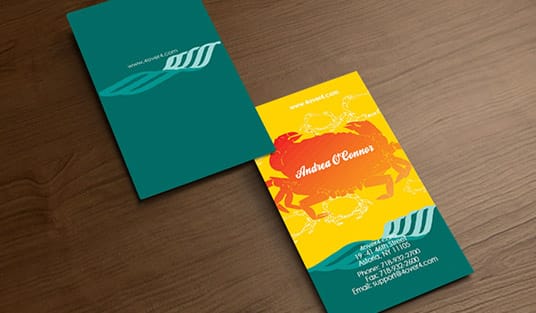
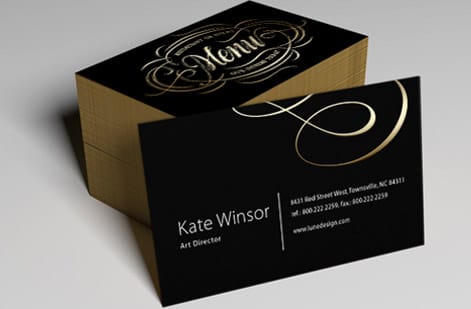
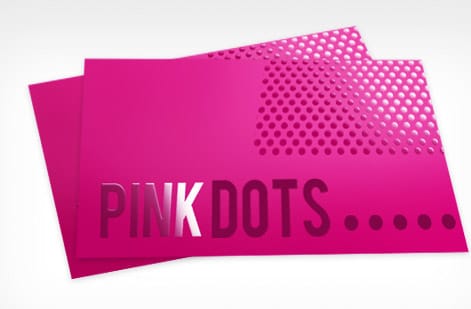
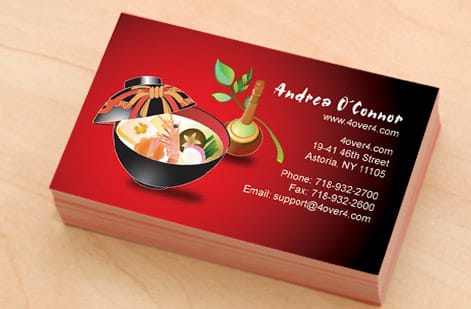
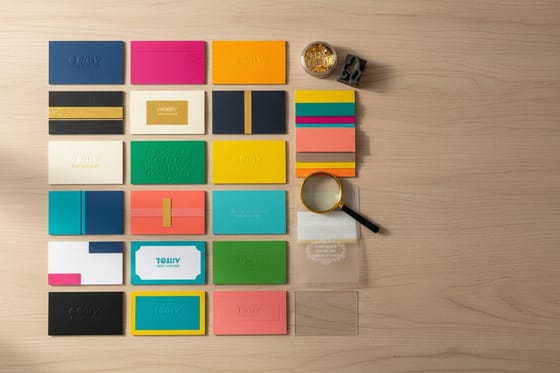
Cards printed on each of these stocks
Explore more
Where to go next

By the numbers
How deep the stock list actually goes
Common Questions
Common questions about choosing business card cardstock
What is the best cardstock weight for business cards?
16pt cardstock hits the sweet spot for most professionals. It feels about as thick as a credit card, sturdy enough to impress without being bulky. For a true luxury feel, 32pt ultra-thick stock makes an immediate tactile impact, while budget-conscious bulk orders work fine at 14pt.
Should I choose matte or glossy finish for my business cards?
Pick matte for text-heavy designs and glossy for image-heavy designs. Matte eliminates glare so contact info stays readable, and gloss makes photos and colors pop. If you want both, spot UV coating lets you combine matte and gloss on the same card.
Can I write on coated business cards?
Not easily. Ballpoint ink beads up and smears on glossy coated surfaces. If you need a writable card, choose uncoated stock or request matte coating on the back only. Many sales professionals use a coated front for branding and an uncoated back for notes.
What cardstock works best for full-color photo business cards?
Coated gloss stock at 14pt or 16pt delivers the sharpest photo reproduction. The coating prevents ink absorption, keeping colors vivid and details crisp. Photographers, models, and real estate agents who feature headshots should lean toward coated options.
How does kraft cardstock affect my business card design?
Kraft has a natural brown base that becomes part of your palette. White ink does not print on standard kraft, so any white areas show as brown. Use dark inks and bold, simple designs. Kraft works beautifully for eco-friendly brands, artisan businesses, and organic food companies.
Is thicker cardstock always better for business cards?
Not always. 32pt ultra-thick cards make a strong impression for networking and luxury brands. But if you are mailing cards inside envelopes or including them in product packaging, thinner 14pt stock keeps postage costs down and fits more easily. Match thickness to how the card will be distributed.
What type of paper are business cards printed on?
Business cards are printed on cardstock, most often 14pt to 16pt coated stock, which is roughly the weight of a 100 lb cover sheet and about twice the thickness of standard copy paper. From there the five families are coated for color, uncoated for a warm writable surface, textured such as linen for a card you feel first, recycled for a sustainability-led brand, and specialty stocks like plastic that step outside paper entirely.
How many paper types does 4OVER4.COM offer for business cards?
4OVER4.COM offers 60+ paper types for business cards, including coated, uncoated, textured, kraft, cotton, and specialty stocks. Each is available in multiple weights and finish combinations so you can fine-tune your card to match your brand.
Get Started
Order 100 kraft business cards from $24.75 to test the cardstock
Pick your weight, coating, and finish, drop in your design, and we print a crisp, long-lasting card that feels like your brand.
Legal Disclaimer
Gold Standard guarantees apply to all standard orders placed through 4over4.com. Price match requires verifiable proof of a competitor's published price for an equivalent product with matching specifications and turnaround time. Satisfaction guarantee covers manufacturing defects and print quality issues. Contact support with order number and documentation. On-time delivery rate based on tracked orders 1999 to 2026. Individual results may vary based on shipping carrier performance.
