
Small Business Failure Rate Stats & Survival Data for 2026


Survival rates by year and industry, the real reasons businesses close, and the branding moves that help you beat the odds, set against 25 plus years of printing for small businesses.
The small business failure rate is far lower than the myths claim. About 20 percent of new businesses close in year one and roughly half survive past five years, so the 9-out-of-10 failure story is wrong. Cash burn, no market need, and weak marketing drive most closures, while the businesses that invest early in brand and marketing survive at higher rates. 4OVER4.COM has helped 150,000 plus businesses look established from day one.
The short version
What the small business failure rate actually tells us
The small business failure rate is one of the most misquoted numbers in business. You have probably heard that 9 out of 10 businesses fail. That is not accurate. According to the U.S. Bureau of Labor Statistics, about 20 percent of new businesses close within their first year, and roughly 50 percent do not make it past five years. Those figures are real, but they do not tell the whole story. Industry, location, cash flow management, and marketing all play a role, and understanding what drives the new business failure rate gives founders a real advantage. 4OVER4.COM has worked with 150,000 plus businesses, many of them startups fighting these odds.
By the numbers
The small business failure rate at a glance
Here are the headline figures behind the small business failure rate, drawn from BLS data, CB Insights research, and our own production history. The numbers are steadier than the headlines suggest, and they point to clear, controllable levers rather than luck.

A closer look
Why small business survival rates deserve a closer look
The small business failure rate gets tossed around at conferences, in blog posts, and across social media, usually without any context. That matters because bad data leads to bad decisions. If you believe failure is close to guaranteed, you might skip investing in branding, marketing, or professional materials, and that is a costly mistake.
The reality looks different. Businesses that invest early in their brand identity and customer acquisition tend to outlast the ones that do not. Our small business growth research shows that companies with consistent branding see measurably better outcomes, and the new business failure rate drops when founders treat marketing as an investment rather than an expense.
4OVER4.COM has printed 10 billion plus cards for businesses at every stage. From first-day startups to established brands, we have seen what separates the survivors from the statistics, and tools like our QR Code Generator help businesses connect print to digital at no extra cost.
Year by year
The year-by-year small business survival rate

The small business failure rate is not a single number, it is a timeline. According to the U.S. Bureau of Labor Statistics, survival shifts steadily as a company ages, and the drop-off tells you where the real risk sits.
- Year 1: About 80 percent of new businesses survive their first year, which means roughly 1 in 5 close before their first anniversary.
- Year 3: Around 65 percent are still operating. The drop-off accelerates as initial capital runs out and market realities set in.
- Year 5: Roughly 50 percent remain open, the figure most people reference when they talk about the startup failure rate.
- Year 10: Only about 30 to 35 percent of businesses are still running a decade after launch.
These numbers have stayed remarkably consistent over the past two decades. The small business survival rate does not swing wildly from year to year. What changes is why businesses close, and that is where the useful information lives.
By industry
Failure rates by industry
Not every industry carries the same risk. BLS data shows some sectors see far higher closure rates than others, driven by margins, overhead, and how much capital it takes to open the doors.
- Construction: One of the highest failure rates, with about 25 percent closing in the first year due to thin margins and project-based cash flow.
- Restaurants and food service: Roughly 60 percent close within three years, pushed by high overhead, razor-thin margins, and intense competition.
- Healthcare and social assistance: Among the lowest failure rates, since steady demand keeps these businesses running longer.
- Professional services: Consulting, legal, and accounting firms tend to survive longer because they need less upfront capital.
- Retail: E-commerce has pushed brick-and-mortar failure rates higher, while online-only retail faces its own battle with customer acquisition costs.
If you are exploring broader patterns, our startup statistics page covers additional industry-level data worth reviewing.
Root causes
The top reasons small businesses fail
Numbers alone do not explain why businesses close. Research from CB Insights, the SBA, and multiple university studies keeps pointing to the same root causes.
- Running out of cash. The number one killer. A CB Insights analysis of startup post-mortems found 38 percent cited running out of money, tied to cash flow mismanagement, underpricing, and slow receivables.
- No market need. Building something nobody wants accounts for about 35 percent of failures, which happens when founders skip validation and jump straight to execution.
- Getting outcompeted. About 20 percent of failed businesses point to competition, and in crowded markets differentiation is survival, not an option.
- Pricing and cost problems. Setting prices too low to win customers, then finding the margins cannot sustain operations, a trap that hits service businesses hardest.
- Poor marketing. Companies that do not invest in customer acquisition early enough often cannot recover. Our small business marketing statistics show that firms spending 7 to 8 percent of revenue on marketing far outperform those that spend less.
- Team problems. Co-founder disputes, hiring the wrong people, and burnout all drive closures that were often preventable.
The branding edge
How branding and marketing affect the failure rate
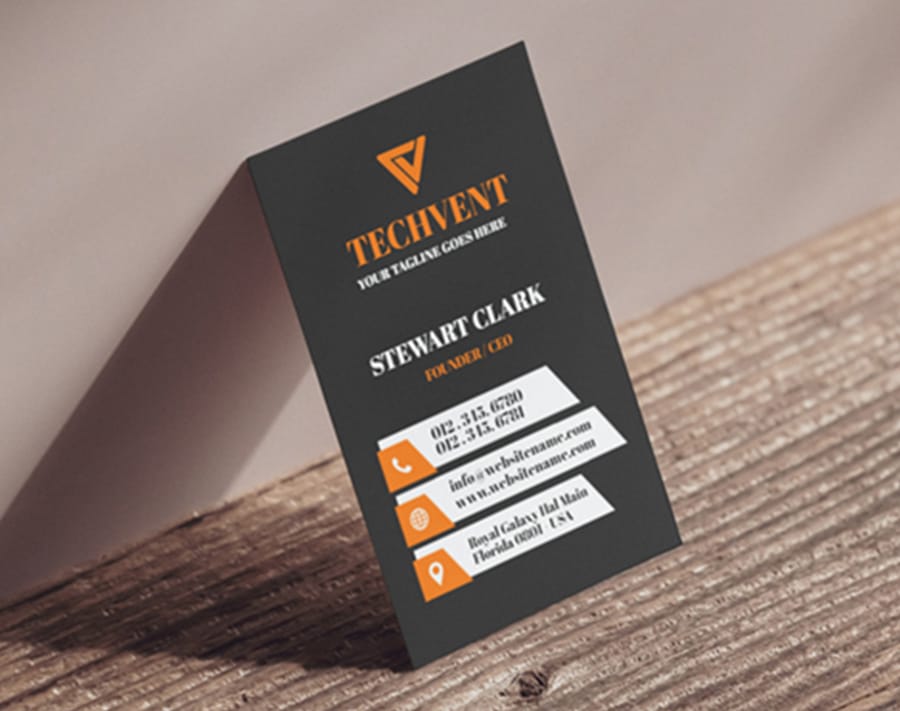
Here is something the small business failure statistics rarely highlight: professional branding correlates strongly with survival. A Lucidpress study found consistent brand presentation across every platform can lift revenue by up to 23 percent. That is the difference between reaching year five and closing in year three.
Print materials play a direct role. Business cards, postcards, flyers, and signage create touchpoints that digital alone cannot replicate. When a prospect holds your card, they engage with your brand physically, and that tactile connection builds trust faster than a social ad.
4OVER4.COM has served 150,000 plus businesses, and the pattern is clear. Companies that invest in professional print materials early tend to stick around longer. It is not magic, it is consistency, and when your brand looks put-together across every channel, customers trust you more.
Timing and place
The pandemic effect and where you operate
The COVID-19 impact on small business failure rates
The pandemic reshaped the small business landscape in ways we are still measuring. According to the Federal Reserve's Small Business Credit Survey, roughly 22 percent of small businesses reported being in fair or poor financial condition heading into 2022, compared with 14 percent before the pandemic.
Some industries got hit far harder than others. Hospitality, events, and in-person services saw closure rates spike. The data also shows something useful. Businesses that pivoted quickly, adding online ordering, delivery, or new product lines, survived at higher rates than those that waited.
The pandemic did not change the fundamental reasons businesses fail, it accelerated them. Companies with weak cash reserves, no digital presence, and poor customer communication were the first to close, while those with strong brands and diversified marketing adapted and survived.
Small business failure rate by state and region
Geography matters. BLS data shows states with higher costs of living, such as California, New York, and Massachusetts, tend to see slightly higher failure rates for new businesses, driven mostly by overhead. States with lower operating costs like Texas, Florida, and Tennessee often show marginally better five-year survival rates.
Location alone does not decide success. A well-run business in an expensive market can outperform a poorly managed one in a cheap market every time. The key variable is whether the business generates enough revenue to cover its local cost structure.
Stage by stage
How failure rates stack up across business stages
The small business failure rate changes dramatically depending on how long a company has been operating. Early-stage businesses face the steepest odds, while those that survive past year five show much stronger staying power. Smart allocation of your small business marketing budget at each stage can meaningfully improve your chances.
| Stage | Survival | Main risk | Where to focus |
|---|---|---|---|
| Year 1 (launch) | About 80 percent survive | Highest cash burn, unproven market fit | Customer acquisition and brand visibility |
| Years 2 to 3 | Around 65 percent survive | Initial capital thins, competition bites | Retention, referrals, tighter pricing |
| Year 5 | Roughly 50 percent survive | Product and customer base stabilizing | Doubling down on what already works |
| Year 10 plus | About 30 to 35 percent survive | Market shifts and complacency risk | Staying adaptable, reinvesting in brand |
Survival and risk
Survival rates and industry risk at a glance
Two quick views of the same story: how survival thins out over time, and which industries carry the most risk. Match your own timeline and sector against these benchmarks to see where to concentrate your effort.
| Year | Still operating |
|---|---|
| Year 1 | About 80 percent still open |
| Year 3 | Around 65 percent still open |
| Year 5 | Roughly 50 percent still open |
| Year 10 | About 30 to 35 percent still open |
| Industry | Relative failure risk |
|---|---|
| Construction | High, about 25 percent close in year one |
| Restaurants | High, about 60 percent close within three years |
| Retail | Moderate to high, squeezed by e-commerce |
| Professional services | Lower, less upfront capital needed |
| Healthcare | Among the lowest, steady demand |
Your industry sets the baseline, but the levers that beat it are the same across sectors: enough runway, early marketing, and a brand that earns trust before the pitch. For the wider picture, our small business statistics hub pulls together every data point we track.
The survivor playbook
What successful businesses do differently
Looking at the small business survival rate from the other direction, what do the roughly 50 percent that make it past five years actually do right? Research points to a handful of shared traits.
- They start with adequate capital. Underfunding is a choice, not a fate. Businesses that secure 12 to 18 months of runway survive at far higher rates.
- They invest in marketing from day one. Not month six, not when they can afford it. Day one.
- They build a recognizable brand. Professional materials, a consistent visual identity, and a clear message, which takes intention more than budget.
- They track their numbers. Cash flow, customer acquisition cost, and lifetime value, so problems surface early.
- They adapt. Markets change and preferences shift, and survivors adjust their approach without abandoning their core identity.
I ordered my first batch of business cards from 4OVER4.COM before I even had my first client. People told me I was wasting money. Three years later I am still in business, and those same people are asking for my card.
Verified customer, Independent Financial Consultant
Myths vs facts
Clearing up small business failure myths
A few myths keep founders making the wrong calls. The pairs below set each common assumption against what the small business failure statistics actually show, so you can plan on evidence rather than fear.
9 out of 10 small businesses fail.
BLS data shows about 20 percent close in year one and roughly 50 percent survive past five years. The 90 percent claim is simply wrong.
Failure is mostly bad luck.
The top causes are running out of cash, no market need, and weak marketing, all of which founders can plan for and manage.
Marketing is a cost to cut when money is tight.
Companies that invest in marketing from day one survive at higher rates, and consistent branding can lift revenue by up to 23 percent.
Professional print materials are a luxury for startups.
A premium business card or postcard builds trust fast and costs little. Order free samples to see how affordable quality print can be.
Print it
The products small businesses reach for most
The survival data rewards looking established early, and that is a printing decision. Standard Business Cards run 100 for $17.57 in 3 business days, door hangers 250 for $290.41, and gloss presentation folders 250 for $844.54. These are the pieces founders order first.





Wally turns the failure-rate data into a survival plan
The odds are beatable. The playbook is simple.
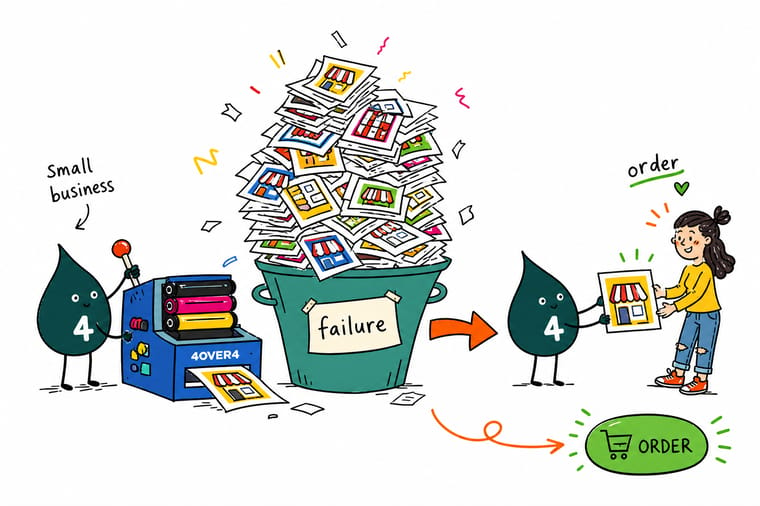
The statistics all point the same way. Cash runway, early marketing, and a brand that looks the part are what separate the survivors from the closures. Wally's rule is simple. Give yourself 12 to 18 months of runway, invest in your brand from day one, and let professional print do the trust-building. A sharp business card in a prospect's hand is the fastest, cheapest way to look like a company that is here to stay.
Print your business cards →Stock, finishing and price
Card stock, finishing and the price at 100
For founders ready to act on these numbers, here is current pricing for Business Cards, the fastest, most affordable way to look professional, alongside the full specifications so you can match the right stock and finish to your brand.
Start from a blank
Blank templates for business cards
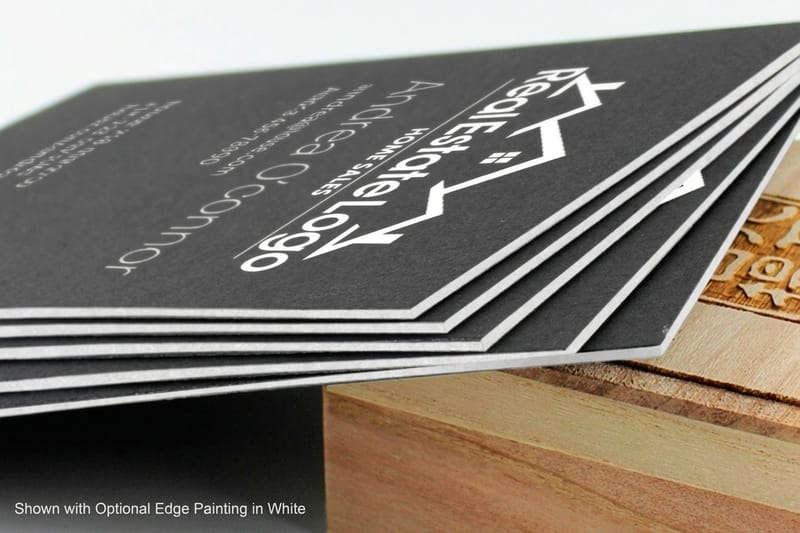
These blank templates open at the right trim size with the bleed and safe margins already drawn, so artwork arrives press ready instead of being rebuilt at the proof stage.

Free to customize
Free small business card templates
Open any of these in the online designer, drop in your details, and you are ready to print. They are built for small businesses that want to look established without hiring a designer.
What our print data reveals
What 4OVER4 order data says about business longevity
After 25 plus years in business and serving 150,000 plus businesses, 4OVER4.COM has a unique vantage point on the small business failure rate. We see which companies reorder year after year, and which ones do not come back.
One pattern stands out: 99 percent of our customers say they will reorder. That is not just a satisfaction metric, it is a signal that these businesses are still operating, still growing, and still investing in their brand presence. Businesses that stop ordering print materials are often businesses that have stopped operating.
We have also noticed that companies ordering across multiple product categories, business cards plus postcards plus flyers, tend to reorder more consistently over time. Diversified marketing correlates with staying power. Even something as simple as Kids Printing for family-oriented businesses shows that creative thinking about your audience pays off.
The small business failure statistics paint a tough picture, but the businesses that invest in professional branding and consistent customer outreach tell a different story, one of resilience and growth.
We almost became a statistic in year two. What saved us was getting serious about our brand presence, business cards, signage, direct mail. Customers started taking us seriously when we looked serious.
Verified customer, Founder, Regional Cleaning Service
Beating the odds
How 4OVER4.COM helps small businesses beat the odds
The small business failure rate does not have to be your story. 4OVER4.COM exists to give startups and growing businesses the tools to compete with bigger, better-funded rivals without the big-company budget.
Here is what that looks like in practice. With 1,000 plus products and 60 plus paper types, you get the same print quality that Fortune 500 companies use. Your business cards feel just as premium, your postcards look just as sharp, and your brand presence communicates the same professionalism.
Our 99.8 percent on-time delivery rate means you are not scrambling before a trade show or networking event, and 82 percent of orders ship early, so you often get your materials ahead of schedule.
Professional branding will not fix a broken business model, but it absolutely helps a good business get noticed, build trust, and convert prospects into paying customers. That is how you move from the might-fail column to the still-thriving column, something 4OVER4.COM has helped businesses do since 1999.
Proof, not promises
What our small business orders show on stock and speed
Here is what our side of the press looks like, the volume, reorder, and quality signals that round out the picture for founders planning their first or fiftieth print run. A 99.8 percent on-time delivery rate keeps you ready for the next event, and a 4.8 out of 5 rating across 10,000 plus reviews shows the print quality holds up order after order.
Why founders trust us
The press behind the pieces founders order first
Every benchmark on this page sits on a long record of getting print right. A 4.8 out of 5 average across 10,000 plus reviews, 150,000 plus businesses served, and print delivered since 1999 are the trust signals behind the numbers, so you can launch a brand knowing the materials will land sharp and on time.
How we built this
Where this data comes from
The small business failure rate data on this page comes from publicly available sources including the U.S. Bureau of Labor Statistics Business Employment Dynamics series, CB Insights startup post-mortem analyses, the Federal Reserve's Small Business Credit Survey, and SBA Office of Advocacy reports. 4OVER4.COM's proprietary data draws from internal customer records spanning 25 plus years and 150,000 plus businesses served. All statistics reflect the most recently available data as of publication.

Get Started
Ready to beat the small business failure rate?
Give yourself the branding edge the data rewards. Pick a product, drop in your design or a free template, and we will print it sharp on premium stock and ship it on time.
Legal Disclaimer
Gold Standard guarantees apply to all standard orders placed through 4over4.com. Price match requires verifiable proof of a competitor's published price for an equivalent product with matching specifications and turnaround time. Satisfaction guarantee covers manufacturing defects and print quality issues. Contact support with order number and documentation. On-time delivery rate based on tracked orders 1999 to 2026. Individual results may vary based on shipping carrier performance.
Explore more
Small business guides, print products and survival data
 Product Business Cards The first impression that helps a new business look established.
  Hub Small Business Statistics The full hub of data on how small companies grow and struggle.
  Statistics Small Business Growth Growth benchmarks and the branding edge behind them.
  Statistics Startup Statistics Funding, formation, and survival data for new ventures.
  Statistics Small Business Marketing What the marketing data says about staying in business.
  Statistics Marketing Budget Benchmarks How much to spend on marketing at each stage.
  Templates Blank Templates Print-ready layouts with bleed and safe margins built in.
  Collection Kids Printing Creative print for family-oriented businesses and events.
  Free Free Samples Feel the stock and print quality before you commit. FAQs Printing FAQs Answers on stock, sizes, proofs, and turnaround.
 Questions and answers
Common questions about small business failure rates
Survival rates, top causes, industry differences, and how to improve your odds, answered.
What percentage of small businesses fail within the first year?
About 20 percent of new businesses close within their first year, according to the U.S. Bureau of Labor Statistics, which means 80 percent survive year one and the 90-percent-fail claim is a myth. The failure rate accelerates between years two and five, when initial funding runs out and competition intensifies. Investing early in branding and customer acquisition improves your odds. Order Free Samples from 4OVER4.COM to see how affordable professional print materials can be.
What is the five-year small business survival rate?
Roughly 50 percent of small businesses survive past five years. The survival rate varies by industry, with healthcare businesses lasting longer while restaurants and construction companies face steeper odds. Businesses with consistent branding, adequate cash reserves, and active marketing outperform the average.
What is the main reason startups fail?
Running out of cash is the number one cause, cited in about 38 percent of startup post-mortems according to CB Insights. The startup failure rate climbs when founders underestimate operating costs or delay revenue. Poor marketing and lack of market need are the second and third most common causes.
Does the new business failure rate differ by industry?
Yes, by a wide margin. Restaurants see about 60 percent closure within three years, while professional services like consulting and accounting have much lower failure rates because they need less startup capital. Healthcare sits among the lowest thanks to steady demand.
How can small businesses reduce their chances of failing?
Start with enough capital to cover 12 to 18 months of expenses. Invest in marketing from day one rather than when you are desperate for customers. Build a professional brand identity with consistent materials across every touchpoint, track your cash flow weekly, and adapt when the market signals something is not working. Tools like our QR Code Generator connect print and digital marketing at no extra cost.
Are small business failure statistics getting worse over time?
Not really. The statistics have stayed relatively stable over the past 25 plus years, according to BLS data. The pandemic caused a temporary spike in closures, but the long-term trend has not shifted dramatically. What has changed is the competitive landscape, where digital marketing has raised the bar for customer acquisition and made brand investment more important than ever.
