
Direct Mail vs Email Response Rate Statistics for 2026


Response rates, ROI, cost per acquisition, and brand recall, compared side by side with real data so you can spend on the channel that fits your campaign.
Direct mail wins on response, recall, and attention. Email wins on speed and cost per send. Physical mail earns around 9 percent house-list response against email’s 1 percent, gets opened 80 to 90 percent of the time, and produces 70 percent higher brand recall. The best marketers combine both for a 28 percent lift, and 4OVER4.COM prints the mail side sharp on premium stock.
Headline numbers
Direct mail vs email: the numbers that actually matter
The direct mail vs email debate is not about crowning a winner. It is about knowing where each channel performs best so you can spend smarter. Physical mail gets opened, held, and remembered at rates digital cannot touch, while email moves faster and costs less per send. 4OVER4.COM has printed 10 billion plus cards and mail pieces for over 150,000 plus businesses, which gives us a front-row seat to what works. The takeaways below break down the real data so you decide on facts, not gut feelings.
By the numbers
Direct mail vs email performance at a glance
Here are the headline figures marketers reach for first when they weigh the two channels, drawn from industry benchmarks and our own production data. Email is efficient per send, but a physical piece earns more attention, longer reading time, and stronger recall. Set those benchmarks against 25 plus years of printing direct mail at 4OVER4.COM and the pattern is consistent: the pieces people can hold get acted on.
Why it still sparks debate
Why the direct mail vs email comparison still sparks debate
Direct mail vs email is not a new argument, but the data keeps shifting. Email inboxes are more crowded than ever, and physical mailboxes are emptier. That change alters the math on attention, engagement, and cost per conversion, which is exactly why the comparison deserves a fresh look in 2026.
Marketers who study our direct mail statistics know response rates for physical mail have held steady or climbed over the past decade. Meanwhile email open rates have slipped as spam filters tighten and consumers grow pickier. The real question is not which channel is better, it is which channel fits your goals, budget, and audience.
Reading our direct mail ROI data alongside email performance gives you the full picture. This page pulls the most relevant numbers together so you can compare like for like rather than guessing. Ready to design a piece? The Online Designer gets you started.
Response rates
Response rates: where physical mail leaves email behind
Response rates are the starkest contrast between these two channels. According to the Association of National Advertisers, direct mail response rates for house lists average around 9 percent, compared to email response rates of roughly 1 percent. That is not a small gap. That is a 9x difference in favor of physical mail.
Physical mail demands physical interaction. You pick it up, flip it over, and read the headline. Email demands a click in a sea of 100 plus daily messages. The tactile nature of print creates what researchers call deeper emotional processing, so your brain treats a postcard differently than a subject line.
For prospect lists, the people who have never bought from you, direct mail still leads. The ANA reports prospect mail response rates around 4.9 percent, while cold email hovers near 0.1 percent. If you are trying to reach new customers, those numbers should shape your budget. Check the full direct mail response rate benchmarks to see how your industry compares.
Open and read rates
Open rates and read rates compared
Email open rates average around 21.33 percent across industries, according to Mailchimp benchmark data. That sounds decent until you realize direct mail gets opened at rates between 80 and 90 percent, per USPS Household Diary Study data. People open their mail. They do not open most of their email.
The gap widens when you look at read rates. An email open might mean someone glanced at a preview pane for half a second. A direct mail read means someone held the piece, scanned the offer, and made a conscious decision about it. The quality of attention is fundamentally different, and that difference shows up in conversions.
Cost comparison
Cost comparison: direct mail vs email marketing budgets
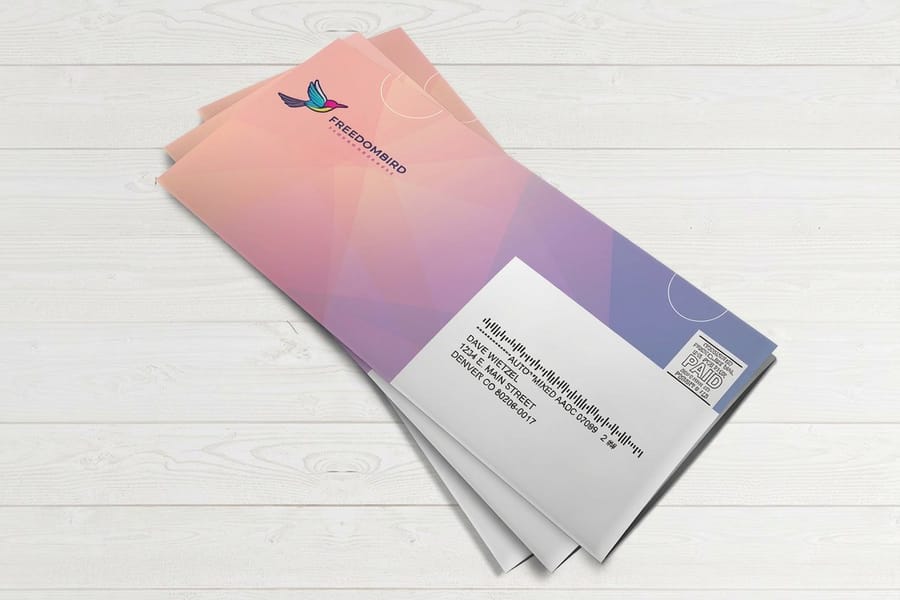
Here is where email marketing vs direct mail gets interesting. Email is cheaper per send, that is undeniable. A single email costs fractions of a penny. A single direct mail piece, including printing, postage, and handling, runs anywhere from $0.30 to $3.00 or more depending on format, size, and finishing.
But cost per send is not cost per response, and it is definitely not cost per conversion. Say you send 1,000 emails at a penny each for 10 dollars and get a 1 percent response. That is 10 responses at a dollar each. Now send 1,000 postcards at 50 cents each for 500 dollars and get a 5 percent response. That is 50 responses at 10 dollars each.
Email wins on cost per response in that scenario. But if your average customer is worth 500 dollars, those 50 mail responses represent 25,000 dollars in potential revenue against 5,000 dollars from email. The cost comparison for direct mail vs email marketing always depends on what a customer is worth to you, and high-ticket offers almost always justify the higher per-piece cost.
Email carries hidden costs too, from list management and deliverability tools to A/B testing platforms and compliance for CAN-SPAM and GDPR. Direct mail costs are more transparent. You pay for design, printing, and postage, and your piece reaches the mailbox with no algorithm changes or spam filters in the way.
The neuroscience factor
Engagement and brand recall: the neuroscience factor
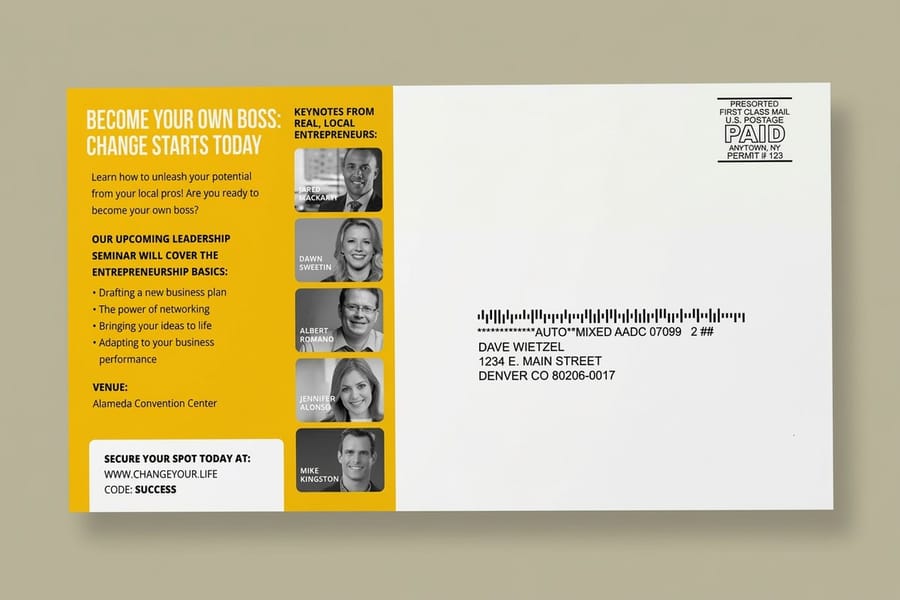
A 2015 study by Canada Post and True Impact Marketing found that direct mail requires 21 percent less cognitive effort to process than digital media. It also produced 70 percent higher brand recall than digital ads. These are the kind of gaps that change campaign strategy, not small rounding differences.
Physical mail activates different parts of the brain. The sensory experience of touching paper, feeling texture, and seeing vivid print creates stronger memory encoding. This is why direct mail effectiveness data consistently shows higher recall and action rates than digital-only formats.
Email is processed and forgotten quickly. The average person spends about 11 seconds reading an email, per Litmus data. Direct mail sits on a kitchen counter for an average of 17 days, according to USPS research. That is 17 days of passive brand exposure every time someone walks past it.
Use both together
The combined approach: using both channels together
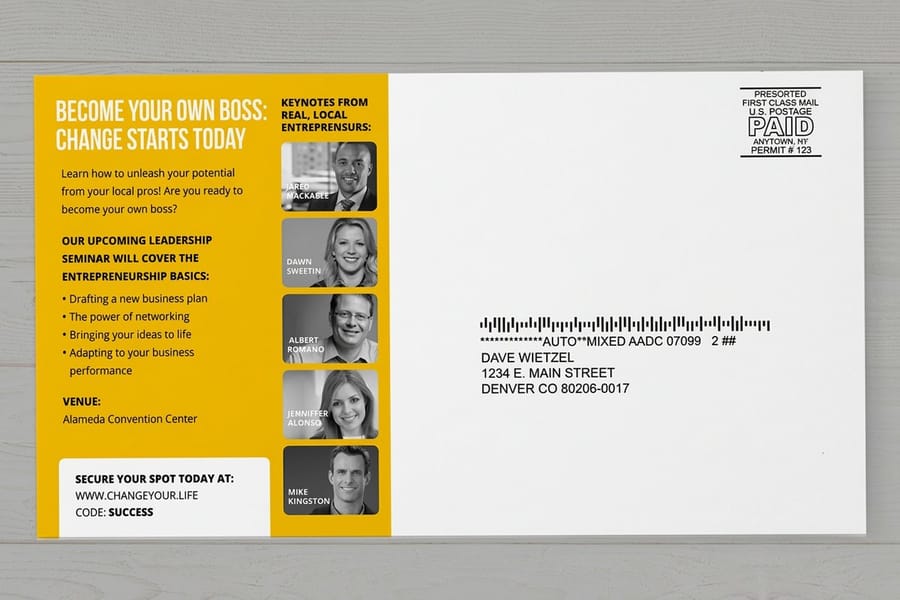
The smartest marketers do not choose between direct mail marketing and email marketing. They use both. According to the DMA, campaigns that combine direct mail with email see response rates about 28 percent higher than either channel alone.
A common strategy sends a postcard first to introduce the offer and build awareness, then follows with an email 3 to 5 days later referencing the postcard. The physical piece primes the recipient, and the email provides a convenient click-to-convert path. Another approach uses email for existing customers and mail for prospecting, where higher response rates justify the investment.
Some brands now trigger direct mail from digital behavior. Someone browses a product page but does not buy, so they receive a postcard with that exact product and a discount code. 4OVER4.COM makes this practical with fast turnaround and variable data, so you can personalize each piece with a name, a unique offer code, or product-specific imagery.

Side by side
How direct mail and email stack up
Seeing the direct mail vs email statistics in one place makes the comparison clearer. Each channel has distinct strengths, and the right choice depends on your objectives, audience, and budget. Neither is universally better, they serve different purposes at different stages of the customer journey.
| Metric | Direct mail | |
|---|---|---|
| Response rate, house list | Around 9 percent | Around 1 percent |
| Response rate, prospects | Around 4.9 percent | Around 0.1 percent |
| Open or read rate | 80 to 90 percent | Around 21 percent |
| Cost per piece | $0.30 to $3.00+ | Fractions of a penny |
| Brand recall vs digital | 70 percent higher | Baseline |
| Time spent with the piece | Around 17 days on the counter | Around 11 seconds |
| Speed to launch | Days to weeks | Hours |
| Best fit | Prospecting and high-ticket offers | Speed, scale, and nurturing |
When you compare response rates, the physical channel consistently outperforms on engagement and recall. Email wins on speed and cost per send. For marketers who want the physical impact even higher, formats like 3D postcards push engagement further by adding a visual wow factor that flat mail and email cannot replicate.
When evaluating the cost comparison for direct mail vs email marketing, always factor in lifetime customer value, not just cost per piece. The channel that costs more per send often costs less per acquired customer. A thick, textured postcard on 32pt stock communicates quality before the recipient even reads the headline, and that sensory advantage does not exist in a Gmail inbox.
When email wins
When email is the better choice
This is not a one-sided argument. Email marketing vs direct mail has clear scenarios where email is the smarter pick, and the strongest plans use each channel for what it does best.
Speed to market
Email campaigns launch in hours. Direct mail takes days to weeks, depending on design, printing, and postal delivery. If you need to announce a flash sale tomorrow, email is your only realistic option.
Automation and personalization at scale
Email automation is mature and powerful, from drip sequences and behavioral triggers to abandoned-cart and birthday messages, all running around the clock. Direct mail automation exists but requires more setup and a higher per-piece investment.
Testing and iteration
You can A/B test an email subject line in 30 minutes and have meaningful results by lunch. Testing a direct mail headline means printing two versions, splitting your list, mailing both, and waiting weeks. Email wins on iteration speed by a mile.
Cost for nurturing sequences
If you need 12 touchpoints over 6 months, email is dramatically cheaper. A 12-touch email sequence costs almost nothing per contact, while a 12-piece mail sequence would cost 6 to 36 dollars per contact. For long nurturing cycles, email makes more financial sense.
Myths vs facts
Clearing up the direct mail vs email misconceptions
A few myths keep marketers from running the mix that would pay off. The pairs below set each common assumption against what the direct mail vs email statistics actually show, so you can plan on evidence rather than habit.
Email always wins because it is cheaper.
Email is cheaper per send, but direct mail’s higher response and recall often lower the cost per acquired customer, especially for high-ticket offers.
Nobody reads physical mail anymore.
USPS data shows 80 to 90 percent of mail gets opened, and a piece sits on the counter for around 17 days of passive brand exposure.
You have to pick one channel or the other.
DMA data shows campaigns that pair mail with email see response rates about 28 percent higher than either channel used alone.
Direct mail cannot be personalized like email.
Variable data printing tailors the name, offer, image, and call to action per recipient, and retargeting mail can even fire off digital behavior.
Wally settles the direct mail vs email debate
Do not pick a side. Pick the right channel for the moment.
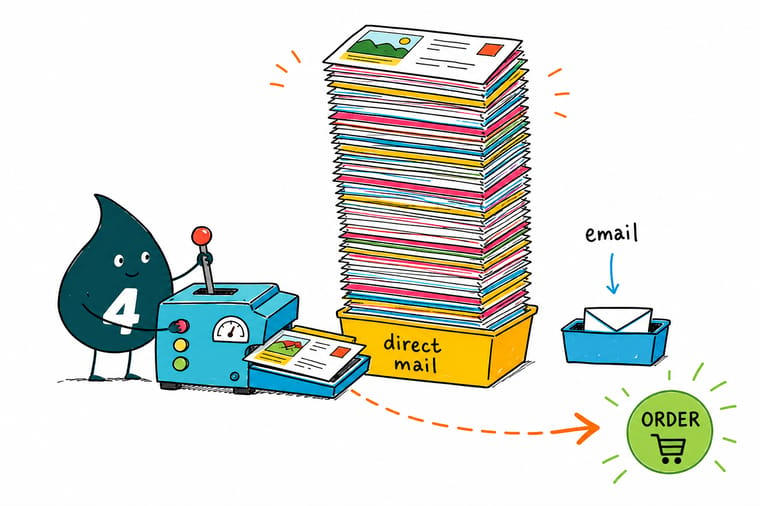
The data points one way for reach and recall and another for speed and cost. Wally’s rule is simple. Send email when you need to move fast or nurture cheaply, and send mail when response rate, recall, and high-ticket conversions matter. Pair the two for the biggest lift, and print the mail heavy on premium stock so it earns the 80 to 90 percent open rate the numbers promise.
Order postcards →Print it
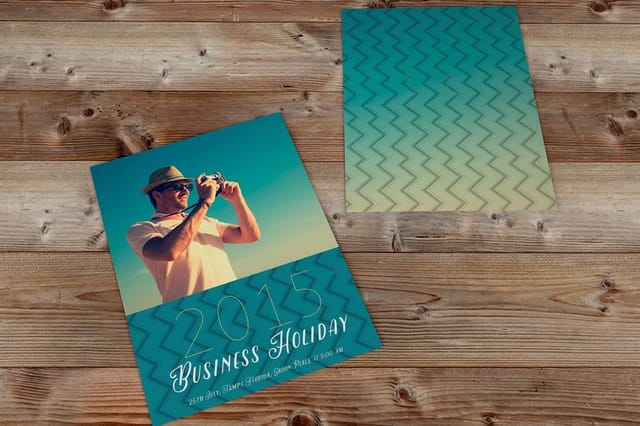
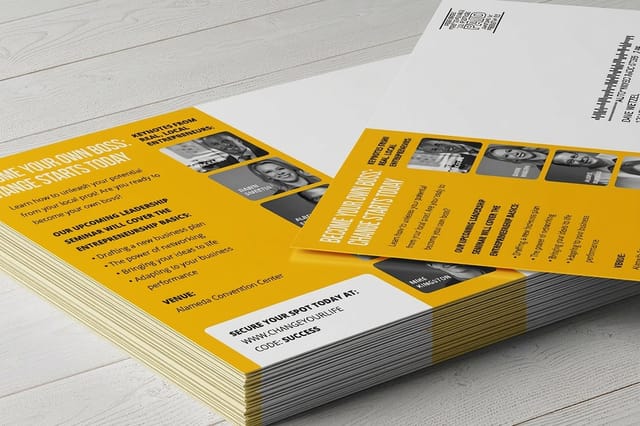
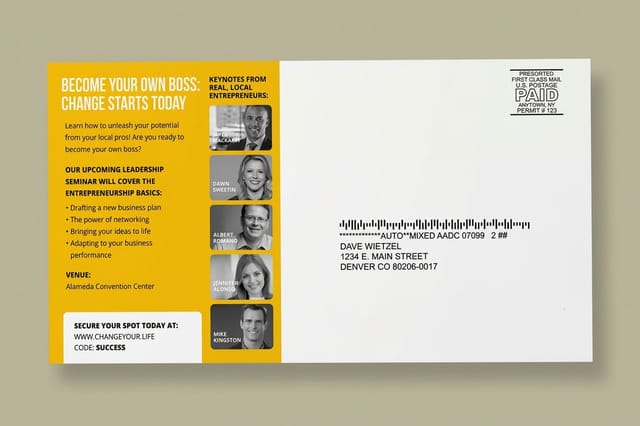
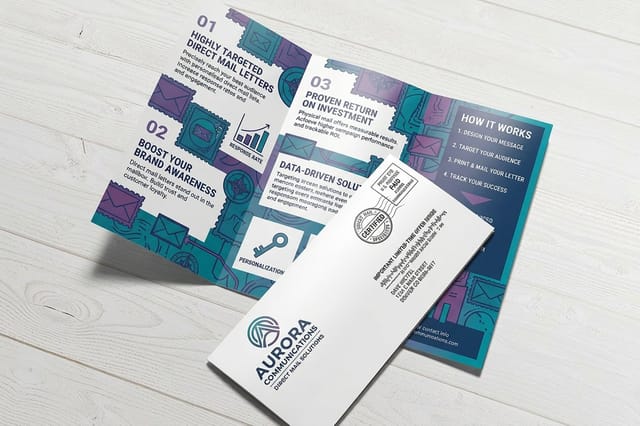
The mail formats compared against email here
Knowing the direct mail vs email statistics is step one. Executing the mail side so it actually beats the inbox is step two, and it starts with the right piece. Here are the products marketers reach for most when they put these numbers to work.
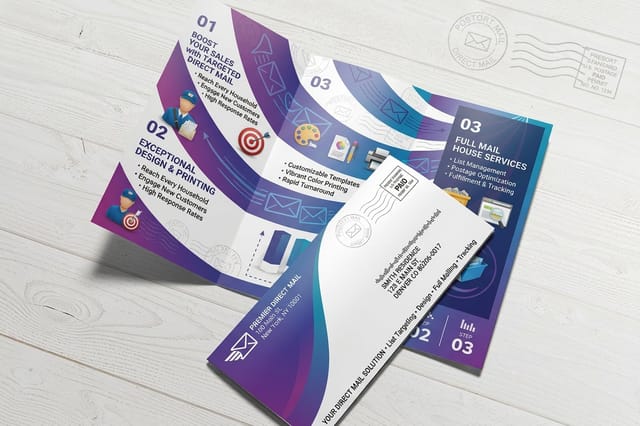
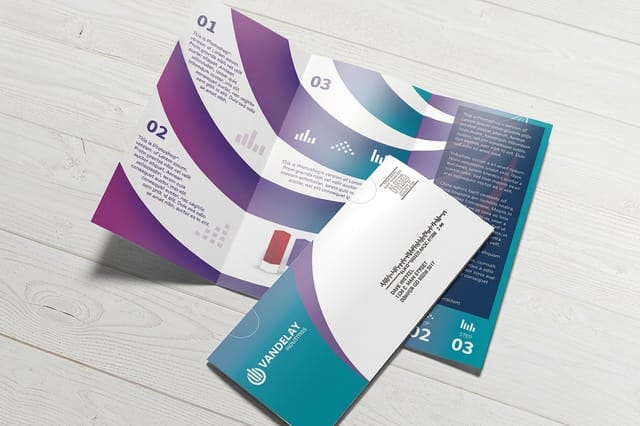
Stock, finishing and price
Postcard costs to set against an email send
Postcards are the cheapest way to put mail against an email send: 500 pieces for $89.68 on 14pt or 16pt cover. The table lists every stock and finish, so you can match the piece to the campaign before you commit a budget.
| Quantity | Price Per Unit | Total |
|---|---|---|
| 50 | 33.0¢ | $16.48 |
| 100 | 24.2¢ | $24.16 |
| 200 | 15.9¢ | $31.86 |
| 300 | 12.8¢ | $38.45 |
| 400 | 11.3¢ | $45.04 |
| 500 | 10.3¢ | $51.62 |
| 600 | 9.89¢ | $59.31 |
| 700 | 9.57¢ | $67.00 |

Start from a blank
Mail templates with the trim and bleed already set
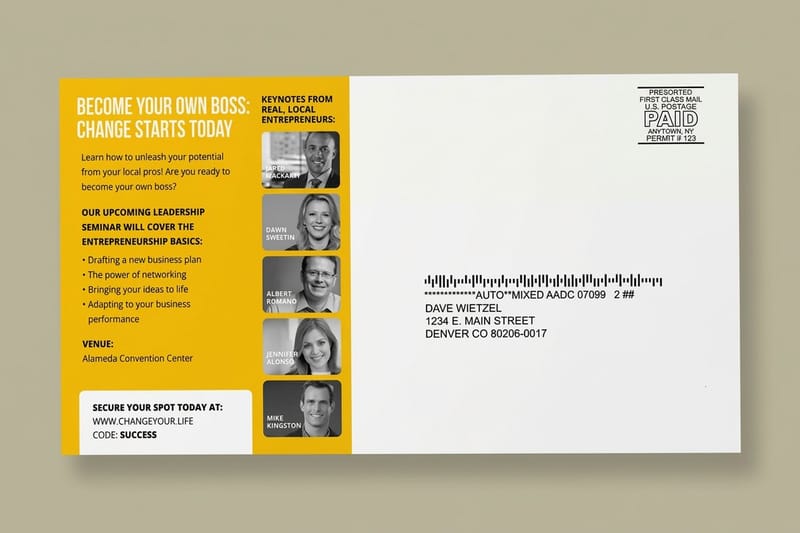
The postcard and mailing flyer templates below already carry the trim, bleed, and safe margin lines, so the address panel stays clear of the cut.
Proof, not promises
What 10 billion plus printed pieces reveal
4OVER4.COM has printed 10 billion plus cards and mail pieces since 1999, over 25 plus years of production data. Across our base of 150,000 plus businesses, postcards remain the most popular format for first-touch prospecting, and thicker stocks at 16pt and above are increasingly requested as marketers learn that paper weight correlates with perceived brand quality. Customers who order premium finishes like soft-touch matte, spot UV, and foil accents report higher response than those using standard uncoated stock. When you compare direct mail vs email, the physical texture of your piece is a variable email simply does not have.
Why marketers trust us
The print record behind the mail side of this comparison
Comparing two channels is only useful if the mail side actually ships. A 4.8 out of 5 average across 10,000 plus reviews and 150,000 plus businesses served stand behind these runs, and a 500 piece postcard run prints in 4 business days.
How we built this
How we compiled this direct mail vs email data
The statistics on this page come from published research by the Association of National Advertisers, USPS Household Diary Studies, Canada Post and True Impact Marketing, Mailchimp benchmark reports, and DMA studies. 4OVER4.COM internal data reflects production and customer feedback from 25 plus years of commercial printing. All figures are cited from their original sources and reflect the most recently available data at time of publication.

Get Started
Put 500 postcards against your next email send for $89.68
A postcard run prints in 4 business days on 14pt or 16pt cover. Letters, flyers, and brochures start at 500 for $238.73 on 100# text.
Legal Disclaimer
Gold Standard guarantees apply to all standard orders placed through 4over4.com. Price match requires verifiable proof of a competitor's published price for an equivalent product with matching specifications and turnaround time. Satisfaction guarantee covers manufacturing defects and print quality issues. Contact support with order number and documentation. On-time delivery rate based on tracked orders 1999 to 2026. Individual results may vary based on shipping carrier performance.
Explore more
Mail versus email guides, postcard products, and reviews
 Statistics Direct Mail Statistics The full response, ROI, and format data behind the debate.
  Statistics Direct Mail ROI See how physical mail stacks up dollar for dollar.
  Statistics Response Rate Benchmarks Average direct mail response rates by industry and format.
  Statistics Direct Mail Effectiveness The engagement and recall research behind the numbers.
  Product Postcards Print the direct mail format with the highest response per dollar.
  Product 3D Postcards Add a visual wow factor email simply cannot replicate.
  Guide How to Make Postcards Design, print, and mail a postcard campaign step by step.
  Template Postcard Templates Print-ready blanks with bleed and safe margins built in.
  Samples Free Print Samples Feel the stocks and finishes before you mail a single piece.
  FAQs Printing FAQs Answers on stock, sizes, proofs, and mailing turnaround.
 Questions and answers
Common questions about direct mail vs email campaigns
Response rates, cost, brand recall, and when to choose each channel, answered.
What are the average direct mail vs email response rates?
Direct mail response rates average around 9 percent for house lists and 4.9 percent for prospect lists, according to the ANA. Email response rates average roughly 1 percent for house lists and 0.1 percent for cold prospects. The gap is wide, and direct mail consistently generates higher response across nearly every industry and audience.
Is direct mail more expensive than email marketing?
Per piece, yes. Direct mail costs $0.30 to $3.00 or more per send, while email costs fractions of a penny. But cost per acquisition often favors direct mail because response rates are much higher. The cost comparison for direct mail vs email marketing depends entirely on your customer lifetime value and conversion rates.
Can I use direct mail and email together?
Absolutely. Combined campaigns see response rates about 28 percent higher than either channel alone, per DMA data. A common approach sends a postcard first, then follows with email 3 to 5 days later. The physical piece creates awareness, and the email provides a convenient path to convert.
Which channel has better brand recall?
Direct mail produces 70 percent higher brand recall than digital media, according to research by Canada Post and True Impact Marketing. Physical mail also requires 21 percent less cognitive effort to process, making it easier for recipients to absorb your message. Check our Showcase for examples of high-impact mail designs.
When should I choose email over direct mail?
Email is better for time-sensitive announcements, long nurturing sequences, automated drip campaigns, and rapid A/B testing. If you need to reach your audience within hours or send 10 or more touchpoints over several months, email speed and low cost make it the practical choice. It is about matching the channel to the goal, not crowning one winner.
What direct mail format gets the highest response rates?
Oversized postcards, at 6x9 or larger, and dimensional mail consistently outperform standard letter-size envelopes. Thicker stocks and premium finishes like soft-touch matte or spot UV also correlate with higher response. The more your piece stands out physically, the more likely it gets read. Order Free Samples to feel the stocks first.
