
6 Print Products That Carry Your Content Marketing Offline
Content marketing goes wrong for beginners in one place: everything gets published on a screen, and the people who would pay you never see it. Six printed pieces fix that, and each one asks the reader for a different amount of attention. Here they are in the order to buy them, with live pricing.
Six printed pieces take a content marketing plan off the screen: business cards carrying a QR code, postcards, flyers, brochures, newsletters, and booklets. Start with cards and postcards, from $16.48, because they only have to carry a promise and a link. Move up to a flyer or a brochure once you know which promise gets answered, and keep booklets and newsletters for content that has already proved itself.
The picks
The 6 picks, in the order to buy them
Every price below is the lowest catalog price for that product, and it moves as you change size, stock, and quantity in the configurator. The order is deliberate: each step down the list asks your reader for more time and costs you more to produce. Lay any of them out in the free online designer, or start from a design template so the bleed and the fold marks are right the first time.
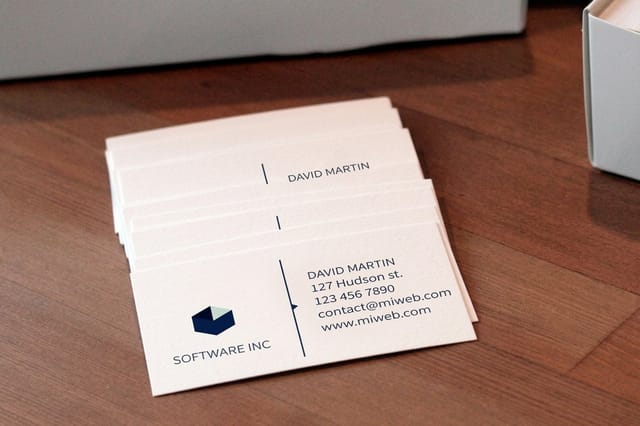
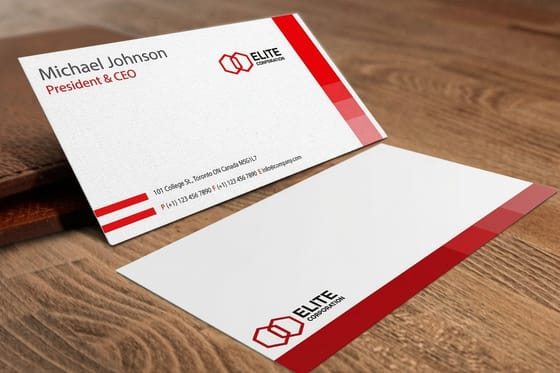
- 1. Standard Business Cards from $17.57 The piece you already hand out. Add a QR that opens the guide you wrote instead of your homepage and the card starts doing content work for the price of a reprint.
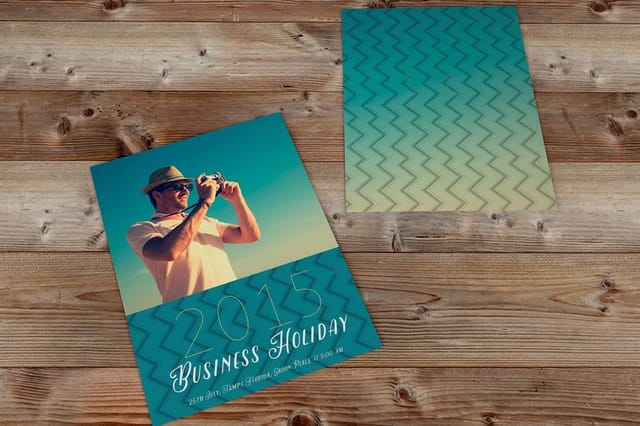
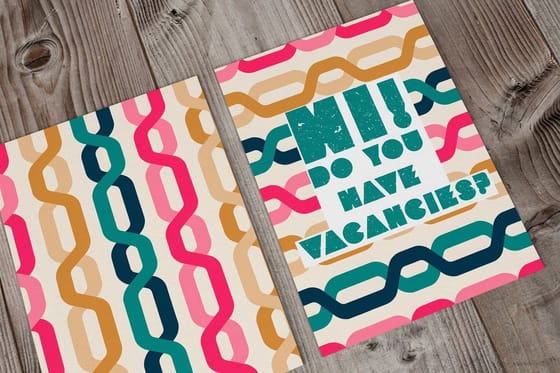
- 2. Standard Postcards from $16.48 The cheapest way to put a headline in front of a person who never visits your site. It carries one idea and one link, and nothing else fits.
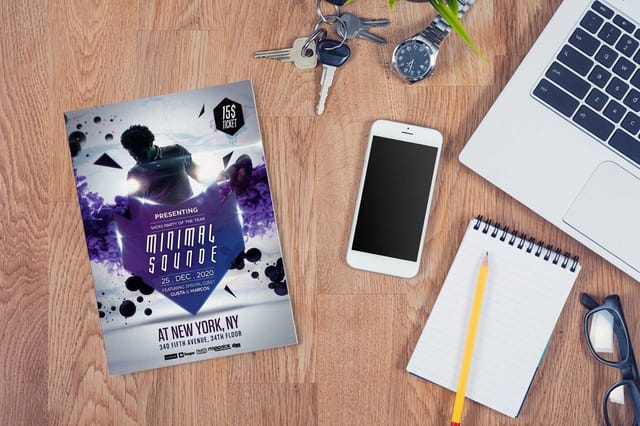
- 3. Standard Flyers from $39.54 One sheet that actually teaches something: a checklist, a price breakdown, a how-to. Print this once your blog has a post worth reprinting.
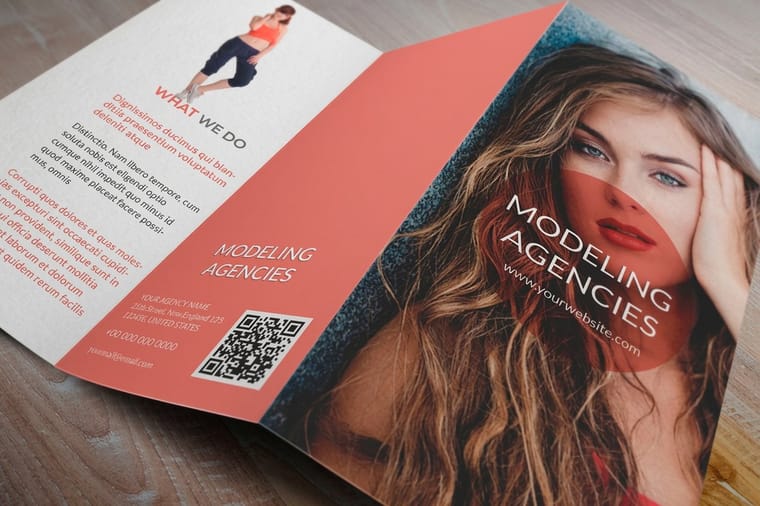
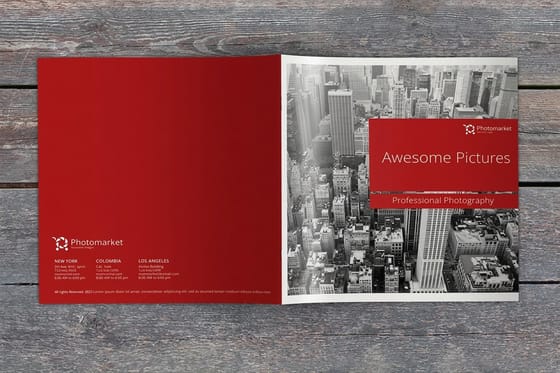
- 4. Standard Brochures from $57.11 Six panels of explanation for the reader who is deciding, not browsing. The fold is a real design constraint, and it is where most first brochures go wrong.
- 5. Standard Newsletters from $75.80 Publishing on a schedule, in a format nobody filters. Only buy in once you can promise four issues, because a newsletter that stops is worse than one that never started.
- 6. Standard Booklets from $240.55 The printed lead magnet. Highest floor price here, and the piece people keep on a desk for a year, so it earns its run when the content is genuinely useful.
Capacity and job
What each format holds, and what it is for
The six pieces are not interchangeable. Each one has a physical limit on how much copy it can carry and a moment in the relationship where it makes sense. Read the row, tap a piece to jump to its section, then match the format to the length of the thing you actually wrote.
| Piece | What it holds | The job it does |
|---|---|---|
| 1. Business cards | 3.5 in x 2 in, one QR code and a name | Turns a handshake into a scan. It points at the content, it does not carry it. |
| 2. Postcards | 6 in x 4.25 in or smaller for the postcard mail rate | Puts one headline and one short link in a mailbox, with no algorithm in between. |
| 3. Flyers | 8.5 in x 11 in, roughly 300 words a side at readable size | Delivers one useful thing in full: a checklist, a comparison, a set of steps. |
| 4. Brochures | 6 panels on a letter sheet, each about 3.66 in wide | Answers the questions a buyer asks after they are interested but before they commit. |
| 5. Newsletters | 4 pages, one issue at a time, on a fixed cadence | Keeps you in front of the same people every quarter without asking for a reopen. |
| 6. Booklets | 8 pages and up, always a multiple of 4 for saddle stitch | The long piece people trade an email address for and then keep on the desk. |
The strategy underneath all six, what to publish and who it is for, is in our beginner's guide to content marketing. If you want to turn one long piece into several of these formats without writing it again, start with content repurposing.
1. Business cards: the handle that points at what you published
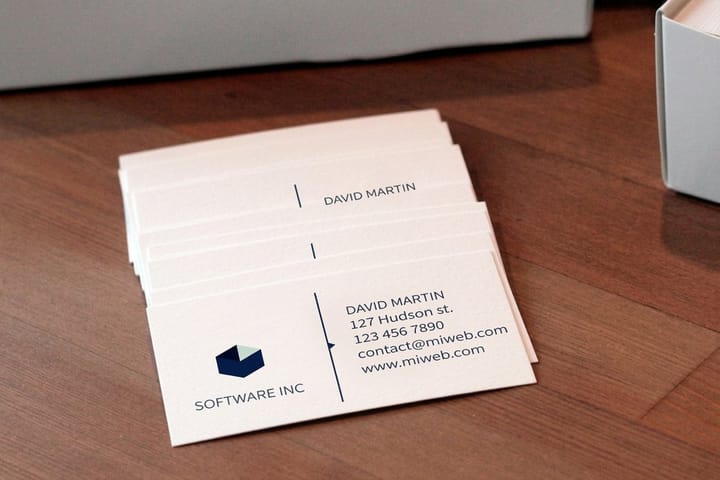
Start here because you already carry these. A standard business card is 3.5 in x 2 in and starts at $17.57, and the only change that turns it into a content marketing piece is the back: a QR code that opens the guide, the checklist, or the calculator you actually wrote.
Two details decide whether it gets scanned. Print the code at 0.8 in square or larger and leave a quiet margin around it roughly four modules wide, because a code shrunk into a corner or crowded against the trim is the one people give up on after two tries. And send it somewhere built for that scan. A code that lands on your homepage hands the reader a search box, and most of them put the card down instead.
Stock matters more than people expect here. A high-gloss laminate throws a phone flash straight back at the lens, so cards scanned indoors in the evening read faster on matte or uncoated stock. The layout side is covered in our guide to QR codes on business cards, with design examples in QR code business card ideas, and the follow-up habits that make a card get used are in 30 business card marketing tips.
2. Postcards: one headline, one link, straight into a mailbox
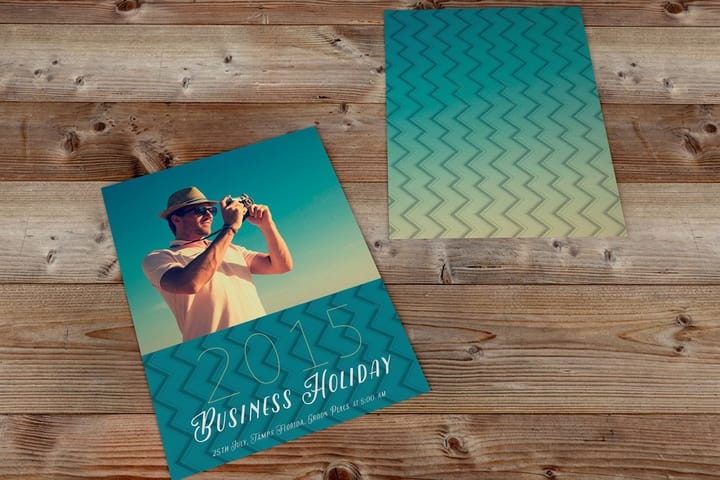
A postcard starts at $16.48 and is the cheapest way to reach somebody who has never found your site. It is not where you teach. It is where you promise one specific thing and give one short address to go and get it.
Size sets the postage, so decide it first. Keep the card at 6 in x 4.25 in or smaller and it mails at the postcard rate; go bigger and it is priced as a letter, which changes the arithmetic on five hundred pieces well before it changes the design. Leave the address panel clear on the back, keep the front to a headline a person reads at arm's length, and print a short vanity URL rather than a long one nobody will retype.
The mistake beginners make is trying to fit the blog post on the card. Six lines of 8pt body copy on a postcard is a wall, and it competes with a headline that had one job. Our direct mail design guide covers the panel rules, sending direct mail postcards walks the mailing side, and adding a QR code to a postcard shows where the code belongs so the mail sorter does not read it as part of the address block. For angles worth testing, there are 12 in postcard marketing ideas.
3. Flyers: one page that gives something away
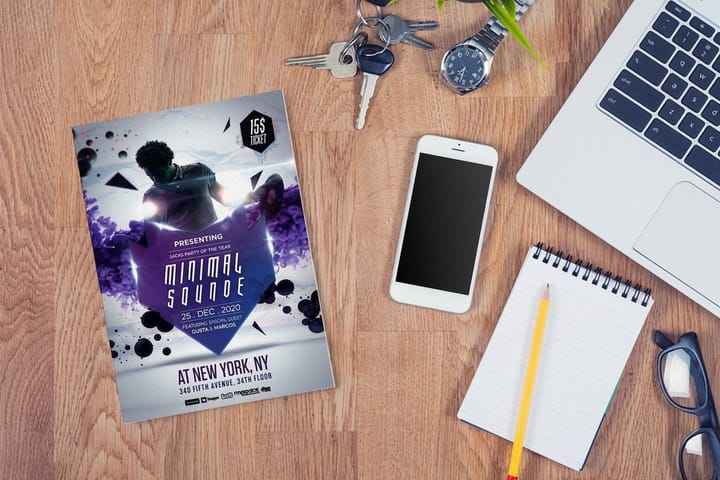
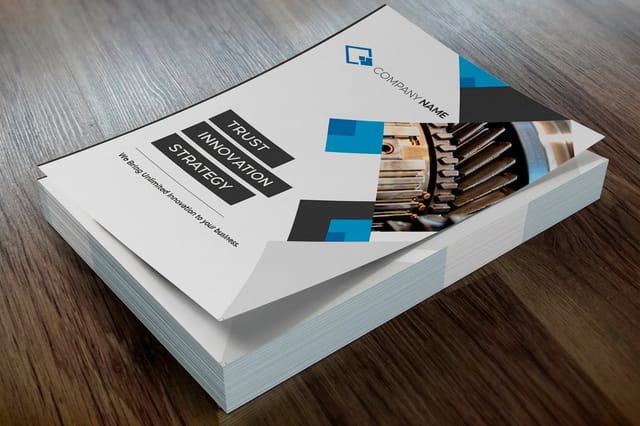
The flyer is the first piece in this kit that carries real content. One 8.5 in x 11 in side of a standard flyer holds roughly 300 words at a size people read standing up, which is enough for a checklist, a five-step process, or a plain comparison of two options. It starts at $39.54.
Print the useful thing, not the sales pitch. A flyer headed "Seven questions to ask before you sign a roofing contract" gets pinned to a corkboard; a flyer headed "We are the best roofer in Queens" is in the bin before the reader reaches the fold. That is the whole trade: you give away the answer, and the name at the bottom is what they remember when the problem turns real.
Watch the paper weight. A 100lb gloss text flyer feels substantial in a rack and photographs well, but it curls in a humid entryway and a pen skates on it, so if you want people writing on the sheet, order an uncoated stock instead. Layout hierarchy is worked through in how to design flyers and how to make flyers, and if you are not sure this is the right format at all, booklet vs brochure vs flyer settles it in a page. Start from a design template if you are laying one out for the first time.
4. Brochures: six panels, and a fold that has to be measured
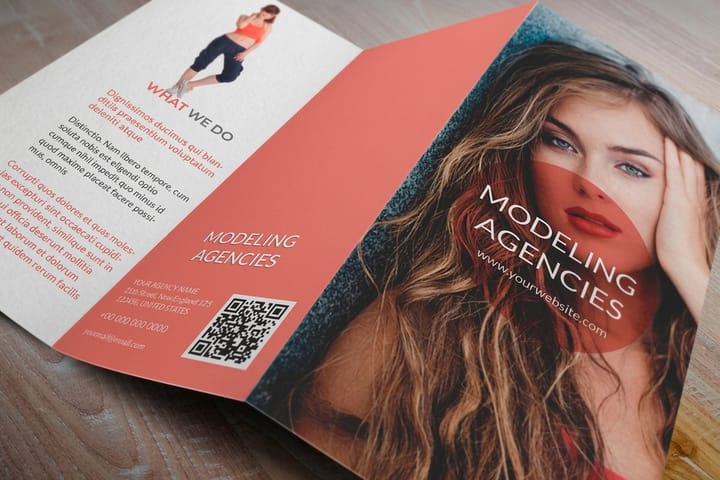
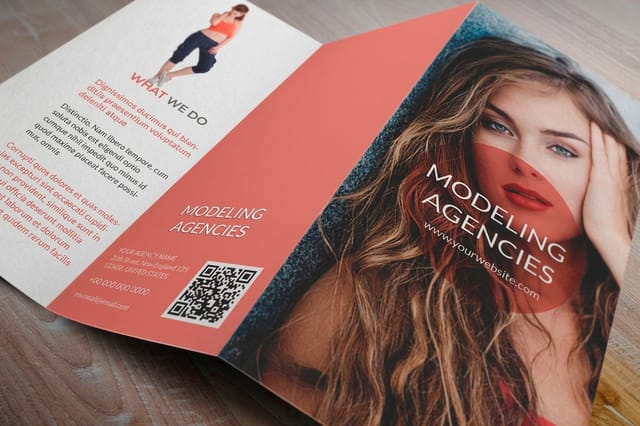
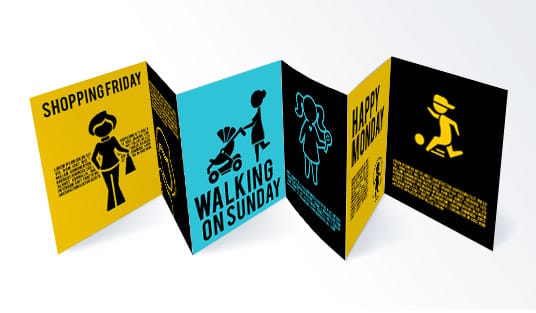
A brochure is what you hand to somebody who is already interested and now has questions. Six panels on a letter sheet, about 600 words total, starting at $57.11. It sits between the flyer, which gives away one thing, and the booklet, which teaches a subject.
Here is the detail that ruins most first brochures. On a letter-size tri-fold, the panels are not equal thirds. The panel that folds inside has to be roughly 1/16 in narrower than the other two, or it buckles against the spine and the fold creeps off your artwork edge. Set your margins to the actual panel widths, keep anything important 0.25 in clear of every fold, and never run a face or a headline across a crease.
Plan the reading order too, because a brochure is opened in stages: the front panel, then the flap, then the full spread. Put the promise on the front, the proof on the inside spread, and the ask on the back panel where a reader lands last. Fold options are laid out in brochure sizes and fold options, stock choices in the best paper for brochure printing, and what to actually write is covered in brochure content ideas.
5. Newsletters: publishing on a schedule nobody can filter
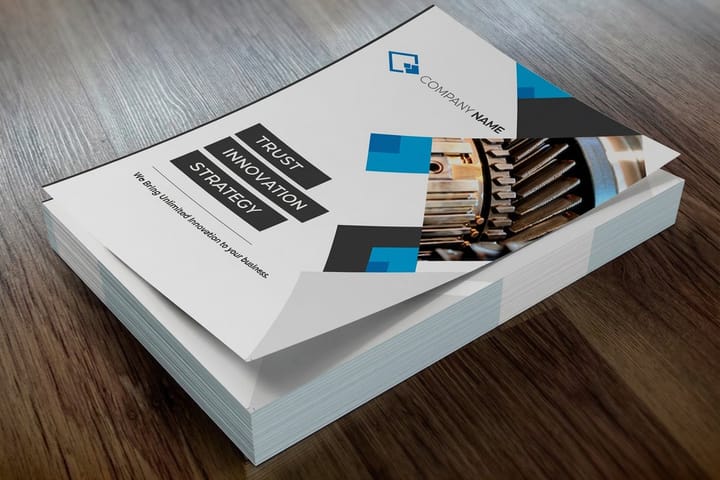
A printed newsletter starts at $75.80 and does something email cannot: it arrives. No promotions tab, no open rate, no sender reputation. The catch is that it only works as a habit, and a habit costs money every single issue.
Be realistic about cadence before you commit. Quarterly is the honest starting point for a small business, because monthly means twelve write-ups, twelve print runs, and twelve postage bills in a year, and the third missed month is when a subscriber decides you folded. Four pages is plenty: one lead story, one customer job with real numbers, one short practical piece, and a dated offer that makes the issue worth opening.
Send it to the list you already own, not a rented one. Existing customers and past enquiries read a newsletter because they recognize the name; a cold list treats the same sheet as junk mail and the cost per response falls apart. Production and postage are walked through in how to print and mail newsletters and creating newsletters for direct mail, the format comparison is in printed vs digital newsletters, and there are layouts to borrow in 15 newsletter designs.
6. Booklets: the lead magnet you can put in a hand
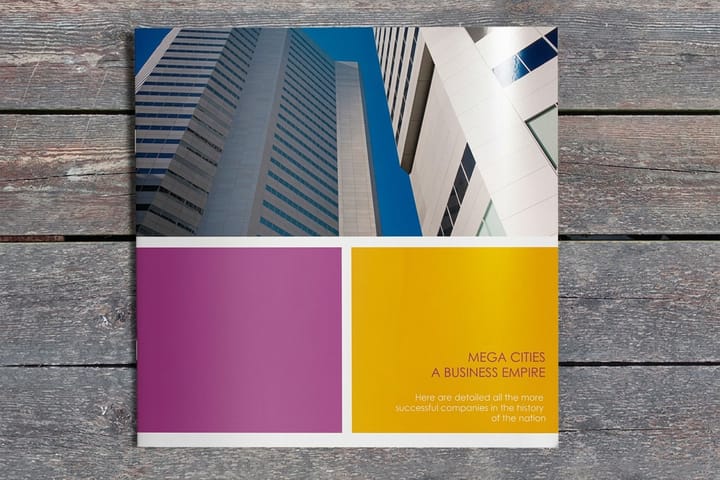
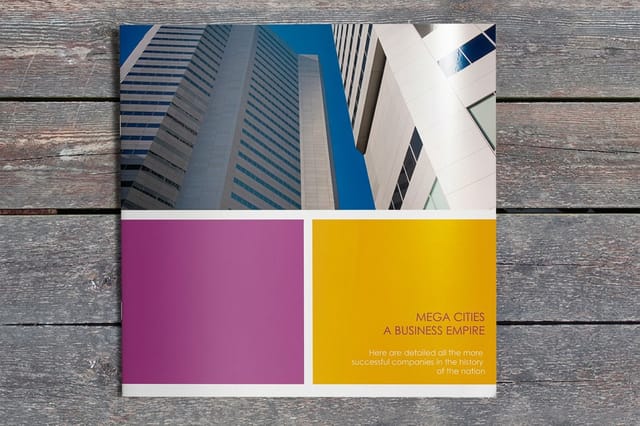
A booklet is the printed version of the long guide on your site, and at $240.55 to start it is the biggest commitment in this kit. It also lasts the longest. A useful 16-page booklet stays on a desk for a year, which no email in the world does.
Two production rules shape the writing. A saddle-stitched booklet is built from folded sheets, so the page count is always a multiple of four: 8, 12, 16, 20. Write to 15 pages and you are padding or cutting, so plan the outline in fours from the start. The second is creep. Every folded sheet nested inside the last pushes the inner pages slightly outward, and the trim takes that off the outer edge, which is why a page number sitting 0.2 in from the trim can vanish on the middle spread. Keep live text 0.375 in clear of the outside edge on anything above 20 pages.
Give it away deliberately. A booklet handed to everyone at a trade show is an expensive flyer; a booklet handed to the eight people who asked a real question is a proposal that arrived early. The binding options are compared in booklet binding methods, the maths is in page counts, multiples of four, and creep, and if you are weighing formats, booklet vs brochure compares the three side by side. For lower-cost runs, see affordable booklet printing.
Specs and pricing
The two pieces you will reorder most
Postcards keep the promise moving and brochures answer the questions that follow, so they are the two lines that come back on almost every reorder. Postcards start at $16.48 for 50 on 14pt gloss cover, brochures at $57.11 for 50 on 100# gloss text, and both leave in 3 business days.

| Quantity | Price Per Unit | Total |
|---|---|---|
| 50 | 33.0¢ | $16.48 |
| 100 | 24.2¢ | $24.16 |
| 200 | 15.9¢ | $31.86 |
| 300 | 12.8¢ | $38.45 |
| 400 | 11.3¢ | $45.04 |
| 500 | 10.3¢ | $51.62 |
| 600 | 9.89¢ | $59.31 |
| 700 | 9.57¢ | $67.00 |
| Quantity | Price Per Unit | Total |
|---|---|---|
| 50 | $1.14 | $57.11 |
| 100 | 82.4¢ | $82.38 |
| 200 | 53.3¢ | $106.55 |
| 300 | 41.0¢ | $123.02 |
| 400 | 34.9¢ | $139.49 |
| 500 | 31.2¢ | $155.97 |
| 600 | 26.7¢ | $160.36 |
| 700 | 23.5¢ | $164.75 |
Wally climbs the content ladder
Six formats, six levels of attention
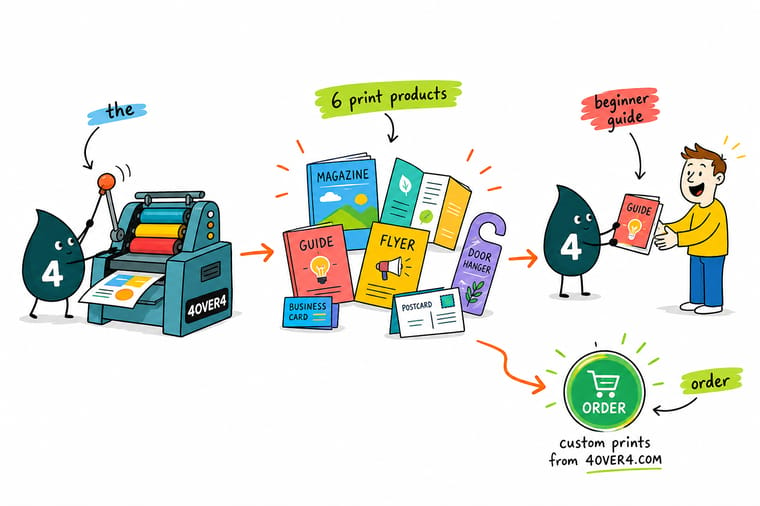
Wally starts on the bottom step with a business card, which only has to carry a QR code, and climbs to a booklet, which asks for twenty minutes and a desk. Every step up holds more of your content and costs more to print, so the trick is matching the step to the reader in front of you. Test the promise on a postcard from $16.48, give the answer away on a flyer, and save the booklet for the people who already asked.
Shop marketing materials →See it in use
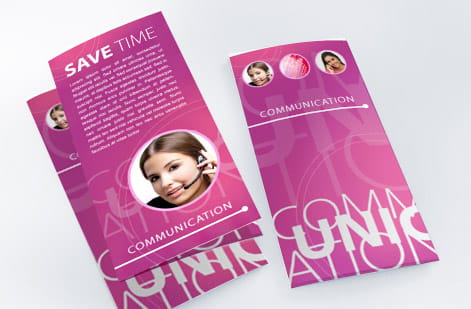
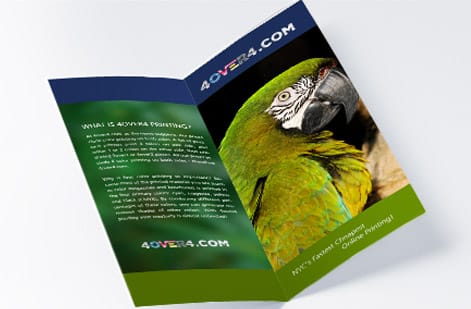
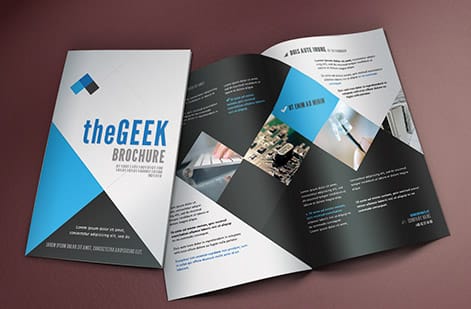
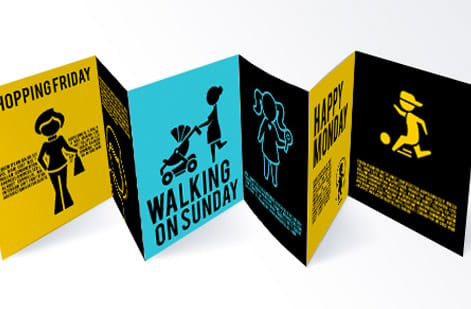
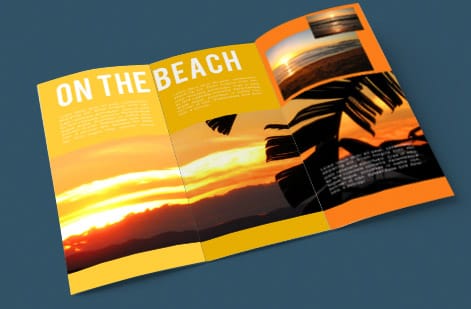
Brochures printed from a content plan


Explore more
Where to go next
By the numbers
What a content plan can be printed as
Common Questions
Common questions about printing your content marketing
Does print belong in a content marketing plan when the content lives online?
It belongs where a screen cannot go. Print reaches people who never search for you, it survives an inbox filter, and it stays on a desk or a corkboard for months. Treat it as distribution rather than a second channel to write for: take the post that already answers a question customers ask you every week, and print it as a flyer, a brochure, or a booklet depending on how long the answer is.
What should a beginner print first?
Business cards with a working QR code, and postcards. Cards start at $17.57 at 4OVER4.COM and postcards at $16.48, so you can test both your offer and the page the QR points at for less than a small ad budget. Once you know which promise gets a response, move up to a flyer at $39.54 that gives the answer away in full.
How do I measure a printed piece with no analytics?
Give each piece its own destination. A short URL printed only on the postcard, a QR with its own tracking link on the card, and a different code on the flyer let you separate the three in your own website data. A dedicated phone extension or a promo code works the same way for calls and orders. Without that, print looks like it did nothing, because the visits all land as direct traffic.
How many words fit on a tri-fold brochure panel?
Roughly 90 to 110 words per panel at a readable body size, so about 600 words across all six panels once you allow for a headline and an image on most of them. Push past that and the type drops below 9pt, which is where a brochure stops being read and starts being scanned. If your subject needs more than 600 words, it is a booklet, not a brochure.
Why does a booklet page count have to be a multiple of four?
A saddle-stitched booklet is made from sheets folded in half and stapled through the spine, and one folded sheet makes four pages. That is why 8, 12, 16, and 20 work and 15 does not. Plan the outline in blocks of four from the beginning, because the alternative is padding with a filler page or cutting something you wanted to keep.
How often should a small business send a printed newsletter?
Quarterly. Monthly sounds better and then collapses in month four, and a newsletter that stops is a louder signal than one that never started. Four issues a year gives you time to collect a real customer story for each one, and it keeps the print and postage cost at a level a small business will still approve next year.
Should the QR code go on the front or the back of a business card?
The back, at 0.8 in square or larger, with a short line of text saying what happens when you scan it. The front is for the name and the way to reach you. A naked code with no label gets scanned far less often than one that says what is on the other side, and a code smaller than 0.8 in fails often enough on older phones to cost you the scan.
What is the cheapest way to test artwork before a big run?
Order the smallest quantity of the cheapest format in the set, usually postcards or flyers, and read the printed copy out loud before you scale it. Check the fold placement on a real brochure and scan the QR from a printed card in poor light rather than from your screen. You can also start from a design template so the margins and bleed are already correct, which removes the most common reason a first run comes back wrong.
Get Started
Print the set in one brand
Order the six pieces together at 4OVER4.COM and the card, the postcard, the flyer, the brochure, the newsletter, and the booklet all leave the press matching. Pick your sizes, stocks, and finishes, and watch each price update live as you build the order.
Legal Disclaimer
Gold Standard guarantees apply to all standard orders placed through 4over4.com. Price match requires verifiable proof of a competitor's published price for an equivalent product with matching specifications and turnaround time. Satisfaction guarantee covers manufacturing defects and print quality issues. Contact support with order number and documentation. On-time delivery rate based on tracked orders 1999 to 2026. Individual results may vary based on shipping carrier performance.
