
7 Print Pieces That Build an Ecommerce Store That Sells
An online store sells twice: once on the product page, and once when the box opens on a kitchen counter. The second sale is made of printed pieces, and there are seven of them. Here is the set, in the order a small store should buy it, with live pricing on every one.
Seven printed pieces carry an ecommerce order after checkout: a product label, a hang tag, a thank you insert card, a sticker, tissue paper, branded tape, and a winback postcard. Buy the label and the insert card first, because together they start under $45 and they touch every order you pack. Leave tissue and tape until your shipping volume is steady, because both are sold in large runs and start far higher.
The picks
The 7 picks, in the order to buy them
Every price below is the lowest catalog price for that product, and it moves as you change size, stock, and quantity in the configurator. Start at the top if you are packing your first hundred orders. Work down as volume makes the larger runs pay. Each piece can be laid out from scratch in the free online designer or started from a design template.
- 1. Custom Labels from $25 The piece that makes a jar, bottle, or box look like a product instead of a batch from a kitchen table. Order it first, because nothing else in the kit can hide a bare container.
- 2. Standard Hang Tags from $25.27 Apparel, candles, and anything with a string or a handle. The tag carries the care instructions and the size, so your product photos stop needing a caption.
- 3. Flat Thank You Cards from $19.77 The only advertisement you will ever run that reaches someone who has already paid. One offer, one code, no expiry date printed on it.
- 4. Die-Cut Stickers from $93.37 A sticker leaves the box and goes on a laptop or a water bottle. It is the cheapest piece here that keeps advertising after the parcel is in the recycling.
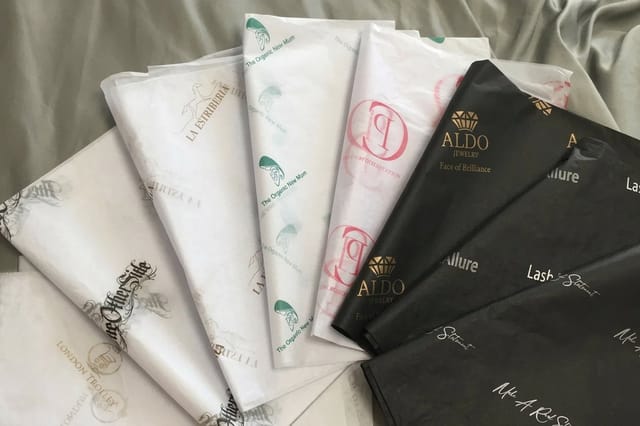
- 5. Tissue Paper from $126.32 The wrap that makes opening the box feel deliberate. Buy it once orders are steady, because it protects nothing and the run sizes are large.
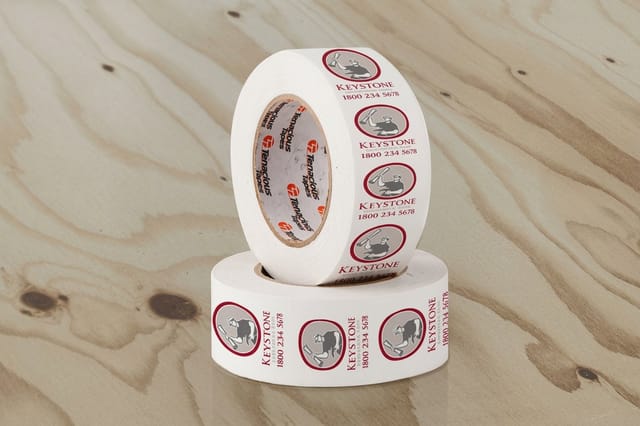
- 6. Packaging Tape from $347.11 The outside of the parcel is the only part a stranger sees. Highest floor price in the kit and the last piece most stores add.
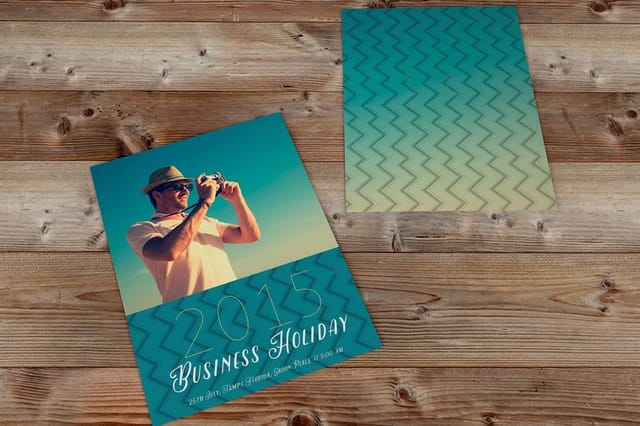
- 7. Standard Postcards from $16.48 The follow-up that lands in a mailbox six weeks later, with no ad account and no algorithm between you and the customer who already bought once.

Specs and placement
What each piece is, and where it sits in the order
Seven pieces, seven jobs. Three of them are on the product, two are in the parcel, one is on the outside of the box, and the last one arrives weeks later in the mail. Read the row, tap the piece to jump to its section, then order the spec that matches what you actually ship.
| Piece | Spec that matters | Where it goes |
|---|---|---|
| 1. Custom labels | Paper for dry goods, BOPP or vinyl for anything that gets wet or cold | On the product itself, and on the outer carton for the SKU and barcode. |
| 2. Hang tags | 2 in x 3.5 in is the common size, 16pt or heavier, hole set in from the edge | Strung to garments, candles, bags, and anything hung on a rack or a hook. |
| 3. Thank you insert cards | 4 in x 6 in flat, or folded when you want a handwritten note inside | On top of the product, the first thing seen when the flap opens. |
| 4. Die-cut stickers | Vinyl, laminated, kiss-cut when it ships loose in a mailer | Tucked in with the order, or used to seal the tissue instead of tape. |
| 5. Tissue paper | One-color repeating pattern costs less to print than full coverage | Wrapped around the product, folded and sealed with a sticker. |
| 6. Packaging tape | Sold by the roll in case quantities, printed in one or two colors | The seam of the shipping box, and across the flap as a tamper line. |
| 7. Winback postcards | 6 in x 4.25 in or smaller to mail at the postcard rate | In the mail weeks after delivery, to customers who bought once and stopped. |
The full store build, from listings to fulfilment, is covered in our guide on how to build an ecommerce store that sells. This page is the printed layer that sits on top of it.
1. Custom labels: the piece that turns a container into a product
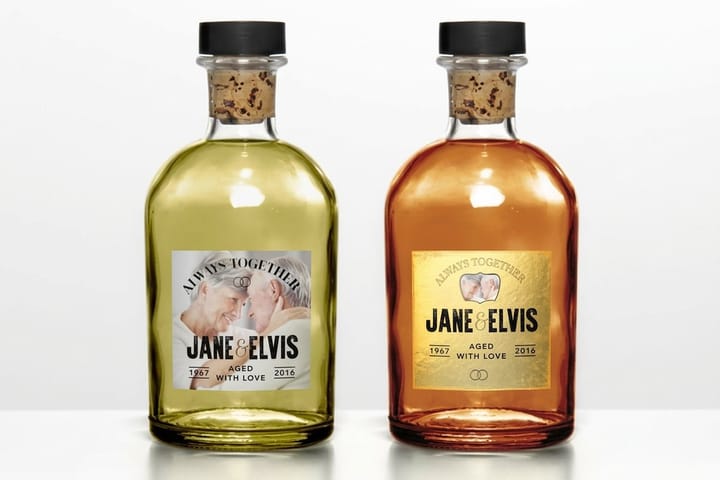
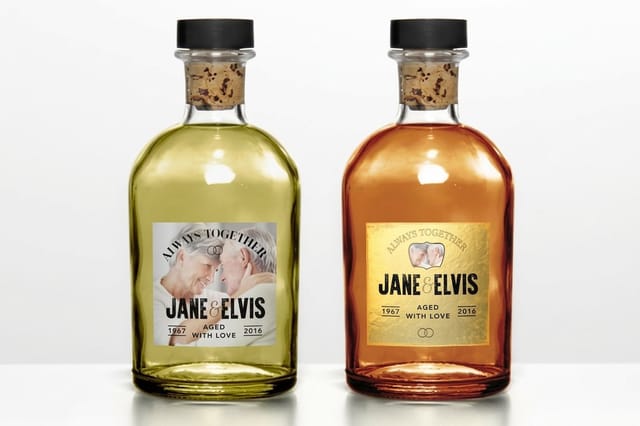
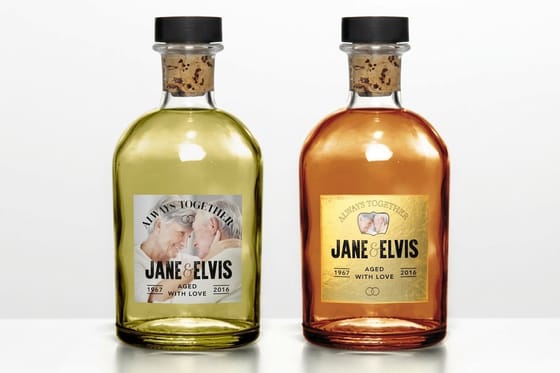
A bare jar with a handwritten name on masking tape sells at a craft fair and nowhere else. A printed custom label is what makes the same jar photograph like something a person would buy from a stranger on the internet. It is the first thing to order and it starts at $25 at 4OVER4.COM.
Material decides more than design here. Paper labels cost the least and look right on dry goods, boxes, and candles that live on a shelf. They also wrinkle the moment a container sweats, so anything that goes in a fridge, a shower, or a cooler wants BOPP or vinyl instead, which shrug off condensation and a wet hand. If the label wraps a curved bottle, keep the artwork off the last quarter inch at each end, because that is where the wrap overlaps itself and buries whatever is printed there.
If your product carries a barcode, print it black on white with clear space around it and keep it off metallic or holographic stock, since a scanner reads contrast and foil throws light back at it. Our explainer on barcode stickers covers the sizing rules, and adhesive labels, seals, and tape walks through where each adhesive belongs. For irregular shapes, die-cut labels follow your outline instead of forcing a rectangle onto a round lid.
2. Hang tags: the spec sheet that hangs off the product
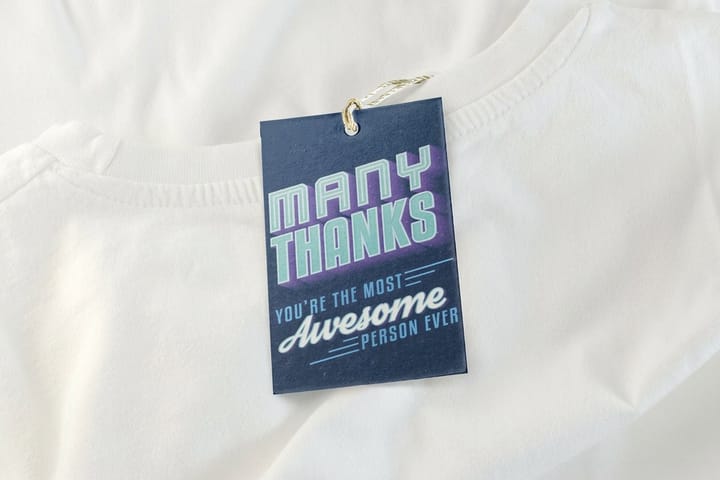
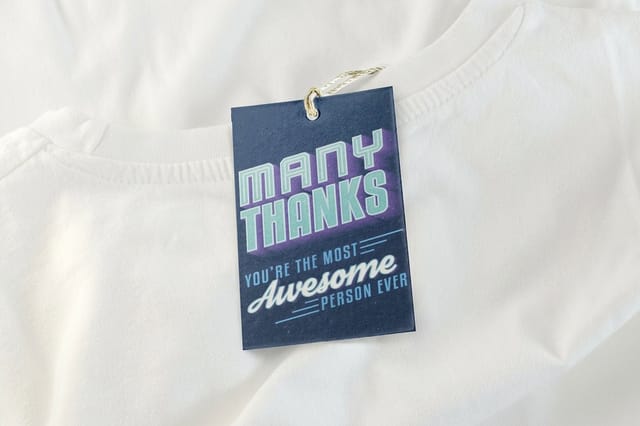
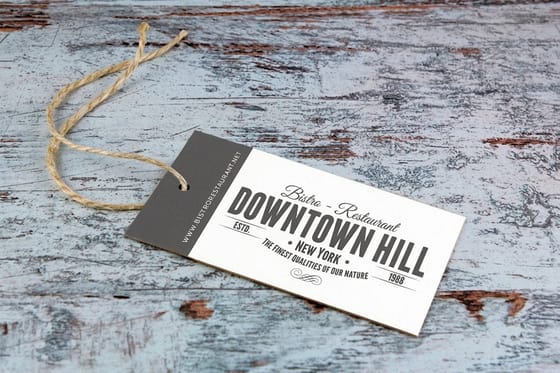
Apparel, bags, candles, and anything with a handle need a hang tag. It holds the size, the fiber content, the care instructions, and the price, which keeps that information off the product photo and out of the description where nobody reads it.
Two things go wrong with hang tags. The first is stock weight: 14pt feels like a business card and bends the first time a shopper pushes past it on a rack, while 16pt and heavier hold their shape. The second is the hole. Set it at least a quarter inch in from the edge, because a hole punched close to the trim tears straight through the first time someone tugs the string. Our hang tag size guide lists the standard sizes and where each one is normally used.
Print the price on the tag only if you never discount. The moment you run a sale you are either sticking a label over your own tag or reprinting the run, so most online sellers leave the price to the listing and give the tag the story instead. Tags also show up in every flat lay, which is worth remembering when you read our notes on product photos for an online store.
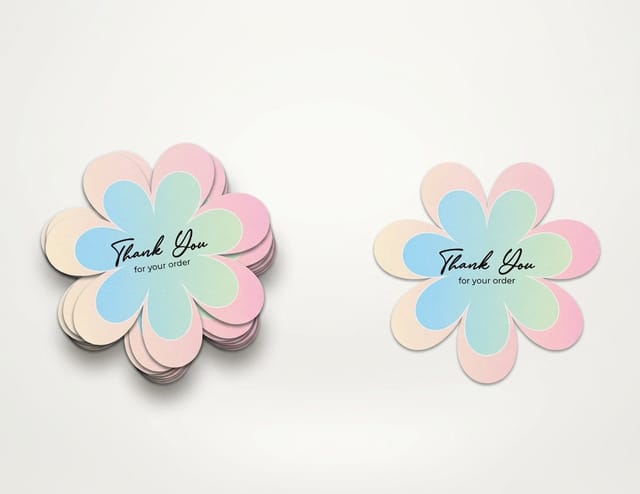
3. Thank you insert cards: the cheapest repeat order you will ever buy

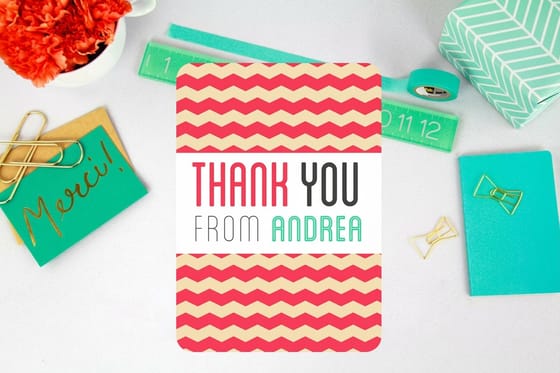
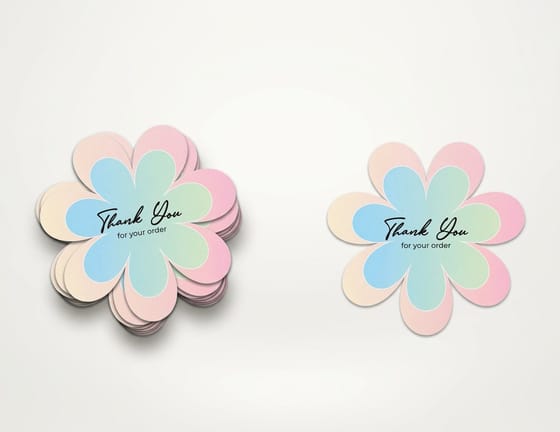
The insert card is the highest-value piece in this kit per dollar, and it starts at $19.77. Every other channel pays to reach a stranger. A flat thank you card reaches someone who has already handed you money and is holding your product, which is the single best moment you will get.
Give it one job. A short thank you, one offer with a code, and a QR that goes somewhere specific, either a review form or the reorder page for what they just bought. Do not print an end date. A card with a code that still works six months later earns orders from junk drawers, while a card that expires on Friday is worthless by the weekend. Two offers on one card cuts the response to both, so pick the one you actually want.
Flat 4 in x 6 in slides into a poly mailer without folding. Choose folded thank you cards when you write notes by hand and want the inside blank, which is worth doing while your order count is small enough that you can. There is more on what to print on them in our guide to packaging insert cards for ecommerce brands.
4. Die-cut stickers: the only piece that leaves the box
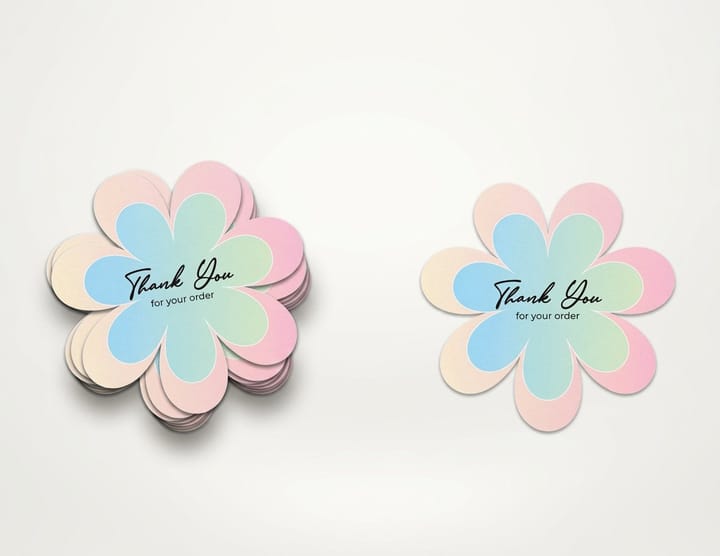
Everything else in the kit gets recycled once the order is unpacked. A die-cut sticker gets stuck on a laptop lid, a water bottle, or a notebook and keeps working for a year. That is why it belongs in the parcel even at $93.37 for the first run.
Choose the cut to match the job. Kiss-cut leaves the backing sheet whole, so the sticker survives being shaken around a mailer and peels off easily with cold hands. Die-cut goes through the backing and looks better in a photo, but the loose shape can bend at the corners in transit. Vinyl with a laminate is what survives a dishwasher and a rain jacket; uncoated paper stickers fade and lift within weeks outdoors.
Here is the part most stores get wrong: a sticker only travels if the customer wants it on their own things. A logo lockup on a white square goes in the bin. A shape, a joke, or a phrase that says something about the person using it goes on the laptop. Bulk pricing and stock choices are covered in print for ecommerce brands, and there are worked examples in nine ecommerce packaging solutions.
5. Tissue paper: the wrap that makes the box feel intentional
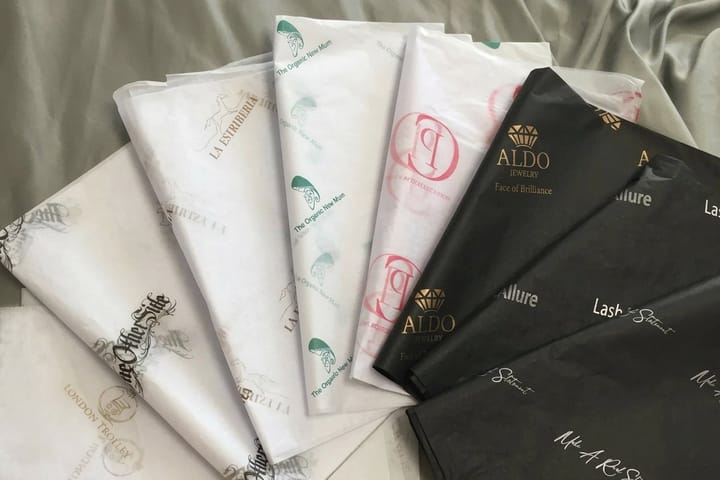
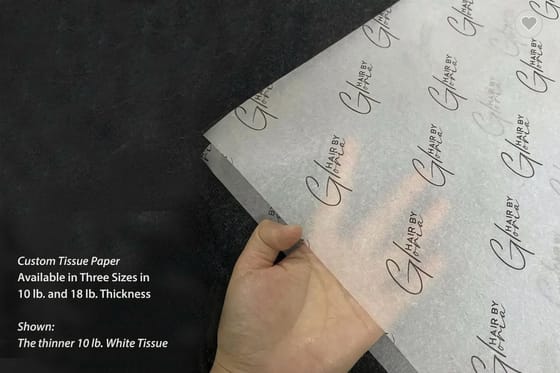
Printed tissue paper is the difference between a product rattling around in a box and a product that was wrapped for somebody. It starts at $126.32, and the run sizes are large, so this is the piece to add once orders are steady rather than on day one.
Be honest about what it does. Tissue is presentation, not protection. It will not stop a mug from cracking and it does not replace bubble wrap or a void fill, so budget for both. A single-color repeating pattern prints cheaper than heavy full coverage and reads better under a folded flap, where only a quarter of the sheet is visible anyway. Keep dense ink away from pale fabrics, because a saturated print pressed against a light garment in a hot van is exactly how ink transfer happens.
One sheet of tissue folded over the product and sealed with a sticker replaces a piece of tape and looks like a decision rather than a shortcut. If you ship flat or soft goods, the mailer itself matters as much as the wrap, which is the subject of choosing custom shipping envelopes, and the wider material picture is laid out in the nine types of packaging.
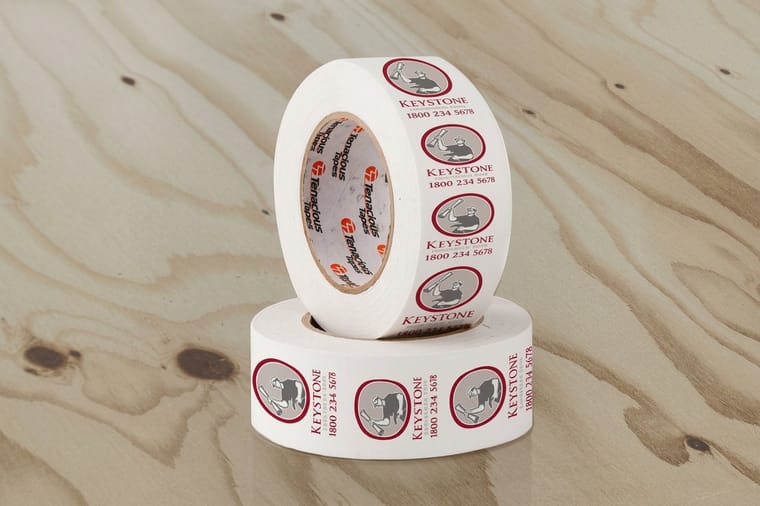
6. Packaging tape: branding on the one surface strangers see
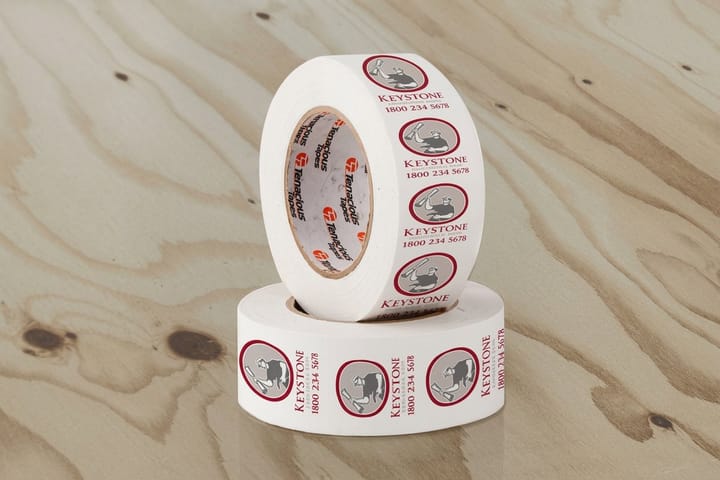
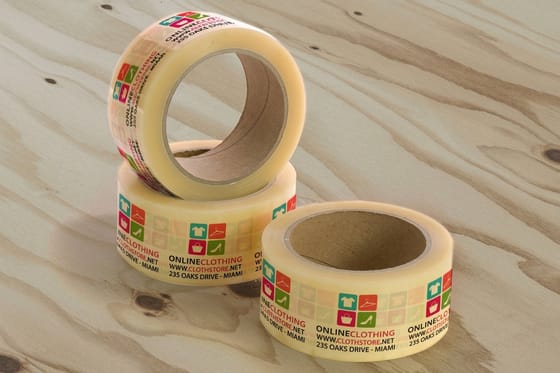
Every parcel you ship travels through a warehouse, a truck, a lobby, and a doorstep. The only printed surface anyone sees along the way is the tape. Custom packaging tape turns a plain brown box into your box, and it starts at $347.11 because it is sold in case quantities of rolls.
The trade-off is real and it cuts both ways. Branded tape tells the world what is inside the carton, which is free advertising for a coffee roaster and a porch-theft signal for anything expensive or resellable. If you ship electronics, jewelry, or anything a stranger can flip, run plain tape on the outside and put the branding inside where the customer finds it. Two-color printing on tape is also the point where cost climbs fastest, so a single strong color usually reads better on brown kraft than a detailed mark that closes up.
Tape also does a job design cannot: a printed seam across the flap shows at a glance whether a box was opened before it arrived. Pair it with shipping boxes sized to the product so the tape run is short and straight, and read the adhesive branding guide before you commit to a roll width.
7. Winback postcards: the follow-up that does not need an ad account
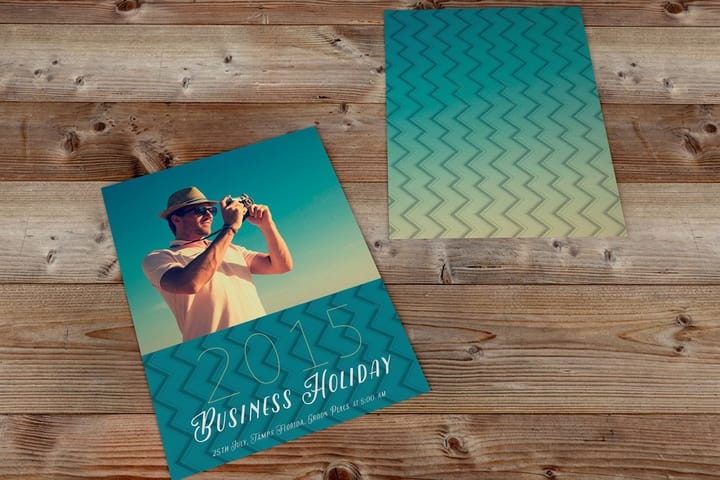
Most online stores stop talking to a customer the moment the email goes to promotions. A printed postcard is the one channel where the address you already collected at checkout still reaches a person, and at $16.48 to start it is the cheapest piece in the kit.
Size decides the postage. Keep the card at 6 in x 4.25 in or smaller and it mails at the postcard rate; go larger and it is priced as a letter, which changes the maths on a few hundred pieces. Leave the address panel clear on the back, keep the offer to one line on the front, and mail to the segment that actually pays back: people who bought once and have not returned, not everyone on the list.
What goes on the card is the same discipline as the insert. One offer, one code, one reason to come back now. Our direct mail design guide covers layout and the address panel, and pricing and profit for online stores is worth a read before you decide how much a returning customer is worth to you.
Specs and pricing
The two pieces you will reorder most
Labels go on every unit and insert cards go in every parcel, so they are the two lines on the order that come back every quarter. Custom labels start at 25 pieces and flat thank you cards at 25 for $19.77, both on a 3 business day turnaround.


| Quantity | Price Per Unit | Total |
|---|---|---|
| 1 | $25.00 | $25.00 |
| Quantity | Price Per Unit | Total |
|---|---|---|
| 25 | 79.1¢ | $19.77 |
| 50 | 50.5¢ | $25.27 |
| 100 | 42.8¢ | $42.84 |
| 200 | 25.8¢ | $51.62 |
| 300 | 20.1¢ | $60.42 |
| 400 | 17.3¢ | $69.20 |
| 500 | 15.6¢ | $77.99 |
| 600 | 15.4¢ | $92.26 |
Wally packs the order
Seven pieces, one box, two sales
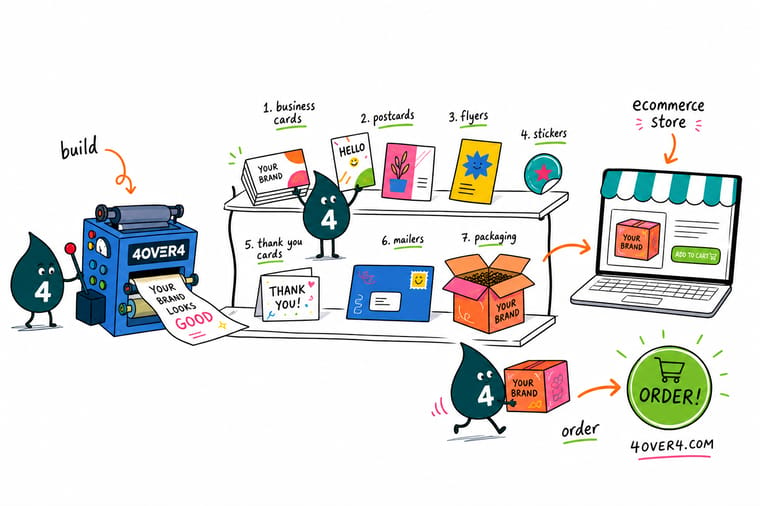
Wally packs a parcel the way a customer opens it, in reverse. The tape and the box are what a stranger sees, the tissue and the sticker are what the customer sees first, the card is what makes them order again, and the label and the tag are what make the product look like a product. Buy the label and the card first at under $25 each, then add the rest as your order count grows. Print the whole set in one brand at 4OVER4.COM.
Shop packaging printing →See it in use
Sticker work from online sellers
Explore more
Where to go next
By the numbers
Printing that keeps every parcel looking the same
Common Questions
Common questions about printing for an online store
What should a new online store print first?
Product labels and a thank you insert card. Labels start at $25 at 4OVER4.COM and flat thank you cards at $19.77, so both together cost less than a small ad test, and they are the two pieces that touch every order. Hang tags come next if you sell apparel or anything with a string. Tissue and branded tape are worth adding once your order count is steady, because they are sold in large runs and their starting prices are much higher.
How much does the full seven-piece ecommerce print kit cost?
Prices depend on size, stock, finish, and quantity, and every option updates live in the configurator. As starting points at 4OVER4.COM: postcards from $16.48, flat thank you cards from $19.77, custom labels from $25, hang tags from $25.27, die-cut stickers from $93.37, printed tissue paper from $126.32, and packaging tape from $347.11. The per-unit price drops as quantity climbs, which is why tape looks expensive at the roll level and cheap per parcel.
Paper or vinyl labels for my product?
Paper is cheaper and looks right on dry goods, candles, and cartons that live on a shelf. Vinyl or BOPP is what you want on anything that meets moisture, because a paper label wrinkles and lifts as soon as a bottle sweats in a fridge or sits in a bathroom. If your product is refrigerated, frozen, or used with wet hands, pay the difference and skip the reprint.
Kiss-cut or die-cut stickers for a package insert?
Kiss-cut for anything that ships loose in a mailer. The backing sheet stays whole, so the sticker does not catch a corner and peel in transit, and the customer can lift it with cold hands. Die-cut, where the cut goes through the backing, photographs better and works well when the sticker sits under a card or inside a wrap where nothing rubs it.
Does a thank you card actually bring customers back?
It works when it carries one specific offer and one place to use it, and it does nothing when it only says thank you. Print a code with no expiry date, point a QR at the reorder page for the exact product they bought, and put a unique code on the card so you can see in your own order data how many came back through it. That number is yours to measure, not one to take from an article.
Is branded packaging tape worth it for a small shop?
It depends on what is in the box. Branded tape is strong advertising for food, apparel, and craft goods, and it is a theft signal for electronics, jewelry, or anything easy to resell off a doorstep. The other catch is the floor price: tape starts at $347.11 because it ships in case quantities, so most stores brand the inside of the parcel first and add tape once shipping volume makes the case worth buying.
What size postcard mails at the postcard rate?
Keep it at 6 inches by 4.25 inches or smaller and it qualifies for the postcard rate. Anything larger is priced as a letter, which is fine if the extra space earns its keep but changes the cost of a few hundred pieces. Leave the address panel clear on the back and keep the offer on the front to one line that reads from arm length.
How do I keep colors matching across labels, tags, tape, and tissue?
Build every piece from one file with the same two brand colors, and expect uncoated and kraft stocks to render those colors darker and duller than a coated label does. The safest route is to pick the color on the roughest stock in the set, usually the kraft or the tissue, and let the coated pieces follow. Starting each item from the same design template keeps the type and the logo size consistent when you order the pieces months apart.
Get Started
Print the whole set in one brand
Order the seven pieces together at 4OVER4.COM and every label, tag, card, sticker, sheet, roll, and postcard leaves the press matching. Pick your sizes, stocks, and finishes, and watch each price update live as you build the order.
Legal Disclaimer
Gold Standard guarantees apply to all standard orders placed through 4over4.com. Price match requires verifiable proof of a competitor's published price for an equivalent product with matching specifications and turnaround time. Satisfaction guarantee covers manufacturing defects and print quality issues. Contact support with order number and documentation. On-time delivery rate based on tracked orders 1999 to 2026. Individual results may vary based on shipping carrier performance.
