
Pricing Strategies That Protect Margin for Online Businesses


A working method for setting prices online: build the floor from real costs, choose the strategy that fits what you sell, cost every discount before you offer it, and change prices without losing the buyers you have.
Price from your contribution margin up, not from your competitor down: total the landed cost, payment fees, shipping, packaging and returns per order, and price so what is left still pays for marketing, overhead and you. Then pick the strategy the product justifies. Cost-plus sets a safe floor, value-based pricing earns more but only when the product page and the parcel back it up, penetration pricing buys early orders at the cost of anchoring buyers low, and every discount is a volume bill: at a 40 percent margin, 10 percent off needs 33 percent more units to break even.
Quick answer
Margin sets the floor, the buyer sets the ceiling
Add up everything one order costs you, then price so the remainder still pays for marketing, overhead and your own time. That gives you the floor. The ceiling comes from what the buyer is comparing you against: on an identical commodity item it is the listing next to yours, and on anything you have branded or improved it is what the outcome is worth to them. Discounts move both numbers at once, which is why the volume math below matters more than the promotion calendar.
Find Your Real Floor Before You Argue About the Ceiling

Most bad prices online come from one mistake: the seller compared the sticker price to the product cost and called the difference profit. The gap between those two numbers is where a business quietly bleeds.
Every order carries more than the item. Work out the full cost per order before you decide anything about strategy:
- Landed cost. Unit price plus freight, duty and any inbound handling. The freight per unit changes with order size, so a price set on a full container does not hold on a reorder of two cartons.
- Payment and platform fees. A percentage of the whole order, shipping included, plus a fixed cent amount per transaction that hurts most on small baskets.
- Outbound shipping and packaging. Measure your actual box, not an average. Dimensional weight rules mean a light bulky parcel can cost more than a heavy small one.
- Returns and replacements. The item usually comes back unsellable and the outbound shipping is gone. Spread that cost across every unit sold, not just the ones returned.
- Marketing acquisition. If a paid channel brings the order, its cost belongs in the same arithmetic, otherwise a profitable product funds an unprofitable channel.
What is left after all of that is your contribution margin, and it is the number every pricing decision on this page runs on. Printing works the same way, which is why the quantity you order changes the unit price so sharply. Our guide to how print price breaks work shows the same cost curve from the supplier side, and printed card prices explained breaks down which specification choices actually move a quote.
Five Pricing Strategies Online Sellers Actually Use
Strategy names get thrown around as if you have to pick one and live inside it. In practice a store runs two or three at once: cost-plus on staples, value-based on the signature product, penetration on a new line it wants reviews for.
| Strategy | How the number gets set | Where it works | Where it breaks |
|---|---|---|---|
| Cost-plus | Full landed cost times a fixed multiplier. | Made-to-order work, wholesale, anything with stable inputs. | Prices your best seller the same as your slowest, so you leave money behind on demand you already have. |
| Competitive | Match, shade or sit just under the visible listings. | Identical commodity SKUs that buyers compare in one screen. | Turns into a race you lose to whoever has cheaper freight or deeper pockets. |
| Value-based | What the result is worth to the buyer, not what it cost you. | Branded, differentiated or hard-to-compare products. | Needs visible proof. Without reviews, photography and decent packaging the price reads as arbitrary. |
| Penetration | Deliberately low to buy first orders and reviews. | New stores with repeat-purchase products and real retention. | Anchors buyers at the low number. Raising the price later costs you a slice of the base you just bought. |
| Premium or skimming | High at launch, held or lowered slowly over the product life. | Novel products, limited runs, brands with an audience already. | Thin listings and cheap-feeling packaging kill it on arrival, and the first buyers resent the later drop. |
Read the last column first. That is where each strategy actually fails, and the failure is what should pick the strategy for you. If you cannot show why your version is different, value-based pricing is wishful thinking and competitive pricing is your reality until you fix the product page. If your repeat rate is weak, penetration pricing just buys one cheap order per customer.
One more that does not need a row: bundling. Selling two items together at a price between one and two of them protects your margin percentage while raising order value, and it makes direct price comparison harder without lying about anything.
What Arrives in the Box Decides Whether the Price Felt Fair
Online, the buyer commits to a price before touching anything. The parcel is where that decision gets confirmed or regretted, and a regretted premium price shows up as a return, a middling review, or simply no second order.
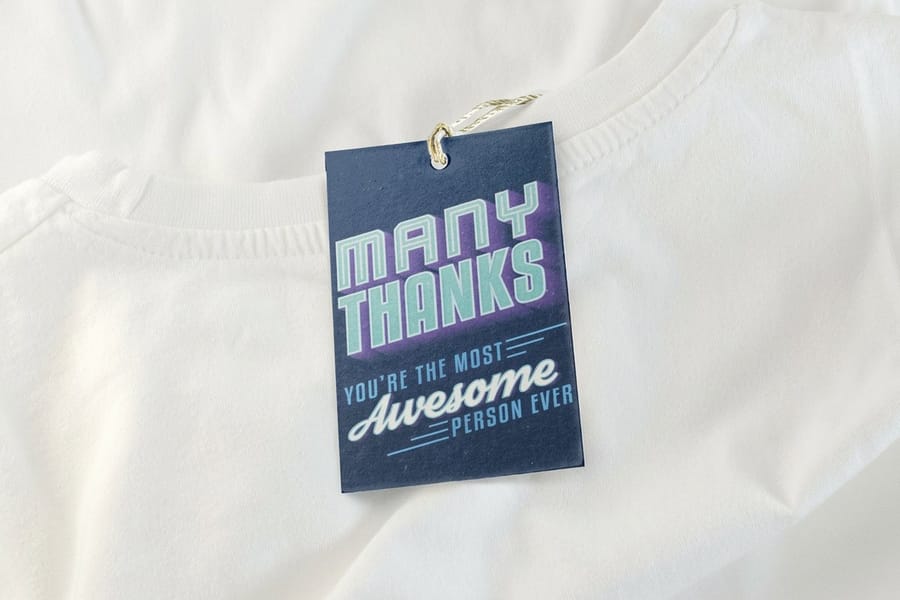
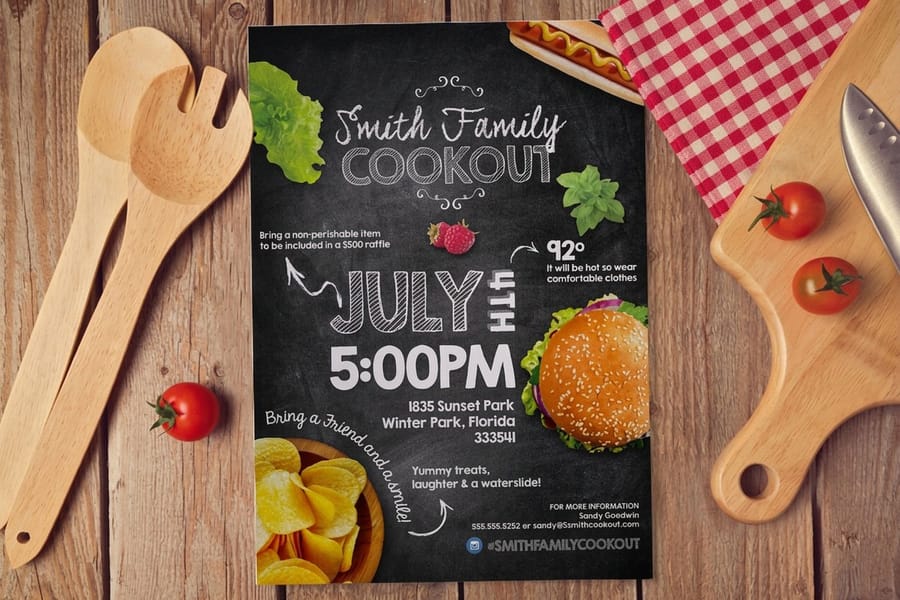
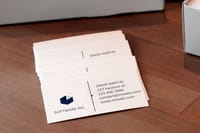
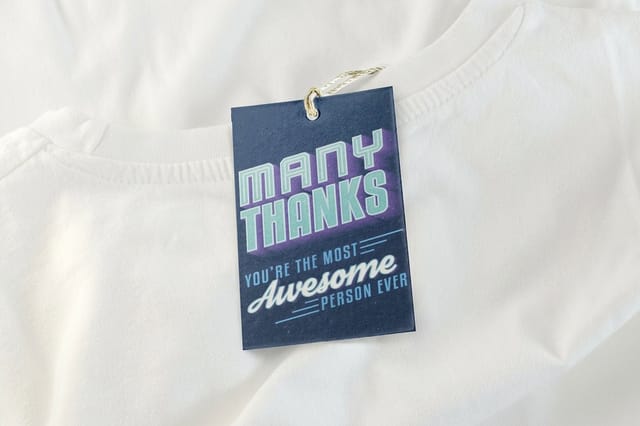
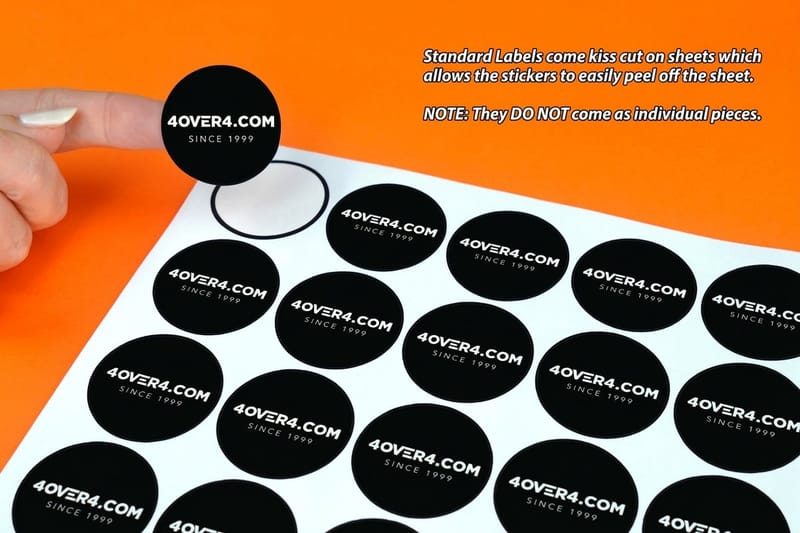
This is the practical half of value-based pricing. Three printed pieces do most of the work, and none of them is expensive against an order you already won. Custom hang tags start at $25.27 and put your brand, the size and the price on the product itself, which is what makes an apparel or homeware item read as retail rather than as a repackaged wholesale unit. Premium product labels start at $29.16 and are the difference between a jar that looks made and one that looks decanted. A card in the parcel, whether that is standard business cards at $17.57 or a printed postcard at $16.48, is your one chance to ask for the second order while the buyer is still pleased.
The limit is worth naming. Packaging spend has to stay proportionate: a heavy printed insert on a low-price impulse item eats the margin that made it worth selling, and buyers notice over-packaging as waste, not luxury. Put the money into the piece that carries information the buyer wants, such as care instructions, sizing or a reorder code, and skip the rest. Browse the hang tags category and the label printing category to compare stocks and finishes, or start from the ecommerce printing collection if you are outfitting a store from nothing.
What a Discount Really Costs, in Units

Discounting feels cheap because the money never leaves your bank account, it just never arrives. The arithmetic is short and it changes how most people run promotions.
To earn the same gross profit after a discount, the extra volume you need is the discount divided by your margin minus the discount. At a 40 percent gross margin, 10 percent off needs 33 percent more units. Twenty percent off needs double the units. Twenty-five percent off needs nearly triple, which almost no promotion delivers. If your margin is 30 percent instead, a 15 percent discount already needs double the volume.
That is why targeted offers beat sitewide sales. A code sent to lapsed customers is aimed at orders that were not coming anyway, so it does not discount the sales you were already going to make. A sitewide banner discounts everyone, including the buyer who had the item in their cart at full price. Codes leak too: any public code ends up in browser extensions and coupon sites within days, so treat a code you email as effectively public unless it is single-use.
Better levers than a straight discount: a free-shipping threshold set above your current average order value, a bundle at a modest saving, a bonus item that costs you less than the discount would, or a printed offer mailed only to past buyers. Direct mail is slow but it does not touch your site price, which keeps the discount out of the shop window. If you are comparing what a print run costs before you commit, how to find the cheapest printing services covers what to check beyond the headline price.
Raising a Price Without Losing the Customer

Prices go up. Costs move, freight moves, and a price you set two years ago was set for a business that no longer exists. The damage comes from how the change is handled, not from the change itself.
Four habits keep it clean. Change the price and the presentation at the same time, so the buyer sees a reason: new label, new packaging, an improved version, a better size. Honor what you already promised, meaning open quotes, unshipped orders and anything a wholesale account ordered against an old sheet. Tell repeat customers before the checkout does, with a short note that gives a date and does not apologize for the number. And move once, properly, instead of trickling up three times a year, because the third increase is the one people notice and resent.
Testing needs the same care. Running two different prices on the identical item at the same time is a trust problem when buyers compare, so test across time periods, across new products, or across separate channels instead. When you do test, watch contribution margin per visitor rather than conversion rate, since a lower price that converts better and earns less is not a win. For the printed side of a relaunch, the packaging printing collection covers boxes and inserts, and blank templates keep the new artwork the right size the first time.
Wally prices an order
Count the whole order, not just the product
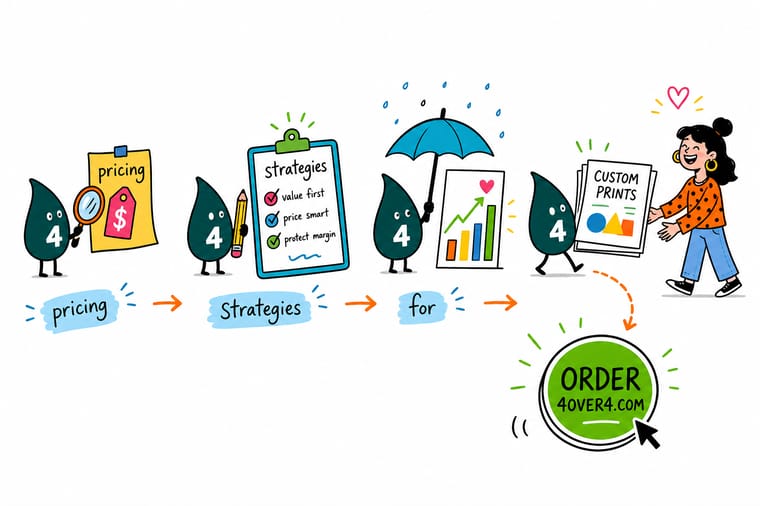
Wally puts the product on one side of the scale and everything else on the other: the freight in, the payment fee, the box, the label, the parcel going out and the one that comes back. Whatever is left over is the only money he gets to spend on ads, rent and himself. When someone asks him for 20 percent off, he does not argue. He just works out that at a 40 percent margin he would need to sell twice as many to end up where he started, and then he offers a bundle instead.
Print hang tags and labels for your products →Specs and pricing
The printed pieces that carry your price
Sizes, stocks and starting prices for the three pieces that do the most work on a premium price, straight from the 4OVER4.COM configurator.


Print it
Make the parcel worth the price you charged


Explore more
Where to go next




By the numbers
The print partner behind the pricing
Common Questions
Your pricing questions, answered
What gross margin should an online store aim for?
Aim high enough that the margin still covers the costs that are not in your cost of goods. Marketing, returns, customer service, software and the salary you eventually want to pay yourself all come out of gross margin, so a number that looks healthy on a spreadsheet can leave nothing behind. A useful test is to take last month: total gross profit minus every operating cost. If that is negative, the problem is the margin percentage or the order volume, and no amount of traffic fixes a unit that loses money.
Should I match a competitor who undercuts me?
Only if you sell the identical item and the buyer can see both listings side by side. On a truly identical SKU, price is the comparison and matching is defensive. On anything you have changed, made, branded or bundled, matching hands the competitor control of your margin and teaches your customers to wait for the next cut. The better answer is usually to change what is being compared: different quantity, different bundle, faster delivery, better packaging.
Is cost-plus pricing good enough on its own?
It is good for the floor and poor for the ceiling. A fixed multiplier keeps you from selling below cost, which is real value, but it treats a product buyers love the same as one they tolerate. The usual pattern is to set the floor with cost-plus, then raise prices on the items that sell out or get repeat orders, and reconsider the ones that only move on discount.
How do I price wholesale against my own website?
The trade convention is that wholesale sits at about half of the retail price, so the retailer can make their own margin. That only works if your retail price already carries enough margin to survive being halved. If cutting your price in half puts you under your landed cost, you do not have a wholesale problem, you have a retail price that is too low. Print a proper line sheet or catalog for buyers, since wholesale accounts still expect a document they can order from.
Does offering free shipping mean raising every price?
It means the shipping cost moves into the price, so it has to fit inside your margin. Two things make it work: a minimum order threshold set above your current average order value, and rates you have actually measured on your real box sizes rather than an average. If your typical order is one small item, free shipping on everything usually costs more than the conversion it buys.
How often should I change prices?
Review on a schedule, change when the review says so. Quarterly works for most stores, monthly if your input costs move. What matters more than frequency is that price changes are visible and consistent: honor prices on open quotes, avoid changing a price in the middle of a running campaign, and let repeat buyers hear it from you first. Frequent unexplained changes teach people to wait, which is the opposite of what a price increase is meant to achieve.
Get Started
Hang tags run 50 for $25.27, or 51 cents each
Hang tags, product labels and cards that make a premium price feel earned when the parcel gets opened. Upload your artwork or start from a template.
Legal Disclaimer
Gold Standard guarantees apply to all standard orders placed through 4over4.com. Price match requires verifiable proof of a competitor's published price for an equivalent product with matching specifications and turnaround time. Satisfaction guarantee covers manufacturing defects and print quality issues. Contact support with order number and documentation. On-time delivery rate based on tracked orders 1999 to 2026. Individual results may vary based on shipping carrier performance.
