
How to Find Affordable Printing Services Without Ending Up With Cheap Print


Affordable printing is a number you calculate, not a printer you find. Here is how to read a quote, where the volume savings actually sit, and which cuts leave a mark on the finished piece.
To find affordable printing, compare the landed price per piece, not the quoted total: add tax and shipping, divide by the quantity, and hold the stock, quantity and turnaround identical across every quote. Then take the saving where it is biggest, which is almost always one quantity break higher and a few more days of turnaround, because setup and rush fees are charged once across the whole job while paper is charged per sheet.
Quick answer
Setup is charged once, paper is charged every sheet
That one sentence explains most of what a printing bill does. Because setup happens once per job, the cost per piece falls steeply across the first quantity breaks and then flattens onto a floor made of paper, ink and press time. Rush fees behave the same way, applied to the whole order rather than to the hours saved, which is why moving a deadline is usually a bigger saving than changing any material. The curve below is the shape to keep in your head when you price two quantities against each other.
Compare the Price Per Piece, Never the Price
A printing quote is a total, and a total tells you almost nothing on its own. Divide it by the quantity, including tax and shipping, and you have the only figure that compares across printers.
This matters because quotes rarely arrive at the same quantity. One printer prices 250 cards, another prices 500 because 500 is where their break sits, and the 250 looks cheaper on the invoice while costing more per card. Do the division on both and the ranking often flips. Do it again with shipping included and it can flip a second time, since freight on a heavy job travels badly and a light job travels almost free.
Three numbers have to match before a comparison means anything: the quantity, the stock, and the turnaround. Change any one and you are comparing different products. A 14pt card and a 16pt card feel different in the hand and cost different amounts to make, and a printer quoting the lighter one will always look sharper on price. Ask for the weight in points or pounds, not adjectives.
If you want a number before you start configuring, our guide to estimating printing costs before you order builds one from size, stock and quantity, and the instant online quote walkthrough shows the same job priced live.
Quantity Breaks Save More Than Switching Printers
Every print job carries a fixed cost that happens once, no matter how many pieces come off the press. Files are checked, plates or a digital run are set up, the press is brought to colour, and the trimmer is set. That work costs the same for 100 pieces as for 5,000.
So the cost per piece is the setup divided by the run, plus the materials. At small quantities the first term dominates and the curve falls steeply. At large quantities it has almost vanished and you are simply buying paper and ink, which is why the curve flattens instead of dropping to nothing. That shape is the whole reason a break exists.
The practical move is unglamorous: price your quantity, price the next break up, divide both, and see what the extra pieces actually cost you. Going from 250 to 500 business cards usually costs far less than double, because the setup half of the bill does not repeat. Going from 2,500 to 5,000 usually costs close to double, because by then you are buying materials and storage.
The limit is real and worth naming. Print ages. Phone numbers change, staff leave, addresses move, and a box of 5,000 cards with a dead extension on them saved nothing. Buy the break that you will use inside the life of the information on the piece. Our bulk discount tiers show where the volume pricing lands per product, and how bulk printing services work covers the production side of a long run.
Where to Cut Cost, and Where It Backfires
Not every saving is equal. Some changes take money out of the bill and nothing out of the piece. Others take a little money out and a lot of credibility with it.
| What you change | What it saves | What it costs you |
|---|---|---|
| Order one break higher | The largest per piece saving available, especially at small runs. | Cash up front and shelf space, plus the risk of reprinting if details change. |
| Give the job more days | The rush uplift, which is charged across the whole order. | Only your planning. This is the cheapest saving on the list. |
| Drop a specialty finish | A finishing pass, so a real slice of the total on cards and covers. | Very little. Most recipients never register the missing spot gloss. |
| Use a standard trim size | Waste on the press sheet, and sometimes a whole cutting setup. | Nothing, unless the odd size was the idea in the first place. |
| Print one side instead of two | Ink and a press pass on flyers and postcards. | Half your message. Usually the wrong trade on anything that has to sell. |
| Go down in stock weight | Paper cost, the smallest line of the four. | The most. A thin card reads as a thin business the moment it is handled. |
Read the last row against the second. Moving your deadline out by a few days can save more than dropping from 16pt to 14pt stock, and nobody notices a longer schedule. That is the trade most buyers get backwards, and it is the single reason cheap print looks cheap.
One more that costs nothing: put the whole campaign on one order. A stack of postcards and matching flyers placed together ship together, and one delivery is not two. If you are trimming a brochure budget specifically, cutting brochure printing costs without cheap results goes panel by panel.
What Affordable Looks Like at 4OVER4.COM
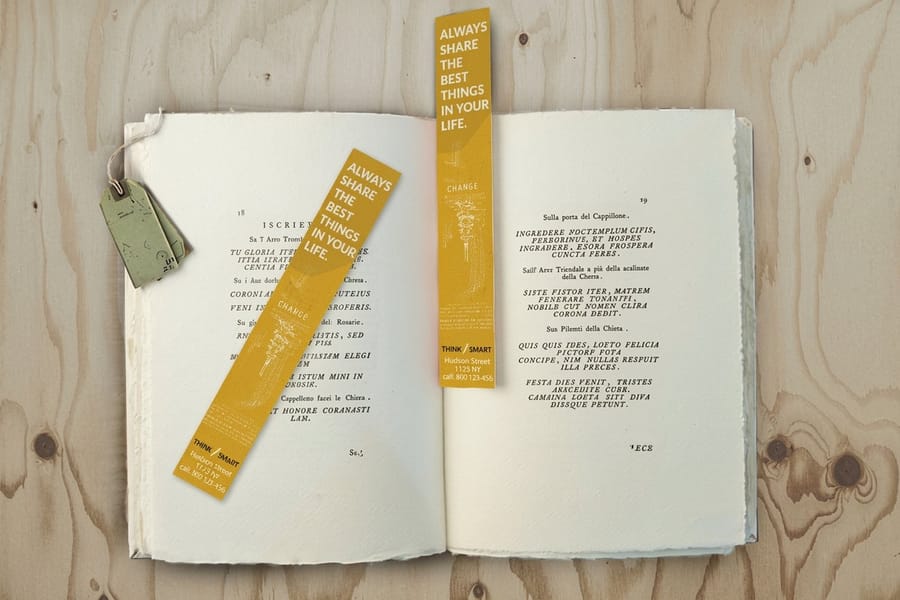
Our starting prices are the honest way to see where a budget goes. Standard business cards start at $17.57, standard postcards at $16.48, standard bookmarks at $16.48, standard flyers at $39.54, and standard brochures at $57.11. Those are entry points, and every one of them falls per piece as the quantity climbs.
Three things sit around that price rather than inside it. Proofs are free, so checking the file costs a review and not a fee. There is no minimum order, so the quantity you need is the quantity you buy. And printing coins accumulate on orders you were placing anyway, then come off a later invoice, which quietly lowers the effective per piece cost on a repeat buyer’s second and third run.
The one thing we will not do is pretend a deadline is free. If the date is tight, read same day and rush printing options and price the rush against express shipping on a normal schedule, because the second is often cheaper. And if a card budget is what brought you here, how much business cards cost breaks the number down by stock and quantity, while business card printing lists every stock we run.
Wally explains cheap print that is not cheap
Divide by the quantity, then look at the calendar
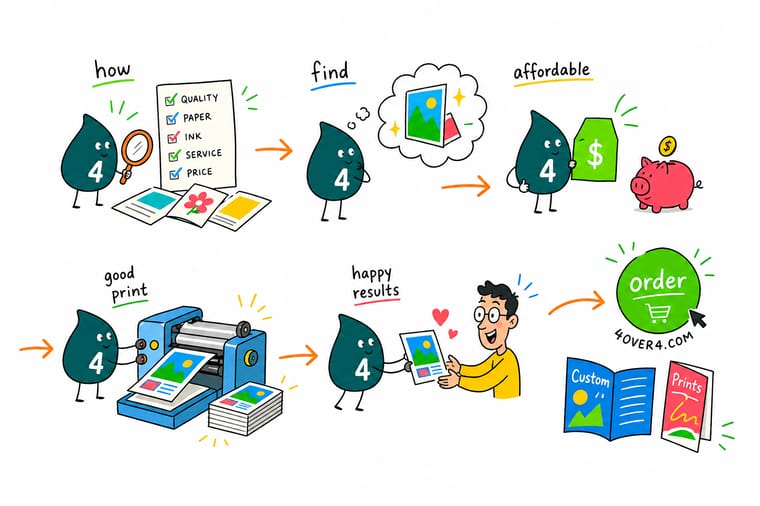
Wally never reads the total. He adds the shipping, divides by the quantity, and writes the number per card on the corner of the quote. Then he prices the next break up and divides again, because setup only gets charged once and the second run rides on it. Last, he checks the calendar, since a few extra days usually saves more than dropping to thinner paper, and nobody ever complimented a schedule.
Price standard business cards →Specs and pricing
Sizes, stocks and starting prices to compare
Configure the quantity and stock, then read the price live. Price two quantities and divide each total by its run to see where your break sits.



Print it
Low starting prices that fall further with volume
Explore more
Where to go next



By the numbers
Low prices held up by 25 years of production
Common Questions
Your printing budget questions, answered
What is the cheapest way to get business cards printed?
Order one quantity break higher than you think you need, on a standard stock, with a standard turnaround, and let the press gang your job with others. Standard business cards start at $17.57 at 4OVER4.COM, and the per card price keeps falling as the run grows because the setup is charged once. The expensive versions of that same order are a rush turnaround, a specialty stock, and a run so small that setup swamps everything else.
Does ordering more actually save money, or is that a sales line?
It genuinely saves, but not evenly. The drop between the first two or three quantity breaks is steep because fixed setup is being divided across more pieces. After that the curve flattens, because what is left is paper, ink and press time, and those scale almost one to one. The practical test takes a minute: price your quantity and the next break up in the configurator, divide each total by its quantity, and stop when the per piece saving stops being worth the storage. Our guide on how bulk price breaks work walks through the same arithmetic in more detail.
Is cheap printing worse quality?
Not automatically. Most of the price difference between online printers and a local shop comes from ganging, which means many customers’ jobs share one large press sheet, so each job carries a slice of the makeready rather than all of it. The quality risk is not the low price, it is what a low price sometimes hides: no proof, no reprint policy, thinner stock than the description implies, and shipping added at checkout. Ask for the stock weight in points or pounds and the reprint terms before you compare anything.
How far ahead should I order to avoid rush fees?
Work back from the date you need the print in your hands, add the production days for the product, then add transit days for the shipping method you actually intend to pay for. Give yourself two spare days on top for a proof round, because a file that needs a fix costs a day whether you planned for one or not. If the date is already too close, compare a rush turnaround against upgrading only the shipping, since express freight on a normal production schedule is often cheaper than pushing the press.
Do free proofs slow the order down?
A proof adds a review step, not a production day, and it is approved by you rather than waited on by us. The job goes into production once the proof is signed off, so the only delay is however long the file sits unreviewed in your inbox. Approving the same evening keeps the schedule intact, and catching a wrong phone number at proof stage costs nothing while catching it after delivery costs the whole run.
Is a printer with free shipping actually cheaper?
Only if the printed price did not absorb it. Freight on print is real, heavy and distance based, so a genuinely free shipping offer is either priced into the unit cost or limited by weight, order value or destination. Compare landed cost: total price, tax and shipping, divided by the quantity. That single number sorts quotes correctly, and it is the one place where most people comparing printers go wrong.
Get Started
Ready to price the job properly?
Set your quantity, stock and turnaround in the configurator, read the price live, then price the next break up and compare per piece before you order.
Legal Disclaimer
Gold Standard guarantees apply to all standard orders placed through 4over4.com. Price match requires verifiable proof of a competitor's published price for an equivalent product with matching specifications and turnaround time. Satisfaction guarantee covers manufacturing defects and print quality issues. Contact support with order number and documentation. On-time delivery rate based on tracked orders 1999 to 2026. Individual results may vary based on shipping carrier performance.
