
Most reprints happen because of a file, not a press, a missing bleed, low resolution, or artwork that runs off the trim. These guides cover DPI, bleeds, cut lines, and the print-ready checklist that gets your job approved on the very first proof.
File Prep & Setup Guides
Latest File Prep Guides
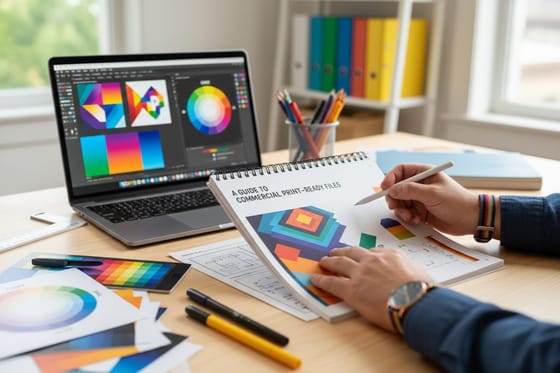
A Guide to Creating Commercial Print-Ready Files
Print file preparation step by step. Set CMYK color, 300 DPI images, bleed and trim, and embedded fonts, then export a press-ready PDF that prints right.
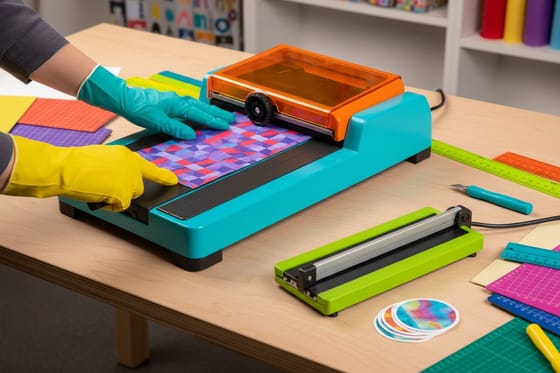
Cutting and Trimming Machines Explained
How print cutting and trimming machines work: guillotine cutters, die cutters, laser cutters, three-knife trimmers, and corner rounders for clean edges.

Google Fonts Are Free for Commercial and Print Use, With Two Real Limits
Google Fonts are free for commercial and print use under the SIL Open Font License. Here is what the licence blocks, and how to embed or outline type for press.

How to Add a Photo to a Business Card So It Prints Sharp
Put a photo on a business card the right way: 300 ppi at printed size, 1125 x 675 px with bleed, CMYK conversion, and the finish that keeps skin tones true.

How to Choose and Set Up Fonts That Print Sharp Every Time
How to pick print fonts that survive ink and dot gain, set minimum point sizes by product and stock, and choose between outlining and embedding before you upload.
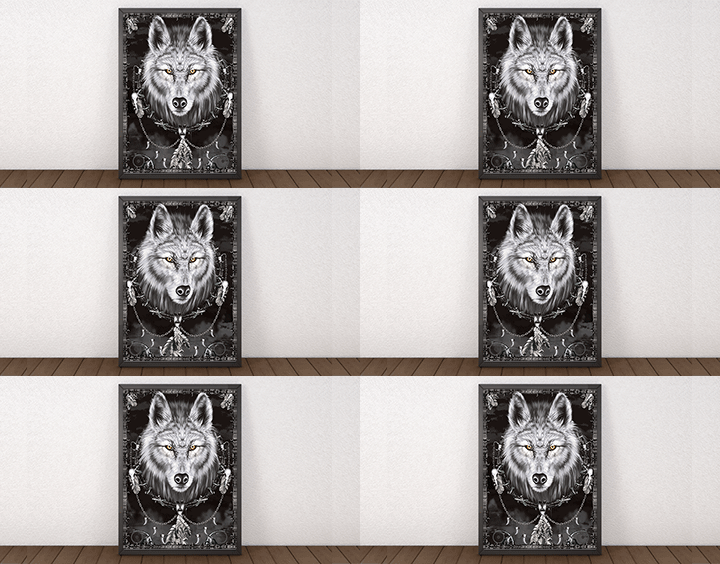
How to Design a Giant Poster That Stays Sharp at Full Size
Design a giant poster the right way: the resolution a full-size print really needs, when to build at scale, and indoor paper versus outdoor vinyl.
All File Prep Guides
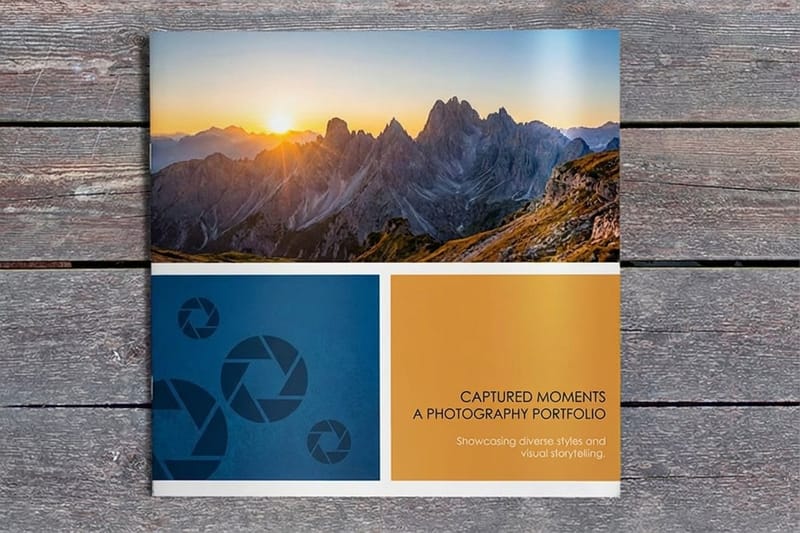
How to Enlarge a Photo for Printing Without Losing Sharpness
Divide pixel width by print width to find your real PPI, then upscale properly. DPI targets by poster size, the limits of upscaling, and the best material for big photo prints.
How to Upscale Images Free and Still Print Them Sharp
Free ways to upscale an image for print, the pixel maths that tells you whether you need to, and the files that should be rebuilt as vector instead of resampled.
The Smallest Font Size You Can Print and Still Read
The smallest font size you can print is about 4 point on coated stock, 6 point for fine print and 8 point for anything people read, in 100 percent black.