
Matte vs Metallic Cardstock, From How Light Hits Each One to What It Costs


One surface scatters light and one returns it. That single difference decides whether your small type stays readable, whether a QR code scans, whether anyone can write on the back, and how much you have to spend before you see a single card.
Matte cardstock scatters light, so the card reads the same from every angle, takes a pen and lets a QR code scan. Metallic returns light, so it flares from one angle and is forgotten by nobody. Standard matte starts at $17.57 per 100 in 3 business days. Soft touch matte starts at $40.28 per 50. A stamped foil accent starts at $126.32 for 500 in 7 business days, and the cheapest metallic of all is the 26pt Metallic Pearl Ice stock at $39.11 per 50.
Quick answer
The surface decides what the card can do
Pick matte when the card has to be read, written on or scanned, and pick metallic when the card only has to be remembered. Matte runs from an everyday uncoated stock at $17.57 per 100 up to a velvety soft touch sheet at $40.28 per 50, both fast. Metallic splits into three products: a stamped foil accent at $126.32 for 500, genuine metallic Pantone ink at the same entry, and a 26pt Metallic Pearl Ice stock at $39.11 for 50, which is the only metallic here with no real minimum.
Matte and Metallic Are Not Two Finishes of the Same Thing
Matte is a surface that scatters light. Metallic is a surface that returns it. Hold a soft touch card under a desk lamp and it looks the same from every seat at the table, because the uncoated fiber sends every ray back in a hundred directions at once. Hold a foil card and it is nearly black until you tilt it, and then the accent flares. Nothing else on this page is a matter of taste. It all falls out of those two behaviors.
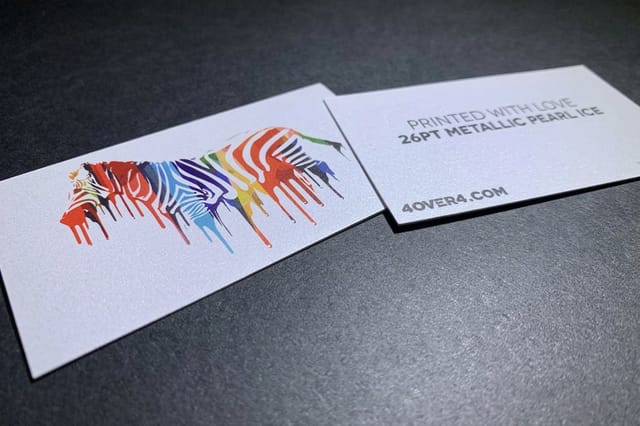
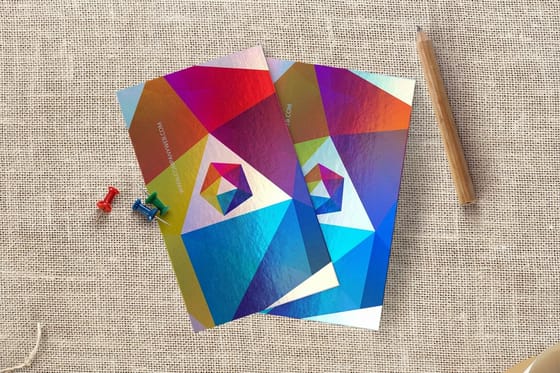
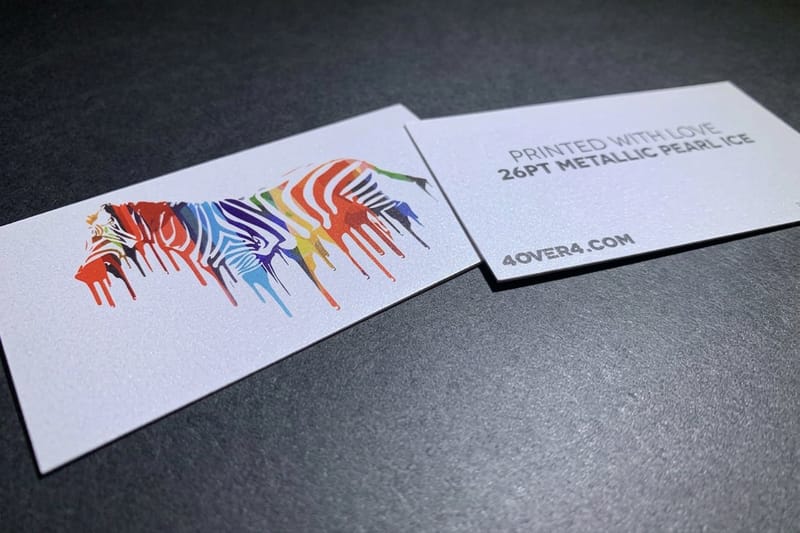
That is also why "metallic" is a slippery word in a print catalog. At 4OVER4.COM it covers three separate processes. Metallic Business Cards print full color on 16pt Gloss Cover and then go back through the press for a real metallic foil accent stamped on the front. Metallic Ink Business Cards use genuine metallic Pantone spot inks, headlined by PMS 877 Silver and PMS 872 Gold, laid smooth across the design instead of stamped in one place. Ultra Thick Metallic Pearl Business Cards put the shimmer in the paper itself, on a single 26pt Metallic Pearl Ice stock that glows through the open areas of your artwork.
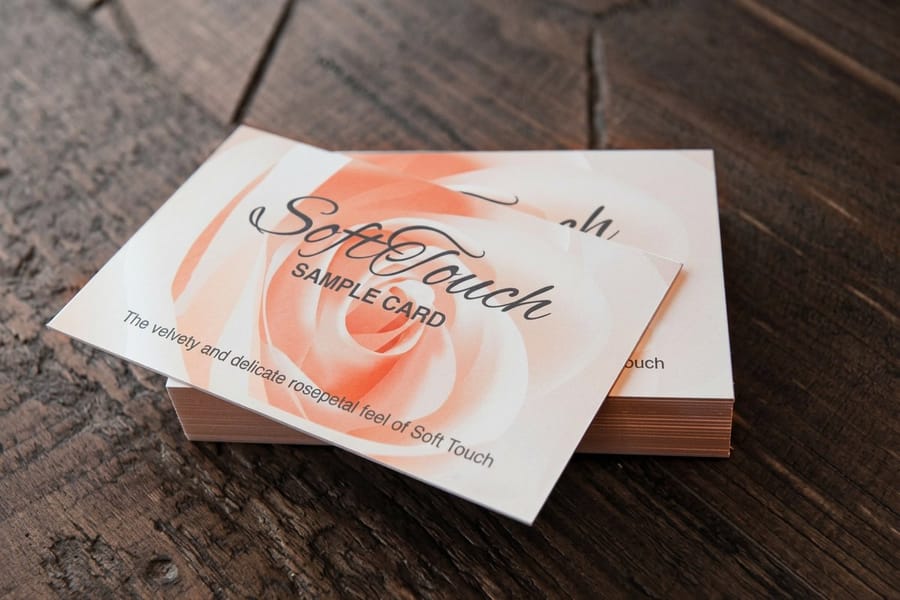
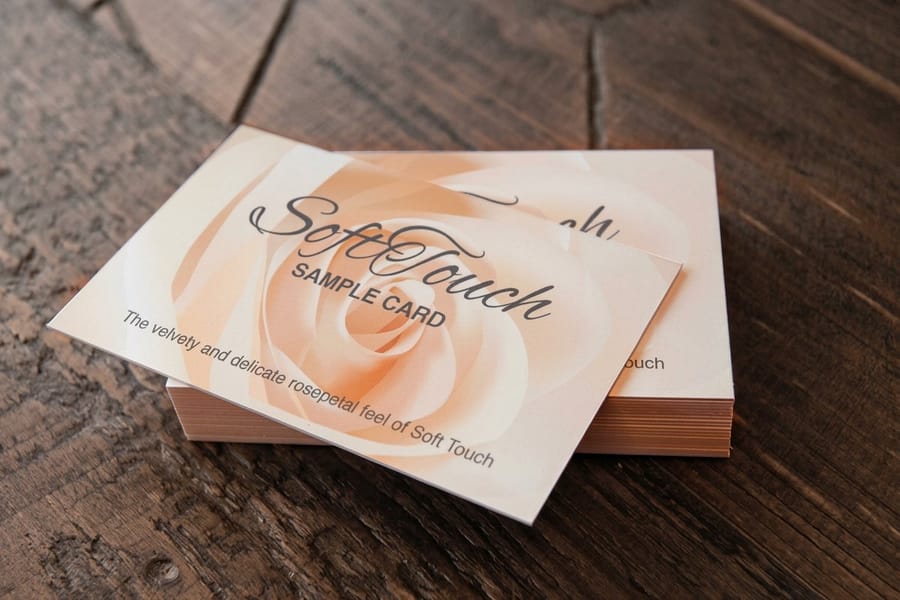
Matte covers a range too. It runs from an everyday uncoated sheet inside the 73 stocks on Standard Business Cards, through to the velvety soft touch laminate on Soft Touch Business Cards, which is closer to suede than to paper. If you want the wider background on surfaces before you pick a side, business card stock explained walks the whole list, and the full range sits on business cards printing.
What Matte Stock Does Well, and Where It Gives Ground
Matte earns its place on legibility. There is no hot spot to read around, so a card works under a fluorescent office ceiling, a bar downlight and a phone torch without anyone tilting it. Fine type stays crisp, because the glare that eats a 6pt line on a gloss card simply is not there. If your card carries an address block, a license number or three lines of small print, matte is doing you a favour.
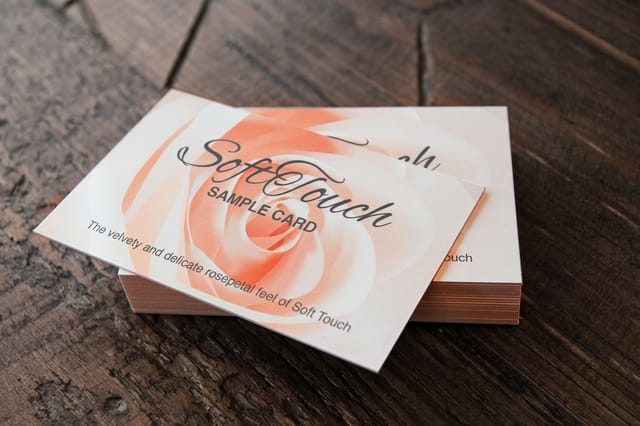
The second argument is touch. Soft Touch Business Cards print on soft touch uncoated stock in four weights, a sturdy 32pt through 48pt and 64pt to a thick 80pt, and every weight carries the same velvety surface. Sets of 50 start at $40.28, in three sizes (the standard 2 by 3.5 in, a 2 by 2 in square and a 1.5 by 3.5 in slim) plus custom sizing up to 2 by 4 in, printed 4/0, 4/1 or 4/4. Standard turnaround is 5 business days with 4-day, 3-day, 2-day, Next-Day and Same-Day rush behind it. They hold a 5.0 out of 5 across 48 reviews, and the reason is almost always the surface rather than the print.
The third argument nobody mentions until it bites: matte takes a pen. A ballpoint keys straight into an uncoated sheet. That is what makes matte the only sane choice for an appointment card, a loyalty card with a stamp box, or any card a receptionist writes a date on. It also means your cards do not smear when they sit face to face in a jacket pocket.
Where matte gives ground is depth. Coating stops ink sinking into the sheet, so a solid black or a deep navy reads richer under gloss than it does under matte, and a full-bleed photograph loses a little of its snap. Matte also scuffs. A velvet surface picks up a pale mark from a rough wallet, where gloss shrugs it off. If you want the flat body and one element with punch, add Spot UV to the logo, or read matte vs gloss business cards for the coating-by-coating version of this decision.
The Three Metallics, and What Each One Actually Costs
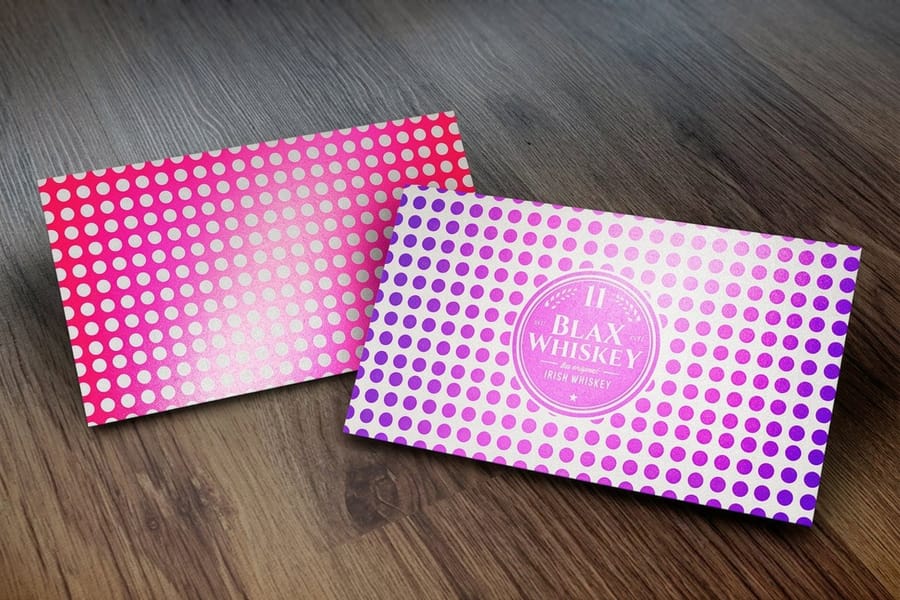
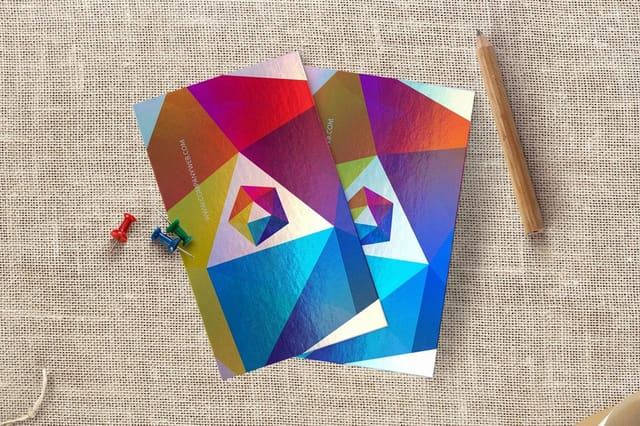
Start with the one people picture. Metallic Business Cards are full color on a bright 16pt Gloss Cover with a real metallic foil accent stamped on the front, so the shine is a shape you place rather than a wash over the whole card. Seven sizes run from a 1.5 by 3.5 in slim to a 2.5 by 2.5 in square with the classic 2 by 3.5 in included, three coatings are offered (leave it bare, add High Gloss UV, or lay Spot UV on the front), and rounded corners come at a 1/8 or 1/4 in radius. Turnaround is 7 business days with a free online proof, and the product rates 5.0 out of 5 across 103 reviews. Sets start at 500 cards for $126.32, about 25.3 cents each, and that minimum is the real constraint: a stamping pass carries setup that a run of 100 cannot pay for.
Metallic Ink Business Cards take the other road. The press lays genuine metallic Pantone spot ink instead of pressing foil, in 8 ink setups led by PMS 877 Silver and PMS 872 Gold, front only or both sides, on the same 16pt Gloss Cover in 7 sizes with custom sizing up to 3 by 4 in. Sets of 500 also start at $126.32 and slide toward about 5 cents a card at 25,000. Ink covers ground foil cannot: fine type, a whole background, a repeated pattern. What it does not do is mirror. It glints, it shifts as the card turns, and it stops short of the hard reflection a stamped accent gives you.
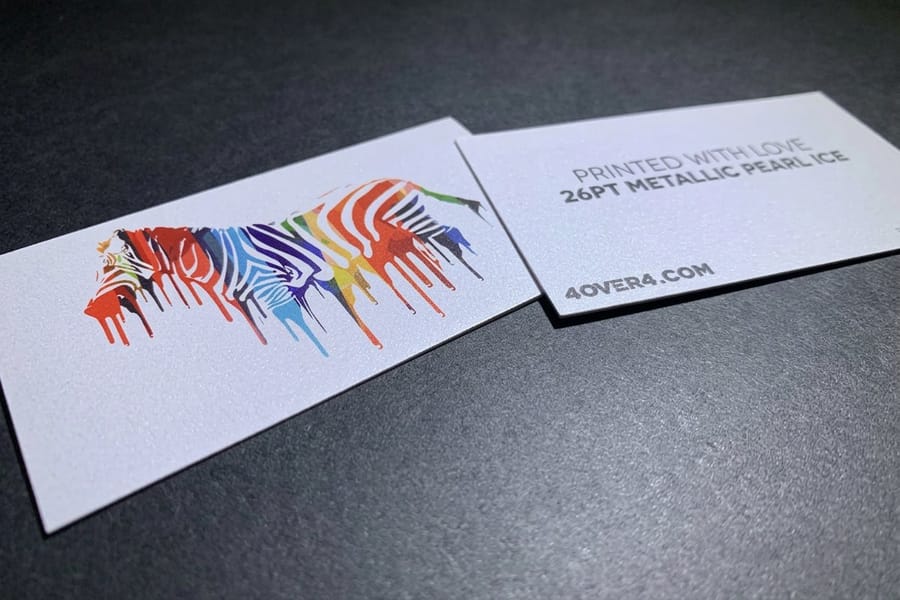
The quiet one is the stock itself. Ultra Thick Metallic Pearl Business Cards run on a single 26pt Metallic Pearl Ice sheet whose shimmer lives inside the paper, so it glows through every open area of the design rather than sitting on top of it. Sets of 50 start at $39.11 and fall toward about 10 cents a card at 10,000, in three sizes plus custom up to 2 by 4 in, on a 5 business day standard turnaround with 2-day, Next-Day and Same-Day rush. That is the cheapest and fastest way to put a metallic card in someone's hand, and it is the one most people have never heard of.
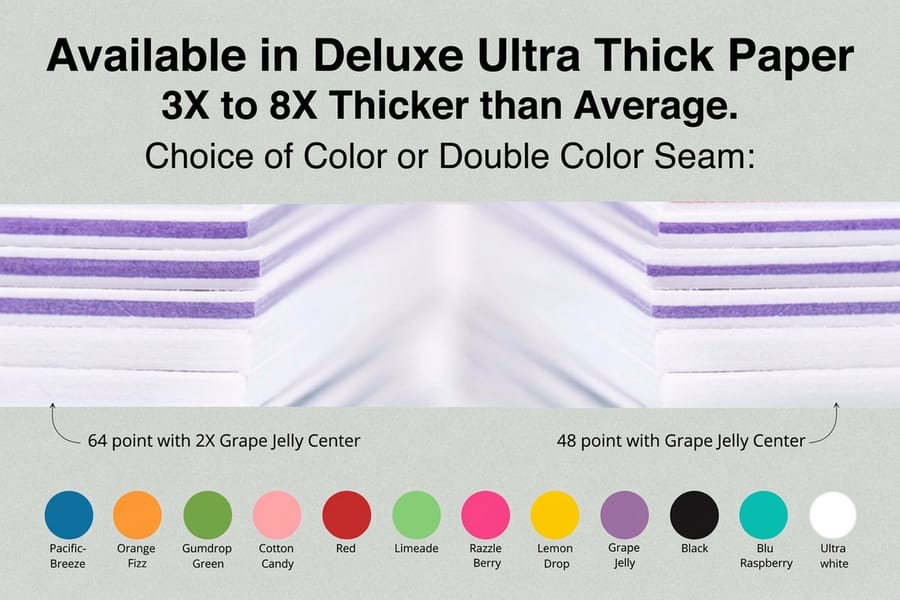
If you want metal across the whole face rather than an accent, Metallic Foil Business Cards start at $222.13 per 500 and offer a 14pt uncoated cover alongside 16pt silk laminated, which is also how you get stamped foil onto a matte sheet. The processes are pulled apart properly in foil stamping vs foil printing vs metallic ink and what a foil accent is.
Side by Side, With the Numbers That Decide It
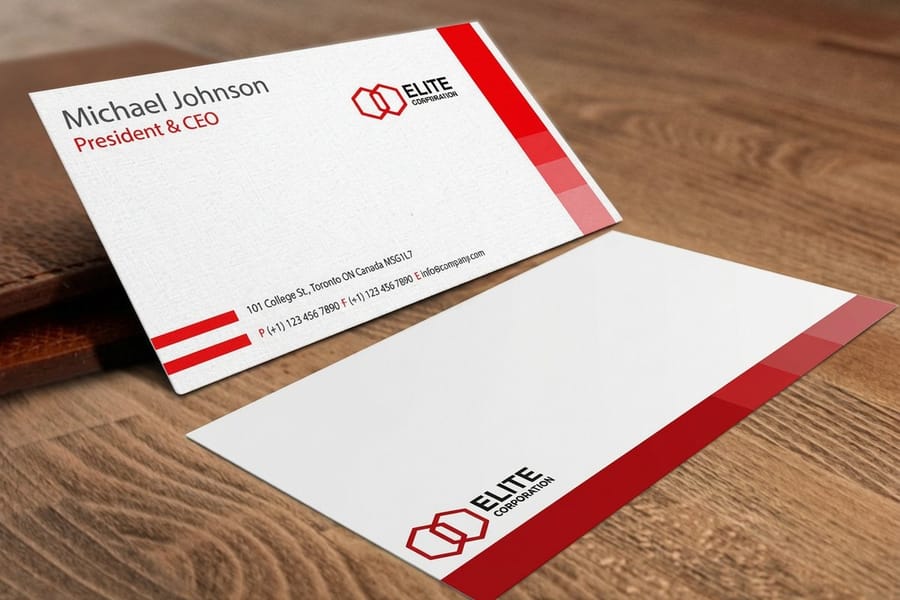
Two numbers matter and they point in opposite directions. Per card, a stamped foil accent is cheaper than a soft touch card. Per order, it costs three times as much before you see anything. Both columns are in the table.
| Option | What the surface is | Smallest run | That run costs | Per card | Standard turnaround |
|---|---|---|---|---|---|
| Standard matte | Uncoated or matte stock inside 73 options, 14pt to 80pt | 100 | $17.57 | About 17.6 cents | 3 business days, Same-Day rush |
| Soft touch matte | Soft touch uncoated, 32pt to 80pt, velvety | 50 | $40.28 | About 80.6 cents | 5 business days, Same-Day rush |
| Metallic pearl | 26pt Metallic Pearl Ice, shimmer in the sheet | 50 | $39.11 | About 78.2 cents | 5 business days, Same-Day rush |
| Metallic ink | Metallic Pantone spot ink on 16pt gloss cover | 500 | $126.32 | About 25.3 cents | 7 business days, free online proof |
| Foil accent | Stamped metallic foil on 16pt gloss cover | 500 | $126.32 | About 25.3 cents | 7 business days, free online proof |
Read the smallest-run column first, because it is the one that changes behavior. Fifty cards is a test. Five hundred is a commitment to a phone number, a job title and a logo, all of which change more often than people expect. The pearl stock is the anomaly worth noticing: it is the only metallic surface here you can buy fifty of, and at $39.11 it costs a dollar less than the same quantity in soft touch.
The turnaround column carries its own arithmetic. Four business days separate a 3 day standard card from a 7 day foil order, which is most of a working week when an event date is fixed. Rush options close the gap and cost money the per-card figures above do not include. If your deadline is inside a fortnight, the material decision may already have been made for you.
The Two Jobs Metallic Quietly Breaks
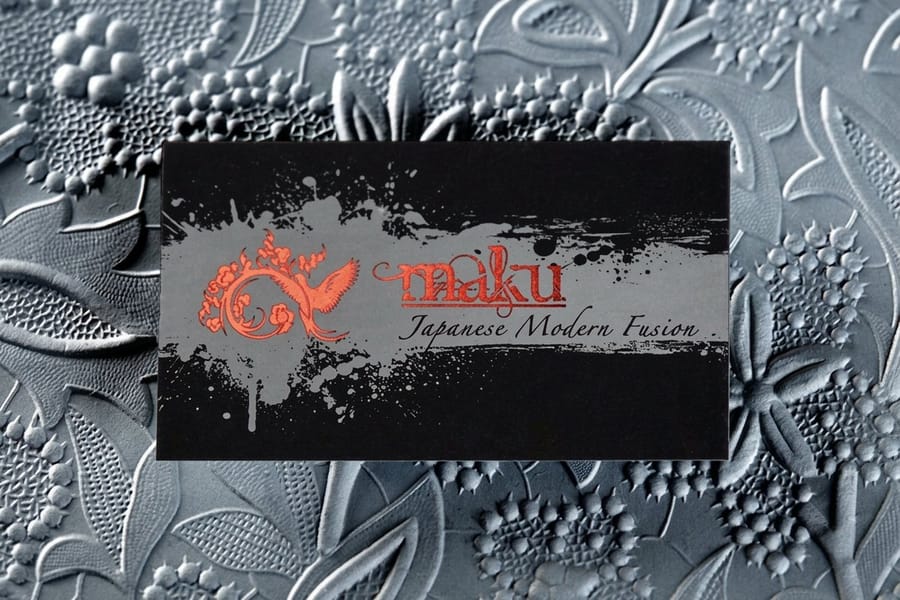
Both of these turn up after the cards arrive, which is the expensive moment to find them.
Scanning. A phone camera reads a QR code by separating dark modules from a light field. A mirrored surface hands the lens a picture of the ceiling light instead, so a code printed on foil or under High Gloss UV can wash out at exactly the angle someone naturally holds a card. The fix is free at the design stage: keep the code in flat CMYK on a matte or uncoated area, or move it to the back, and let the foil sit on the logo. Sizes, quiet zones and error correction are covered in how to use QR codes on business cards.
Writing. A coated 16pt gloss cover has no tooth, so a ballpoint skates and a gel pen sits wet long enough to transfer onto the next card in the stack. That kills the metallic card for a salon appointment slip, a dentist recall card, a loyalty stamp box, or anything a member of staff writes on at the counter. If one side has to be written on, that side has to be uncoated. Soft touch and the uncoated stocks in the standard range take pen the second the card leaves your hand.
There is a third, smaller one worth naming: photography. Metallic only exists at one angle, so a straight-on product shot of a foil card shows a dull gray shape where the gold should be. If the card is going to live on your website and your social feed as much as in a hand, shoot it with a raking light and tilt it, or print it matte and let the design carry it. The same logic applies to any print piece, which is why what a matte finish is is worth reading before you commit a whole brand kit to shine.
Which Surface Wins for Your Card
Matte wins on every practical count and metallic wins the one that is hardest to buy, which is being remembered. The choice rests on what the card has to do after it leaves your hand.
- Choose matte when the card carries small type, an address block or a QR code, when anyone will write on it, when the deadline is short, or when you are printing a design for the first time. A box of 100 at $17.57 lets you find the typo before you spend real money, and soft touch at 32pt upward gives you a premium card that still behaves.
- Choose a foil accent when the card is handed over in a room where being remembered is the entire job, and when the artwork is finished. It needs 500 cards, seven business days and a settled logo, and it repays all three.
- Choose metallic ink when the shine has to cover fine type or a whole background rather than one stamped shape, and when a silver or gold Pantone is already part of the brand.
- Choose metallic pearl when you want shimmer without a minimum. Fifty cards at $39.11 on a 26pt sheet is the least risky way to find out whether your brand suits metal at all.
The combination beats either extreme more often than not: a matte or soft touch body with one metallic element, so the eye has somewhere to land. Metallic Foil Business Cards offer a 14pt uncoated cover exactly for that, which puts stamped foil on a sheet that still feels like paper. If the question underneath all of this is what separates a premium card from an ordinary one, what makes a business card premium answers it in caliper and finish rather than in adjectives, and 14pt vs 16pt vs 32pt covers what thickness alone buys you.
Setting Up Artwork for Each Surface
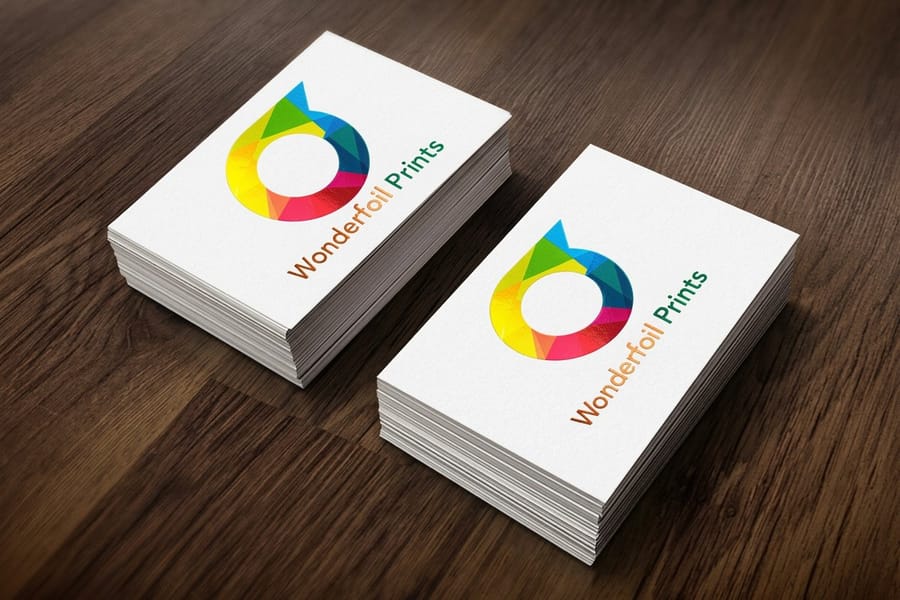
The differences are cheap to handle in the file and expensive to handle after a proof comes back wrong.
Matte. Push your darks harder than the screen suggests, because an uncoated sheet drinks ink and a solid black lands a shade lighter than it previews. Keep fine reversed type a little heavier for the same reason, since ink spreads slightly into the fiber and can close up a hairline serif. Build in CMYK, hold a proper bleed, and check the trim against the business card size guide before you upload. Every layout in the blank template library already has the bleed and safe zone built in.
Foil accent. The stamp is a separate press pass, so it needs its own layer telling the press exactly where metal goes, drawn as 100% solid shapes rather than tints or gradients. Give the accent weight: hairlines and small serifs fill in under the pressure of the die. Keep it to one element, and use the free online proof that comes with the order, because a flat PDF preview is the one thing that hides a foil placement error. The full file build is in how to set up your design files for foil.
Metallic ink and pearl. Metallic ink is a spot color, so specify PMS 877 Silver or PMS 872 Gold by name rather than trying to simulate it in CMYK, which only ever produces flat gray or mustard. Pearl works in the opposite direction: the shimmer comes from the sheet, so it shows through the areas you leave open. Heavy full-bleed coverage buries the effect you paid for, and a design with generous white space is where the pearl actually earns its money. Start from a layout in design templates if you would rather not build from scratch.
Wally holds one of each up to the lamp
Scattered light or mirrored light, and what each one costs
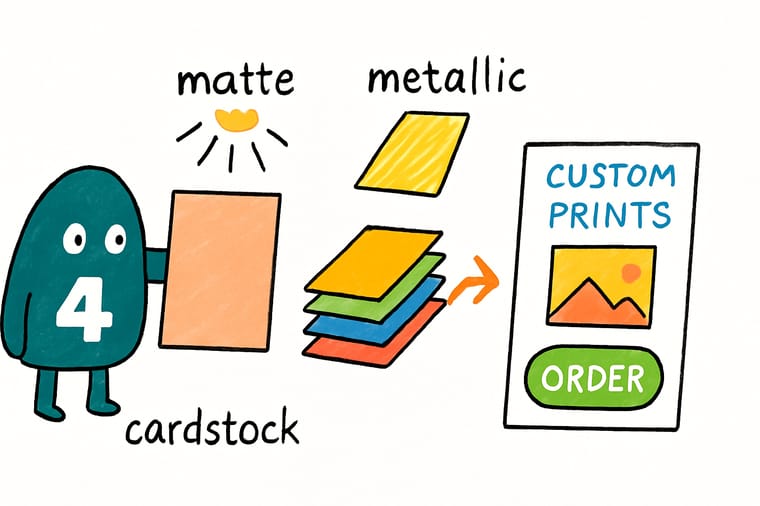
Wally tilts the matte card and nothing changes, which is the point: the small print reads, the QR code scans, and a pen writes on the back. Then he tilts the foil card and the logo flares across the room. His rule of thumb is simple. Print the working card matte, and save the metal for the one element you want people to remember. If you only want to try shine once, the 26pt pearl stock starts at $39.11 for fifty.
Compare every business card stock →Specs and pricing
Matte and metallic side by side, with live prices
Soft touch is one velvety stock in four weights. Standard covers 73 stocks including the uncoated and matte options. Metallic adds a stamping pass to a gloss sheet. Configure each one and watch the price move with the quantity, the size and the turnaround.


Print it
Order the surface your card actually has to live with
Explore more
Where to go next
By the numbers
Matte, metallic and pearl card stocks
Common Questions
Your matte and metallic questions, answered
Will a QR code still scan on a metallic card?
It scans, but you have to give it help. A phone camera reads a QR code by finding contrast between dark modules and a light background, and a mirrored surface throws the room back at the lens instead, so under a ceiling light the code can wash out and the scan hangs. The safe build is to keep the code itself out of the metal. Print it in flat CMYK on a matte or uncoated area, or on the back of the card, and let the foil accent sit on the logo where it belongs. Our guide on QR codes on business cards covers the size and quiet-zone rules that decide whether a scan works at all.
Can I write on a metallic business card?
Not reliably, and this catches people out on appointment cards. Metallic Business Cards print on 16pt Gloss Cover, and a coated sheet has no tooth for ink to key into, so a ballpoint skates and a gel pen stays wet long enough to smear on the next card in the stack. If the back of the card needs a date, a name or a stamp, that side has to be uncoated. Soft touch and the uncoated stocks in the standard range take pen immediately.
What is the difference between metallic foil, metallic ink and metallic pearl?
Three separate processes. A foil accent is a metallised layer stamped onto the sheet under heat and pressure, so the metal is a discrete shape you place, and it is the only one that behaves like a true mirror. Metallic ink is a genuine metallic Pantone spot ink, headlined by PMS 877 Silver and PMS 872 Gold, laid smooth across the whole design rather than one stamped shape. Metallic pearl is a stock, 26pt Metallic Pearl Ice, with shimmer running through the paper itself so it glows through the open areas of your artwork. Foil is the loudest, pearl is the subtlest, ink sits in between.
Which one is cheapest to try?
Ultra Thick Metallic Pearl Business Cards, at $39.11 for a set of 50, are the cheapest way to hold a metallic card in your hand. Soft touch matte is a near neighbor at $40.28 for 50. If you only care about the lowest possible entry price and not the surface, a box of 100 Standard Business Cards on a matte or uncoated stock is $17.57. What you cannot do cheaply is test a stamped foil accent, because the smallest set is 500 cards at $126.32.
Do matte cards look cheap next to metallic ones?
They look different, not cheaper, and the thickness is doing more of that work than the finish. A 32pt soft touch card is roughly twice the caliper of an everyday 14pt card and lands in the hand with a weight nobody mistakes for a giveaway. What matte genuinely loses is depth in dark ink: a solid black reads richer under gloss because the coating stops the ink sinking. If you want matte with the punch, print the card matte and add Spot UV to the one element that should shine.
Does a matte finish scuff or show fingerprints?
Soft touch resists fingerprints better than gloss, which is exactly why it is used on packaging that gets handled. The trade is scuffing. A velvety uncoated surface will pick up a mark from a rough wallet or a card that slides against a key, and on a very dark solid the mark shows as a pale line. Gloss and foil hide scuffs better and show fingerprints worse. Neither one is maintenance free, so if the cards live loose in a bag rather than in a case, order a few more than you need.
Can I combine matte and metallic on the same card?
Yes, and it is usually the best-looking answer. The classic build is a matte or soft touch body with one small metallic element, so the eye has somewhere to land instead of the whole card competing with itself. Metallic Foil Business Cards offer a 14pt uncoated cover alongside the 16pt silk laminated stock, which is how you get stamped foil sitting on a genuinely matte sheet. Keep the metal to a logo or a monogram: foil everywhere reads as cheap rather than expensive.
How does each one photograph for a website or a social post?
Matte photographs the way it looks, which is why product shots and portfolio pages lean on it. One soft light, no hot spot, and the color on screen matches the card in the hand. Metallic photographs badly under flat light because the shine only exists at one angle, so a straight-on shot of a foil card shows a dull gray shape where the gold should be. Shoot it with a raking light and tilt the card until the accent flares. If your card mostly lives in photographs rather than in hands, that is an argument for matte.
Get Started
Decide what the card has to do, then pick the surface.
Matte if it has to be read, written on or scanned. Metallic if it only has to be remembered. Configure either one and watch the price move as you change the quantity, the stock and the turnaround.
Legal Disclaimer
Gold Standard guarantees apply to all standard orders placed through 4over4.com. Price match requires verifiable proof of a competitor's published price for an equivalent product with matching specifications and turnaround time. Satisfaction guarantee covers manufacturing defects and print quality issues. Contact support with order number and documentation. On-time delivery rate based on tracked orders 1999 to 2026. Individual results may vary based on shipping carrier performance.
