
Wine Bottle Label Dimensions Guide for Every Bottle Shape


A front label on a standard 750ml runs 3.5 to 4 inches square, with a slightly taller back label for the compliance text and a narrow neck strip. Size follows the bottle, so here are the exact dimensions for every bottle style, plus the bleed and safe zones that keep every design sharp.
On a standard 750ml bottle, the front label measures 3.5 to 4 inches wide by 3.5 to 4 inches tall. The back label is slightly taller at 3.5 to 4.5 inches, and neck labels are narrow strips of 1.5 to 3 inches. Those numbers shift with bottle shape, volume, and placement, so add 0.125 inch of bleed on every side, keep text 0.125 inch inside the trim, and always measure the actual bottle before you design.
Quick reference
Standard wine label sizes at a glance
A 750ml front label is 3.5 to 4 inches wide by 3.5 to 4 inches tall, and the back label is 3 to 4 inches wide by 3.5 to 4.5 inches tall. Neck labels stay narrow and larger formats scale up. Measure the actual bottle first, then match these ranges. Use them as a starting point, not a substitute for measuring your own glass.
| Label type | Typical width | Typical height |
|---|---|---|
| Front label | 3.5 in to 4 in | 3.5 in to 4 in |
| Back label | 3 in to 4 in | 3.5 in to 4.5 in |
| Neck label | 1.5 in to 3 in | 0.5 in to 1.5 in |
| Magnum front (1.5L) | 4.5 in to 5 in | 4.5 in to 5 in |
| Half bottle front (375ml) | 2.5 in to 3 in | 2.5 in to 3 in |
Now match it to the bottle style, because the back label width is the number that moves most.
| Bottle style | Front label | Back label width |
|---|---|---|
| 750ml Bordeaux, the standard | 3.5 to 4 in by 3.5 to 4 in | 3 to 4 in |
| 750ml Burgundy, wider body | top of the range, 4 in by 4 in | 3 to 4 in |
| 750ml Riesling, tall and slim | 3 to 3.5 in wide | 3 to 3.5 in |
| 750ml sparkling and prosecco | 3.5 to 4 in, set lower on the body | 3 to 4 in |
| 1.5L magnum | 4.5 to 5 in by 4.5 to 5 in | 4.5 to 5 in |
| 375ml half bottle | 2.5 to 3 in wide | 2.5 to 3 in |
Get labels cut to your size. Enter the exact width and height you measured and we die cut the label to it, front, back and neck. Order Any Shape Wine Labels for a custom outline, or keep a premium bottle label stock in a straight rectangle or oval at the same measured size.
Watch it printed
See any shape wine labels on the press, in 117 seconds
Why label dimensions make or break your wine branding
A wine label is the first thing a buyer sees on the shelf. Get the dimensions wrong and your design wrinkles, overlaps the seam, or leaves awkward gaps on the glass. This wine bottle label dimensions guide walks you through every measurement you need, from front labels and back labels to neck wraps and the bleed and safe zones that keep your artwork looking sharp.
Whether you are launching a boutique vineyard brand or printing labels for a homebrew hobby, accurate sizing is non-negotiable. 4OVER4.COM serves 150,000+ businesses with professional print products, and wine labels are one of the most detail-sensitive items we produce. Just like precision matters when learning how to clean rubber stamps or getting good at how to fold a brochure, getting wine label dimensions right means knowing the specifics before you start designing.
Standard wine label dimensions for 750ml bottles
The 750ml bottle is the workhorse of the wine industry. It is what you find on most shelves, and it is the bottle shape that label sizing standards are built around. Here is the baseline: front labels typically measure 3.5 to 4 inches wide and 3.5 to 4 inches tall. Back labels are similar in width but often a bit taller, around 3 to 4 inches wide by 3.5 to 4.5 inches tall. Neck labels are smaller strips, generally 1.5 to 3 inches wide and 0.5 to 1.5 inches tall.
These are not random numbers. They have been refined over decades to balance branding real estate with regulatory requirements. The U.S. Alcohol and Tobacco Tax and Trade Bureau (TTB) mandates that certain text, such as alcohol content, government warnings, and origin statements, must be legible and clearly separated from marketing copy. That means your label needs enough room for both your design and the legal fine print.
Before you finalize anything, measure your specific bottle. Not all 750ml bottles share the same body diameter or curvature. A Burgundy bottle has a wider body than a Bordeaux. A Riesling bottle is taller and slimmer. The shape changes how the label wraps around the glass, and that changes everything about your dimensions.
Wine bottle sticker sizes by bottle type
If you are searching for wine bottle sticker sizes, you are asking the same question as label sizes. The sticker is the label, and the size follows the glass. Here is the front, back and neck answer for the bottles we print most, in inches.
| Bottle | Front sticker | Back sticker | Neck strip |
|---|---|---|---|
| 750ml Bordeaux, the standard | 3.5 to 4 wide by 3.5 to 4 tall | 3 to 4 wide by 3.5 to 4.5 tall | 1.5 to 3 wide by 0.5 to 1.5 tall |
| 750ml Burgundy, wider body | top of the range, 4 by 4 | 3 to 4 wide by 3.5 to 4.5 tall | 1.5 to 3 wide by 0.5 to 1.5 tall |
| 750ml Riesling, tall and slim | 3 to 3.5 wide, height to the flat band | 3 to 3.5 wide by 3.5 to 4.5 tall | 1.5 to 3 wide by 0.5 to 1.5 tall |
| 750ml sparkling and prosecco | 3.5 to 4 wide, sitting lower on the body | 3 to 4 wide by 3.5 to 4.5 tall | 1.5 to 3 wide by 0.5 to 1.5 tall |
| 1.5L magnum | 4.5 to 5 wide by 4.5 to 5 tall | match the front width, 4.5 to 5 | 1.5 to 3 wide by 0.5 to 1.5 tall |
| 375ml half bottle | 2.5 to 3 wide, height to the flat band | match the front width, 2.5 to 3 | 1.5 to 3 wide by 0.5 to 1.5 tall |
Two things trip people up here. A sparkling bottle has a steep shoulder and thicker glass, so the flat band is shorter than it looks and the sticker usually sits lower on the body than it would on a still wine. And a magnum is not a scaled photocopy of a 750ml, so measure it: the curve decides whether a 5 inch sticker lies flat or lifts at the corners.
The file rules do not change with the bottle. Add 0.125 inches of bleed on every side, keep type 0.125 inches inside the trim, and work at 300 DPI in CMYK. If the outline you want is not a rectangle, any shape wine labels are die cut to the exact width and height you measured.
Label sizes for 700ml spirit bottles and mini wine bottles
Two bottles fall outside the wine table above and get asked about almost as often. The 700ml spirit bottle is the standard for gin, whiskey and vodka in most markets. It is taller and straighter than a Bordeaux, with a body diameter close to 3 inches, so the front label can run taller than it runs wide. A front label of 3 to 3.5 inches wide by 4 to 5 inches tall sits well on most straight-sided spirit bottles, with a back label of the same width and a neck strip of 1.5 to 2.5 inches. Square spirit bottles are the exception, because each flat face becomes its own panel and the label should stop 0.125 inches short of every corner.
The mini or split bottle holds 187ml and stands about 7.5 inches tall with a diameter around 2 inches. A front label of 1.75 to 2.25 inches wide by 2 to 2.5 inches tall fits the short flat band, and most producers skip the back label and print the compliance text on the front. Measure the flat section before you order, since the curve on a mini starts sooner than it looks. Both sizes print as any shape wine labels cut to the exact width and height you give us.
Front label sizing, your primary branding space
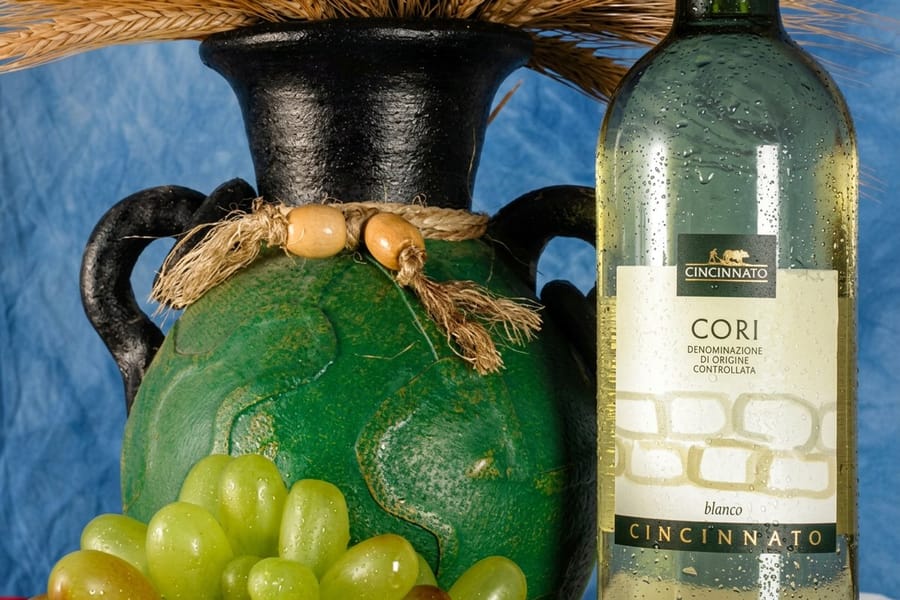
The front label carries your brand name, vintage year, varietal, and usually the appellation. It is the hero of your packaging. For most standard 750ml bottles you are working within a 3.5 to 4 inch width and 3.5 to 4 inch height. Some winemakers go wider with a wraparound design, but a centered rectangular or oval label is the most common approach.
Keep your critical design elements, such as the logo, brand name, and vintage, inside a safe zone that sits at least 0.125 inches (1/8 inch) from every edge. This prevents trimming from cutting into your artwork. If you are using the 4OVER4.COM any shape wine labels, you can go beyond rectangles and create die-cut shapes that follow your design. Circles, ovals, and arched tops turn the shape itself into part of the branding.
One thing to watch: if your bottle has a pronounced curve, a label wider than 4 inches may start to wrinkle at the edges. Test with a paper mockup first. Print a label at your intended size, cut it out, and wrap it around the actual bottle. Five minutes of testing saves hours of frustration.
Back label dimensions and regulatory requirements
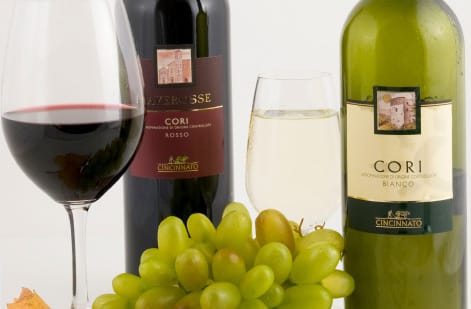
Back labels carry the compliance load. The TTB requires specific information on wine labels sold in the United States, including the brand name, class or type of wine, alcohol content, net contents, name and address of the bottler, and a government health warning. That is a lot of text for a small space.
Standard back labels for 750ml bottles run 3 to 4 inches wide and 3.5 to 4.5 inches tall. The extra height compared to front labels gives you room for the mandatory text plus any tasting notes, food pairing suggestions, or your winery story. Some producers use a slightly narrower back label to create visual distinction from the front.
Typography matters here. The TTB requires that mandatory statements meet minimum type-size requirements. Alcohol content, for example, must be at least 1mm tall for wines between 7 and 14 percent ABV. Plan your text hierarchy early. Do not design the pretty stuff first and try to squeeze compliance text in later. That approach almost always leads to a cramped, hard-to-read label. TTB requirements are revised from time to time, so confirm the current mandatory statements and their minimum type sizes before you approve the final file, because a printed label cannot be edited. For more help with text-heavy layouts, the printing FAQ hub has detailed answers.
Neck label and cap dimensions
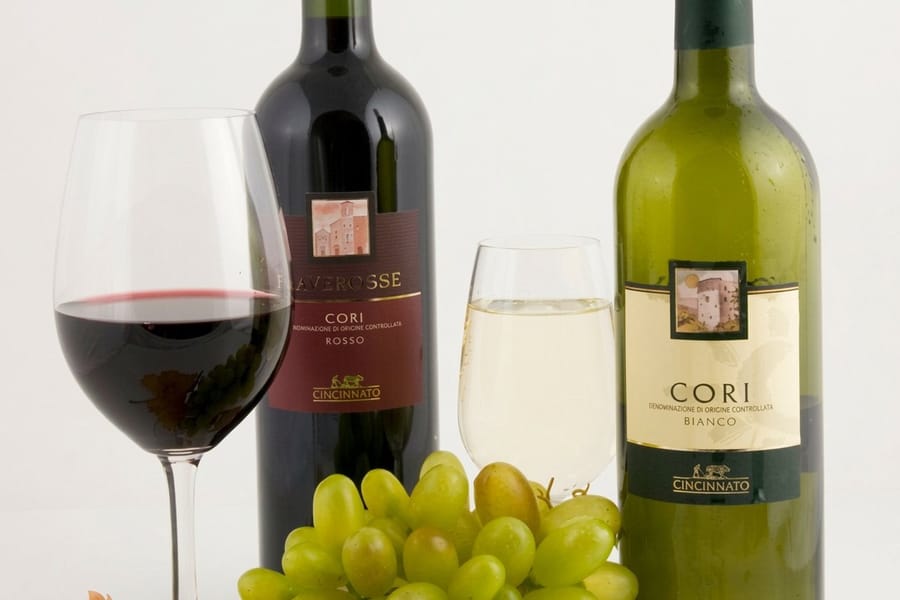
Neck labels, sometimes called collar labels, wrap around the narrow part of the bottle just below the capsule. They are small but they add a polished, finished look. Typical dimensions are 1.5 to 3 inches wide and 0.5 to 1.5 inches tall.
Because the neck has a tight curve and a taper, your label material needs to be flexible enough to conform without bubbling. Thinner label stocks work better here. If you are using a textured or thick paper for your front and back labels, consider a thinner material for the neck wrap.
Some wineries skip the neck label entirely and use a capsule, the foil or plastic sleeve over the cork, as their only neck branding. Others use a full neck wrap that extends from the capsule down to the shoulder. If you go with a full wrap, build a template that accounts for the taper, because the circumference at the top of the neck is smaller than at the shoulder.
How bottle shape changes your label dimensions
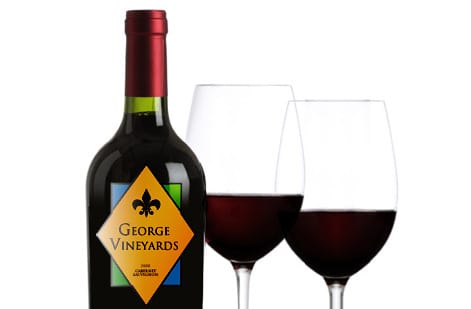
Not every wine bottle is the same shape, and shape directly affects label sizing. Here is how the most common bottle styles change your dimensions:
- Bordeaux bottles have straight sides and angular shoulders. They offer a flat, consistent surface for labels. Standard dimensions work well here with minimal curvature distortion.
- Burgundy bottles have a wider body and sloping shoulders. The wider circumference means you can sometimes go slightly wider on your front label, up to 4.25 inches, without wrinkle issues.
- Riesling and Alsace bottles are tall and slim. Labels need to be narrower, often 3 to 3.5 inches wide, to avoid wrapping too far around the smaller circumference.
- Champagne and sparkling bottles are thicker glass with a wider body. Front labels are often smaller, around 3 inches wide, because the bottle curve is more pronounced.
- Magnum and large-format bottles (1.5L and up) need proportionally larger labels. A magnum front label might run 4.5 to 5 inches wide and 4.5 to 5 inches tall.
If you are working with an unusual bottle shape, always request a physical sample from your bottle supplier and measure it yourself. Relying on spec sheets alone can lead to surprises. You can browse real-world label designs in the 4OVER4.COM wine label showcase to see how different shapes and sizes come together in finished products.
Bleed, safe zone, and file setup for wine labels
Once you know your finished label size, you need to set up your design file correctly. Three measurements matter:
- Trim size: the final, finished size of your label after cutting. This is the dimension you have been measuring.
- Bleed: an extra 0.125 inches (1/8 inch) of artwork extending beyond the trim line on all sides. This prevents white edges if the cut shifts slightly during production.
- Safe zone: keep all critical text and logos at least 0.125 inches inside the trim line. Anything closer to the edge risks getting cut off.
So if your front label is 4 inches wide by 4 inches tall, your design file should be 4.25 inches by 4.25 inches to include bleed on all sides. Your safe zone for text and logos would be 3.75 inches by 3.75 inches. 4OVER4.COM offers blank templates with these guides already built in, so you do not have to set them up manually.
File resolution should be 300 DPI minimum. Wine labels are viewed up close, in someone's hand and on a dinner table, so low-resolution artwork shows every flaw. Use CMYK color mode for print accuracy, not RGB. And if your design includes metallic foil or spot UV, those elements need to sit on separate layers in your file.
Wine label size in cm, mm and pixels
Design tools rarely agree on a unit, so here are the same wine label dimensions in the three systems people search for. A 3.5 to 4 inch front label is 8.9 to 10.2 cm wide and tall, or 89 to 102 mm. The back label at 3 to 4 inches wide by 3.5 to 4.5 inches tall becomes 7.6 to 10.2 cm by 8.9 to 11.4 cm, which is 76 to 102 mm by 89 to 114 mm. The neck strip at 1.5 to 3 inches wide by 0.5 to 1.5 inches tall works out to 3.8 to 7.6 cm by 1.3 to 3.8 cm.
For a pixel canvas at 300 DPI, multiply the inch value by 300. A 4 by 4 inch front label is 1200 by 1200 pixels, and a 3.5 by 4 inch label is 1050 by 1200 pixels. Add the 0.125 inch bleed on every side and the 4 inch label becomes 4.25 inches, which is 1275 pixels or 10.8 cm. Set the canvas at the bleed size, keep the trim size in mind as you place type, and export a PDF rather than a screen-resolution image so nothing softens on press. Metric users can enter the size in mm directly, and our water bottle label size guide uses the same conversion for bottles that are not wine.
Choosing the right label material and finish
Dimensions are only half the equation. The material and finish you choose affect how the label looks, feels, and performs on the bottle. Wine labels face unique challenges: condensation from chilling, moisture from ice buckets, and handling by customers picking bottles off shelves.
For wine labels that need to survive cold and wet conditions, waterproof materials like BOPP (biaxially oriented polypropylene) or vinyl are strong choices. Paper labels give a more traditional, artisanal feel but may need a laminate coating to resist moisture. If you want that textured, old-world look, consider a cotton or linen-textured paper with a matte laminate.
Finish options add another layer of personality. Glossy finishes make colors pop and photographs look vivid. Matte finishes feel sophisticated and reduce glare. Soft-touch laminate gives a velvety, tactile quality that makes people want to hold the bottle longer. Spot UV can highlight specific elements, such as your logo, a crest, or a vintage year, with a raised, glossy accent against a matte background.
Design tips that work within standard wine label dimensions
Working within a 3.5 to 4 inch square or rectangle might feel limiting, but constraints breed creativity. Here are practical design tips that work within standard wine label dimensions:
- Use hierarchy aggressively. Your brand name should be the largest element. Varietal and vintage come next. Everything else is supporting cast.
- Leave white space. A crowded wine label looks cheap. Premium wines almost always have generous margins and breathing room around text.
- Test readability at actual size. Print your design at 100 percent scale and hold it at arm's length. If you cannot read the varietal name from 3 feet away, the type is too small.
- Consider label shape as a design element. A die-cut arch or oval label stands out on a shelf full of rectangles.
- Match your label style to your price point. Minimalist designs signal premium. Busy, colorful designs work for casual, everyday wines.
The right material also depends on how labels are applied. Hand-applied labels are more forgiving with thicker stocks, while machine-applied labels need consistent thickness and a reliable adhesive backing. Talk to your printer about the application method before ordering. If you are creating other branded materials alongside your wine labels, guides like how to make flyers, how to make envelopes, and how to make custom magnets help you keep a cohesive brand across every print piece.
How to measure your bottle for a perfect fit
The flexible measuring-tape method is hands-down the most accurate way to find the circumference and height for your label. Three steps, in this order.
- Wrap a flexible tape around the bottle at label height and record the circumference. Measure at the widest, flattest part of the body, because that is where the label sits. This number is the absolute maximum width for a full wraparound label.
- Measure the flat vertical space between the shoulder and the base curve. Stand the bottle on a flat surface and measure from the point where the shoulder starts to curve up down to where the glass begins to curve in at the base. That distance is your maximum label height.
- Subtract 0.5 inches from both figures. That leaves the label sitting inside the flat area with even margins on all four sides, so no edge runs onto a curve where it would wrinkle or lift.
Then cut a piece of scrap paper to the dimensions you just worked out and wrap it around the bottle to see exactly how it sits. This simple physical test immediately shows any tapering issues and helps you confirm the placement looks balanced and professional before you commit to a print run.
Compliance text every wine label has to fit
Mandatory statements eat into your usable space, so plan for them from the first sketch. The exact rules differ by region, but the essentials look like this:
- The government warning: this text has specific font-size requirements, typically at least 2mm high for most 750ml bottles so it stays legible.
- UPC barcode: a standard UPC-A barcode needs a clear space of at least 1.469 inches wide by 1.02 inches high to scan properly.
- Sulfite declaration: the "Contains Sulfites" statement is mandatory for wines with over 10 parts per million of sulfur dioxide.
- Alcohol content and net contents: these details must be clearly displayed according to your regional regulations.
Requirements shift across borders. The European Union keeps things relatively simple, mandating a general minimum text height of 1.2mm for all required information like alcohol content and importer details. The United States TTB uses a more layered system, where the mandatory government health warning must be at least 2mm high on most standard bottles, noticeably larger than the EU baseline. If you sell in more than one market, design to the strictest rule so a single label works everywhere.
Wally explains wine label sizing
Measure the glass, then let the numbers follow
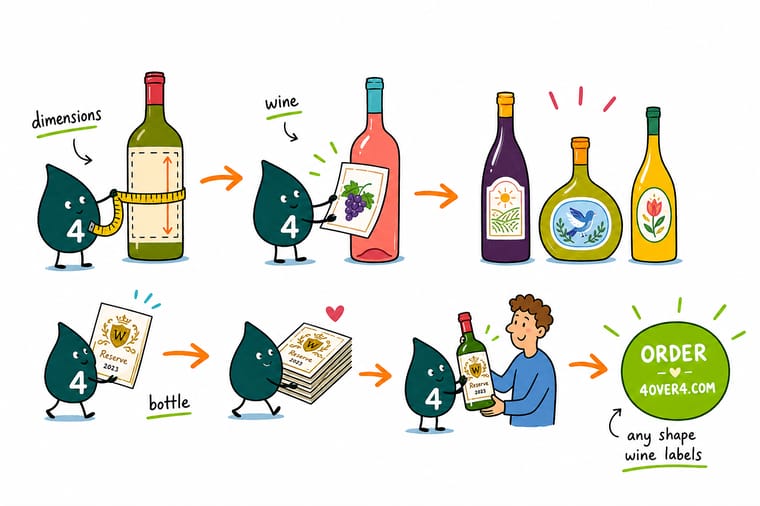
Wally treats a wine label like a tailored suit: measure the bottle first, then cut the front, back, and neck to fit. On a 750ml, that is roughly a 3.5 to 4 inch front, a slightly taller back for the legal text, and a narrow neck strip, plus an eighth-inch of bleed so nothing trims off. Mock it up on real glass before you order. When the size is set, 4OVER4 prints your wine label in any shape and finish you like.
Order wine labels →Bottle shapes
How each bottle shape changes your front label
| Bottle style | Front label width | What to know |
|---|---|---|
| Bordeaux | Standard 3.5 to 4 in | Straight sides, angular shoulders, flat surface with minimal curve distortion. |
| Burgundy | Up to 4.25 in | Wider body and sloping shoulders let you run a slightly wider front label. |
| Riesling / Alsace | 3 to 3.5 in | Tall and slim, so labels stay narrower to avoid wrapping too far around. |
| Champagne / sparkling | Around 3 in | Thick glass and a pronounced curve call for a smaller front label. |
| Magnum (1.5L+) | 4.5 to 5 in | Large format bottles need proportionally larger labels, front and back. |
Start from a template
Ready-to-use bottle label templates
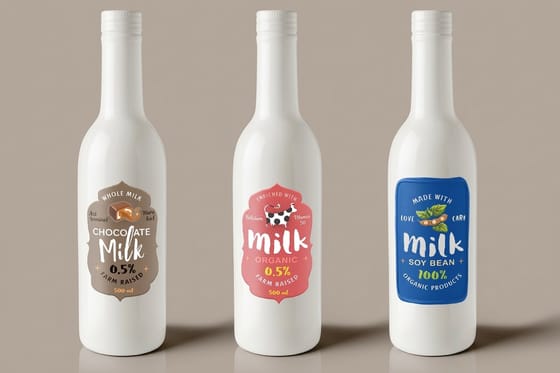
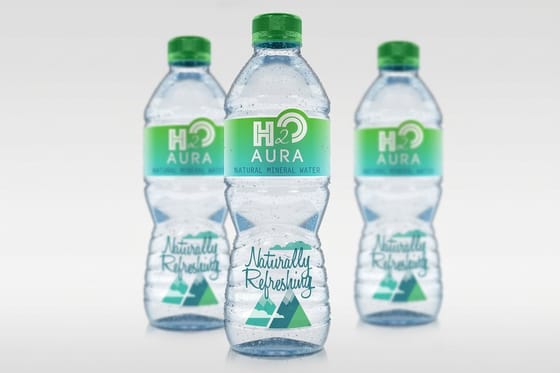
These print-ready bottle label templates open at the finished trim size with the 0.125 inch bleed and the 0.125 inch safe zone already drawn, so you can drop in artwork and get the wine label file setup right from the start. If your measured size is not on the list, any shape wine labels are cut to the exact width and height you give us.
Specs and pricing
Any-shape wine label specs and pricing
Once your dimensions are dialed in, here is what a custom, die-cut wine label gives you at 4OVER4.COM, with live specs and price-per-unit straight from the configurator.

| Quantity | Price Per Unit | Total |
|---|---|---|
| 250 | $1.07 | $267.89 |
| 500 | 62.9¢ | $314.59 |
| 1,000 | 37.1¢ | $370.77 |
| 2,500 | 18.0¢ | $450.32 |
| 5,000 | 12.2¢ | $610.72 |
| 10,000 | 8.18¢ | $818.12 |
| 15,000 | 7.68¢ | $1,152.20 |
| 20,000 | 7.68¢ | $1,536.64 |
Print it
Order wine and bottle labels at 4OVER4
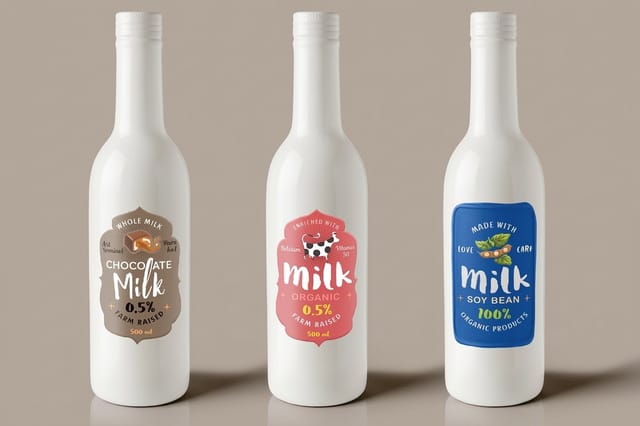
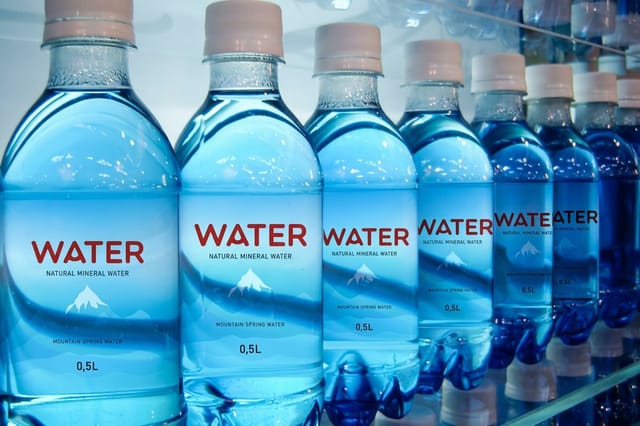
See it in use
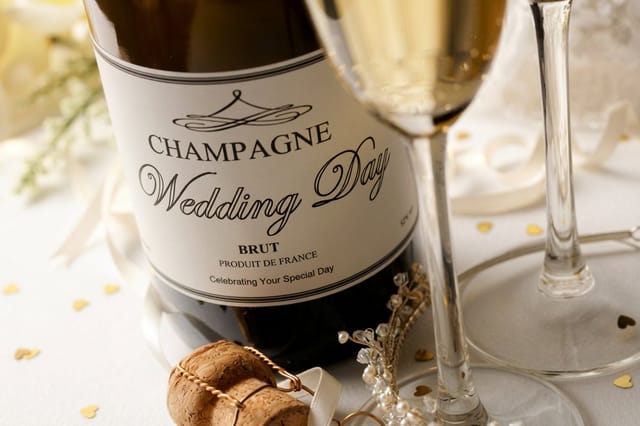
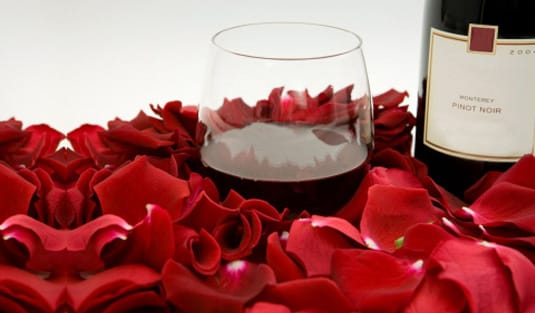
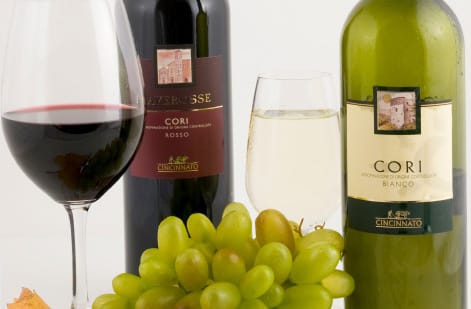
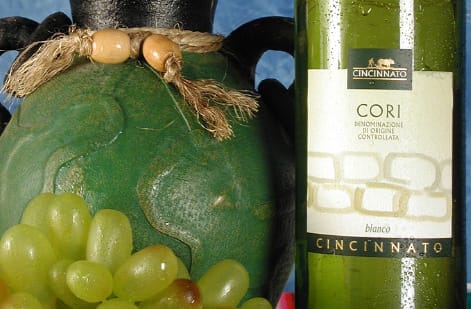
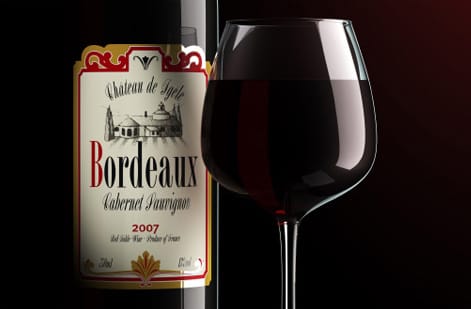
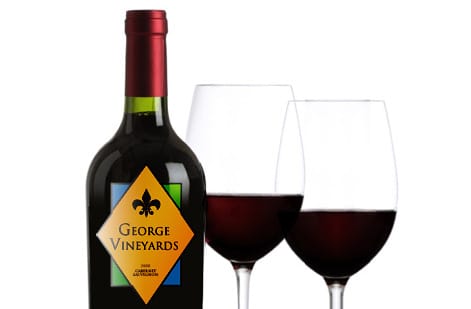
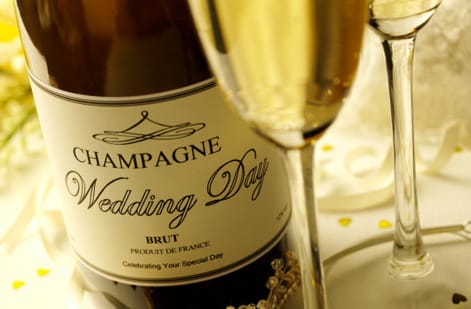
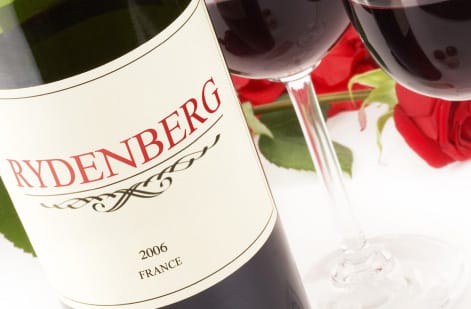
Wine labels we printed and die cut
Explore more
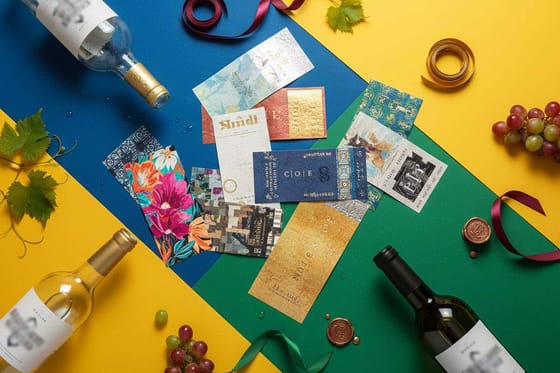
Where to go next


By the numbers
Ten billion cards and labels, twenty five years in
Common Questions
Common questions about wine label sizing and printing
What is the size of a 750ml wine bottle?
A standard 750ml Bordeaux bottle stands about 11.5 to 12 inches tall with a body diameter close to 3 inches, which gives a circumference of roughly 9.5 to 10 inches. A Burgundy bottle is wider at about 3.25 inches across, and a Riesling bottle is taller and slimmer. Those numbers set the maximum wrap width, so measure your own bottle at label height before you size the label.
What size should a wine label template be?
Build the template at the trim size plus 0.125 inches of bleed on every side, so a 4 by 4 inch front label opens as a 4.25 by 4.25 inch canvas, and mark a safe zone 0.125 inches inside the trim. At 300 DPI that canvas is 1275 by 1275 pixels. The 4OVER4 blank bottle label templates come with the bleed and safe zone already drawn, so you only add artwork.
Where should a wine label sit on the bottle?
Center the front label on the flattest part of the body with its bottom edge about 1 to 1.5 inches above where the glass starts to curve into the base, and put the back label directly opposite so the two align when the bottle turns. Keep the neck label just below the capsule. On a sparkling bottle the flat band is shorter, so the label sits lower on the body than it would on a still wine.
What size should a front label be for a standard 750ml wine bottle?
A front label for a standard 750ml wine bottle typically measures 3.5 to 4 inches wide and 3.5 to 4 inches tall. The exact size depends on your bottle shape and curvature. Bordeaux bottles work well with wider labels, while slimmer Riesling bottles need narrower labels around 3 to 3.5 inches wide. Always measure your specific bottle before ordering.
How much bleed should I add to my wine label design file?
Add 0.125 inches (1/8 inch) of bleed on all sides of your wine label design. That means your file dimensions should be 0.25 inches larger than your finished trim size in both width and height. Bleed prevents white edges if the cut shifts slightly during production. The 4OVER4.COM blank templates include these guides pre-built.
Do wine label dimensions change for different bottle sizes like magnums?
Yes. Larger bottles need proportionally larger labels. A magnum (1.5L) front label typically runs 4.5 to 5 inches wide and 4.5 to 5 inches tall. Half bottles (375ml) use smaller labels, often 2.5 to 3 inches wide. Always measure your actual bottle rather than scaling from standard 750ml sizes.
What's the best material for wine labels that will be chilled or placed in ice buckets?
Waterproof materials like BOPP (biaxially oriented polypropylene) or vinyl are the best choices for wine labels exposed to moisture. Paper labels can work if coated with a waterproof laminate, but they are more prone to peeling in prolonged wet conditions. 4OVER4.COM offers multiple waterproof options across all standard wine label dimensions.
What resolution and color mode should my wine label file use?
Use 300 DPI minimum resolution and CMYK color mode. Wine labels are viewed at close range, so low-resolution artwork shows pixelation and soft edges. RGB files often print with muted or shifted colors because RGB has a wider color gamut than CMYK. Convert your file to CMYK early in the design process to see accurate color.
Can I order custom-shaped wine labels instead of standard rectangles?
Absolutely. Die-cut wine labels in oval, arched, circular, or completely custom shapes are available from 4OVER4.COM. Custom shapes help your bottle stand out on crowded shelves. Just make sure your die-cut shape still leaves enough space for all required TTB compliance text. The shape outline becomes your new trim line, so add the same 0.125-inch bleed and safe-zone margins.
What size are wine bottle stickers?
Wine bottle stickers are the labels themselves, so the sizes match. On a standard 750ml bottle a front sticker runs 3.5 to 4 inches wide by 3.5 to 4 inches tall, a back sticker 3 to 4 inches wide by 3.5 to 4.5 inches tall, and a neck strip 1.5 to 3 inches wide by 0.5 to 1.5 inches tall. Measure your own bottle first, then add 0.125 inches of bleed on every side.
Get Started
Ready to print your wine labels?
Lock in your dimensions, pick a waterproof or textured stock, and we print crisp, any-shape wine labels that fit your bottle and your brand.
Legal Disclaimer
Gold Standard guarantees apply to all standard orders placed through 4over4.com. Price match requires verifiable proof of a competitor's published price for an equivalent product with matching specifications and turnaround time. Satisfaction guarantee covers manufacturing defects and print quality issues. Contact support with order number and documentation. On-time delivery rate based on tracked orders 1999 to 2026. Individual results may vary based on shipping carrier performance.
