
Law Firm Marketing Statistics for 2026


Budget benchmarks, legal PPC costs, and referral ROI, set against the order data behind 25 plus years of printing for legal professionals at 4OVER4.
Law firm marketing statistics point to one conclusion: firms that pair digital lead generation with premium print close more clients. Referrals carry the lowest cost per client, legal PPC ranks among the priciest keywords anywhere, and a thick, textured business card signals credibility before a word is read. With 150,000 plus businesses printing with 4OVER4.COM, the data backs what attorneys already sense.
The headline
What the 2026 legal marketing data actually shows
Law firm marketing statistics reveal a clear pattern. Firms that invest in both digital and print channels see stronger client acquisition than those relying on a single approach. The legal industry spends billions a year on marketing, yet many attorneys still underestimate how much tangible, printed materials do to build trust with potential clients. Understanding these numbers helps firms allocate budgets smarter and avoid wasting money on channels that do not convert, and every 4OVER4.COM print order is backed by 5 Gold Guarantees so your marketing investment is protected from the start.
By the numbers
Four legal marketing figures behind a firm's budget
Here are the headline figures attorneys and legal marketing teams reach for first when they plan a budget, drawn from industry surveys and our own production data. Legal keywords sit among the most expensive in paid search, while referral-driven print carries the lowest cost per client. Set those benchmarks against 25 plus years of printing for law firms at 4OVER4.COM and the picture is consistent: the materials people can hold get acted on.

Why the data matters
Why legal marketing data matters for your firm
Law firm marketing statistics are not just numbers on a spreadsheet. They are a roadmap. Every dollar your firm spends on marketing should trace back to measurable client intake, brand recognition, or referral growth. Without data you are guessing, and guessing gets expensive fast.
The legal industry is competitive. Solo practitioners compete with mid-size firms, and mid-size firms compete with national brands. The firms that win are the ones paying attention to what actually works, and the data tells a clear story about where print, digital, and referral marketing fit into that picture.
Just like firms in other industries track their numbers closely, attorneys need reliable benchmarks. Compare the patterns here against these wedding industry statistics, then keep every consistent print investment working harder through the 4OVER4.COM loyalty program.
Budgets and ad spend
Breaking down attorney marketing budgets and ad spend
The attorney marketing budget varies widely by firm size, practice area, and location. Personal injury firms tend to spend the most on advertising, often six or seven figures a year. Estate planning and family law firms usually run leaner budgets and lean heavily on referral-driven print like business cards, letterhead, and branded folders.
According to the American Bar Association's annual legal technology survey, the average law firm allocates between 2 and 10 percent of gross revenue to marketing. Smaller firms on the higher end of that range tend to grow faster, while established firms with strong referral networks hold market position at the lower end.
The pattern is consistent across law firm advertising statistics. Firms that combine digital lead generation with strong print branding close more consultations. A prospect who finds you online and then receives a thick, textured card during a consultation is far more likely to retain your services, the same pattern these real estate marketing statistics reveal.
Where clients come from
Digital versus print: where law firms actually get clients
Here is where legal marketing statistics get interesting. Most law firms report that their top three client acquisition channels are referrals, organic search, and paid search. But referrals do not happen in a vacuum. They happen when a satisfied client hands your business card to a friend, and when your branded materials sit on someone’s desk for months.
Print marketing supports every other channel. Your website converts better when prospects already recognize your brand from a mailer. Your referral rate climbs when your business cards feel worth keeping. Your consultation close rate improves when your intake packet looks polished and professional.
Pay-per-click for legal keywords ranks among the highest in any industry. Terms like car accident lawyer or DUI attorney near me can cost 50 to 200 dollars per click, so a single PPC client might cost 1,000 to 5,000 dollars or more. The healthcare sector faces the same channel math in these healthcare marketing statistics.
Brand building
The role of print in law firm brand building
Brand perception matters in legal services more than almost any other industry. Clients are trusting you with their freedom, their finances, or their family. Every touchpoint either builds or erodes that trust.
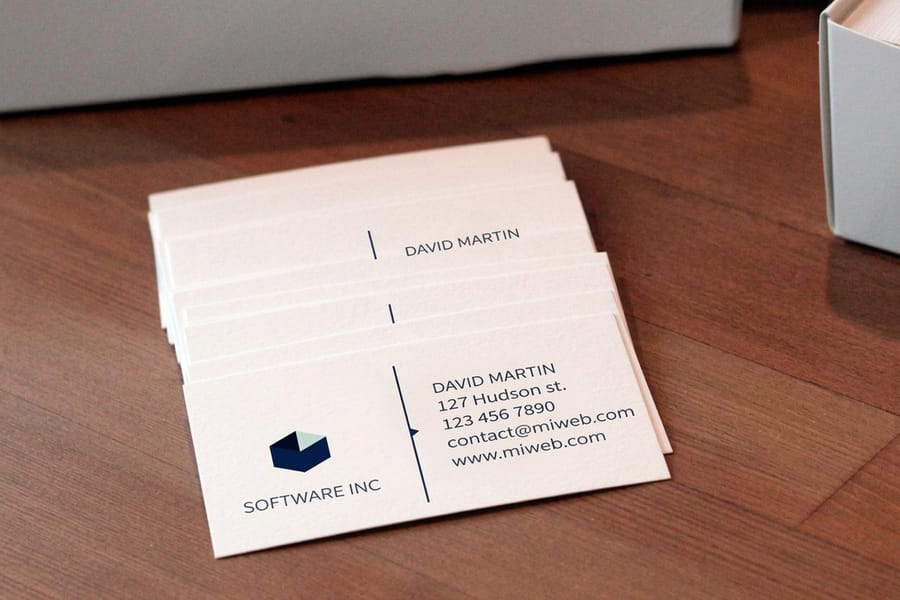
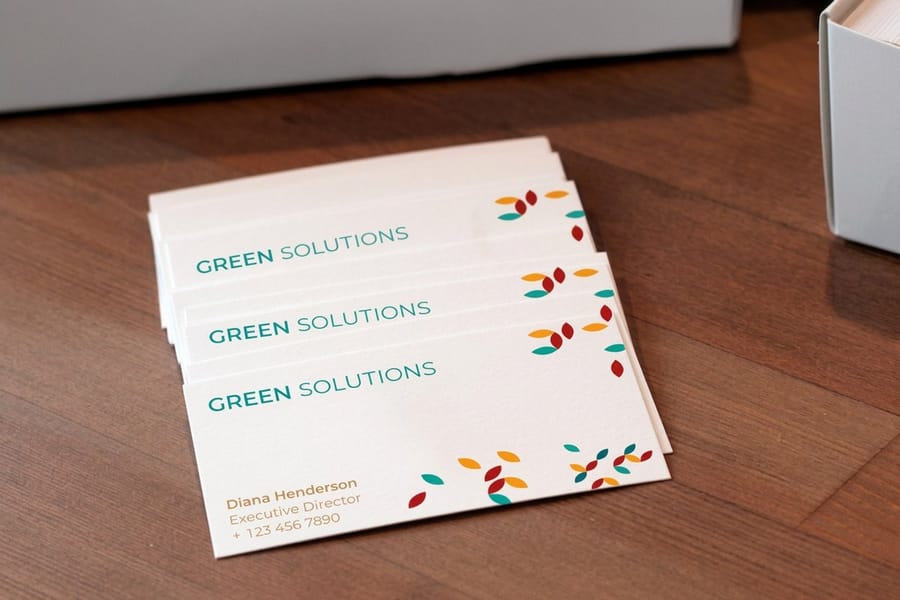
Print materials serve as physical proof of your professionalism. A flimsy card on thin stock signals a budget operation. A thick, textured card with clean typography signals an established, trustworthy firm. The same applies to letterhead, envelopes, presentation folders, and client welcome packets.
Similar patterns emerge across industries that depend on trust. This restaurant failure rate data shows that businesses investing in professional branding survive longer than those that cut corners.
Our firm redesigned all print materials, business cards, letterhead, and folders, through 4OVER4.COM last year. The consistency across everything makes us look like a much larger operation than we are.
Verified customer, Managing Partner
Our order data
What 4OVER4 order data reveals about legal print

4OVER4.COM has served 150,000 plus businesses since 1999, and law firms are a consistent segment of that base. Attorneys overwhelmingly choose thicker paper stocks. The most popular pick among legal professionals is 32pt ultra-thick cardstock for business cards, nearly double the rate of other professional services.
Specialty finishes like spot UV, embossing, and foil stamping are far more common in legal print orders. Attorneys understand that tactile quality communicates credibility. A raised logo on a card or a foil-stamped firm name on a folder creates an impression that lasts.
These patterns from our own order data align with broader industry trends. Print is an active part of the legal marketing toolkit, not a leftover from the past. Explore options beyond the office with our kids printing collection for firm family events and community outreach.
Budgets and channels
How practice area and channel shape the spend
Not every practice area spends the same way, and not every channel returns the same cost per client. These two views put attorney marketing budgets and channel economics side by side so you can see where your firm should lean.
| Practice area | How they market |
|---|---|
| Personal injury | Six to seven figures a year, heavy TV and PPC spend. |
| Criminal defense | 5,000 to 15,000 dollars a month on Google Ads in metro areas. |
| Immigration | Community outreach and multilingual printed materials. |
| Corporate law | Relationship marketing, premium cards, embossed stationery. |
| Estate and family law | Leaner budgets, referral-driven print like cards and folders. |
| Channel | What the data shows |
|---|---|
| Referrals with print | Lowest cost per acquisition, highest lifetime value. |
| Organic search (SEO) | Moderate upfront investment, compounds over time. |
| Paid search (PPC) | Immediate results but 50 to 200 dollars per legal click. |
| Direct mail | Cost-effective for re-engaging past clients and referrals. |
| Social advertising | Lower cost per impression, longer conversion cycle. |
| TV and radio | Broad reach, high cost, best for brand awareness. |
Your channel mix should match your practice and your market. Personal injury firms in competitive metros justify heavy PPC and TV, while estate and family law firms win on referrals fueled by premium print. The common thread is knowing your cost per client before you scale a single channel.
Make it convert
Pair premium print with your digital funnel
The firms that win balance channels rather than betting everything on one. Digital generates the lead, print closes it. A prospect who finds you online and then holds a 32pt card during the consultation is far more likely to sign, so plan your ad spend and your print together from the start.
Proof, not promises
Legal print by the numbers at 4OVER4
Here are the trust signals behind the benchmarks, the volume, tenure, and quality figures that round out the picture for firms planning their 2026 marketing. A 4.8 out of 5 average across 10,000 plus reviews and 25 plus years of printing for professional services show the print quality holds up order after order, which is exactly what a firm putting its name on every card needs.
Stock, finishing and price
The card weight that reads as credible, priced at 100
For firms ready to act on these numbers, here is current pricing for Business Cards, the material with the lowest cost per referred client, alongside the full specifications so you can match the right stock and finish to your firm.
Wally turns the data into your firm's next print run
Statistics are step one. The card in their hand is step two.
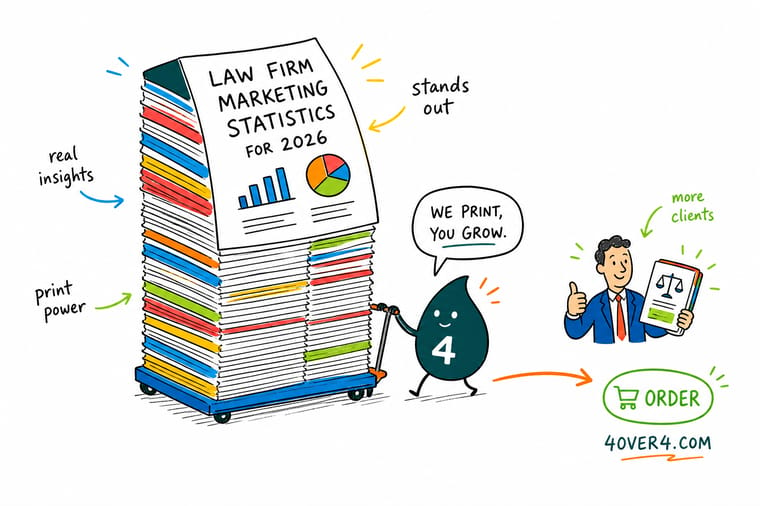
The numbers all point the same way. A premium piece a prospect can hold beats an ad that vanishes when the budget runs out. Wally's rule for law firms is simple. Protect your referral engine with cards worth keeping, print heavy on the stock that signals credibility, and let quality do the closing. When one legal search click runs 50 to 200 dollars, a card printed on 32pt stock and kept by a referral source changes what your 2 to 10 percent marketing budget has to buy.
Order business cards →Side by side
How legal marketing compares to other professional services
Law firm marketing statistics become more meaningful next to other professional services. Attorneys face some of the highest advertising costs in any sector, but they also benefit from higher client lifetime values. Seeing where legal sits relative to healthcare, real estate, and financial services helps a firm benchmark its own performance, and you can widen that view across every sector in these industry marketing statistics.
| Sector | Paid search pressure | Where print gives an edge |
|---|---|---|
| Legal | Among the highest CPC in any industry | Premium cards and folders convert high-value consultations |
| Healthcare | High, tightly regulated keywords | Appointment cards and referral print build patient trust |
| Real estate | Moderate to high in hot markets | Just listed and just sold print dominate a neighborhood |
| Financial services | High, fiercely competitive terms | Branded statements and folders signal stability |
The cost per click for legal keywords is consistently among the top three most expensive categories in paid search. But the average case value in personal injury or corporate law can justify that spend, as long as firms track their numbers carefully.
Print offers law firms a cost advantage that digital channels cannot match. A single premium business card costs pennies to produce but can generate a referral worth thousands. The pattern is simple: legal marketing is expensive, but firms that balance digital spend with strategic print report better overall ROI than firms that go all-in on any single channel.
Myths vs facts
Clearing up legal marketing misconceptions
A few myths keep firms from investing in print that would pay off. The pairs below set each common assumption against what the law firm marketing statistics actually show, so you can plan your next campaign on evidence rather than habit.
Print marketing is dead in legal, everything is digital now.
Print is one of the highest-ROI legal channels when used strategically, because a premium card sits on a desk for months while a paid ad vanishes the second the budget runs out.
Bigger marketing budgets always win more clients.
Smaller firms on the higher end of the 2 to 10 percent range often grow faster, and referral-driven print beats raw ad spend on cost per client.
A business card is just contact info, so quality does not matter.
A thick, textured card signals an established, trustworthy firm, while thin stock signals a budget operation before a word is read.
Solo practitioners cannot compete with large firms on branding.
A solo attorney with 32pt embossed cards and branded folders can project the same professionalism as a 50-attorney firm.
Start from a blank
Blank templates for law firm print
Need a head start on design? These blank templates make it easy to get your firm's artwork print-ready, with bleed and safe margins already built in.


Print it
The print materials law firms reach for most
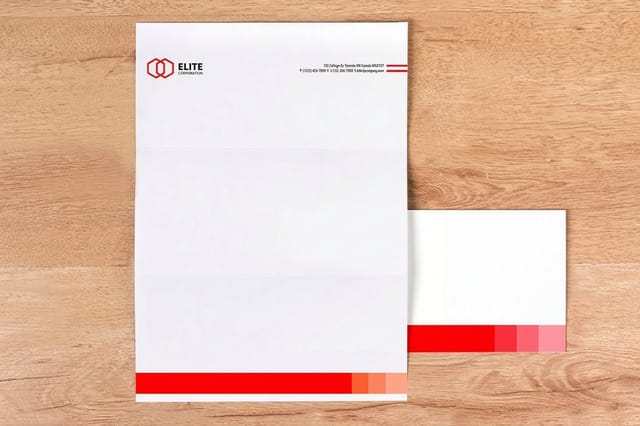
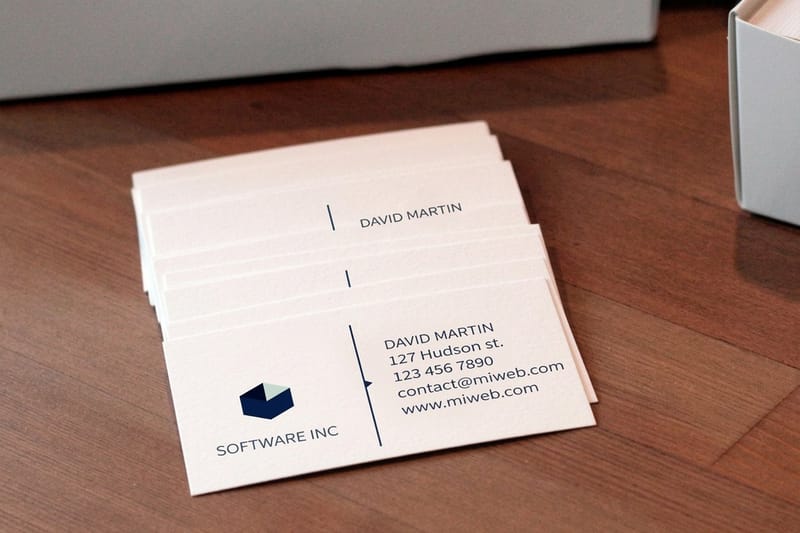
Legal marketing runs on pieces a client keeps. Standard Business Cards print 100 for $17.57 in 3 business days, letterheads 50 for $99.95 on stocks up to 28# Royal Linen, and gloss presentation folders 250 for $844.54. These are the pieces legal teams order most.



Why firms trust us
The press behind these legal stationery figures
Every benchmark on this page sits on a long record of getting print right. A 4.8 out of 5 average across 10,000 plus reviews, 150,000 plus businesses served, and professional services print since 1999 are the trust signals behind the numbers, so your firm can invest in print knowing the cards will land sharp and on time.
How we built this
Where each law firm figure on this page comes from
The law firm marketing statistics on this page come from a combination of publicly available industry reports, American Bar Association survey data, legal marketing association benchmarks, and 4OVER4.COM's own anonymized order data from legal industry customers. We cross-reference multiple sources and present only data points that appear consistently across reliable publications, with cited numbers drawn from industry surveys published between 2023 and 2025. Our internal data reflects aggregate patterns from 25 plus years serving professional services clients.

Get Started
Order 100 attorney business cards for $17.57
Pick your format, drop in a design or a free template, and we will print it sharp on premium stock and ship it on time.
Legal Disclaimer
Gold Standard guarantees apply to all standard orders placed through 4over4.com. Price match requires verifiable proof of a competitor's published price for an equivalent product with matching specifications and turnaround time. Satisfaction guarantee covers manufacturing defects and print quality issues. Contact support with order number and documentation. On-time delivery rate based on tracked orders 1999 to 2026. Individual results may vary based on shipping carrier performance.
Explore more
Legal marketing guides, stationery products and benchmarks
Statistics Industry Marketing Statistics Benchmark legal spend against every other sector we track.  Statistics Real Estate Marketing Statistics How agents pair print and digital to win listings.
  Statistics Healthcare Marketing Statistics Channel allocation trends across professional services.
  Statistics Wedding Industry Statistics Another market where tangible print drives real results.
  Statistics Restaurant Failure Rate Data Why professional branding helps businesses survive longer.
  Product Business Cards Print the material with the lowest cost per referred client. Rewards Loyalty Program Earn on every reorder your firm prints with us.
  Guarantees 5 Gold Guarantees Quality, price match, on-time delivery, service, satisfaction.
  Collection Kids Printing Prints for firm family events and community outreach. FAQs Printing FAQs Answers on stock, sizes, proofs, and turnaround.
 Questions and answers
Common questions about legal marketing data
Budgets, channels, PPC costs, print materials, and how small firms compete, answered.
What percentage of revenue should a law firm spend on marketing?
Most law firm marketing statistics suggest allocating between 2 and 10 percent of gross revenue to marketing. Newer firms or those in competitive practice areas like personal injury typically spend closer to 7 to 10 percent, while established firms with strong referral networks maintain growth at 2 to 5 percent. The right number depends on your growth goals and local competition.
Which marketing channel has the lowest cost per client for attorneys?
Referrals consistently show the lowest cost per acquisition in legal marketing statistics. When supported by quality print like premium business cards and branded referral cards, the cost per referred client drops even further. The budget you put toward referral support materials often delivers the highest ROI of any channel.
Are printed business cards still effective for law firms?
Yes. Law firm advertising statistics show that printed business cards remain one of the most cost-effective marketing tools for attorneys. Clients and referral partners keep heavy cards on desks and in wallets for months, and a thick, well-designed card signals professionalism before you say a word. Start with our business cards on premium stock.
How much do law firms spend on pay-per-click advertising?
Legal keywords are among the most expensive in paid search. Terms like personal injury lawyer can cost 50 to 200 dollars per click, and monthly PPC budgets for competitive firms range from 5,000 to 100,000 dollars or more. This is why many firms balance digital spend with lower-cost print marketing to improve overall ROI.
What print materials do law firms order most?
Based on legal marketing statistics and 4OVER4.COM order data, the most popular products for law firms are business cards on thick stocks, letterhead, envelopes, presentation folders, and direct mail postcards. Specialty finishes like spot UV and foil stamping are more common in legal orders than in most other industries. Order free samples to feel the stocks before you commit.
How do small law firms compete with larger firms in marketing?
Small firms can compete by investing in premium print that creates a perception of size and stability. Legal marketing statistics show that clients judge firm credibility partly through physical brand touchpoints, so a solo practitioner with 32pt embossed cards and branded folders can project the same professionalism as a 50-attorney firm.
