
The Telegram Monetization Playbook in Print, 5 Products That Grow and Protect a Paid Channel
Telegram has no feed to recommend you, so every member arrives from a link you put somewhere yourself. These five printed pieces put that link in rooms and mailboxes the app never touches, and one of them keeps working after the channel is gone.
Print does one job for a Telegram channel: it puts a scannable invite on something a person can hold, in places the app cannot advertise. Five pieces cover the whole path. A circle sticker seeds the link, a business card hands it over, a postcard reaches members even if the channel disappears, a flyer explains the channel to a room, and a numbered ticket sells the meetup. Point every code at a redirect you own, never at the raw invite link.
The picks
Five picks, from $16.48 postcards to $93.37 die-cut stickers
Order them in this sequence, because each one feeds the next. The sticker gets the link into circulation, the card closes a conversation, the ticket collects an address, and the postcard uses it. Prices come straight from the configurator and drop per piece as the quantity climbs.
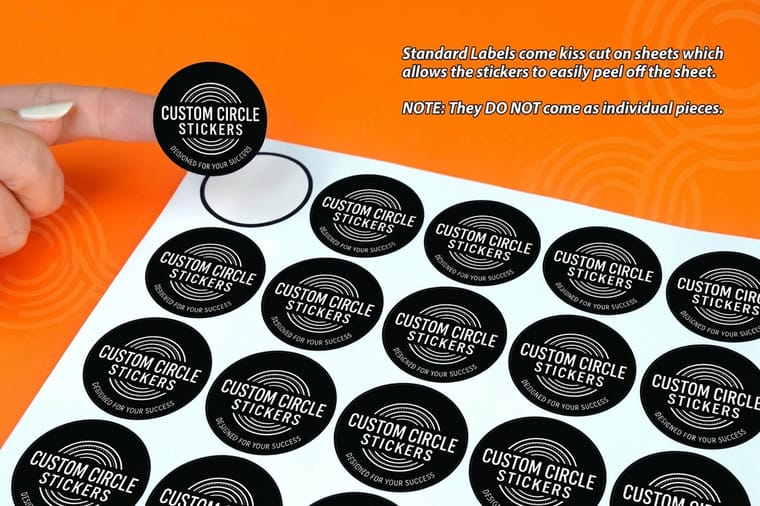
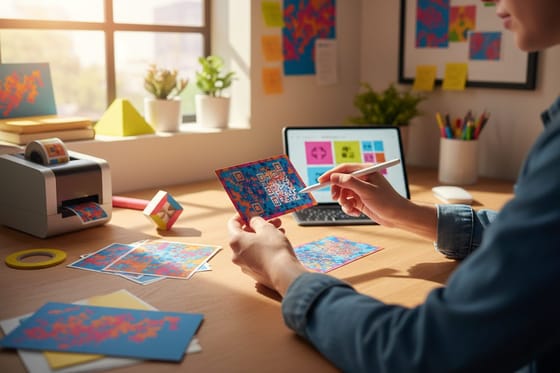
Circle stickers from $23.88
The cheapest surface for a scannable join link, and the one that ends up on somebody else’s laptop lid where your channel gets seen for a year.
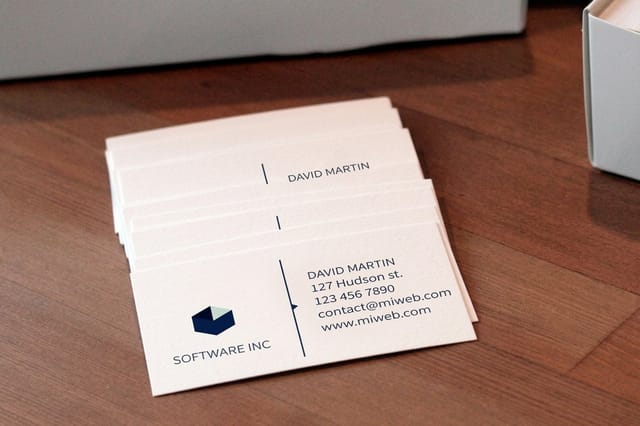
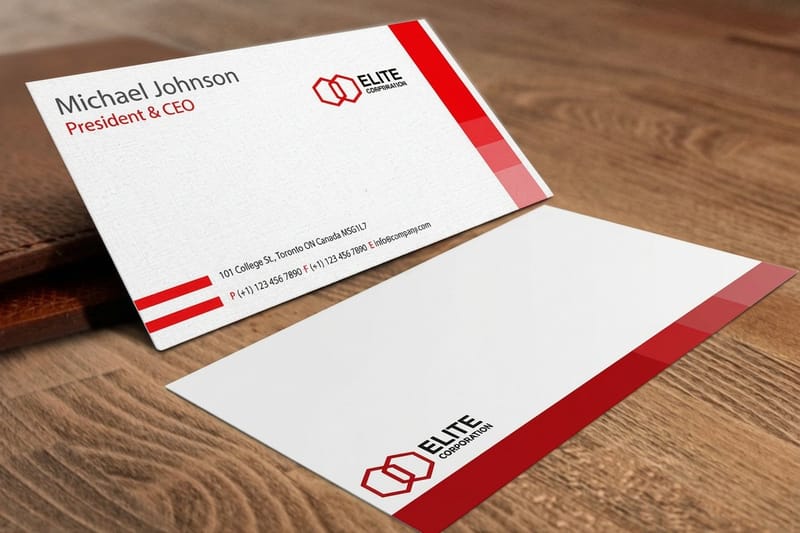
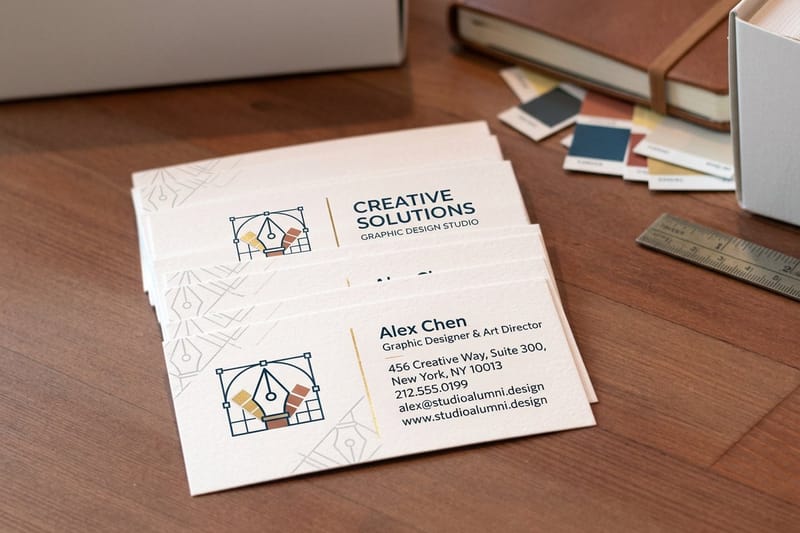
Standard business cards from $17.57
A spoken handle gets misheard in a loud room. A card with a QR on the blank back does not, and it is the piece that fits in a pocket at a meetup.
Standard postcards from $16.48
The one line to your members that Telegram cannot switch off. Mail reaches the people who muted the channel and the people who lost it in a ban.
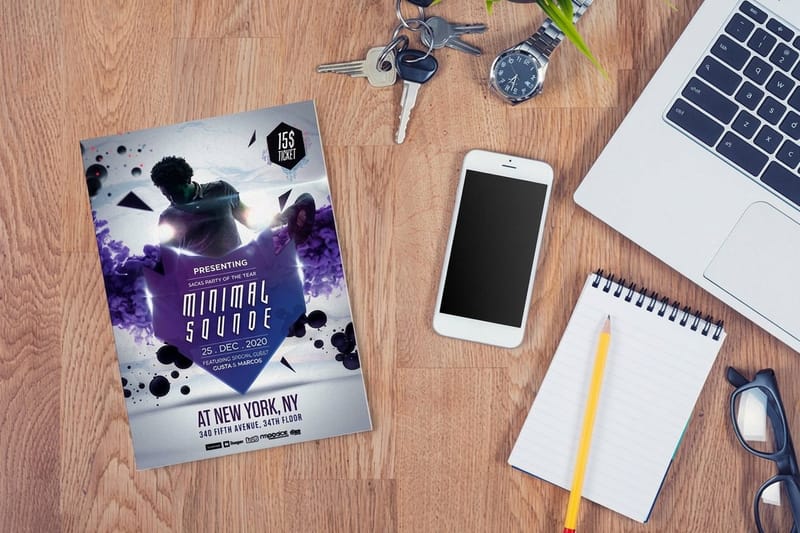
Standard flyers from $39.54
One page that has to sell a channel to a room that has never heard of it. Board, counter and conference table, where a sticker is too small to explain anything.
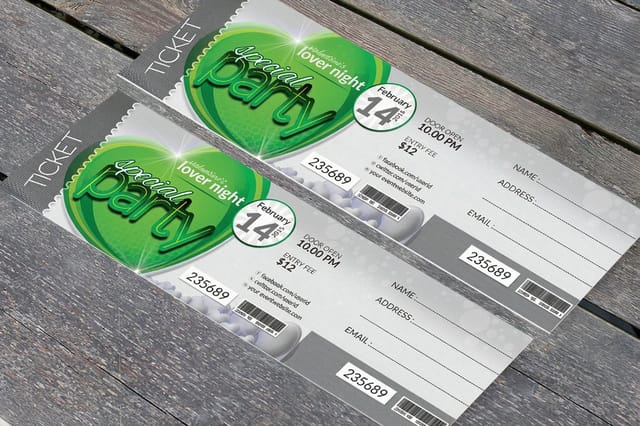
Event tickets from $25.27
Numbered stubs turn a free channel into a paid room. The tear-off half also collects the mailing address that makes pick three possible.


Before you print anything
Never print the invite link itself
This is the one setup mistake that turns an entire print run into scrap, and it is invisible until the day it happens.
A Telegram invite link is a revocable string. You can rotate it, set it to expire, cap the number of uses, or lose it because somebody reported the channel. All of that is fine while the link lives in a bio you can edit. It is not fine once the link is a QR code on 500 stickers, because paper does not have an edit button.
The fix takes ten minutes. Register a short path on a domain you already own, one per surface, and have each path redirect to the current invite. The printed code points at yourdomain.com/j/sticker, and that row points at the invite. When the invite changes you edit the row, and every sticker, card, postcard and flyer already in the wild keeps working.
You get attribution as a side effect, which is the part most channel owners miss. Telegram tells you a member joined and nothing about where they came from. Four separate redirect paths give you four hit counts, and that is the difference between knowing the conference table worked and guessing. If QR codes are new to you, our complete guide to QR codes covers error correction, quiet zones and the size floor in one place.
What each piece does
The five pieces and the job each one holds
Each piece works at a different distance from the sale. Read the row, tap the piece to jump to its section, and start with whichever stage of the funnel is currently silent.
| Piece | Job in the funnel | Where it goes | Starts at |
|---|---|---|---|
| Circle stickers | Seed the invite link where you are not standing | Laptop lids, merch boxes, conference swag tables, the back of a paid order | $23.88 |
| Business cards | Hand the link to one person you just spoke to | Meetups, conferences, a pocket, a sponsor conversation | $17.57 |
| Postcards | Reach members without going through Telegram at all | Mailboxes of buyers whose address you already hold | $16.48 |
| Flyers | Explain the channel to strangers in one page | Noticeboards, counters, conference tables, event bags | $39.54 |
| Event tickets | Charge for the room your channel can fill | Door of a meetup, workshop or launch night | $25.27 |
1. Circle stickers: the join link that travels without you

A sticker is the only piece in this kit that keeps working in a room you are not in. Somebody puts it on a laptop lid, a water bottle or a hard case, and the code stays scannable for as long as the laptop lives. Circle stickers start at $23.88 and are the cheapest way to get a Telegram invite onto a physical object.
The round shape is not decoration. A QR code is square and needs a clear border on all four sides, and a circle gives you that border for free without a designer having to think about it. On a 3 in circle you can run a code around 1.2 in square, leave the quiet zone clean, and still fit the channel handle underneath in type big enough to read at arm’s length. Keep the code dark on a light fill. Reversing it to light-on-dark is where a lot of scanners give up.
Print in batches, and give each batch its own short URL. A run that goes out in merch boxes and a run you leave on a conference swag table are two different experiments, and the redirect log is the only place that difference shows up. Our walkthrough on how to print QR code stickers covers the file setup, the contrast, and the size floor in detail.
Here is the trade-off worth knowing before you order. Circle stickers start at $23.88; die-cut stickers cut to the outline of your logo start at $93.37. The die-cut version looks like merch and earns a spot on a laptop that a plain circle does not always get. If the sticker is a freebie in a shipping box, print circles and print a lot of them. If the sticker is the thing people asked for, pay for the shape.
2. Business cards: the handoff a loud room cannot garble
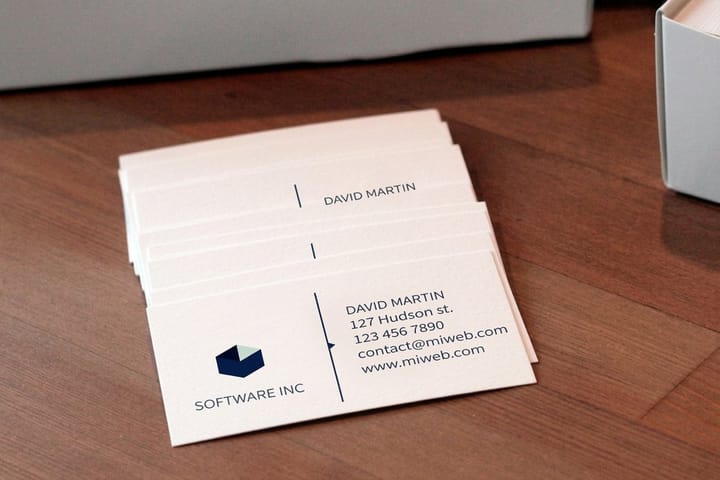
Telling somebody your channel handle at a conference is a bad transfer. Handles get misheard, similar names get followed, and the person means to search for it later and never does. A standard business card at 3.5 in by 2 in, from $17.57, removes the typing from the transaction entirely.
Give the back of the card to the code and nothing else. A QR needs about 0.8 in square as a floor for a reliable scan at arm’s length, a quiet border of roughly four modules on every side, and at least 0.125 in of clearance from the trim so a shift on the cutter never clips a corner off the code. One short line above it should say what the person gets by joining, because "scan me" is not a reason and a channel name is not a promise.
The front carries your name and what you actually do, since the card also has to work when it turns up in a jacket three weeks later. If you want layouts that already respect the quiet zone, start from a design template rather than a blank artboard, and read our notes on QR code business cards that convert before you finalize the back.
3. Postcards: the channel Telegram cannot switch off

Every Telegram audience is rented. If the channel is reported, the invite link is killed, or the account behind it is locked, the members are gone and there is no export that brings them back. Postal addresses are different. Once somebody buys a physical product from you, you hold an address that no platform decision can take away, and a standard postcard from $16.48 is the cheapest way to use it.
That is the disaster plan, but the everyday use is quieter and more valuable. A paying member who muted the channel four months ago sees none of your posts and still shows up on the subscription bill until the day they cancel. A postcard sitting on a kitchen counter gets read without an app open, and it is the one message you can send that does not compete with a notification stack.
Set it up properly. The address side belongs to the postal service, so keep the code, the offer and the artwork on the design side, and leave the address block and the barcode clear zone alone. Our guide on adding a QR code to postcards shows where the code can sit without a sorting machine printing over it.
Collect the address at the only moment people give it up without friction, which is checkout on something physical. That is also the argument for selling merch at all when the real product is a channel: the box is a reason to ask for an address, and the address is what survives the ban.
4. Flyers: one page for a room that has never heard of you
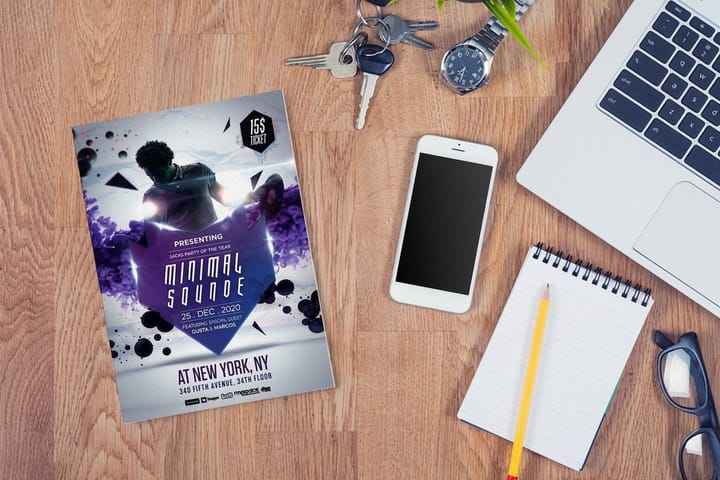
A sticker cannot explain anything and a card only works after a conversation. The flyer, from $39.54, is the piece that has to do the pitch cold, on a coworking noticeboard, a shop counter in your niche, or a table at somebody else’s event.
Three questions decide whether the code gets scanned, and all three belong above the fold: what do I get, how often do I get it, and does it cost anything. A channel is an unusual thing to advertise on paper because most readers have no mental model for it, so name the format outright. "Four trade breakdowns a week, free channel, paid tier optional" tells a stranger more than a paragraph about community ever will. Put the code at the bottom with a border of white around it and print the short URL underneath in readable type, because plenty of people will type it rather than open a camera.
Now the honest part. This is the lowest-yield piece in the kit and the first one to cut. A flyer only pays when there is a physical place where your specific audience gathers, and if your members are anonymous and scattered across time zones, that place does not exist. Print flyers for a real event with a real door, not on principle. Our guides on how to design flyers and using QR codes on flyers cover the hierarchy that keeps the offer at the top.
5. Event tickets: charge for the room your channel can fill
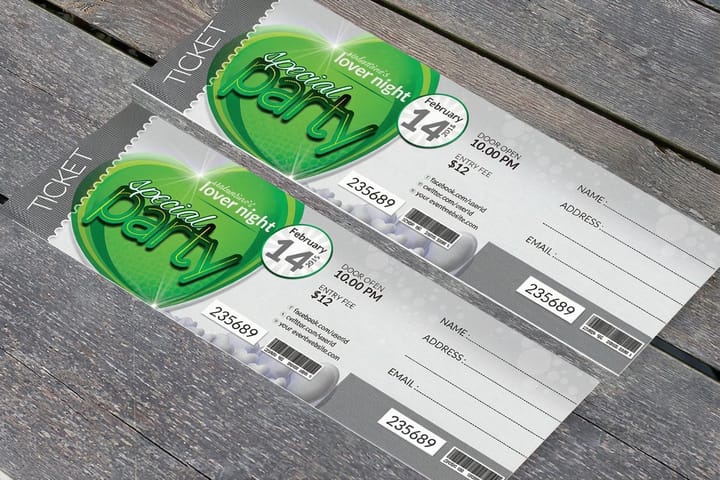
The shortest path from a free member to a paying customer is usually a room, not a paywall. A workshop, a launch night or a members-only meetup is something people will pay for while still refusing a monthly subscription, and event tickets from $25.27 are what make that room countable.
Ask for sequential numbering and a tear-off stub. The numbering gives you a door count that works with no wifi, no scanner and no app, which matters more than it sounds when the venue basement has no signal. The stub is the second half of the job: it is where the attendee writes a name and a mailing address, and that is exactly the list that feeds the postcard above. One event can build the offline backup for a channel that has never had one.
Price the ticket at something small rather than nothing. A free RSVP for an online community reliably produces a room half the size of the list, because nobody who paid nothing has anything at stake. Even a token price changes who turns up. The full argument for stacking room revenue on top of channel revenue is in the Telegram monetization playbook, and if the channel is still small, monetizing a micro audience is the better place to start.
Specs and pricing
The two pieces you will reorder: stickers and cards
Stickers go out fastest and cards run out at every event, so these are the two lines most channel owners reprint. Circle stickers start at $23.88 for 25 on standard uncoated label stock, business cards at $17.57 for 100, and both leave in 3 business days.

| Quantity | Price Per Unit | Total |
|---|---|---|
| 25 | 95.5¢ | $23.88 |
| 50 | 72.9¢ | $36.44 |
| 100 | 42.7¢ | $42.72 |
| 150 | 32.7¢ | $49.01 |
| 200 | 27.6¢ | $55.29 |
| 250 | 24.6¢ | $61.57 |
| 300 | 22.0¢ | $65.97 |
| 400 | 17.6¢ | $70.36 |
| Quantity | Price Per Unit | Total |
|---|---|---|
| 100 | 17.6¢ | $17.57 |
| 200 | 11.5¢ | $23.07 |
| 300 | 9.15¢ | $27.46 |
| 400 | 7.96¢ | $31.86 |
| 500 | 7.25¢ | $36.26 |
| 600 | 6.77¢ | $40.64 |
| 700 | 6.43¢ | $45.04 |
| 800 | 6.18¢ | $49.43 |
Wally prints the redirect, not the link
Five surfaces, four short URLs, one line you can edit
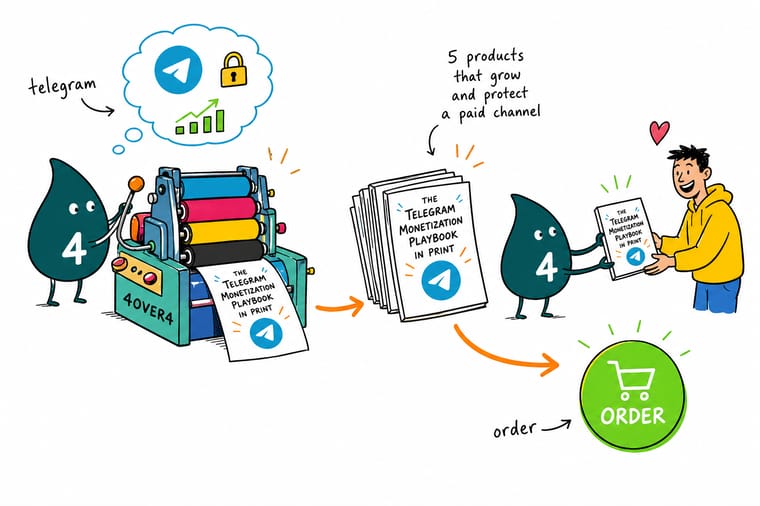
Wally learned this the expensive way. He printed the raw invite hash on a box of stickers, the link got rotated a month later, and every sticker turned into a dead end. Now each piece carries its own short URL on his own domain, the redirect points at the current invite, and when the link changes he edits one row instead of reprinting anything. The four separate paths also tell him which surface actually brought members, which Telegram never will.
Shop the creative professionals collection →See it in use
Circle stickers channels have handed out





Explore more
Where to go next


By the numbers
What a channel invite can be printed on
Common Questions
Common questions about printing for a Telegram channel
Does printing anything actually grow a Telegram channel?
It grows one in the places a link cannot reach on its own, which means rooms where you meet people and mailboxes of people who already bought from you. Telegram has no recommendation feed, so nothing hands you a stranger; the join has to come from somewhere you put the link. Print is one of those places, and unlike an ad it keeps working after the budget stops. It is not a substitute for referrals, and if you never meet your members in person the only piece here that earns its cost is the mailed one.
What should the QR code on a printed piece point to?
A short URL on a domain you control, which then redirects to the current Telegram invite link. Never print the t.me invite hash itself. Invite links get revoked, expire, or get reported, and a dead link on 500 stickers is 500 wasted stickers. With a redirect in the middle you edit one row when the invite changes and every printed piece keeps working.
How do I tell which printed piece brought people in?
Give each surface its own short URL, so the sticker, the card, the postcard and the flyer redirect through four different addresses to the same invite. Telegram will not report a source, so the hit count on those four redirects is the only attribution you get. Print the batch numbers into the short URLs as well if you run more than one drop, because a conference batch and a merch-box batch behave nothing alike.
How small can a QR code be on a business card?
Keep it to about 0.8 in square as a working floor for a scan at arm’s length, with a clear quiet zone of roughly four modules on every side and at least 0.125 in of clearance from the trim edge. Print it dark on a light background rather than reversed. Below about 0.6 in, or on top of a photo, first-try scans start failing and most people do not try twice.
What does the five-piece Telegram print kit cost to start?
The five starting prices add up to $122.74 at 4OVER4.COM: circle stickers from $23.88, standard business cards from $17.57, standard postcards from $16.48, standard flyers from $39.54, and event tickets from $25.27. Every one of those falls per piece as the quantity climbs, and the configurator updates the price live as you change size, stock and finish, so the real number depends on the run you order.
Circle stickers or die-cut stickers for channel promotion?
Circle stickers start at $23.88 and die-cut stickers, cut to the outline of your logo, start at $93.37. Print circles when the sticker is a free extra inside a shipping box, because volume matters more than shape there. Pay for die-cut when the sticker is the merch itself and has to compete for space on a laptop lid against stickers people chose.
How do I reach paying members if my channel gets banned?
Only through contact details you collected outside Telegram, which in practice means the mailing addresses attached to physical orders. That is why the postcard is in this kit at all. Ask for the address at checkout on merch or at the door of a paid event, keep the list off the platform, and a ban becomes an interruption instead of the end of the business.
Do I need paid tickets for a meetup my channel members attend free?
A printed, numbered ticket is worth it even for a low price, because a free RSVP from an online community routinely fills half the seats it promised. The number gives you a door count without wifi or a scanner, and the tear-off stub is where you collect the mailing address that feeds your postcard list. If the event genuinely has to be free, print the ticket anyway and charge nothing; the stub is the reason it exists.
Get Started
Put the channel on something people keep
Print the five-piece Telegram kit as one branded set at 4OVER4.COM. Circle stickers start at $23.88 for 25 and business cards at $17.57 for 100, each configured for size, stock and finish on its own page. Turnaround options include same-day printing when an event lands on Friday.
Legal Disclaimer
Gold Standard guarantees apply to all standard orders placed through 4over4.com. Price match requires verifiable proof of a competitor's published price for an equivalent product with matching specifications and turnaround time. Satisfaction guarantee covers manufacturing defects and print quality issues. Contact support with order number and documentation. On-time delivery rate based on tracked orders 1999 to 2026. Individual results may vary based on shipping carrier performance.
