
5 Print Products That Turn a Micro-Audience Into Revenue
A few hundred engaged followers is enough to sell printed work, as long as you pick products whose minimum order matches the number of people who will actually buy. Here are the five, with real starting prices and what each one costs you to put in the mail.
A micro-audience earns on margin per buyer, not on reach, so the kit is one cheap yes plus one expensive yes. Die-cut stickers and buttons convert the casual follower, posters carry the few people who want wall art, postcards test a design for the price of lunch and thank the buyer afterwards, and artist business cards catch everyone who liked the work but walked away. Print flat pieces first, because they ship for the price of a stamp.
The picks
Five pieces, from $16.48 postcards to $108.75 posters
Order them in this sequence, not all at once. Stickers first because they prove whether anyone buys, then buttons to lift the average order, then postcards as your test bench and thank-you insert, then posters and cards once you know your numbers. Every price below updates live in the configurator and falls as the quantity climbs, and you can start any of them from a design template instead of a blank canvas.
Start here
Why a small audience needs a different shopping list
Large accounts buy scale, small accounts buy optionality. When ten thousand people see a post, a five hundred unit run is a rounding error. When four hundred people see it, the same run is a bet, and the way you lose that bet is by printing the expensive item first. The five pieces below are ordered by how much they risk, from a sticker you will clear in a month to a poster run that needs a real audience behind it, and each section names where the product goes wrong as well as where it pays.
Prices and postage
What each piece costs, and what it costs to send
The starting price is only half the decision. The other half is the envelope, because a product that cannot go out flat carries a shipping cost on every single order for the rest of its life. Read the row, tap the piece to jump to its section, and notice that the two most expensive items to mail are also the two with the biggest ticket.
| Piece | Starts at | How it ships | The job it does |
|---|---|---|---|
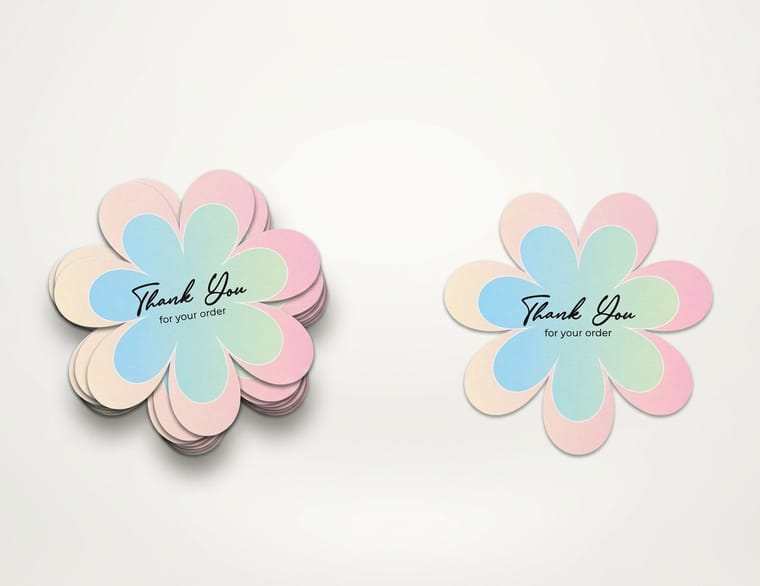
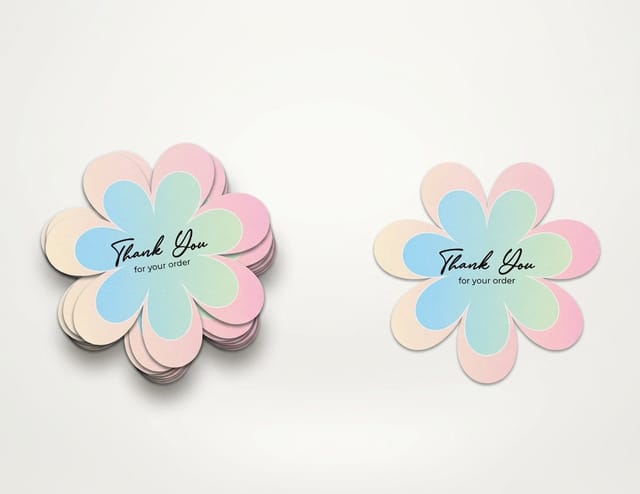
| 1. Die-Cut Stickers | From $93.37 | Flat, in a stamped envelope | The lowest-friction yes in the whole kit. Cut to the outline of the art, so the shape itself is the product. |
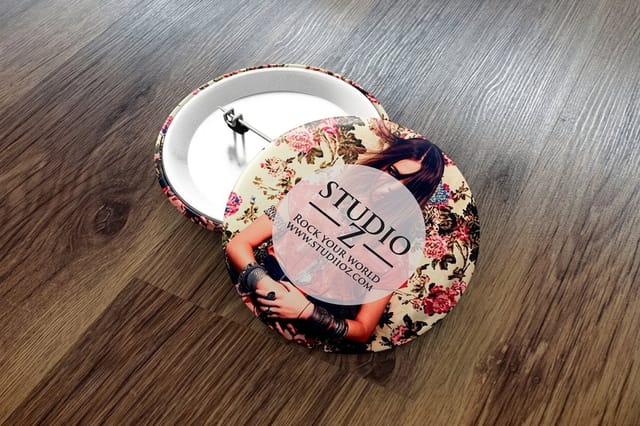
| 2. Standard Buttons | From $93.15 | Padded mailer, too thick for a letter | The impulse add-on that raises an order from one item to three without asking for a bigger decision. |
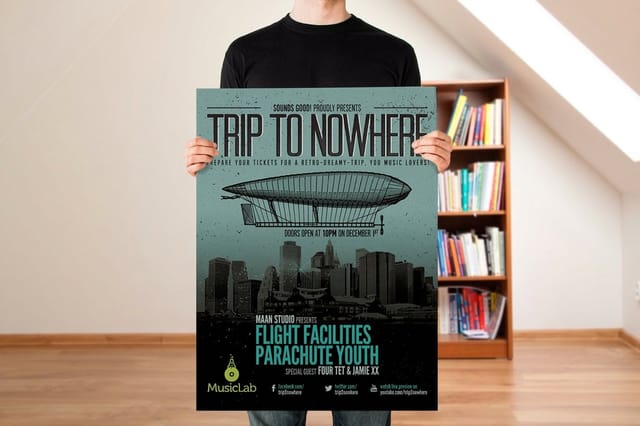
| 3. Standard Posters | From $108.75 | Rolled in a tube, priced by volume | The high-ticket piece for the handful of people who want your work on a wall, not on a laptop lid. |
| 4. Standard Postcards | From $16.48 | Flat, and it can ride free inside another order | The cheapest way to see your art on paper, and the thank-you insert that pulls a second purchase. |
| 5. Artist Business Cards | From $17.57 | Flat, a box fits in a jacket pocket | Not merch at all. The piece that catches the people at your table who like the work but will not buy today. |
1. Die-Cut Stickers: the first thing a small audience actually buys
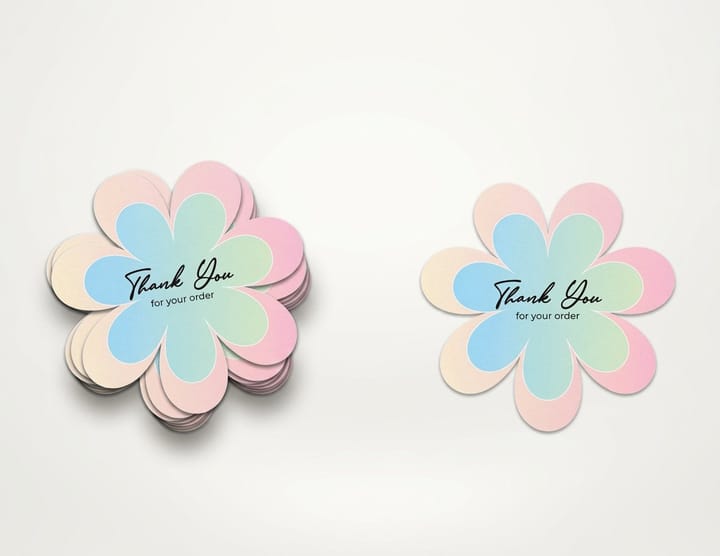
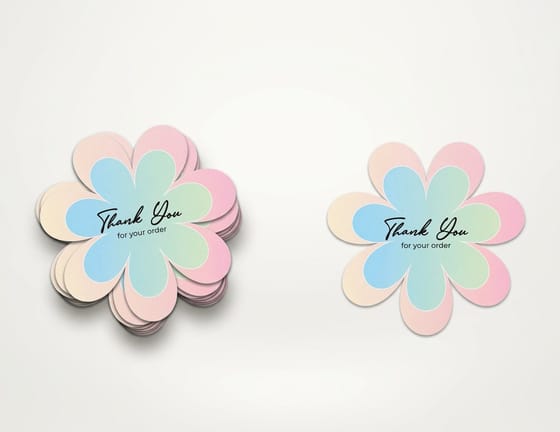
Almost every creator who sells anything sells a sticker first, and the reason is arithmetic rather than taste. A sticker is the cheapest object a follower can own that still carries your art, so the decision to buy takes about four seconds. Die-cut stickers are cut to the outline of the drawing itself, which means the silhouette is the product. A round sticker with your logo in the middle is a logo. The same logo cut to its own edge is a shape people stick on a laptop.
The die line is where these go wrong. Long thin tails, sharp spikes and hairline gaps between elements survive on screen and crack at the weed line, then peel from the tip after a week in a backpack. Keep the outline simple, leave a margin of about an eighth of an inch of colored border around the art, and close any gap narrower than that rather than asking the cutter to hold it.
Material is the other choice worth thinking about for ten minutes. Vinyl handles water bottles and car glass, paper stock does not, and the finish changes how a dark background reads under a light. Our breakdown of sticker materials covers which stock suits which surface, and if you decide the shape does not need to be custom after all, the standard dimensions are listed in the round sticker size guide.
Price your run by opening the configurator, reading the total at two or three quantities, and dividing each one by its count. That per-piece number is your floor, and every dollar above it is what pays for the envelope, the stamp and your time. For more ways to move them than a shop listing, there are ideas in ten uses for logo stickers.
2. Standard Buttons: the add-on that turns one item into three
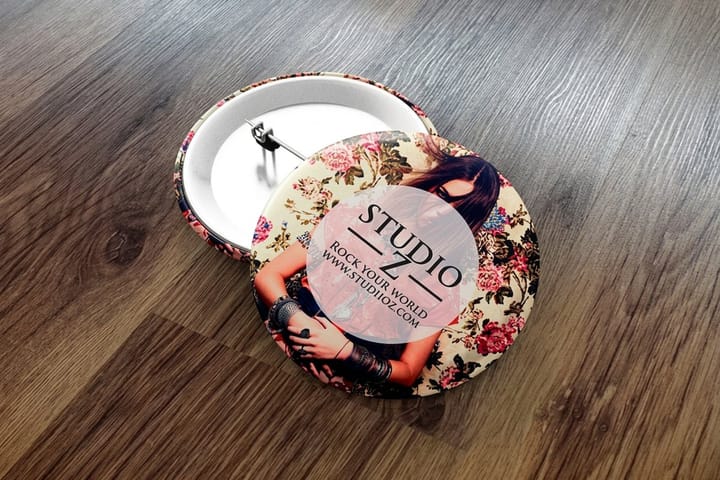
A button rarely carries an order on its own. It does something more useful: it lets a buyer who has already said yes to a sticker say yes twice more without a second thought. Standard buttons are the classic pin-back format, and a set of three or four designs sold as a pack is the easiest bundle in this kit to assemble.
Design for the curve, not the flat circle. The artwork wraps around the rim of the shell before it is crimped, so anything sitting within roughly an eighth of an inch of the edge disappears over the side where nobody sees it. Center the mark, let the background bleed past the trim, and never put type near the border. This is the single mistake that comes back on a first button order.
Buttons break the flat-mail rule the rest of the kit follows. They are thick enough that a plain letter envelope will not clear, so budget a padded mailer and check the weight before you set a shipping price. Bands have been solving this problem at a merch table for decades, and the packing logic in our band merch pack transfers directly. If you sell in person, the layout advice in craft fair booth setups is worth reading before your first market.
3. Standard Posters: the high-ticket piece for your top few percent
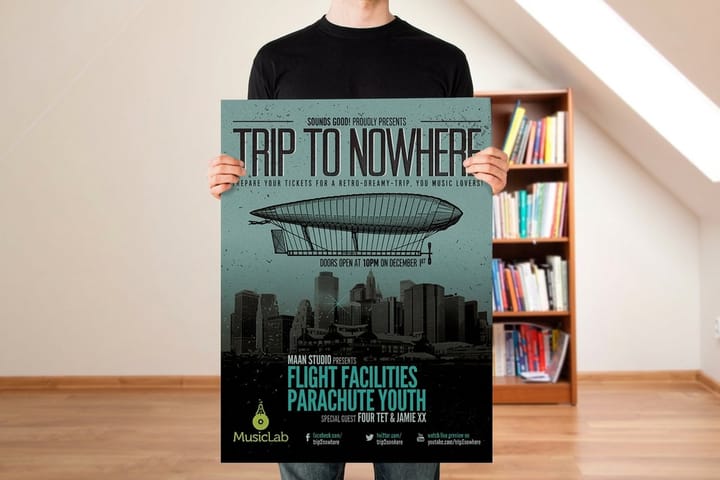
Somewhere in a small audience there are a few people who want the work on a wall. They are the reason to carry one expensive item, and standard posters are the usual choice because a single print can carry more revenue than a hundred stickers. Start at $108.75 in the configurator and the price climbs with size and quantity from there.
Two things sink poster runs for creators. The first is resolution. Art built for a phone feed looks flawless at 1080 pixels wide and turns soft at 18 by 24 inches, because a poster wants roughly 150 pixels per inch at final size and a screen file has nowhere near that. Rebuild the piece at print dimensions or draw it as vector, and check it at 100 percent before you upload. The poster size and resolution guide lays out what each common size needs.
The second is shipping, and it is the one nobody plans for. A rolled poster travels in a tube, and a tube is charged on the space it takes up rather than what it weighs, so a light print in a long cylinder can cost more to send than the print cost to make. Price that in from the start or offer posters only at events where the buyer carries it home. If you would rather absorb the cost by ordering deeper, read how the ladder works in bulk printing price breaks.
4. Standard Postcards: your cheapest print test and your second sale
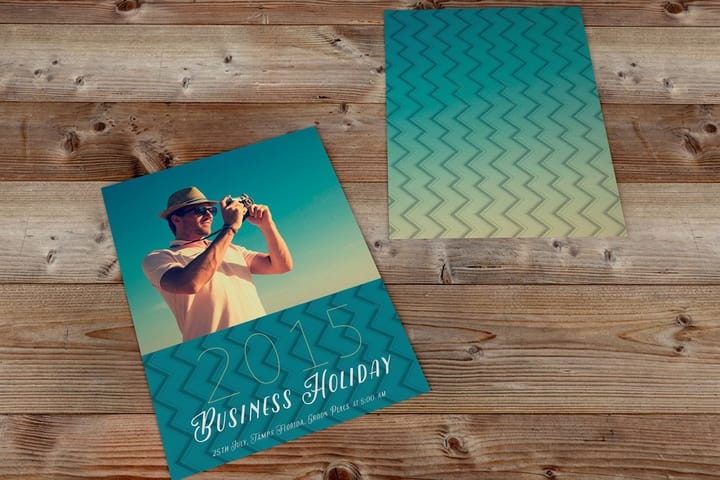
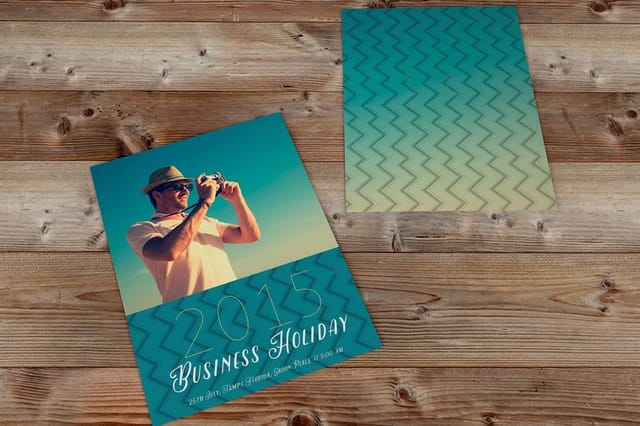
At $16.48 to start, standard postcards are the least expensive way in this catalog to hold your own artwork on paper. That makes them a test rig. Print the design you are unsure about as a postcard first, live with it for a week, and only then decide whether it deserves a sticker die or a poster run. Ink on paper tells you things a monitor hides, particularly about how dark your darks really are.
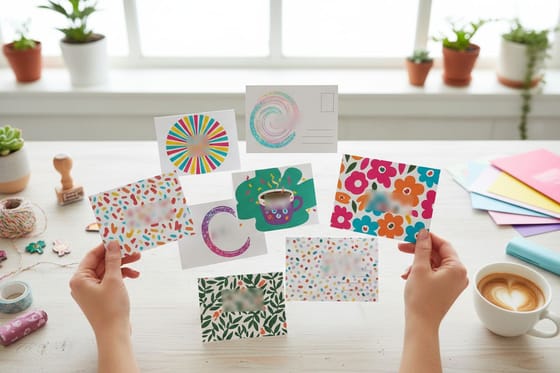
Their second job is quieter and probably more valuable. A postcard slipped into every parcel as a thank-you costs pennies, adds no shipping weight, and is the only moment you get a buyer's full attention with nothing else competing. Put one line of thanks, one QR code, and one reason to come back on it. Nothing else. There are workable examples in our roundup of small business thank-you card ideas.
Watch the two sides. A postcard you actually mail has to leave the address half clear for the carrier, while a postcard riding inside a box can bleed art edge to edge on both faces. Decide which one you are printing before you lay it out, because the layouts are not interchangeable. The wider view of what to put on which piece is in our guide to creating custom merchandise.
5. Artist Business Cards: the piece that catches everyone who did not buy

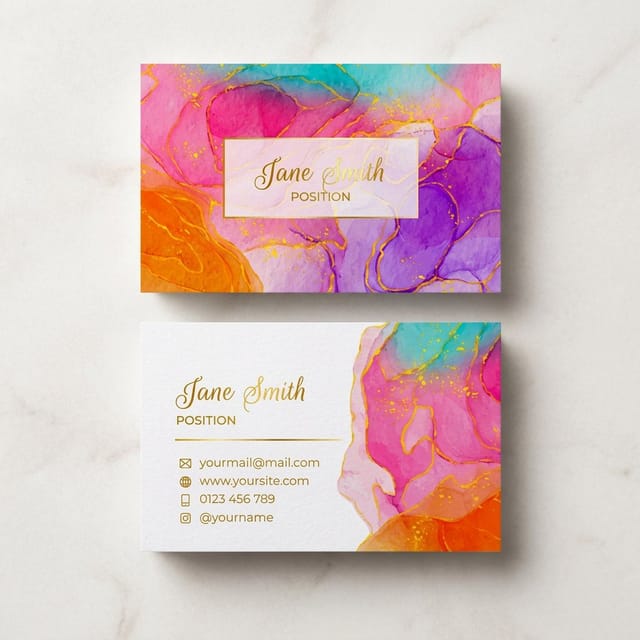
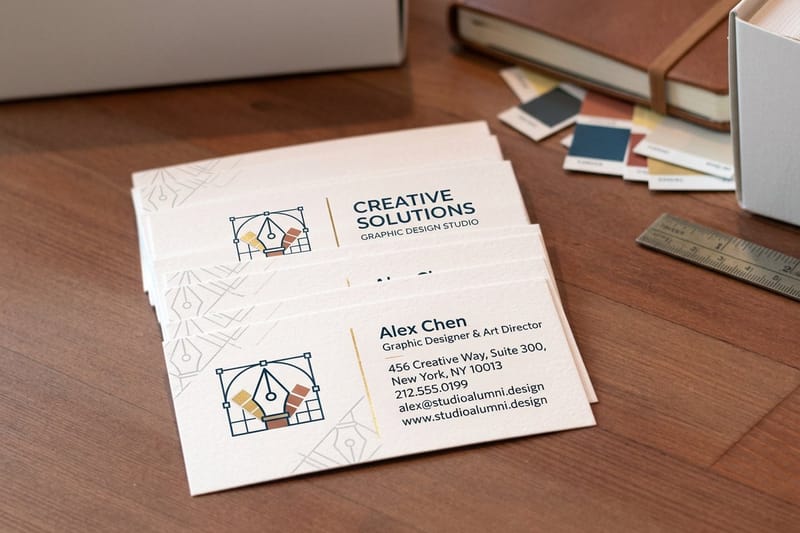
Most people who stop at your table will not buy anything, and that is normal. Artist business cards exist to make sure those people can still find you in three months. From $17.57 a box, this is the cheapest customer acquisition in the kit by a wide margin, and it is the only piece here that is not merchandise at all.
Treat the back as the working side. Your handle, a QR to the shop, and the medium you work in beat a phone number nobody will dial. Choose a matte or uncoated finish if you ever want to write a commission price or a name on it, because a pen skates straight off a gloss coating and smears. That one detail decides whether the card survives a market day.
Print the card from the same artwork as the rest of the set so the sticker, the poster and the card read as one body of work rather than five separate experiments. If you would rather not build the layout yourself, our design templates give you a starting file to drop art and a QR into. For everything else that goes on the table around the cards, see vendor booth ideas, and browse the full range in the creative professionals printing collection.
Specs and pricing
Compare the two you will reorder most
Stickers and posters sit at opposite ends of this kit: one is the volume seller, the other is the margin piece. Here are the live specs and price ladders for both, straight from the configurator, so you can see where each curve flattens out.
| Quantity | Price Per Unit | Total |
|---|---|---|
| 25 | $3.73 | $93.37 |
| 50 | $1.91 | $95.56 |
| 100 | 100.0¢ | $99.95 |
| 200 | 56.3¢ | $112.59 |
| 300 | 41.4¢ | $124.13 |
| 400 | 33.9¢ | $135.65 |
| 500 | 29.2¢ | $146.10 |
| 600 | 26.4¢ | $158.17 |
| Quantity | Price Per Unit | Total |
|---|---|---|
| 50 | $1.86 | $93.15 |
| 100 | $1.09 | $108.94 |
| 150 | 83.2¢ | $124.73 |
| 200 | 75.0¢ | $149.99 |
| 250 | 68.8¢ | $172.11 |
| 500 | 59.7¢ | $298.41 |
| 1,000 | 47.2¢ | $472.09 |
| 2,000 | 47.2¢ | $944.20 |
Wally explains the small-audience ladder
One cheap yes, one expensive yes, and a card for everyone else
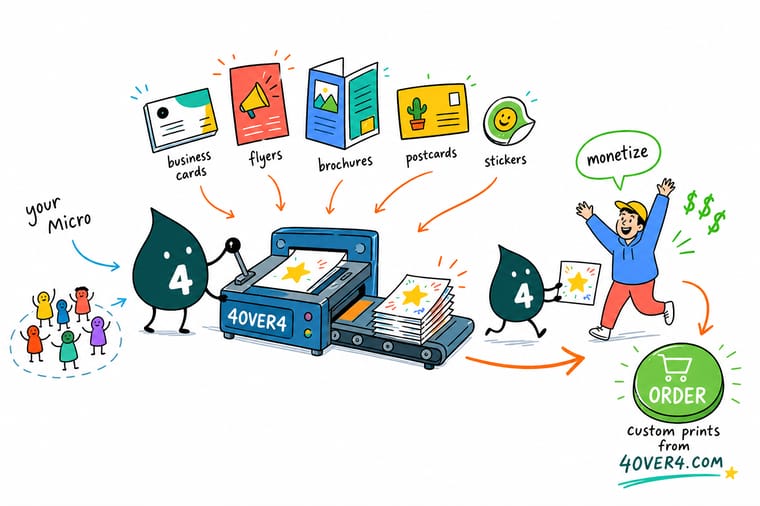
Wally sets the table the way a creator with a few hundred followers should: stickers and buttons in front where the casual fan can grab one, a poster behind for the person who wants the work framed, postcards doing double duty as a design test and a thank-you insert, and a stack of artist business cards for everyone who liked it but walked away. Print the flat pieces first, watch what sells, and only then order the run that needs a tube.
Shop creative printing →See it in use
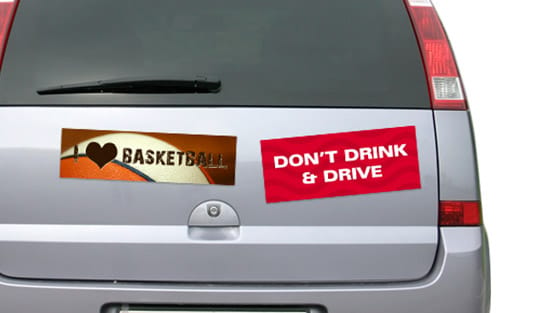
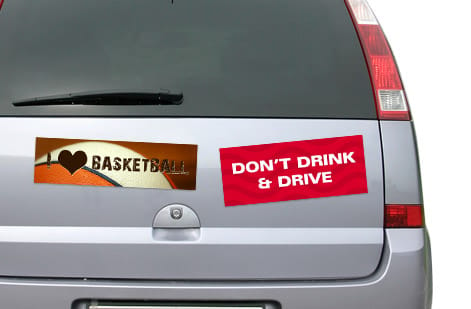
Die-cut stickers sold to small audiences

Explore more
Where to go next

By the numbers
What a small audience can be printed for
Common Questions
Common questions about selling print to a small audience
How many followers do you need before printing merchandise?
There is no follower threshold, only an order threshold. What matters is whether enough people will buy to clear the smallest run you can place, and you can find that out for about seventeen dollars by printing a design as postcards before you commit to anything else. Creators with a few hundred engaged followers routinely sell through a sticker run, while accounts with tens of thousands of passive followers sometimes do not, because engagement converts and reach does not.
What should I print first if I only have a hundred dollars?
Stickers, and only one design. Die-Cut Stickers start at $93.37 at 4OVER4.COM, which puts a full run inside that budget, and a sticker is the easiest thing for a follower to say yes to. Print your single strongest piece of artwork rather than spreading the money across three weak ones, because a small audience buys the design it already recognizes from your feed.
How do I work out what to charge for a sticker?
Open the product configurator, read the total at the quantity you plan to order, and divide it by the count. That number is your unit cost and your absolute floor. On top of it you need to cover the envelope, the postage, the payment processing fee and your packing time, so the retail price ends up several times the print cost. Check the total at two or three quantities before you decide, because the per-piece cost drops noticeably at each price break.
Can I print 25 of something instead of 500?
Short runs are available on most products, and the configurator shows the price at every quantity a product supports, so you can see exactly what a small order costs before committing. Expect the per-piece price to be much higher at 25 than at 500. For a first test that trade is usually worth it, since paying more per unit to avoid a box of unsold stock is the cheaper mistake.
Will a photo from my phone print well as a poster?
Sometimes, and it depends entirely on the pixel dimensions rather than the file size. A poster wants around 150 pixels per inch at its finished size, so an 18 by 24 inch print needs roughly 2700 by 3600 pixels. A modern phone photo shot at full resolution can clear that. A screenshot, a social media download or an image saved from a website almost never will, and enlarging it in software adds pixels without adding detail.
What is the cheapest way to ship stickers to a buyer?
Flat, in a plain envelope, with a piece of cardstock behind the sticker to stop it bending. Stickers, postcards and business cards all stay under the thickness a standard letter allows, which is why they are the products a small creator actually clears profit on. Buttons are too thick and need a padded mailer, and posters need a tube, so price those two separately instead of folding them into one flat shipping rate.
How do I keep five different products looking like one brand?
Build the artwork once as vector, then fix two colors and one typeface and refuse to add a third of either. The sticker, the button, the poster, the postcard and the card should all come off that single file at different scales. Order free-standing test prints if you are unsure how a color shifts between an uncoated card and a gloss sticker, because the same ink value reads warmer on uncoated stock.
Are tote bags worth it for a small audience?
Usually not as a first product. A tote is heavier, bulkier and more expensive per unit than anything in this kit, so it ties up more cash for the same number of buyers and costs more to post. It makes sense once you have sold through a sticker and poster run and know roughly how many people buy, at which point a tote becomes a walking advertisement your customer carries for you. Start with the flat pieces and add fabric when the demand is already proven.
Get Started
Print the first run this week
Start with one design and one product at 4OVER4.COM. Pick your size, stock and finish, watch the per-piece price fall at each quantity, and stop where the curve flattens.
Legal Disclaimer
Gold Standard guarantees apply to all standard orders placed through 4over4.com. Price match requires verifiable proof of a competitor's published price for an equivalent product with matching specifications and turnaround time. Satisfaction guarantee covers manufacturing defects and print quality issues. Contact support with order number and documentation. On-time delivery rate based on tracked orders 1999 to 2026. Individual results may vary based on shipping carrier performance.
