
The Advertising Funnel Blueprint in 6 Print Pieces That Move Strangers to Repeat Buyers
Six printed pieces, one for each stage of the funnel, with the live price and the honest limit of each one. Print the sequence and you can name the stage that failed instead of guessing at the whole campaign.
An advertising funnel is five stages wide at the top and narrow at the bottom, and the blueprint is one printed piece per stage with one job each. Vinyl banners and mailed postcards buy reach, flyers convert that reach into interest, brochures answer the compare questions, business cards close, and magnets keep you in the house for the repeat. Spend the least per person at the top and the most per person at the bottom, and put a traceable code on every piece.
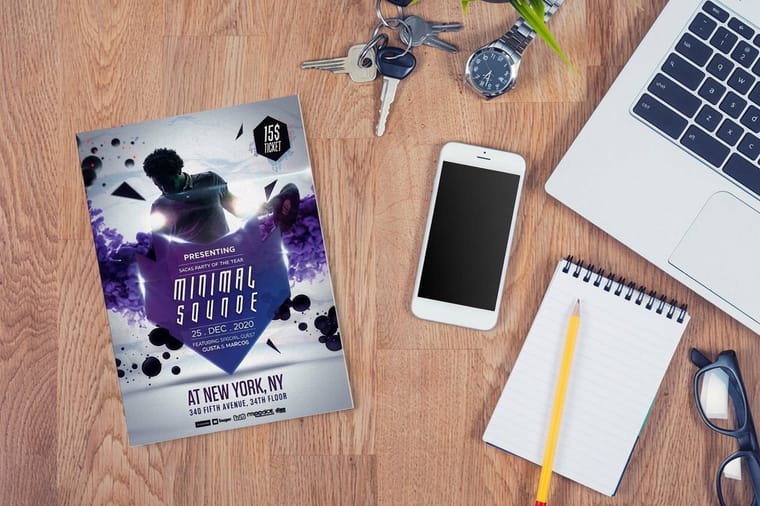
The picks
Six funnel pieces, from $17.57 cards to $89.68 for 500 mailers
Read this as a sequence, not a shopping list. Each pick owns one stage, and the note under it says what the piece does well and where it stops. Prices come straight from the configurator and fall as your quantity climbs.
- 1
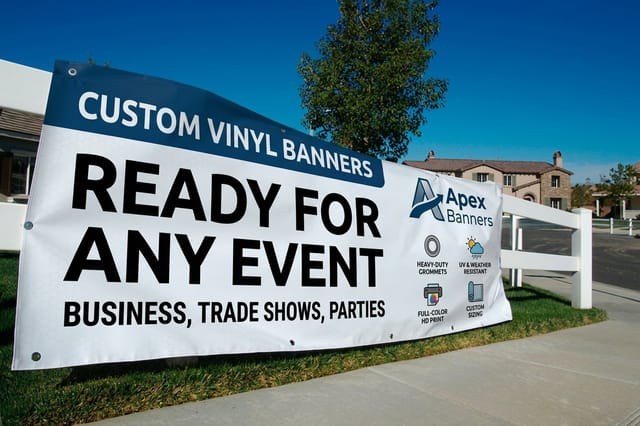
Vinyl Banners Reach from $79
One fixed cost that keeps working every day for a season. It only reaches people who already pass your address, which is exactly why it is the cheapest reach you will buy and never the only one.
- 2
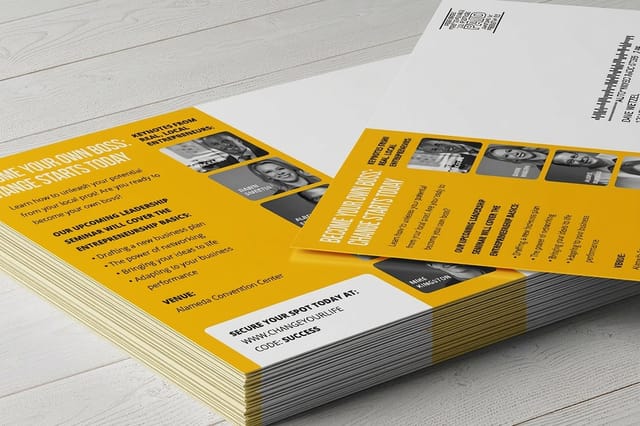
Direct Mail Postcards Reach from $89.68
Reach you can aim. A postcard lands in a house that has never heard of you, and unlike a banner you pay again for every drop, so the offer on it has to be worth the second printing.
- 3
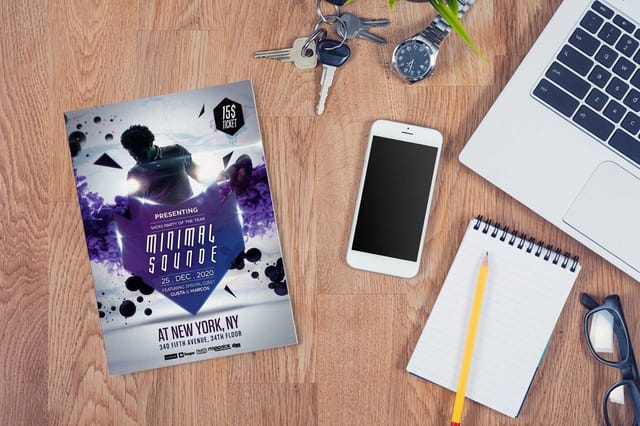
Standard Flyers Interest from $39.54
The cheapest per-piece way to put one offer in a hand. Give it a single message and a deadline. A flyer carrying four offers converts on none of them.
- 4
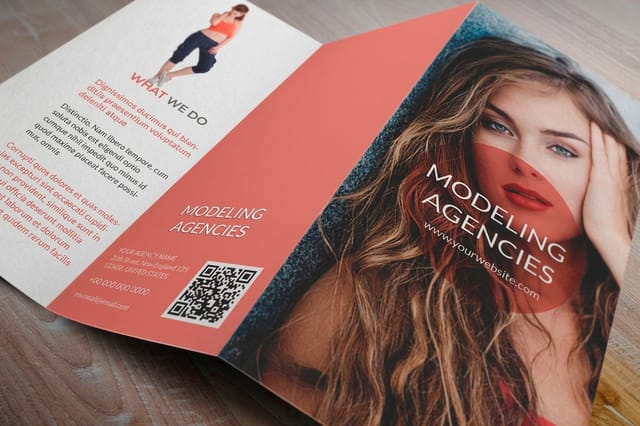
Standard Brochures Compare from $57.11
For the shopper who is already comparing you against two other quotes. It costs more per piece than a flyer and earns that back only when someone asked for it first.
- 5
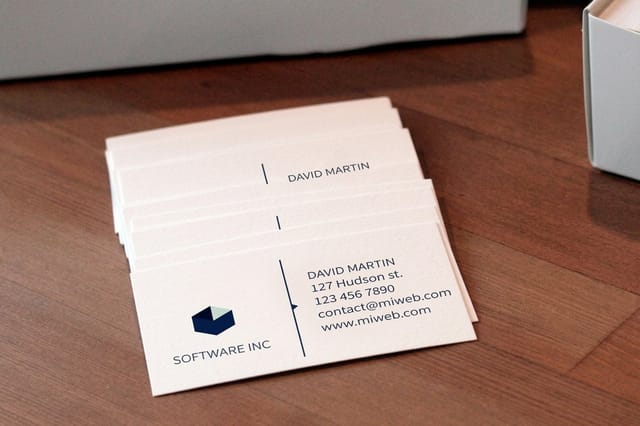
Standard Business Cards Decide from $17.57
The stage where a company becomes a person. Cheapest piece in the kit and the one most likely to be in a pocket when the buyer finally decides.
- 6
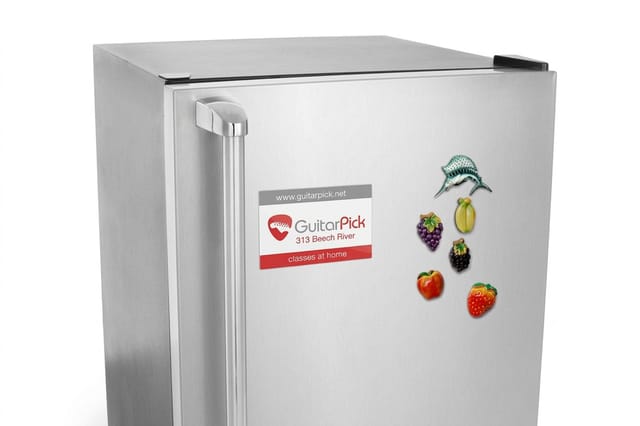
Standard Magnets Repeat from $19.68
The only piece that stays in the house. It buys you a spot on the fridge for a year, but only if the front carries a phone number and a reason to keep it.
Stage by stage
What each piece does, and what it cannot do
Every printed piece is good at one stage and bad at the others, and the second column of failures below is the part most blueprints leave out. Read the row, then tap the piece to jump to the detail.
| Stage | Piece | The job | Where it stops |
|---|---|---|---|
| Reach | Vinyl banner | Be seen by people who never went looking for you | Cannot travel. It only works on the traffic your address already gets. |
| Reach | Direct mail postcard | Aim that reach at streets you choose | You pay per household on every drop, so a weak offer costs full price twice. |
| Interest | Flyer | Trade five seconds of attention for one offer | Too small to explain anything. A second offer on it kills the first. |
| Compare | Brochure | Answer the questions a flyer had no room for | Wasted on a stranger. It needs a hand already reaching for it. |
| Decide | Business card | Put a named human on the other end of the call | Carries no argument. It only converts someone already convinced. |
| Repeat | Magnet | Stay in the kitchen until the need comes back | Useless without a reason to keep it. Pure logo goes in a drawer. |
How to run it
Order them the way a stranger meets them
Start at the stage where people are already stalling. If nobody knows you exist, the banner and the postcard come first. If plenty of people call but few buy, the money belongs in the brochure. If customers buy once and vanish, print the magnet before anything else. The full set is the goal, but the order you buy it in should follow the leak, and the sections below walk all six pieces in funnel order with the limits named.
1. Vinyl banners: the cheapest reach you will ever buy
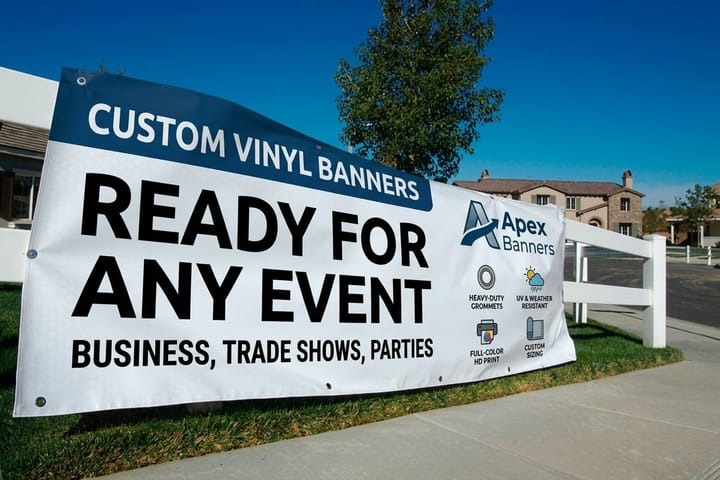
Top of the funnel is a numbers game, and a vinyl banner wins it on cost per day. You pay once, from $79, and the banner works every hour the sun is up for a whole season. Divide that by the number of people who pass your frontage and no other piece in this kit comes close.
Here is the catch nobody prints on the order form. A banner cannot expand your geography. It reaches the people who were already going to drive past your door, which makes it excellent at converting existing traffic into awareness and useless at finding a neighborhood three miles away. That is why the blueprint puts a mailed piece next to it rather than after it.
Treat the copy the way a driver does, which is at speed and out of the corner of an eye. One claim, one number, one name. Heavyweight vinyl with welded hems and grommets holds its shape through wind and rain instead of curling at the corners after a month, and the wider you go the more the mounting matters. Our print advertising design guide covers the hierarchy that keeps a headline legible from across a road.
2. Direct mail postcards: reach you can point at a street
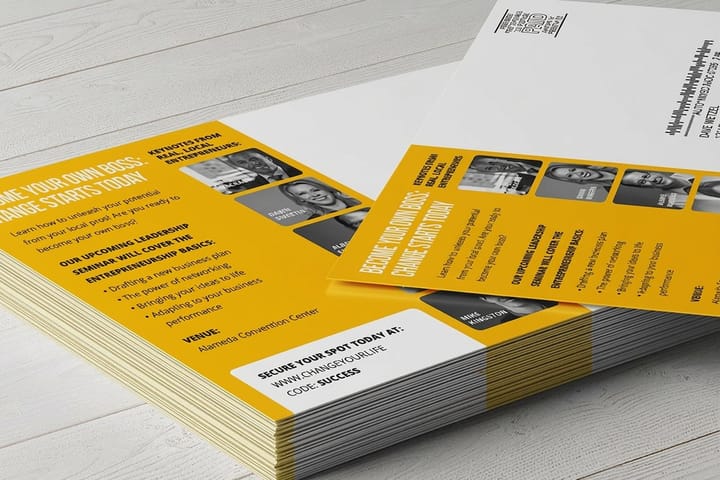
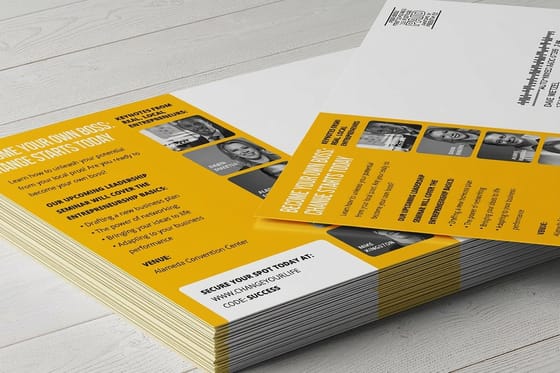
The banner catches whoever shows up. Direct mail postcards go and find people, which is the difference between waiting for reach and buying it. You choose the streets, the card lands on a kitchen counter, and for a moment you are competing with the electric bill instead of every other ad on a screen.
The trade-off is that mail has no residual value. A banner is a one-time cost that keeps paying; a mail drop is a cost you pay again for the identical audience next month. That changes what belongs on the card. Put a dated offer on it, one that expires, so the drop has a job it either did or did not do by a specific Friday. Brand-only mail is the most expensive way to be forgotten.
Card size and mailing setup are decided together, not one after the other, and getting the address panel wrong is what sends a run back. Walk the sequence in our guide to sending direct mail postcards, and see the layout side in how to design a postcard before you build artwork. For more ways to spend the reach stage well, these brand awareness ideas are worth reading first.
3. Flyers: one offer, five seconds, nothing else

A flyer is the interest stage in one sheet. Somebody has now noticed you, and the flyer converts that flicker of attention into a specific thing to do. From $39.54 it is the cheapest per-piece way to put a message in a hand, which is why it is also the piece most often ruined by ambition.
The failure is always the same: four offers on one flyer. A person reading a handout gives it about the length of a traffic light. Two competing headlines and they choose neither. Pick the single offer that a new customer would say yes to fastest, give it a deadline, and let the other three offers wait for the brochure.
Stock is the other decision that shows. Text weight feels like a handout and costs less per piece, cardstock feels like something worth keeping and survives a pocket. Neither is wrong, but a flyer that is going into a mailbox or a rack should be the heavier one. Our guides on how to design flyers and choosing between a booklet, a brochure, and a flyer settle both questions. If a weekend promotion is on the line, same-day printing keeps a Thursday decision from becoming a Monday one.
4. Brochures: for the shopper who is already comparing quotes
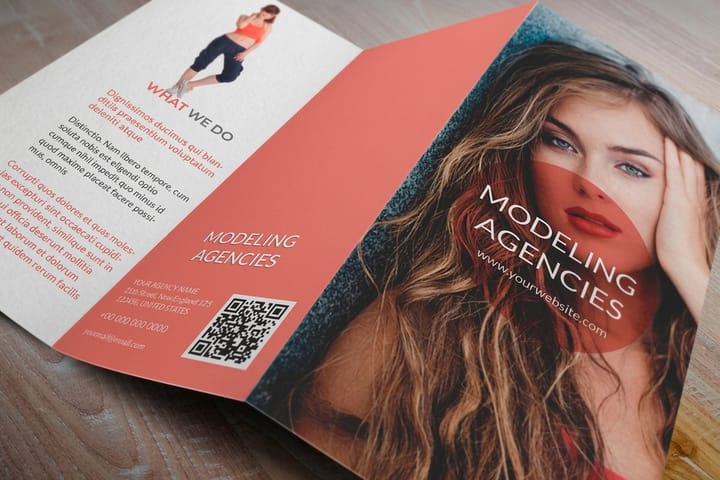
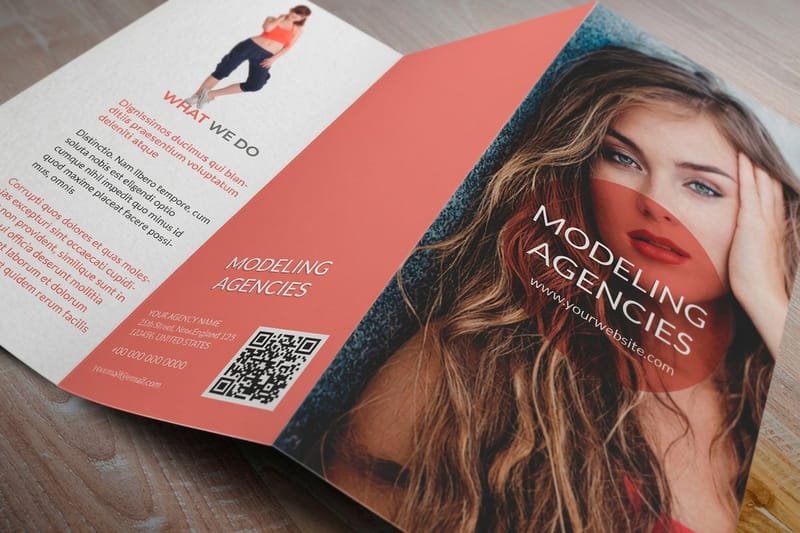
By the compare stage the question has changed from "who are you" to "why you and not them". A brochure is the only piece in this kit with enough room to answer that: panels for the process, the specification, the price ladder, the warranty, the two objections your salespeople hear every week.
It is also the piece most often wasted. At $57.11 to start, a brochure costs meaningfully more per piece than a flyer, and handing one to a stranger on a sidewalk burns that money for a glance. Brochures belong where somebody has already raised a hand: a counter rack, a quote folder, a follow-up envelope, a trade show table after the conversation, not before it.
The fold decides the reading order, so choose it before the copy. A half-fold gives you four big panels for one story; a tri-fold gives six narrow ones and suits a step-by-step or a service list. Write panel by panel rather than pouring text in afterwards. For the mechanics, read how to fold a brochure, and for what to put on those panels, these sales collateral examples show what a compare-stage piece actually contains.
5. Business cards: the moment a company becomes a person
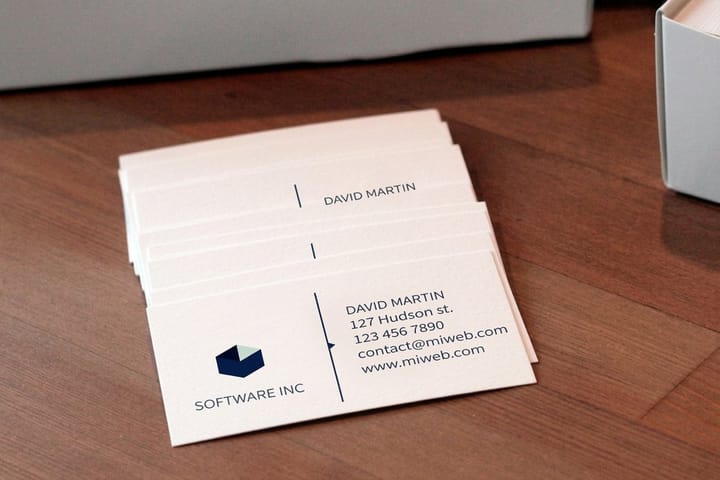
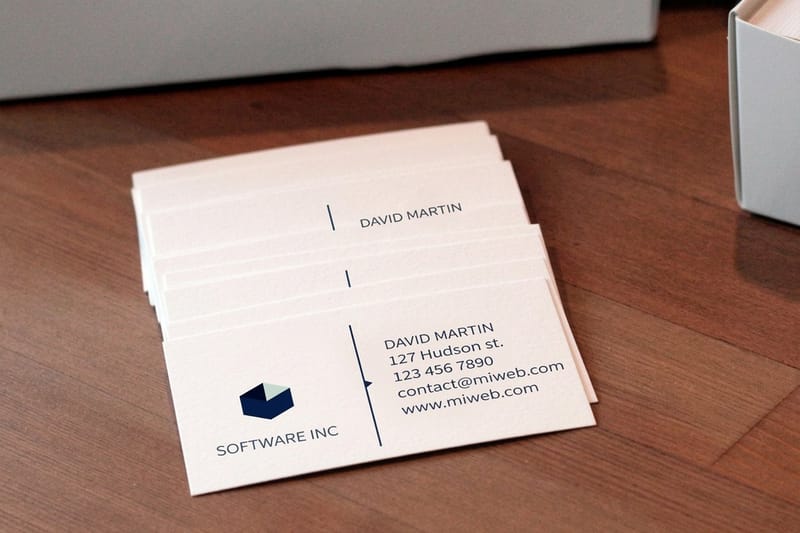
The decision stage is small and personal. Somebody has read enough and now needs a name and a number they trust. From $17.57, standard business cards are the cheapest piece in the whole blueprint and the one most likely to be in a wallet on the day the buyer is finally ready.
A card carries no argument, which is exactly why it is at the bottom. Do not try to make it sell. Make it easy: one name, one direct line, one QR code that lands somewhere useful such as a booking page or a live quote form. A card that sends someone to a homepage wastes the only click it will ever get.
Stock is the whole signal on a piece this small. A 16pt card with a soft-touch or silk finish reads as deliberate the second it hits a palm, while a thin card says the opposite before a word is read. See how the finishes differ in how to design business cards, and start from a design template so the card matches the flyer and the brochure instead of looking borrowed.
6. Magnets: the piece that stays in the house
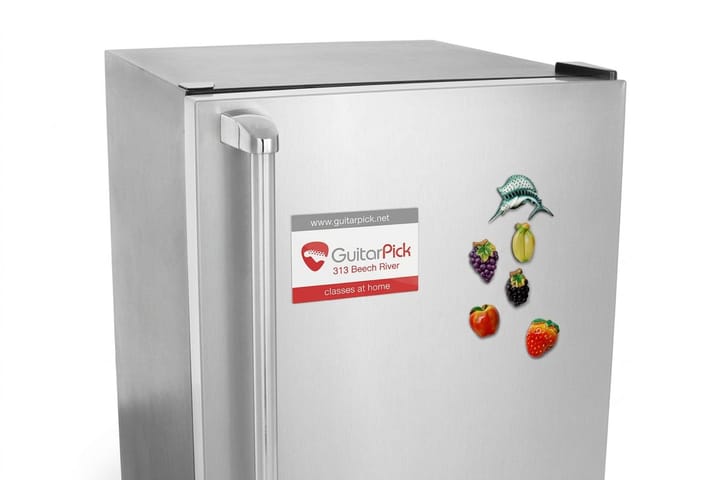
Most funnels stop at the sale, which is where the repeat stage quietly dies. Standard magnets from $19.68 are the only piece here that lives in the customer's house, and for anything bought on a schedule or in an emergency, that placement is the whole strategy. Plumbers, dentists, HVAC crews, and lawn services all win the second job the same way: by being on the fridge when the need arrives.
The limit is design, not print. A magnet with nothing but a logo on it goes in the junk drawer. A magnet with a phone number, a service list, or a calendar earns its space because it is useful on days when the customer needs nothing from you. That is the price of admission to a kitchen.
Send them with the invoice, in the thank-you envelope, or in the box with the delivery, and pair them with a card so the customer has both a portable contact and a fixed one. To see how the whole set works when it is planned together, look through these print marketing examples or start from a matched set in the brand launch essentials kit.
Specs and pricing
The two pieces you will reorder most
Flyers and brochures carry the middle of the funnel, and they are the pieces most businesses reprint every quarter. Here are the live specs and the price ladders for both, straight from the configurator.


| Quantity | Price Per Unit | Total |
|---|---|---|
| 50 | 79.1¢ | $39.54 |
| 100 | 57.1¢ | $57.11 |
| 200 | 37.3¢ | $74.69 |
| 300 | 28.6¢ | $85.68 |
| 400 | 24.4¢ | $97.76 |
| 500 | 21.8¢ | $108.75 |
| 600 | 18.7¢ | $112.03 |
| 700 | 16.5¢ | $115.33 |
| Quantity | Price Per Unit | Total |
|---|---|---|
| 50 | $1.14 | $57.11 |
| 100 | 82.4¢ | $82.38 |
| 200 | 53.3¢ | $106.55 |
| 300 | 41.0¢ | $123.02 |
| 400 | 34.9¢ | $139.49 |
| 500 | 31.2¢ | $155.97 |
| 600 | 26.7¢ | $160.36 |
| 700 | 23.5¢ | $164.75 |
Wally walks the funnel
Six pieces, five stages, one brand
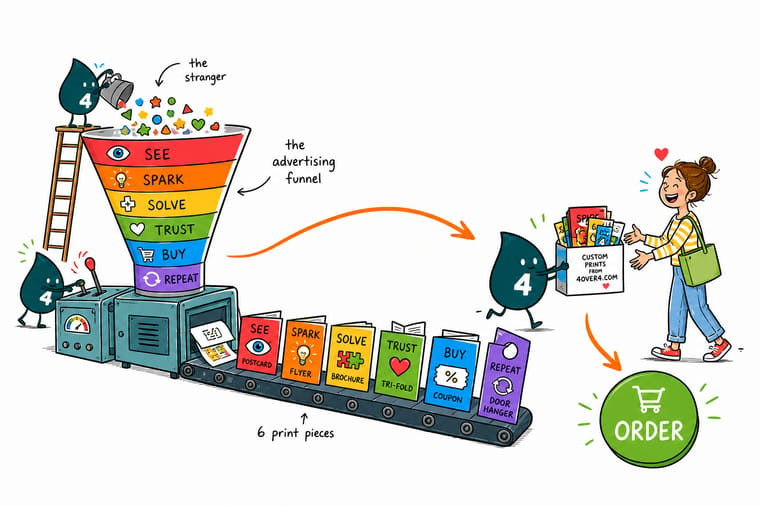
Wally starts at the wide end where a banner and a mailed postcard get you noticed, hands over a flyer with a single dated offer, follows with a brochure for the shopper comparing quotes, closes with a business card carrying a real name, and leaves a magnet on the fridge for the next time. Print the sequence in one brand and every stage hands the customer to the next. Skip a stage and the run stalls exactly there.
Shop marketing materials →See it in use
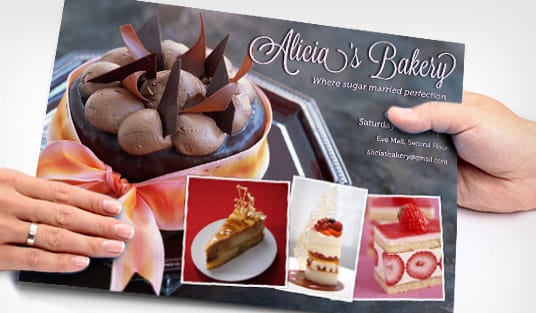
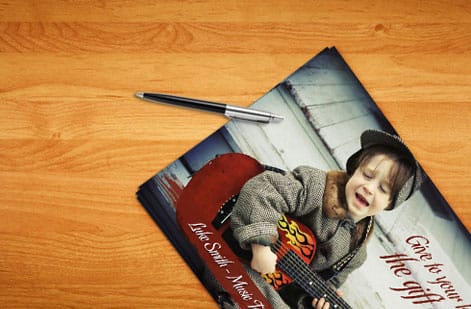
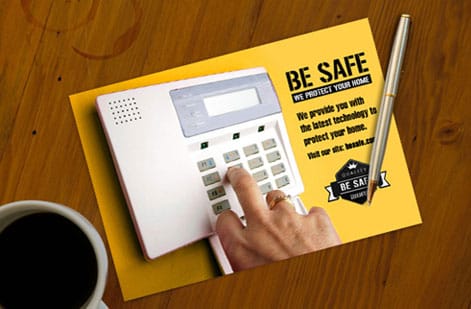
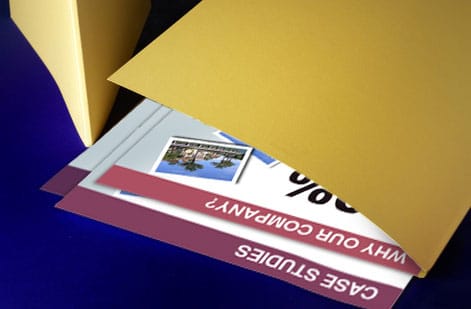
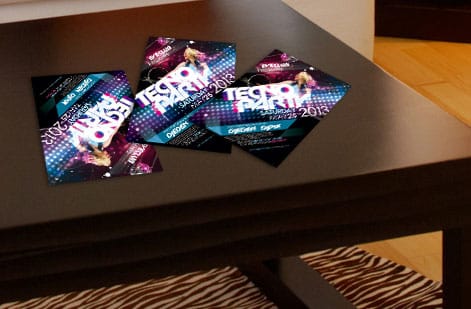
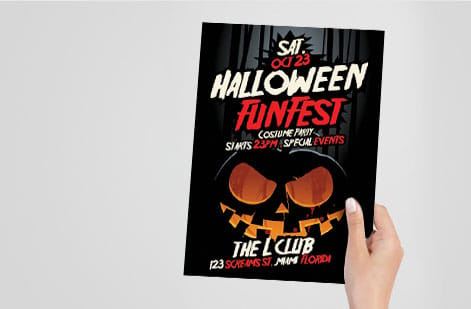
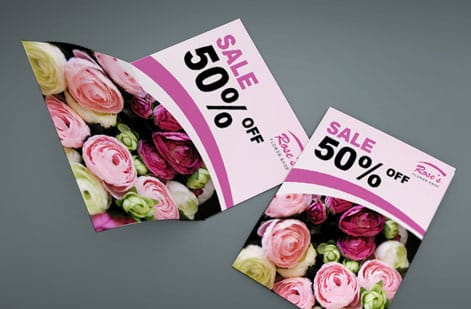
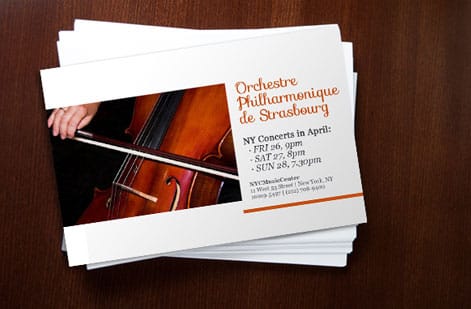
Flyers printed for the top of a funnel
Explore more
Where to go next
By the numbers
What a whole funnel can be printed on
Common Questions
Common questions about print advertising funnels
What is an advertising funnel in plain terms?
It is the path from a person who has never heard of you to a person who buys from you again, split into stages so you can see where they stop. In print, the stages are reach, interest, compare, decide, and repeat. Each stage gets one piece with one job, so when a campaign underperforms you can name the stage that failed instead of blaming the whole run.
If my budget only covers two pieces, which two should I print?
A flyer and a business card, in that order. The flyer is the cheapest way to put an offer in a hand at $39.54, and the card at $17.57 is what a person keeps when they are ready to act. Add the reach stage next, because a flyer with nobody to hand it to is just paper in a box.
How do I tell which printed piece produced a sale?
Give each piece a different destination. A separate offer code on the flyer, a dedicated landing URL or QR code on the postcard, a phone extension on the banner, and a distinct booking link on the card. Print the codes before the run, not after, and ask new customers what brought them in. Without that, every result you get is a guess about which stage worked.
Can I use the same artwork on every piece in the funnel?
Use the same colors, logo, and type pairing, but never the same copy. The stages ask different questions. A banner has room for one claim, a flyer for one offer, a brochure for the objections, and a card for a name. Copying the flyer headline onto the brochure means the compare stage never gets answered, which is the most common reason a print funnel stalls at the middle.
When is a brochure the wrong choice?
Any time the reader has not asked for it. Handed to a stranger, a brochure gets the same two-second glance a flyer gets, and it costs more per piece to buy that glance. Keep brochures for counters, quote folders, follow-up envelopes, and the second half of a trade show conversation. Send the flyer to the sidewalk.
How many should I order on a first test run?
Enough to give the offer a fair reading, but not so many that you are stuck with a headline that did not work. Per-unit price falls as quantity climbs, so a short first run costs more per piece by design. Prove one offer on a small quantity, keep the winner, then reorder deep and let the volume pricing do the rest.
Does the repeat stage really need a printed piece?
It needs one if what you sell is bought on a cycle or in a hurry. A magnet from $19.68 sits in the kitchen for a year, so when the water heater fails at 9pm your number is already on the fridge. If your customer buys once in a decade, spend that money on the reach stage instead.
Get Started
Order 500 direct mail postcards from $89.68 at the top of the funnel
Order the six pieces as one branded set at 4OVER4.COM. Standard business cards start at $17.57 for 100 on 14pt gloss cover in 3 business days, direct mail postcards at $89.68 for 500, and each piece is configured for size, stock and finish on its own page.
Legal Disclaimer
Gold Standard guarantees apply to all standard orders placed through 4over4.com. Price match requires verifiable proof of a competitor's published price for an equivalent product with matching specifications and turnaround time. Satisfaction guarantee covers manufacturing defects and print quality issues. Contact support with order number and documentation. On-time delivery rate based on tracked orders 1999 to 2026. Individual results may vary based on shipping carrier performance.
