
5 Print Products That Keep Your Visual Identity Consistent
A visual identity is only consistent if it survives contact with four different surfaces. These are the five pieces that prove it, the order to buy them in, and the one paper fact that explains why your color never quite matches.
Five printed pieces carry a small business identity: business cards, letterhead, envelopes, a pocket folder and die-cut stickers. Approve your brand color on the coated business card first, then match the other four back to it, because uncoated letterhead prints the same build lighter and vinyl stickers print it stronger. Order the set in one run so every piece goes through the same press profile.
The picks
Five identity pieces, from $17.57 cards to $844.54 folders
Buy them in this order. The card sets the color, the letterhead and envelope carry it into correspondence, the folder holds the paper, and the sticker pushes the logo somewhere print normally cannot go. Prices come straight from the configurator and fall as your quantity climbs. Start any of them from a design template if you would rather not build a file from scratch.
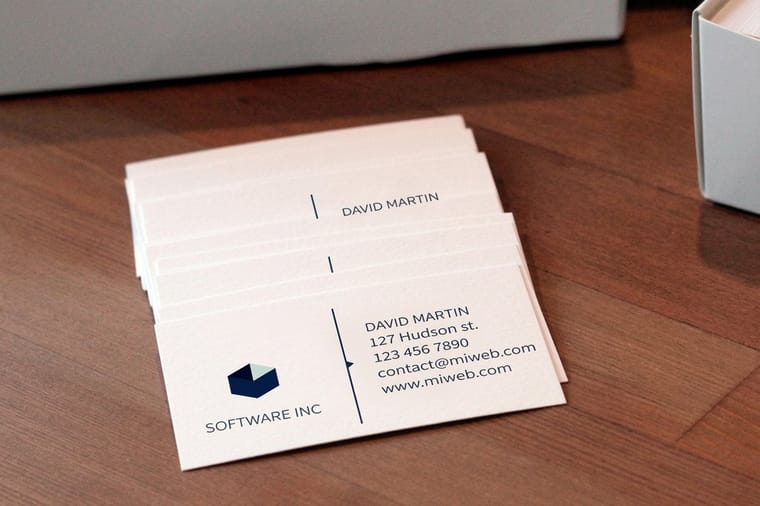
- 1 Standard Business Cards From $17.57
The piece that gets handled and compared. It carries your colors at their most saturated, so set the color here first and match everything else back to it.
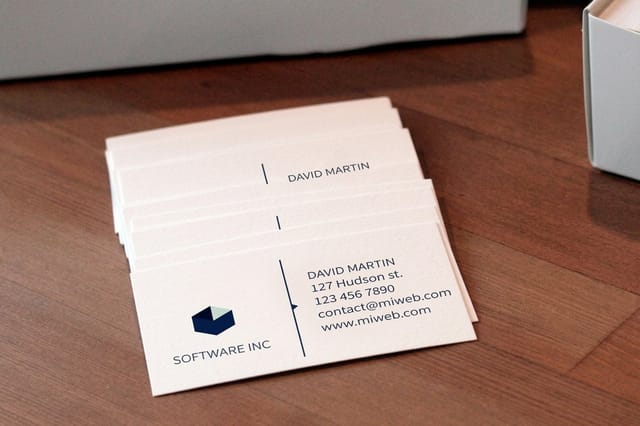
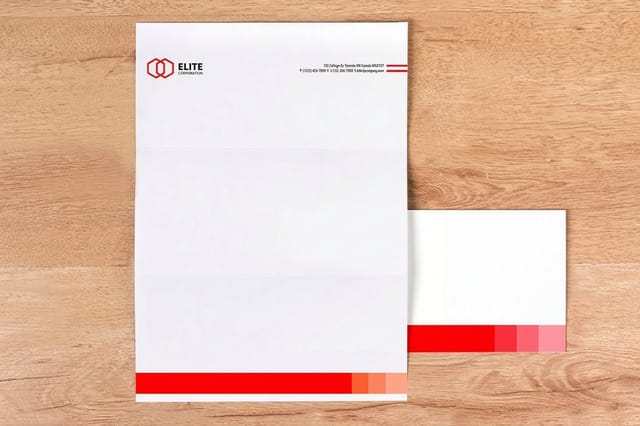
- 2 Standard Letterheads From $99.95
Uncoated 8.5 in x 11 in sheets your office printer can run a quote over. This is where the same brand color looks lightest, and where most identities quietly fall apart.
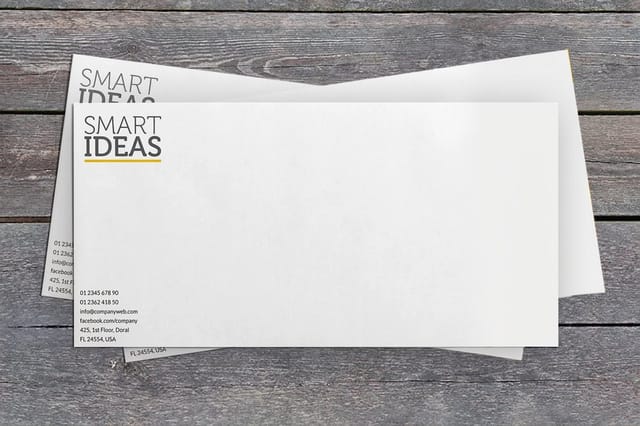
- 3 Printed Envelopes From $142.99
A #10 envelope is the first thing a client sees, before the letter inside it. Match the letterhead stock family and the logo lands as one piece of mail, not two.
- 4 Pocket Folders From $844.54
The holder for everything above. Higher entry price because it is die-cut and glued at a larger minimum, so order it once a year rather than in small batches.
- 5 Die-Cut Stickers From $93.37
The logo cut to its own outline on white vinyl. Colors read strongest here of all five, which is why the sticker is the piece most likely to look off next to the letterhead.
Sizes and stocks
What each piece is, and what the surface does to your color
The five pieces sit on four different surfaces, and each surface treats ink its own way. Read the row, then jump to the section for the file-setup detail that piece needs. If any of the stock terms are unfamiliar, our guide to branding your business in print defines them as it goes.
| Piece | Standard size | Usual stock | What the surface does |
|---|---|---|---|
| 1. Standard business cards | 3.5 in x 2 in | 14pt or 16pt coated card | Deepest color of the five. Coating sits over the ink and darkens it slightly, so a matte and a gloss card printed from one file will not look identical side by side. |
| 2. Standard letterheads | 8.5 in x 11 in | 70lb or 80lb uncoated text | Uncoated fiber absorbs ink, so the same build prints lighter and softer than on the card. Leave it uncoated anyway, because toner and inkjet ink do not sit reliably on a gloss sheet. |
| 3. Printed envelopes | #10, 4.125 in x 9.5 in | 24lb wove | Lightest and thinnest of the paper three. Keep the logo clear of the seams and the flap fold, because ink over a glued ridge cracks and smears. |
| 4. Pocket folders | 9 in x 12 in closed, 4 in pockets | 14pt to 16pt cover, coated | Die-cut and glued, so it carries a setup cost the flat pieces do not. Add the business card slits at order time or you cannot add them later. |
| 5. Die-cut stickers | Cut to your outline, commonly 2 in to 4 in | White vinyl | Non-porous, so color is at its most saturated. Give the artwork an 1/8 in bleed and hold text 1/8 in inside the cut line, because a contour cut drifts slightly on a roll. |
Before you order
Decide three things once, then repeat them everywhere
Consistency is not a design skill, it is a short list of decisions you refuse to revisit. Fix the color reference, the logo versions and the type pairing before the first order, and every piece after that becomes a match rather than a judgement call. The brand style guide is where those three live so a new vendor cannot invent their own. Picking the colors in the first place is its own problem, and choosing a brand color palette covers the pairings that hold up in print rather than only on a screen.
- One color reference, written down. The CMYK build you approved on the card, and a Pantone number if the color is non-negotiable. Put both on the file, not in somebody's memory.
- Three logo versions. Horizontal, stacked and single-color. A 2 in sticker and a #10 envelope corner cannot both take the same lockup, and the alternative is a vendor squashing one for you.
- Two typefaces, maximum. One for headings, one for body, used the same way on the card, the letterhead and the folder. The reasoning behind the pairing is in serif versus sans serif for your brand.
Design and print help
Tools that keep the five pieces matching
One artwork file behind five different trims is the whole job. These four are what most businesses use to hold that line without a design agency on retainer.
1. Standard business cards: where you approve the brand color
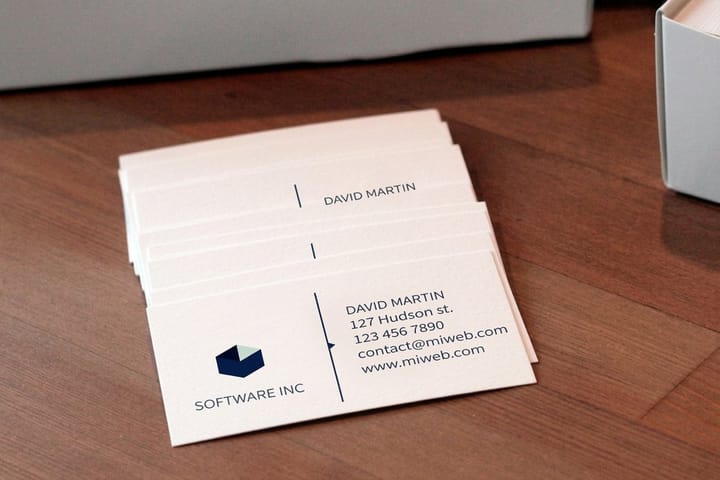
Start the identity here, because standard business cards print on the most coated stock in the set and show your color at its strongest. Whatever you approve on the card becomes the reference for the other four pieces. Approve it on a letterhead instead and every later piece will look darker than you expected.
The stock decision is 14pt or 16pt. Both are rigid enough for a 3.5 in x 2 in card, and 16pt is the one people notice when they take it out of a wallet a week later. The finish matters more than the caliper for color: a gloss coat lies over the ink and deepens it, a matte coat scatters light and mutes it, and a soft-touch laminate mutes it further while adding a texture people remember. Printing one file on all three produces three visibly different blues.
Two things to fix before you order. Convert type to outlines so a font you have and we do not cannot substitute itself, which is the step our guide on preparing a business card logo for printing walks through. And keep your logo and any text 1/8 in inside the trim, because a stack of cards is cut together and the blade wanders by a hair through the lift.
If your brand color is a specific, non-negotiable one, read Pantone spot color printing before you build the file. A spot color costs more than a straight CMYK run, and it is the only way to get the same red twice on two different stocks.
2. Standard letterheads: the piece that has to stay uncoated
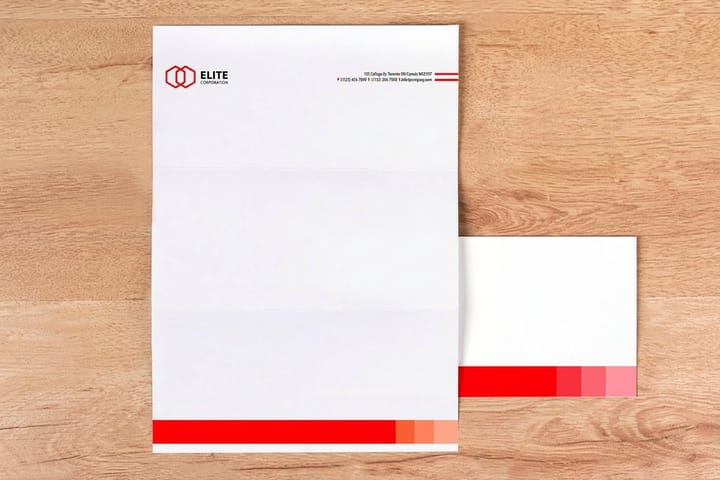
Standard letterheads are 8.5 in x 11 in sheets printed with your logo and details, then left blank so your office printer can put a quote, an invoice or a letter on top. That second step is the whole constraint. Toner needs to fuse to the surface and inkjet ink needs somewhere to soak in, and a gloss coating gives them neither, so a coated letterhead smears under a fingertip or flakes off the fuser roller.
So letterhead runs on 70lb or 80lb uncoated text, and uncoated paper drinks ink. The identical color build that looked deep on your business card will print noticeably lighter and slightly softer at the edges here. Nobody is doing anything wrong. It is the fiber. Expect it, look at both pieces together before you approve either, and adjust the letterhead build up a little rather than pulling the card down.
Keep the design out of the way of the letter. Hold the logo and contact block inside the top 1.5 in and the bottom 0.75 in, leave the middle of the sheet empty, and do not run color to the edge unless you are certain: full-bleed letterhead has to be printed oversize and trimmed, so the sheet you feed into a desktop printer may no longer be a true 8.5 in x 11 in. Our custom stationery printing guide covers the whole set together.
3. Printed envelopes: the first thing anyone sees
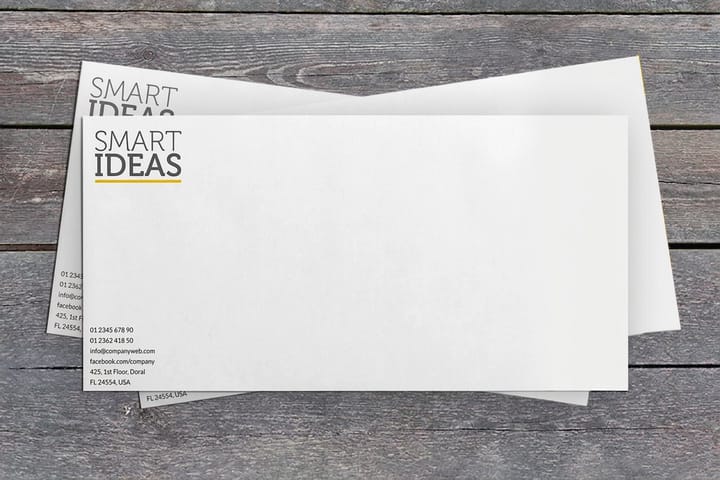
A client meets the envelope before the letter. Printed envelopes in the standard #10 size, 4.125 in x 9.5 in, hold a folded letterhead in thirds and carry your return address corner in the same type and the same color as the sheet inside. Order them in the same run as the letterhead and the two pieces read as one. Order them six months later from somewhere else and they will not.
An envelope is not a flat sheet, and the difference shows up in the artwork. It has a seam down the back, a folded flap and a glue line, and printing over any of those ridges gives you cracked or doubled ink. Keep artwork at least 0.25 in clear of the seams and the flap fold, and treat a full-bleed envelope as a special order rather than a default, because it means printing the flat blank and converting it afterwards.
The stock is lighter than everything else in the kit, usually a 24lb wove, so your color will land somewhere between the letterhead and nothing at all. Check the return address at actual size before you approve: 7pt type that reads fine on screen turns into a gray smudge on a wove surface. If you are adding a logo to a corner for the first time, how to add a logo to envelopes covers placement and the mailing clearances the post office expects.
4. Pocket folders: the piece that holds the rest together
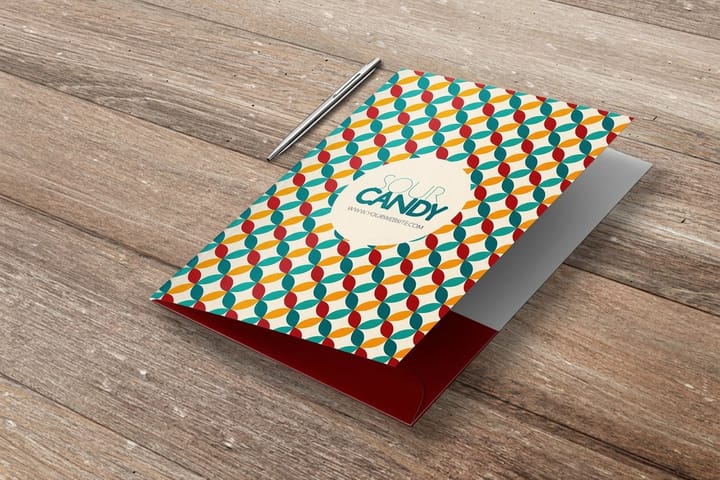
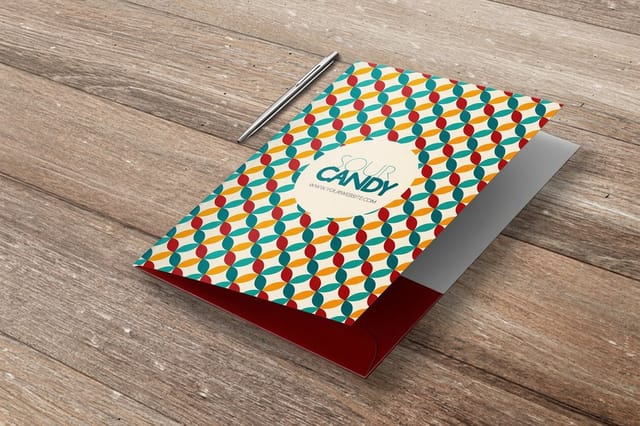
Pocket folders are the container for everything above: a 9 in x 12 in closed folder with 4 in interior pockets that take letterhead, a proposal, a price sheet and a business card in the slit. For anyone who hands over documents in person, this is the piece that makes a stack of paper look like a company rather than a pile.
Here is the honest trade-off. Folders start around $844.54, well above the flat pieces, and that is not a markup. A folder is printed, coated, die-cut on a custom die, scored and glued, and it runs at a higher minimum quantity than cards or letterhead. Per unit it is reasonable. As a first order it is a real commitment, so most businesses buy folders once a year and reorder cards four times in between.
Decide two things at order time, because neither can be added afterwards. Business card slits are cut by the same die as the pockets, so if you want one, ask for it before the die is made. And pick the coating with the handling in mind: a gloss folder shows every fingerprint from a trade show table, while matte hides them and takes a pen better. Our explainer on what pocket folders do for branding and organization goes through the configurations.
5. Die-cut stickers: your logo cut to its own shape
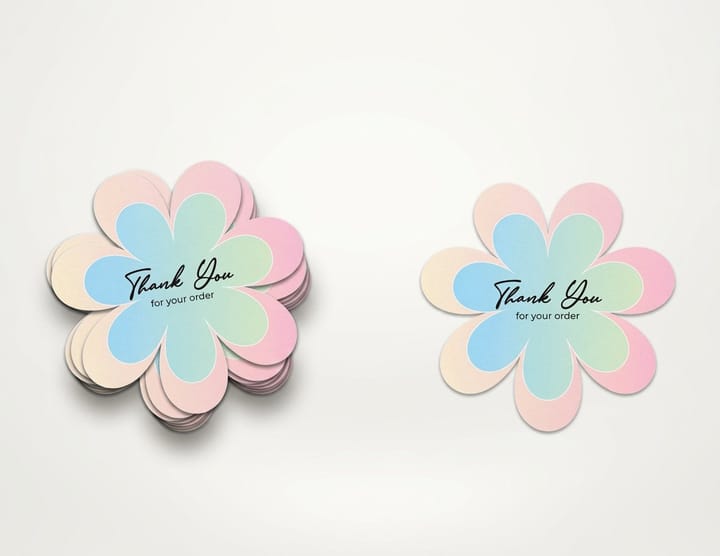
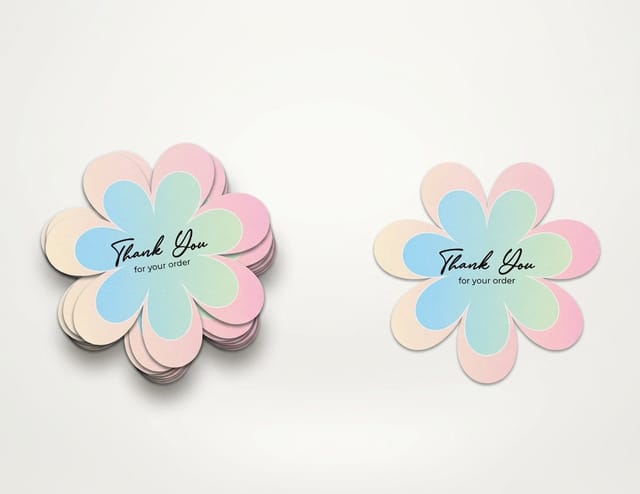
Die-cut stickers take the logo and cut it to its own outline instead of dropping it in a square. They go on laptops, packages, shop windows and the seal of a shipping box, which makes them the cheapest way to put the identity somewhere a business card never reaches.
Vinyl is non-porous, so ink sits on the surface and nothing soaks in. Your color prints at its most saturated here, more so than the coated business card, which is why a sticker held next to a letterhead is the harshest test your identity gets. If those two look like the same brand, the set is working.
Build the file for the cut, not just for the screen. Give the artwork 1/8 in of bleed past the cut line, hold text and thin logo strokes 1/8 in inside it, and simplify any outline with a notch narrower than about 1/8 in, because a contour blade cannot turn a corner tighter than its own radius and will round it for you. Logos with a fine tagline underneath are usually better as a stacked version at sticker size, which is the reason for keeping the variations described in logo variations every brand needs.
For the difference between vinyl and paper faces, and where each one belongs, vinyl versus paper stickers lays out the durability trade-off in plain terms.
Specs and pricing
The two pieces you will reorder most: cards and letterhead
Business cards run out first and letterhead runs out second, so these are the two ladders worth knowing. The specs and price tables below are live from the configurator, and both drop sharply once you move past the smallest quantity.

| Quantity | Price Per Unit | Total |
|---|---|---|
| 100 | 17.6¢ | $17.57 |
| 200 | 11.5¢ | $23.07 |
| 300 | 9.15¢ | $27.46 |
| 400 | 7.96¢ | $31.86 |
| 500 | 7.25¢ | $36.26 |
| 600 | 6.77¢ | $40.64 |
| 700 | 6.43¢ | $45.04 |
| 800 | 6.18¢ | $49.43 |
| Quantity | Price Per Unit | Total |
|---|---|---|
| 50 | $2.00 | $99.95 |
| 100 | $1.05 | $105.44 |
| 200 | 58.2¢ | $116.43 |
| 300 | 43.6¢ | $130.72 |
| 400 | 34.9¢ | $139.49 |
| 500 | 29.4¢ | $147.18 |
| 600 | 25.4¢ | $152.68 |
| 700 | 22.6¢ | $158.17 |
Wally explains why the color moves
Same ink, four surfaces, four results
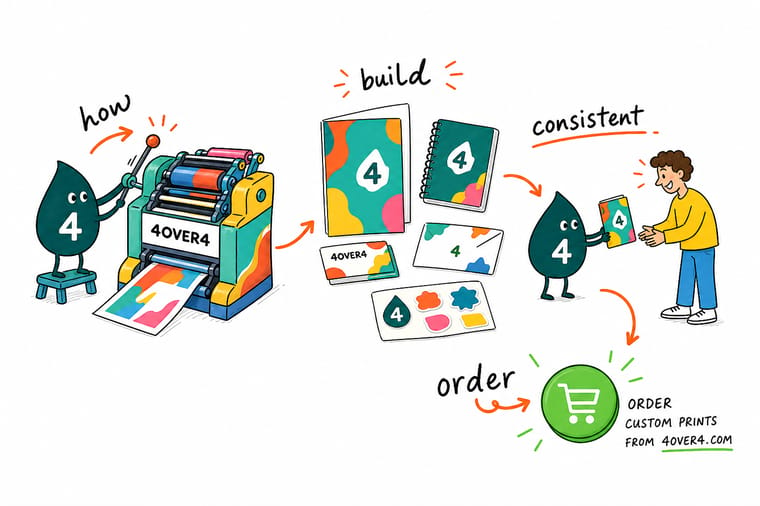
Wally lines the five pieces up on the counter and holds them to the light. Coated card seals the surface, so the ink stays on top and reads deep. Uncoated letterhead is fiber, so it drinks the ink and the same color comes back lighter. The envelope is thinner again. Vinyl takes nothing in at all, so the sticker is the loudest of the lot. Approve the color on the card, write down the build or the Pantone number, and print the whole set in one order. That is how five different surfaces end up looking like one brand.
Shop the business basics collection →See it in use
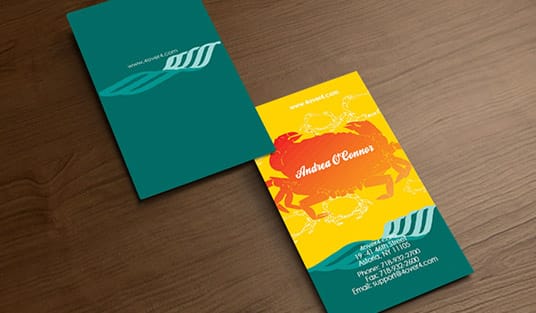
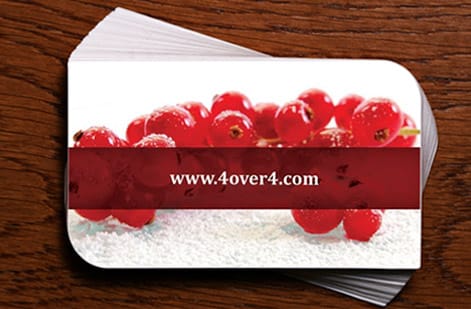
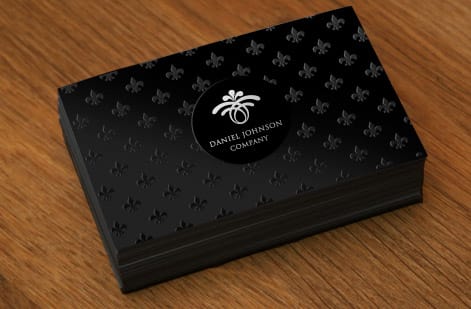
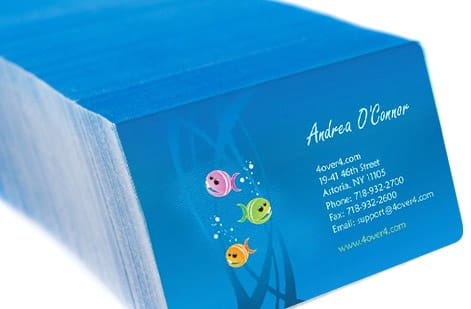
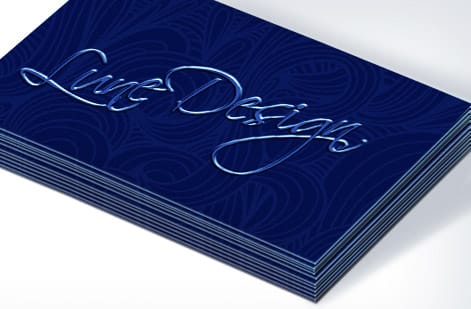
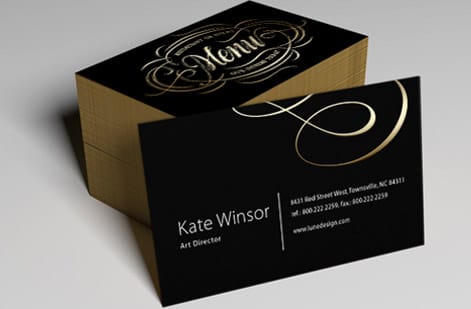
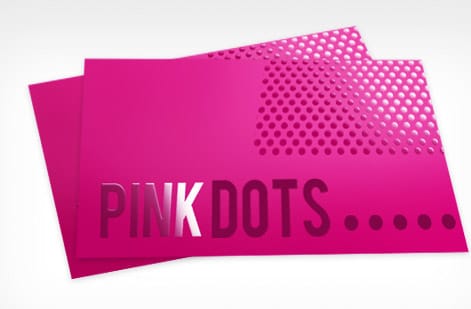
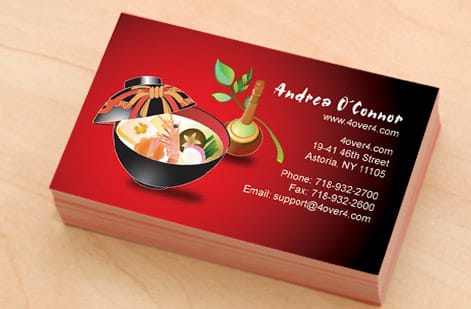
Business cards printed to a brand sheet
Explore more
Where to go next

By the numbers
Five pieces, sixty stocks and one on-time record
Common Questions
Common questions about a consistent print identity
What print pieces do I need for a consistent visual identity?
Five pieces cover an identity that people actually touch: business cards, letterhead, envelopes, a pocket folder and die-cut stickers. Cards carry the color reference, letterhead and envelopes handle correspondence, the folder holds documents in person, and stickers put the logo on packages and laptops. You can start with cards alone, but the set is what makes the brand look deliberate.
Why does my brand color look different on my letterhead than on my business card?
Because of the paper, not the printing. A business card is coated stock, so ink sits on a sealed surface and reads dark and sharp. Letterhead is uncoated text stock, so the fiber absorbs ink and the same values print lighter and slightly softer. Compare the two side by side before you approve either, and if the color has to be exact across both, specify a Pantone spot color rather than a CMYK build.
How much does a full identity print set cost?
At 4OVER4.COM, standard business cards start around $17.57, letterheads around $99.95, printed envelopes around $142.99, die-cut stickers around $93.37, and pocket folders around $844.54. Every price moves with size, stock, finish and quantity, and the configurator updates live as you build the order. The folder is the outlier because it is die-cut and glued at a higher minimum, which is why most businesses order it once a year.
Can I print letterhead on glossy paper?
You can, but you probably should not. Letterhead exists to be run through your own laser or inkjet printer, and a gloss coating gives toner nothing to fuse to and inkjet ink nowhere to soak in, so the text smears or flakes. Use 70lb or 80lb uncoated text and accept that your brand color prints a little lighter there. If you want a glossy piece in the set, put the gloss on the business card or the folder instead.
Should I order all five pieces at the same time?
Yes, if the budget allows it. Printing in one order puts every piece through the same press profile in the same week, which is the simplest way to stop color drift between the card and the envelope. If you have to stage it, order the business cards first and approve the color there, keep the exact build or Pantone number on file, and match the later pieces back to that reference.
What file do I need to send for a die-cut sticker?
A vector file with your artwork and a separate cut path, with 1/8 in of bleed past that path and all text held 1/8 in inside it. Avoid outline notches narrower than about 1/8 in, because the contour blade has a turning radius and will round them. If your logo has a fine tagline, use a stacked version for stickers rather than shrinking the horizontal lockup.
Do I need a Pantone color or is CMYK enough?
CMYK is enough when the brand color is not the point and everything prints in one place. A Pantone spot color is worth the extra cost when the color is the brand, when you order from more than one vendor, or when the same color has to appear on coated card, uncoated paper, vinyl and eventually apparel. The spot number travels; a CMYK recipe is only true for one press and one stock.
Can I add business card slits to a pocket folder later?
No. The slits are cut by the same die that makes the pockets, so they have to be specified before the die is produced. The same is true of the pocket depth and any hole for a CD or a brochure. Decide the interior configuration at order time, and if you are unsure, order the version with slits, since an unused slit costs nothing and a missing one means a reprint.
Get Started
Print the whole identity in one run
Cards, letterhead, envelopes, a pocket folder and die-cut stickers, ordered together so every piece goes through the same press profile in the same week. Configure sizes, stocks and quantities with live pricing.
Legal Disclaimer
Gold Standard guarantees apply to all standard orders placed through 4over4.com. Price match requires verifiable proof of a competitor's published price for an equivalent product with matching specifications and turnaround time. Satisfaction guarantee covers manufacturing defects and print quality issues. Contact support with order number and documentation. On-time delivery rate based on tracked orders 1999 to 2026. Individual results may vary based on shipping carrier performance.
