
The 6-Piece Event Credential and Access Set That Runs Your Door
Every event has a door, and the door has three questions: who are you, are you allowed in, and does this open again tomorrow. These six printed pieces answer all three, from a 25-piece badge run to a magnetic-stripe card that lasts a season.
The event credential and access set is six products that identify people and control entry: event badges and plastic event badges name the person, event tickets and square event tickets prove admission with sequential numbering and a perforated stub, and key tags plus the plastic card with key tag carry barcodes or a magnetic stripe for access that repeats. Badges start at 25 pieces in 1 to 5 business days, while the 30mil plastic quotes 13 to 15 business days, so order the plastic first.

The picks
The six picks, priced live
Start here. These are the six products that run identity and entry at an event, each priced live from its own configurator. Order them together so the tier colors match across paper and plastic, then read on for what each one does and when it earns its place.
Design and print help
Keep six credentials on one system
A credential set fails when the tiers stop matching. These 4OVER4.COM services keep one logo, one tier palette and one typeface across badge, ticket and tag.
How they work together
Order in the direction production runs
Plastic takes weeks and paper takes days. Sequence the order that way and all six pieces land together instead of the badges waiting three weeks for the tags.
These two print on 30mil plastic with barcoding and variable data, and they quote the longest production window in the set. Nothing else on this page needs that much runway, so they go in the cart first.
Tickets need to exist before the promotion does. Turn on sequential numbering and perfing here, because a numbered stub is the only record you keep of who actually came through the door.
Badges go last on purpose. The attendee list is never final until it is, and personalization only works if it is printing the real names. Badges start at 25 pieces, so a late add-on run is cheap.
1. Event badges: the name that ends the who are you question
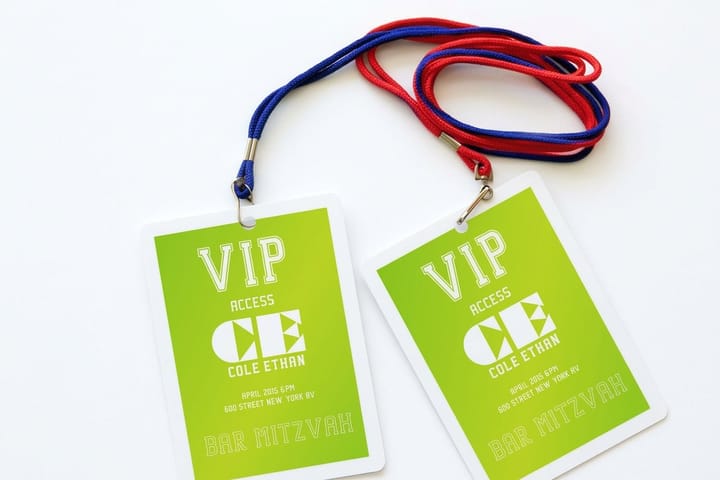
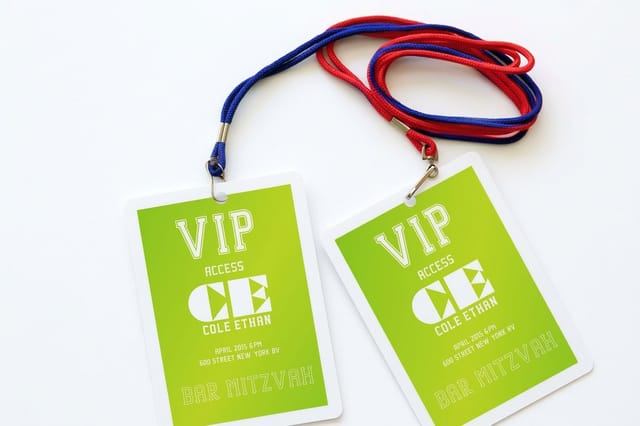
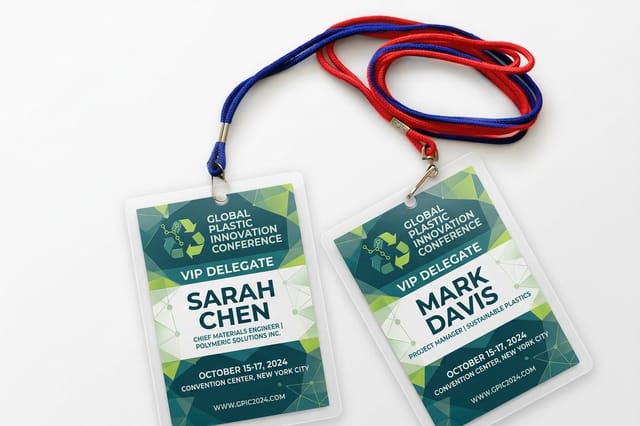
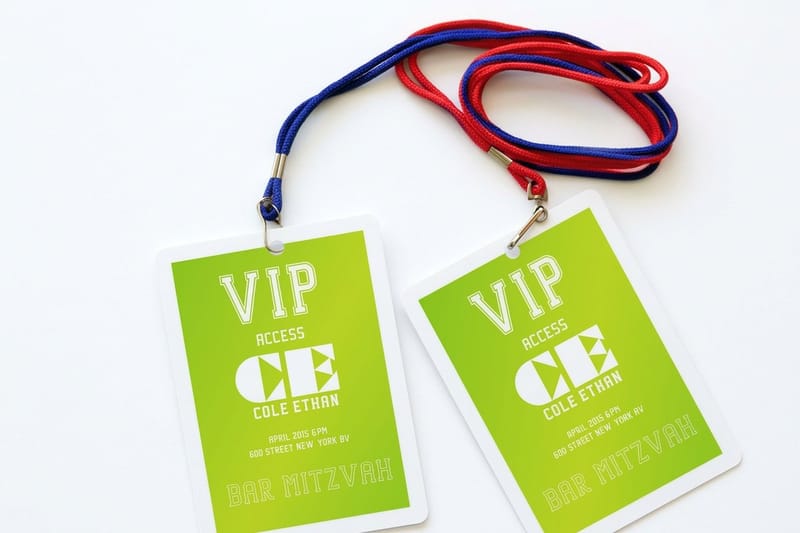
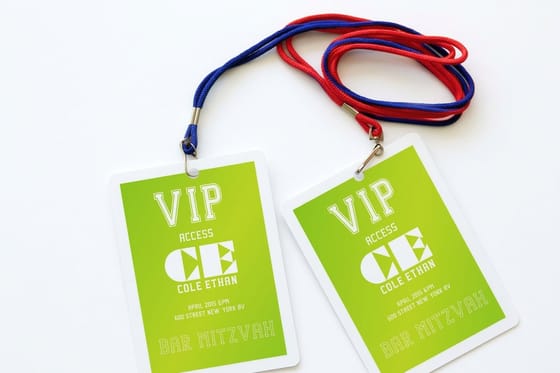
A badge exists so nobody has to ask. It carries the name, the company and the access tier, and it does that from about six feet away or it does not work. That distance is the whole design brief: first name large, everything else small, tier color as a solid band rather than a thin rule.
The configurator runs six sizes, from 2 by 3 inches up to 4 by 6 inches. The small end is for a lanyard badge people wear all day. The 4 by 6 end is for a badge a volunteer needs to read across a registration table. Choose the hole style at the same time: a 5/16 inch drilled hole for a clip, or a lanyard slot if you are ordering the 38 inch hook lanyards with the badges. Breakaway hook lanyards in black, red and blue are the safer choice anywhere staff work near equipment.
Turn on personalization and the press prints the real names instead of leaving you a stack of blanks and a marker. Runs start at 25 pieces, which is why late add-ons are cheap, and a next-day hardcopy proof is available when the color of the tier band has to be exact. For the layout itself, our event name tags and badges printing guide covers safe areas, and designing conference badges that stand out goes further on the visual side. Browse the full event badge printing category if you want every option in one view.
2. Plastic event badges: the credential that survives day two

Same badge builder, different commitment. Plastic event badges point you at 18pt PVC vinyl, a stock that is 30 percent thinner than the 30pt gloss laminated default and flexes instead of creasing. That single property is the reason a badge makes it through a three-day festival in a back pocket and still reads.
Use it wherever the credential is reused: staff and crew who work every night of a run, season-pass holders, venue contractors, anyone whose badge should not be reprinted twice a week. Pair it with a breakaway lanyard and rounded corners at a 1/4 or 3/8 inch radius so the edge does not go soft after repeated handling. Personalization still applies, so a reusable stock does not force you back to handwritten names.
The honest trade-off: PVC vinyl costs you some stiffness. A thin badge sags at 4 by 6 inches, so keep reusable credentials in the smaller sizes and reserve the large formats for the laminated stock. If you are weighing a badge against a card for networking specifically, business cards versus event badges lays out where each one wins.
3. Event tickets: proof of entry you can actually reconcile
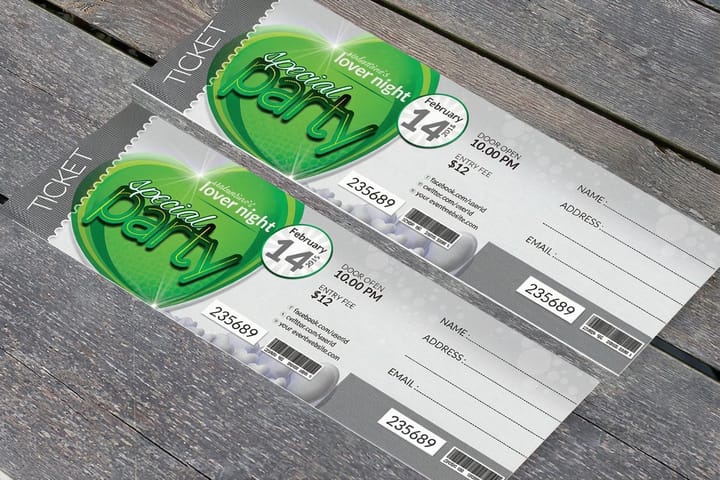
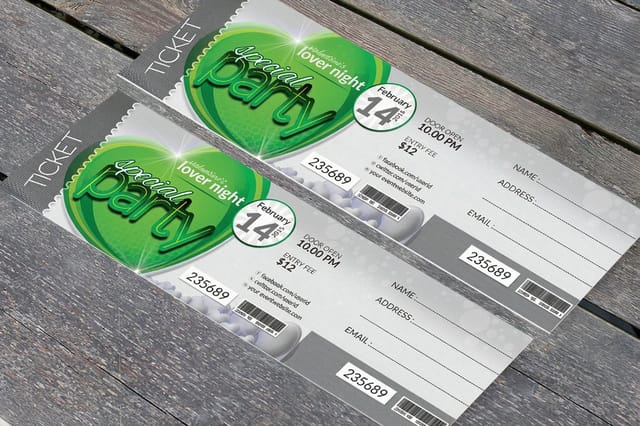
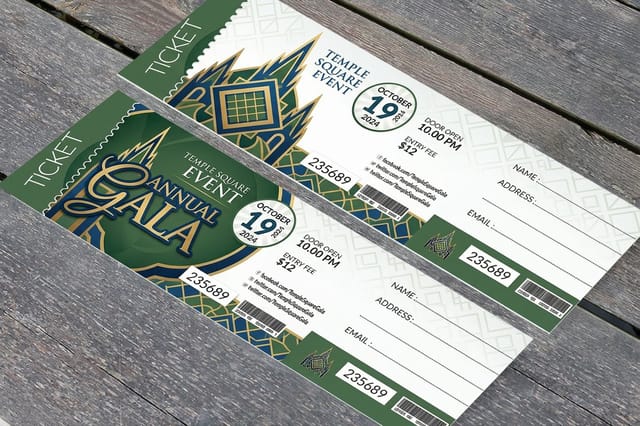
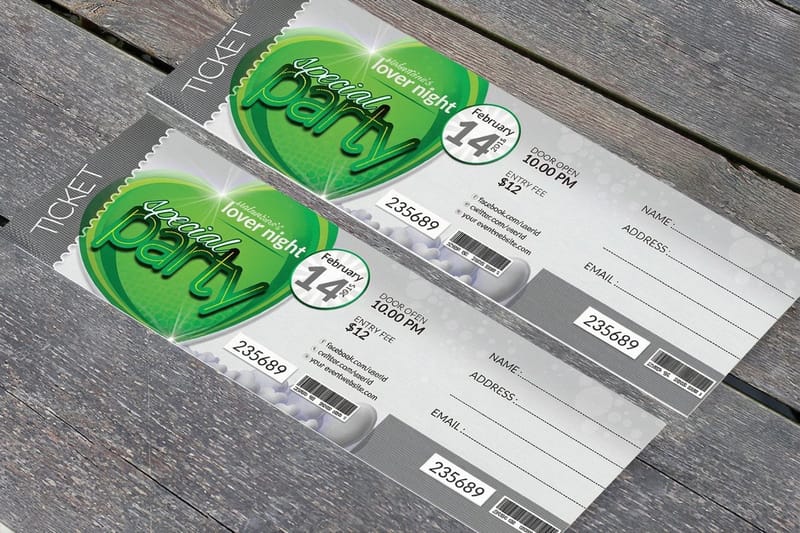
An event ticket is a financial record that happens to look like a keepsake. Print it at 2 by 5.5 inches, the admission shape that fits a pocket and a cash box, and let two options do the real work: sequential numbering in black ink, and perfing. Numbering gives every ticket a unique identity. Perfing splits it, so the stub in your box matches the half that walked in.
Fifteen stocks are available and the spread matters more than it sounds. 14pt gloss cover is the default and photographs well for a show poster look. 18pt uncoated takes a pen, which is what you want if the door team writes a table number on the stub. 15pt synthetic plastic is the one to reach for at an outdoor event where rain is a real possibility. There is a 13pt uncoated cover at 100 percent post-consumer waste for anyone printing to an environmental brief. Our ticket paper and stock options guide compares them side by side.
Runs start at 50 and production moves in 1 to 5 business days. Before you order, read event ticket formats for the anatomy and event ticket layout for where the number and the terms belong. The full event ticket printing category holds every variant, including raffle tickets if you are running a draw on the night.
4. Square event tickets: the format people photograph
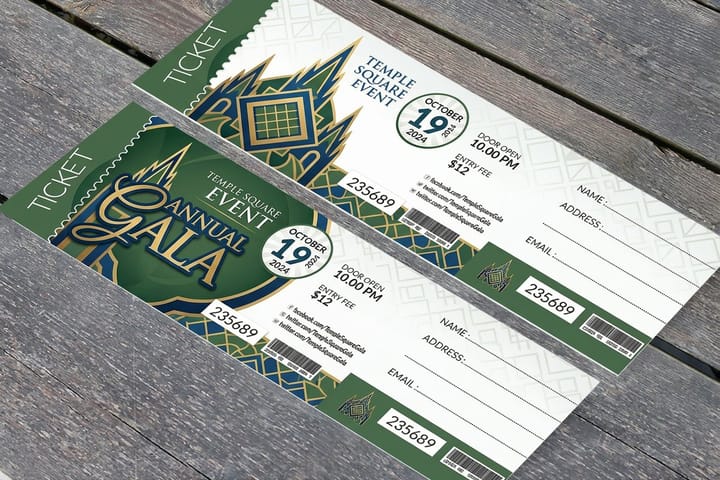
Square tickets exist for one reason: the shape reads as designed rather than issued. A square crop matches how art gets posted and shared, so it suits gallery nights, album launches, supper clubs and anything where the ticket doubles as merchandise. Guests keep it, and a kept ticket is free promotion for the next date.
Everything functional carries over from the standard ticket. The same fifteen stocks, the same sequential numbering in black ink, the same perforation and bundling options, the same 1 to 5 business day production and 50-piece starting run. You lose nothing operationally by choosing the square format, which is the point.
What changes is the layout discipline. A square gives you less horizontal room for a long event name, so lead with a mark or a strong type lockup and push the details to the back with a 4/1 or 4/4 ink setup. Designing custom event tickets covers that split, and choosing a ticket size is worth a read before you commit the artwork to a square.
5. Key tags: the credential that lives on a keyring
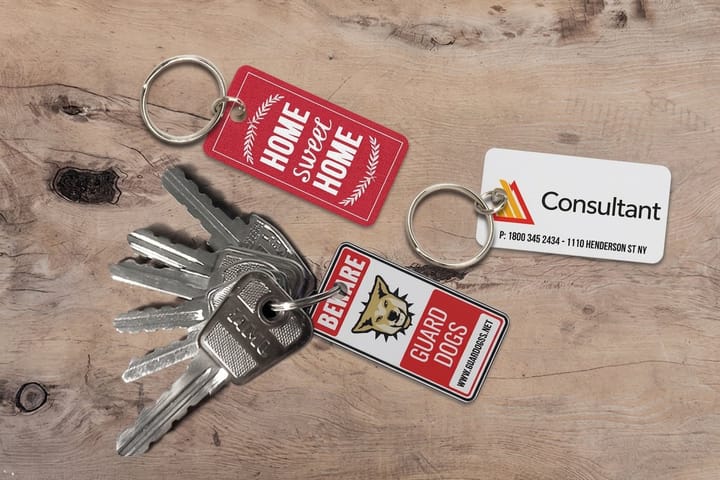
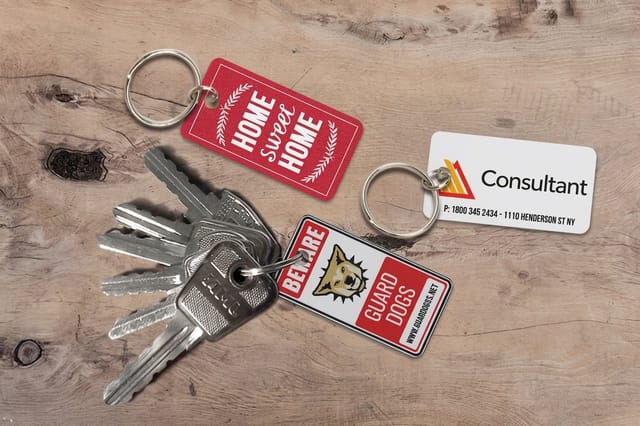
A key tag is what you hand someone whose access outlasts the event. Members, season-pass holders, gym and studio regulars, volunteers who come back every month. It prints at 1.125 by 2.375 inches on 30mil white plastic, the same thickness as a credit card, with a single 3/16 inch drilled hole and a 1/8 inch corner radius so it never catches on a pocket.
The scanning options are the reason to choose plastic over a paper card. Barcoding with numbering is available in Code 128, Code 39, UPC-A and EAN-13, and variable data prints a sequential number on every tag, so each one is genuinely unique rather than a copy. Finish it in UV gloss for a bright surface or silk laminated matte if the tag will be handled daily and you do not want fingerprints on it.
Two constraints to plan around. Runs start at 500 pieces, so this is a product for an established list, not a first event. And production quotes 13 business days, the second-longest lead time in this set. Order the tags the day the artwork is approved. For adjacent formats, hotel keycards explained and choosing a key card holder cover the carrier side, and the wider plastic cards printing collection holds every card stock we run.
6. Plastic card with key tag: one print, two credentials
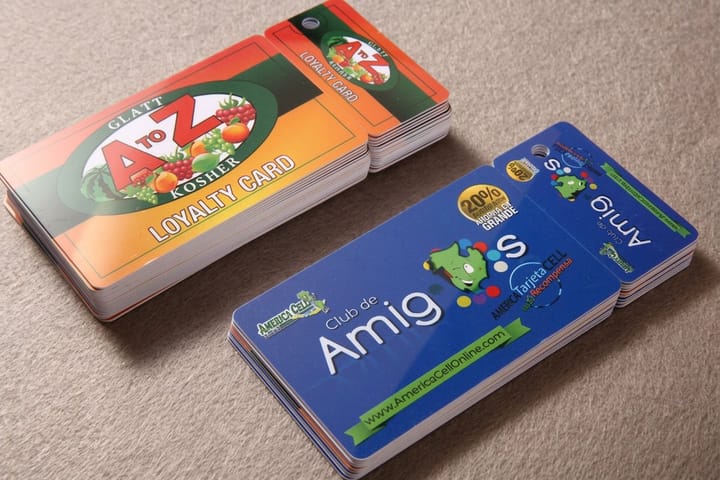
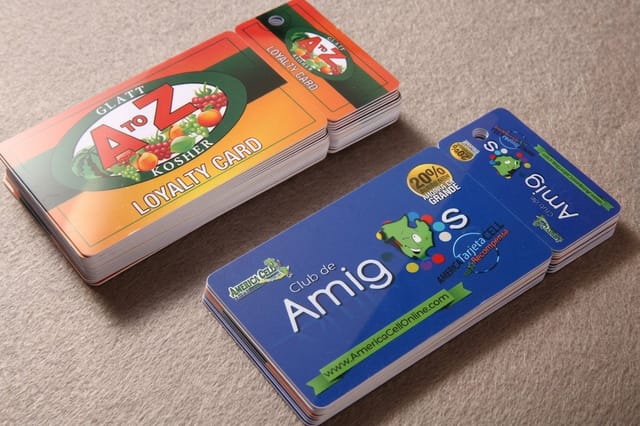
This is the piece that ends the argument about whether members want a wallet card or a keyring tag. It prints as one 4.5 by 2.125 inch piece on 30mil white plastic that snaps apart into both, so a single order covers the person who carries a wallet and the person who carries keys.
It is also the most capable credential on this page. A LoCo or HiCo magnetic stripe for door and POS systems, a signature panel, foil stamping on either side or both, a scratch-off panel with a PIN for redemption codes, barcoding in Code 128, Code 39, UPC-A or EAN-13, and variable data for sequential numbering. Finish it in UV gloss or silk laminated matte. If your access control already reads a stripe, this is the only product in the set that speaks its language.
The cost of all that capability is time and volume. Runs start at 500 and production quotes 15 business days, the longest in the set, so it belongs at the front of the schedule and nowhere near a last-minute decision. Print it once a year for the whole membership rather than in small batches, and use event badges for anyone who only needs access for a weekend.

Specs and pricing
Anchor the set: event badge specs and live pricing
The badge sets the tier color everything else copies, so it is the piece to specify first. Here are the live options and the price-per-unit ladder for event badges at 4OVER4.COM, straight from the configurator.

| Quantity | Price Per Unit | Total |
|---|---|---|
| 25 | $2.00 | $49.88 |
| 50 | $1.25 | $62.51 |
| 100 | $1.01 | $101.04 |
| 150 | 86.7¢ | $130.10 |
| 200 | 78.0¢ | $155.93 |
| 250 | 73.1¢ | $182.74 |
| 300 | 68.6¢ | $205.78 |
| 400 | 63.9¢ | $255.67 |
Wally explains the credential set
Six pieces, one door, nobody stuck in line
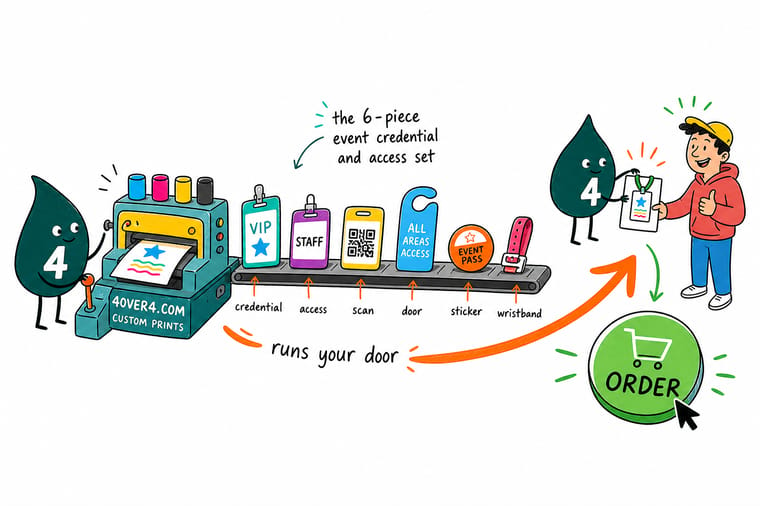
Wally works the door in his head. The badge tells him who you are, the numbered ticket stub tells him you paid, and the key tag tells him you are coming back next month. He prints the plastic first because it takes the longest, saves the badges for last so the names are final, and keeps one tier color on every piece so a volunteer can read access from six feet away.
Shop the entertainment collection →See it in use
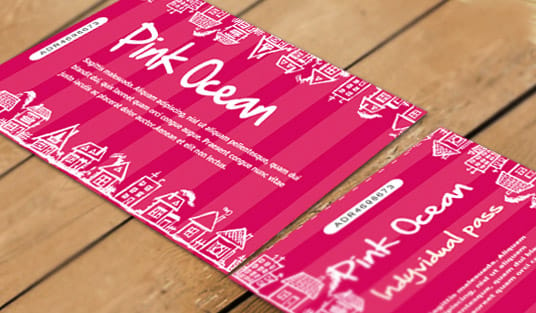
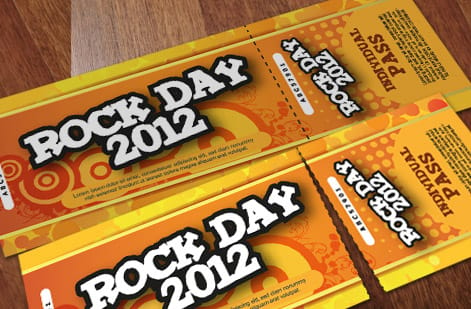
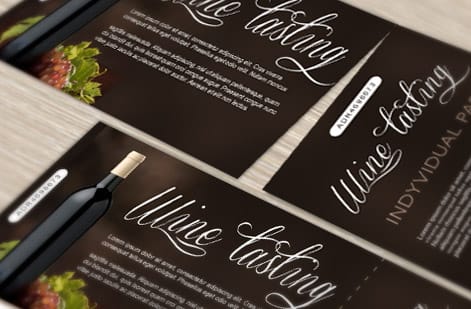
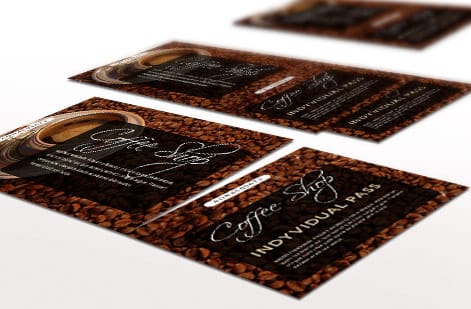
A gallery of event badge jobs



Explore more
Where to go next
By the numbers
One set, printed to hold the door
Common Questions
Common questions about event credentials and access printing
What is in the event credential and access set?
Six products that handle identity and entry at an event: event badges, plastic event badges, event tickets, square event tickets, key tags, and the plastic card with key tag. Badges say who someone is, tickets prove they are allowed in, and the plastic key tags and cards carry barcodes or a magnetic stripe for anything that has to be scanned or swiped more than once.
Should I order event badges or plastic event badges?
Both are built from the same configurator, with the same six sizes from 2 by 3 inches up to 4 by 6 inches and the same hole, lanyard and personalization options. The real decision is the stock. 30pt gloss laminated is the default and it is the stiffer of the two, which suits a single weekend where badges get worn once and thrown away. 18pt PVC vinyl is 30 percent thinner and bends rather than creasing, so it holds up if the same badge comes back for a second day or a second event.
Do I need sequential numbering on event tickets?
You need it any time a ticket has to be reconciled after the fact. Sequential numbering prints a unique number in black ink on every ticket, and paired with the perforation option it leaves you with a numbered stub for each admission. That is how you count real attendance, catch a duplicate, or run a door raffle without a second product. If the ticket is only a keepsake or a save-the-date, skip it and save the setup.
What size are event tickets and key tags?
Event tickets print at 2 by 5.5 inches, the standard admission shape that fits a shirt pocket and a ticket roll box. Key tags print at 1.125 by 2.375 inches on 30mil white plastic with a single 3/16 inch drilled hole and a 1/8 inch corner radius. The plastic card with key tag prints as one 4.5 by 2.125 inch piece that snaps apart into a wallet card and a tag.
How far ahead do I have to order the plastic pieces?
Further than you think. Key tags quote 13 business days in production and the plastic card with key tag quotes 15, because both are cut and finished on 30mil plastic rather than run through a paper press. Badges and tickets move in 1 to 5 business days, and badges have a same-day option. Sequence the order the way the production times run and the whole set lands together.
Can a credential carry a barcode or a magnetic stripe?
Yes, on the plastic products. Key tags and the plastic card with key tag both offer barcoding with numbering in Code 128, Code 39, UPC-A or EAN-13, plus variable data for sequential numbers. The plastic card with key tag adds a LoCo or HiCo magnetic stripe, a signature panel, and a scratch-off panel with a PIN. Badges and tickets take a printed QR or barcode as artwork instead, which scans fine but is not encoded.
How do I keep six different products looking like one credential system?
Pick one color per access tier and repeat it as a solid band on every piece that tier touches, then keep the logo in the same corner across all six. Print the tier word large enough to read at arm length, because a door volunteer reads the color first and the word second. Building all six in the online designer or from the same design templates is the fastest way to hold that discipline across paper and plastic.
Get Started
Plastic event badges start at 25 for $49.88
Order the full access set from 4OVER4.COM and keep tier colors identical across badges, tickets and plastic. Set size, stock, numbering and quantity on any product and the price updates live.
Legal Disclaimer
Gold Standard guarantees apply to all standard orders placed through 4over4.com. Price match requires verifiable proof of a competitor's published price for an equivalent product with matching specifications and turnaround time. Satisfaction guarantee covers manufacturing defects and print quality issues. Contact support with order number and documentation. On-time delivery rate based on tracked orders 1999 to 2026. Individual results may vary based on shipping carrier performance.
