
The 4 Most-Used Ticket Sizes for Event Printing


Tobias is our voice for cutting, binding and large format, built from the knowledge of our production team, with over 20 years in printing.
Concert, raffle, gala, or theater, most event tickets land on one of four sizes. This guide covers each, what it is best for, and how to pick the right ticket dimensions for your event.
Four sizes cover almost every event. A 2 by 5.5 in ticket is the traditional concert and general-admission size, 2.75 by 8.5 in gives room for schedules and sponsors, 3.5 by 8.5 in is a large premium ticket, and a compact 2 by 6 in works for raffles and stubs. Add a perforated stub for entry control and pick the size that fits your information and your budget.
Start here
Four sizes, and what each one holds
The choice comes down to how much the ticket has to say. The sections below take each size in turn, and free printable concert ticket templates and the specs behind them give you a starting file at those sizes.
Concert tickets
What size is a concert ticket?
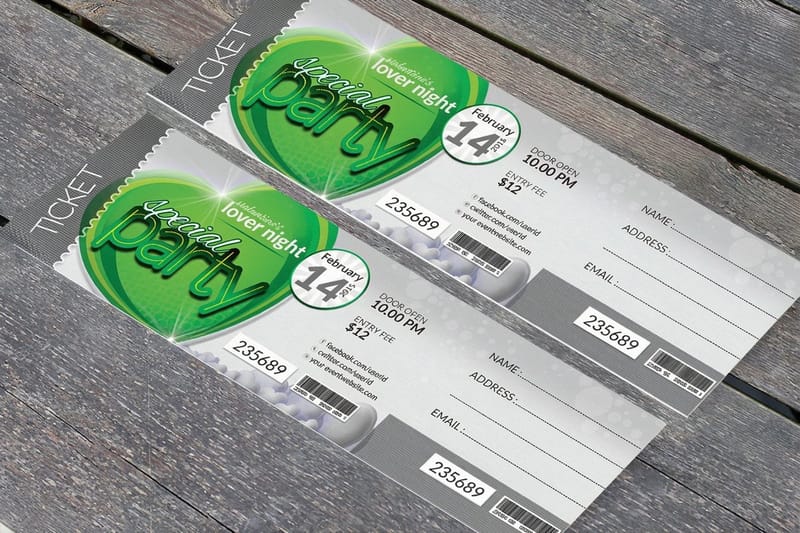
A standard printed concert ticket is 2 by 5.5 inches. It is the usual size for general admission and reserved seating, and it leaves room for the event name, date, venue and a tear-off stub without wasting stock. Numbering, stubs and the other formats are covered in event ticket formats, sizes, numbering and stubs explained.
At that size you can fit the artist or event name, the date and door time, the venue and address, the seat or price, the terms in small type, and still keep a stub for the door. The one thing to check before you order: tickets printed at the box office as people walk up come off a thermal printer on its own stock, around 5.63 by 1.97 in, so it is a different shape from the ticket you design. Anything you sell in advance, mail, or hand out gets printed at 2 by 5.5 in. See live options in event ticket printing.
2 by 5.5 in: The Classic Small Ticket
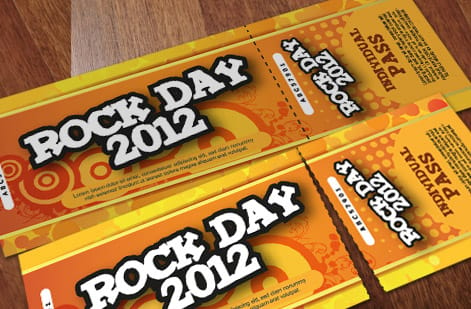
The 2 by 5.5 in ticket reads as a ticket at a glance. It is compact enough to fit a pocket or wallet, easy to hand out and tear, and instantly familiar to attendees. For general admission shows, club nights, and everyday events, it is the default.
Despite the small footprint, there is room for the essentials: event name, date, time, venue, and a price or seat, plus a perforated stub for entry. It is the most economical size to print in volume, which matters when you are producing hundreds or thousands.
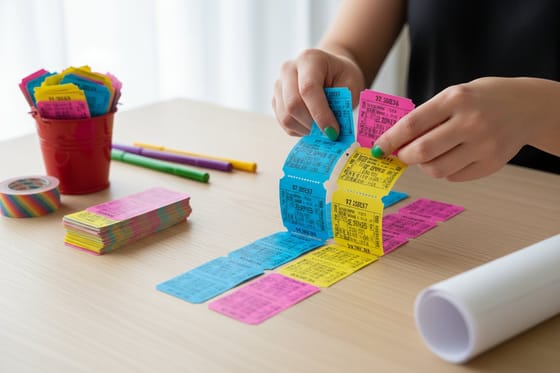
When your information is minimal and budget matters, this size wins. Our guide on how to make raffle tickets covers stub and numbering setup that applies here too. When the artwork is ready you can print concert tickets at 2 by 5.5 in and add perforation and sequential numbering if you need them.
2.75 by 8.5 in: The Longer Ticket
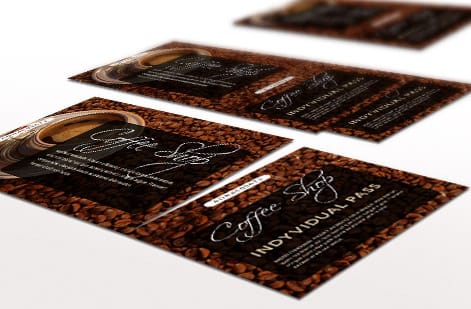
When a small ticket cannot hold everything, the 2.75 by 8.5 in size steps up. The extra length gives room for a schedule, a short program, seat and section details, or a row of sponsor logos, without crowding the design. It reads as a more substantial, considered ticket while still fitting a standard envelope.
This size suits festivals, conferences, and multi-act events where the ticket doubles as an information carrier. A generous perforated stub can hold a separate voucher, drink token, or entry portion. Because the format is longer, it also gives designers space for stronger imagery and hierarchy. 4OVER4.COM prints event tickets at 2 by 5.5 in only, so this size and the 3.5 by 8.5 in below are formats to know rather than to order here.
Use it when the ticket must communicate more than the basics. For layout inspiration that balances information and design, see this look at event ticket layout and pair the ticket with matching event badges for staff and VIPs.
3.5 by 8.5 in: The Large Premium Ticket

The 3.5 by 8.5 in ticket is the premium, high-impact option. Roughly the footprint of a rack card, it gives maximum room for full-bleed imagery, detailed seat maps, elaborate designs, and prominent sponsor placement. For galas, premieres, VIP experiences, and keepsake events, the larger canvas signals that the ticket itself is part of the occasion.
The trade-off is cost and handling: more material per ticket and a size that will not tuck into a small pocket. In return you get a ticket that feels like a collectible, which is often exactly the point for a marquee event.
Choose this size when presentation outranks pocketability. It also works well when the ticket must carry legal terms, detailed maps, or a rich program alongside the entry stub. For corporate and formal events, our guide on planning a corporate event covers where premium tickets fit.
Why Different Ticket Sizes Matter
Ticket size is a practical decision. It determines how much information you can present, how the ticket feels in hand, how it fits envelopes and pockets, and how much it costs to print at volume. Choosing well means the ticket does its job, entry, information, and brand impression, without waste.
Start from the content you must include, then pick the smallest size that fits it comfortably. Upsize only when the ticket is a keepsake or has to carry schedules, maps, and sponsors. Always plan the perforated stub so entry staff can tear cleanly while the attendee keeps a memento.
Whatever size you choose, consistency with your event branding ties it together. Match the ticket to your posters, badges, and signage for a cohesive look. Browse related event materials in this roundup of event promotional materials.
What Event Tickets Cost and How They Are Priced
Ticket price scales with paper stock and quantity, plus perforation and numbering if you add them. 50 event tickets cost $25.27 on 14pt Gloss Cover, runs go up to 5,000, and the unit price drops as the run grows, so a large event run costs less per ticket than a small batch.
Use the live specs and pricing panel below to build your ticket and see the number move. When you order, your artwork runs through a free file check so perforation, numbering, and design line up before the run prints.
Wally sizes the ticket to the event
Fit the info, add the stub, match the feel
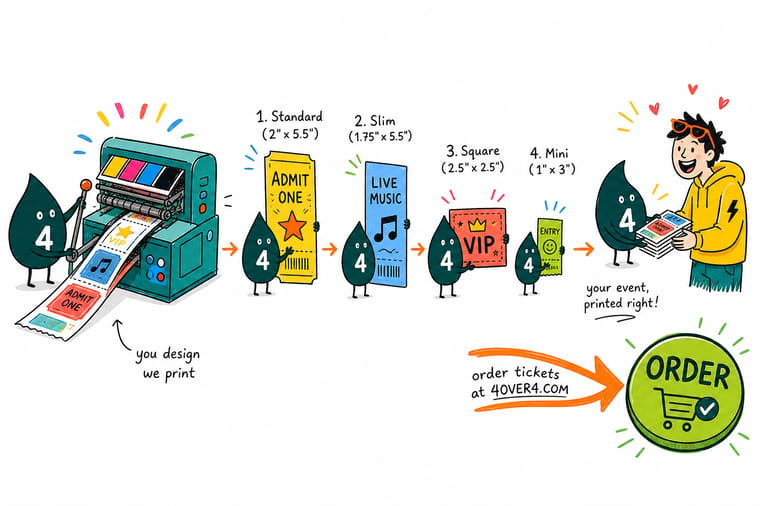
Wally lists everything a ticket must show, then picks the smallest size that fits: 2 by 5.5 in for classic concerts, longer formats when schedules and sponsors need room, and a premium large ticket for galas. He adds a perforated stub for entry and matches the design to the event, and 4OVER4 prints it with clean perforation and numbering.
Order event tickets →Quick reference
The four most-used ticket sizes at a glance
Match the size to the information you must print and the feel you want.
| Ticket size | Best for | Why it matters |
|---|---|---|
| 2 x 5.5 in | Concert tickets, general admission | The printed concert standard. Economical for high-volume events, fits the essentials plus a stub. |
| 5.63 x 1.97 in | Box-office thermal stock | What a venue thermal printer cuts at the door. Order the ticket you design at 2 x 5.5 in instead. |
| 2 x 6 in | Raffles and stubs | A compact format ideal for numbered raffle tickets and tear-off stubs. |
| 2.75 x 8.5 in | Festivals, conferences | Room for schedules, seat details, and sponsor logos without crowding. |
| 3.5 x 8.5 in | Galas, VIP, keepsakes | A premium canvas for imagery, maps, and collectible presentation. |
Step by step
Choose the right ticket size in 6 steps
- List everything the ticket must show Event name, date, time, venue, seat, price, terms, sponsors, and stub content.
- Choose the size Go larger only when schedules, maps or a keepsake feel call for it.
- Decide on a stub Add a perforated stub so staff tear at entry and holders keep a half.
- Match the feel to the event Upsize to a premium format for galas and keepsake occasions.
- Tie it to your branding Align colors, imagery, and type with your posters and event materials.
- Proof and order Confirm perforation and numbering, run the free file check, and set quantity.

Infographic
The four most-used ticket sizes
From compact concert tickets to premium keepsakes, the sizes event organizers reach for most, 2 by 5.5, 2 by 6, 2.75 by 8.5 and 3.5 by 8.5 inches, drawn to scale.
Add a perforated stub to any size for entry control. The holder keeps the main ticket while staff tear the stub at the door.
Specs and pricing
Event ticket specs and live pricing
Once you know the size, the print decisions come down to stock, quantity, and finish. Here are the live specs and price-per-unit for event tickets at 4OVER4.COM. The form offers 15 stocks, from 14pt gloss cover through 18pt premium white linen to 15pt metallic pearl and 15pt synthetic plastic, full color on one side or both, and perforation and black sequential numbering as options.
| Quantity | Price Per Unit | Total |
|---|---|---|
| 50 | 50.5¢ | $25.27 |
| 100 | 42.8¢ | $42.84 |
| 200 | 25.8¢ | $51.62 |
| 300 | 20.1¢ | $60.42 |
| 400 | 17.3¢ | $69.20 |
| 500 | 15.6¢ | $77.99 |
| 600 | 15.4¢ | $92.26 |
| 700 | 15.2¢ | $106.55 |
Order it
Print event tickets in the right size
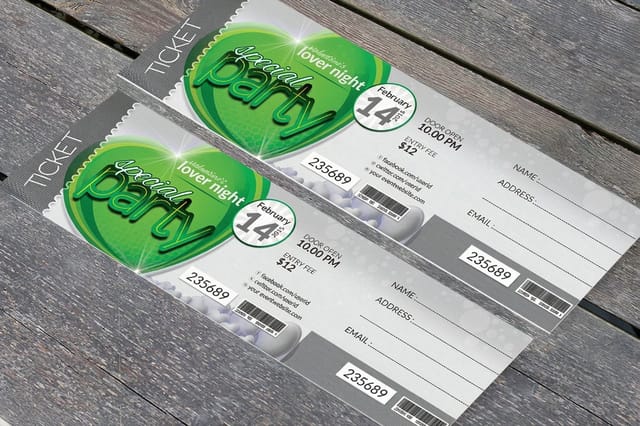
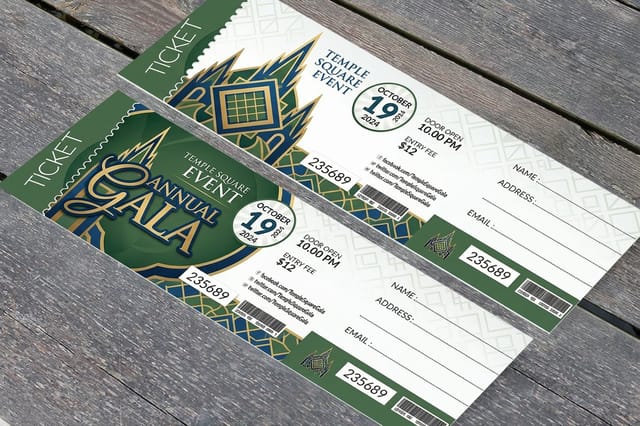
Event tickets with optional perforation and numbering, and event badges for staff and VIPs at the same gate.


Explore more
Where to go next

By the numbers
Badges, tickets, and the rest of the gate
Common Questions
Common questions about ticket sizes
What size does 4OVER4.COM print event tickets in?
2 by 5.5 in only, on 15 stocks running from 13pt uncoated to 18pt premium white linen, with metallic pearl and synthetic plastic among them. Perforation and black sequential numbering are optional add-ons.
Can a ticket be printed on both sides?
Yes. Choose full color on the front with a blank back, black ink on the back, or full color on both sides. The back is a good home for terms, a map or a sponsor.
Where should the number go on a raffle ticket?
On a light area of both halves. Sequential numbering prints in black ink, so a dark background behind the number makes it hard to read at the draw.
Get Started
50 event tickets cost $25.27, or 51 cents each
Print custom event tickets at 4OVER4.COM with optional perforation and numbering. Adjust stock and quantity and watch the price update live.
Legal Disclaimer
Gold Standard guarantees apply to all standard orders placed through 4over4.com. Price match requires verifiable proof of a competitor's published price for an equivalent product with matching specifications and turnaround time. Satisfaction guarantee covers manufacturing defects and print quality issues. Contact support with order number and documentation.