
AI Profit Mastery for Small Business, 6 Print Products That Turn AI Output Into Paid Work
Writing the offer is free now. Getting it in front of somebody who has never heard of you is not, and that is the part these six pieces do. Each one is priced live, and each one has a job the other five cannot do.
Software turned copywriting into a free step, so profit now sits in distribution and in measurement. Six printed pieces cover both: direct mail postcards from $89.68 to test one offer against another, standard flyers from $39.54 for volume without postage, standard brochures from $57.11 to put your prices in writing, standard postcards from $16.48 for the QR code that gets counted, classic business cards from $17.57 for the handoff, and door hangers from $290.41 when the work belongs to the address. All six start at $510.79 together, or $220.38 without the door hangers.
The picks
The 6 picks, numbered and priced live
Buy them in this order, not all at once. Cards and postcards are cheap enough to be wrong about. The mailing is where you spend real money, so it goes after an offer has already worked face to face. Prices come straight from the configurator and drop per piece as the quantity climbs.
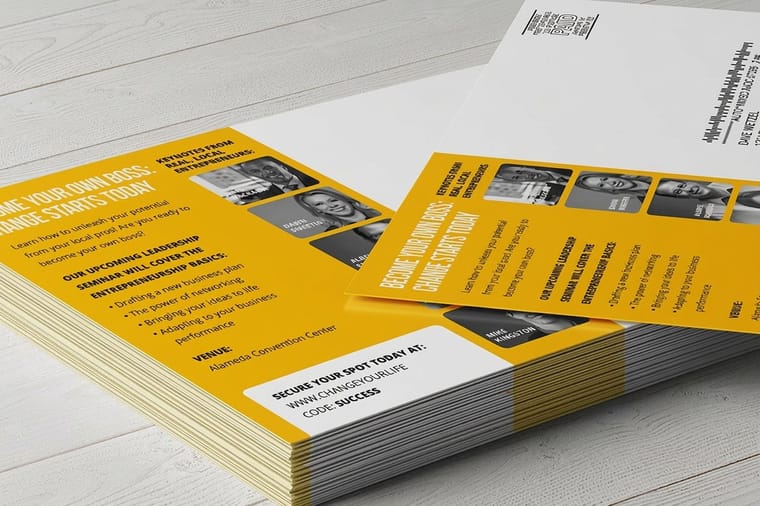
Direct mail postcards from $89.68
The only piece in the kit that tells you whether the offer works. Split one list in half, mail two versions with two response codes, and the winner pays for the next run.
Standard flyers from $39.54
Cheapest per piece because there is no postage on it. The trade is that you or someone on your payroll has to carry them, so the real cost is an afternoon.
Standard brochures from $57.11
The priced menu you hand over instead of quoting off the top of your head. Three tiers with a name and a number stops the negotiation from starting at your floor.
Standard postcards from $16.48
The counter card and the pack-in. One QR to the booking page, one line saying what the scan does, and its own redirect path so you can count who came from it.
Classic business cards from $17.57
The handoff nobody has replaced. A blank back with one scannable code beats reciting a domain name across a counter or a job site.
Door hangers from $290.41
The expensive one, and only worth it when your service is address-specific and you can name the streets. If you cannot draw the route on a map, mail instead.
Before you send the file
What generated artwork does on a press
Three things go wrong between an image that looks right on a laptop and the same image on paper. All three are cheap to fix in advance and expensive to find on a delivered pallet.
Resolution first, because it is arithmetic rather than opinion. Print wants 300 pixels per inch at the size the piece will be trimmed to, so divide the pixel width of your file by 300 and you have the widest it can print without being enlarged. A 1024 pixel square gives you 3.4 inches. A 6 by 9 in mailer with a full-bleed image needs about 1875 by 2775 pixels once the bleed is counted, which no square 1024 file will ever reach. Generate at the final size, or keep the generated image as one element on the page and set the rest as live type. Our print resolution guide covers what happens between 150 and 300 ppi, which is where most of these files land.
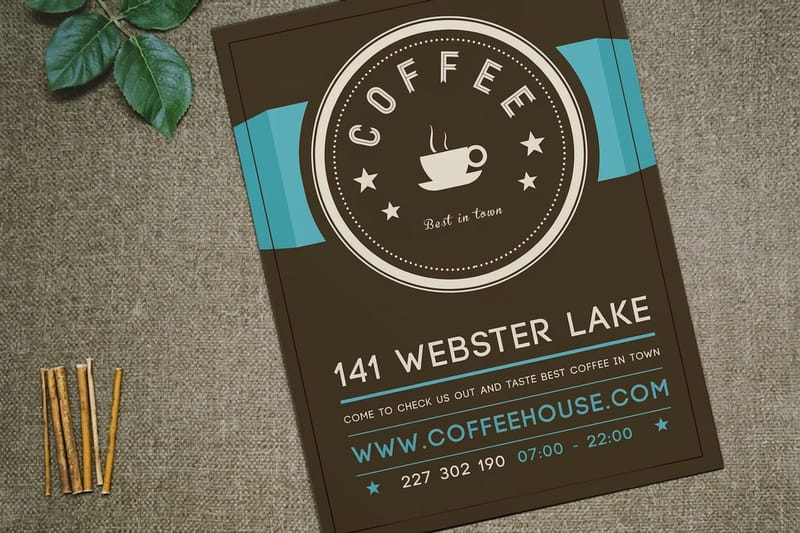
Colour second. Screens make colour by mixing light, presses make it by laying ink, and the vivid cyans and hot oranges that image models reach for have no ink equivalent. Convert to CMYK yourself and look at the result, rather than shipping an RGB file and being surprised. Large black areas need the same attention: flat 100K prints as a washed grey-black across a big field, and a rich black recipe fixes it. There is a walkthrough in converting RGB files for print and the mix itself in rich black explained.
Third, the layout edges. Generated images arrive at screen dimensions with no bleed and no safe margin, so anything meant to run off the edge of a card needs 0.125 in of extra image on every side, and anything that must not be cut off stays 0.125 in inside the trim. Text baked into a generated image is the other trap: models still render lettering as convincing nonsense, and it survives a glance on a phone but not a proof at full size. Set every word yourself. Bleed and trim explained covers the measurements, and humanising AI copy deals with the words before they reach the page.
What each piece does
The six pieces and the job each one holds
Each piece answers a different question and costs a different amount to be wrong about. Read the row, tap the piece to jump to its section, and start with whichever job your business is currently doing by memory.
| Piece | The job it does | When it makes sense | Starts at |
|---|---|---|---|
| Direct mail postcards | Tests one offer against another on a list you can measure | You have an address list, or a carrier route worth buying | $89.68 |
| Standard flyers | Puts one offer in a lot of hands for very little money | You have feet, a counter, or a community board to work | $39.54 |
| Standard brochures | Holds the tiers, the prices and what is not included | The sale involves a conversation and a quote | $57.11 |
| Standard postcards | Carries one QR code and one reason to scan it | You ship boxes, run a counter, or want repeat visits | $16.48 |
| Classic business cards | Gets your link into a pocket without anyone typing it | You meet people face to face, which is most trades | $17.57 |
| Door hangers | Reaches a specific street without postage or a list | The work is tied to the address: lawns, roofs, HVAC, pest | $290.41 |
1. Direct mail postcards: the only piece that grades your offer
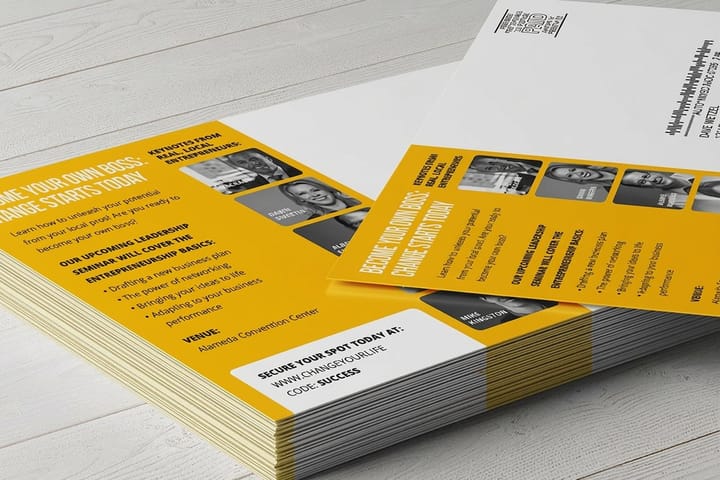
Generate forty subject lines in a minute and you still do not know which one earns a phone call. Direct mail postcards from $89.68 are how a small business finds out, because a mailing is the one print channel with a known denominator: you sent 500, you got back what you got back.
Run it as a split. Take one list, cut it in half at random, and mail version A to one half and version B to the other. Change one thing between them. Two different headlines with the same offer, or the same headline with two different offers, never both at once, or the result tells you nothing about either. Give each version its own code, its own phone extension or its own short URL, because "how did you hear about us" is answered wrong more often than it is answered right.
The mechanical rules are worth knowing before the file is built. Postcards run at 4 by 6 in, 5 by 7 in, 6 by 9 in and 6 by 11 in, and the bigger sizes are the ones that survive a stack of envelopes on a kitchen counter. The address panel and the barcode clear zone stay empty on the mailing side. A sorting machine sprays ink straight across whatever is sitting there, and a QR code with a postal barcode through it scans for nobody. Our walkthrough on adding a QR code to postcards shows where the code can safely sit.
Here is the limit nobody selling automation mentions. A cold rented list is the most expensive way to learn, and it can lose money for several runs before it teaches you anything useful. Start with addresses you already own, past customers and quoted jobs that never closed, then move to a carrier route once one version has beaten another twice. If you want the whole neighbourhood rather than a list, every door direct mail skips the list purchase and buys the route instead.
2. Standard flyers: the cheapest paper per hand
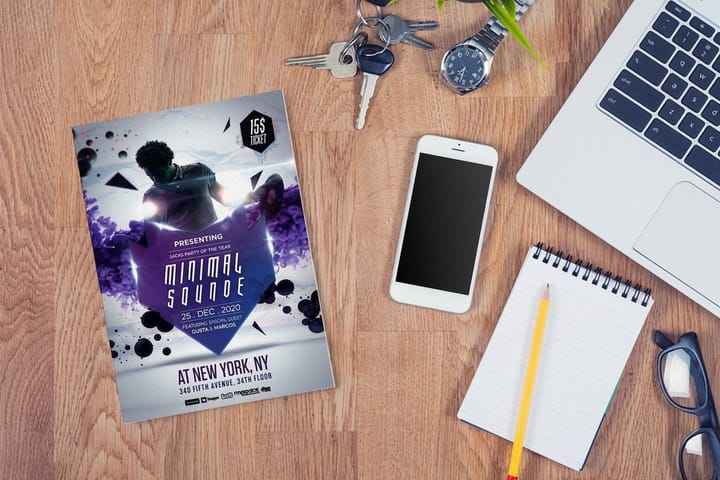
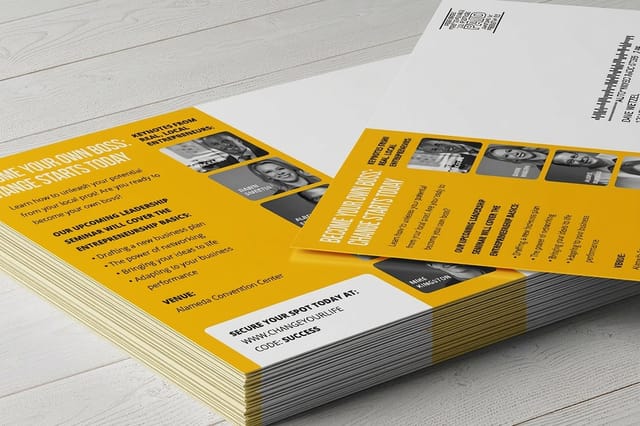
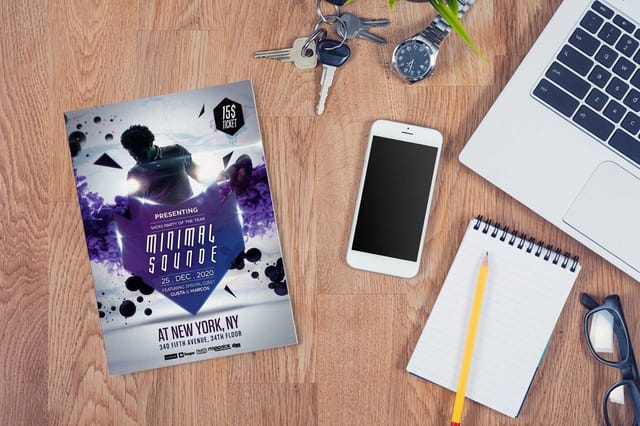
A flyer is what you print when the cost per piece has to be almost nothing. Standard flyers from $39.54 come in at a fraction of a mailed postcard because there is no postage attached, and 8.5 by 11 in gives you room for an offer, a photo and a map without crowding.
That saving moves the cost somewhere else. Somebody has to carry them: to the counter, the noticeboard, the windshields in the lot at the far end of the plaza. Two hours of your own time is not free, and neither is a teenager at hourly rate for a Saturday. Count that before you decide flyers beat a mailing, because the printing is the small half of the bill. Our notes on flyer distribution and the standard flyer sizes guide cover the placement and the trim.
Generated flyer copy fails in one predictable way, and it is easy to fix once you see it. The model writes for a reader who is already curious, so it opens with a paragraph explaining who you are. A flyer gets about one second at arm's length while somebody is walking. One offer, one number, one deadline, and the business name small at the bottom. Ask for the headline in six words and throw away anything the model adds under it.
One paper note that changes how the piece feels for a few dollars. A 100 lb gloss text sheet photographs well and holds saturated colour, which suits a food or retail promotion. Uncoated stock takes a pen, so if the flyer is a quote sheet or a service checklist that somebody will write on at a job site, order it uncoated and accept the flatter photo. Flyer printing prices breaks down where the money actually goes.
3. Standard brochures: put the price in writing before the meeting
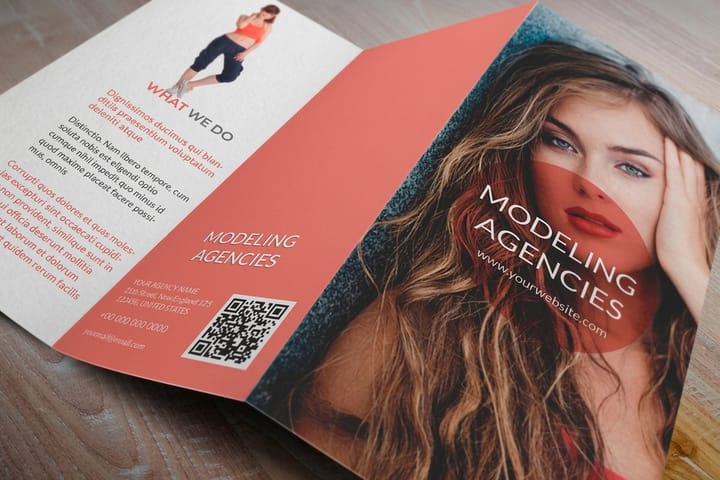
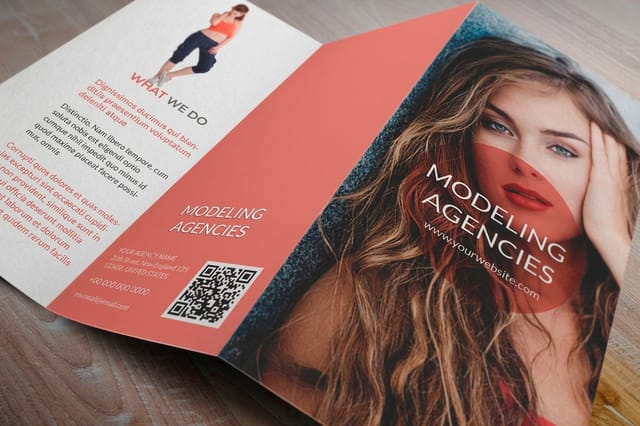
The fastest margin gain most small businesses can make has nothing to do with software: stop quoting from memory. A standard brochure from $57.11 carries three named tiers, what each one includes, and what it does not, so the conversation starts from your printed number instead of the customer's guess.
This is the one job a language model is genuinely good at. Feed it your last twenty invoices and it will find the packages you have been selling without naming them, then write them up as Basic, Standard and Complete. Put your most expensive tier first so the middle one reads as sensible. What the model must not do is pick the prices. It will produce figures that look plausible and have no relationship to your labour cost, and once a price is printed on 500 brochures you are living with it.
The fold has geometry you cannot ignore. On a tri-fold, the panel that tucks inside is trimmed about 1/16 in narrower than the other two so the piece closes flat, which means a full-bleed photograph placed as if all three panels were equal will sit off-centre once it is folded. Set the panels at their real widths from the start. The tri-fold brochure sizes guide has the panel measurements, and QR codes on brochures covers where a code can live without landing on a crease.
Be honest about when this piece is wasted. A brochure only pays for itself when the sale involves a conversation and a quote. If somebody buys from you in ninety seconds at a counter, they will not read three panels, and the money belongs on a postcard instead.
4. Standard postcards: one code, one reason, one path
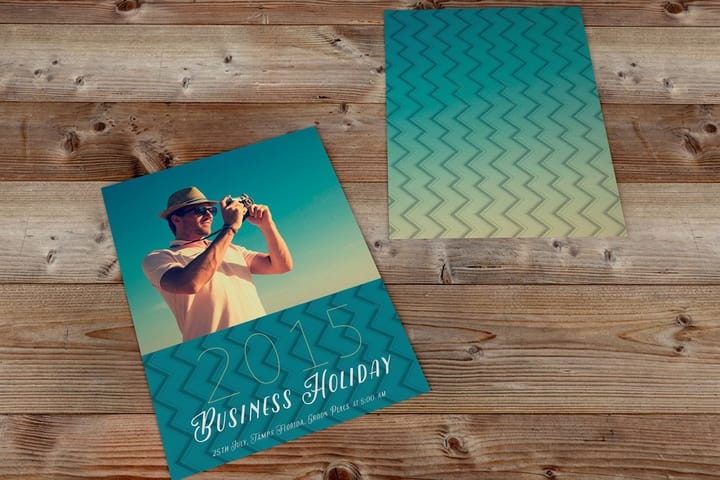
Print carries no analytics unless you build them in, and a standard postcard from $16.48 is the cheapest place to build them. Drop one in every box you ship, keep a stack by the register, hand one over with the receipt. One QR code, one short line saying what the scan gives them, nothing else on that side.
The code has real dimensions. Keep it around 0.8 in square as a working floor for a first-try scan at arm's length, leave a quiet border of roughly four modules on every side, and hold it at least 0.125 in inside the trim so a shift on the cutter never clips a corner. Dark code on a light background, never reversed out, and never sitting on top of a photograph. The line above it should say what happens next, because a bare code is a question nobody answers.
Give every printed piece its own redirect path to the same destination. The postcard, the business card and the flyer each get a different address on your own domain, all landing in the same place. The hit counts are the only attribution print gives you, and they answer a question with money attached: which box, which counter, which route actually produced bookings. Our guide on QR codes for small business covers the tracking setup end to end.
If you are pointing the code at an assistant or a booking flow you built this month, test it on a phone with one bar of signal before you print a thousand cards. A scan that lands on a slow page is worse than no code at all, because the customer has already decided you are the sort of business whose links do not work.
5. Classic business cards: the handoff nothing has replaced

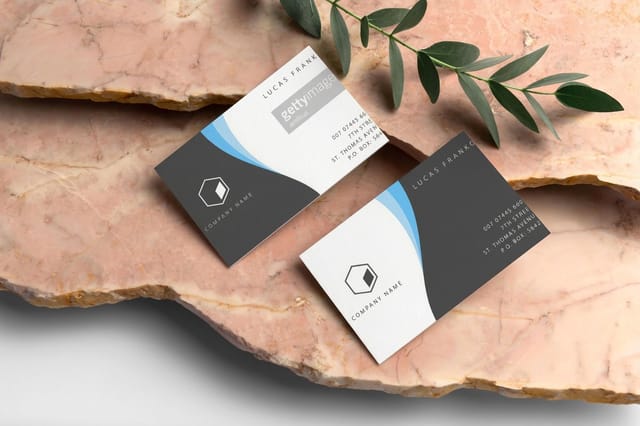
Somebody asks what you charge while you are standing on their driveway with wet hands. Classic business cards from $17.57 exist for that moment and almost nothing else, which is why the design should be close to empty.
Front carries the name, the trade and the number. Give the entire back to one code and one sentence explaining it: see prices, book a slot, get a quote. Resist putting a second code on for the review page. Two codes on one card means neither gets scanned, because the reader has to choose and choosing is work. Our piece on QR code business cards that convert shows layouts that survive being handed over rather than photographed.
Stock is where a card either says small business or says careful business, and it costs very little to move up. The extra weight registers in the hand within about half a second of the card being taken, before anything on it has been read. Order a template layout if you would rather not build the file, since the templates already respect the trim and the quiet zone around a code.
6. Door hangers: the expensive one, and when it earns it
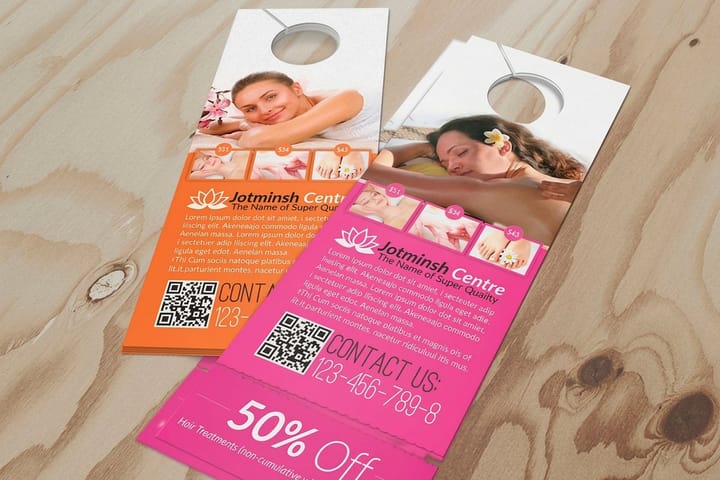
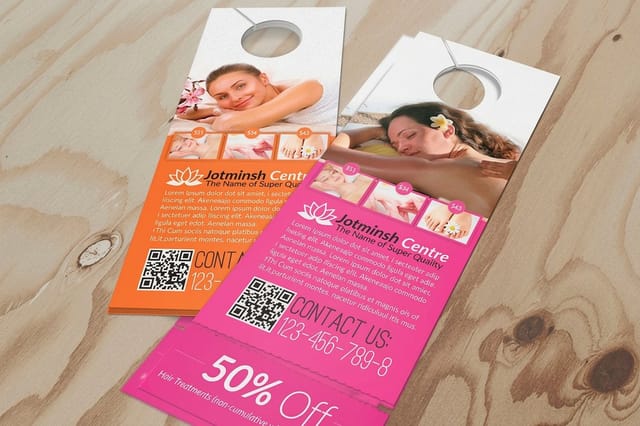
Door hangers start at $290.41, which makes them the most expensive entry in this kit by a wide margin. They earn it in exactly one situation: your work is tied to the address rather than the person. Lawns, roofs, gutters, driveways, pest control, HVAC. You can see from the kerb who needs you, and there is no list to buy and no postage to pay.
The die cut takes the top of the piece. A hole and a slot sit at the top so the hanger drops over a handle, and nothing you need read belongs up there. Start the headline below the cut and treat the top two inches as structure, not space. Door hanger sizes lists the standard trims and where the hole falls on each one.
Two rules keep the campaign legal and welcome. Never put one in a mailbox: in the United States the mailbox belongs to the postal service and only stamped mail goes in it, which our note on flyers in mailboxes explains. Check local and HOA rules before you walk a private community, because a complaint costs more than the print run. The door hanger campaign guide covers routing, timing and how many doors one person can actually cover in an evening.
If you cannot draw your route on a map, skip this piece and put the money into pick one. Scattering door hangers across a city is the same spend as a mailing with none of the measurement.
Specs and pricing
The two pieces you will reorder, side by side
Mailers and flyers are the two that get reprinted month after month, and they are the two where quantity changes the per-piece price most. Here are the live specs and price ladders straight from the configurator.


| Quantity | Price Per Unit | Total |
|---|---|---|
| 50 | 79.1¢ | $39.54 |
| 100 | 57.1¢ | $57.11 |
| 200 | 37.3¢ | $74.69 |
| 300 | 28.6¢ | $85.68 |
| 400 | 24.4¢ | $97.76 |
| 500 | 21.8¢ | $108.75 |
| 600 | 18.7¢ | $112.03 |
| 700 | 16.5¢ | $115.33 |
| Quantity | Price Per Unit | Total |
|---|---|---|
| 500 | 17.9¢ | $89.68 |
| 1,000 | 17.1¢ | $170.53 |
| 2,000 | 9.35¢ | $186.95 |
| 3,000 | 6.84¢ | $205.13 |
| 4,000 | 5.58¢ | $223.31 |
| 5,000 | 4.83¢ | $241.51 |
| 6,000 | 4.56¢ | $273.85 |
| 7,000 | 4.37¢ | $306.18 |
Wally splits the list in half
One change per test, or you learn nothing
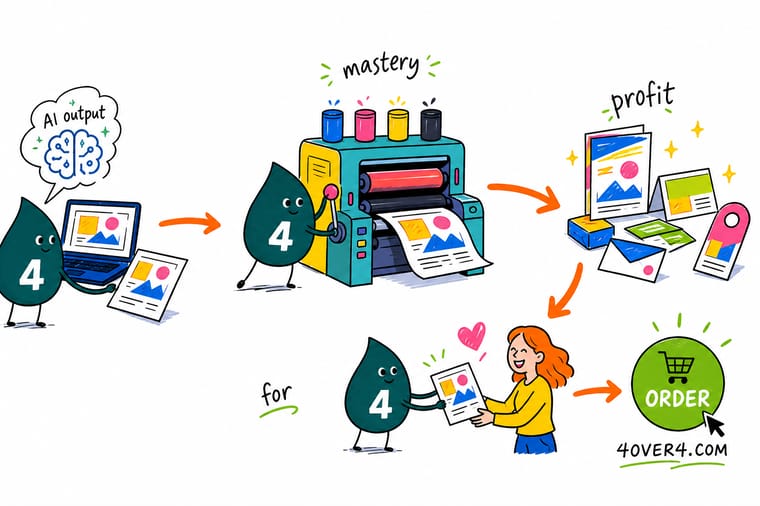
Wally had forty versions of an offer written before his coffee went cold, and mailed a different one to every hundred addresses. Every response came back and none of it meant anything, because no two versions differed by one thing. Now he mails two: same list cut in half, same artwork, one headline changed, a different code on each. The winner becomes the version to beat next month. That is the whole method, and the printing is the cheap part.
Shop the business basics collection →See it in use
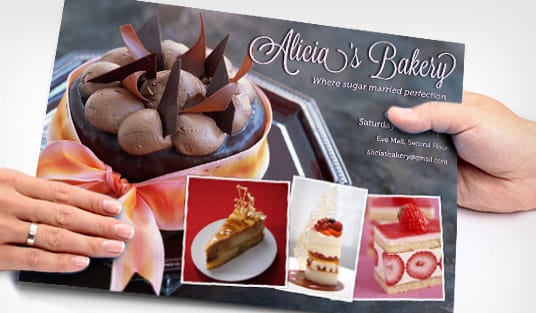
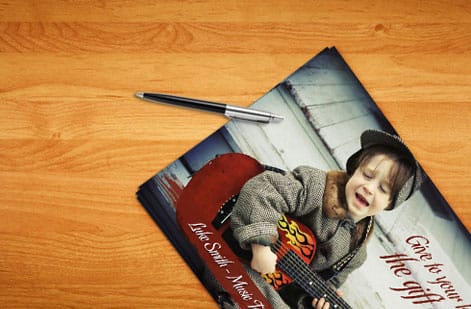
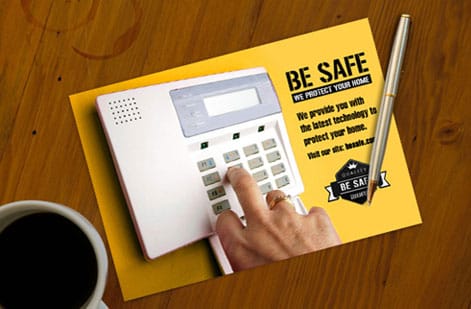
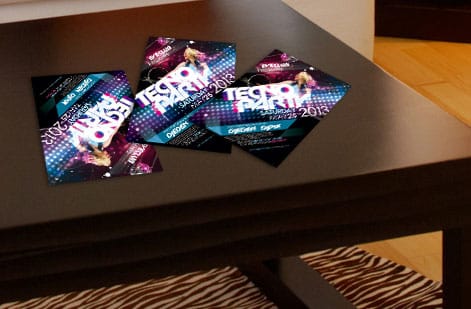
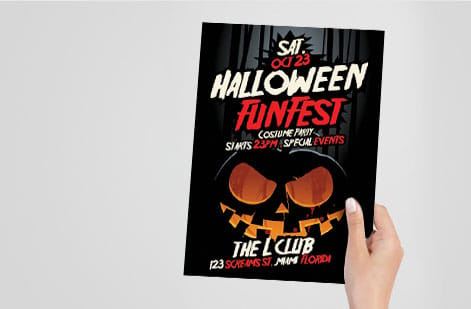
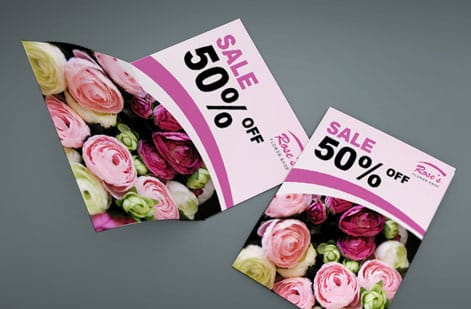
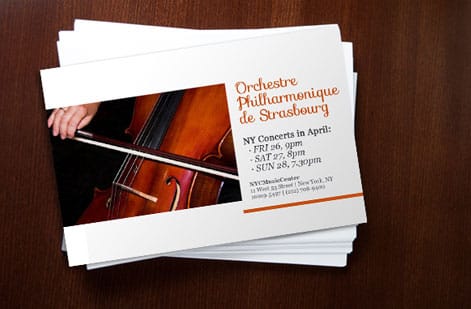
Flyer designs small businesses put to work
Explore more
Where to go next

By the numbers
Sixty materials and a thousand products to pick from
Common Questions
Common questions about printing AI-made marketing
What should a small business print first when the copy is written by AI?
Business cards and postcards, in that order, because they are the cheapest per piece and the fastest to correct. Classic business cards start at $17.57 and standard postcards at $16.48, so a mistake costs you under twenty dollars to reprint. Save direct mail from $89.68 for after you have a version of the offer that has already worked in person, since a mailing spends its money before you find out whether the message lands.
Why do AI-generated images look soft when printed?
Resolution. Screens are happy at 72 to 150 pixels per inch, and print wants 300 at the final size. A 1024 pixel square covers 3.4 inches at 300 ppi, so placing it across a 6 by 9 in mailer means the file is being enlarged nearly three times and the softness is the enlargement, not the printing. Generate at the size you need, or keep the generated image small on the page and set the headline as live type.
Why did the colours change between my screen and the print?
Screens mix light and presses mix ink, so a colour that glows on a monitor has no ink equivalent. The neon cyans, hot oranges and vivid greens that image models favour are the worst offenders, and they come back duller and slightly muddier than expected. Convert to CMYK yourself and judge the result rather than letting the conversion happen at the printer, and use a rich black recipe instead of flat 100K on any large solid black area.
How do I split test a direct mail postcard properly?
Take one list, split it in half at random, and change exactly one element between the two versions: the headline or the offer, not both. Give each version its own response code, phone extension or short URL, because customers report where they heard about you incorrectly more often than they report it correctly. Run both halves at the same time so weather, payday and season affect them equally, and hold the winner as the version to beat next time.
What does the six-piece kit cost to start?
The six starting prices add up to $510.79 at 4OVER4.COM: direct mail postcards from $89.68, standard flyers from $39.54, standard brochures from $57.11, standard postcards from $16.48, classic business cards from $17.57, and door hangers from $290.41. Leaving out door hangers brings the other five to $220.38. Every price falls per piece as the quantity climbs, and the configurator updates live as you change size, stock and finish.
Can I let a language model write the prices on my brochure?
No. It will produce numbers that read as reasonable and have nothing to do with your labour cost, your materials or your local market, and a printed price is a promise you have to keep for as long as the brochure is in circulation. Use the model for the structure, the tier names and the wording of what is included, then set every figure yourself against your last twenty invoices before the file is approved.
Are door hangers worth it for a small business?
Only when the work belongs to the address rather than the person, and only when you can name the streets. Lawn care, roofing, gutters, pest control and HVAC qualify, because you can see the need from the kerb. At $290.41 to start they are the priciest piece in this kit, so if your route is really the whole city you are better off mailing, where at least you get a measurable response for the money.
How do I know which printed piece brought the customer in?
Give each piece its own redirect path on your own domain, all pointing at the same page, and read the hit counts. A postcard, a card and a flyer landing on three different addresses tell you which one produced the visit without asking the customer anything. Add a printed code for phone callers, since anyone who dials instead of scanning leaves no digital trail at all.
Get Started
Put the offer where somebody will see it
Print the six-piece kit as one branded set at 4OVER4.COM. Pick your sizes, stocks and finishes, and watch every price update live as you build the order.
Legal Disclaimer
Gold Standard guarantees apply to all standard orders placed through 4over4.com. Price match requires verifiable proof of a competitor's published price for an equivalent product with matching specifications and turnaround time. Satisfaction guarantee covers manufacturing defects and print quality issues. Contact support with order number and documentation. On-time delivery rate based on tracked orders 1999 to 2026. Individual results may vary based on shipping carrier performance.
