
How to Humanize AI Copy Without Rewriting It From Scratch


Six patterns give a generated draft away, and five of them are structural. The edit pass that removes them runs in the order that wastes the least time.
Humanizing a generated draft is an editing job: delete the warm up paragraph, break the flat sentence rhythm by splitting the long sentences and cutting one to four words, strip the hedging stacks, and put a fact only your business knows into every paragraph. Prompting alone will not finish it, because the model cannot supply your prices, your lead times or the objection you hear every week. Read the result out loud before it goes anywhere, and read it twice if it is going to print, where the sentence is final the moment the press runs.
Quick answer
Cut, then re-cut, then read it out loud
The work is subtraction before it is style. Delete the opening paragraph, delete every sentence that would still make sense for a different company, then measure what is left: if the sentences all land within a few words of each other, split two and cut one to the bone. After that, add what the model could not know, which is your price, your turnaround, your customer's actual words. Read the whole thing aloud last. The diagram below shows the same paragraph before and after, measured rather than described.
The Six Tells That Give Generated Copy Away
Readers rarely think "a machine wrote this." They think the writing is boring and stop. These are the six patterns that produce that reaction, and each one has a fix you can apply without understanding why the model did it.
| The tell | What it looks like on the page | The fix |
|---|---|---|
| Flat rhythm | Seven sentences in a row all landing between 18 and 22 words. | Split two, cut one to under six words, leave one long. |
| The warm up | A first paragraph that describes the topic instead of saying anything about it. | Delete it. Start at the sentence that carries information. |
| Hedging stacks | "May potentially help to improve", "can often be a good option for many businesses". | Commit or cut. One qualifier per claim, never three. |
| Empty adjectives | Robust, seamless, powerful, high quality, cutting edge. | Replace with a number, a material, a measurement or nothing. |
| Tidy triads | Everything arrives in threes, and every list item is the same length. | Use two items, or four. Let one item run longer than the rest. |
| The summary close | A final paragraph that repeats the article and adds nothing. | End on the last real point, or on what the reader should do next. |
Five of the six are structural. That is the useful part, because structure is visible without judgement: you can count sentence lengths, count qualifiers, and count how many paragraphs open by restating their own heading. Vocabulary is the tell people talk about most and the one that matters least, since swapping "robust" for "sturdy" leaves an empty sentence exactly as empty.
The Edit Pass, in the Order That Saves the Most Time
Order matters, because half the sentences you would otherwise polish are sentences you are about to delete. Cut first, then rewrite what is left.
- Delete the opener. Read the first paragraph and ask what a reader knows after it that they did not know before. If the answer is nothing, it goes, and the piece starts stronger.
- Cut every sentence that survives a swap. Change the subject to a different business. If the sentence still makes sense, it was never about you. "We are committed to quality service" works for a dentist and a tow truck, so it is not copy, it is wallpaper.
- Break the rhythm. Now measure what is left. Split the two longest sentences, cut one to four or five words, and let one run long on purpose. This single pass changes how the whole page reads more than anything else on this list.
- Put a fact in every paragraph. A price, a size, a turnaround, a stock weight, a name. Paragraphs with no facts get merged into the ones that have them.
- Kill the qualifiers. Search for may, might, can, often, typically, generally, potentially. Keep the ones doing real work and delete the rest. Most paragraphs lose two words and gain a spine.
- Read it out loud. Actually out loud, not in your head. Every place your voice stumbles is a place a reader will skim, and it takes four minutes on a page of copy.
The out loud pass is the one people skip and the one that catches the most. It exposes repeated sentence openings, a paragraph with no breath in it, and any line you would be embarrassed to say to a customer standing in front of you. If you are working on a headline that has to fit a card or a mail panel, the online designer lets you set the words into the real layout while you edit, which stops you falling in love with a line that does not fit.
Feed the Draft Something Only You Have
Generated copy sounds generic because the input was generic. A model can arrange language it has seen; it cannot know that your busiest month is March, that customers always ask about the setup fee before they ask about the paper, or that the last mailer pulled better with a date on it than without one.
Before you generate anything, write down five things: your actual starting price, your real turnaround, the two objections you hear most, one sentence a customer said in their own words, and the one thing a competitor does that you deliberately do not. That list takes ten minutes and it is the entire difference between copy that could belong to anyone and copy that could only be yours. Hand it to the model as raw material, then check on the way out that every one of the five made it into the finished piece.
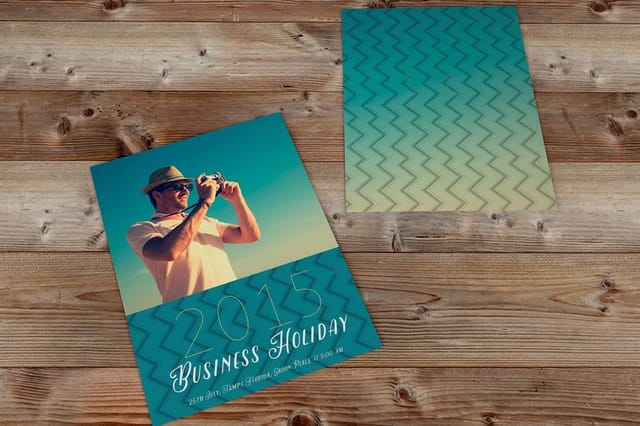
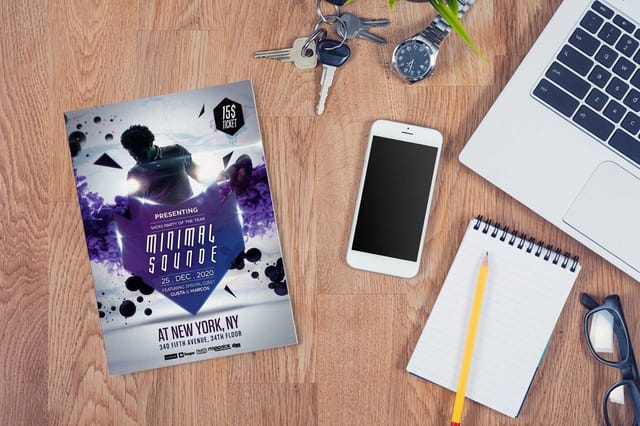
Printed formats are a good forcing function here, because the space is fixed. A postcard front gives you a headline and roughly twenty five words of support, and you cannot pad your way past a weak offer. Standard postcards start at $16.48, so a test run is cheap enough to write two versions and mail both. A standard flyer at $39.54 gives you more room and takes away the excuse for filler, since a full page of vague copy is more obviously empty than a paragraph on a screen. Our postcard layout guide covers how much of that space the mail panel takes before your words get any of it.
Print Is the Cruelest Proofreader
Web copy is a draft that happens to be live. Print copy is finished, and that changes how carefully the last read should go.
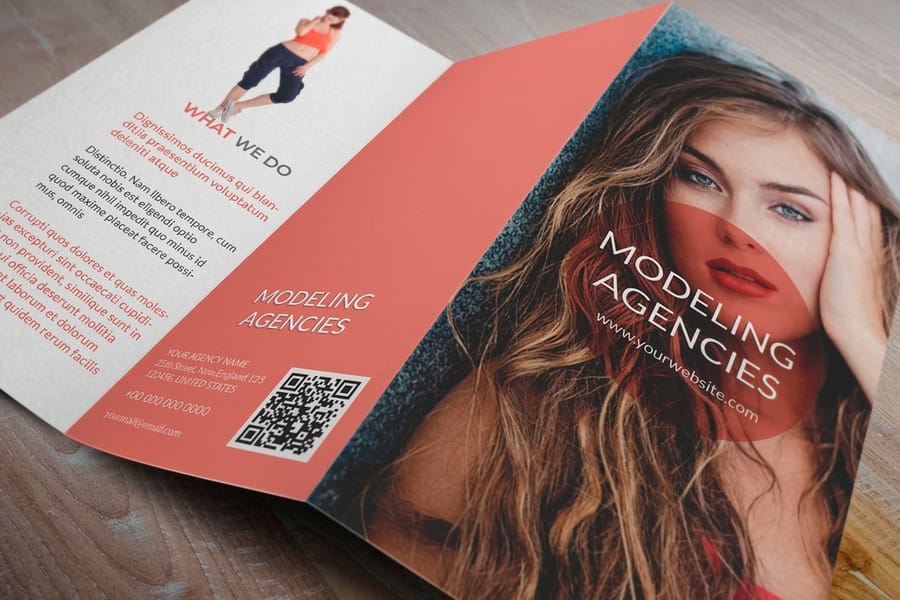
Three things go wrong with generated copy specifically at the print stage. The first is invented detail: a model that does not know your hours will write plausible hours, and plausible hours printed on 5,000 standard brochures at $57.11 a run is an expensive kind of wrong. The second is length drift, where copy written for a web page runs past the panel it was meant for, and someone fixes it at the last minute by shrinking the type to 7 point. The third is repetition across panels, which nobody notices on screen and everybody notices when three folds sit open on a table.
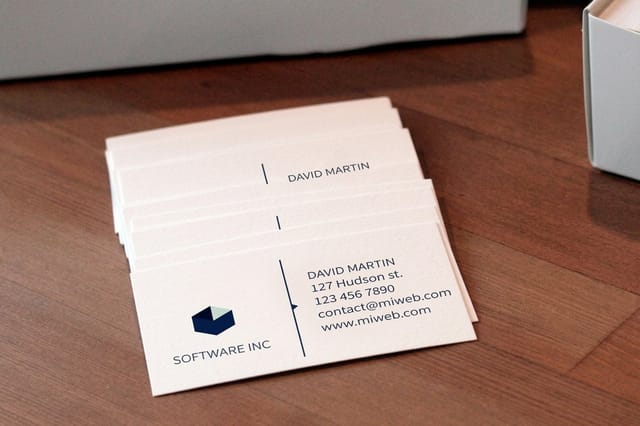
The counter is a proofing order that treats facts and prose separately. Check every number against something authoritative first: your own site, your own price list, your own calendar. Then read the prose out loud from the printed proof rather than the screen. Then have one person who did not write it read the whole thing cold. This is also why standard business cards at $17.57 deserve more scrutiny per word than any other piece you own, since a dozen words go out to everyone you meet for the next year, and standard letterheads at $99.95 carry a boilerplate footer that will outlive three website redesigns.
If the copy is going out as a campaign rather than a single piece, the trade-offs between running it yourself and handing it over are laid out in our direct mail agency versus DIY comparison, and the full range of printed formats sits in marketing materials.
When You Should Leave the Copy Flat
Humanizing is not always an improvement, and the pages where it backfires are easy to name.
- Specification tables and product data. A reader scanning stock weights wants identical phrasing in every row. Deliberate variation there makes the table harder to scan, not friendlier.
- Legal, safety and returns text. Predictable, slightly stiff language is doing a job. Loosening it introduces ambiguity you will regret.
- Anything requiring a first hand claim you cannot make. Adding "we tested this on a run of 10,000" to make copy sound experienced is not humanizing, it is inventing. If the experience is not real, write the sentence without it.
- Repeated instructional steps. Assembly and file setup instructions want parallel structure. Consistency beats personality when someone is following along with a box in front of them.
There is a second failure mode worth naming, because it is the one that shows up after people read a list of tells. Over-corrected copy reads as forced: contractions dropped in awkwardly, a fragment every third sentence, a joke that has nothing to do with the product. That is not a human voice, it is a costume. The target is not quirky, it is specific. A sentence that names a real price and a real limit sounds human even when it is perfectly plain, and a page that admits what a product does badly earns more trust than a page of adjectives. For the strategy layer above the sentences, our guide to brand messaging components covers what the copy has to carry before tone matters, and digital versus traditional marketing covers how the same message behaves differently on a screen and on a printed page.
Wally edits the draft
He counts the sentences before he changes a single word
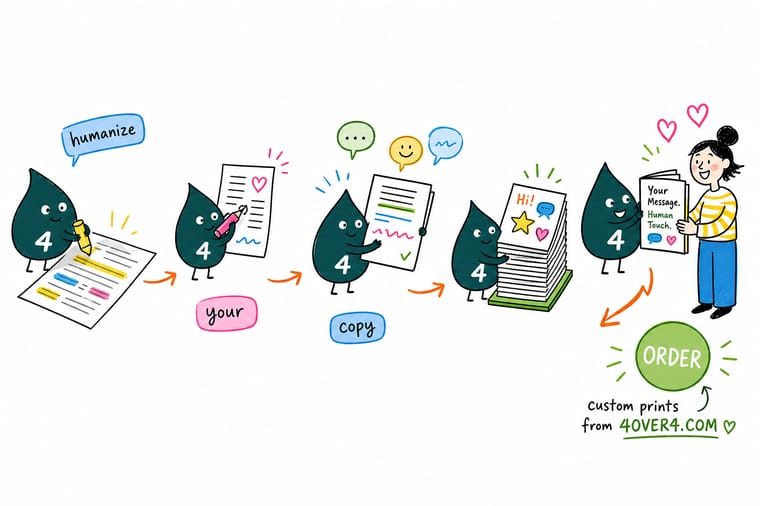
Wally reads the generated page once and crosses out the first paragraph without reading it twice, because it never said anything. Then he measures: seven sentences, all about twenty words, which is the pattern readers feel as boring. He splits two, chops one down to four words, and leaves one long. Last, he writes a real price and a real turnaround into the paragraphs that had neither. Same length, completely different page.
Print the finished copy on postcards →Specs and pricing
Where finished copy actually lands, with live pricing
Copy has to fit something. These are the three formats that force the tightest writing, with real configuration choices and starting prices from the 4OVER4.COM configurator.



Print it
Put the edited version on paper
Explore more
Where to go next


By the numbers
The press behind your finished words
Common Questions
Your questions about editing AI copy, answered
Can I just prompt the model to write like a human?
You can improve the draft that way, but you cannot finish it that way. A prompt like "write in a plain, direct voice, vary your sentence length, no marketing adjectives" produces a better starting point than a bare request, and it is worth writing once and reusing. What it will not do is add the facts only your business holds, and it will not notice that it opened three paragraphs in a row with the same construction. Treat the prompt as a way to shorten the edit, not to skip it.
How much of a generated draft usually survives the edit?
It varies with how much you fed the model. If you handed it your prices, your process and two real customer objections, most of the structure survives and you are mainly cutting and tightening. If you handed it a one line topic, expect to keep the outline and rewrite the sentences, because everything specific in that draft is a guess. A useful signal: if you cannot point at a sentence and say where the fact in it came from, that sentence is filler and it goes.
Do AI detectors matter for my marketing copy?
Not enough to write for them. Detector scores swing on things that have nothing to do with quality, and plainly written human copy gets flagged regularly, so chasing a score pushes you toward deliberately odd writing. The audience is the better target. If a reader learns something they did not know and can tell a person with a real business wrote it, the copy is doing its job whatever a detector says.
Are em dashes really an AI tell?
The dash is not the problem, the density is. Plenty of good writers use one. Generated drafts tend to use several per page, almost always for the same job of tacking an aside onto a complete sentence, and the repetition is what reads as machine written. The fix is mechanical: find every dash, keep at most one, and turn the rest into full stops or commas. Most of the time the sentence gets sharper when the aside becomes its own short sentence.
Should I say that AI helped write it?
For marketing copy, ordinary practice is no, in the same way you do not credit your spellchecker or the template your designer started from. Disclosure belongs where the reader is relying on the author being a specific person or a real experience: bylined opinion, testimonials, case studies, safety or medical guidance, and anything a publisher or platform asks you to declare. If a piece claims a first hand experience nobody at your company had, the problem is not disclosure, it is that the claim is untrue and needs to come out.
Does any of this matter for a postcard with twenty words on it?
It matters more there, not less. Long copy hides a weak sentence in the middle of a paragraph, but a postcard headline has nowhere to hide, and generated short copy usually collapses into a generic offer plus a generic verb. Write the twenty words yourself, then use the model to produce ten alternates you can react to. Standard postcards start at $16.48 at 4OVER4.COM, and the cost of getting those twenty words wrong is the whole run.
Get Started
Copy edited? Print it before you second guess it.
Pick a size, upload the file, and we print the version you finished rather than the version you kept fiddling with. Postcards, flyers and cards ship from our Queens plant.
Legal Disclaimer
Gold Standard guarantees apply to all standard orders placed through 4over4.com. Price match requires verifiable proof of a competitor's published price for an equivalent product with matching specifications and turnaround time. Satisfaction guarantee covers manufacturing defects and print quality issues. Contact support with order number and documentation. On-time delivery rate based on tracked orders 1999 to 2026. Individual results may vary based on shipping carrier performance.
