
What Are Yard Signs Made Of? Materials & Sizes Explained


Most yard signs are corrugated plastic, but aluminum, PVC foam board, and HDPE each fit a different job. Corrugated plastic covers most of them, and the upgrade only pays when the sign stays up past a season.
Most yard signs are made of corrugated plastic (Coroplast), a lightweight, waterproof, fluted polypropylene board that stands up to rain, sun, and wind for several months. Aluminum, PVC foam board, and HDPE cover longer-term, higher-detail, or heavy-duty jobs. The standard roadside size is 18 by 24 inches, and price rises from corrugated plastic to PVC to aluminum.
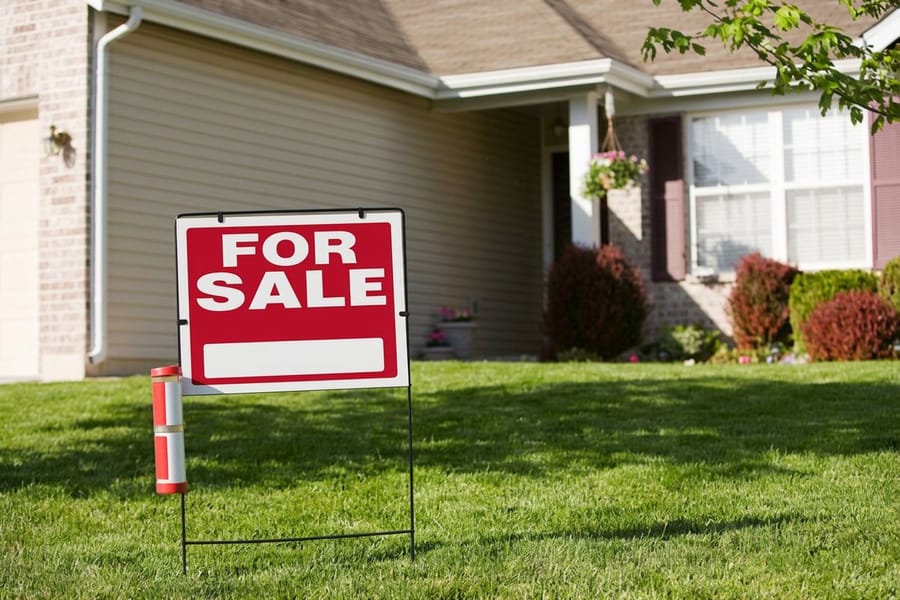
Quick tips
Quick guide to picking a yard sign material
Match the material to the job before you order. Corrugated plastic (Coroplast) is the lightweight, waterproof default for campaigns, real estate, and events. Aluminum lasts for years and handles permanent installs. PVC foam board prints the sharpest for upscale listings, and HDPE takes the abuse of industrial sites. Keep 18 by 24 inches as your roadside size, confirm UV-cured inks, and order in bulk to drop the per-sign price. 4OVER4.COM prints every material on weatherproof stock built for rain, wind, and sun.
What Are Yard Signs Actually Made Of?

Yard signs live outdoors for weeks or months at a time. They get rained on, baked by the sun, and pushed around by wind. So what are yard signs made of that lets them survive all of that? Corrugated plastic is the usual answer, but it is not the only option, and picking the wrong material for your situation wastes money.
This guide breaks down every material used for yard signs, what size are yard signs in each one, and how much yard signs cost depending on what you choose. An open house, a birthday party and a local campaign each land on a different material, and this page says which.
Browse the 4OVER4.COM Showcase for real examples of finished yard signs. If you are juggling other print projects too, our rubber stamp cleaning guide and our free design templates help you get started fast.
Corrugated Plastic, the Standard Yard Sign Material
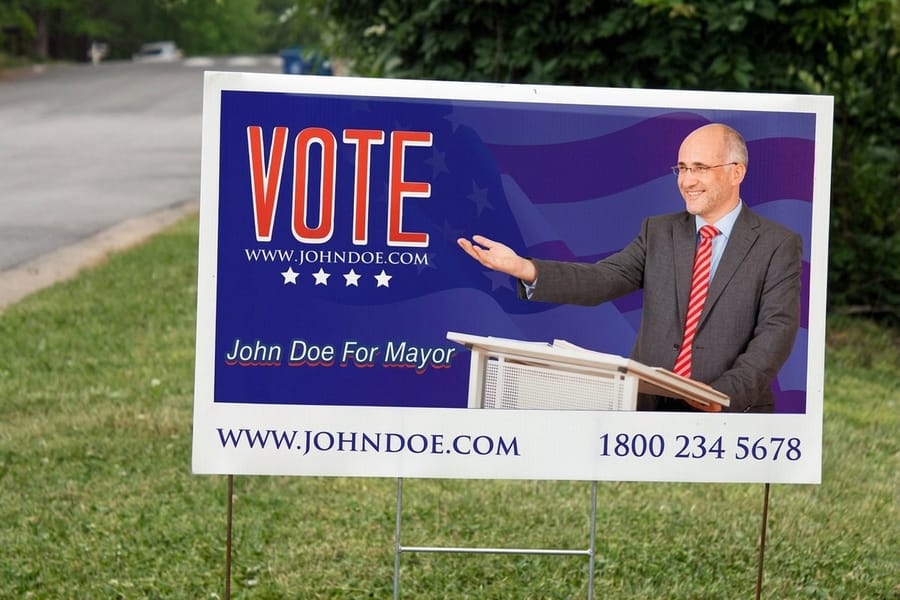
When people ask what are yard signs made of, the answer is almost always corrugated plastic, sold most often under the brand name Coroplast. This material owns the yard sign market for good reason.
Corrugated plastic is molded from polypropylene resin with a fluted internal structure. Think of it like cardboard, but plastic. Those hollow channels running through the middle make it very light while staying rigid enough to stand upright on a wire stake. It is waterproof, so rain rolls right off, and its UV resistance keeps colors from fading through several months of outdoor exposure.
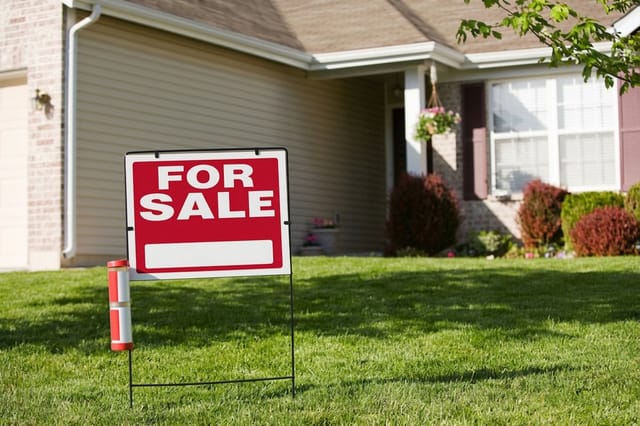
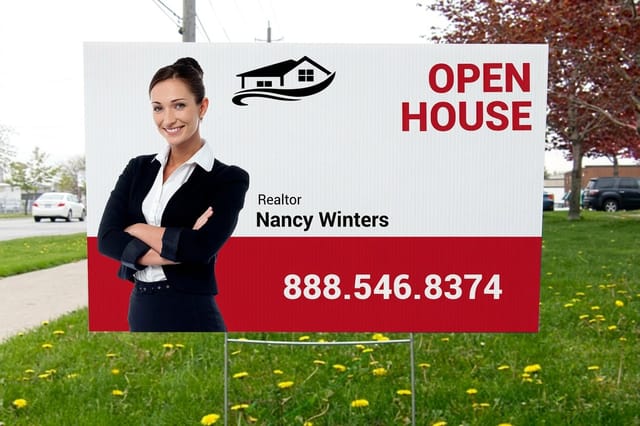
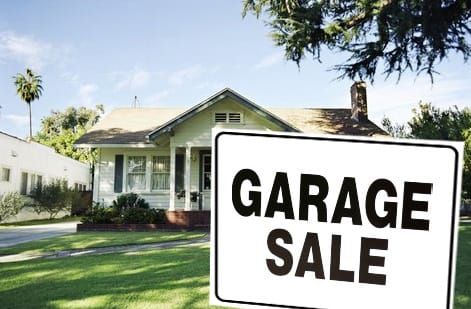
Standard corrugated plastic runs 4mm thick, about three sixteenths of an inch. That is thin enough to slide onto H-frame wire stakes yet thick enough to shrug off moderate wind, and 6mm or 10mm options add rigidity for rougher weather. What size are yard signs in corrugated plastic? The most popular dimensions are 18 by 24 inches and 24 by 36 inches, with 12 by 18 inches available for smaller garage-sale or notice signs. The 18 by 24 size is the standard for real estate, campaigns, and small business promotions. For agent-branded boards, our real estate yard signs come sized and staked for the curb, and the guide hub covers sizing across other sign types.
Aluminum Signs, Built for Long-Term Placement
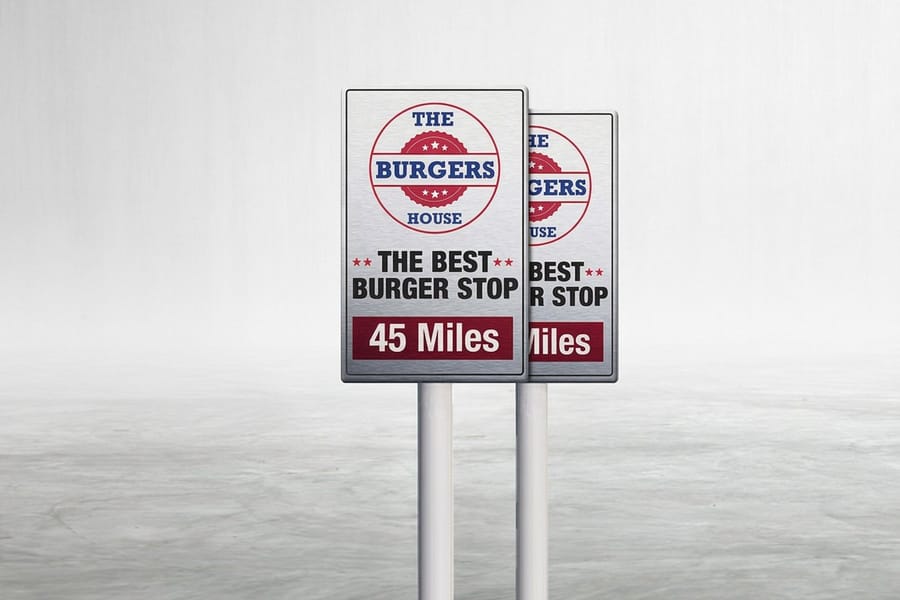
When a yard sign needs to last for years instead of weeks, aluminum is the material to reach for. 4OVER4.COM prints custom aluminum signs that handle permanent and semi-permanent outdoor installs with ease.
Aluminum yard signs use .040 inch or .063 inch sheeting, printed with UV-cured inks or dye sublimation that bonds the image straight to the metal. The result does not peel, chip, or fade for years. Real estate agents who want a professional, reusable sign choose aluminum, HOA communities use it for entrance markers, and small businesses install it as semi-permanent directional signage.
The tradeoff is cost. Aluminum runs more than corrugated plastic yard signs, but you are paying for longevity, and a single aluminum sign can outlast dozens of plastic ones. It is heavier too, so it mounts on post brackets or screws rather than wire H-stakes, and that extra weight actually helps it stay put in wind.
PVC Foam Board, a Smooth Indoor-Outdoor Surface
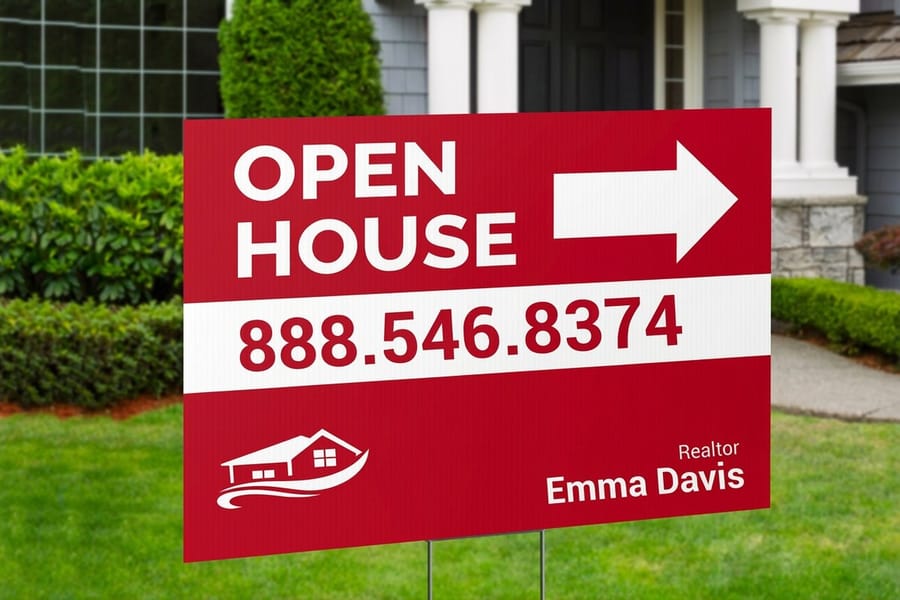
PVC foam board, also called Sintra or expanded PVC, is a solid, non-fluted plastic sheet. Unlike corrugated plastic with its hollow channels, PVC foam board is dense all the way through, which gives it a smooth, flat printing surface that produces sharper images and cleaner text.
Standard thickness ranges from 3mm to 6mm. The material is light, rigid, and moisture resistant, and it prints beautifully with both digital and screen methods. That makes it a favorite for high-end real estate signage, event displays, and any job where print quality matters more than extreme durability, since the smooth face shows no fluting lines through your graphics.
PVC foam board handles short to medium outdoor campaigns well, from a few weeks to a couple of months. For longer exposure, corrugated plastic or aluminum is the safer pick, because PVC can turn brittle in deep cold and warp slightly under intense, prolonged heat. Pairing signs with other printed pieces? Our brochure folding guide and free blank print templates keep your whole campaign consistent.
Polyethylene and HDPE, the Heavy-Duty Options
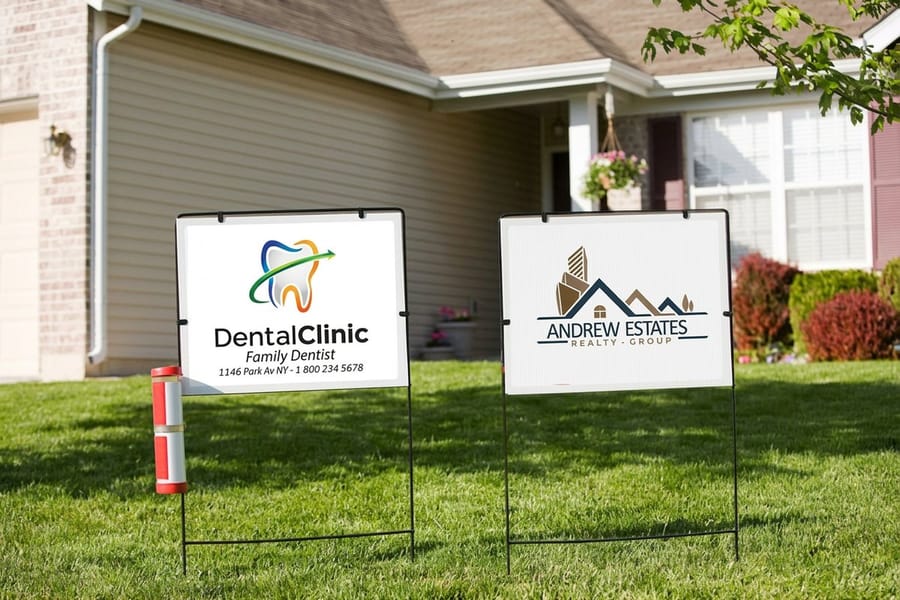
High-density polyethylene, or HDPE, signs are the tanks of the yard sign world. This material shows up in industrial signage, construction site markers, and anywhere that demands extreme durability.
HDPE is virtually indestructible outdoors. It does not crack, split, or delaminate, and it is flexible enough to absorb impacts without breaking while staying rigid enough to hold its shape on a stake or post.
The downside is cost and print range. HDPE typically costs more than corrugated plastic and accepts fewer printing methods, so colors may not pop as brightly. For most yard sign jobs, campaigns, events, and real estate, corrugated plastic does the same work at a fraction of the price.
How Material Choice Affects Cost
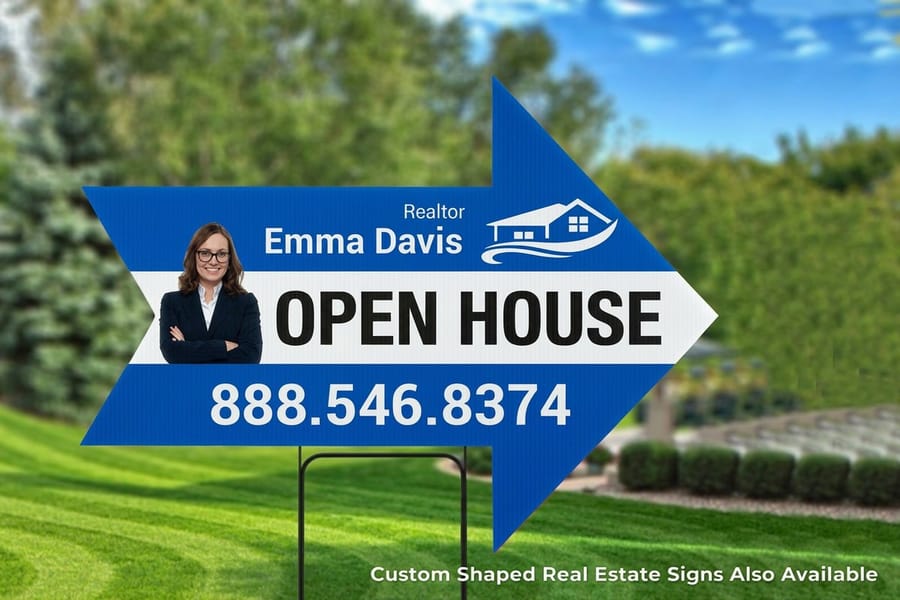
How much do yard signs cost? Material, size, quantity and print method set it. The comparison below puts them side by side.
Corrugated plastic is the most affordable option and the default for bulk orders like political campaigns that need hundreds of signs. A single-sided print on a standard 18 by 24 inch corrugated board is the lowest-cost yard sign you can order. PVC foam board costs a bit more, since the material is pricier and its smooth surface asks for more precise printing, but for smaller runs where appearance matters, the upgrade is worth it. Aluminum carries the highest per-unit price. How much are yard signs in aluminum? Expect several times the cost of corrugated plastic, though reusability flips the math over a five-year life.
No matter which material you choose, ordering in larger quantities drops the per-sign price a lot. That holds true across every yard sign material, so if you are running a campaign or managing multiple listings, bulk ordering is the smart move.
What Makes a Yard Sign Weatherproof and Durable?
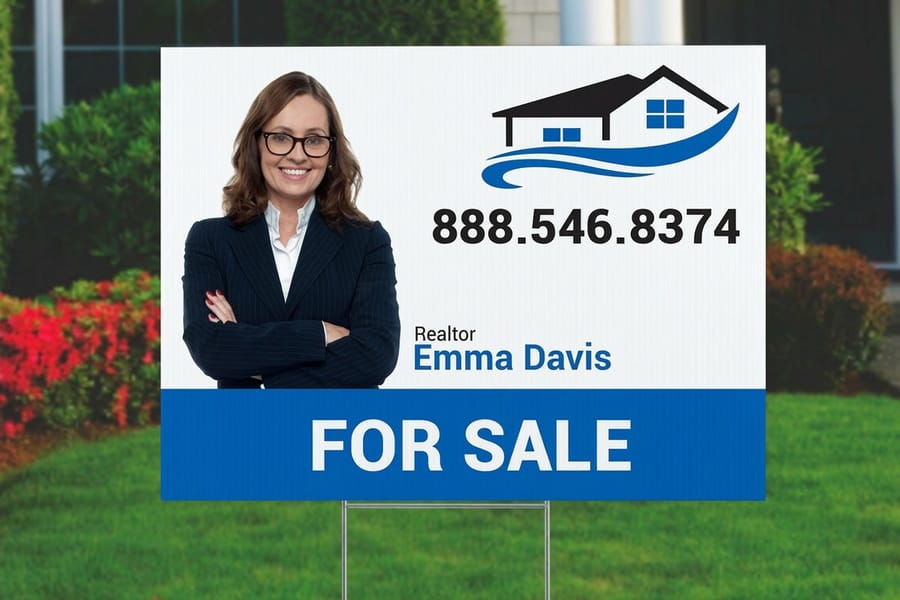
A yard sign is weatherproof when four things line up: a substrate that does not drink water, ink that does not fade in sun, a surface that takes scuffs instead of the print, and a stake that holds the panel out of the mud. Miss one and the sign fails at that point first, usually the bottom edge or the reds in your logo.
1. The substrate. Corrugated plastic and PVC foam board are plastic all the way through, so rain runs off instead of swelling the board the way it would swell a paper stock. Aluminum absorbs nothing at all, which is why it is the material for a permanent install. Thickness decides the rest: 4mm corrugated plastic is fine on a sheltered lawn, while a wind corridor or an exposed street corner wants 6mm or aluminum, since a thin board flexes back and forth in gusts until it snaps at the stake line.
2. The ink. UV-cured inks are the difference between a sign that still reads true in month three and one that has gone pink and chalky. The ink cures instantly under ultraviolet light and sits as a hardened film on the surface, so sun and rain work on the cure rather than on wet pigment. On aluminum, dye sublimation goes one better and puts the image into the metal surface, where it cannot scratch or peel. 4OVER4.COM prints every outdoor sign product with UV-resistant inks, so this part is handled for you.
3. The laminate. A laminate is a clear layer over the print that takes the abrasion instead of the ink: wind-blown grit, mower debris, and the scuffs signs pick up from being pulled, stacked, and re-staked. Short outdoor runs on corrugated plastic usually skip it, because UV-cured ink already handles the weather on its own. It earns its keep on signs that get moved and reused week after week, and on PVC foam board, which is the first material to give up under harsh sun. Dye-sublimated aluminum never needs it, since there is no ink layer sitting on top to protect.
4. The mounting. On corrugated plastic the internal flutes run one direction only, and they have to run vertically so wire stakes slide up into the channels from the bottom edge. Flutes running the wrong way means no stake channel at all, and a sign taped or zip-tied to a post tears out at the first storm. Keep a few inches of air under the bottom edge too, so water drains away instead of wicking up into the panel.
How long each material lasts outside. PVC foam board looks the sharpest on day one but warps and fades after a few weeks of harsh sun, so treat it as an indoor sign or a short outdoor stint. Corrugated plastic is what you use for anything that has to stand past a month, which covers a full campaign season or a listing cycle from sign-up to sold. Aluminum comes down, gets stored, and goes back up season after season, and that reusability is what flips the cost math over a five-year life even though it carries the highest per-unit price.
Printing Methods Used on Yard Sign Materials
The material decides which printing method works best, and each one has a clear job.
Digital UV printing is the most common method for corrugated plastic and PVC foam board. UV-cured inks dry instantly under ultraviolet light, creating a durable, weather-resistant image that handles full color, photos, and gradients. Screen printing suits large runs of simple one-to-three-color designs, so it is fast and cost-effective for high-volume political signs with bold text. Dye sublimation is used mainly on aluminum, where the ink becomes part of the metal surface and will not scratch or peel, giving the most durable print of any yard sign method.
For inspiration on other printed pieces, explore our guides on custom magnets, envelopes, and flyers, or browse the 4OVER4.COM Showcase to see finished yard signs from real customers.
Choosing the Right Material for Your Project
Match the material to how long the sign needs to last and where it will be displayed. These four rules cover almost every situation.
- Short-term outdoor use, one to three months: corrugated plastic. Affordable, light, and easy to stake into any lawn.
- Upscale listings or events: PVC foam board. A smoother print surface for a cleaner, higher-end look.
- Permanent or reusable signage: aluminum. Lasts years, looks professional, and handles all weather.
- Industrial or construction sites: HDPE. Impact resistant and nearly indestructible.
Most first-time buyers should start with corrugated plastic, since it covers about 90 percent of use cases at the best price, and upgrade to aluminum or PVC only when the job calls for it. Ready to build the sign itself? Walk through our guide to making yard signs, and if you sell homes, the real estate yard sign rules and design tips cover permits, placement, and layout.
Mistakes That Ruin Your Yard Signs Before They Go Up
Knowing what are yard signs made of is only half the battle. Picking the wrong material, or using the right one incorrectly, leads to wasted money and embarrassing results. Avoid these five common mistakes.
Using foam board for long outdoor campaigns. PVC looks great at first but warps and fades after a few weeks of harsh sun, so anything that needs to last more than a month should be corrugated plastic or aluminum. Ignoring flute direction on corrugated plastic. The internal channels run one way, and your sign needs them vertical so wire stakes slide in from the bottom. Choosing thin material for windy spots. A 4mm board in a wind corridor flexes and eventually snaps, so step up to 6mm or aluminum for exposed locations.
Skipping UV-resistant inks. Standard inks fade fast outdoors, so always confirm your printer uses UV-cured inks. 4OVER4.COM uses UV-resistant printing across every outdoor sign product. Ordering the wrong size for visibility. A 12 by 18 inch sign disappears from a busy road, so match the size to viewing distance and keep 18 by 24 inches as your roadside minimum.
Two mounting errors take more signs down than the weather does, and both happen in the first five minutes on site. The wrong stake. A light wire H-stake is fine under a 4mm corrugated board on a soft lawn. Put that same wire under a 6mm board, a double-sided sign, or hard-packed ground and the legs bend on the way in, the sign leans, and the next gust rips the flutes off the wire. Move up to a heavier gauge stake or a U-channel post for thicker or heavier panels, seat it with a mallet on the stake itself, and never push down on the printed face to drive it in. No ground clearance. A panel set flat on the dirt wicks water up the bottom edge, collects mud from every mower pass, and vanishes behind the first inch of grass. Leave a few inches of air under the bottom edge so the sign drains, stays clean, and stays readable from the road.
4OVER4 Yard Sign Products Worth Considering
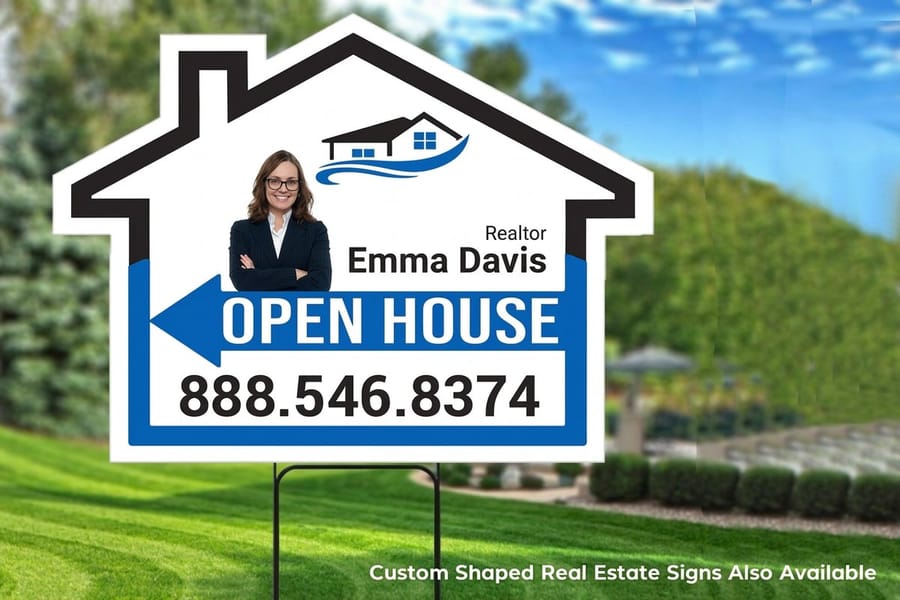
Now that you know what yard signs are made of, here are the 4OVER4.COM products that put these materials to work. Corrugated plastic suits a weekend event and aluminum suits a permanent install, and every option prints on weatherproof stock with UV-resistant inks.
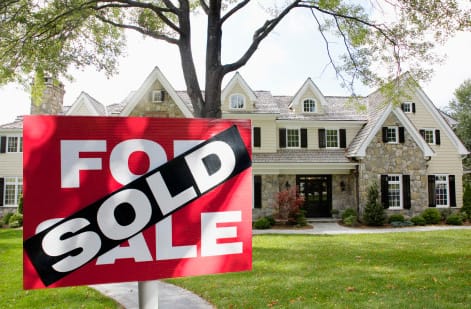
Start with custom yard signs if you want to pick size, material, and single or double-sided printing in one configurator, including the 18 by 24 inch roadside standard. Go straight to coroplast yard signs when you already know you want corrugated plastic, which is the 4mm and 6mm fluted board that takes wire stakes from the bottom edge and carries most campaign and real estate runs. Larger quantities drop the per-sign price on both, so order the full run at once rather than in batches.
Planning a celebration around your signage? Pair your yard signs with matching invitation cards for grand openings and community events, and see how signs, banners, and displays work together across the signs and banners collection. For deeper reading, our guides to the best colors for real estate yard signs, real estate bandit signs, and outdoor event banners round out your outdoor advertising toolkit.
Wally explains yard sign materials
Pick the material first, and the sign lasts
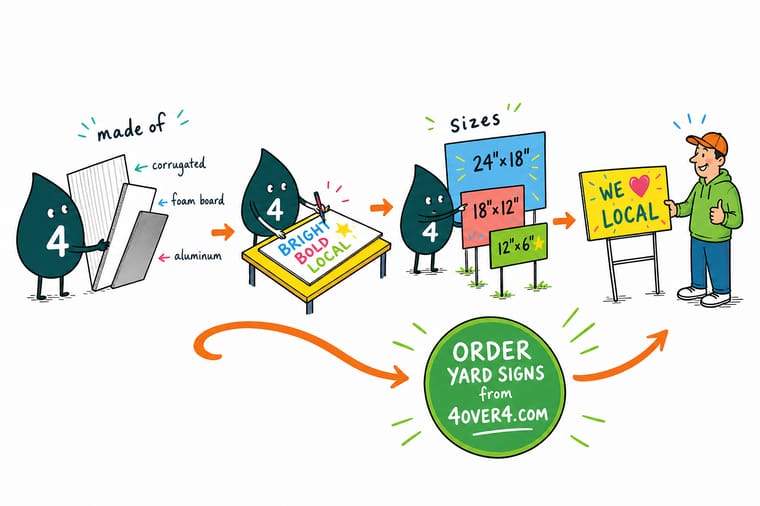
Wally sizes up the weather before the wallet: corrugated plastic for a quick campaign, PVC foam board when the print has to look crisp, and aluminum when the sign lives outside for years. Get the material right and the sign holds its color through rain, wind, and sun. Start with the size and material, and 4OVER4 prints it on weatherproof stock with UV-cured inks.
Order yard signs →Specs and pricing
Yard sign materials, specs, and starting prices
Compare the three materials side by side with live configuration options and starting prices straight from the 4OVER4.COM configurator, from budget corrugated plastic to long-lasting aluminum.


Print it
Order custom yard signs at 4OVER4
See it in use
Sign jobs we printed and shipped


Explore more
Where to go next

By the numbers
Which of these materials we stock
Common Questions
Your yard sign material questions, answered
What is the most common material for yard signs?
Corrugated plastic, often called Coroplast, is the most common yard sign material. It is light, waterproof, and affordable. The fluted polypropylene structure keeps signs rigid on wire stakes while resisting rain, UV exposure, and temperature swings. Most political, real estate, and event yard signs use it in 4mm thickness.
How long do corrugated plastic yard signs last outdoors?
Corrugated plastic yard signs with UV-cured inks typically last 6 to 12 months outdoors before noticeable fading sets in. The plastic itself survives much longer, but print quality degrades with extended sun exposure. For signs that need to last years, aluminum is the better choice.
What size are yard signs for real estate?
The standard real estate yard sign size is 18 by 24 inches. It is large enough to show agent info, phone numbers, and brokerage logos while fitting standard H-frame wire stakes. Larger 24 by 36 inch signs work for commercial listings or directional arrows at intersections.
How much do yard signs cost on average?
It depends on material, size, and quantity. Corrugated plastic signs are the most budget-friendly, especially in bulk. PVC foam board costs moderately more per unit. Aluminum carries the highest per-unit price but offers the best long-term value for permanent signage. Ordering larger quantities always reduces the per-sign cost.
Can yard signs handle heavy rain and snow?
Corrugated plastic and aluminum yard signs handle rain and snow without damage, since both are waterproof and will not absorb moisture. PVC foam board resists water too, but prolonged freezing can make it brittle. For harsh winter conditions, corrugated plastic or aluminum are your safest options.
What is the difference between single-sided and double-sided yard signs?
Single-sided yard signs print on one face only. Double-sided signs print on both faces, so they read from either direction. Double-sided costs more but doubles visibility, which matters most for signs placed along roads where traffic flows both ways. 4OVER4.COM offers both options across all yard sign materials.
What materials make a yard sign weatherproof?
Corrugated plastic, PVC foam board, and aluminum are all plastic or metal, so none of them absorb rain the way a paper board would, and all three become weatherproof once they are printed with UV-cured inks. Corrugated plastic is the standard outdoor choice and the default for bulk campaign runs, aluminum is the material for permanent installs because it absorbs nothing and takes a dye-sublimated image that will not scratch or peel, and PVC foam board is best kept to short outdoor stints or indoor use since it warps and fades after a few weeks of harsh sun. Thickness counts as much as material: 4mm corrugated plastic suits a sheltered lawn, while 6mm or aluminum is what holds up in an exposed, windy spot.
How long do yard signs last outside?
It depends on the material and how exposed the spot is. PVC foam board starts warping and fading after a few weeks of harsh sun, so plan around that rather than fighting it. Corrugated plastic is what you order for anything that has to stand more than a month, which covers a campaign season or a listing from sign-up to sold. Aluminum comes down, gets stored, and goes back up year after year, and that reuse is what makes its higher per-unit price pay off over a five-year life. Wind shortens all of these: a 4mm board in a wind corridor flexes and eventually snaps, so step up to 6mm or aluminum before you blame the weather.
Do yard signs need lamination?
Usually not. UV-cured inks dry instantly under ultraviolet light into a hard, weather-resistant film, so a corrugated plastic sign going out for one campaign or one listing does fine without any extra layer. Lamination is worth it when a sign gets handled a lot, pulled, stacked, and re-staked across several events, because the clear layer takes the grit and scuffs instead of the print, and it helps PVC foam board, which is the first material to break down in strong sun. Aluminum printed by dye sublimation never needs it, since the image is part of the metal surface rather than a layer sitting on top of it.
Get Started
Order yard signs on 4mm White Coroplast
Pick your material and size, drop in your design, and we print weatherproof yard signs that hold up through rain, wind, and sun.
Legal Disclaimer
Gold Standard guarantees apply to all standard orders placed through 4over4.com. Price match requires verifiable proof of a competitor's published price for an equivalent product with matching specifications and turnaround time. Satisfaction guarantee covers manufacturing defects and print quality issues. Contact support with order number and documentation. On-time delivery rate based on tracked orders 1999 to 2026. Individual results may vary based on shipping carrier performance.
