
What Blind Embossing Is and How Inkless Raised Printing Reads on Paper


The die pair, the stocks that crack, the artwork that survives, and the point where a raised mark with no ink is worth what it costs.
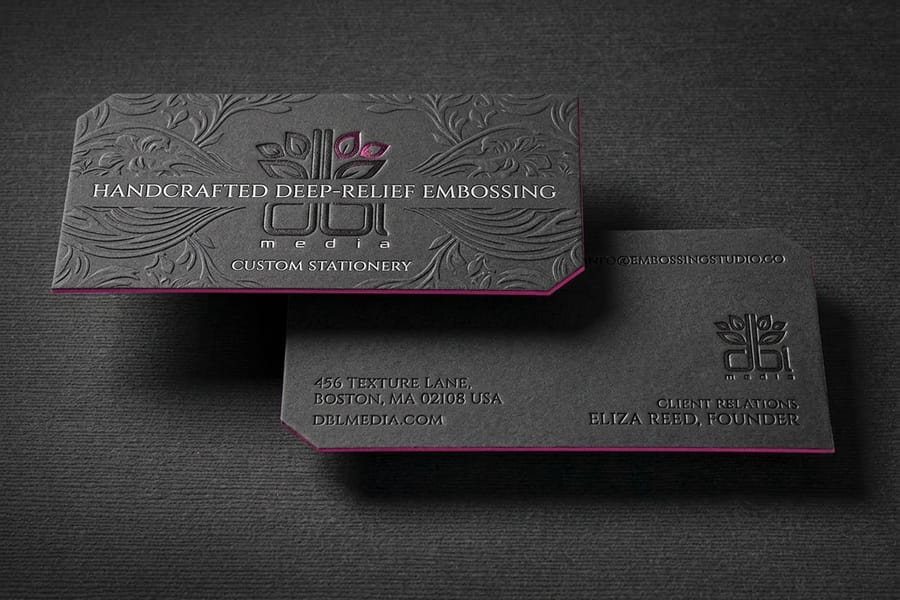
Blind embossing squeezes paper between a male and female die so the design rises off the sheet, with no ink, no foil and no color anywhere in the process. Blind refers to the missing ink. The mark reads by the shadow its shoulder casts, which is why it looks strong on uncoated stock under side light and nearly vanishes on gloss under flat overhead light. The back of the sheet carries a matching recess, and the cost sits in cutting the die rather than in the run.
Quick answer
A shape pressed into paper, with nothing printed on it
Blind embossing forms the sheet instead of printing it. A female die above and a male counter below trap the paper and push it into a raised shape, sometimes with heat to help deep work hold its edge. Because no ink or foil is involved, the hit does not have to register to anything, which makes it simpler to place than a foil stamp. What you give up is visibility: the mark exists only as relief, so lighting, stock surface and shape mass decide whether anyone notices it.
How a Blind Emboss Is Made
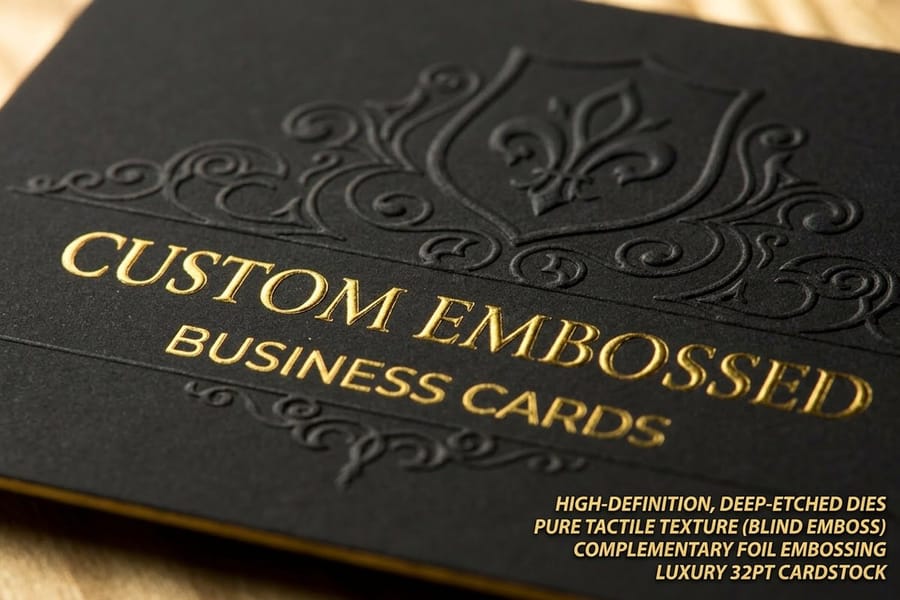
Two pieces of tooling do the work. A female die carries the shape cut into its face, a male counter carries the same shape in relief, and the press brings them together with the sheet in between. The paper stretches into the cavity and stays there.
Most dies for card work are etched in magnesium or copper for shallow single-level shapes, or cut in brass when the design has several depths and needs sculpting. Brass also survives long runs and holds heat, which matters because many embossing jobs run warm: heat relaxes the fiber and helps a deep shape hold its edge instead of springing back.
Nothing is inked at any point, which removes the one thing that usually goes wrong on a finishing pass. A foil stamp has to land on top of printed artwork, and a registered emboss has to line up with a printed shape underneath it. A blind hit answers to nothing, so it can sit anywhere on the sheet without a registration argument. That is the quiet reason so many letterheads carry a blind monogram rather than a foil one.
The trade-off arrives on the reverse. Fiber that rose on the front came from somewhere, so the back shows a matching recess you can feel with a thumbnail. On a business card nobody minds. On a two-sided piece where the back carries dense type across the same footprint, the recess pushes through the ink and looks like damage. Our guide to how embossed printing works covers the die types in more detail.
Blind Emboss, Deboss, Letterpress and Foil Compared
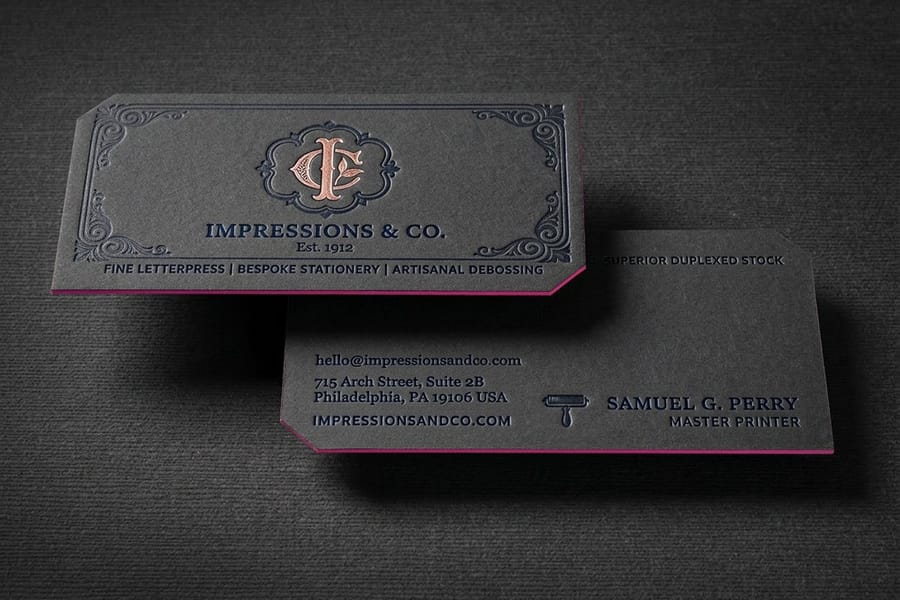
All four leave something you can feel, and quotes mix them up constantly. Sort them by two questions: does ink land on the sheet, and which way does the paper move.
| Finish | Ink or foil | What the paper does | Best used for |
|---|---|---|---|
| Blind emboss | None | Rises on the front, recesses on the back. | Monograms, logo marks and crests where texture is the message. |
| Blind deboss | None | Sinks into the front, bumps on the back. | Thin or brittle stock, and marks that should read as pressed rather than proud. |
| Letterpress | Ink, pressed in | Sinks, with color sitting in the impression. | Cotton stock and type-led work where the dent is meant to show. |
| Foil stamp | Metallic or pigment foil | Stays flat unless a counter is added. | Shine at any viewing distance, including under flat overhead light. |
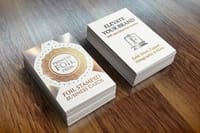
The column that decides most briefs is the second one. A blind emboss is invisible in a photograph taken with a ring light and invisible in a PDF proof, so it only works for a piece someone holds. If the mark has to carry across a table or survive a phone camera, foil stamped business cards do that job and a blind hit does not.
Combination work exists for the cases where both matter. Foil stamped and embossed in one operation gives you a raised metallic mark, which costs a die that holds foil and a registration step, and it is the finish people usually mean when they describe a card as looking expensive. The comparison in foil stamping versus raised foil is worth reading before you commit.
Stock, Artwork and the Limits of the Die
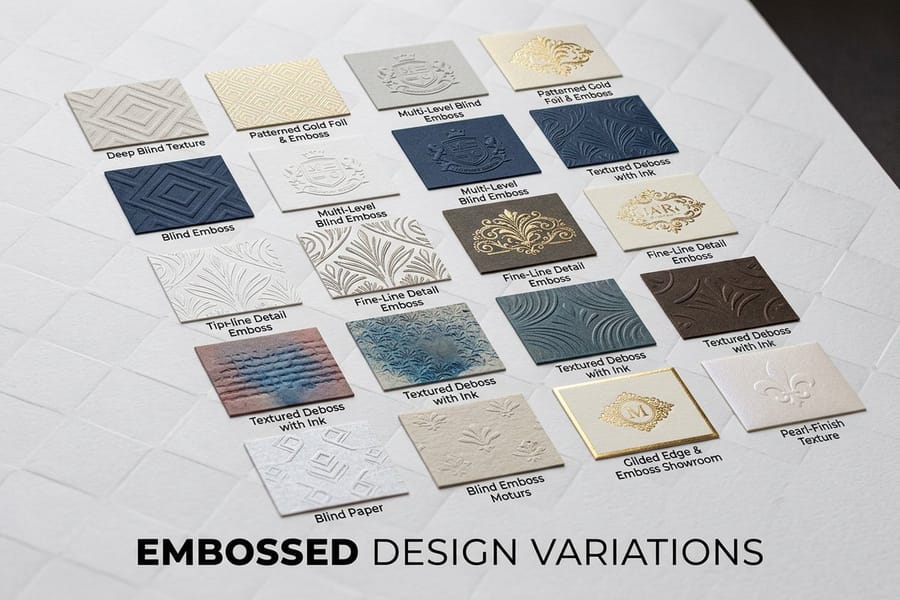
Two things ruin a blind emboss more often than anything else: paper that cannot stretch, and artwork with no mass.
Start with the sheet. Cover weights around 14pt and 16pt take a single-level shape cleanly and are the default for embossed cards. Uncoated and textured stocks are more forgiving than coated ones because loose fiber moves instead of splitting, and a heavy gloss coat is the surface most likely to craze along the shoulder. Lighter text weights near 100lb hold only a shallow hit. If you want real depth or a sculpted multi-level die, move up to 32pt duplexed board, which is also the stock that hides a recess when two plies are mounted back to back. The card stock and coating guide for embossed cards goes weight by weight.
Now the artwork. Give the die something to hold. Solid marks, monograms, thick rules and display type at roughly 10 point and up survive. Hairlines, fine serifs at small sizes, tight counters inside letterforms, gradients and photographic images do not: the shoulder either tears or the shape closes up into a blur. Keep about a quarter inch between a raised element and the trim edge, because pressure near the edge distorts the cut and can curl the card.
Spacing matters more than designers expect. Two heavy shapes sitting close together share one shoulder, and the paper between them stretches from both sides at once, which is where cracks start. Leave a little air. Build the file at full size with fonts converted to outlines, supply the emboss shape as solid vector art on its own layer, and start from a correctly sized layout in the blank template library.
Where Blind Embossing Earns Its Cost
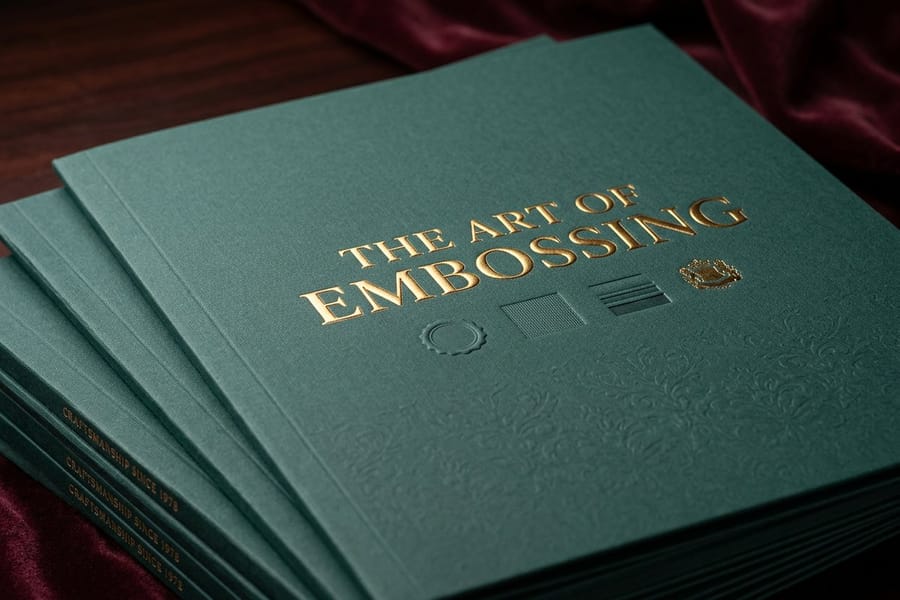
A blind emboss pays off wherever someone picks the piece up, turns it, and keeps it for a moment. It fails wherever the piece is scanned at a distance or thrown away in a week.
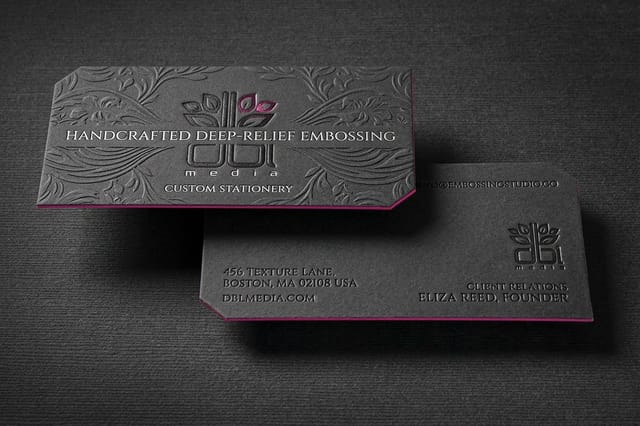
Business cards are the clearest case. Embossed business cards start at $251.36 against $17.57 for standard business cards, and the gap only makes sense because a card gets handled: taken, read, turned over, put in a wallet. Spend it on the fifty cards you hand to people who matter and print the everyday box flat.
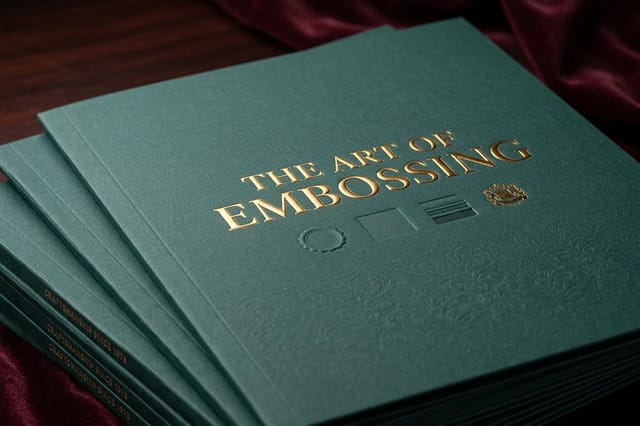
Folders come second and are often the better buy. Embossed presentation folders start at $1,037.97, and the front cover of a folder is the largest uninterrupted surface in most brand kits, which lets a die run big enough to read from a few feet. A blind crest on a folder cover carries a proposal in a way a printed logo does not.
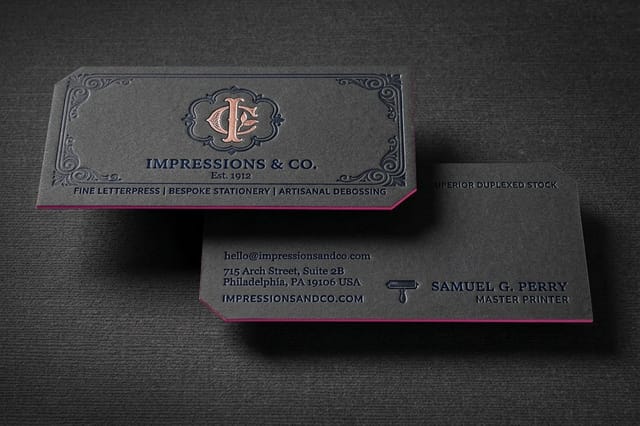
Stationery is the third home, because a blind monogram on a letterhead sits under laser-printed text without any of the heat problems a raised resin finish brings. If your brief actually wants the dent to show and the type to carry color, letterpress business cards at $251.36 give you the pressed look with ink in the impression. Where a blind emboss does not belong: bulk direct mail, anything read across a room, and any piece a client will judge from a photo. Browse the finishes side by side on business card printing, and if you are weighing every option at once the print finishing techniques guide lays them out together.
Wally explains blind embossing
No ink, no foil, just a shape pushed into the sheet
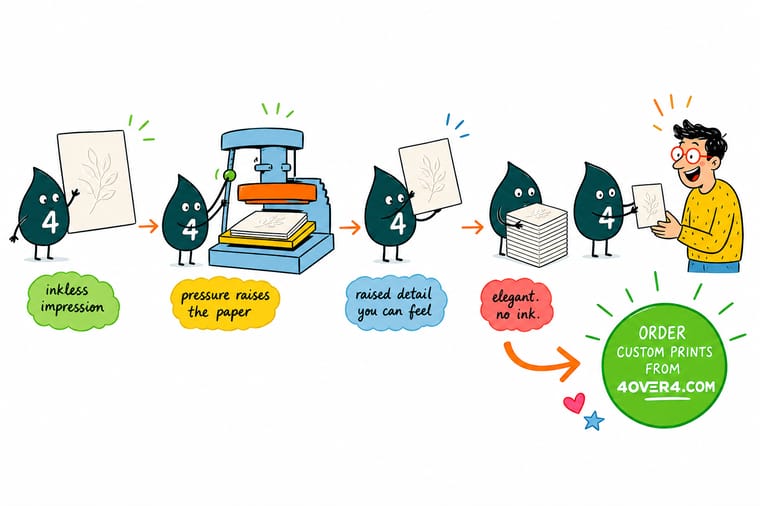
Wally puts the card between two dies, one with the shape cut in, one with the shape standing out, and closes the press. The paper stretches and holds. Nothing gets printed, which is what blind means. Turn the card over and you can feel the dent where the fiber came from. Give him a solid mark on 16pt uncoated and it looks superb under side light. Give him a hairline serif on gloss and it disappears.
Order embossed business cards →Specs and pricing
Die-based finishes, sizes, and starting prices
Embossing, letterpress and foil stamping all start with tooling. Compare the three side by side, with live configuration choices and starting prices from the 4OVER4.COM configurator.
Print it
Order a mark people can feel
Explore more
Where to go next


By the numbers
The finishing line that presses your emboss
Common Questions
Your blind embossing questions, answered
What is blind embossing?
Blind embossing raises a design into paper with a matched die pair and no ink, no foil and no color of any kind. A female die with the shape cut into it sits above the sheet, a male counter with the same shape in relief sits below, and the press squeezes the paper between them until the fiber takes the form and holds it. The word blind refers to the absence of ink rather than to any quality of the effect. What you see is relief, and what makes it visible is the shadow the raised edge casts.
How is blind embossing different from debossing?
They use the same tooling and differ in which way the shape points. Blind embossing pushes the design up out of the front of the sheet and leaves a recess on the back. Debossing presses it down into the front and leaves a bump on the back. Debossing is the safer choice on thin or brittle stock because compressing fiber inward strains it less than stretching it outward, and it also stacks better in a box. If you want the deeper comparison, the guide on embossing versus debossing walks through both.
Can you emboss both sides of a card?
Not in the same place, because one hit shapes both surfaces at once. You can emboss the front and put a separate emboss on the back in a different area, provided the two footprints do not overlap. Designers who want relief on both faces usually mount two sheets back to back on a thick duplexed stock, which hides each recess inside the sandwich. On a standard single-ply card, plan one hit and put the rest of the design in flat ink.
Which stocks hold a blind emboss and which ones crack?
Cover weights around 14pt and 16pt hold a clean single-level shoulder and are what most embossed business cards run on. Uncoated and textured stocks take the shape best because loose fiber stretches instead of splitting. Coated and heavily calendered sheets crack along the shoulder more readily, and lighter text weights around 100lb split at anything deeper than a shallow hit. Thick 32pt duplexed board is the stock that carries multi-level sculpted dies.
Does blind embossing cost more than foil stamping?
They sit close, and the tooling drives both. At 4OVER4.COM embossed business cards start at $251.36 and foil stamped business cards start at $222.13, so the finish choice is closer to a design decision than a budget one. The real difference is what happens if you want both: a combination emboss, where foil is stamped and raised in one operation, needs a die cut to hold the foil as well as the shape, and it has to register to the printed artwork underneath.
Can you emboss a photograph or a gradient?
No. A die has physical edges, so it can only produce shapes it can hold. Solid marks, monograms, heavy rules, logo silhouettes and display type all emboss well. Photographs, gradients, halftone screens and hairline strokes have nothing for the die to grip and come back as mush or as a torn shoulder. If the logo mixes a heavy mark with fine legal type, emboss the mark and print the small text flat.
Do I need a new die every time I reorder?
Only if the artwork or the size changes. A die is cut for one shape at one scale, and the same die runs again on a repeat order of the same card. Change the logo, move the mark, or resize the card and the tooling has to be recut. That is worth knowing before a rebrand, because it is the part of the job that carries the setup cost rather than the paper.
Get Started
Embossed business cards run 250 for $251.36, or $1.01 each
Pick your stock, send the emboss shape as solid vector art, and we press a clean shoulder that reads under side light and holds on the reorder.
Legal Disclaimer
Gold Standard guarantees apply to all standard orders placed through 4over4.com. Price match requires verifiable proof of a competitor's published price for an equivalent product with matching specifications and turnaround time. Satisfaction guarantee covers manufacturing defects and print quality issues. Contact support with order number and documentation. On-time delivery rate based on tracked orders 1999 to 2026. Individual results may vary based on shipping carrier performance.
