
What Is a Brochure? Types, Folds & When to Use One


A brochure is a folded, printed sheet that packs a lot of information into a compact format people hold, flip through, and keep. Here is what a brochure is, the fold styles, the standard sizes, and how to design one that gets read, plus how the fold you choose changes the order your reader sees your message in.
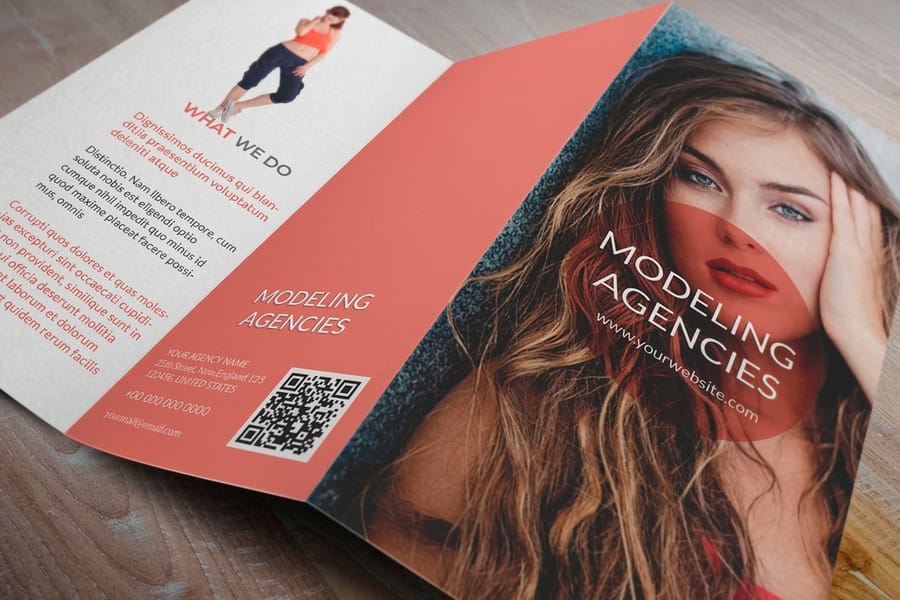
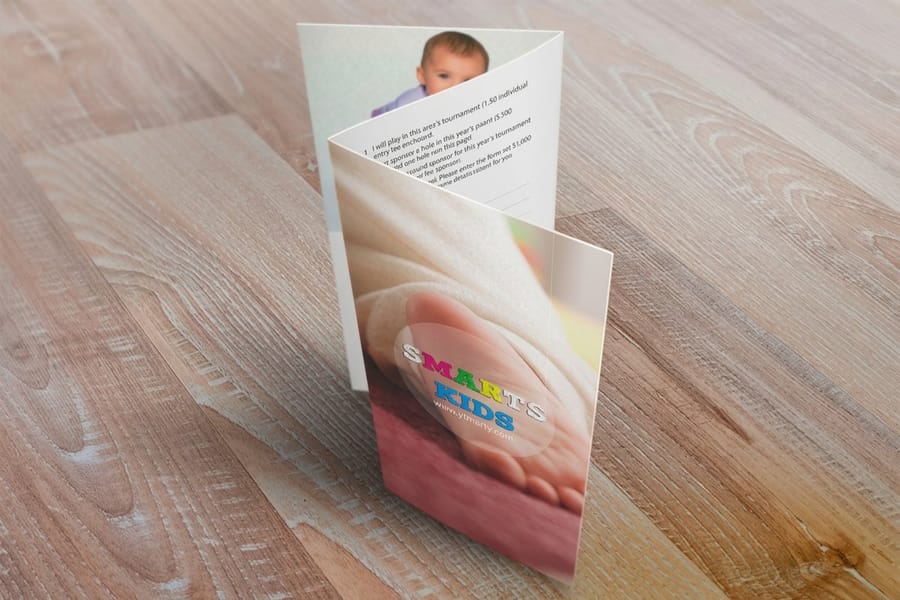
A brochure is a single sheet of paper, printed on both sides and folded into panels that organize your message into sections. The fold is what makes it a brochure rather than a flyer or a pamphlet: a flyer is one flat unfolded sheet, and a pamphlet is the older word for the same folded thing. Most brochures start as an 8.5 by 11 inch sheet folded into a tri-fold, and the fold style you pick, bi-fold, tri-fold, z-fold, or gate fold, decides how your reader moves through the content. A bi-fold takes one fold down the middle and gives you four panels, which suits a menu or a short pitch. A tri-fold takes two parallel folds and gives you six panels: a cover, a back panel that can carry your address, and an inside spread that opens all at once. A z-fold uses the same six panels but folds like an accordion, so each panel is revealed in order, which is why it works for step by step instructions and timelines. A gate fold opens two side panels outward to reveal a wide centre panel, so save it for a single big image or offer. Text weight paper folds and stacks cheaply for mailers and handouts, while a heavier cover stock feels more substantial in the hand and should be scored before folding so the ink on the fold line does not crack.
Quick answer
Brochure basics you should know
A brochure is a folded printed document used to share information about a business, product, service, or event. Think of it as a small printed sales conversation: the cover panel earns the pick up, the inside panels answer the questions a buyer actually asks, and the back panel carries your contact details or the mailing address if it goes in the post. It packs a lot of content into a compact, hand-friendly format, and it comes in fold styles like bi-fold, tri-fold, z-fold, and gate fold. 4OVER4.COM has helped 150,000 plus businesses create brochures that actually get read, backed by 10,000 plus reviews from satisfied customers.
Watch it printed
See standard brochures on the press, in 153 seconds
So, what is a brochure, exactly?
If you have ever picked up a folded sheet at a hotel lobby, a doctor's office, or a trade show booth, you already know what a brochure is. It is a single sheet of paper, printed on both sides, then folded into panels that break your message into sections a reader can move through in order. Think of it as a small magazine for your brand.
Brochures work because they are tangible. People hold them, flip through them, and keep them on a counter or in a glove box, which is something a social feed cannot do. Whether you are promoting a new menu, listing real estate, or explaining a service, a well built brochure carries the message for you long after the conversation ends.
This guide walks through the fold styles, who uses brochures and why, the sizes to choose from, and the design habits that keep yours out of the recycling bin. Every brochure order from 4OVER4.COM is backed by our 5 Gold Guarantees, and you can build your layout in the browser with the online designer before it ever hits the press.
How a brochure differs from a flyer or a pamphlet
People mix these three up constantly. A flyer is a single, unfolded sheet, which is great for a quick announcement. A pamphlet is usually a small booklet with several pages stapled together. A brochure sits right in the middle. It is one sheet, printed on both sides, and folded into panels. That fold is the whole difference.
The fold also creates a reading flow. You decide what the reader sees first on the cover panel, what they find as they open the inside panels, and what they keep on the back panel with your contact details. If you are learning how to make flyers, you will spot shared design ideas, but a brochure gives you far more room to tell the full story.
Common brochure fold styles

Your fold style sets how many panels you get and how the reader experiences the content. These are the ones most people reach for.
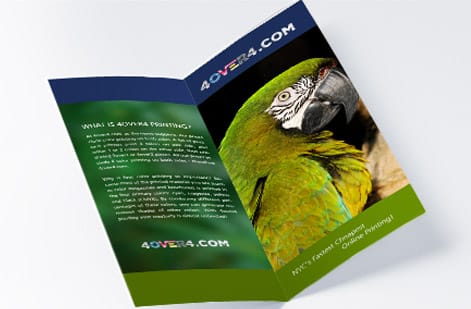
- Bi-fold, or half fold: one fold down the center makes 4 panels. Clean and simple, ideal for short presentations and event programs.
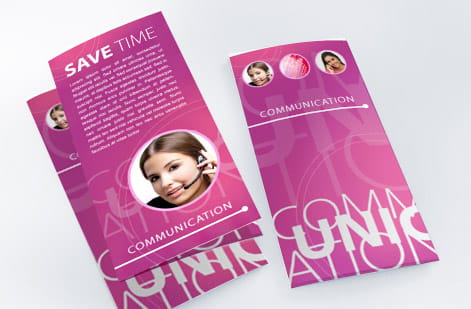
- Tri-fold, or letter fold: two parallel folds make 6 panels. The most common style, and a natural fit for menus, service lists, and product overviews.
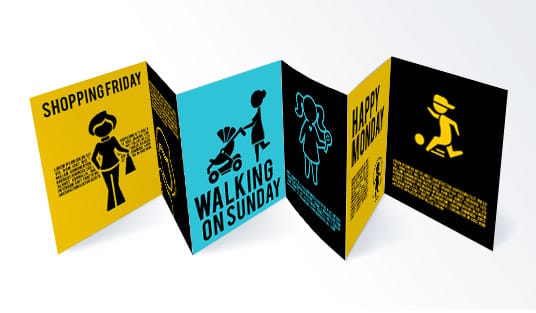
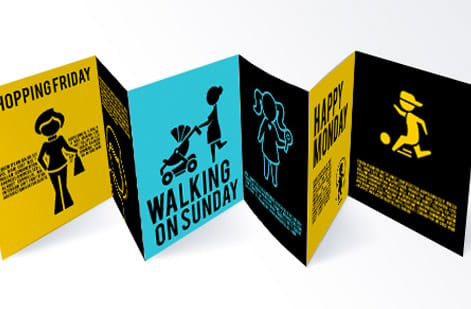
- Z-fold, or accordion fold: the paper zigzags into 6 panels that open like an accordion, which suits step-by-step guides and timelines.
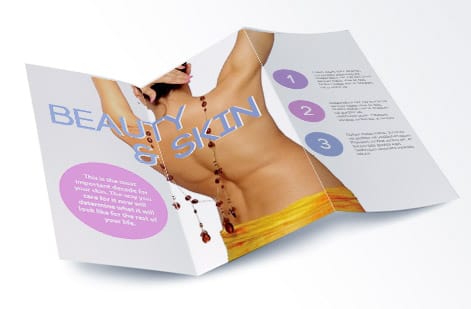
- Gate fold: two panels fold inward to meet in the center for a dramatic reveal, a favorite for luxury brands and high-end presentations.
- Roll fold: panels fold inward one after another, each slightly narrower than the last, which works well for detailed product catalogs.
Each fold changes how a reader interacts with the page. A tri-fold drops neatly into a brochure rack, while a gate fold creates a moment at a trade show. When you are ready to lay one out, our guide on how to fold a brochure breaks down the setup for every option.
What goes on each panel of a tri-fold
Fold styles get easier to plan once you know which panel a reader meets first. A tri-fold sheet carries 6 panels, 3 on each side, and they are not read in the order they sit on the flat sheet.
- Front cover. The panel facing up in the rack. One headline, one image, your logo, nothing else.
- Inside flap. The panel a reader sees as the cover opens, so it works best as a short introduction rather than detail.
- Inside spread. The three panels that open all at once, where the services, the menu or the steps live, one topic per panel.
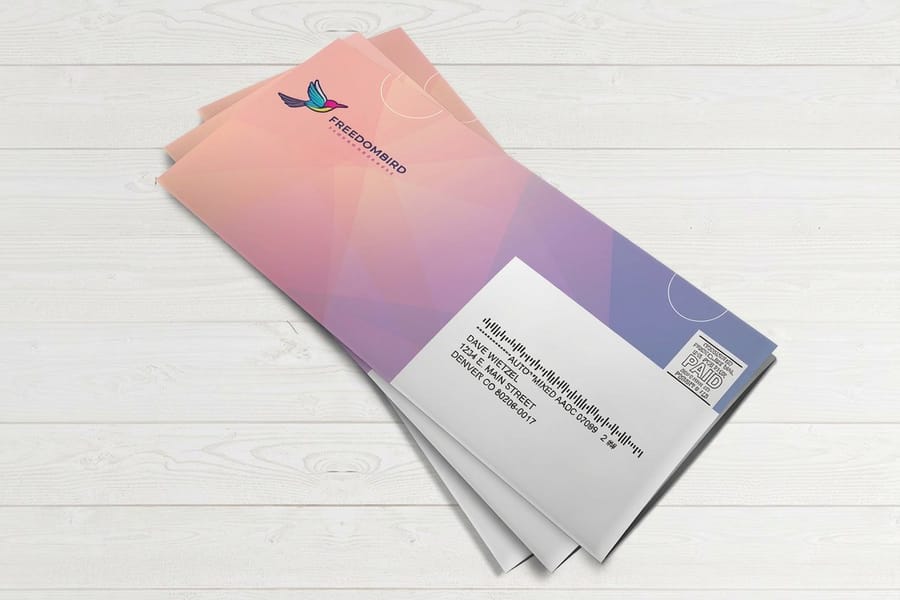
- Back panel. Contact details and the next step, or the address block when the brochure goes in the post as a self mailer.
Plan the content panel by panel before you open a design file and the fold stops fighting you.
Who uses brochures and why they still work
Brochures are not relics. They are working tools across dozens of industries every day. Here is how real professionals put them to use.
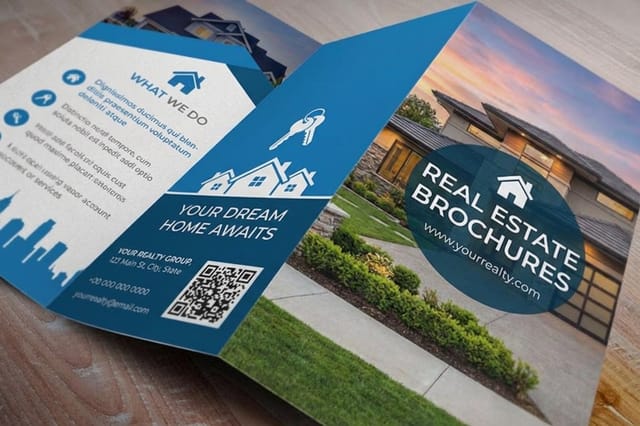
Real estate agents hand out bi-fold property sheets at open houses, with a room photo, square footage, and pricing on each panel, so buyers can review it at the kitchen table that night. Restaurants and cafes print tri-fold takeout menus that end up on the fridge, quietly selling around the clock.
Healthcare practices use brochures to explain procedures, insurance options, and new patient details, which cuts front-desk questions and helps patients feel informed before they arrive. Event planners reach for gate-fold brochures at conferences, and pair them with seasonal pieces like Christmas door hangers for campaigns that run beyond the venue. Nonprofits lean on brochures for donor outreach, where a printed piece with strong photos and a clear ask outperforms a cold email almost every time. When the goal is the mailbox, direct mail brochures arrive with the address panel already built in.
Brochures for school projects and class assignments
A large share of the people asking what a brochure is are students with an assignment, and the brief is usually the same. Take one sheet, fold it into panels, and use those panels to explain a country, a book, a body system or a historical event.
The safe format is an 8.5 by 11 inch sheet in a tri-fold, which gives you 6 panels. Put the title and one strong image on the cover panel. Give each inside panel a single topic so nothing runs across a fold. Save the back panel for sources, a map or a summary.
Two habits earn marks. Set the fold lines up in your layout so text never lands on one, and keep images sharp, because a photo pulled from a phone screen at 72 DPI prints blurry and print wants 300 DPI. Run it off at home for a class, or order standard brochures when the piece has to survive a fair table.
How to design a brochure that gets read
A brochure that lands in the trash is a brochure that failed. A few habits keep yours in someone's hands.
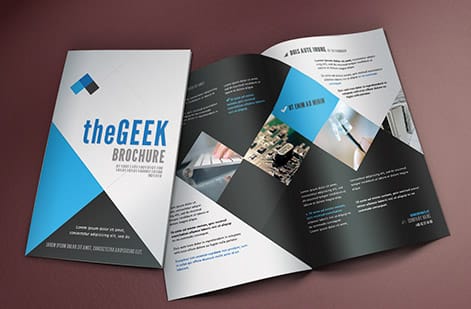
Start with the cover panel. This is your hook, so use a bold headline, one striking image, and your logo, and resist the urge to cram it. The cover has one job, to make someone open the brochure. Organize content by panel, with each panel covering a single topic so information never bleeds across a fold and confuses the eye.
Use a clear hierarchy of headlines, subheadings, bullets, and short paragraphs, because nobody reads a wall of text on a brochure. Choose images that earn their space, since a food photo should make mouths water and a property shot should be bright and well lit. End with a clear call to action on the back panel, with your phone number, website, and a specific next step, because "call for a free estimate" beats "contact us" every time. If you want a running start, grab a layout from our free brochure templates or browse the full guide hub for more.
Paper stock and finish options for brochures
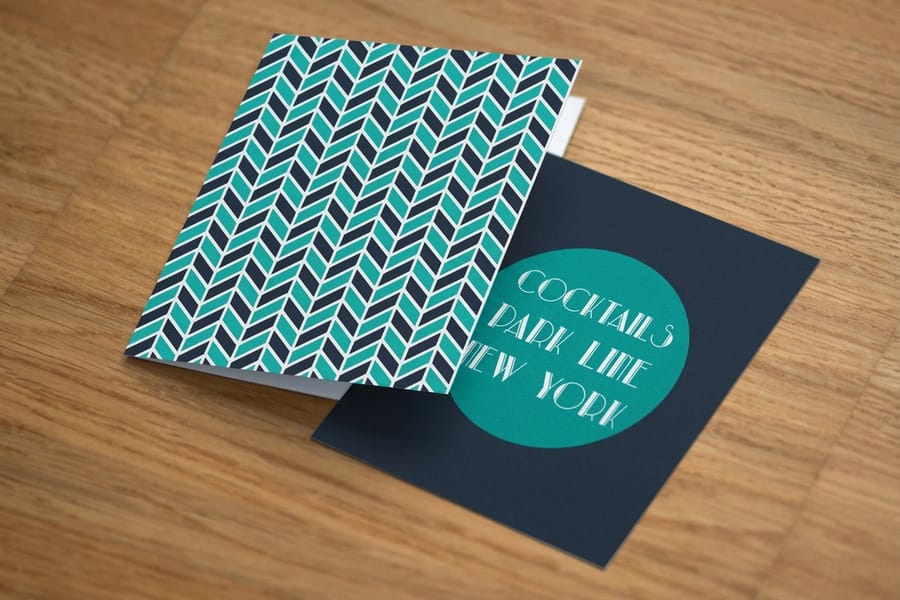
The paper you pick changes how a brochure feels in the hand, and that feel matters more than most people expect. A flimsy sheet signals a flimsy business, while a thick, coated stock says you take your brand seriously.
Glossy coated stock makes colors pop and photos look sharp, which is why restaurants, travel companies, and image-led brands reach for it. Matte coated stock has a smooth, non-reflective surface that reads easily under bright lights and feels refined, so law firms, financial advisors, and luxury brands tend to prefer it. Uncoated stock has a natural, writable texture that suits educational pieces, nonprofits, and eco-conscious brands.
4OVER4.COM offers 60 plus paper types across the product line, including recycled options through our green printing program, so you are never stuck with one or two choices. Want to feel the difference first? Order free paper samples and compare stocks side by side.
Brochure sizes and dimensions
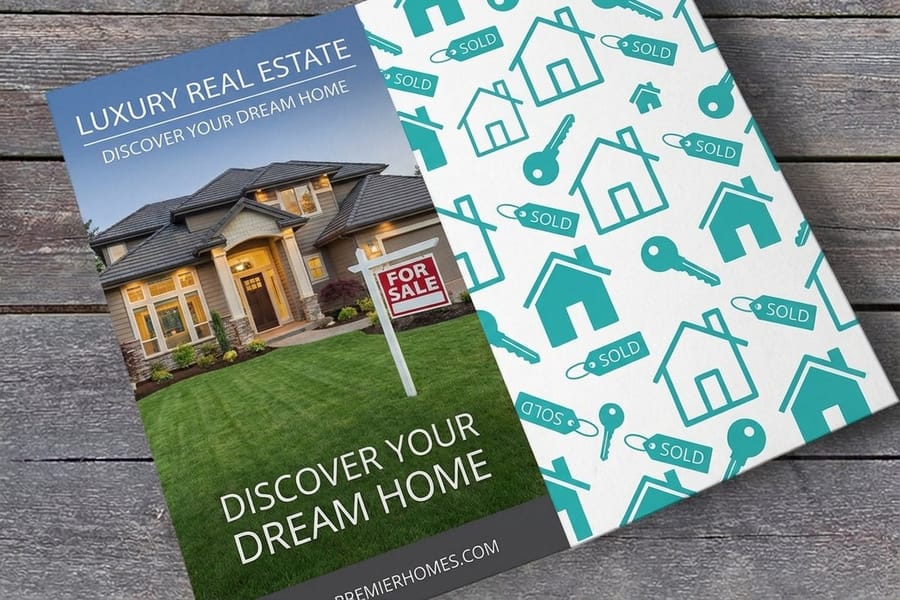
The standard brochure starts as an 8.5 by 11 inch letter sheet before folding, but that is far from your only option. These are the common sizes.
- 8.5 by 11 inches: the most popular, folding into a standard tri-fold that fits a number 10 envelope and a brochure rack.
- 8.5 by 14 inches, legal size: more panel space for detailed content, which suits menus and product catalogs.
- 11 by 17 inches: a larger format that folds into a bi-fold with generous panels, great for maps, event guides, and portfolios.
- 5.5 by 8.5 inches: a compact half-letter size, perfect for quick-reference guides and handouts.
Your size comes down to how much content you need and where the brochure will live. If it has to fit a standard rack or envelope, stay with 8.5 by 11. For mailings, learn how to make envelopes that match your brochure, and see the full range on our brochure printing page.
Brochures as part of a bigger marketing plan
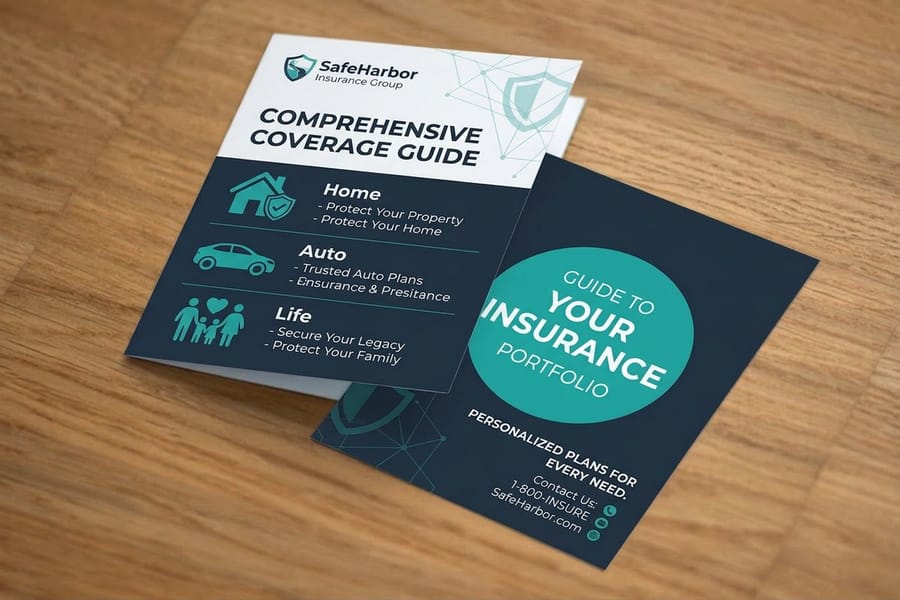
A brochure rarely works alone. It is usually one piece of a larger set of marketing materials, and it hits hardest when paired with the rest. Send one inside a direct mail package with a personal letter, or tuck it into a welcome kit alongside business cards and a branded folder.
Hand brochures out at events next to custom magnets that keep your brand on the fridge long after the event ends. Plenty of teams also use them as leave-behinds after a sales meeting, where the conversation fades but the brochure on the prospect's desk keeps working.
If you stamp your own packaging or mailers, our guide on how to clean rubber stamps keeps those tools sharp, so every touchpoint in the kit looks like it came from the same brand.
Brochure mistakes that waste your budget

Knowing what a brochure is does not automatically make a good one. These are the errors 4OVER4.COM sees most from first-time orders, and how to sidestep them.
Cramming too much text. A brochure is not a whitepaper, so if your panels look like newspaper columns, cut the word count in half and then cut it again. Ignoring the fold. Text and images that land on a fold line look broken, so always design with your fold lines visible in your layout.
Using low-resolution images. Print needs 300 DPI minimum, and a photo that looks fine on a phone screen will print blurry at 72 DPI. Skipping the bleed. If color or images run to the edge, add the usual 0.125 inch of bleed on each side, or you will get thin white borders where you never wanted them. No clear call to action. Every brochure should tell the reader exactly what to do next, whether that is visit a site, call a number, or scan a QR code.
Wally explains brochures
One folded sheet, a whole story in your hand
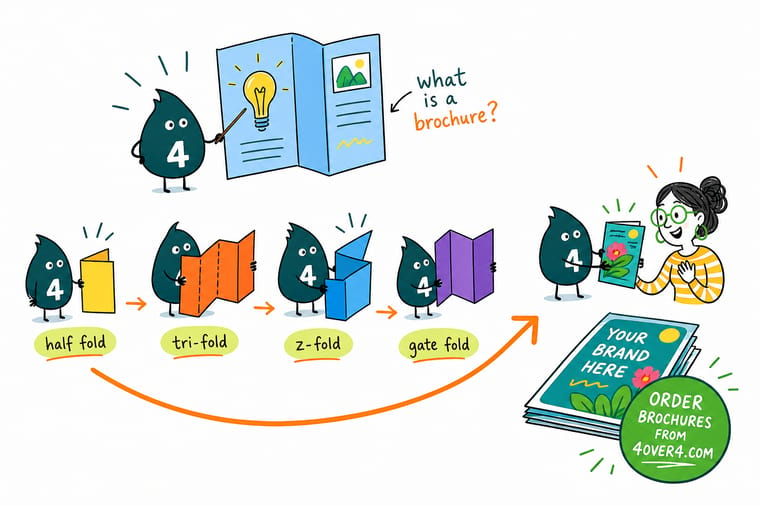
Wally thinks of a brochure as a tiny guided tour: the fold decides what you see first, next, and last, so each panel does one job and hands the reader to the next. Match the fold to the goal, keep one idea per panel, and finish with a clear next step. When the layout is set, print it on the stock that fits your brand at 4OVER4.
Order brochures →Specs and pricing
Brochure specs and live pricing
When you are ready to print, here is what a custom brochure gives you at 4OVER4.COM, with live specs and price-per-unit straight from the configurator.
| Quantity | Price Per Unit | Total |
|---|---|---|
| 50 | $1.14 | $57.11 |
| 100 | 82.4¢ | $82.38 |
| 200 | 53.3¢ | $106.55 |
| 300 | 41.0¢ | $123.02 |
| 400 | 34.9¢ | $139.49 |
| 500 | 31.2¢ | $155.97 |
| 600 | 26.7¢ | $160.36 |
| 700 | 23.5¢ | $164.75 |
Print it
Popular brochure products at 4OVER4
See it in use
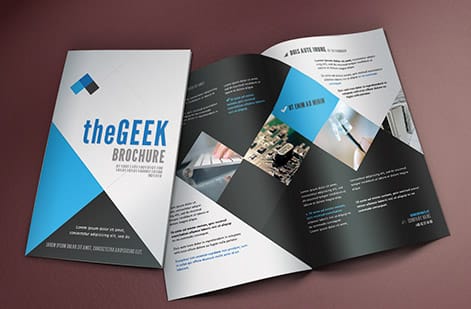
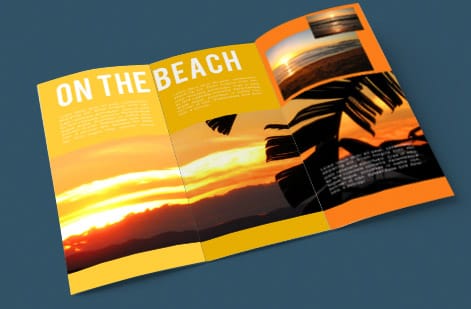
Brochures we printed for customers

Explore more
Where to go next

By the numbers
Nine fold styles, sixty plus papers
Common Questions
Your brochure questions, answered
What is a brochure for school?
For a school project a brochure is a single sheet, printed on both sides and folded into panels, used to present a topic in sections instead of as an essay. The usual format is an 8.5 by 11 inch sheet tri-folded into 6 panels. The cover carries the title and one image, each inside panel takes one subtopic, and the back panel holds sources or a summary.
How do you create a brochure?
Start with the fold, because it decides how many panels you have and what a reader sees first. Set the page to your finished flat size, 8.5 by 11 inches for a standard tri-fold, and mark the fold lines in your layout. Write one topic per panel, put a headline and one image on the cover, and end with a clear next step on the back panel. Export a press ready PDF at 300 DPI in CMYK with 0.125 inch of bleed on all sides, then print it.
What is a brochure used for?
A brochure promotes products, services, events, or organizations. Businesses hand them out at trade shows, mail them, place them in lobby racks, and leave them behind after sales meetings. They work because they pack a lot of information into a compact, portable format that people actually keep.
What is the difference between a brochure and a pamphlet?
A brochure is a single sheet folded into panels. A pamphlet is usually a small booklet with several pages bound or stapled together. Brochures are faster and cheaper to produce, while pamphlets make sense when you have more content than one sheet can hold.
What size should my brochure be?
The most common size is 8.5 by 11 inches before folding, which creates a standard tri-fold that fits a number 10 envelope and a brochure rack. Larger formats like 11 by 17 inches work for event guides and portfolios, and a smaller 5.5 by 8.5 inch brochure suits quick-reference handouts.
How many panels does a tri-fold brochure have?
A tri-fold brochure has 6 panels, 3 on the front and 3 on the back. Two parallel folds divide the sheet into thirds. It is the most popular layout because it balances content space with a compact finished size.
What paper stock works best for brochures?
Glossy coated stock is best for photo-heavy brochures like restaurant menus and travel guides. Matte coated stock suits text-heavy, professional pieces. Uncoated stock gives a natural, writable feel that fits nonprofits and educational materials. 4OVER4.COM offers 60 plus paper types so you can match the stock to your brand.
Can I mail brochures directly to customers?
Yes. Brochures are one of the most popular direct mail formats. You can send them in envelopes or design them as self-mailers with a mailing panel on the back. 4OVER4.COM offers direct mail brochures built for postal delivery, with the address panel formatting already in place.
What file format should I use for brochure printing?
Submit your design as a press-ready PDF at 300 DPI with 0.125 inch of bleed on all sides. Make sure fonts are embedded or outlined, and use CMYK color mode for accurate reproduction. RGB files get converted, which can shift your colors.
What is the difference between a brochure and a flyer?
The fold. A flyer is one flat sheet with a single message, read at a glance and often handed out or posted on a wall. A brochure is that sheet folded into panels, so it holds more and is read in a sequence you control: cover first, then the inside spread, then the back panel. If you have one offer and one date, print a flyer. If you have services, prices, or steps to explain, fold it and print a brochure.
Get Started
Ready to print your brochure?
Pick your fold and size, drop in your design or start from a free template, and we print a crisp brochure your customers will actually keep.
Legal Disclaimer
Gold Standard guarantees apply to all standard orders placed through 4over4.com. Price match requires verifiable proof of a competitor's published price for an equivalent product with matching specifications and turnaround time. Satisfaction guarantee covers manufacturing defects and print quality issues. Contact support with order number and documentation. On-time delivery rate based on tracked orders 1999 to 2026. Individual results may vary based on shipping carrier performance.
