
What Are Hang Tags? Uses, Types & Design Tips


A hang tag is the small printed card that dangles from a product and carries your logo, price, sizing, and care details. Stock thickness is what separates a tag that reads as premium from one that curls on the rack.
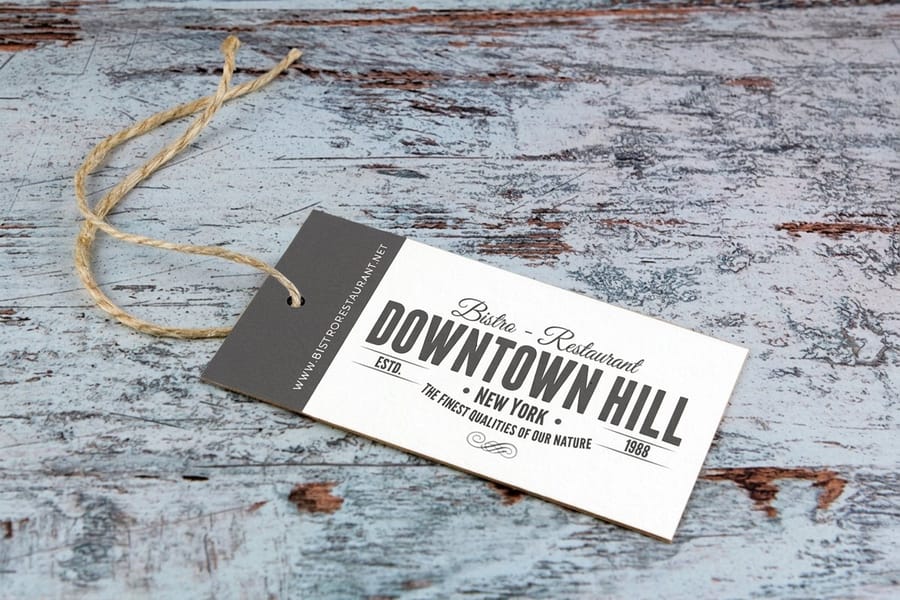
Hang tags are printed cards attached to a product with string, ribbon, or a plastic barb. They display your logo, pricing, sizing, care instructions, or a QR code, and shoppers see them the moment they pick the item up. Fashion labels, candle makers, food brands, and retailers use hang tags to reinforce brand identity right at the point of sale. Pick a stock and finish that match your product, leave room for the drill hole, and use both sides of the card.
Quick tips
Quick tips for great hang tags
Match your hang tag to your product before anything else. Use 14pt for high-volume runs, 16pt for everyday retail, and 32pt for premium goods. Add a finish like spot UV or foil stamping when you want the tag to feel expensive, print both sides, and leave clear space around the drill hole. Then tie it on with cord, ribbon, or a plastic barb that fits your brand. 4OVER4.COM customers who plan the stock, finish, and attachment together get tags that lift the whole product.
Why hang tags matter for your brand
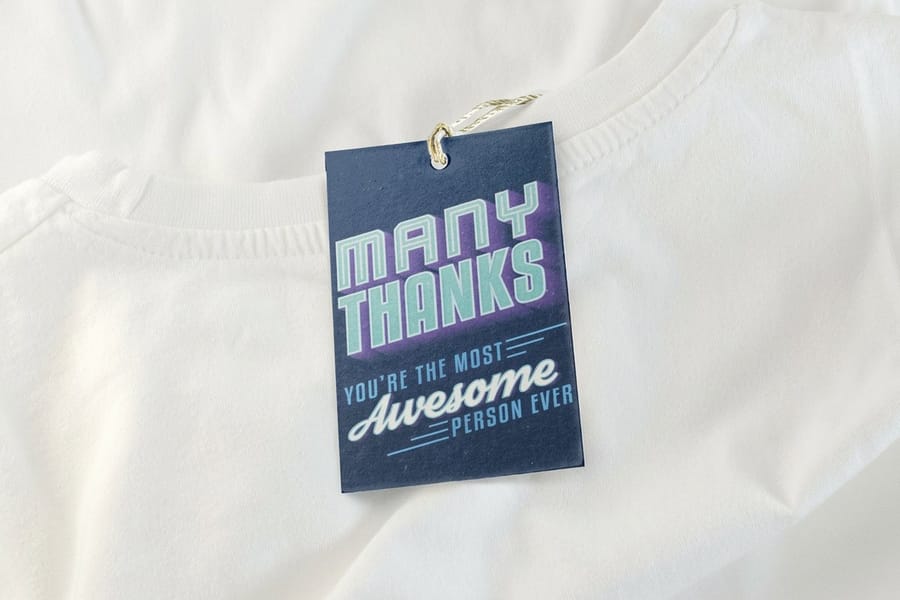
So what are hang tags, really? They are the first thing a customer touches when they pick up your product. That small card dangling from a garment, a candle, or a bar of handmade soap does far more than share a price. It tells your brand story in a single glance.
Hang tags work as miniature billboards. They carry your logo, a tagline, material details, sizing, or a QR code that links to your site. A well-designed tag can make a $20 product feel like it is worth $50. See how other businesses use them in the 4OVER4.COM showcase.
A clothing line and a shelf of artisan goods use the same small card to hold their place. Design yours from scratch with the online designer, or borrow ideas from other print guides like how to clean rubber stamps.
What a hang tag actually does
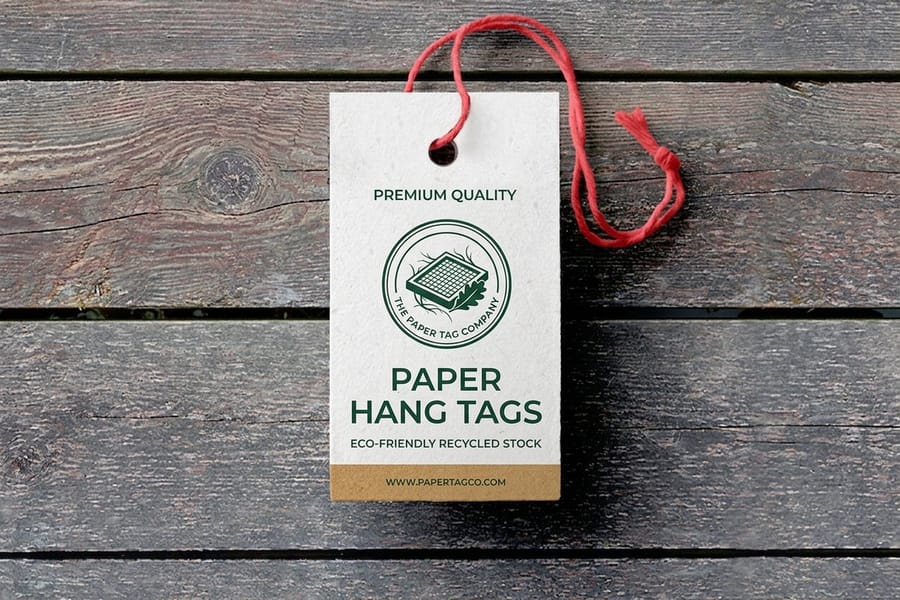
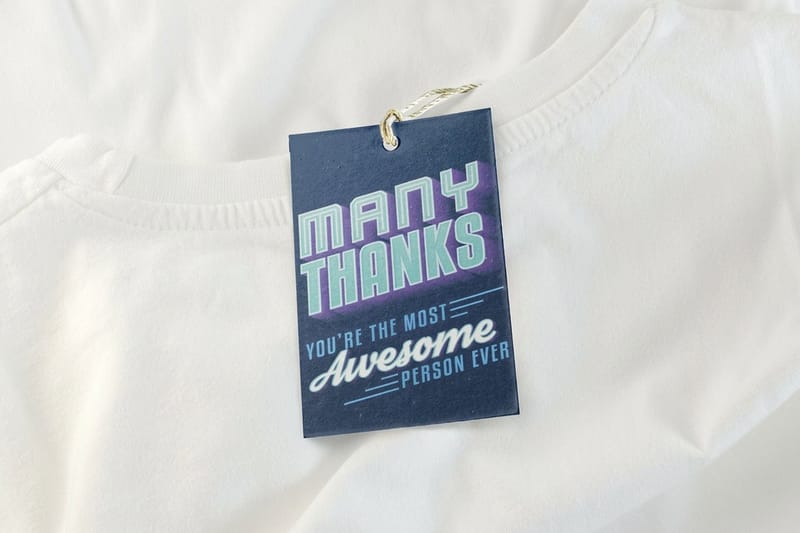
A hang tag is a printed card that attaches to a product, usually through a hole punched near the top. String, ribbon, safety pins, or plastic barbs hold it in place. The card carries whatever information you want the buyer to see before they commit to a purchase.
Think about the last shirt you bought. You flipped the tag to check the price, the fabric blend, or the care instructions, and that tiny card shaped your read on the brand. A thick, textured tag with embossed lettering signals quality. A flimsy, poorly printed one signals the opposite.
Hang tags play three roles at once. They are a branding tool, an information carrier, and a marketing asset. Plenty of brands use the back for a discount code or a social handle, turning a simple label into a conversion driver.
The common types of hang tags
Not every hang tag looks the same. The style you pick depends on your product, your brand aesthetic, and how much information you need to fit.
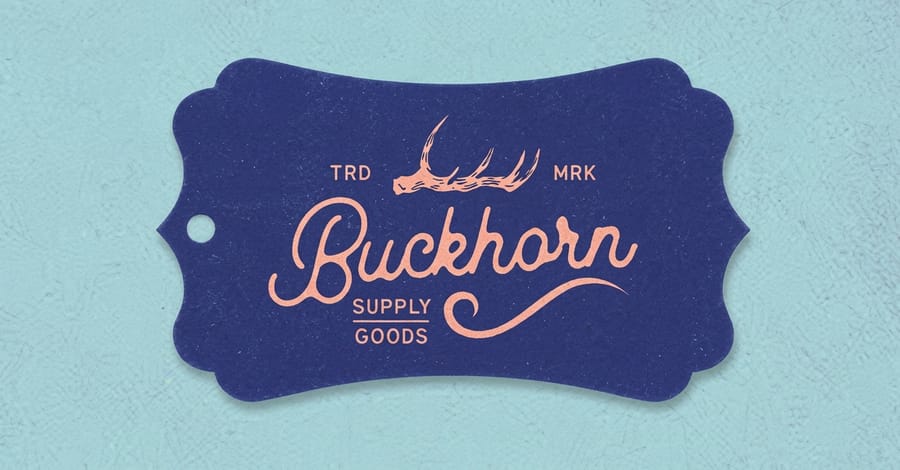
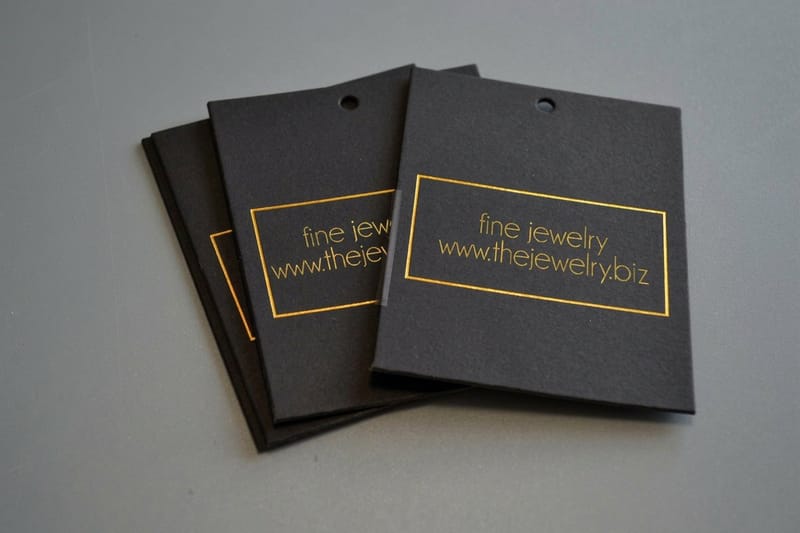
Standard rectangle hang tags are the classic. Clean lines, easy to read, and they work for everything from clothing to gift bags, which is why most businesses start here and keep printing costs low. Die-cut and shaped hang tags break away from the rectangle, matching your logo outline or a leaf shape for an organic skincare line. Shaped hang tags cost a little more, but the visual impact is hard to ignore. For a bold, modern look, black hang tags give white or metallic ink a dark canvas to pop against, which is why streetwear and luxury brands reach for them.
Prestige hang tags use heavier card stock and finishes like foil stamping, embossing, or soft-touch lamination. If your product retails above $50, prestige hang tags help justify that price, because the texture alone tells customers they are holding something worth paying for. Folded hang tags add two more panels for detailed care instructions, multi-language text, or brand storytelling, and the folding ideas in how to fold a brochure carry straight over.
The industries that rely on hang tags
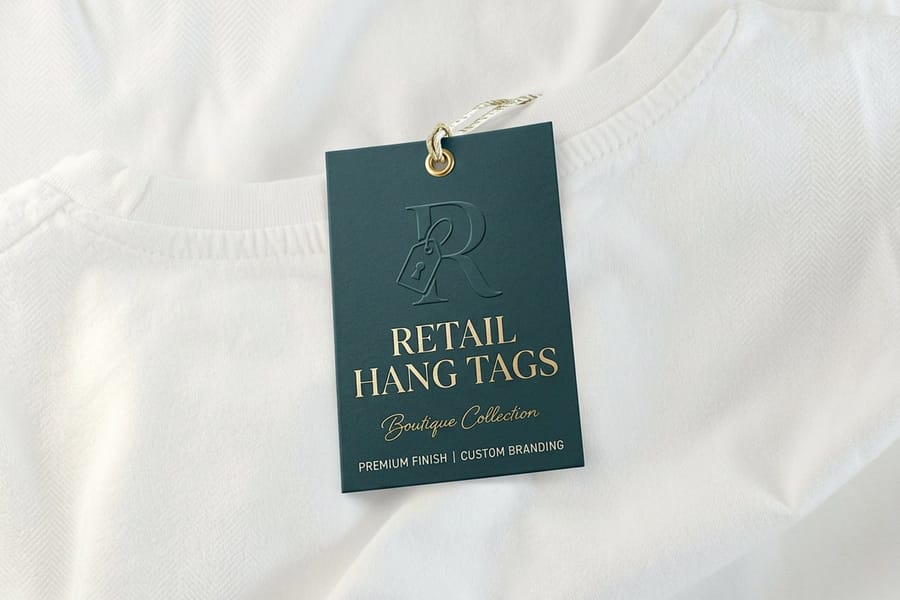
Hang tags are not just for clothing anymore. They show up anywhere a product needs a quick, branded introduction at the point of sale.
- Fashion and apparel. Sizing, fabric content, brand story, and pricing on every garment.
- Handmade and artisan goods. Soap makers, jewelers, and potters use them to add a personal, professional touch.
- Food and beverage. Wine bottles, hot sauce, and specialty coffee bags carry tasting notes or origin details.
- Home goods and candles. Scent descriptions, burn times, and safety warnings.
- Retail and gift shops. Pricing, barcodes, and promotional messaging.
Browse the 4OVER4.COM showcase to see real hang tag designs from businesses across these industries.
Choosing the right paper stock
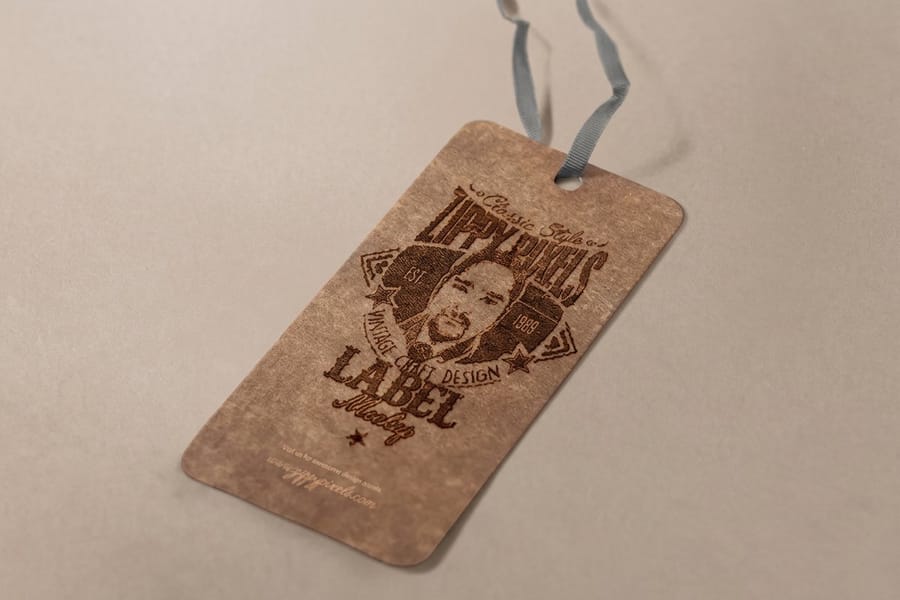
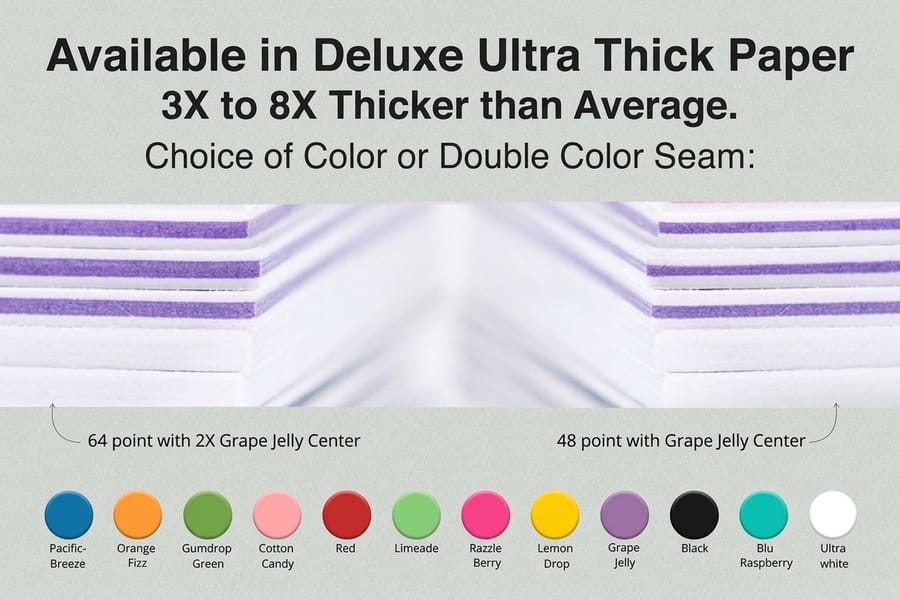
Paper stock is where a hang tag goes from just a tag to part of the brand experience. The weight and texture of the card communicate quality before anyone reads a single word.
14pt card stock is about the thickness of a standard business card. It is budget-friendly and holds up for high-volume runs where you need thousands of tags, so it suits seasonal promotions or temporary pricing. 16pt card stock feels sturdier and lands in the sweet spot for most retail hang tags, roughly the thickness of a credit card, thick enough to feel solid without driving up cost.
32pt ultra-thick stock is the premium option. It is rigid and hefty, and when a customer feels that weight they associate it with quality, so it is the move for high-end goods. Beyond thickness, coated stock delivers vivid, saturated color on a smooth surface, while uncoated stock has a natural, textured feel that works beautifully for organic or rustic brands.
Finishes and what each one does to a tag
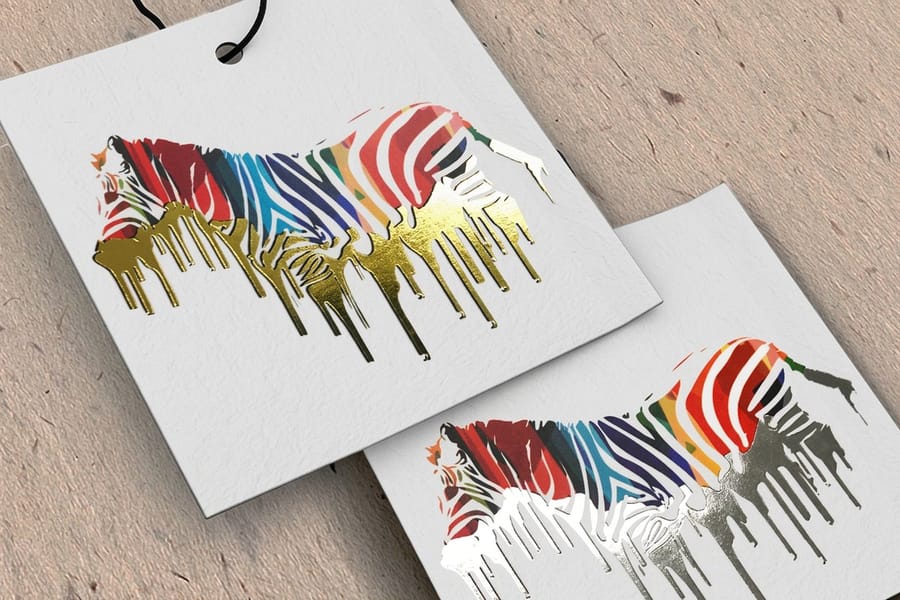
The finish you choose changes how a hang tag looks and feels in someone's hand, often more than the artwork does.
Matte finish gives a soft, non-reflective surface that reads easily under any lighting and feels smooth to the touch, ideal for minimalist designs. Gloss finish makes color pop with a shiny coating that catches store lighting, though it shows fingerprints more readily.
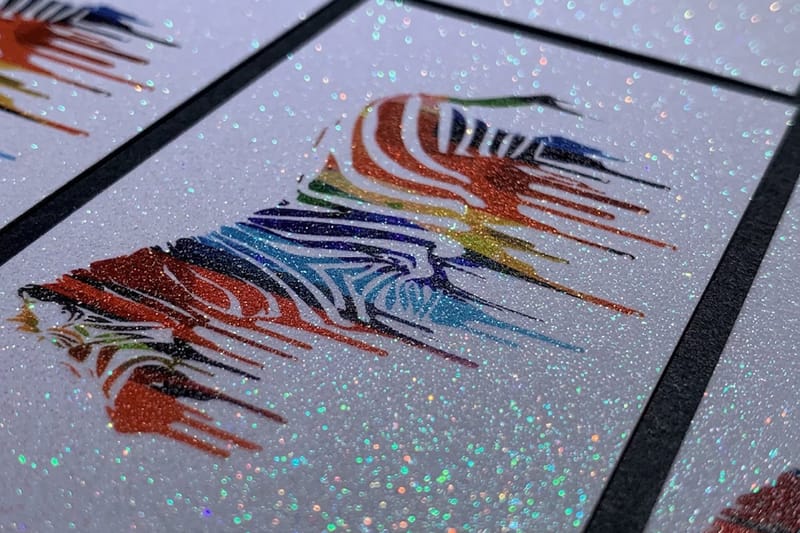
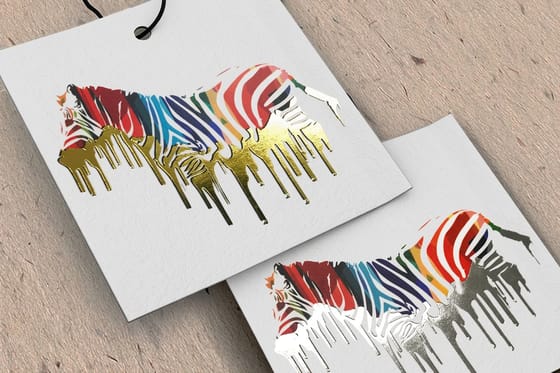
Spot UV adds a glossy, raised coating to specific areas like your logo, and the contrast between matte and gloss creates a tactile detail people notice right away. Foil stamping presses metallic foil in gold, silver, rose gold, or a custom color onto your design, and nothing says premium quite like a foil-stamped logo catching the light. Soft-touch lamination gives the card a velvety, silky texture that people keep touching, and that sensory pull keeps your brand in their hands longer.
Designing your hang tags
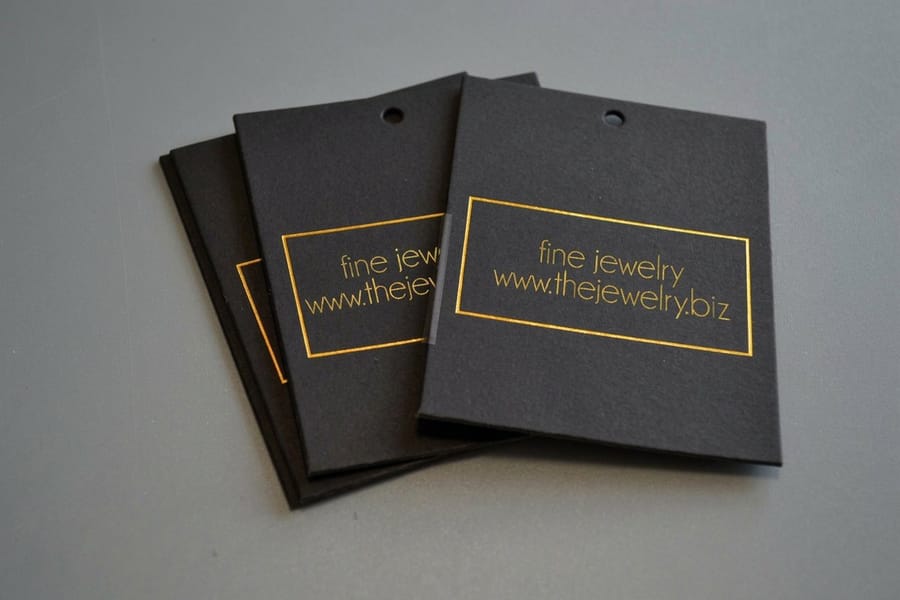
Good hang tag design balances branding with readability. You do not have much space, so every element has to earn its place.
Keep the text minimal. Lead with your logo and brand name, then add only what matters at the point of sale, like price, size, material, or a short tagline. Save the long story for your website. Use both sides. The front is your brand moment and the back is your utility space for care instructions, barcodes, a website URL, or social handles.
Leave room for the hole. The drill hole needs clearance, so keep artwork away from the top edge or your most important text can get punched through. For more design and printing tips across formats, browse the 4OVER4.COM guide hub, including how to make flyers, how to make envelopes, and the custom magnets FAQ.
How to attach your hang tags
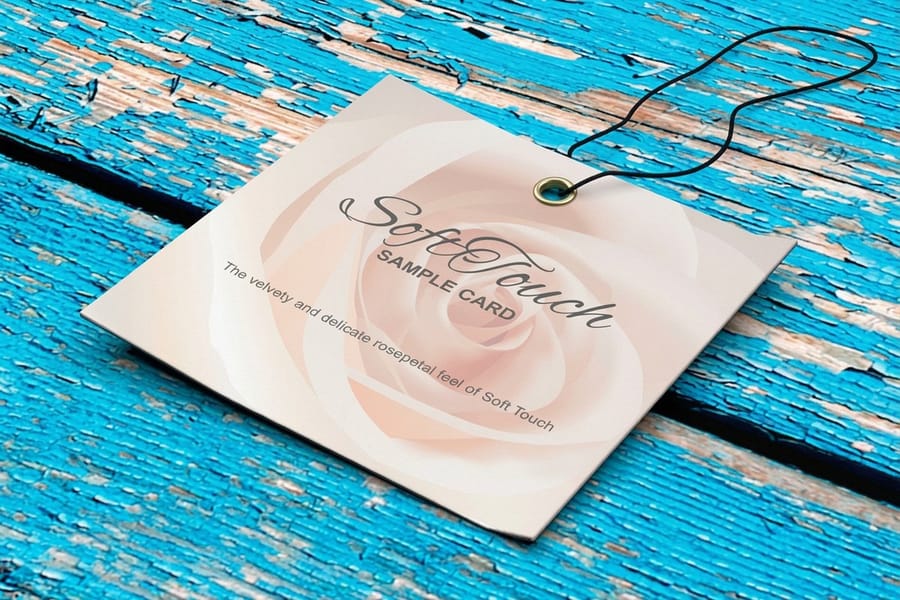
How you attach a hang tag matters more than you would think, because the tie is part of the first impression a shopper forms.
Cotton or hemp string gives an organic, handcrafted feel that suits artisan goods and eco-conscious brands. Satin ribbon adds a luxurious touch and shows up on high-end fashion, lingerie, and gift items, with the ribbon color matched to your palette. Plastic barbs, also called swift tacks, are the retail standard, fast to apply, secure, and easy for a customer to remove. Safety pins fit rustic or vintage looks and add character on denim or handmade textiles.
The attachment method carries its own message. A hand-tied waxed cord on a thick kraft tag tells a very different story than a plastic barb on a glossy rectangle.
Hang tag mistakes that hurt your brand
Even small errors on a hang tag undercut the professional image you are building. These are the ones 4OVER4.COM sees most often.
Paper that is too thin. A flimsy tag bends, tears, and cheapens the product, so use 16pt minimum for anything above $15. Cramming in too much text. A hang tag is not a brochure, and dense type looks cluttered, so stick to the essentials and let a QR code carry the rest. Ignoring the drill hole. If your design does not account for the hole, you lose part of your logo or text, so check the template before you submit your files.
Skipping the back. That is free real estate for care instructions, a discount code, or your Instagram handle, and one-sided tags waste half your print. Mismatched attachment. A satin ribbon on a kraft tag looks confused, and a plastic barb on a luxury product feels cheap, so match the tie to the story you are telling.
Wally explains hang tags
A hang tag is a tiny stage for your brand
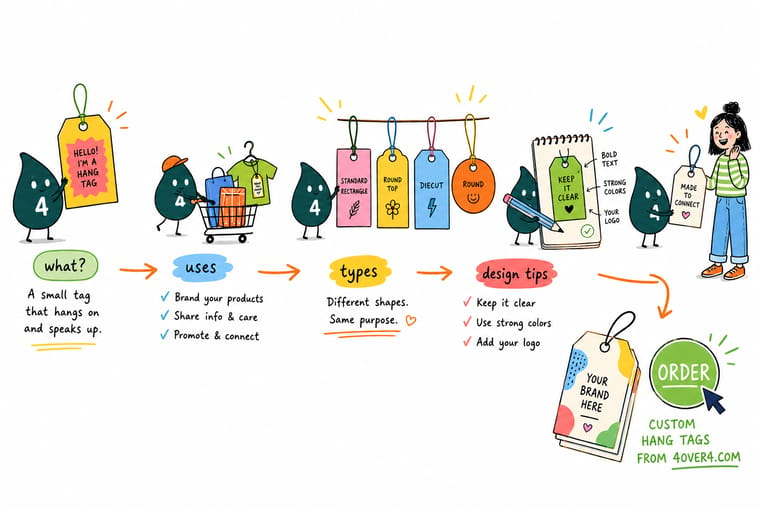
Wally treats a hang tag like the handshake before the sale: the stock, the finish, and the tie all tell the shopper who you are before they read a word. Keep the text light, use both sides, leave room for the drill hole, and match the string to the story. When you are ready to print, 4OVER4 builds standard, shaped, and prestige hang tags to your exact logo or text.
Order hang tags →Specs and pricing
Custom hang tag specs and pricing
Standard tags start at 50 for $25.27 and black tags on 32pt to 80pt Midnite Black Uncoated at 50 for $30.76, with live specs below.

| Quantity | Price Per Unit | Total |
|---|---|---|
| 50 | 50.5¢ | $25.27 |
| 100 | 28.6¢ | $28.56 |
| 200 | 15.9¢ | $31.86 |
| 300 | 12.4¢ | $37.35 |
| 400 | 10.2¢ | $40.64 |
| 500 | 8.79¢ | $43.94 |
| 600 | 8.24¢ | $49.43 |
| 700 | 7.53¢ | $52.73 |
Print it
Best hang tag options at 4OVER4
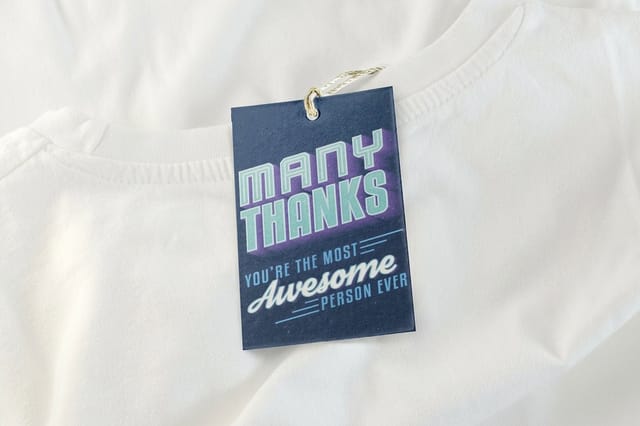
4OVER4.COM prints standard hang tags, foil-and-embossed prestige hang tags, and die-cut shaped hang tags to fit any brand and budget. Building out a launch or a seasonal promotion? A fresh batch of tags pairs naturally with premium invitations for the event.


Explore more
Where to go next


By the numbers
Hang tag stocks, from 14pt gloss to 80pt Midnite Black
Common Questions
Your hang tag questions, answered
What are hang tags used for?
Hang tags are printed cards attached to products to display branding, pricing, sizing, care instructions, or promotional messaging. They show up across fashion, handmade goods, food packaging, candles, and retail. A well-designed hang tag reinforces brand identity and gives customers the key product details right at the point of purchase.
What paper thickness works best for hang tags?
For most retail products, 16pt card stock hits the right balance between durability and cost. It feels sturdy in the hand without being excessive. If you sell premium or luxury goods, 32pt ultra-thick stock adds a rigid, hefty feel that reads as quality. Budget runs can use 14pt for temporary pricing or seasonal promotions.
Can I print on both sides of a hang tag?
Yes, and you should. The front typically features your logo and brand visuals. The back is ideal for care instructions, barcodes, website URLs, social media handles, or discount codes. Printing both sides doubles your communication space without adding to the per-unit cost.
What size should my hang tags be?
The most common hang tag sizes run from 2 inches by 3.5 inches, close to a business card, up to 3 inches by 5 inches for tags that need more information. Smaller tags work well on jewelry, accessories, and small goods. Larger tags suit clothing, home goods, and products with detailed care instructions.
How do I attach hang tags to my products?
Common attachment methods include cotton string, satin ribbon, plastic barbs (also called swift tacks), and safety pins. Cotton and hemp string suit artisan and eco-friendly brands. Satin ribbon adds luxury. Plastic barbs are the retail standard because they are fast and secure. Match the attachment style to your brand aesthetic.
What is the difference between hang tags and product labels?
Hang tags are separate printed cards that dangle from a product on string or a fastener. Product labels are adhesive stickers applied directly to packaging or the product itself. Hang tags are removable and often more visually prominent, which makes them better for branding and point-of-sale impact. Labels work better for permanent identification.
Get Started
Order 50 premium prestige hangtags from $35.38
Pick your stock, drop in your logo or text, and we print crisp, durable hang tags that make your product look the part.
Legal Disclaimer
Gold Standard guarantees apply to all standard orders placed through 4over4.com. Price match requires verifiable proof of a competitor's published price for an equivalent product with matching specifications and turnaround time. Satisfaction guarantee covers manufacturing defects and print quality issues. Contact support with order number and documentation. On-time delivery rate based on tracked orders 1999 to 2026. Individual results may vary based on shipping carrier performance.
