
Pop Up Retail Display Design


Plan your layout, pick the right display hardware, size your graphics for distance, and print a matching kit. Here is how to turn a blank space into a pop up shop that stops foot traffic and sells.
To design a pop up retail display, match the format to your event, lead with a tall retractable banner stand at the entrance, and keep headlines to 5 to 7 high-contrast words at 150 DPI or higher. Complete the space with business cards, flyers, and take-home magnets. Order 2 to 3 weeks out, test the setup at home, and reuse the display across dozens of events.
Quick tips
Quick tips for designing a pop up display
Start with your pop up type, then build outward. Lead the entrance with a tall retractable banner stand, keep headlines to 5 to 7 words at high contrast, and design large-format graphics at 150 DPI minimum. Pair the hardware with business cards, flyers, and take-home magnets, order everything 2 to 3 weeks ahead, and test the setup at home. 4OVER4.COM prints the full kit so every piece matches.
Watch it printed
See pop up displays on the press, in 108 seconds
Why pop up retail displays deserve a design strategy
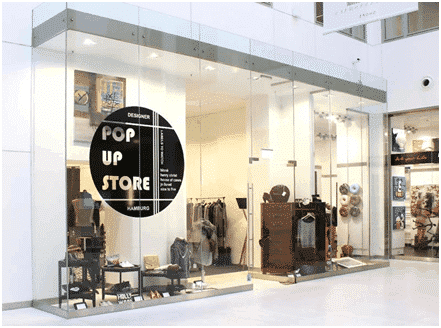
A retail pop up setup is a brand experience compressed into a small footprint and a short window of time, not a table with products on it. You get days, sometimes only hours, to make an impression, so every banner, every sign, and every printed piece has to work harder than it would in a permanent store.
This pop up retail display design guide breaks down the decisions that matter: choosing the right display format, sizing your graphics, picking materials that survive transport, and designing layouts that move customers through your space. Browse real setups on our Showcase for inspiration, and if you also run branded rubber stamps between events, our guide on how to clean rubber stamps keeps them crisp.
4OVER4.COM has printed 10 billion cards and countless large-format pieces for businesses building temporary retail experiences. Here is how to get yours right.
Understanding pop up shop types and how they shape display needs
Before you design a single banner, you need to know what kind of pop up you are running. The display requirements for a weekend farmers market booth look nothing like a month-long showroom in a shared retail space. Here are the main types.
- Event-based pop ups tie to festivals, trade shows, conferences, or product launches. They need portable, quick-setup displays that handle crowds and heavy foot traffic.
- Market-testing pop ups gauge customer interest in a new location. The display should feel polished enough to represent your brand yet flexible enough to adjust mid-run.
- Seasonal pop ups cover holiday shops, summer collections, and back-to-school setups. These lean on themed graphics and time-sensitive messaging.
- Brand awareness pop ups are not always about selling on-site. The goal is impressions, social shares, and email signups, so displays prioritize visual impact over shelving.
- Collaborative pop ups share a space between two or more brands. The design has to separate each brand clearly while keeping a cohesive look.
Each type demands different printed materials. Event-based setups need pop up displays that collapse and travel well, while seasonal pop ups call for large-format banners with bold graphics. Know your type first, then design accordingly.
Layout planning: how to move customers through your space
The biggest mistake in pop up retail display design is ignoring traffic flow. You are working with limited square footage, so every inch needs a purpose.
Start with your entrance. This is where your tallest, most eye-catching display goes, a retractable banner stand or a fabric backdrop carrying your logo and value proposition. Customers should understand who you are and what you sell within three seconds of looking at your space.
Next, create a natural path. In a 10 by 10 booth that usually means an L-shaped or U-shaped product arrangement that pulls people in and guides them past your key items. In a larger retail space, use floor-standing displays and signage to build distinct zones for featured products, browsing, and checkout.
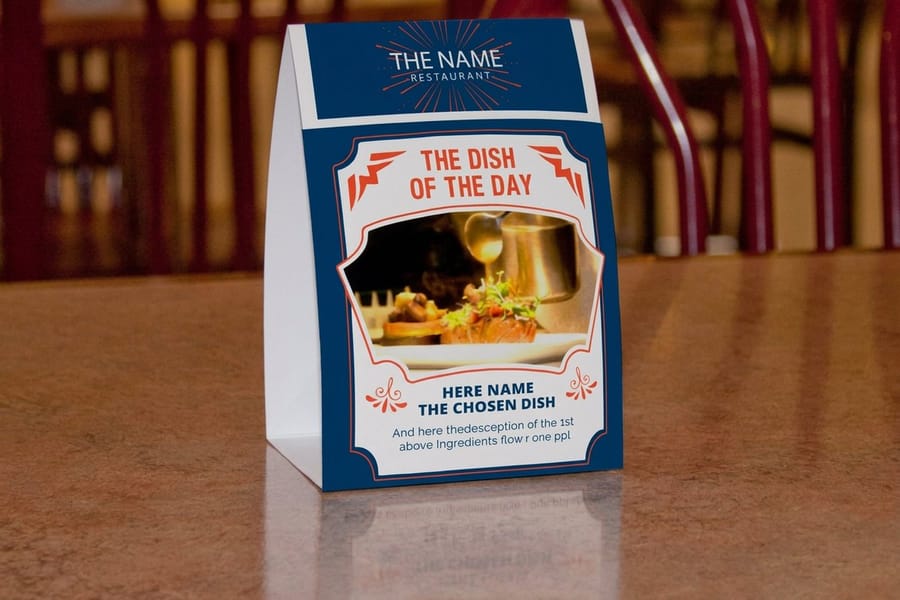
Your checkout area needs its own signage. A small countertop banner or table tent with pricing, accepted payment methods, and your social handles keeps things moving. If you hand out brochures, learning how to fold a brochure keeps them sharp on the table instead of sloppy.
Choosing the right display hardware
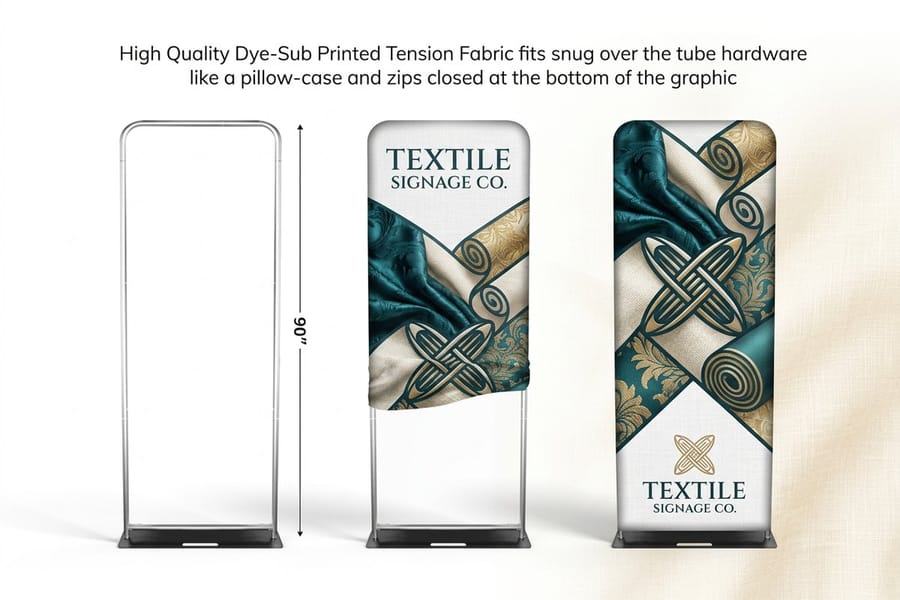
Pop up displays come in several formats, and the right one depends on your space, your budget, and how often you plan to reuse it.
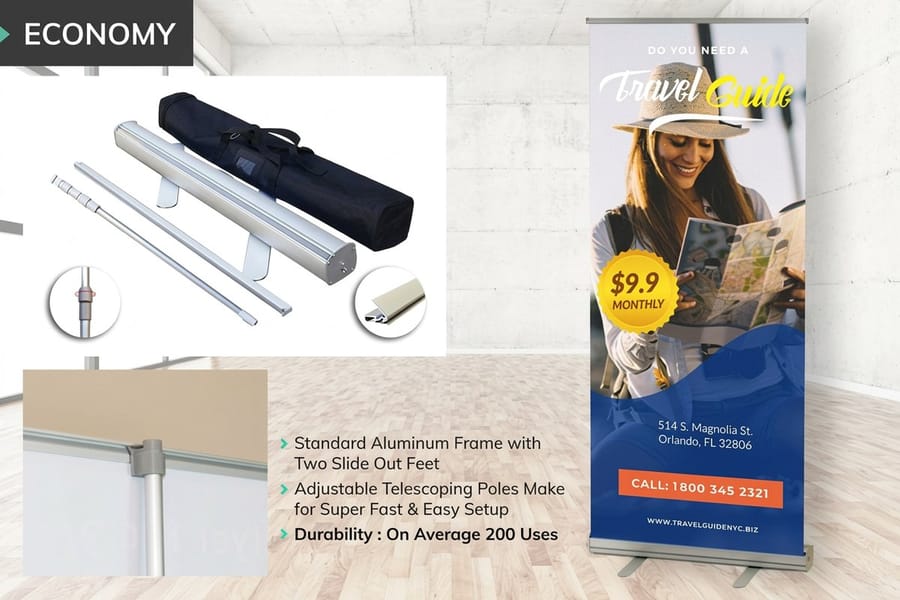
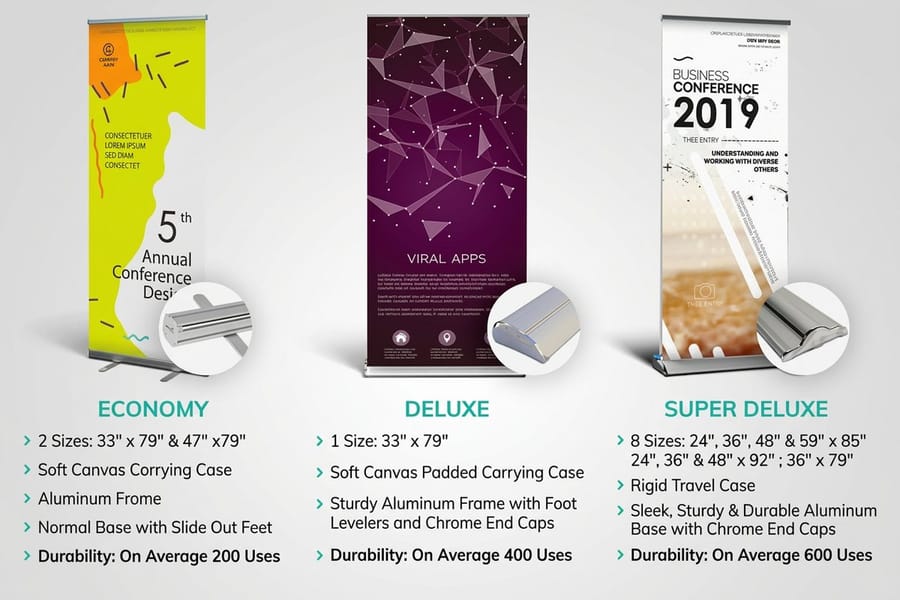
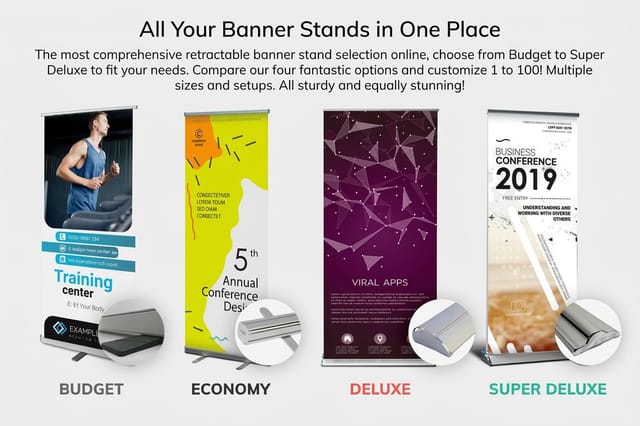
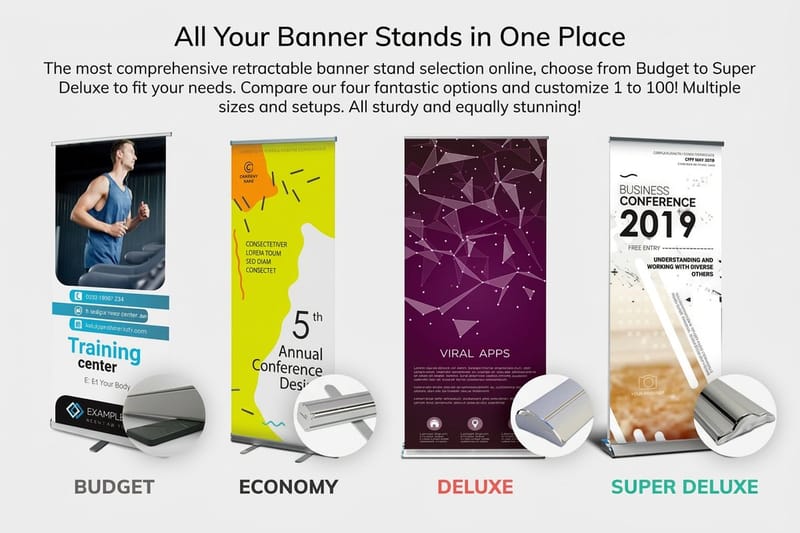
Retractable banner stands are the workhorse of pop up retail. They are lightweight, set up in under a minute, and the graphic rolls into the base for protection during transport. Standard sizes run 33 inches wide by 78 to 81 inches tall, big enough to be seen from across a venue floor.
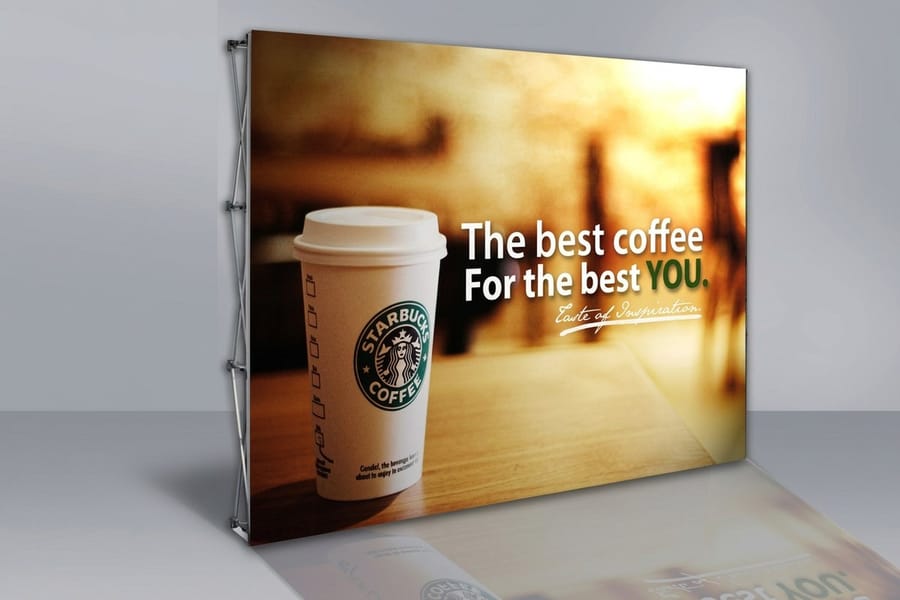
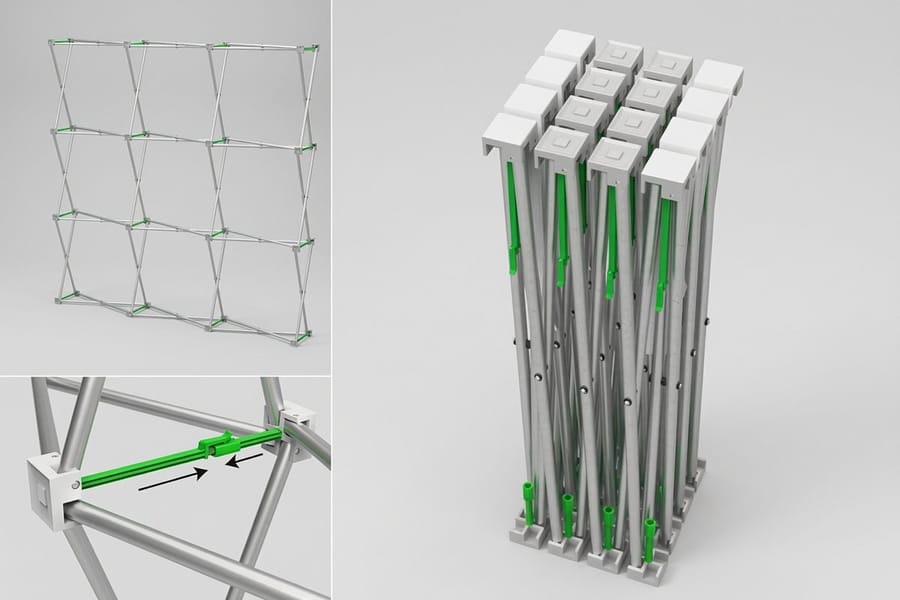
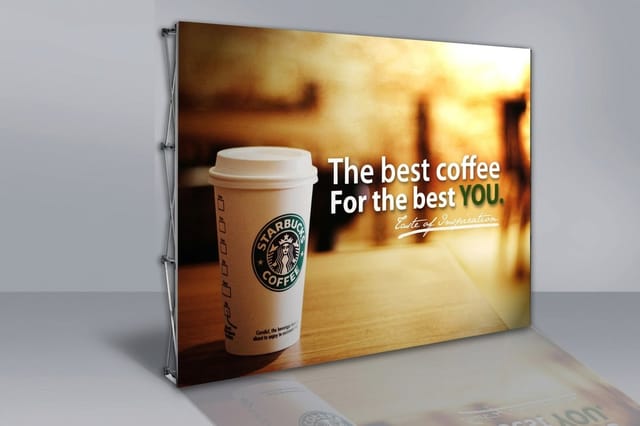
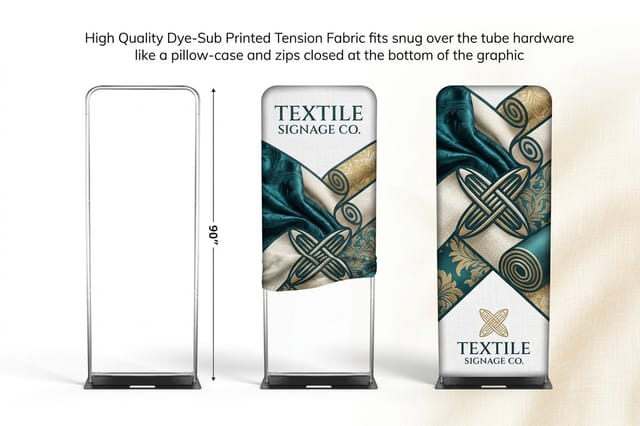
Fabric pop up walls create a full backdrop behind your display area. They work well for collaborative pop ups where you need to define your brand territory. The fabric stretches over a collapsible frame and prints edge to edge with dye-sublimation for vivid, saturated color.
Tabletop displays sit on your table and add vertical interest without taking floor space, ideal for smaller booths or a shared table at an event.
Floor-standing signs and A-frames work outside your booth to pull in foot traffic. Place them at the venue entrance or the end of an aisle to steer people your way.
For a full look at what 4OVER4.COM offers, visit the pop up displays product page and compare sizes, materials, and pricing.
Reconfiguring one set of hardware for different venues
Most brands buy a kit for their first booth and then discover the second venue is a different shape. The fix is to buy hardware that rearranges rather than a layout that only works once. A 33 inch by 78 to 81 inch retractable banner stand is the piece that moves best, because it works as an entrance marker in a 10 by 10 booth, as a divider in a shared space, and as a backdrop behind a single market table.
Three arrangements cover almost every venue. On a shared table, one banner behind you and a tabletop sign in front. In a 10 by 10 booth, two banners flanking an L-shaped product run with an A-frame out in the aisle. In a walled space, a fabric pop up wall as the backdrop with the same two banners moved to the entry.
Only the printed graphic is venue specific. The bases, the frame and the cases travel unchanged, so plan the artwork so nothing important sits where a table will cover it. Browse the pop up display range and pick hardware you can stand in three places.
Pop up setup costs: what each tier actually includes
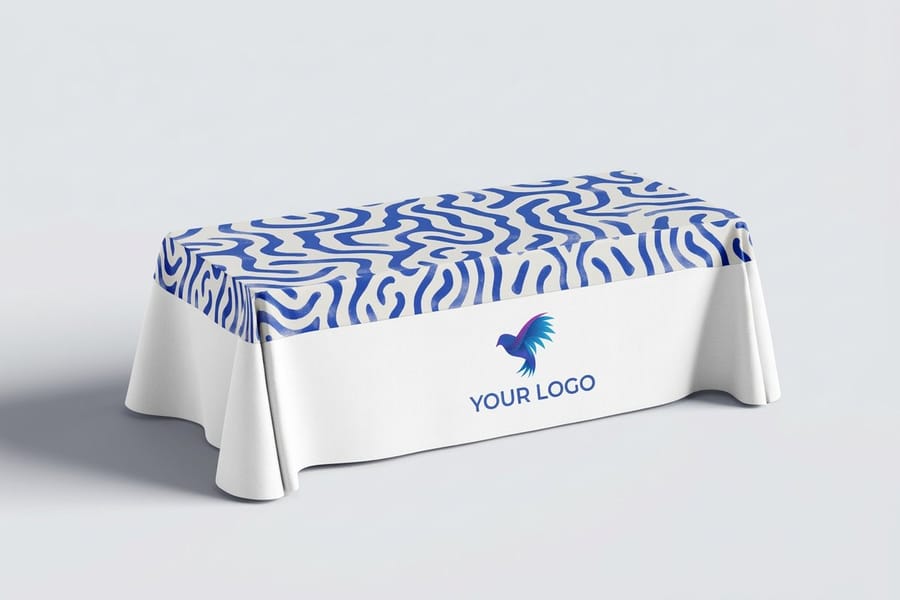
Budget a pop up in tiers, not line by line. Three kits cover nearly every booth, and what separates them is how much vertical space you own and how much printed material walks away with visitors. Live pricing for each piece sits on the pop up displays product page, so build the kit that matches your venue and check the run before you commit.
| Tier | Fits | Display hardware | Signage | Printed takeaways |
|---|---|---|---|---|
| Starter | One table at a market, or a shared booth | 1 retractable banner stand, 33 inches wide by 78 to 81 inches tall, plus a table cover | 1 tabletop sign carrying prices | Business cards and a small flyer stack |
| Mid | A corner booth you hold for a weekend | 2 retractable banners, printed table cover, 1 tabletop display | 1 A-frame or floor-standing sign outside the booth | Postcards, flyers, and magnets carrying a QR code |
| Full booth | A walled space visitors step into | Fabric pop up wall as the backdrop, 2 banners flanking the entry, table cover, tabletop display | A-frame at the aisle end plus a header sign | Postcards, flyers, magnets, and a branded sticker or bag |
Two rules save more than any discount. First, hardware is reusable and graphics are not: a well-kept banner base survives dozens of events while the printed graphic is the part you replace when the offer changes, so buy the base once and budget the graphic per season. Second, order 2 to 3 weeks out. Rush turnaround on large format is where pop up budgets quietly break.
Graphic design principles for pop up retail displays
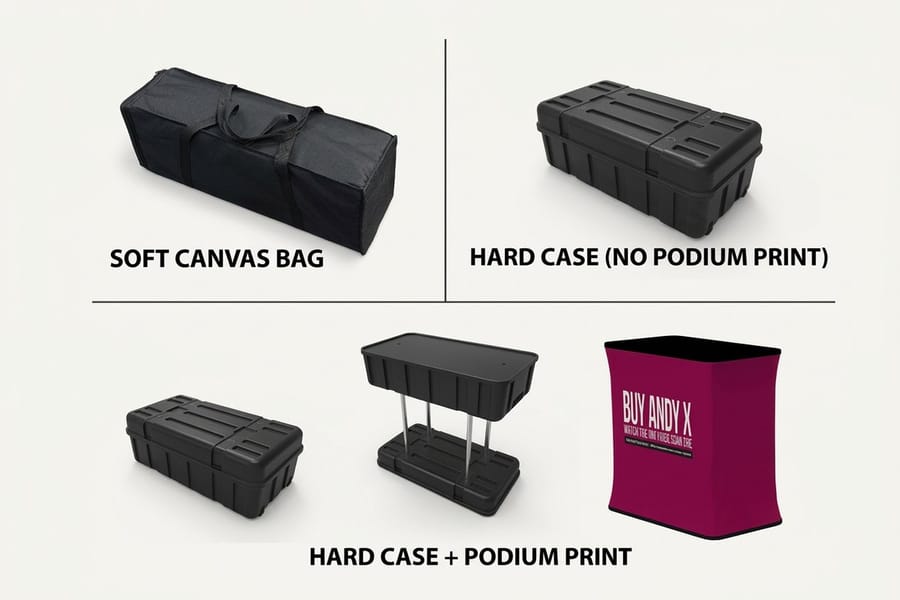
Designing for a pop up display is different from designing for a screen or a business card. You are designing for distance, speed, and distraction. Here is what works.
Keep text minimal. Your banner headline should run 5 to 7 words at most. People walking past will not stop to read a paragraph, so lead with your brand name, your product category, and one compelling benefit.
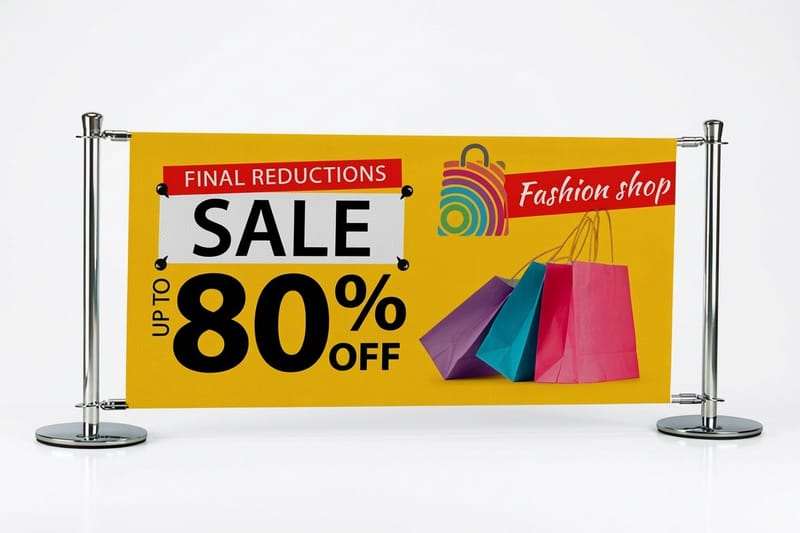
Use high-contrast colors. Dark text on light backgrounds, or the reverse, reads from 15 feet away. Avoid placing text over busy photos unless you add a solid or semi-transparent color block behind it.
Size your fonts for distance. A good rule is one inch of letter height for every 10 feet of viewing distance. To grab attention from 30 feet, your headline should be at least 3 inches tall.
Include one clear call to action. Visit us at Booth 42. Scan for 15 percent off. Follow the handle. Do not ask people to do five things. Pick one.
Design at 150 DPI minimum for large format. Full 300 DPI at actual print size is ideal, but large-format displays viewed from several feet away look great at 150 DPI, which keeps file sizes manageable.
Need supporting event flyers? Our guide on how to make flyers covers layout, sizing, and design tips that apply directly to pop up shop promotion.
Printed materials that complete your pop up display
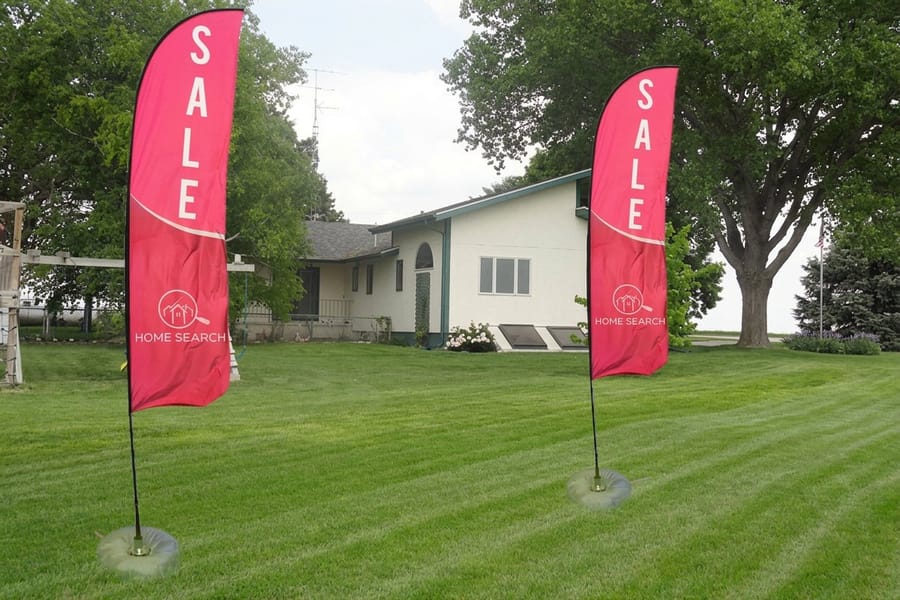
Your display hardware is the skeleton. Printed materials are the muscle. Here is what most successful pop up shops add beyond the main display.
- Flyers and postcards hand out to passersby and tuck into every bag. They extend your pop up reach well beyond the event itself.
- Business cards are essential for networking at trade shows and markets. 4OVER4.COM offers 60+ paper types so your card matches your brand personality.
- Custom magnets are a take-home item people actually keep. Our guide to custom magnets has ideas on shapes and sizes.
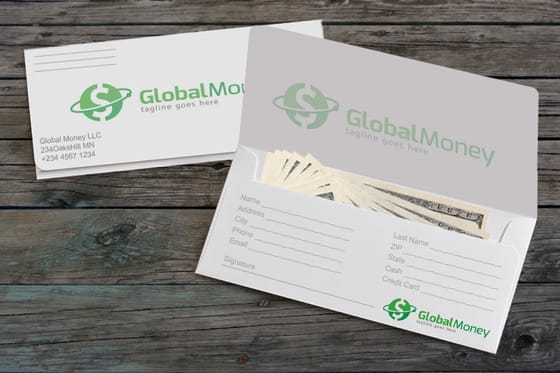
- Branded envelopes add a polished touch when you collect payments, gift cards, or receipts. Learn to create them in our how to make envelopes guide.
- Table tents and counter cards are small but mighty. Use them for pricing, product notes, or QR codes that link to your online store.
Setting up and tearing down efficiently
Time is money at pop up events. Most venues give you a 30 to 60 minute setup window. Practice your setup at home before the event, label your display components, pack them in the order you will unpack them, and bring backup supplies like extra zip ties, tape, a utility knife, and a level.
Retractable banners are the fastest to deploy. You pull up and lock. Fabric walls take 5 to 10 minutes with two people, and tabletop displays are instant. Plan the sequence: backdrop first, tables second, product placement third, and small signage last.
For teardown, reverse the order. Small items first, big displays last. Protect your printed graphics by rolling them rather than folding, and store them in their original cases. Well-maintained displays can last dozens of events.
Print this checklist or keep it on your phone. Running the same order every time is what turns a 60 minute window into a 30 minute one.
- Before you leave. Run the full setup at home once, label every component, pack in reverse unpack order, and add spare zip ties, tape, a utility knife, and a level.
- On arrival. Find your footprint, check where power and foot traffic sit, and unload the backdrop first.
- Build, in order. Backdrop, tables and covers, product placement, small signage last. Retractable banners pull up and lock, fabric walls take 5 to 10 minutes with two people, tabletop displays are instant.
- Ten minutes before doors. Stand where the customer will stand, confirm nothing blocks the headline, set the A-frame or floor sign outside the booth, and stack takeaways within arm reach.
- Teardown, reverse order. Small items first, big displays last. Roll printed graphics instead of folding them, return each to its own case, and count components against your label list before you drive off.
Measuring your pop up display's performance
Do not just set it and forget it. Track what is working. Count foot traffic into your space, note which products people touch first because that tells you where their eyes land, and ask customers how they found you. Was it the banner outside, a flyer someone handed them, or social media?
Use QR codes on your displays and printed materials to track digital engagement. Each display element can carry a unique QR code pointing to a specific landing page. Generate print-ready codes with our free QR code generator, then see which piece drove the most traffic.
After each event, photograph your setup from the customer point of view. Review what looked good, what got lost, and what needs to change. Browse the guide hub and our Showcase for ongoing inspiration as you refine your approach.
Mistakes that sabotage pop up retail displays
Even experienced brands trip up on pop up retail display design. Here are the errors 4OVER4.COM sees most often, and how to avoid them.
Overcrowding the display. More product does not mean more sales. A cluttered table overwhelms customers and makes everything look cheap. Edit ruthlessly, feature your top 5 to 10 items, and keep backup stock hidden underneath.
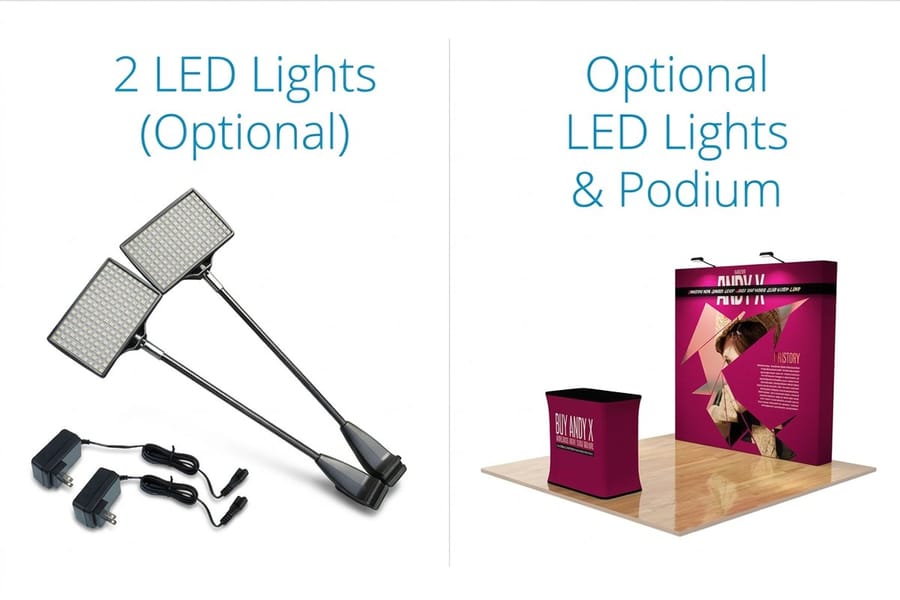
Ignoring lighting. Most venues have harsh overhead fluorescents or dim ambient light, and neither flatters your products. Bring your own clip-on LED lights or battery spotlights. Good lighting can make a $200 display look like a $2,000 setup.
Low-resolution graphics. Pixelated banners look amateur. Always design at 150 DPI minimum for large-format prints and check your files at actual size before sending them to print.
No branded takeaway. If a customer walks away with no card, no flyer, and no magnet, you have lost them. Always have something physical to send home.
Skipping a test run. Never set up your pop up display for the first time at the actual event. Practice at home, time yourself, and fix problems before they cost you.
Why pop up shops work: four business reasons
A pop up shop is not only a marketing stunt. It is a low-risk way to grow revenue and learn about your customers in person. Four reasons brands keep coming back to temporary retail.
- Create customer engagement. Plenty of shoppers fill an online cart, then abandon it when there is no physical trace of your business. A pop up gives them that trace. Pair it with a digital campaign and you build real buzz around the event.
- Increase seasonal sales. Some seasons are slow. A pop up lets you customize a location temporarily and offer products tuned to that season. Instead of waiting for people to find you, you bring the store to your audience.
- Educate customers. If your product is complex, it is easier to demonstrate it in person than to explain it through video or text. Trained staff can give shoppers a fresh, hands-on understanding of what you sell.
- Test additional revenue. The temporary nature of a pop up is a great way to judge whether a permanent storefront would work in a location. You gauge interest, gather on-site feedback, and put your popular products within easy reach.
Hosting a launch or seasonal market? Pair your display with printed event invitations. A physical invite in someone's hand gets noticed far more than another email in the inbox.
Wally explains pop up displays
A small footprint that reads like a real storefront
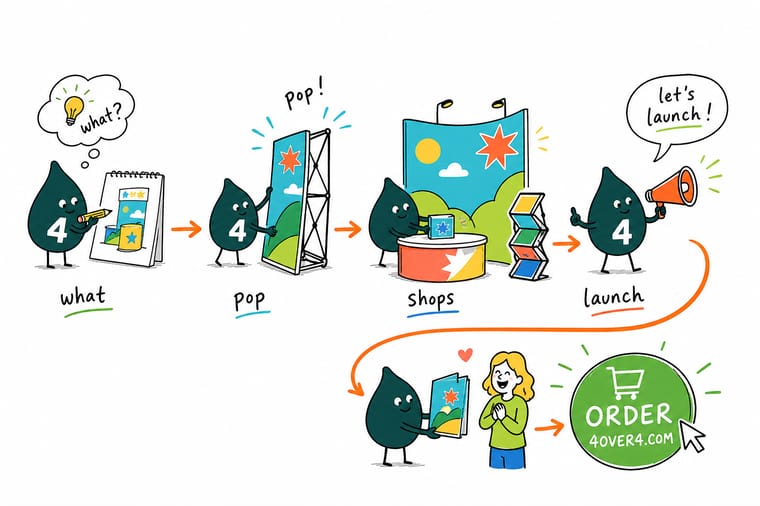
Wally treats a pop up shop like a stage: the entrance banner is the headline, the layout is the script, and the printed takeaways are the encore. Keep text short, contrast high, and graphics sharp at 150 DPI, and a 10 by 10 booth can out-sell a permanent window. When the event ends, roll the graphics up and reuse them at the next one. Build the whole kit, from pop up displays to business cards, at 4OVER4.
Order pop up displays →Specs and pricing
Pop up display specs and pricing
Here is what a made-to-order pop up display gives you at 4OVER4.COM, with live specs and price-per-unit pulled straight from the configurator.
| Quantity | Price Per Unit | Total |
|---|---|---|
| 1 | $752.39 | $752.39 |
| 2 | $752.39 | $1,504.78 |
| 3 | $686.49 | $2,059.46 |
| 4 | $686.49 | $2,745.94 |
| 5 | $686.49 | $3,432.43 |
| 6 | $686.49 | $4,118.91 |
| 7 | $686.49 | $4,805.40 |
| 8 | $686.49 | $5,491.89 |
Print it
Displays that power your pop up shop
Free templates
Free pop up display templates
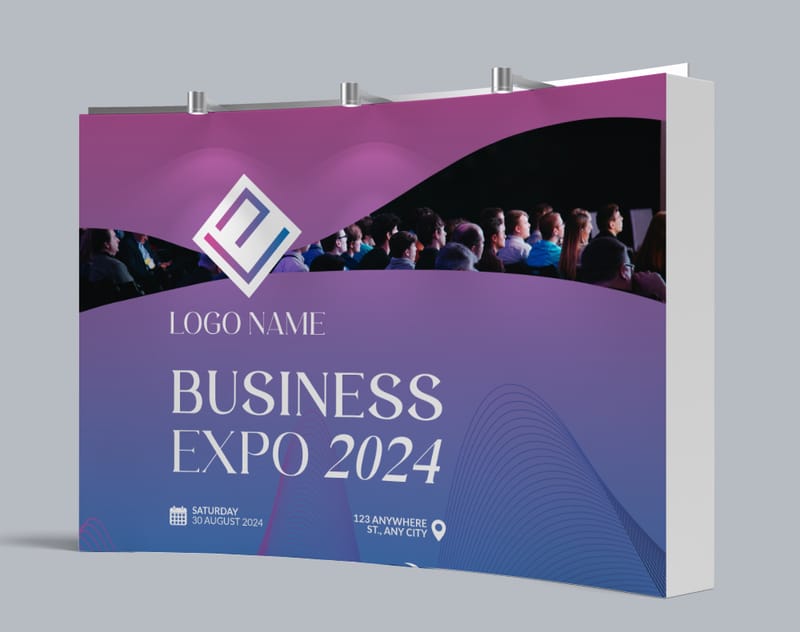
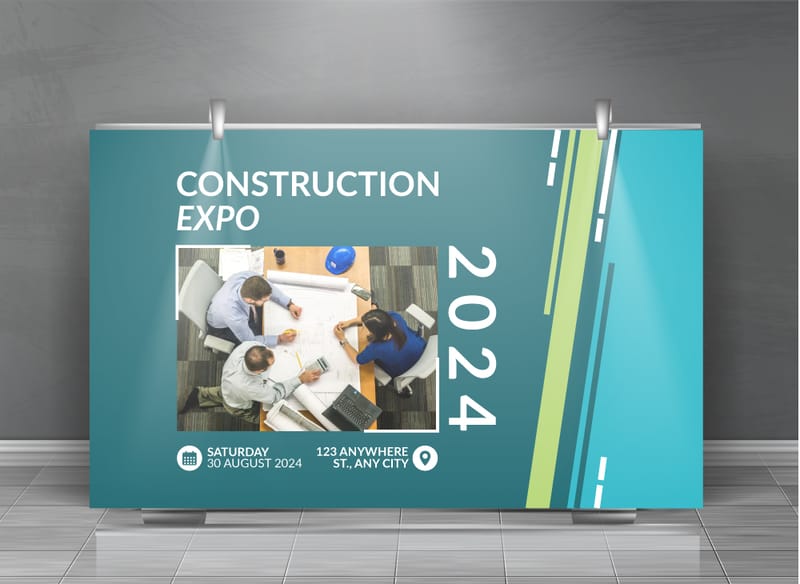
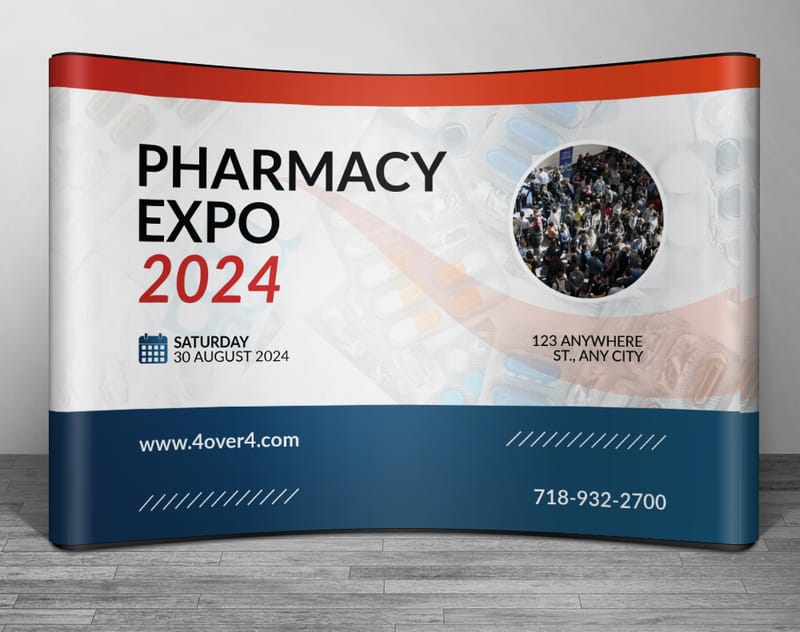
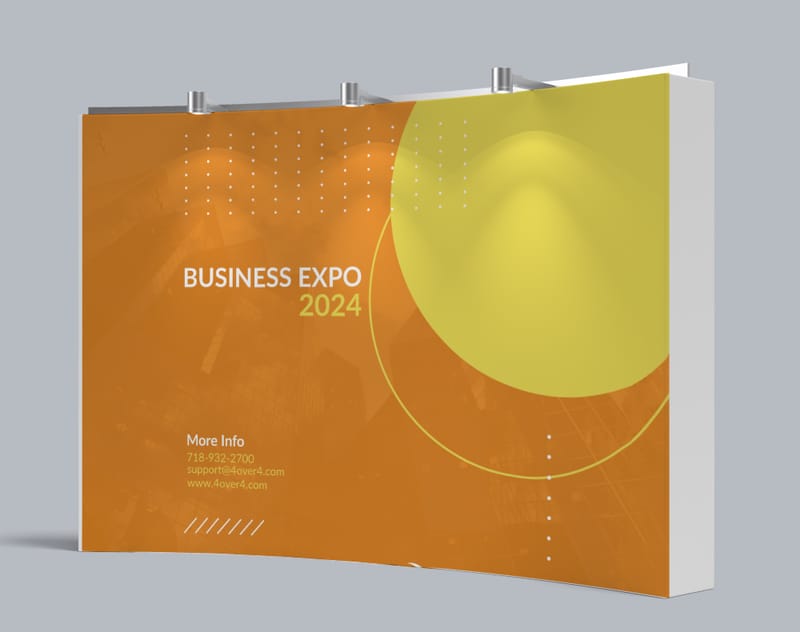
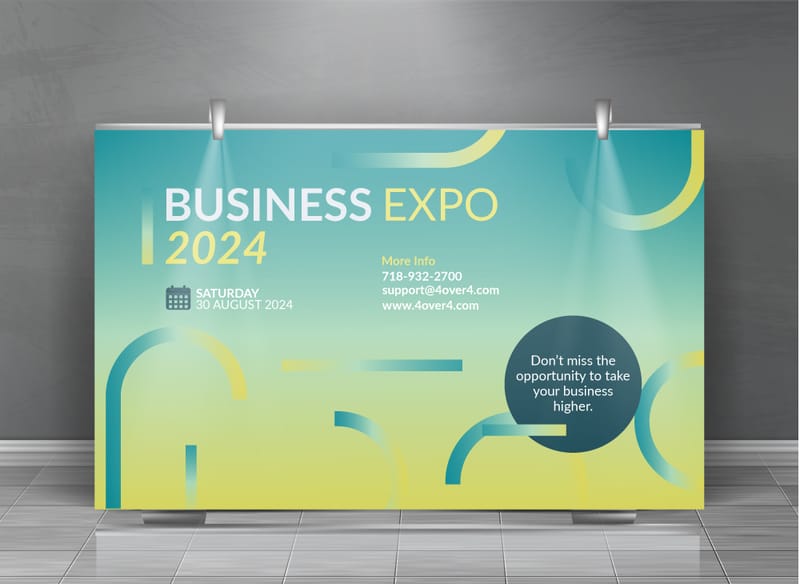
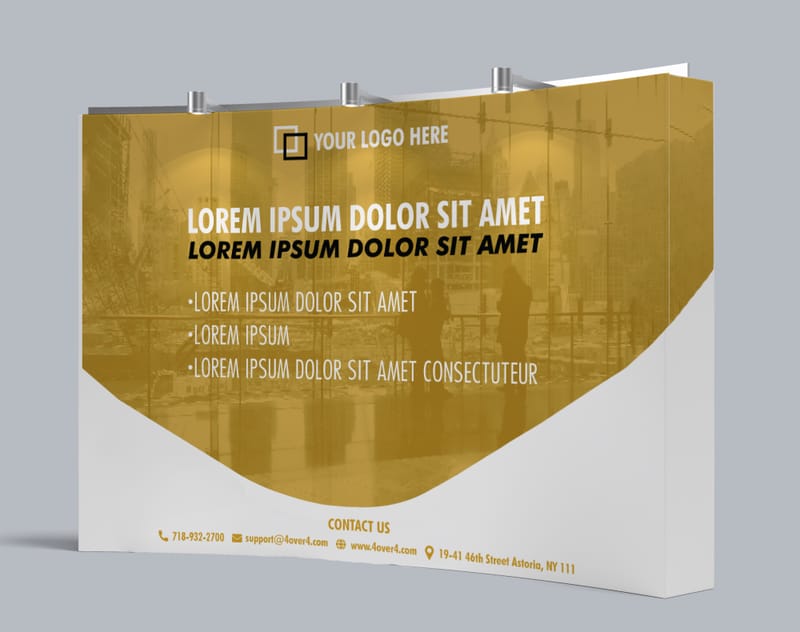
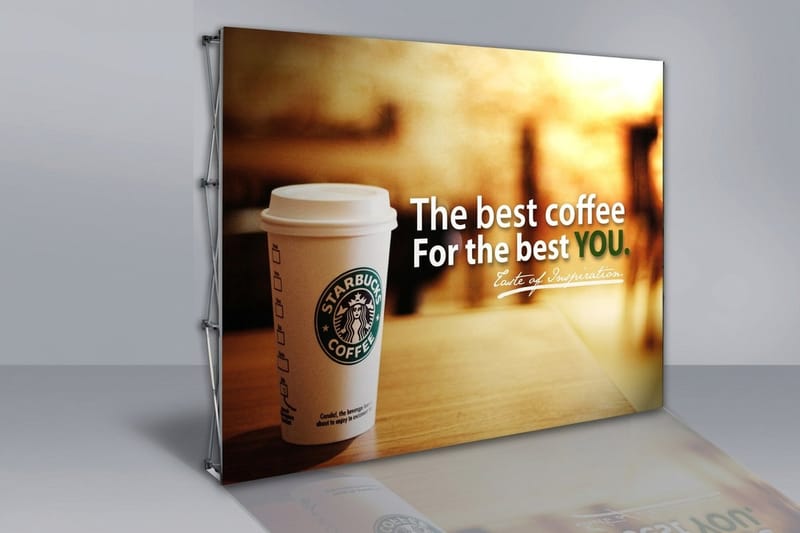
Start from a ready-made pop up display layout in the online designer, or download a blank template with the correct dimensions and bleed to build your graphics from scratch.
Explore more
Where to go next

By the numbers
What a pop-up shop can pull from, 1,000 products and 60 stocks
Common Questions
Common questions about pop up retail display design
What is a retailer display?
A retailer display is any fixture or printed piece that presents products and messaging to a shopper in a retail space. In a permanent store that means shelving, endcaps and signage. In a pop up it means the portable version: retractable banner stands, fabric walls, tabletop displays, table covers and A-frames that go up in minutes and pack into a case. The job is the same either way, which is to tell someone who you are from a distance and put the product within reach.
Can I build a pop up retail display myself?
You can build the table and the layout yourself, and plenty of first-time vendors do. What is worth buying rather than building is the tall piece, because a retractable banner stand sets up in under a minute, rolls its graphic into the base for transport, and survives dozens of events. A homemade backdrop tends to be the thing that fails in a 30 to 60 minute setup window. Start with one banner stand, a table cover and a stack of takeaways, then add hardware as your event schedule grows.
What displays work best for a clothing pop up shop?
Clothing needs vertical space and clear sightlines, so lead with a fabric pop up wall or a retractable banner behind the rail rather than in front of it. Keep the floor open for a rail and a mirror, and use tabletop signs for sizing and pricing so nothing blocks the browse. Feature five to ten pieces at the front and keep backup stock under the table. Add an A-frame at the aisle end to pull foot traffic toward the rail.
What size pop up display works best for a 10x10 booth?
A standard 33 inch by 81 inch retractable banner stand is the most popular choice for a 10 by 10 booth. It stands tall enough to be seen over tables and crowds but stays narrow enough to fit beside your product display. Many vendors run two, one on each side, for a framed, professional look.
How far in advance should I order printed materials for a pop up shop?
Order at least 2 to 3 weeks before your event. That leaves room for design revisions, printing, shipping, and a test setup at home. 4OVER4.COM delivers with 99.8 percent on-time delivery, but rushing the design stage tends to create errors you will notice on event day.
Can I reuse pop up displays at multiple events?
Yes. Retractable banners and fabric pop up walls are built for repeated use. Store them in their original cases, roll printed graphics instead of folding them, and keep them away from moisture. A well-maintained display can last 50 or more events without noticeable wear.
What file format should I use for large-format pop up display graphics?
Submit high-resolution PDF, TIFF, or EPS files. Design at 150 DPI minimum at actual print size, convert fonts to outlines, and set the color mode to CMYK. If you need a QR code on the display, generate one with a free QR code generator and place it at print resolution.
Do I need different displays for indoor versus outdoor pop up shops?
Yes. Outdoor pop ups need displays rated for wind and weather, so look for weighted banner stand bases and water-resistant graphics. Indoor events are more forgiving, where standard retractable banners and fabric walls work perfectly. Always check your venue rules on display size and fire safety before ordering.
What is the most cost-effective way to set up a pop up display for the first time?
Start with one retractable banner stand, a stack of business cards, and a set of flyers or postcards. That covers your three essentials: visibility from a distance, a professional handoff in conversation, and a take-home piece that drives follow-up. Add tabletop displays and fabric walls as your schedule grows.
Get Started
Ready to build your pop up shop display?
Pick your display size, upload your artwork, and we print a sharp, travel-ready kit that sets up in minutes and lasts dozens of events.
Legal Disclaimer
Gold Standard guarantees apply to all standard orders placed through 4over4.com. Price match requires verifiable proof of a competitor's published price for an equivalent product with matching specifications and turnaround time. Satisfaction guarantee covers manufacturing defects and print quality issues. Contact support with order number and documentation. On-time delivery rate based on tracked orders 1999 to 2026. Individual results may vary based on shipping carrier performance.
