
How to Scale With YouTube Ads Without Wrecking Your Cost Per Acquisition


A working YouTube campaign rarely breaks because the audience ran out. It breaks because the ad wore out, the budget jumped too fast, or the conversions being counted were never caused. Spend grows without any of the three if you watch for them.
You scale YouTube ads by feeding the auction new creative, not new targeting, and by raising budget in steps of roughly a quarter with several days between each one. Inventory is effectively unlimited, so the ceiling you hit at higher spend is creative fatigue, a bid strategy thrown back into learning by a big jump, or a view-through conversion count that a holdout test would not confirm. Fix those three and the channel keeps going.

Quick answer
More hooks, smaller budget steps, one honest measurement
Scaling on YouTube is a creative supply problem wearing a media buying costume. The inventory is deep enough that widening targeting rarely helps, so the practical levers are a steady flow of new openings, budget rises of about a quarter at a time held for several days, and a holdout test that tells you whether view-through conversions represent anything real. When frequency is high and fresh creative no longer resets the cost, the channel has shown you its edge, and the marginal budget belongs somewhere with a different constraint.
On YouTube You Run Out of Ads Before You Run Out of People
Most paid channels get expensive because the audience is finite. YouTube is the opposite problem. There is more inventory than any advertiser can drain, so when a campaign that worked at a small daily budget falls apart at four times that, the audience is rarely the reason.
What changed is frequency and creative wear. The same people saw the same ad more often, the skip happened sooner each time, and the auction pushed further into viewers who fit your targeting loosely. All three are symptoms of one shortage: not enough different things to say. That is why a scaling plan for YouTube looks nothing like a scaling plan for search, where you widen keywords, or for LinkedIn, where you open another seniority band.
The formats behave differently under that pressure, so it is worth being precise about which one you are pushing.
| Format | What the viewer can do | What it is good at | Where it breaks under scale |
|---|---|---|---|
| Skippable in-stream | Skip after five seconds, before the ad is charged as a view. | Cold prospecting, and the honest test of whether a hook works. | A weak opening is punished instantly and the whole spend stalls behind it. |
| Bumper | Nothing. Six seconds, no skip, sold on impressions. | Reminding people who already met you, cheaply and at reach. | Six seconds cannot carry an argument, so it needs an audience that has one already. |
| Non-skippable in-stream | Watch the whole spot, up to fifteen seconds in most markets. | A message that must land complete, such as a date or a recall. | Forced attention on a boring ad buys resentment along with the impression. |
| Demand Gen | Scroll past it in a feed, like any other card. | Warm traffic across Shorts, Discover and Gmail placements. | Cheap warm conversions hide whether the cold side is still paying its way. |
Read the last column as a job list. Scaling in-stream means writing hooks. Scaling bumpers means building the audiences that make six seconds enough. Mixing the two inside one campaign makes both unreadable, which is the most common structural mistake in a video account. Our guide to paid marketing metrics covers how to separate them in reporting so one does not launder the other.
Build a Setup That Produces New Hooks Every Week
If creative is the constraint, the question is not which ad is best. It is how fast you can make the next one. Teams that scale video reliably almost always solve this the boring way, by making filming repeatable instead of making each shoot special.
Start with the five seconds that matter. One script, shot once, becomes a run of ads by changing only the opening line, the opening shot and the on-screen text. The body of the ad barely moves. That keeps production cost per variant low enough that killing a version is a shrug rather than an argument, which is exactly the mindset the auction rewards.
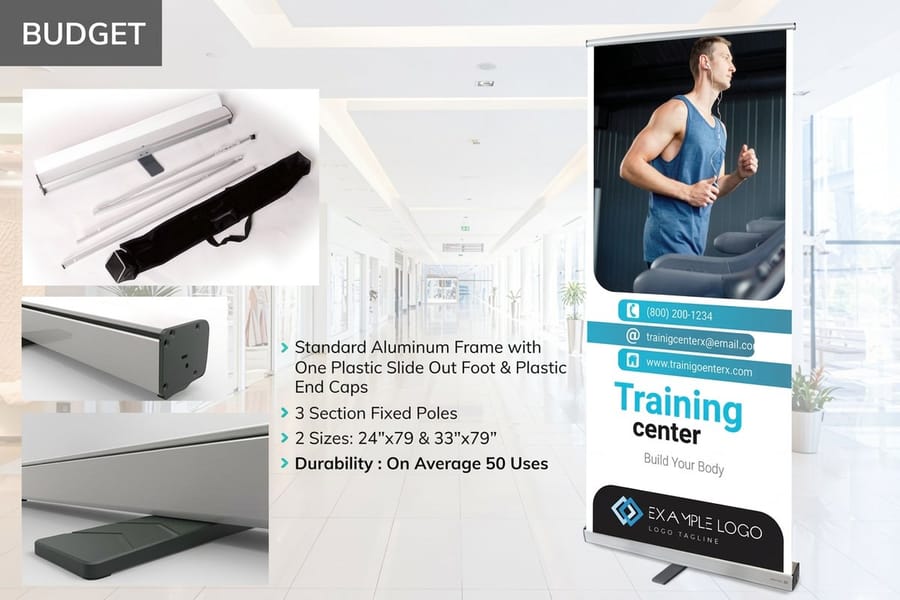
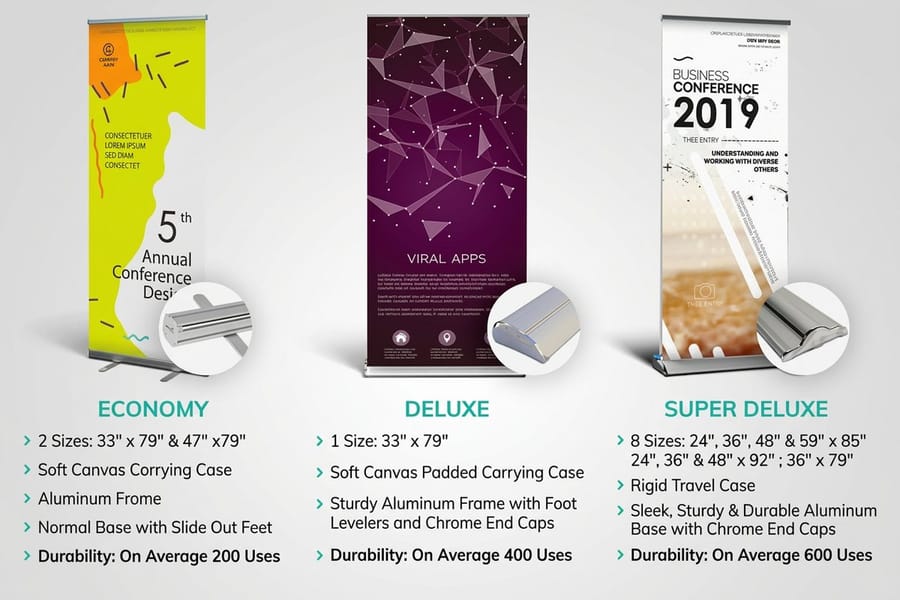
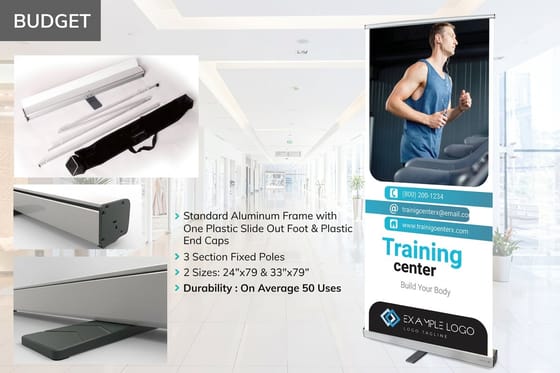
A fixed background does more work here than most people expect. Shooting against a branded retractable banner stand, from $139, means a shoot in a meeting room in February matches one in the same room in June. Color, logo placement and lighting stay consistent, so your variants differ where you want them to differ and nowhere else. It also travels, so the same setup films at an event and the footage cuts together with everything else.
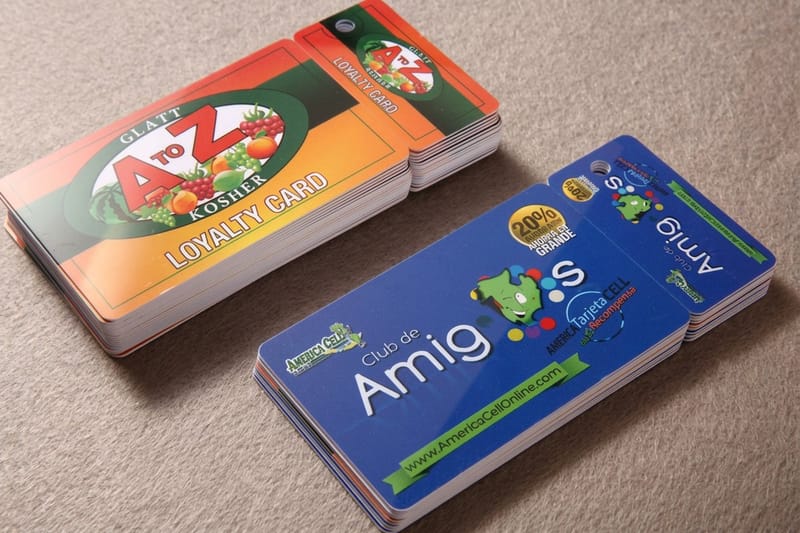
The other reliable source of volume is other people. Creator footage tests differently to studio footage because the opening does not look like an ad, and a seeded product is cheap next to a production day. Put a printed card and a die-cut sticker sheet in the box, from $93.37, with the brief and the hashtag on it: the sticker gets used on camera and the card stops the brief from vanishing into a direct message thread. The UGC conversion playbook covers how to brief that footage so it converts rather than just entertains, and standard business cards from $17.57 handle the same job when you meet creators in person.
Raising Spend Without Resetting What Already Works

Google Ads bid strategies are solving for a spend level, not just for a cost target. Change the spend level sharply and the strategy has to work out how to buy again, at a new rate, with your money. That is the whole mechanism behind the cost spike everyone sees after a big budget jump, and it is why the fix is patience rather than a lower target.
Steps of roughly a quarter of the current daily budget, held for several days before the next one, keep the disruption small enough to ride out. When you genuinely need a step change rather than a climb, duplicate the campaign at the higher budget and keep the original running. You lose a little efficiency to overlap and you keep a control that still works, which is a good trade the first time a scale attempt goes wrong.
Knowing what else disturbs the machine is worth as much as the budget rule.
| What you change | Effect on the campaign | Better move |
|---|---|---|
| Doubling daily budget | Forces the bid strategy to re-solve for a new spend level. | Step up by about a quarter, then hold for several days. |
| Cutting the target cost | Throttles delivery and can stall the campaign entirely. | Leave the target and improve the offer or the landing page. |
| Swapping the conversion action | Discards the history the strategy was trained on. | Add the new action alongside, and switch once it has volume. |
| Adding a new ad to a working group | Minor. This is the change the system is built to absorb. | Do this constantly. It is the only lever that scales cleanly. |
One caution about targeting while you scale. Layering audience on audience feels like control, but on YouTube it mostly narrows the pool that a strong ad could have reached anyway. Custom segments built from what people actually search for tend to outperform stacked affinity and in-market layers, and the broader setup gives the bid strategy room to find buyers you would not have listed. The paid marketing strategy guide works through where that logic stops applying.
Check the Number Before You Scale It, Then Plan the Ceiling
Video reporting is generous by design. A view-through conversion is credited when somebody saw your ad, never clicked, and bought within the attribution window, which sweeps up both real influence and people who were going to buy from you anyway. Scale on that column without testing it and you can triple spend against a number your bank balance never confirms.
The test is not complicated. Hold out a region, or a matched audience, for a few weeks and compare total orders rather than platform reported orders. If overall sales do not move when the campaign scales, you were paying to take credit for existing demand. Do this once, early, at a spend level you can afford to lose, and every later scaling decision gets easier. The content marketing analytics guide covers the reporting cadence around that, and the landing page frameworks guide covers the page that has to absorb the extra traffic once it arrives.
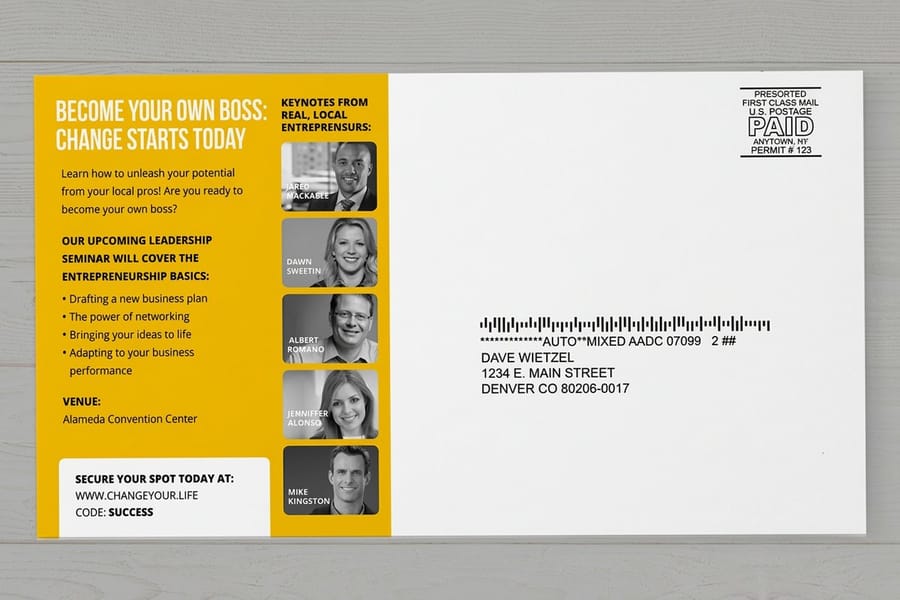
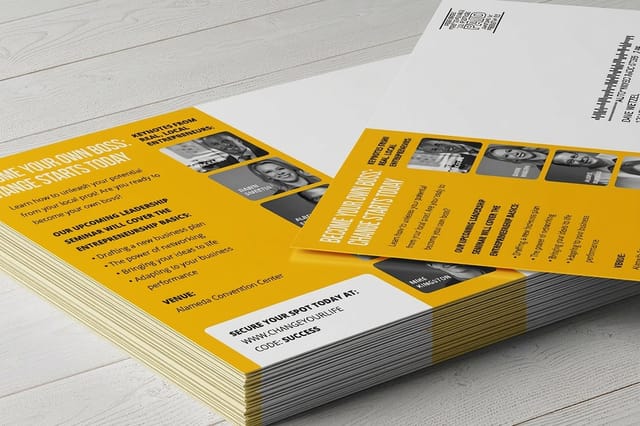
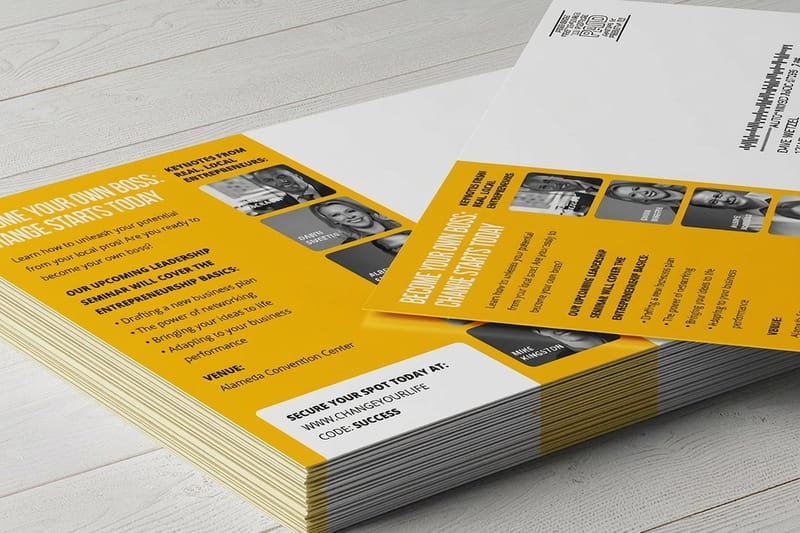
Every video account eventually reaches a point where frequency is high, fresh hooks stop resetting the cost, and each additional dollar buys the same viewer again. That is not a failure. It is the channel telling you where its edge ends, and the right response is to move the marginal budget somewhere with a different constraint. Direct mail postcards start at $89.68 with print, addressing and postage in one order, and there is no auction to bid against for a mailbox. If you already run your own list, standard postcards start at $16.48.
Mail also feeds the channel it follows. A postcard carrying a short URL or a QR code pushes people into branded search, which is the cheapest traffic in any account, and the frames that tested best in your video make the strongest postcard fronts because a large audience has already voted on them. Direct mail versus digital marketing compares what each channel costs to prove out, building a converting content funnel covers what to offer at each stage, and the direct mail services collection handles print, addressing and postage so nobody on the team is stuffing envelopes between shoots.
Wally explains scaling video ads
New hooks in, budget up one notch, and check the number is real
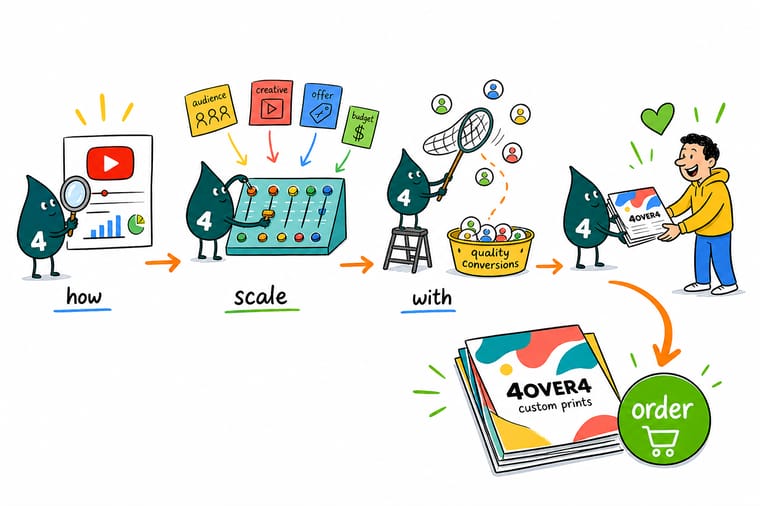
Wally does not widen the targeting when the cost climbs. He writes another opening five seconds, films it against the same banner so everything matches, and lets the weak ones die quietly. The budget dial moves one notch at a time and then sits still for a few days. Before he trusts a cheap cost per acquisition he holds out a region and checks whether total orders actually moved. When even fresh hooks stop helping, he stops bidding and mails the list instead.
Order retractable banner stands →Specs and pricing
The print side of a video campaign, sized and priced
Backdrops for filming, seeding stickers for creators and postcards for the offline follow-up, with live configuration choices and starting prices from the 4OVER4.COM configurator.



Print it
Print the parts of the funnel the auction cannot reach


Explore more
Where to go next



By the numbers
The print partner behind the campaigns at 4OVER4
Common Questions
Your YouTube ads scaling questions, answered
How much should I raise a YouTube ad budget at a time?
Small enough that the bid strategy keeps its footing, and then wait. A common working rule is a rise of roughly a quarter of the current daily budget, held for several days before the next step. The reason is mechanical rather than superstitious: a conversion bid strategy is solving for a spend level, and a big jump forces it to re-solve while spending your money at the new rate. If you need a step change rather than a climb, duplicating the campaign at the higher budget and letting the original keep running is usually safer than doubling in place, because you keep a control that still works.
Why does my cost per acquisition rise the moment I scale?
Three things happen at once and they are easy to blame on the wrong one. The bid strategy re-enters a learning stretch and buys less efficiently for a while. Frequency rises inside the audience you were already reaching, so the same viewers see the same ad again and respond less. And the auction reaches further out into people who fit your targeting loosely. Only the first one fixes itself. The second needs a new hook, the third needs an offer that holds up in front of a colder viewer.
Should I scale with skippable in-stream or Demand Gen?
Use both, for different jobs. Skippable in-stream buys attention from people watching something else, so it carries the cold end of the funnel and it is where hook quality shows up hardest. Demand Gen, which absorbed the old video action campaigns, serves feed style placements across YouTube, Shorts, Discover and Gmail, and it tends to pick up the warmer traffic more cheaply. Splitting them into separate campaigns matters more than choosing between them, because otherwise the cheap warm conversions hide whether the cold side is paying for itself.
How many video creatives do I need to keep scaling?
Enough that a new hook enters the account every week or two once you are past a modest budget. That is less production than it sounds, because most of the variation lives in the first five seconds. One core script, shot once, can generate a run of ads by changing only the opening line, the opening shot and the on-screen text. Cut the versions that never survive the skip point, keep filming against the same setup, and treat the winners as a template rather than a finish line.
Do view-through conversions actually count?
Some of them, and nobody can tell you which. A view-through conversion is credited when someone saw the ad, did not click, and converted later inside the attribution window. Part of that is real influence and part of it is people who would have bought regardless. The practical answer is to hold out a region or a matched audience for a few weeks and compare total orders, not platform reported orders. If total sales do not move when the campaign scales, the column was measuring your existing demand.
What should I do when YouTube stops scaling profitably?
Stop feeding it and move the money to a channel with a different constraint. Once frequency is high and fresh creative no longer resets the cost, extra budget is buying the same people twice. Print reaches a named list with no auction and no competing bidder: direct mail postcards start at $89.68 at 4OVER4.COM with print, addressing and postage handled in one order, and standard postcards start at $16.48 if you already run your own mailing. A postcard with a short URL or a QR code also feeds branded search, which is the cheapest traffic in any account.
Can I reuse my YouTube ad footage for anything else?
Yes, and most teams underuse it. The frames that tested best as a hook make good still assets, because they have already been judged by a few hundred thousand people. Pull them into a landing page hero, a retargeting postcard and the trade show backdrop so the same visual keeps working after the impression is paid for. Retractable banner stands start at $139 and die-cut stickers start at $93.37, which puts a whole physical set of your best performing frame inside the cost of a single day of media on most accounts.
Get Started
Order 500 direct mail postcards from $89.68 for the offline half
Film against a branded backdrop, seed creators with stickers they will actually use, and mail the people the auction keeps charging you to reach twice.
Legal Disclaimer
Gold Standard guarantees apply to all standard orders placed through 4over4.com. Price match requires verifiable proof of a competitor's published price for an equivalent product with matching specifications and turnaround time. Satisfaction guarantee covers manufacturing defects and print quality issues. Contact support with order number and documentation. On-time delivery rate based on tracked orders 1999 to 2026. Individual results may vary based on shipping carrier performance.
