
The UGC Conversion Playbook That Turns Customer Photos Into Sales


A working method for collecting customer photos, getting rights you can actually advertise with, and putting the shots where they move a sale. Written for brands with no content budget and no agency.
User generated content converts because it answers the question a studio photo cannot: what this looks like in a normal room, in normal light, owned by someone with nothing to gain. The playbook is four moves. Ask at the moment the order arrives, using something physical the buyer has to handle. Collect a written permission that names the use and the period. Place the photo where the doubt lives, next to the price and the size details rather than in a footer grid. Then measure it against a holdout, because a like is not a conversion rate.
Quick answer
Ask physically, get it in writing, place it beside the price
Customer photos convert because nobody was paid to take them. The loop has four steps and two known leaks. Ask while the buyer is holding the product, which is why a printed insert beats an email. Get a written yes that names the channel and the period, because a public post is not a license. Put the photo in gallery position two, beside the size details and in the cart, not in a wall at the bottom. Then hide the block from a slice of traffic and compare conversion rates, because engagement moves for reasons that have nothing to do with you.
What a Customer Photo Fixes That a Studio Shot Cannot
A studio photo answers what the product is. A customer photo answers whether it will look like that for you, which is the question that actually stalls a purchase.
Three specific doubts get settled. Scale, because a product shot on white has no reference and a photo on somebody's desk does. Color under real light, since a warm kitchen bulb and a phone camera show a shade that no color managed studio image will. And whether ordinary people buy this at all, which is a social question no amount of copywriting settles.
Name the limit too. Customer photos do very little on a specification driven purchase, where the buyer wants the dimension, the stock weight or the compliance detail and a phone snap does not carry it. They also work against you when the product genuinely needs controlled light to look right, and on a premium item they can pull perceived value down rather than up. If your positioning depends on polish, use customer photos for proof and keep the hero image controlled.
There is a prerequisite people skip. Nobody can tag an account they cannot spell, so the handle has to appear where it is read slowly, not just in a website footer. Printing it on the back of your standard business cards, which start at $17.57, is the cheapest place to start, and our notes on writing an Instagram handle on a business card and on social media icons on business cards cover the layout traps.
The Ask, and Why It Has to Be Something They Hold
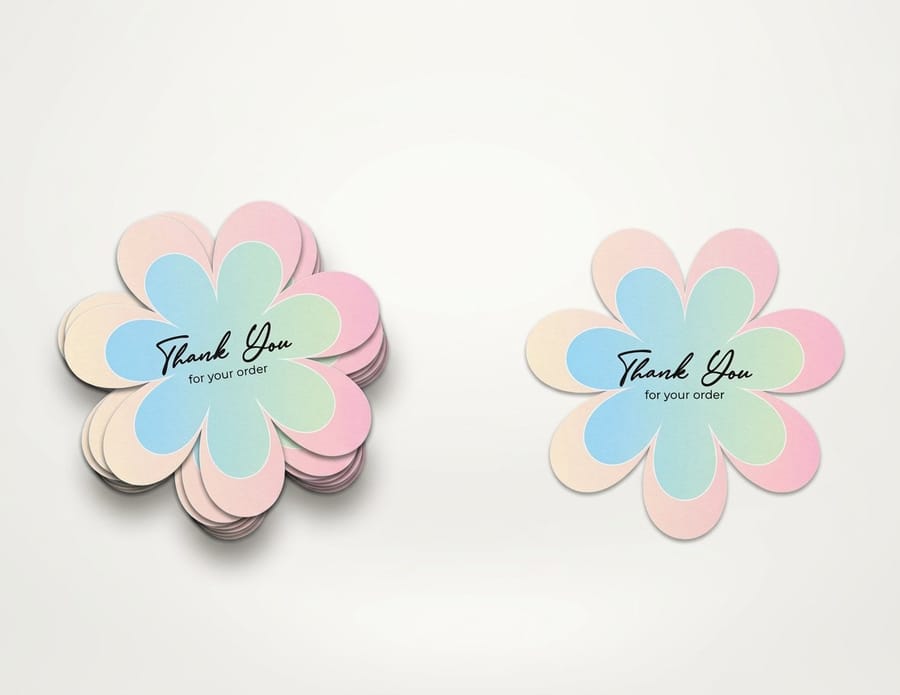
The email ask competes with every other unread message. The card in the box arrives at the one moment the buyer is holding the product and feeling good about the decision, which is why a printed insert consistently outperforms the same words sent digitally.
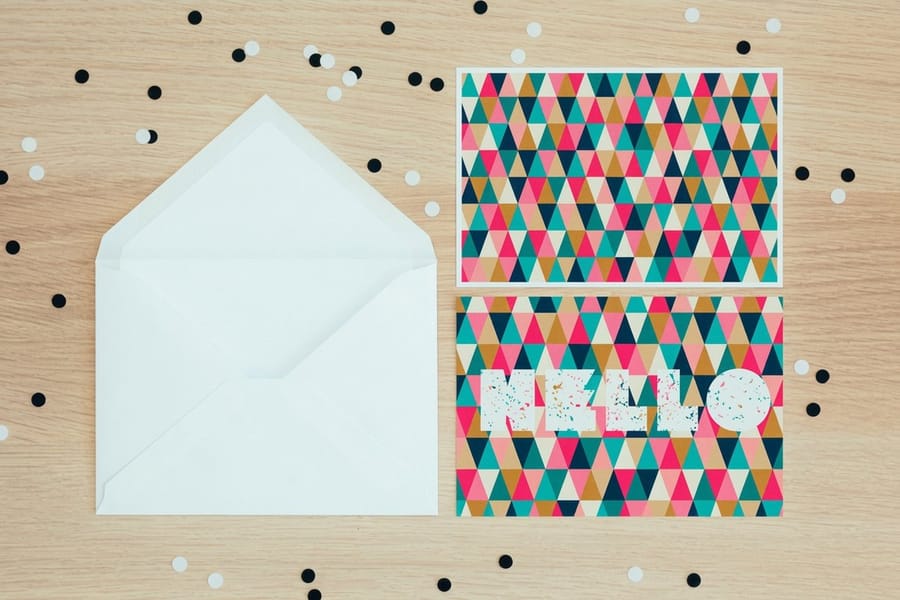
Keep it to one instruction. A 4 by 6 insert with a single line of what to photograph, the handle, a QR code, and one honest reason to bother is enough. Two instructions halve the response, and a paragraph of brand story kills it outright. Standard postcards start at $16.48 and are the default format for this. If you want a longer lived prompt, die cut stickers from $93.37 get photographed on laptops and bottles for years without any further ask, which is the point this piece on stickers as a rebranding tool makes at length.
| Ask channel | What it costs to start | When it lands | What kills it |
|---|---|---|---|
| Insert card in the box | Standard postcards from $16.48 | The unboxing minute, product in hand | A wall of text with no single instruction |
| Sticker in the box | Die cut stickers from $93.37 | Days or months later, wherever it gets stuck | A bare logo that gives nobody a reason to display it |
| Counter or table card | Table tents from $554.39 | While the customer is waiting anyway | A hashtag nobody can remember or spell |
| Post purchase email | Free with your existing email tool | Two to five days after delivery | Arriving beside forty other unread messages |
| Handout at an event | Standard flyers from $39.54 | While you are standing in front of them | Passing it over without saying the ask out loud |
Read the last column before the second one. Every one of these fails for a reason that costs nothing to fix, which is why testing the wording matters more than the format. Print fifty cards, ship them, count the scans, then reprint. Our thank you postcard design guide covers the layout, the QR code walkthrough covers the code, and if the box itself is part of the experience the subscription box and unboxing guide is where the insert fits in the packing sequence.
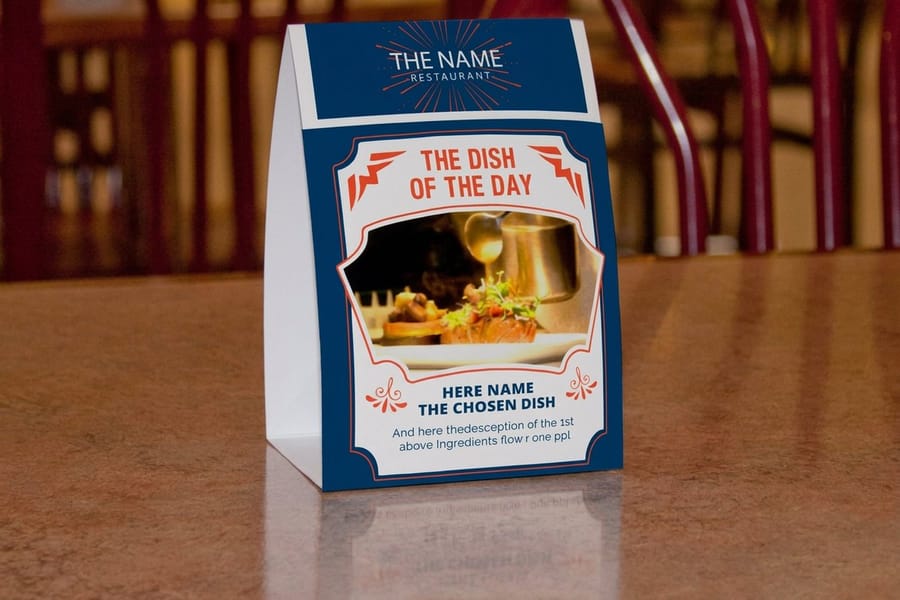
One warning on the counter card. Table tents start at $554.39, which is a different order of commitment from a postcard, so they only make sense once you know the wording works and you have a room full of waiting customers to put them in front of.
Rights, Credit, and the Line You Print on the Card
Someone tagging you has given you nothing you can advertise with. Platform terms grant the platform a broad license to the content, and grant you the in app share tools. That is the whole extent of it.
What you need instead is short and boring. Send a request that names the channels, names the use, and names a period. Something like: may we use this photo on our product page and in paid social for twelve months, credited to your handle. Keep the reply. Screenshot it, save it beside the image file, and record the date it expires. A named period gets more people to agree than asking to keep it forever, and the cost is that you have to track the expiry rather than forget about it.
Two hard limits. If a person is recognizable in the frame, that person has to agree separately, and if it is a child you need a parent. If somebody else's artwork, logo or music sits in the shot, leave it alone rather than argue about it later.
You can print a participation line on the physical prompt, and it does real work: post with the hashtag and you agree we may share your photo on our site and social. Put it in small type on the tent card or the insert. But treat it as a floor, not a ceiling. A printed line is easy for someone to say they never read, and a direct yes in writing is not. For anything running as a paid ad, ask again. If the ask is part of a recurring program rather than a one off, the mechanics in the customer loyalty card guide transfer directly, and the wider budgeting question belongs in your small business marketing plan.
Credit the handle every time. It is the polite thing, it keeps people posting, and it doubles as your record of where the image came from when someone asks six months later.
Placement, and the Only Number That Settles It
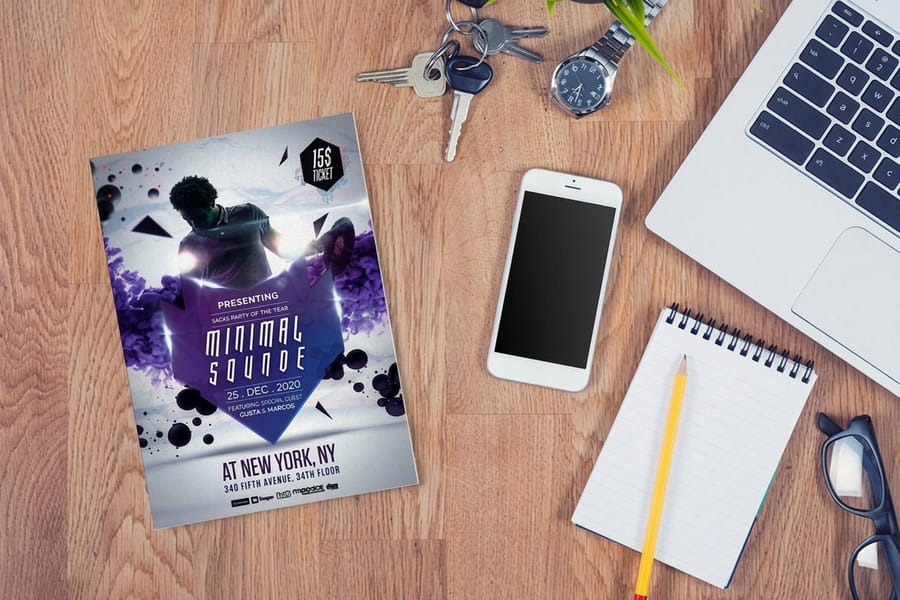
The rule is one line long: put the photo next to the sentence it proves. A shot of the product on a desk belongs beside the dimensions, not in a feed widget three screens down.
In order of return: gallery positions two to four, the size or fit block, the cart, the post purchase email, then paid social. Print is the step most brands forget. A customer photo on a standard flyer from $39.54 reads as a testimonial where a stock image reads as decoration, and you already own the file. The same photo carries a counter card, a poster and a sticker sheet without another shoot.
- Gallery slots two to four. Position one still has to explain the product on a clean background, because that image travels into search results and the cart.
- Beside the size or fit copy. This is where the specific doubt lives, and a photo answers it faster than another paragraph.
- In the cart. Second thoughts happen here, and one familiar image does more than a trust badge.
- In the post purchase email. It shows the next buyer what to send, which feeds the loop rather than just decorating it.
- In print. Flyers, counter cards and posters where a real photo beats stock at no extra cost.
Then measure it properly. Engagement is not a conversion rate, and a photo block going live in the same week as a price change tells you nothing. Hold back the block from a slice of traffic, run it for long enough to clear your normal weekly swing, and compare the two conversion rates. Rotate the photos quarterly, because a wall that has not changed in a year starts to read as a fixed part of the template rather than as recent proof.
If the loop keeps running you will end up with more images than places to put them, which is a good problem. Social content ideas for small brands and the Instagram post template guide cover how to space them out, and twelve postcard marketing ideas covers the print side. Everything the loop needs to run is in marketing materials, from postcard printing to sticker printing.
Wally explains the UGC loop
Ask in the box, get it in writing, put it beside the price
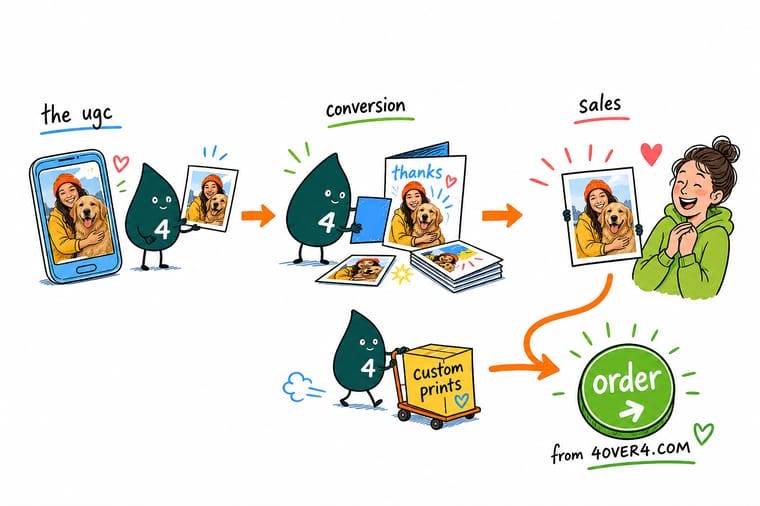
Wally slips one small card into every box with a single instruction on it, because that is the only step in the loop he fully controls. The photo comes back, he writes to the customer and asks in plain words whether he may use it on the product page and in ads for a year, and he keeps the reply. Then he puts it in gallery slot two, right beside the price, where the shopper is hesitating. He hides it from a slice of traffic for two weeks so he knows whether it actually did anything.
Print your insert cards →Specs and pricing
The three assets that carry the ask
Sizes, stocks and starting prices for the insert card, the sticker and the event handout, straight from the 4OVER4.COM configurator.

Print it
Put the ask in the box this week
Explore more
Where to go next




By the numbers
The print side of the loop, handled at 4OVER4
Common Questions
Your UGC questions, answered
How many customer photos do I actually need per product?
Three good ones beat sixty near identical ones. Pick photos that each settle a different doubt: one that shows scale against something familiar, one that shows the real color in ordinary daylight, and one that shows the thing in use rather than posed. A grid of sixty shots of the same angle adds page weight and answers nothing new. Once you have the three, the useful next step is a fourth from a customer who is visibly not your target demographic, because it widens who can picture themselves owning it.
Do I have to pay customers for their photos?
No, and paying changes what you receive. An unpaid customer photo carries weight precisely because the person had nothing to gain. A feature on your page, a discount code, or early access is usually enough to get a yes. The moment money or free product changes hands you have created a material connection, and in the United States that has to be disclosed inside the post itself under the FTC endorsement guides. That is not a reason to avoid paying, only a reason to know which of the two things you are buying.
What is the difference between UGC and influencer content?
Who was paid, and how the result reads. Influencer content is commissioned, scripted to a brief, and shot by someone with an audience you are renting. User generated content is what a normal buyer made because they liked the thing. Content agencies now sell so called UGC style video, which is commissioned footage made to look unpaid. It can perform well, but it is advertising and it has to be labeled as advertising. Do not file it in the same bucket as the photo your customer took on their kitchen table, because the two behave differently when a shopper looks closely.
Where should customer photos go on a product page?
Not in position one. The first image still has to do the plain job of showing what the product is on a clean background, because that is the image the shopper scans in results and in the cart. Positions two to four are where a customer shot earns its slot. After that, drop one beside the size or fit copy, since that is where the specific doubt sits, and one in the cart where second thoughts happen. A wall of photos in the footer is the placement people default to and the one that does the least.
How do I get photos when almost nobody posts?
Ask individually before you ask at scale. Write to your last fifty buyers by name, say what you would like a photo of, say where it would appear, and offer to credit them. A direct request to a happy buyer converts far better than a hashtag campaign shouted at everyone. Then fix the systemic reason nobody posted: no printed ask in the box, a handle nobody can spell, or a hashtag that is already crowded with unrelated posts. Print the ask, keep it to one instruction, and measure scans per hundred boxes.
Can I use a customer photo in a paid ad?
Only with permission that says so in words. The platform terms let the platform sublicense the content, not you, and reposting inside the app is not the same right as running the image as an ad. Send a short request that names paid advertising, names the channels, and names how long. Keep the reply. If a person is recognizable in the frame you also need that person to agree, and if the person is a child you need a parent. Naming a period such as twelve months gets more people to say yes than asking for it forever, as long as you actually track the expiry.
Get Started
Table tents run 250 for $554.39, or $2.22 a table
One 4 by 6 card, one instruction, one handle, one QR code. Print fifty, ship them, count the scans, then print the version that worked.
Legal Disclaimer
Gold Standard guarantees apply to all standard orders placed through 4over4.com. Price match requires verifiable proof of a competitor's published price for an equivalent product with matching specifications and turnaround time. Satisfaction guarantee covers manufacturing defects and print quality issues. Contact support with order number and documentation. On-time delivery rate based on tracked orders 1999 to 2026. Individual results may vary based on shipping carrier performance.
