
How to Frame Canvas Prints for a Polished Gallery Look


Pick a floater frame for a modern gallery gap or a traditional frame to cover raw edges, then hang the canvas at gallery height and level the top edge. The floater gap is the one choice you cannot undo once the frame is on.
To frame a canvas print, match the frame to the canvas: use a floater frame for stretched canvases with finished edges, or a traditional frame to cover unfinished edges. Center the canvas with even spacers, secure it with offset clips or framing points, then hang it around 57 inches from the floor on a stud or a rated wall anchor and level the top edge.

Quick tips
Quick tips for framing your canvas prints
Frame canvas prints to match the look you want and the space they hang in. Floater frames give a modern gallery gap, traditional frames hide unfinished edges, and DIY strip frames keep the cost under $15. Measure the stretcher bars before buying, center the canvas at roughly 57 inches from the floor, and level the top edge. 4OVER4.COM canvas prints ship ready to frame with clean, consistent edges.
Why framing your canvas prints changes everything
A canvas print on its own already looks good. A framed canvas print looks finished. That is the difference between something hanging on a wall and something that clearly belongs there. A frame adds structure, protects the edges, and gives the piece a polished border that catches the eye from across the room.
You do not need pro skills or expensive tools to frame canvas prints well. A well chosen frame protects the print, adds visual depth, and makes any wall look intentional. 4OVER4.COM has helped 150,000+ businesses produce print they are proud to display, and with 10,000+ reviews at a 4.8 out of 5 rating, these prints are worth framing right.
If your display idea goes beyond a standard print, 4OVER4.COM custom projects bring bigger concepts to life, and the loyalty program earns rewards on every order. This guide walks you through choosing a frame style, framing with floater or traditional frames, hanging at gallery height, and caring for the finished piece.
Choosing the right frame style for your canvas

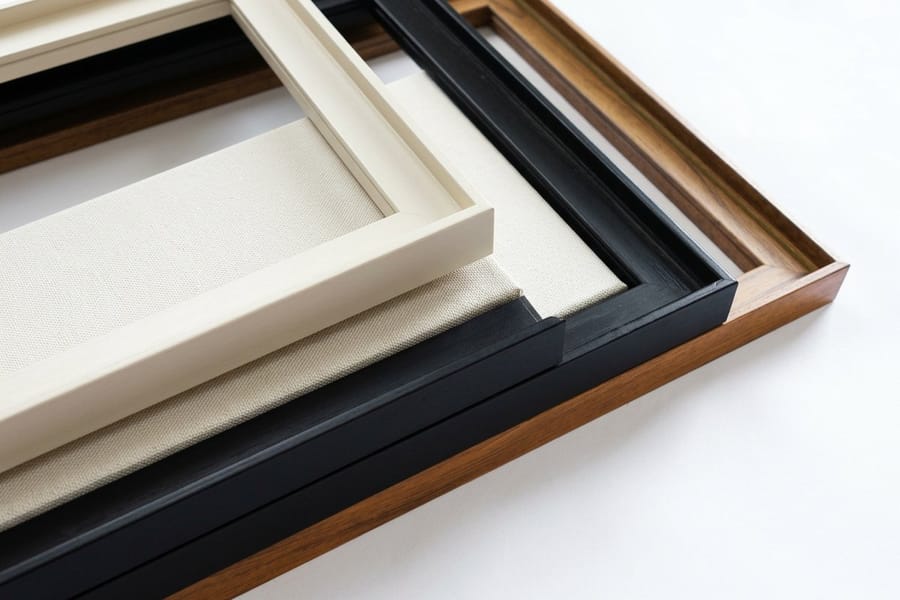
Not every frame suits every canvas. The right pick depends on the look you want, the thickness of the canvas, and where it will hang. These are the main options.
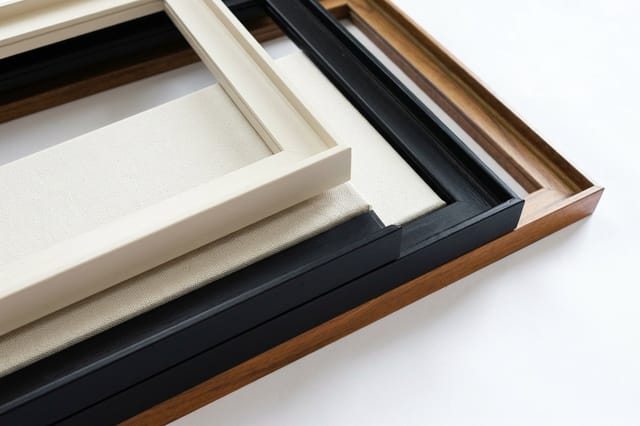
- Floater frames sit slightly away from the canvas edge, creating a shadow gap that gives a modern, gallery style look. Best for stretched canvases with painted or wrapped edges.
- Traditional picture frames cover the canvas edges completely. They work when you want a classic, formal feel or need to hide unfinished edges.
- L shaped frames overlap the front edge of the canvas slightly, for a clean, contained look without the floating effect.
- DIY strip frames are simple wood strips attached to each side of the canvas. Budget friendly and easy to customize with paint or stain.
Measure the canvas carefully before you buy anything. You need the outer dimensions of the stretcher bars, not just the image area. A frame that is even a quarter inch off will look wrong or will not fit at all. Our premium canvas prints ship with consistent stretcher bar sizes, so your measurements stay predictable.
Tools and materials you will need

Gather everything before you start. Nothing kills momentum like a trip to the hardware store halfway through the project. The short list for most framing jobs runs to seven items.
- Frame (floater, traditional, or DIY materials)
- Measuring tape and a pencil for marking
- Small finishing nails or offset clips
- Hammer or nail gun
- D ring hangers or sawtooth hangers
- Picture hanging wire for heavier pieces
- Level
- Wall anchors if you hang on drywall without a stud
Framing several canvases for a gallery wall? Grab some kraft paper and painter's tape too, so you can map the layout on the wall before you commit to any nail holes. For more hands on print projects, the how to make flyers guide and the how to fold a brochure guide cover more DIY print tips.
How to frame canvas prints with a floater frame
Floater frames are the most popular choice for stretched canvases, and they are the easiest to get right. Work through these four steps.
Step 1: Check the depth. The canvas needs to sit inside the frame with a small gap on all sides, usually about 1/8 to 1/4 inch, and sit slightly below the top edge of the frame. That is what creates the floating illusion.
Step 2: Center the canvas. Lay the canvas face down on a clean surface and set the frame upside down on top of it. Use spacers, small pieces of cardboard or foam work well, to keep the gap even on all four sides.
Step 3: Secure with offset clips. Offset clips screw into the frame and press against the stretcher bars to hold the canvas in place. Space them evenly, two per side for small canvases and three or four per side for larger ones. Tighten them snug, but do not overtorque and warp the bars.
Step 4: Add hanging hardware. Attach D ring hangers about one third of the way down from the top on each side, then run picture wire between them with about 2 inches of slack when pulled taut at the center. For canvases under 10 pounds, a single sawtooth hanger centered at the top works fine.
Framing with a traditional picture frame
If your canvas has unfinished edges or you prefer a more classic look, a traditional frame does the job, and the process is a little different.
Measure the face of the canvas, the image area rather than the outer stretcher bar size. You need a frame with a rabbet, the inner lip, deep enough for the canvas thickness. Most stretched canvases run 0.75 to 1.5 inches deep.
Fit the canvas into the frame so it sits snugly with the image visible through the front opening. If it is slightly loose, add small wedges or foam strips along the inside edges to stop it shifting. Secure it from the back with glazier points or flexible framing points pushed into the rabbet, or offset clips for deeper canvases, then attach the hanging hardware to the frame rather than the canvas.
Traditional frames add weight, so make sure your wall hardware can handle it. A 24 by 36 framed canvas can easily top 15 pounds. If you enjoy detailed print and craft projects, you might also like the custom magnets guide and the how to make envelopes guide.
How to hang canvas prints securely
Framing is half the battle. Hanging is where things go sideways, literally, if you rush it. Level the top edge rather than the frame and the canvas reads straight from across the room.
Find your spot. The center of the canvas should sit at roughly 57 inches from the floor, standard gallery height. It reads right from a standing eye line and from a seated one.
Locate a stud if you can. A stud finder takes 30 seconds and saves you from a canvas crashing down at 2 in the morning. If there is no stud where you want it, use a wall anchor rated for at least twice the weight of the framed canvas.
Mark and measure. Hold the canvas to the wall and mark the top center with a light pencil line. Measure from the taut wire or hanger to the top of the frame, then move your mark down by that distance. That is where the nail or hook goes.
Hang and level. Drive the nail or hook at a slight upward angle, hang the canvas, then lay a level across the top edge and adjust until it is straight. Step back about 8 feet and check it from viewing distance. For a gallery wall, space frames 2 to 3 inches apart and test the layout with kraft paper cutouts taped up first. Consistent spacing matters more than perfect symmetry.
DIY frame options on a budget
You do not need to spend a lot to frame canvas prints well. These budget options look sharp when the print underneath is solid.
Wood strip frames. Buy four pieces of 1x2 lumber, cut them to length with 45 degree miters at each end, sand and stain or paint, then attach them to the sides of the canvas with small finishing nails or wood glue. Total cost runs under $15 for most sizes.
Painted edge treatment. Instead of a physical frame, paint the canvas edges in a complementary color. Black works with almost anything. It is not technically framing, but it gives a finished look with zero hardware.
Washi tape borders. For temporary or seasonal displays, thick washi tape along the edges adds a decorative border that is easy to change with no commitment. When your print quality is high, even a simple treatment looks intentional. Browse the full guide hub for more step by step projects from print finishing to display.
Caring for framed canvas prints

Once the canvas is framed and hung, a little upkeep keeps it looking fresh for years.
Dust regularly. Use a soft, dry microfiber cloth and wipe gently in one direction. Skip household cleaners, water, or anything wet, because moisture can damage the print surface and warp the material.
Avoid direct sunlight. UV light fades canvas prints over time. If a canvas hangs near a window, add UV protective glass to the frame or rotate the display seasonally.
Check the hardware every year. Wire stretches and nails loosen, so give the hanging hardware a quick check once a year, tighten the D ring screws, and replace worn wire before it becomes a problem. If you keep other print products around, the how to clean rubber stamps guide covers care tips for a different product.
Framing mistakes that ruin the look
Even seasoned DIYers trip over the same framing mistakes. Dodge these and your canvas hangs clean.
- Buying the wrong frame depth. If the frame is too shallow, the print pokes out the back. Always measure canvas thickness before you order.
- Skipping spacers on floater frames. Without even spacing the canvas drifts to one side and looks sloppy. Cardboard shims fix it in five minutes.
- Using nails without anchors on drywall. A framed canvas is heavier than it looks. Drywall anchors cost about a dollar and prevent heartbreak.
- Hanging too high. Most people hang art at standing eye level, but 57 inches from the floor to center is the sweet spot that works for everyone.
- Over tightening offset clips. That bows the stretcher bars inward. Snug is enough. If the canvas does not rattle when you tap the frame, you are good.
4OVER4.COM canvas prints arrive ready to frame with clean edges and consistent stretcher bar dimensions, so a quality print clears half these headaches before you pick up a hammer.
Canvas prints and print products worth pairing
Once you have framing down, you might want to build out a full display. 4OVER4.COM offers 1,000+ products that pair with framed canvases, from branded signage for retail walls to custom booklets for artist portfolios and promotional pieces for gallery events. Quality framing starts with quality printing, so when the canvas is vivid and sharp on sturdy material, the frame simply finishes a strong piece.
Want to compare sizes and specs before you order a frame? The 4OVER4.COM help center answers canvas print questions, and square canvas prints and framed canvas give you ready made options for a symmetrical gallery wall.
Wally explains canvas framing
The frame is the last inch that makes a wall say gallery
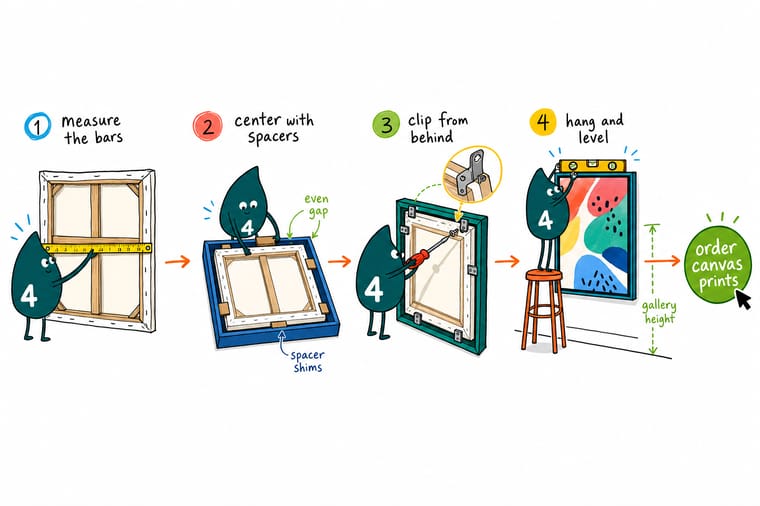
Wally treats the frame as the last inch of a print job. The canvas can be beautiful, but the frame is what makes a wall say gallery. Match a floater frame to a finished edge, hang it at 57 inches, level the top, and the piece reads intentional from across the room. Start with a sharp, sturdy canvas print built to frame and the frame simply finishes the story.
Order canvas prints →Print it
Canvas prints, ready to frame
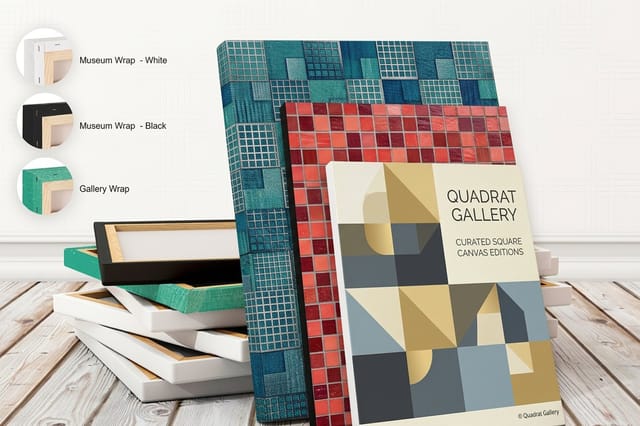
Start with a sharp, sturdy canvas print and the frame just finishes it. Premium and square canvas prints ship in 3 business days and framed canvas in 4, with live pricing below.

See it in use
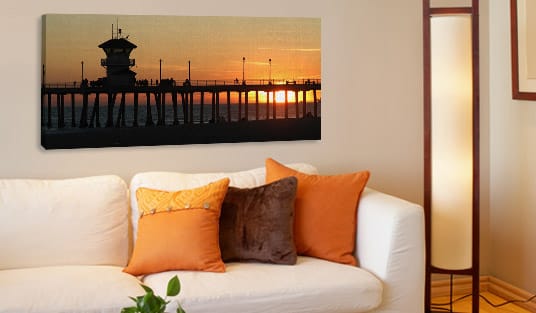
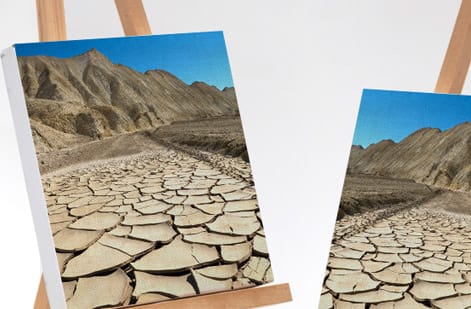
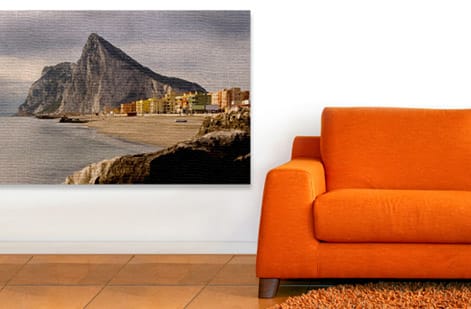
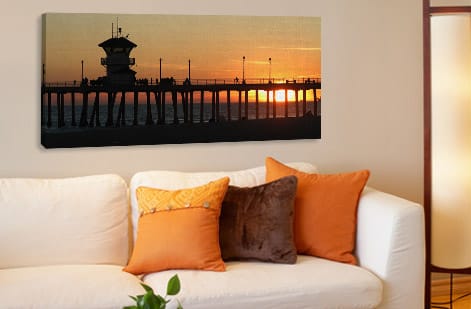
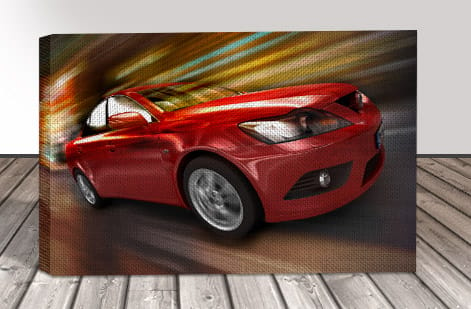
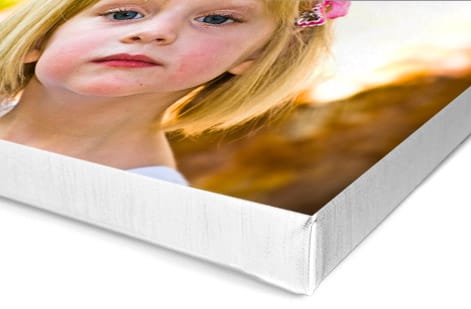
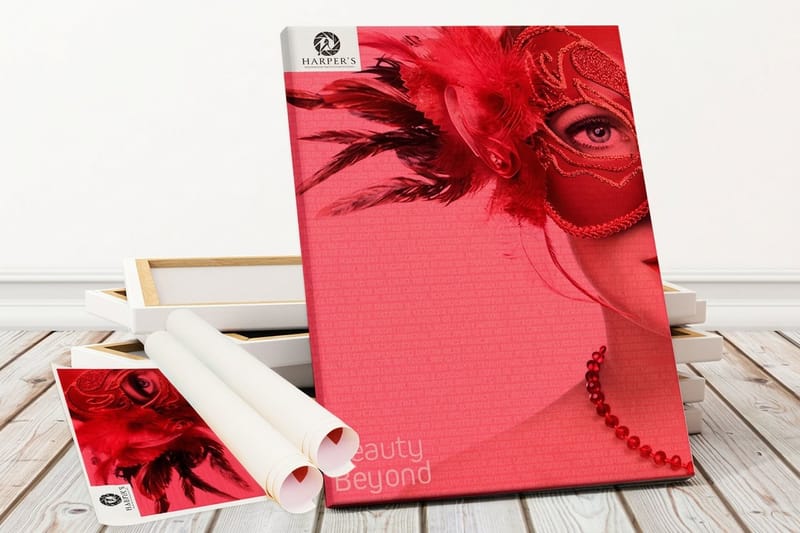
Canvases we stretched and framed for customers


Explore more
Where to go next



By the numbers
The canvas side of a 1,000+ product catalog
Common Questions
Your canvas print framing questions, answered
Do canvas prints need to be framed?
No. Stretched canvas prints can hang on their own with hanging hardware attached to the stretcher bars. Framing simply adds a polished, finished look and protects the edges from dings and dust. Gallery wrapped canvases look great either way, so framing is a style choice rather than a requirement.
What type of frame works best for canvas prints?
Floater frames are the most popular option for stretched canvases. They leave a small gap between the canvas and the frame for a modern gallery look. Traditional frames work better when you want to cover unfinished edges or prefer a classic feel. Match the frame style to your room decor.
How do I measure a canvas print for framing?
Measure the outer dimensions of the stretcher bars for a floater frame. For a traditional frame, measure the face, meaning the image area, of the canvas. Always measure the depth too, because the frame rabbet needs to be deep enough to hold the full thickness of the canvas.
How to hang canvas prints without damaging walls?
Use adhesive hanging strips rated for the weight of your framed canvas. Command strips handle lighter pieces under 8 pounds. For heavier framed canvases, removable wall anchors leave smaller holes than standard nails. You can also lean a large framed canvas on a shelf or mantle for a damage free display.
Can I frame a canvas print myself or should I hire someone?
DIY framing is straightforward with the right tools. Floater frames with offset clips take about 20 minutes per canvas and need no special skills. Professional framing makes sense for very large pieces over 40 inches or valuable originals where you want archival materials and a flawless finish.
How much does it cost to frame a canvas print?
DIY floater frames run $20 to $60 depending on size and material. Custom framing at a shop costs $75 to $300 or more. DIY strip frames made from lumber can come in under $15. Frame material is the biggest factor, since wood costs more than composite and metal sits somewhere in between.
Get Started
Order a framed canvas, printed in 4 business days
Pick your size and wrap, upload your art, and we print a vivid, sturdy canvas that frames and hangs clean every time.
Legal Disclaimer
Gold Standard guarantees apply to all standard orders placed through 4over4.com. Price match requires verifiable proof of a competitor's published price for an equivalent product with matching specifications and turnaround time. Satisfaction guarantee covers manufacturing defects and print quality issues. Contact support with order number and documentation. On-time delivery rate based on tracked orders 1999 to 2026. Individual results may vary based on shipping carrier performance.
