
How to Choose Outdoor Advertising Signs That Survive the Weather and Get Read


Materials ranked by how long they really last outside, letter heights that match reading distance, and the mounting mistakes that tear signs off fences.
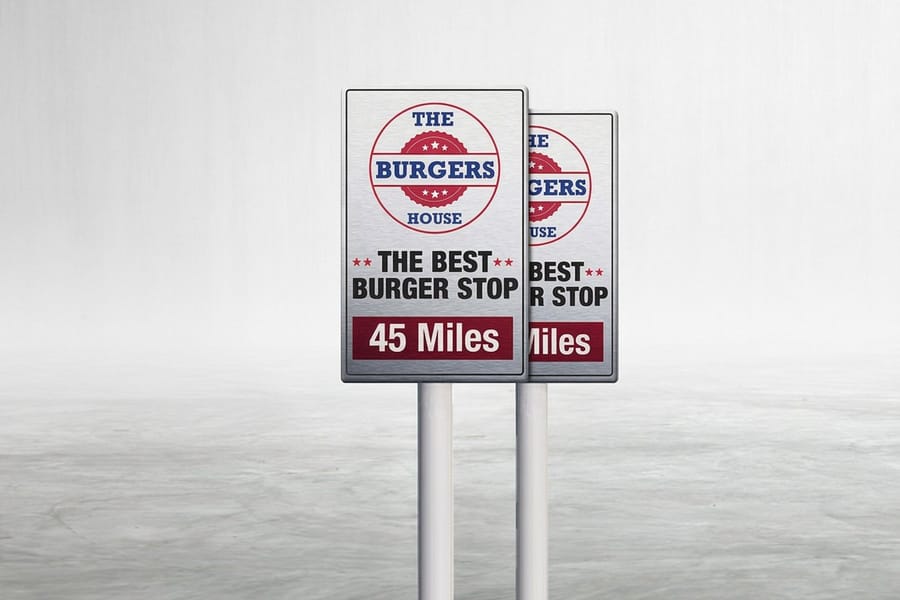
Choose an outdoor sign with two numbers: how many months it stays outside, which picks the material, and how far away it has to be read, which picks the size. Coroplast at $25 covers a season, expanded PVC covers a year in shade, aluminum at $36 outlives its own graphics, and vinyl or mesh banners cover width rather than lifespan. Size it at one inch of capital letter height per ten feet of reading distance, and use mesh anywhere wind is the real condition.
Quick answer
Time outside picks the material, reading distance picks the size
Decide how long the sign has to stay up before you decide what it is made of. A season on a lawn is coroplast, a year under cover is expanded PVC, and anything permanent on a post or a wall is aluminum. Then set the size from the distance it is read at, one inch of capital letter height per ten feet, and let the longest line dictate the panel. Banners are a separate answer for width rather than lifespan, and mesh replaces vinyl wherever wind is a real factor rather than an occasional one.
Start With Two Numbers, Not With a Material
Every outdoor sign decision rests on a pair of numbers, and once you have them the rest of the choices make themselves.
Number one: how many months does it stay outside. This picks the material. A weekend open house, a two week sale, a season long campaign and a permanent parking rule are four different substrates, and paying for the wrong end of that range is the most common way money gets wasted on signage. Nobody needs an aluminum panel for a garage sale, and nobody should be replacing a coroplast notice every four months because it went brittle.
Number two: from how far away does it have to be read. This picks the size. Reading distance sets letter height, letter height sets the longest line, and the longest line sets the panel. Work in that order and you stop guessing at dimensions.
Two smaller questions follow. Is it mounted flat against something solid, driven into soft ground, or stretched across an open span, because that decides between a rigid panel, a staked sign and a banner. And is it lit, backlit or read only in daylight, because a sign that has to work at night needs contrast far beyond what looks fine on screen at noon. Our guide to making custom signs walks the same decisions from the file side.
The Outdoor Sign Materials, and What Each One Is Actually For
Five substrates cover almost every outdoor advertising sign ordered in the United States. They are not interchangeable, and the differences show up in month three rather than on day one.
| Material | Rigidity | Realistic outdoor life | Best mount | Starts at |
|---|---|---|---|---|
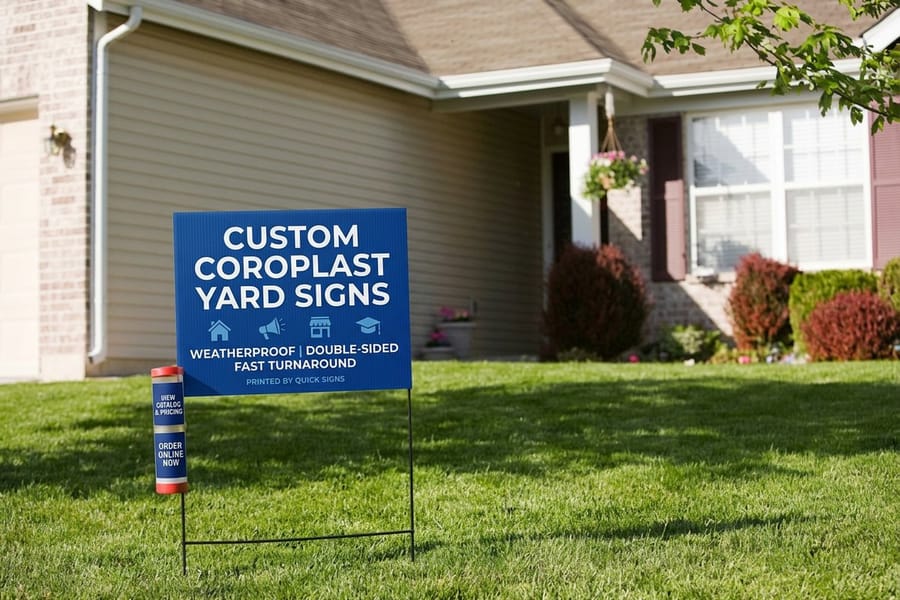
| Coroplast 4 mm | Light, fluted, flexes by hand | About one season before color and flutes go | H stakes in soft ground, zip ties on a fence | $25 |
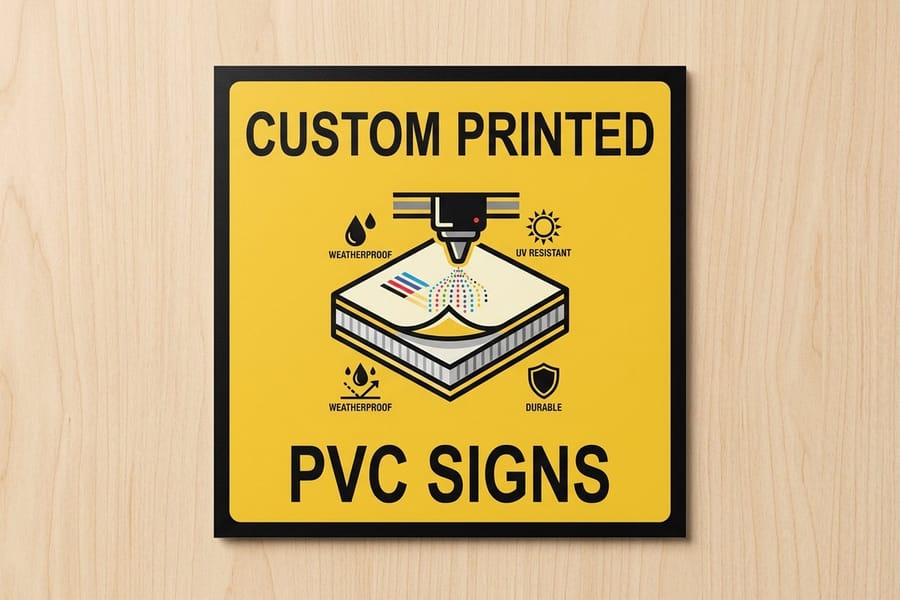
| Expanded PVC | Rigid but thermally active | A year or two, less in direct sun | Screws or standoffs on a wall, framed | $25 |
| Aluminum | Fully rigid, will not warp | Outlives its own printed graphics | Posts, brackets, walls, permanent fixings | $36 |
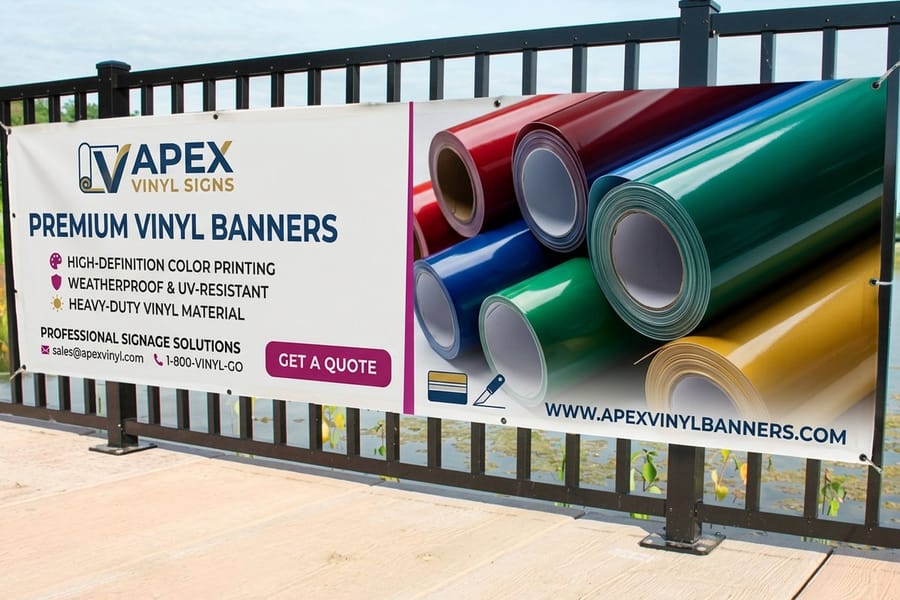
| Vinyl banner 13 oz | Flexible sheet, not a panel | A year or two, fails at the hem first | Grommets and rope across a span | $79 |
| Mesh banner | Flexible, perforated weave | Similar to vinyl, survives wind far better | Chain link fences, scaffolding, rails | $75 |
Read the third and fourth columns together. Coroplast yard signs are cheap because they are disposable by design, and treating them as permanent is what makes people think print quality was the problem. PVC signs give you a cleaner, heavier panel and cut to custom shapes well, but expanded PVC moves with temperature, so a wide unframed sheet in full afternoon sun will develop a bow. Aluminum signs are the only one of the rigid three that you install and forget.
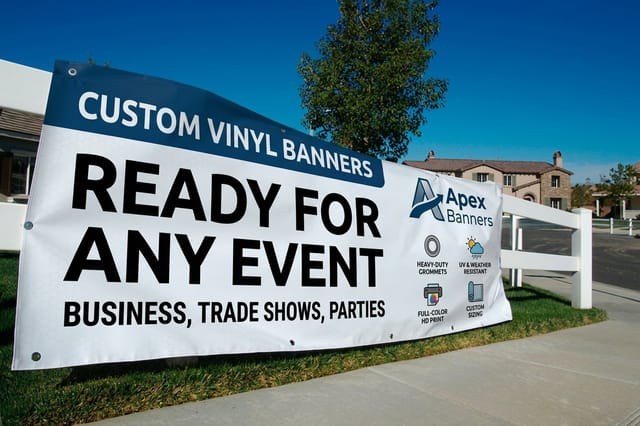
Banners are a different category rather than a cheaper panel. Vinyl banners buy you width at low cost, which is why storefronts and events use them, and mesh banners exist purely because solid vinyl behaves like a sail. If the sign has to be tall and narrow and grab attention at a driveway entrance, feather flags at $108.75 do that better than any flat panel, because motion catches the eye before shape does. For a clear finish with real presence at a reception or entrance, acrylic signs at $152.72 are the premium option, though acrylic belongs on covered or interior mounts rather than exposed weather.
Sizing for the Distance and the Speed It Gets Read At
The trade rule is one inch of capital letter height for every ten feet of comfortable reading distance. Push it to one inch per twenty five feet and the text is still technically legible, but only if somebody stops and looks for it, which is not what an advertising sign gets.
| Read from | Letter height | Typical panel | Where this happens |
|---|---|---|---|
| 15 to 30 ft | 2 to 3 in | 18 by 24 in yard sign | Sidewalk, lawn, door frontage |
| 40 to 60 ft | 4 to 6 in | 24 by 36 in rigid panel | Parking lot, driveway entrance |
| 80 to 120 ft | 8 to 12 in | 3 by 6 ft or larger banner | Building face, fence line, road frontage |
Speed changes the message before it changes the size. A person walking has several seconds with your sign. A driver at 40 mph has about two, which is enough for a name, one offer and one instruction, and nothing else. Cut the third line before you shrink the first one. A phone number nobody can dial at speed is wasted space that a website name or a short landmark instruction would have used better.
Contrast does more work than color choice. Dark type on a light field or light type on a dark field reads at distance, while two mid tone colors of similar value turn into mush by 50 feet even though they looked bold on the monitor. Skip thin serifs and script faces on anything read from a car. Keep a real margin around the text, because a busy background edge eats the first and last letter of every line at speed. If the sign will be read after dark, plan for reflection or lighting rather than assuming headlights do the job, and check our banner sizes guide before you commit a span to a size that no hardware fits.
Weather, Wind and Mounting: Where Outdoor Signs Really Fail
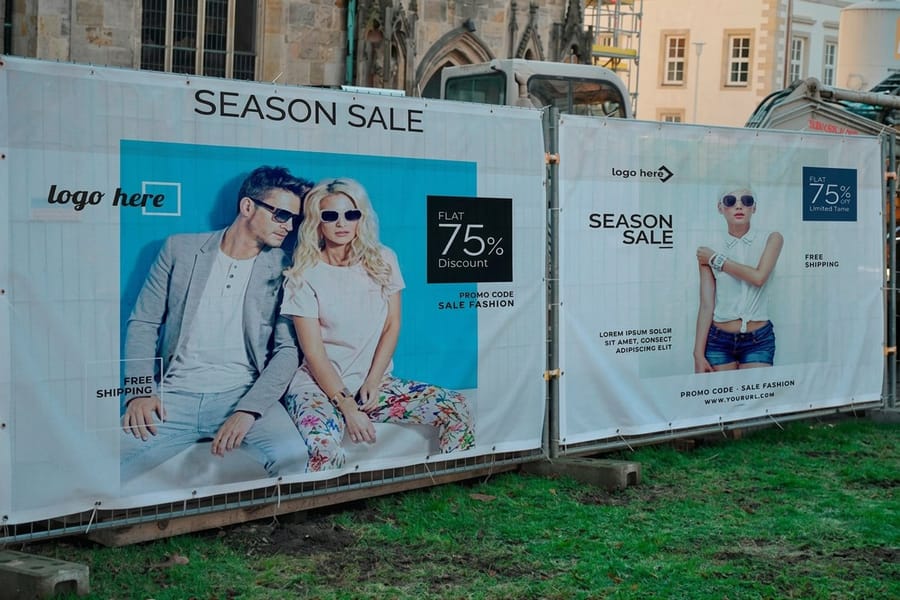
Signs almost never fail because the ink was wrong. They fail because of wind, because of how they were mounted, or because the substrate moved when the temperature did.
Wind is the main killer. A solid vinyl banner is a sail, and on a chain link fence it will pull its own grommets through the hem in the first serious gust. Wind slits are the popular fix and they underdeliver, because they only vent when the air lines up with the cut, and each slit gives the fabric a new place to start tearing. When wind is the real condition, order mesh. Space grommets at about two foot intervals and always put one in each corner, then tie through every one of them rather than the corners alone, because a banner tied at four points only concentrates the load.
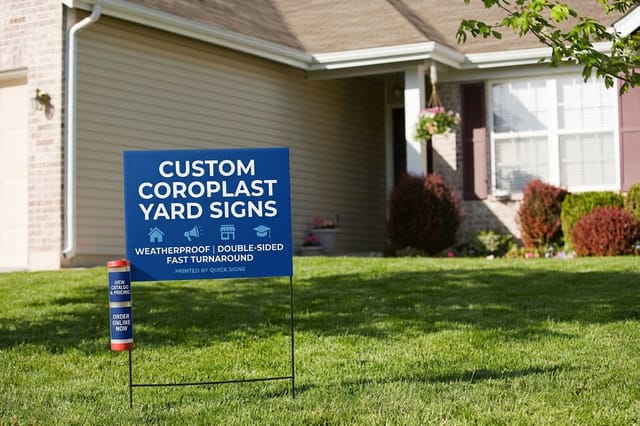
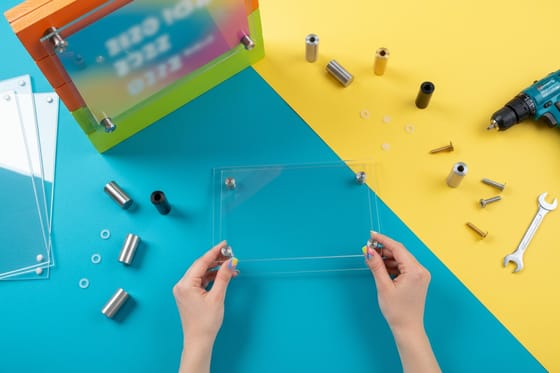
Mounting decides more than people expect. On coroplast, the flutes are hollow channels running in one direction, and an H stake slides into those channels. That means a stake mounted yard sign has to be printed with its flutes running vertically. Order it the other way and the stake has nothing to bite. On rigid panels, drilled holes want a grommet or a washer so the fixing does not slowly chew through the material, and a wall panel held off the surface with standoff hardware reads as real signage instead of a sheet taped up.
Sun and cold do the slow damage. Ultraviolet light flattens color long before it touches the substrate, and reds and oranges usually go first, so a design built around a deep red will look tired sooner than the same layout in blue. A UV laminate adds cost per square foot and buys real time back. Cold does the opposite kind of harm: coroplast that survived summer fine will crack at the stake slots on a hard freeze, which is why campaign and real estate signs get replaced in the spring. If you are ordering signs for a lawn or a listing, the real estate yard sign rules guide covers the placement rules that go with them, and how to make yard signs covers the file setup. Browse the full range on the rigid signs, yard signs and banners pages when you know which of the two numbers you are solving for.
Wally picks the outdoor sign
Count the months, then count the feet
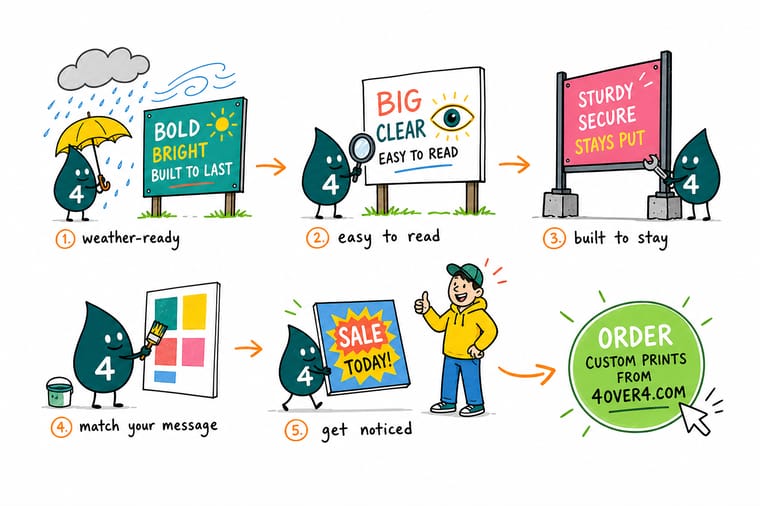
Wally asks two questions before he prints anything. How long does it stay outside, which tells him coroplast for a season, PVC for a covered year, aluminum for good. And how far away does somebody read it, which gives him an inch of letter height for every ten feet of distance. Then he checks the wind. Solid vinyl on a fence is a sail waiting to tear, so he swaps it for mesh and ties through every grommet, not just the corners.
Order aluminum signs →Specs and pricing
Sizes, materials and starting prices side by side
Compare the three substrates that cover most outdoor advertising, with live configuration options and starting prices straight from the 4OVER4.COM configurator.
Print it
Order a sign built for the time it has to stand there
Explore more
Where to go next
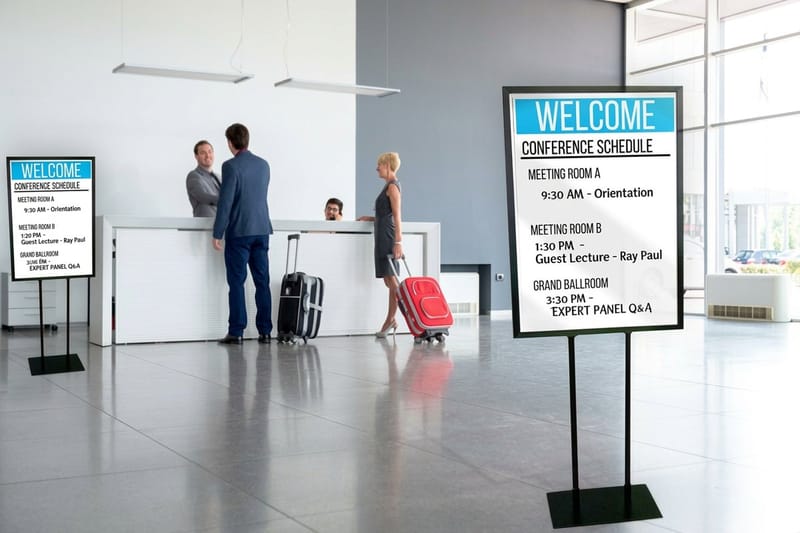
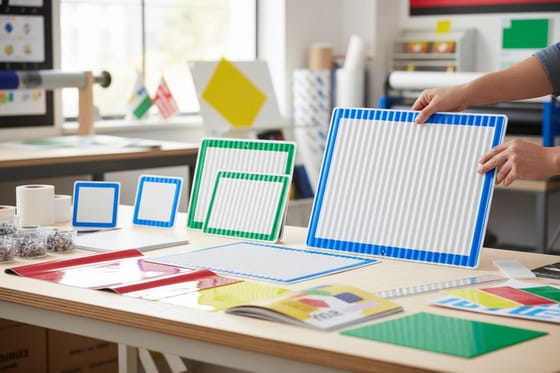

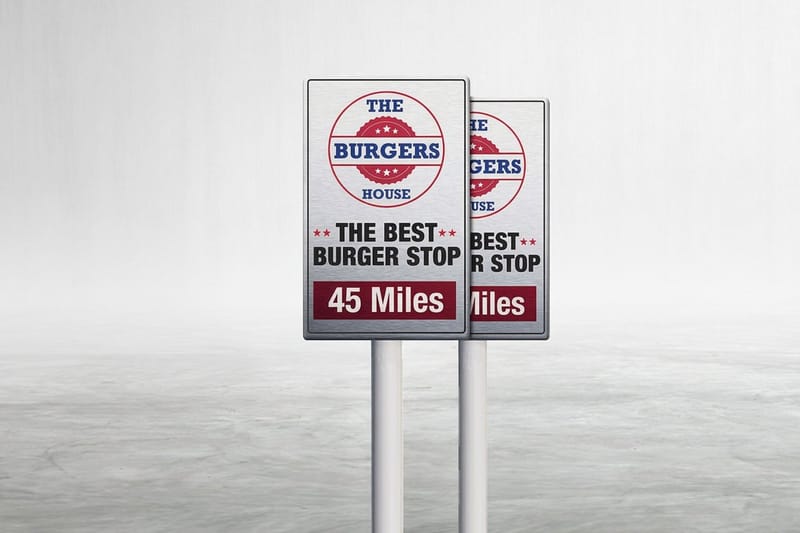

By the numbers
The substrates an outdoor sign can be printed on
Common Questions
Your outdoor sign questions, answered
What is the best material for an outdoor advertising sign?
There is no single best one, and anybody who names one without asking how long the sign stays up is guessing. For a few weeks on a lawn or a sidewalk, 4 mm coroplast is the right call and starts at $25. For a season under a covered entry, expanded PVC holds a cleaner edge. For anything that has to live through a full year of sun, rain and frost on a post or a wall, aluminum is the only one of the three that does not need replacing, and it starts at $36. Vinyl banners sit outside that comparison because they are not rigid at all, and they win on width rather than on lifespan.
How big does an outdoor sign need to be to read from the road?
Use one inch of capital letter height for every ten feet of reading distance, then size the panel around the longest line. Read from 30 feet on a sidewalk, that is 3 inch letters and an 18 by 24 inch panel is usually enough. Read from 100 feet across a parking lot, that is 10 inch letters, and a headline of four words already needs something closer to 4 feet wide. Speed tightens it further: a driver at 40 mph has roughly two seconds of usable reading time, so cut the message to a name, one offer, and one way to act.
How long do outdoor signs actually last?
Coroplast holds up for about a season before the color flattens and the flutes turn brittle in freezing weather. Expanded PVC lasts longer as a print but bows in direct summer sun once the panel gets past roughly two feet unframed. A 13 oz vinyl banner usually fails at the hem and grommets before the print gives out. Aluminum outlives its own graphics, so what you are really buying with aluminum is a panel you can refinish later. A UV laminate extends any of them, and full southern exposure shortens all of them.
Can PVC signs be used outdoors?
Yes, with one honest limit. Expanded PVC prints beautifully and cuts to shape cleanly, but it expands and contracts with temperature more than aluminum does, so a large unframed panel in direct sun will bow. Keep PVC to smaller panels, to shaded or covered mounting positions, or to jobs where the sign sits in a frame that holds it flat. When the panel is big and the sun is direct, aluminum is the answer.
Do vinyl banners need wind slits?
Slits help less than most people expect, and they cost you part of the artwork. A slit relieves pressure only when the air happens to line up with it, and the cut edges become the first place the banner tears. If the banner is going on a fence or across an open span where wind is the real problem, order a mesh banner instead. Mesh is a perforated weave that lets the air through, which is why it starts at $75 and is the standard choice for fences, scaffolding and stadium rails.
Do I need a permit for an outdoor advertising sign?
Often yes, and we cannot answer it for your address. Sign permits are set locally: many towns cap total square footage per business, restrict how close a sign sits to the property line, limit illumination, and treat temporary signs like real estate and election signage under a separate short term rule. Call the municipal building or zoning department before you order anything permanent. The one case where this bites hardest is a large wall or pylon sign that turns out to exceed the local area allowance after it is already printed.
Get Started
Order a coroplast yard sign, printed in 5 business days
Tell us how long it stays up and how far away it gets read, and we will print it on the substrate that lasts exactly that long, cut and drilled ready to mount.
Legal Disclaimer
Gold Standard guarantees apply to all standard orders placed through 4over4.com. Price match requires verifiable proof of a competitor's published price for an equivalent product with matching specifications and turnaround time. Satisfaction guarantee covers manufacturing defects and print quality issues. Contact support with order number and documentation. On-time delivery rate based on tracked orders 1999 to 2026. Individual results may vary based on shipping carrier performance.
