
Can Gift Certificates Expire? Rules You Need to Know


Federal law protects most gift certificates from expiring for at least five years, and many states go further. The five-year floor is federal, and your own state may push it out past that.
Can gift certificates expire? In most cases, no, not for a while. The federal Credit CARD Act of 2009 blocks expiration for at least five years from the purchase or last-load date, and states like California and Massachusetts ban expiration entirely. Paper certificates and plastic gift cards follow the same rules, inactivity fees are limited, and the safest move for any business is to skip the expiration date and disclose all terms clearly.

Quick answer
Gift certificate expiration rules you need to know
In most cases, federal law protects gift certificates from expiring for at least five years from the date of purchase, and state laws often add extra protection on top. Paper certificates and plastic gift cards sit under the same federal floor, but the state rules turn on where your business operates. 4OVER4.COM helps businesses create professional, compliant gift certificates that build customer trust and drive repeat visits.
What every business owner should know before printing gift certificates

Gift certificates are one of the simplest ways to bring new customers through your door. They feel personal, they feel generous, and they keep working long after the initial sale. But one question trips up business owners and recipients alike: can gift certificates expire?
Federal and state rules heavily restrict expiration dates on gift certificates and gift cards. Getting this wrong does more than frustrate customers, it can land you in real legal trouble. That is why understanding the rules matters before you print a single certificate.
A first batch and a refresh of an existing program use the same tools here. Grab ready-to-customize layouts from our design templates library, browse real work in our gift certificate showcase, and see our guide on how to clean rubber stamps if you are adding custom stamp branding to your certificates.
Federal law and gift certificate expiration: the CARD Act explained

The Credit CARD Act of 2009 is the federal baseline. It says gift cards and gift certificates cannot expire sooner than five years from the date of purchase or the date funds were last loaded. This covers most retail gift cards, store gift certificates, and general-use prepaid cards.
Inactivity fees, the charges that slowly drain a card balance, cannot kick in until at least 12 months of inactivity. Even then, a business can charge only one fee per month. The law is built to protect the person who paid from quietly losing value.
The part that matters most for small business owners is scope. If you print paper gift certificates for your salon, restaurant, or boutique, the CARD Act still applies to you. It makes no difference whether it is a plastic card with a magnetic stripe or a beautifully printed paper certificate. The rules cover both.
What counts as a gift certificate under federal law
The definition is broad. Any card, code, or certificate that stores a monetary value and can be redeemed for goods or services falls under the CARD Act. That includes:
- Paper gift certificates with a fixed dollar amount
- Plastic gift cards sold at your register or online
- Digital gift codes sent by email or text
- Prepaid promotional cards given as rewards
There are exceptions. Loyalty cards, promotional offers like buy-one-get-one coupons, and cards with no stored monetary value generally are not covered. But if money changed hands and a balance exists, the five-year rule almost certainly applies.
State laws that go beyond federal protections
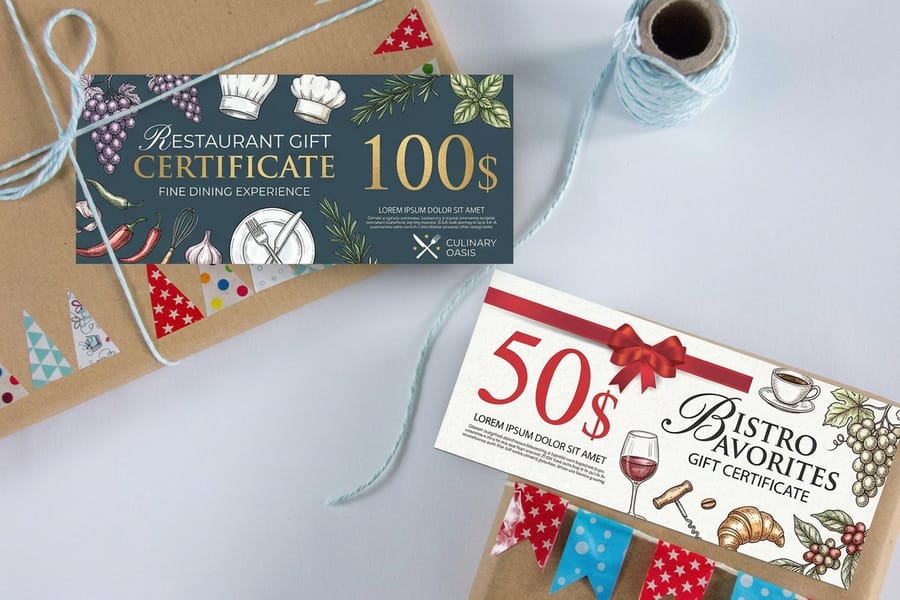
Federal law sets the floor, not the ceiling. Many states have their own gift certificate laws that are even stricter. Some ban expiration dates entirely. Others require businesses to honor certificates indefinitely.
California, for example, prohibits expiration dates on gift certificates regardless of the amount. Sell a $25 certificate in California and it never expires, period. Massachusetts, Rhode Island, and several other states follow similar rules. For answers to more common business printing questions, visit our guide hub.
States with no-expiration rules. Several states keep it simple, gift certificates cannot expire at all. These include California, Connecticut, Maine, Massachusetts, Montana, Oregon, Rhode Island, Vermont, and Washington. If your business operates in any of them, leave the expiration date off your certificates.
Other states allow expiration but require longer windows than the federal five-year minimum. New York requires gift certificates to be valid for at least five years and also requires clear disclosure of any expiration date and fees. Minnesota bans expiration on gift cards entirely while allowing it on gift certificates under certain conditions.
Why multi-state businesses need to pay attention
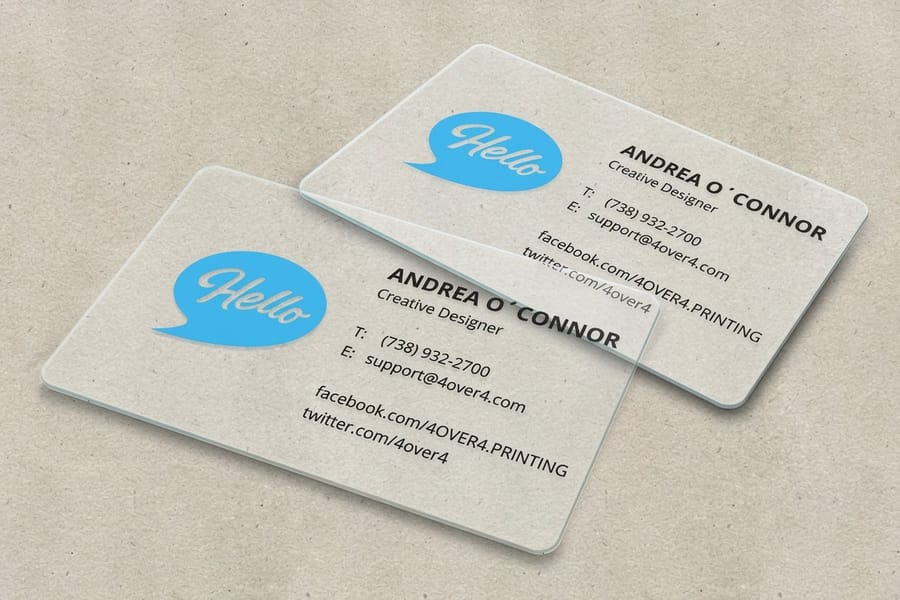
If you sell gift certificates online or operate in more than one state, you follow the strictest applicable law. A customer in California buying from your New York shop? California no-expiration rule applies to that sale. The safest approach for a multi-state business is to skip expiration dates entirely.
Thinking about how to make gift certificates that work across state lines? Keep the design clean and compliant. 4OVER4.COM offers 30Mil Clear Plastic Cards that give your certificates a premium, professional look while leaving plenty of room for the required disclosures.
A short habit saves a lot of grief here: when in doubt, treat every certificate as if the strictest state rule applies. Design it once to the highest standard and you never have to track which sale crossed which state line.
How to make gift certificates that stay compliant
Designing a gift certificate is not just about making it look good. You need specific information on it to stay on the right side of the law. What belongs on every certificate:
- The dollar value or a description of the goods and services the certificate covers
- Any fees such as inactivity, service, or maintenance fees, clearly disclosed
- The expiration date where applicable, or a plain statement that the certificate does not expire
- Your business name and contact information
- A unique serial number or code for tracking and redemption
Skip any of these and you are asking for trouble. Customers deserve transparency and regulators expect it. If you are learning how to make gift certificates for the first time, treat compliance as step one, not an afterthought.
Design tips for clear, professional certificates. A well-designed certificate builds trust while a sloppy one raises doubts. Use 14pt cover stock or heavier, because a flimsy certificate feels disposable and thick, textured paper tells the recipient it has real value. Leave room for the fine print so expiration terms and fees stay legible at 8pt or larger rather than crammed into a tiny footer. Brand it properly with your logo, colors, and typography so it matches the rest of your marketing. Our guide on how to make flyers covers layout principles that carry straight over, and the showcase shows branded print done right.
Exceptions and edge cases to watch for

Not every gift-like product follows the same rules. Understanding the exceptions helps you avoid creating something that is regulated differently than you expected.
Promotional certificates versus gift certificates. A free-appetizer card you hand out at a trade show is not a gift certificate. No money changed hands, so the CARD Act does not apply, and you can put an expiration date on a promotional offer without worrying about the five-year rule. Be careful though. If a customer pays anything, even a discounted price, it is likely covered. A $50 gift certificate sold for $40 during a holiday promotion is still a gift certificate under the law. Related projects like custom packaging and mailers follow different rules entirely, and our guide on how to make envelopes covers those details.
Employer-issued and charitable certificates. Certificates issued by employers as rewards or bonuses may carry different tax implications, but the expiration rules still generally apply. Charitable organizations sometimes issue certificates as part of fundraising, and those can have their own state-specific rules. When in doubt, check your state attorney general website or consult a business attorney. A quick legal review costs nothing compared to a compliance violation.
What happens when a business violates gift certificate laws

Penalties vary by state, but they are real. Businesses that impose unauthorized expiration dates or hidden fees on gift certificates can face:
- Fines ranging from hundreds to thousands of dollars per violation
- Lawsuits from individual customers or class actions
- Enforcement actions from state attorneys general
- Reputation damage that pushes customers to competitors
Some states treat gift certificate violations as unfair or deceptive trade practices, a category no business wants to be in. For ideas on building customer-facing materials that reinforce trust, explore our guide on how to fold a brochure for marketing collateral that complements your gift certificate program.
Tracking and managing gift certificate redemptions

Printing beautiful certificates is only half the job. You need a system to track what has been issued, what has been redeemed, and what is still outstanding. Every unredeemed gift certificate is a liability on your books.
Assign a unique serial number to every certificate. Keep a simple spreadsheet or use your point-of-sale system to log each one with the purchase date, the amount, and the redemption status. This protects you when a customer shows up with a certificate years later, and under federal law they have every right to do exactly that.
For businesses that want a creative twist, custom printed materials like magnets can double as memorable certificate holders. See our guide on custom magnets for ideas, or start from our blank gift certificate templates and framed canvas templates to get moving fast.
Common gift certificate mistakes that cost businesses money

Even well-meaning business owners get tripped up. These are the mistakes 4OVER4.COM sees most often.
Printing an arbitrary expiration date. Valid for 90 days might sound reasonable, but it violates federal law in most cases. Unless you have confirmed your state allows it and the certificate runs at least five years out, leave the expiration date off.
Burying fee disclosures in tiny print. Inactivity fees must be clearly stated before purchase. If the customer cannot easily read the terms, you are not compliant.
Forgetting state-specific rules. Federal law is the minimum. If your state bans expiration dates entirely, the five-year federal rule does not help you, so always check local regulations.
Not tracking outstanding certificates. Unredeemed certificates are a financial liability. Without a tracking system you are flying blind and might refuse a valid certificate by mistake.
Using low-quality materials. A flimsy certificate gets lost in a drawer while a thick, well-printed one gets kept in a wallet. The material you choose directly affects redemption rates and brand perception. 4OVER4.COM prints on premium stocks that protect both.
Wally explains the expiration rules
No expiration date is almost always the safe, and friendly, choice

Wally reads the fine print so you do not have to: federal law keeps most gift certificates alive for at least five years, and plenty of states ban expiration outright. The simplest, most customer-friendly move is to leave the date off, disclose any fees clearly, and print on stock that feels worth keeping. When you are ready, 4OVER4 prints compliant, sequentially numbered gift certificates built to your exact brand.
Order gift certificates →Specs and pricing
Custom gift certificate specs and pricing
Once you know the rules, here is what a made-to-order gift certificate gives you at 4OVER4.COM, with live specs, paper options, and price-per-unit straight from the configurator.
| Quantity | Price Per Unit | Total |
|---|---|---|
| 50 | 85.7¢ | $42.84 |
| 100 | 60.4¢ | $60.42 |
| 200 | 39.0¢ | $77.99 |
| 300 | 31.9¢ | $95.56 |
| 400 | 28.3¢ | $113.14 |
| 500 | 26.1¢ | $130.72 |
| 600 | 25.6¢ | $153.78 |
| 700 | 25.3¢ | $176.85 |
Print it
Print gift certificates that look as good as they perform


See it in use
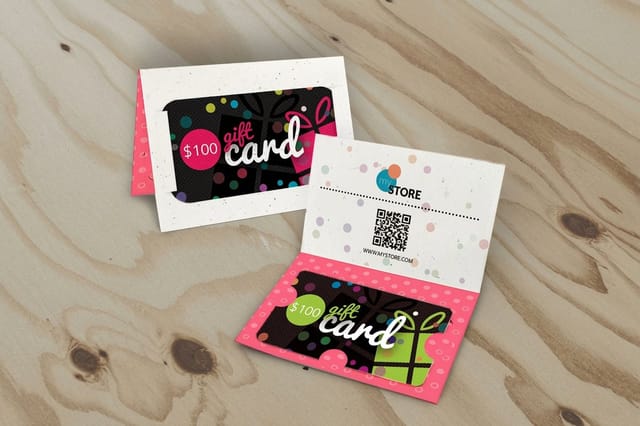
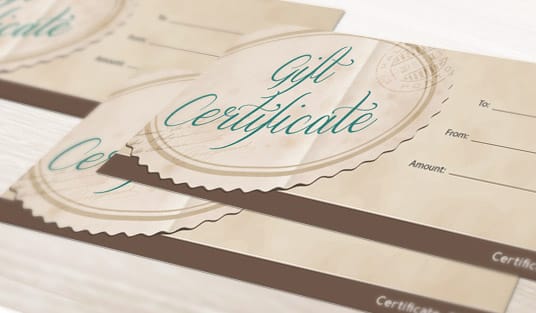
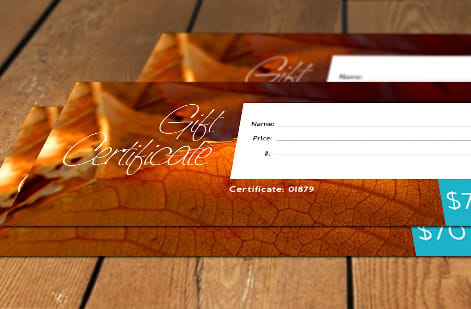
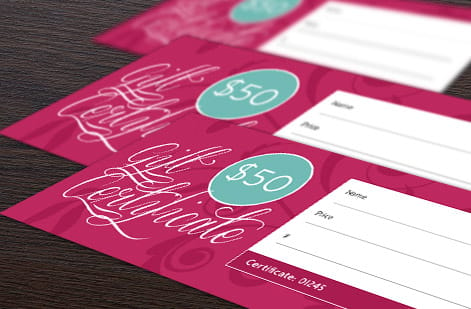
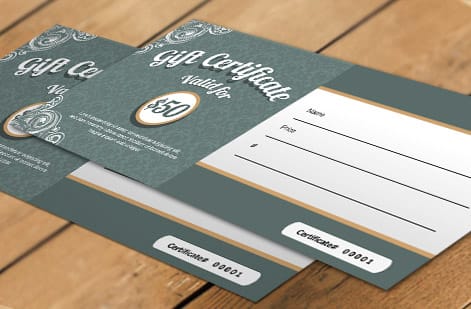
Certificates and gift cards we printed for shops




Explore more
Where to go next






By the numbers
Paper at 50 for $42.84, plastic at 250 for $226.11
Common Questions
Your gift certificate expiration questions, answered
Can gift certificates expire under federal law?
Under the Credit CARD Act of 2009, gift certificates cannot expire sooner than five years from the date of purchase or the last reload. This applies to paper certificates, plastic gift cards, and digital codes where money was exchanged. Several states ban expiration dates entirely, so always check your local laws on top of the federal rule.
Do state laws override federal gift certificate rules?
State laws can be stricter than federal law but never weaker. States like California, Massachusetts, and Oregon ban gift certificate expiration dates completely. When your state has tougher rules, those take priority. Multi-state businesses should follow the strictest regulation that applies to any given sale.
Can I charge inactivity fees on gift certificates?
Federal law allows inactivity fees only after 12 months of no activity, and only one fee per month. The fee must be clearly disclosed before purchase. Many states restrict or ban inactivity fees entirely, so check your state rules before adding any fee to your program.
How do I make gift certificates that are legally compliant?
Include the certificate value, your business name and contact information, any applicable fees, the expiration date where allowed, and a unique tracking number. Use legible font sizes for every disclosure. Making gift certificates the right way means putting compliance and clarity ahead of design flourishes.
Are promotional certificates subject to the same expiration rules?
Promotional certificates where no money changed hands, like a free dessert card or a bonus reward, are generally exempt from the CARD Act. However, if a customer paid anything for the certificate, even a discounted amount, it is likely covered by the expiration and fee rules.
What happens if my business ignores gift certificate expiration laws?
Violations can bring fines, lawsuits, enforcement actions from state attorneys general, and serious reputation damage. Some states classify violations as unfair or deceptive trade practices, which carry heavier penalties. Compliance is far cheaper than the consequences of ignoring the rules.
Get Started
Order 50 gift certificates from $42.84
Pick your size and premium stock, add sequential numbering and your disclosures, and we print certificates that build trust and keep their value.
Legal Disclaimer
Gold Standard guarantees apply to all standard orders placed through 4over4.com. Price match requires verifiable proof of a competitor's published price for an equivalent product with matching specifications and turnaround time. Satisfaction guarantee covers manufacturing defects and print quality issues. Contact support with order number and documentation. On-time delivery rate based on tracked orders 1999 to 2026. Individual results may vary based on shipping carrier performance.
