
Canvas vs Framed Prints vs Posters for Wall Art That Lasts


Three ways to put the same image on a wall, priced from $25 to $87.86. The choice is glare, protection, and how long the piece is staying up.
Choose stretched canvas for a bright wall, because it has no glass and therefore no glare, and it arrives ready to hang. Choose a framed print when the piece will be touched, dusted or sunlit, since the glazing that causes reflections is also what keeps fingerprints and UV off the paper. Choose a poster when the art is temporary or the budget is tight, and accept that you are buying a sheet rather than a finished object.
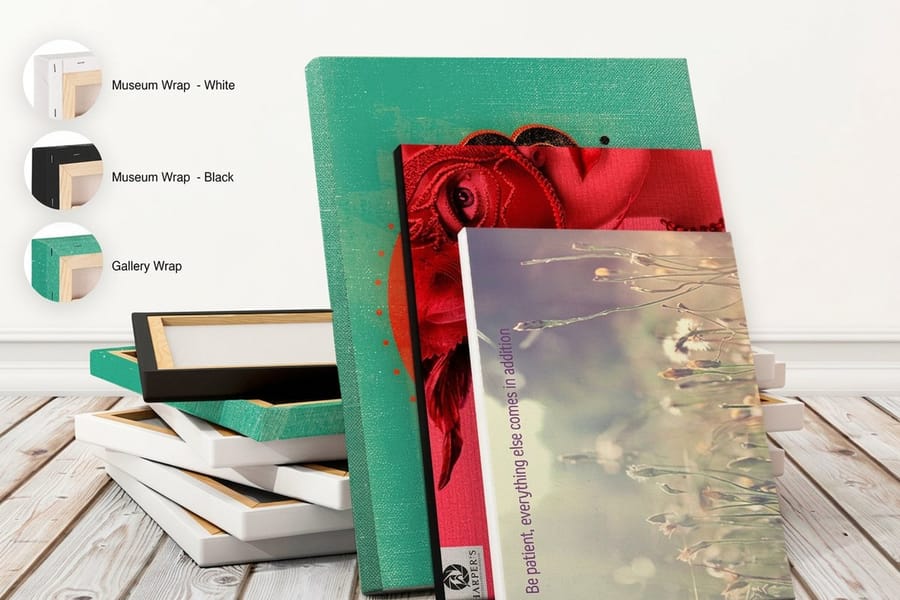
Quick answer
The glazing decides more than the print does
All three carry the same image. What separates them is the layer sitting in front of it. Canvas has nothing in front, so a lamp never bounces back at you and nothing shields the surface either. A framed print puts glazing over the paper, which reflects the room but blocks dust and a share of UV. A poster has neither, which is why it costs the least and lasts the shortest. Match the format to the wall and the lifespan, not to the artwork alone.
What Actually Arrives in the Box
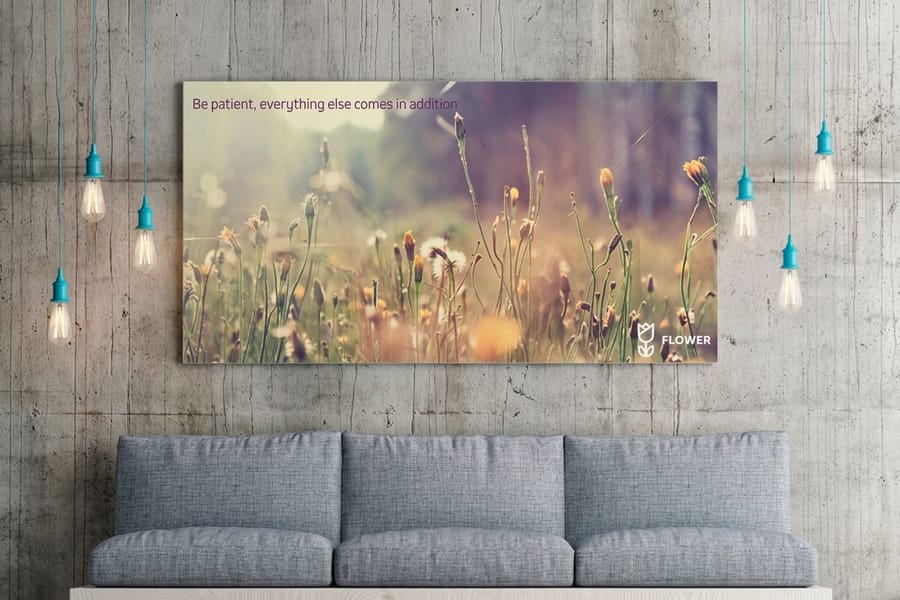
The three formats are usually compared on looks. The bigger practical difference is what shows up at your door and how much work is left after that.
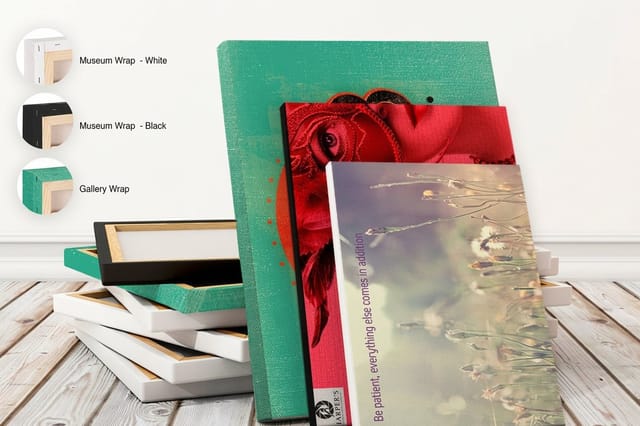
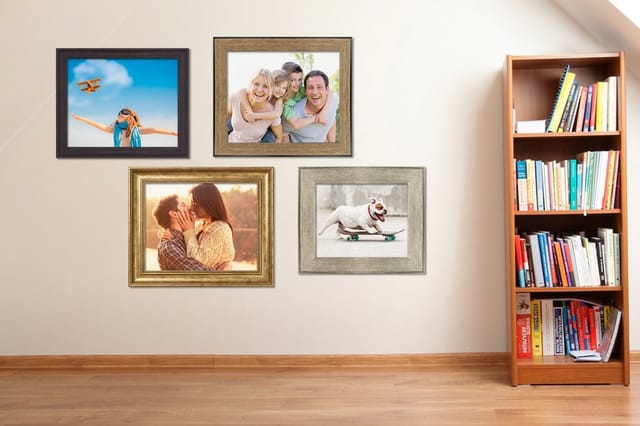
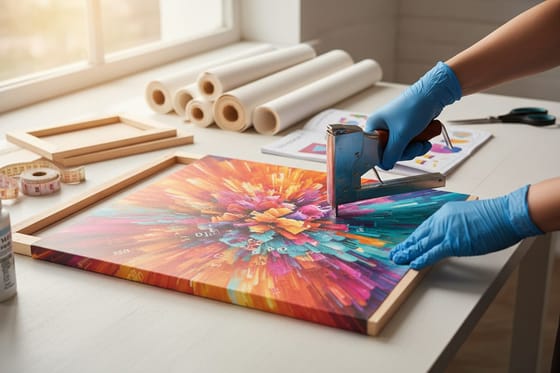
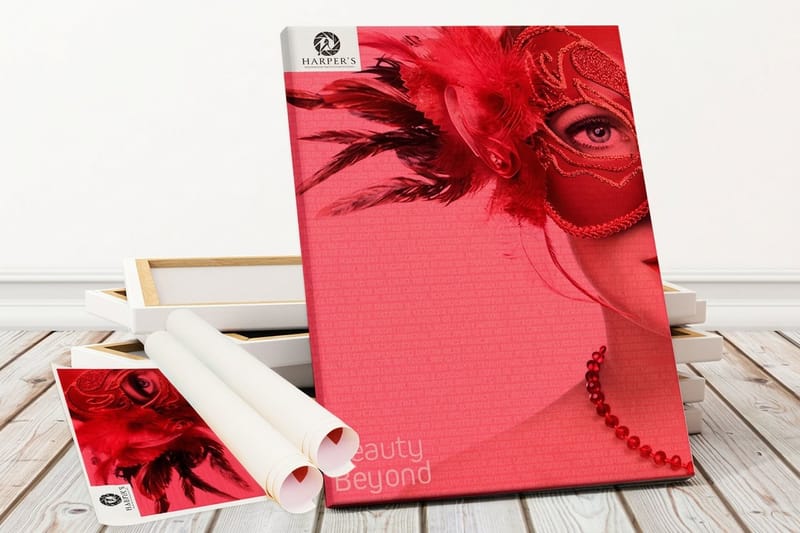
A poster is a sheet. It ships rolled in a tube, it needs flattening, and it needs something to hold it up. That something is a frame you buy separately, a clip rail, or tape. A framed print is finished. Paper, mat, glazing, moulding and hanging hardware arrive as one object, and it weighs enough that the fixing matters. A stretched canvas is also finished, wrapped over a wooden bar with the hardware already fitted on the back, and it weighs a fraction of the same size behind glass.
| Format | What ships | Ready to hang | Surface | Weakest point |
|---|---|---|---|---|
| Stretched Canvas | Printed canvas wrapped on a wooden bar, hardware fitted. | Yes, straight out of the box. | Woven cloth, no glass. | Nothing protects the face, so fingerprints and knocks land on the art. |
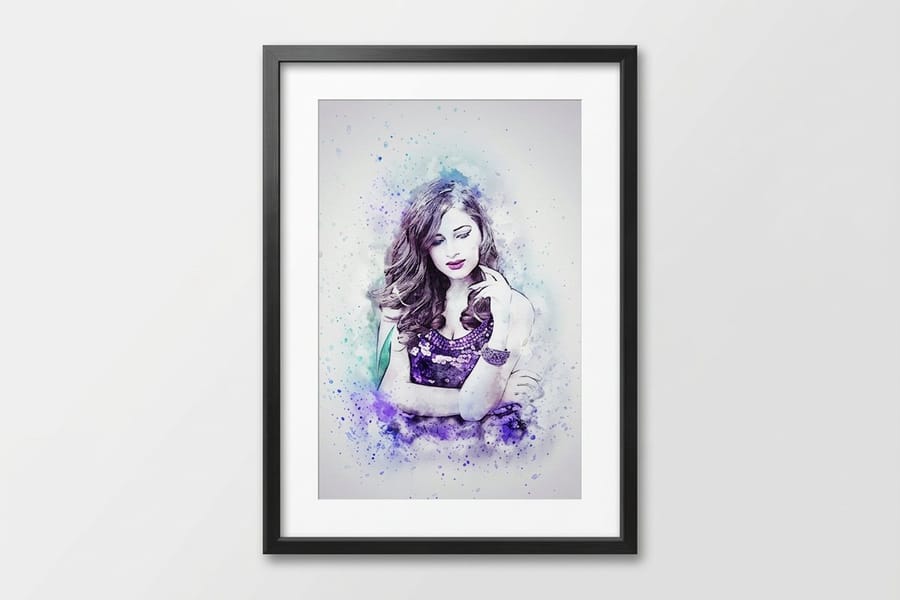
| Framed Prints | Paper, mat, glazing and moulding assembled. | Yes, but the wall fixing has to carry real weight. | Smooth paper behind glazing. | The glazing reflects every light source in the room. |
| Large Format Posters | A single sheet, rolled in a tube. | No. Frame, rail or tape is on you. | Gloss or matte poster stock. | Curls, creases at the corners, and tears when it comes down. |
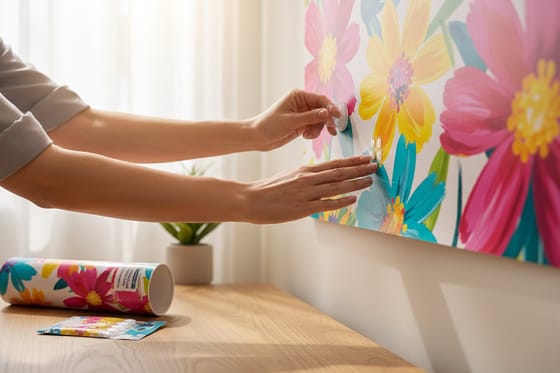
| Mounted Posters | The poster bonded to a rigid board. | Close. Flat, stiff, hangs with strips or a rail. | Poster stock on a rigid core. | A dented corner on the board cannot be repaired. |
That last row is the one people miss. A mounted poster sits between the bare sheet and the framed print: it keeps poster pricing and poster paper, but it stays flat forever and hangs without a frame. If you want the difference between the canvas options themselves, our guide to rolled, stretched and framed canvas covers the three side by side.
Glare Is the Trade-Off Nobody Mentions in the Product Photos
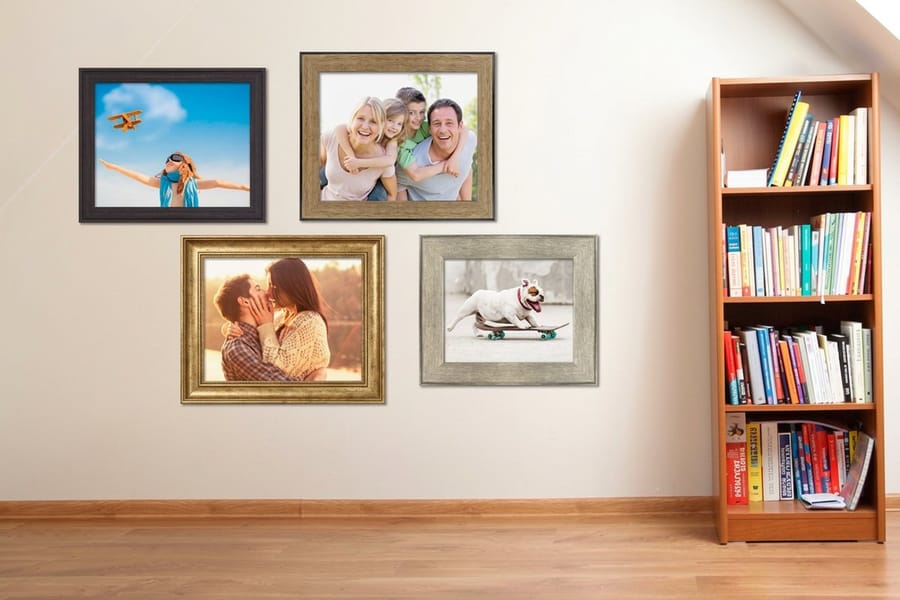
Product photography is shot in a light tent, so every format looks flawless. On a real wall the deciding factor is usually the glazing, because glazing is a mirror that happens to have your art behind it.
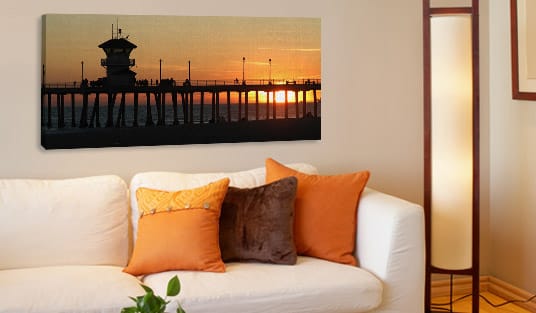
Stand in front of a framed print in a room with a ceiling spot and you will find an angle where the lamp sits on top of the image. Move two steps and it goes away, then a window puts it back. Canvas cannot do that. It has no smooth surface and no glass, so light hits the weave and scatters. This is the single strongest argument for canvas in a bright living room, a conservatory, or any wall facing a window.
Posters land in the middle, and the stock decides where. Gloss poster paper is nearly as reflective as glazing. Matte kills almost all of it and costs the image a little saturation in exchange. If a poster is going somewhere bright, order it matte, and read the difference between gloss and matte poster paper before you pick.
The other half of the trade runs the opposite way. Glazing is also armor. It stops dust settling into the surface, it stops fingers reaching the print, and it absorbs a share of the UV that fades ink. A canvas in a hallway at elbow height collects marks that cannot be cleaned off, because you are wiping the artwork itself. Put canvas above furniture. Put framed paper where people walk past it. Our wall decor guide works through room by room placement in more depth.
What Each One Costs and Where the Money Actually Goes
Print cost is not what separates these formats. Framing cost is. Here is where each one starts at 4OVER4.COM.
- Large Format Posters from $25, and Rolled Canvas from $25 for the same image on cloth instead of paper.
- Mounted Posters from $39.99, which buys the rigid board and a flat piece that never curls.
- Framed Canvas from $50.33, a stretched canvas inside a floater frame with no glass added.
- Stretched Canvas from $59, finished on the bar and ready to hang.
- Framed Prints from $73.57 and Framed Posters from $87.86, both of which include the moulding and the glazing.
- Acrylic Prints from $152.72 when you want the face-mounted gallery look instead of any of the above.
Read that list as one number: the jump from $25 to $87.86 is almost entirely the frame. That is why buying a bare poster and framing it yourself only saves money if you already own the frame, and why Stretched Canvas at $59 undercuts a framed poster while still arriving finished.
Size changes the maths again. Above roughly 24 by 36 inches, glass gets heavy and expensive fast, while canvas and mounted board barely notice the extra area. Large work is where canvas quietly becomes the cheaper finished piece, which is also true for commercial jobs run through our large format printing department.
Choosing by Room, by Artwork, and by How Long It Stays Up
Three questions settle it, in this order.
How long is it staying up? Under two years, print a poster. Seasonal art, a rental wall, a promotion, a kid whose taste changes every autumn: none of that deserves a frame. Over five years, frame it or put it on canvas, because a bare sheet will curl at the corners and pick up a crease the first time it comes down.
What is the artwork? Painted, textured or heavily color graded images gain from the canvas weave. High detail photography, line work, typography and anything with fine text loses a little on cloth and holds up better on smooth paper. Print a small test both ways if the image sits between the two.
Where exactly does it hang? Bright wall or opposite a window, canvas. Hallway, stairwell, kitchen or anywhere hands and steam reach it, framed print. Above a sofa or a bed in normal room light, either works, so decide on the artwork instead. A gallery wall of many small pieces is the one case where matching frames beat mixed formats, and arranging a gallery wall without nails shows the layout method.
The verdict. For most homes, stretched canvas is the best single default: no glare, nothing to buy afterwards, and it survives being moved. Framed prints win when the image is detailed, valuable, or hanging where it gets handled. Posters win on price and on flexibility, and mounted posters are the honest middle when you want flat and rigid without paying for a frame. Browse the finished options in the canvas printing collection or across posters and wall art, and if you plan to frame a canvas yourself, framing canvas prints covers the floater frame method.
Wally hangs all three
Same picture, three very different walls
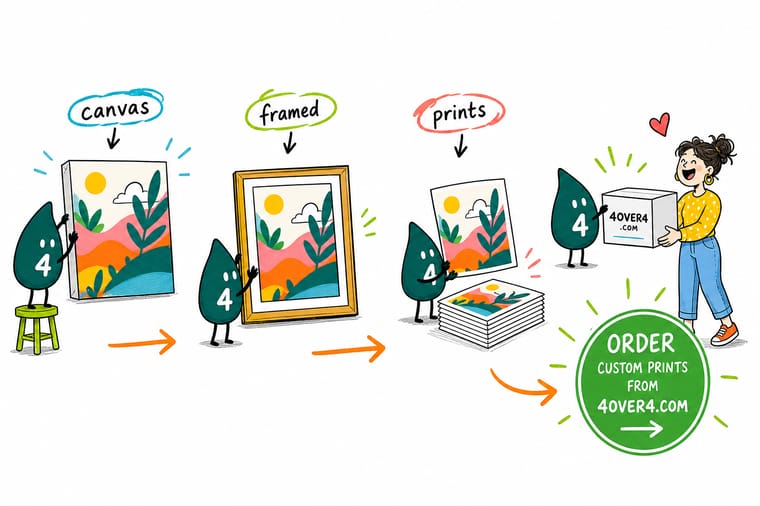
Wally puts the same image on canvas, behind glass, and on a bare sheet, then turns the lamp on. The framed print throws the lamp straight back at him. The canvas swallows it, because there is no glass to reflect with. The poster does whichever its paper decides, gloss bounces and matte does not. Then he runs a finger across each one and remembers why the glass was there in the first place.
Order a stretched canvas print →Specs and pricing
Sizes and starting prices for each format
Canvas, framed poster and mounted poster options with live configuration choices and starting prices straight from the 4OVER4.COM configurator.


Print it
Put your image on the wall

Explore more
Where to go next

By the numbers
Canvas, frames, and posters inside our product range
Common Questions
Your wall art questions, answered
Is canvas or a framed print better for wall art?
It depends on the light in the room and on how much the piece gets handled. Canvas has no glass over it, so a window or a ceiling spot never bounces off it, and it arrives ready to hang with hardware already fitted. A framed print puts glazing between the room and the paper, which reflects light but also blocks dust, fingerprints and a good share of UV. Bright room with lots of windows, take canvas. Hallway, kids, or a piece you want to keep looking new in ten years, take the frame.
Do canvas prints look cheaper than framed prints?
They look different rather than cheaper. Canvas has a woven texture that breaks up fine detail slightly, so a soft landscape or a painted image reads beautifully while a razor sharp architectural photograph loses a little of its edge. Framed paper holds detail better and reads as more formal because of the mat and the moulding. If the artwork is photographic and detail is the point, frame it. If the artwork is painterly, canvas flatters it.
Are posters worth framing or should I just print on canvas?
Frame the poster when the image is going to stay on that wall for years and you already own or want a frame. Print on canvas when you would otherwise be buying a frame anyway, because Framed Posters start at $87.86 while Stretched Canvas starts at $59 and needs nothing else. A bare Large Format Poster starting at $25 is the right answer when the art is seasonal, a rental wall, or something you expect to swap out.
What is the difference between framed prints and framed canvas?
Framed Prints are paper behind glazing inside a moulding, usually with a mat that holds the paper away from the glass. Framed Canvas is a stretched canvas with a floater frame around the outside, so there is a small visible gap between the canvas edge and the frame and no glass anywhere. Framed Prints start at $73.57 and Framed Canvas at $50.33 at 4OVER4.COM. The floater frame is the option when you want the finished look of a frame without introducing a reflective surface.
Which lasts longer on a sunlit wall?
A framed print with glazing, because the glazing takes the UV first. Direct sun fades any print, and the honest answer is that no wall art should hang in a south facing window all day. If it has to, frame it, and rotate the piece with a second image every year or two so no single print takes all the exposure. Canvas on a sunlit wall is a shorter term decision, which is fine when the piece is a promotion or a seasonal display rather than an heirloom.
Can I get the same image on canvas and on paper to compare?
Yes, and it is the cheapest way to settle the argument. Order the image once as Rolled Canvas from $25 and once as a Mounted Poster from $39.99, hang both on the wall you actually care about, and look at them at night with the lamps on. That is when glazing and gloss stock give themselves away. Our free print samples let you feel the substrates first if you want to narrow it down before you commit.
Get Started
Large format posters ship in 2 business days, framed in 4
Upload your image once, pick canvas, a frame, or a bare sheet, and we print it at the size your wall actually needs.
Legal Disclaimer
Gold Standard guarantees apply to all standard orders placed through 4over4.com. Price match requires verifiable proof of a competitor's published price for an equivalent product with matching specifications and turnaround time. Satisfaction guarantee covers manufacturing defects and print quality issues. Contact support with order number and documentation. On-time delivery rate based on tracked orders 1999 to 2026. Individual results may vary based on shipping carrier performance.
