
5 Restaurant Menu and Storefront Prints That Keep Your Posted Info Current
Everything a guest reads before they order lives on five printed surfaces, and each one is read from a different distance. Here is the set, from $57.11 for 50 menus, in the order a guest meets it: from the banner on the facade to the menu in their hands.
The set is five pieces: a facade banner, a sidewalk A-frame, window clings, laminated menus for the entrance and the tables, and printed menus for the hand and the takeout bag. Together they carry your name, your hours, your posted prices, and whatever notices your jurisdiction wants visible, each sized for the distance it actually gets read from.
The picks
Five pieces, from $57.11 for 50 menus to a $182.32 A-frame
Order the piece your storefront is missing, or print all five together so the color on the banner matches the color on the menu. Every product below can be laid out from scratch in our free online designer, or started from a restaurant-ready design template. Prices come straight from the configurator and drop as your quantity climbs.

Start here
How the five pieces hand a guest along
Read the set as a sequence of reading distances. The banner works the far side of the street, the A-frame works the curb, the clings work the sidewalk and the doorway, the posted laminated menu works the entry, and the printed menu works the table. The same headline set at the same size on all five would be too small on two of them and too big on the other three. Below, each piece in the order a guest meets it, with the size it is normally ordered at and the limit worth knowing before you buy.
Sizes and placement
Restaurant menu and storefront sizes at a glance
Five surfaces, five standard trims, five spots on the property. Tap a piece to jump to its section, then order the size that matches the distance it needs to be read from rather than the space you happen to have.
| Piece | Common size | Where it sits |
|---|---|---|
| 1. Restaurant banners | 3 ft x 8 ft over one storefront bay, 4 ft x 10 ft across a wide facade | High on the facade or the parapet, above the awning line, where a driver on the far side of the street still gets a clean sightline. |
| 2. Signicade A-frames | 24 in x 36 in printed inserts in a 45 in tall weighted frame | On the sidewalk beside the door, angled to the direction most foot traffic comes from, wheeled in at close. |
| 3. Restaurant window clings | 12 in x 18 in for hours and app badges, up to 24 in x 36 in for a promo panel | Inside the glass at eye level, next to the handle side of the door where a guest is already looking for hours. |
| 4. Laminated menus | 8.5 in x 11 in single panel, 11 in x 17 in folded to 8.5 in x 11 in | Posted at the entrance and stacked at the host stand, wiped between parties and back in service in seconds. |
| 5. Restaurant menus | 8.5 in x 11 in, 8.5 in x 14 in, or a 4.25 in x 11 in specials insert | In the guest’s hands at the table, plus the takeout stack by the register and the delivery bag. |
1. Restaurant banners: the sign that works the far side of the street
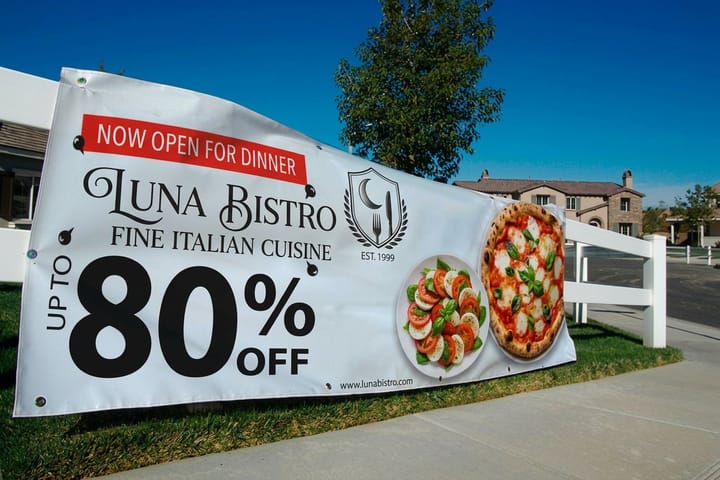
Start with the piece read from farthest away. A restaurant banner across the facade carries one message and one only: the name, the cuisine, or the thing you want a stranger to know before they decide to cross. At 60 feet, capital letters need to be about 6 inches tall to land, which usually means three or four words fit and nothing else does.
Material decides how long it lasts outdoors. Heavyweight scrim vinyl with a folded, welded hem the whole way around and grommets every 2 feet plus one in each corner will hold shape through a season; an unhemmed banner tears out at the first grommet after one storm. If the run is exposed to a crosswind, order mesh or ask for wind slits, because a solid vinyl panel on an open frontage acts like a sail. Vinyl prints up to 10 feet on the short side as one piece with no seam, so a 3 ft x 8 ft bay banner or a 4 ft x 10 ft facade banner comes off the roll with no weld through your name.
Two specs on the order form do most of the work here, and both are covered in our guide on how to spec an outdoor vinyl banner. Mounting matters just as much: a banner that sags into a wrinkle stops being legible from the road, and how to hang banners covers tension and wind load. Check your local sign ordinance before you order the size, because many cities cap temporary banner square footage or limit how many days one can stay up.
2. Signicade A-frames: the posted menu that stops the walk-by
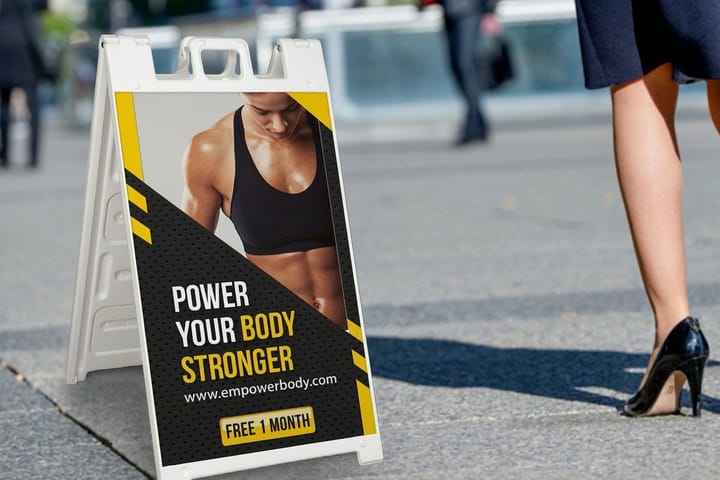
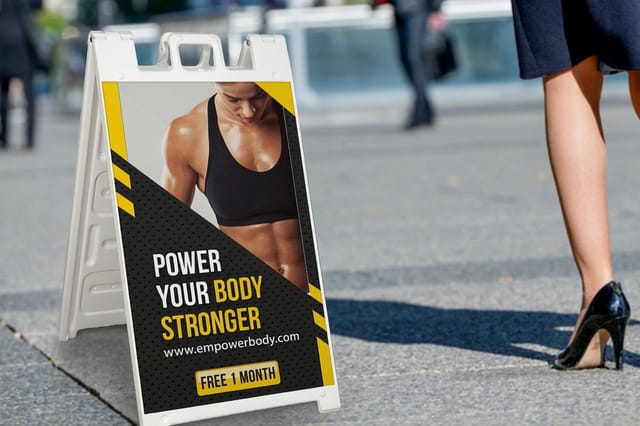
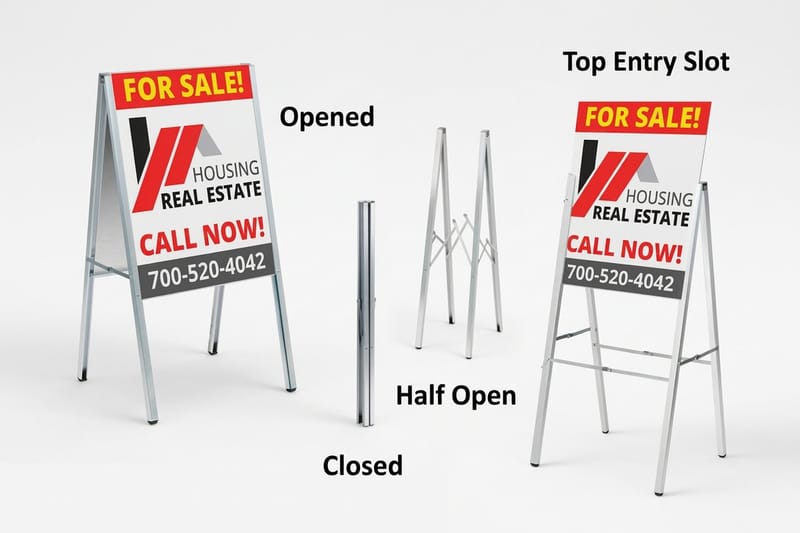
The banner gets someone looking. The A-frame gets them to stop walking. A weighted Signicade A-frame holds two 24 in x 36 in printed inserts in a frame about 45 inches tall, which puts your headline at chest height about 20 feet from the door. At that distance, 2 inch capitals are the floor. Most sidewalk boards fail because someone set the specials in the same size as the menu body copy and it disappeared past 10 feet.
This is the only piece in the set you change often, and that is the point. Print a stack of inserts, swap the daily special or the brunch window in ten seconds, and wheel the frame inside at close so it does not walk off overnight. Two practical notes from restaurants that have lost one: fill the base with sand rather than water if you are north of the freeze line, because water splits the base shell when it turns to ice, and check the sidewalk rules with your city before the first one goes out, since many require a clear pedestrian path and some require a permit for anything on public walkway.
If you want the layout logic behind a board that actually converts a passerby, our sidewalk signage guide and how to design an A-frame sign cover hierarchy and contrast. For frame choice, how to choose an A-frame sidewalk sign compares the plastic Signicade against the metal and aluminum frames.
3. Restaurant window clings: hours, apps, and the notices that have to be visible
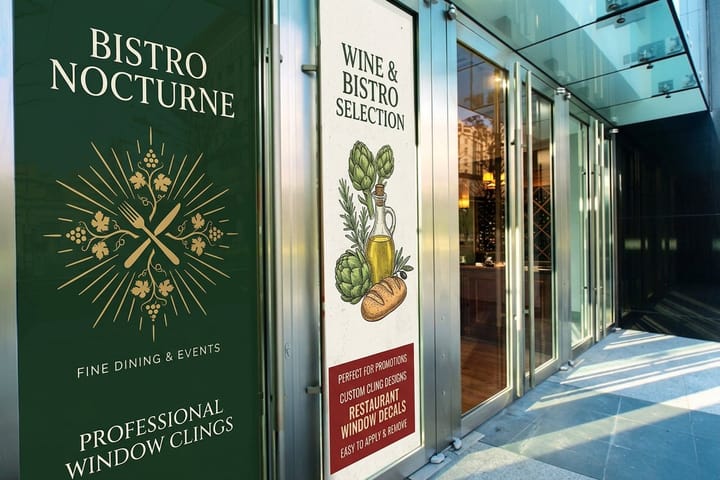
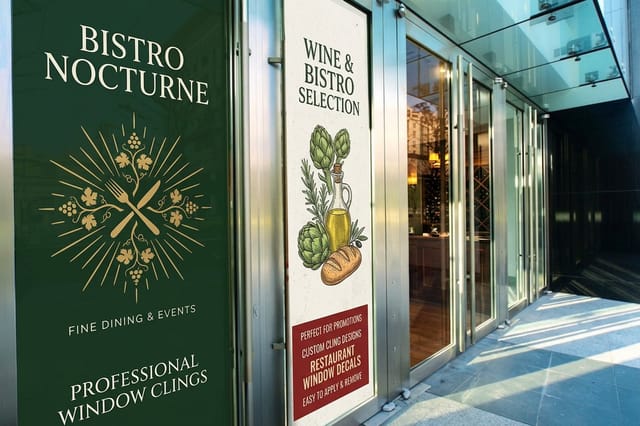
Window glass is where your posted information lives. Restaurant window clings carry the hours, the delivery-app badges, the card logos, the health department grade card frame, and any notice your jurisdiction wants visible before a guest walks in. They are static-cling vinyl with no adhesive, so they lift off clean and can be repositioned when the hours change in the spring.
Two things decide whether a cling works. First, the surface: a cling mounted on the inside of the glass has to be printed reverse-reading, or it reads backwards from the sidewalk. Tell us which side when you order and the file gets mirrored before it goes to press. Second, the glass prep: clean with plain glass cleaner and let it dry completely, because ammonia residue and any trace of kitchen grease film will let a cling creep and drop off a south-facing window in the afternoon heat. On a window that bakes all day, an adhesive decal is the more honest choice, and window clings vs window decals lays out where each one wins.
Size to the reading distance, not to the pane. Hours and app badges read from about 12 feet, so cap heights around 1.2 inches are right, which fits comfortably on a 12 in x 18 in panel. Our window cling sizes guide maps the common panels to their uses, and how to apply window clings covers the squeegee and the bubble. For the wider picture across the door, the wall, and the glass, read the restaurant signage guide.
4. Laminated menus: the posted copy that survives a sanitizer wipe
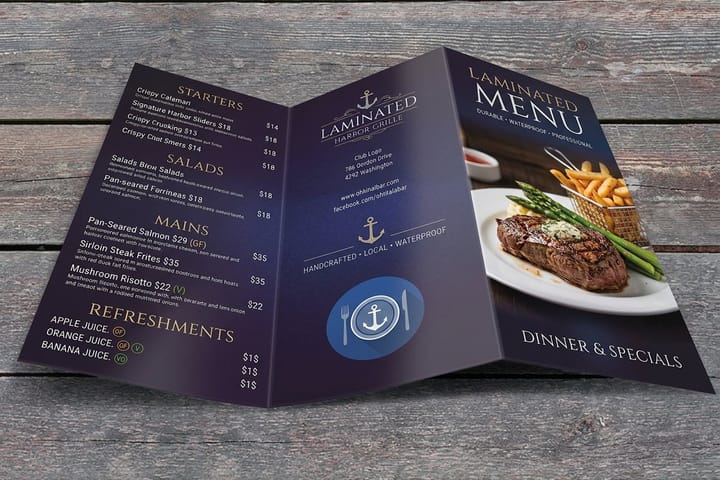
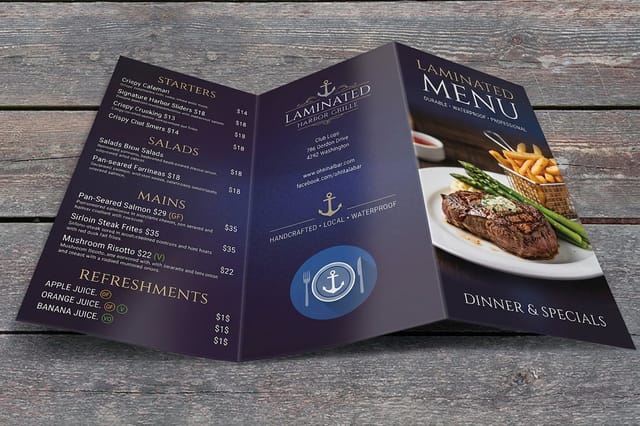
Two menus do two different jobs, and this is the durable one. A laminated menu is what you post at the entrance in a frame, hand to a table that just got bussed, and wipe down between every party. Laminate film thickness is the spec that matters: around 1.5 mil is a thin protective skin, 3 mil is the practical middle for a menu handled all night, and 5 mil and up turns the sheet into a rigid board that will not fold.
Ask for the laminate to seal past the trim rather than flush to it. A flush cut leaves the paper edge exposed, and after a few weeks of wipes the fluid wicks in at the corner and the layers separate. Gloss film is easier to clean but throws glare under pendant lighting and shows every fingerprint; matte kills the glare but hazes over time under alcohol-heavy sanitizer. Quat-based sanitizer wipes are the gentler choice on either film.
Here is the limit nobody mentions when they sell you lamination: you cannot correct a price on it. A laminated menu is the right call when your menu is settled and gets handled constantly, and the wrong call when your costs are moving. If you re-price more than twice a year, print plain menus and reprint them instead. Our guide to waterproof and wipeable menu printing compares laminate against synthetic stock, and rigid plastic menus covers the step above laminate for high-volume rooms.
5. Restaurant menus: the piece the whole check is decided on
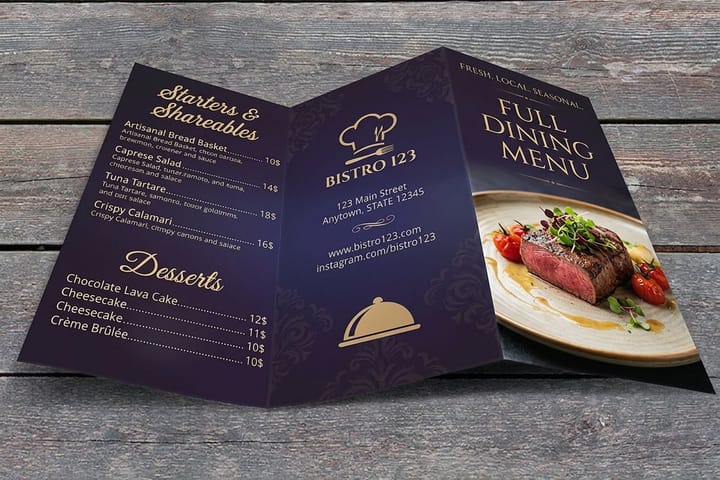
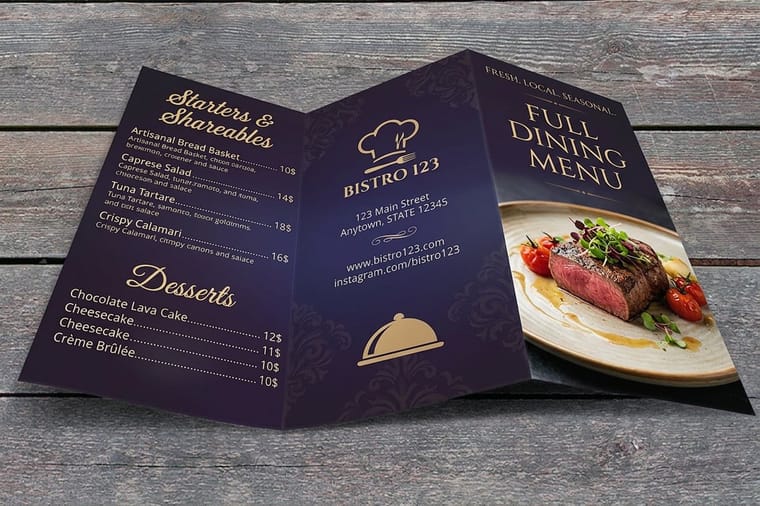
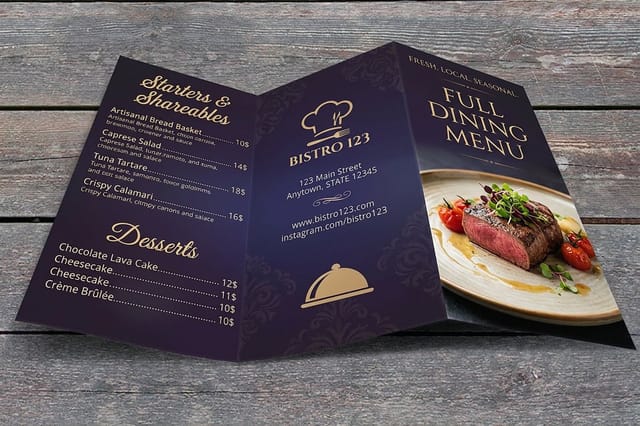
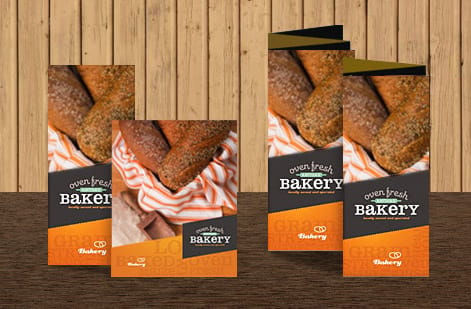
The last piece is the one a guest actually reads, and every dollar on the check gets decided on it. Printed restaurant menus come as a single 8.5 in x 11 in panel, a taller 8.5 in x 14 in sheet when the list runs long, or an 11 in x 17 in sheet folded to 8.5 in x 11 in for a full dine-in book. A 4.25 in x 11 in specials strip printed separately is the cheapest way to change one thing without reprinting the whole menu.
Body copy under 10 pt is the most expensive mistake on a menu, because dining rooms are dim and a guest who cannot read a description orders the thing they already know. Keep the body at 10 pt or larger, give section headers real contrast, and stop lining the prices up in a right-hand column, which turns the page into a price list and pulls every eye down the cheap side. Set the price on the same line as the description instead, in the same weight as the body. Our article on restaurant menu design and the guide to laying out a menu that sells go through the layout decisions in order.
Takeout is a different sheet. A to-go menu gets folded into a bag, read at a kitchen table, and stuck on a fridge, so it wants a lighter stock and a phone number large enough to dial from across the room; take-out menu printing covers what changes. If you are unsure which trim to order, standard menu sizes lists the common ones with the panel counts that go with them. You can start any of these from a design template and drop your logo in.
Specs and pricing
The two pieces you will reorder most
Menus wear out and clings come down when the hours change, so those are the two lines most restaurants reorder. Menus start at $57.11 for 50 on 100# gloss text with a 5 business day build, and clings are sized and quoted by the square foot below.
| Quantity | Price Per Unit | Total |
|---|---|---|
| 50 | $1.14 | $57.11 |
| 100 | 82.4¢ | $82.38 |
| 200 | 53.3¢ | $106.55 |
| 300 | 41.0¢ | $123.02 |
| 400 | 34.9¢ | $139.49 |
| 500 | 31.2¢ | $155.97 |
| 600 | 26.7¢ | $160.36 |
| 700 | 23.5¢ | $164.75 |
| Quantity | Price Per Unit | Total |
|---|---|---|
| 1 | $30.00 | $30.00 |
Wally sizes the storefront
One rule sets the type on all five pieces
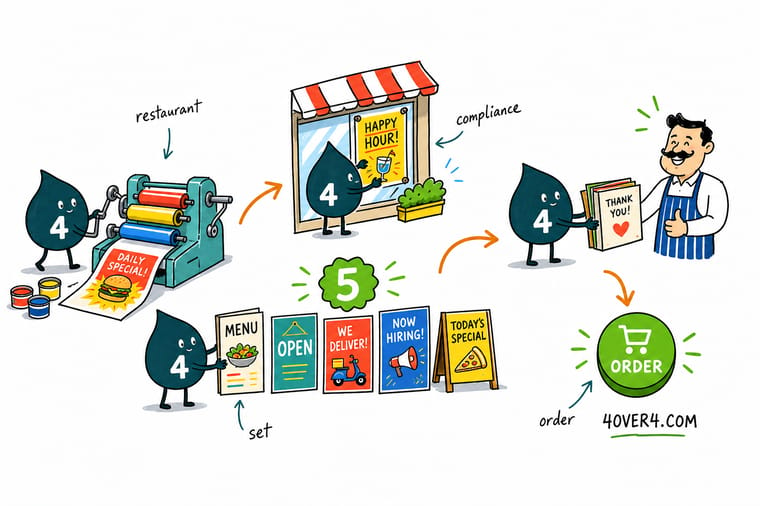
Wally walks the sidewalk the way a hungry stranger does. About 1 inch of capital letter height for every 10 feet of reading distance: 6 inch caps on the facade banner at 60 feet, 2 inch caps on the A-frame at 20 feet, roughly 1.2 inches on the window clings at 12 feet, and 10 pt body copy on the menu in hand. Set each piece from where it gets read and the whole front reads clean instead of busy.
Shop restaurant printing →See it in use
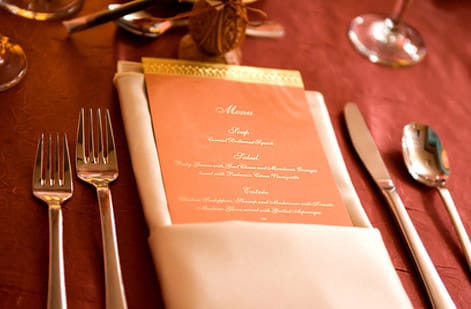
Menus restaurants have reprinted here
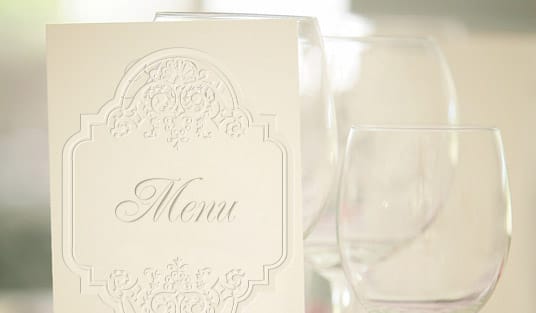
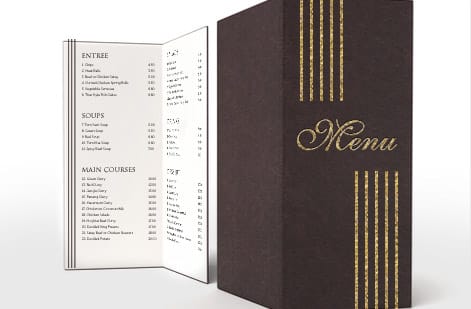
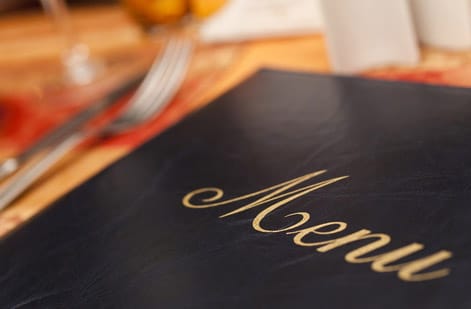
Explore more
Where to go next
By the numbers
What a storefront and a table can be printed on
Common Questions
Common questions about restaurant menus and storefront signage
What should a restaurant post outside the front door?
At minimum: your hours, your menu with current prices where it can be read before someone walks in, the payment and delivery services you accept, and whatever notice your local health department requires to be visible. In practice that is a laminated menu in an entry frame, a set of window clings for hours and app badges, and an A-frame on the sidewalk carrying the daily special. Posted-price and calorie-labeling rules vary by city and by how many locations a brand operates, so check with your local health department before you finalize the panel.
Should I laminate my restaurant menus?
Laminate when the menu is settled and gets handled constantly, which is most dine-in rooms. Do not laminate when your prices are still moving, because you cannot correct a laminated sheet and a reprint costs the same as the original. A common split is laminated menus for the tables and the entry frame, and plain printed menus for takeout and delivery, which get thrown away anyway.
What laminate thickness holds up to sanitizer wipes?
Around 3 mil is the practical middle for a menu wiped between parties: stiff enough to hold shape, thin enough to still fold if the design calls for it. Go to 5 mil or more when you want a rigid board that never creases. Ask for the film to seal past the trim rather than flush to the edge, because a flush cut leaves the paper edge open and repeated wipes wick fluid in at the corner until the layers separate.
Do window clings go on the inside or the outside of the glass?
Inside, almost always, so the storefront glass protects them from weather and from being peeled off. That means the artwork has to be printed reverse-reading, or it will read backwards from the sidewalk, so say which side you are mounting to when you order and the file gets mirrored. The exception is a window that gets full afternoon sun, where the heat makes static cling creep and an adhesive decal is the better material.
What size is a standard A-frame insert?
The Signicade frame takes two 24 in x 36 in printed inserts, one per side, in a frame about 45 inches tall. Print the inserts in a stack so you can swap the daily special in a few seconds, and set the headline at 2 inch capitals or larger, because that board is read from about 20 feet and anything smaller reads as a gray block from the curb.
How much does the five-piece menu and storefront set cost?
Every price moves with size, stock, finish, and quantity, and updates live in the configurator as you build the order. As a starting point at 4OVER4.COM, restaurant window clings begin around $30, restaurant banners around $79, restaurant menus and laminated menus around $57.11, and Signicade A-frames around $182.32. Per-unit cost drops as the quantity climbs, so ordering a season of menu reprints in one run costs meaningfully less than four small reorders.
How big does the type need to be on each piece?
Use about 1 inch of capital letter height for every 10 feet of reading distance. That puts a facade banner read at 60 feet at roughly 6 inch caps, an A-frame read at 20 feet at 2 inch caps, window clings read at 12 feet at about 1.2 inches, and the in-hand menu at 10 pt body copy or larger. Sizing all five the same is why a storefront can look busy and still say nothing from the road.
How often should a restaurant reprint its menu?
Reprint whenever a price on it is wrong, because a crossed-out or stickered price costs you more in perceived sloppiness than the reprint costs in paper. Restaurants with stable pricing typically reorder menus twice a year for wear alone, since a handled menu picks up creases and corner damage long before the content goes stale. If your costs move quarterly, keep the main menu free of prices that change and put those items on a separate 4.25 in x 11 in specials insert you can reprint on its own.
Get Started
Print the whole front of the house in one order
Banner, A-frame inserts, window clings, laminated menus, and table menus, all matched on one press run at 4OVER4.COM. Pick your sizes, stocks, and finishes, and watch every price update live as you build the order.
Legal Disclaimer
Gold Standard guarantees apply to all standard orders placed through 4over4.com. Price match requires verifiable proof of a competitor's published price for an equivalent product with matching specifications and turnaround time. Satisfaction guarantee covers manufacturing defects and print quality issues. Contact support with order number and documentation. On-time delivery rate based on tracked orders 1999 to 2026. Individual results may vary based on shipping carrier performance.
