
Plastic Menus That Stay Rigid Through Years of Table Service


What restaurants actually mean by a plastic menu, how laminated and solid plastic behave differently on a wet table, and the trim and cleaning decisions that set how long a menu lasts.
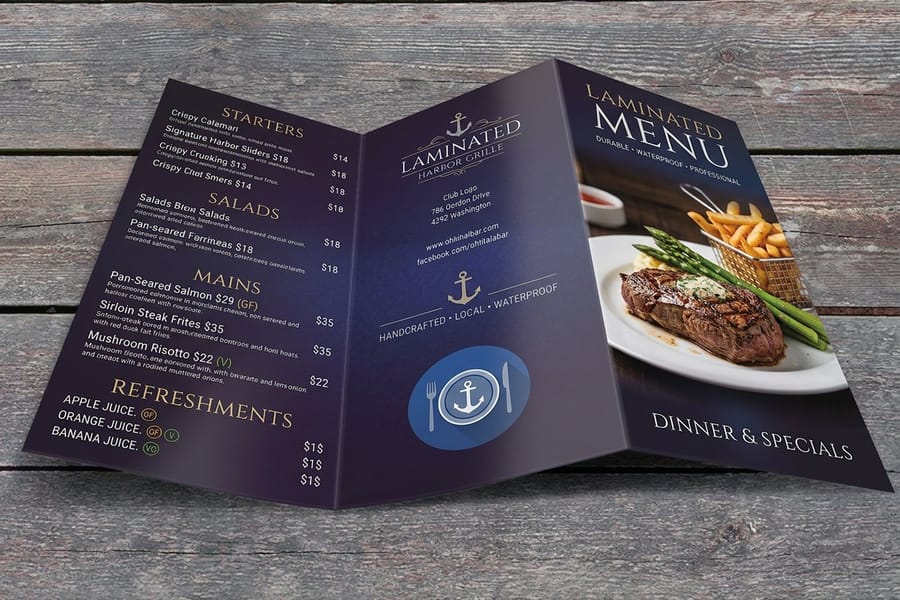
A plastic menu is a menu you can wipe down and hand to the next table, and in practice it is a printed sheet sealed between two clear plastic films rather than a solid plastic sheet. At 4OVER4.COM that is laminated menus, from $57.11 for 50, printed on 100# Gloss Text or 70# Uncoated Text in seven sizes up to 11 x 25.5 in. A true solid vinyl menu with no paper core costs several times more per piece and cannot be reprinted when prices change, which is why sealed paper dominates restaurant tables.
Quick answer
Sealed paper, not solid plastic, and the edge decides its life
The menu you are picturing is a laminated one: printed paper with a clear film sealed to both faces. The film supplies the rigidity and the wipe-clean surface, the paper keeps the price low enough to reprint when a supplier moves. Solid vinyl menus exist and never absorb anything, but at menu size the per-piece cost stops most kitchens from ever reordering. Whichever you print, the failure point is the same: a trimmed edge that leaves paper exposed, wet-wiped several hundred times a year.
What a Rigid Plastic Menu Actually Is
Two very different things get sold under the same name, and the difference decides your reorder cost for the next three years.
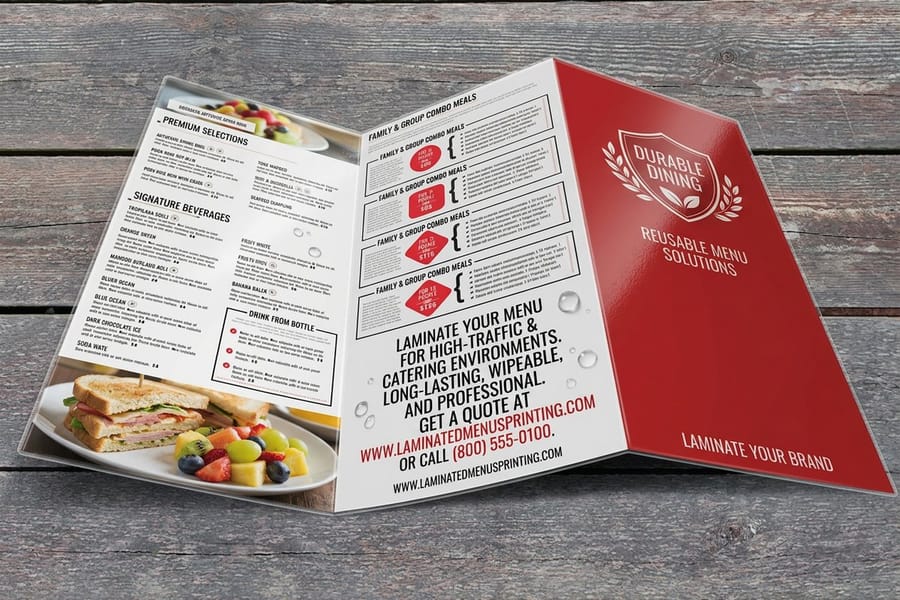
The common one is a laminated menu: your menu printed on paper, then sealed between two clear plastic films under heat and pressure. The plastic is a skin, the paper is the core, and the stiffness you feel in your hand comes mostly from the film. That is why a menu printed on 100# Gloss Text, which is limp on its own, holds a flat plane once it is laminated.
The rarer one is a solid plastic menu, printed directly onto a vinyl or polyester sheet with no paper inside at all. Nothing can wick into it because there is nothing absorbent to wick into. It is the same family of material as our rigid plastic business cards, which run on 20pt vinyl in white, frosted, or fully clear and start at $125.22 for 250. Scale that construction up to an 11 x 17 in menu and the per-piece cost stops being a printing decision and becomes a capital one.
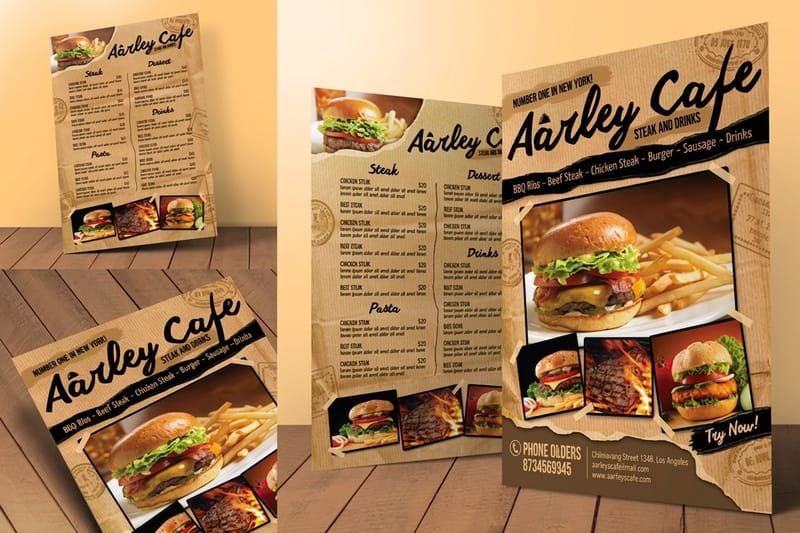
For a working restaurant, laminated wins on the maths almost every time. Laminated menus start at $57.11 for 50 across seven sizes, from a slim 4.25 x 11 in table menu to an 11 x 25.5 in spread, with custom sizing up to 11 x 26 in. When a supplier price moves, you reprint. A menu you cannot afford to replace ends up taped over.
Plastic, Laminated, UV Coated and Uncoated Compared
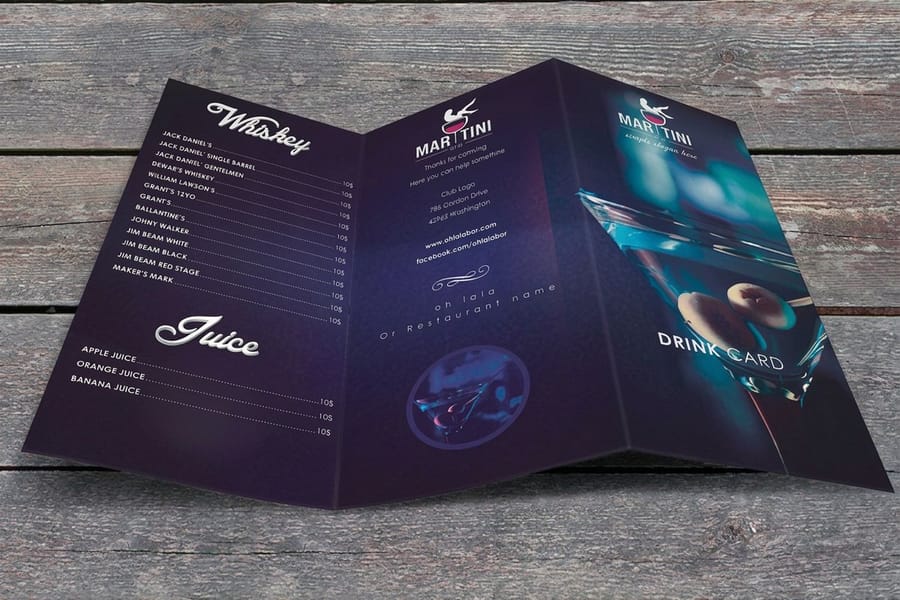
Four constructions cover almost every menu on a table in the United States. They differ less in how they print than in how they die.
| Construction | What it is | How it fails | Reprint cost | Best room |
|---|---|---|---|---|
| Laminated | Printed text stock sealed between two clear films. | Lifts at a cut edge after months of wet wiping. | Low. From $57.11 for 50. | Dine-in menus handled by every guest, all day. |
| Solid plastic | Ink printed straight onto vinyl or polyester, no paper core. | Scratches and scuffs, and the ink abrades before the sheet does. | High enough that people avoid reprinting. | Poolside, hotel bars, anywhere menus get genuinely soaked. |
| UV coated paper | Gloss cover stock with a hard High Gloss UV coating over the ink. | Creases and softens where a thumb sits on the same spot. | Low. | Takeout lists and specials that change inside a season. |
| Uncoated or kraft | Bare stock, no film, no coating. Takes a pen. | Any spill, immediately and permanently. | Lowest per short run. | Daily menus, tasting menus, anything printed to be thrown out. |
Read the third column before the first. If your menus leave service looking tired within a month, the fix is usually not a thicker sheet, it is a sealed one. If they survive a year but read as dated, you bought too much durability and not enough reprint budget. Standard menus and kraft menus exist for that second case, and every construction we print is priced live on menus printing.
Thickness, the Trimmed Edge, and Why Menus Really Die

Ask a printer why a laminated menu went cloudy at one corner and the answer is never the lamination. It is the knife.
Trim a laminated sheet flush to the artwork and the blade cuts film, paper and film in a single pass, which leaves the paper core open along all four edges. Every wipe pushes a little moisture at that opening. The paper fibers swell, the adhesive bond between film and sheet gives up locally, and a corner starts to separate. Once it lifts, it never goes back down. Leaving a narrow border of film beyond the sheet instead, so the two films weld to each other, closes the edge entirely. You trade an exact trim and a sharp edge for a visible clear rim, and you get months of extra service.
Thickness matters for a different reason: how the menu behaves in one hand. Our laminated menus run on 100# Gloss Text for saturated color or 70# Uncoated Text for a matte sheet that takes a pen, and either one under film holds flat at typical menu sizes. Above roughly 11 x 17 in, or in a room where guests hold a menu by one corner, use a fold so the spine carries the load, or move to a cover-weight stock with a High Gloss UV coating. Our guide to UV coating covers where that finish outperforms film and where it does not.
Two finish choices worth deciding on purpose:
- Gloss film makes photography of the food snap, and shows every fingerprint under a pendant light. Rooms with bright downlights get glare across the whole page.
- Matte film kills the glare and hides prints, but burnishes to a shiny gray patch where hands touch the same place on every menu, usually the lower right corner.
Pick from the room, not from the proof. If you are not sure how your artwork behaves either way, our comparison of glossy versus matte finishes shows what each does to color, and a correctly sized layout is waiting in the blank template library.
Sanitizing a Plastic Menu Without Wrecking It
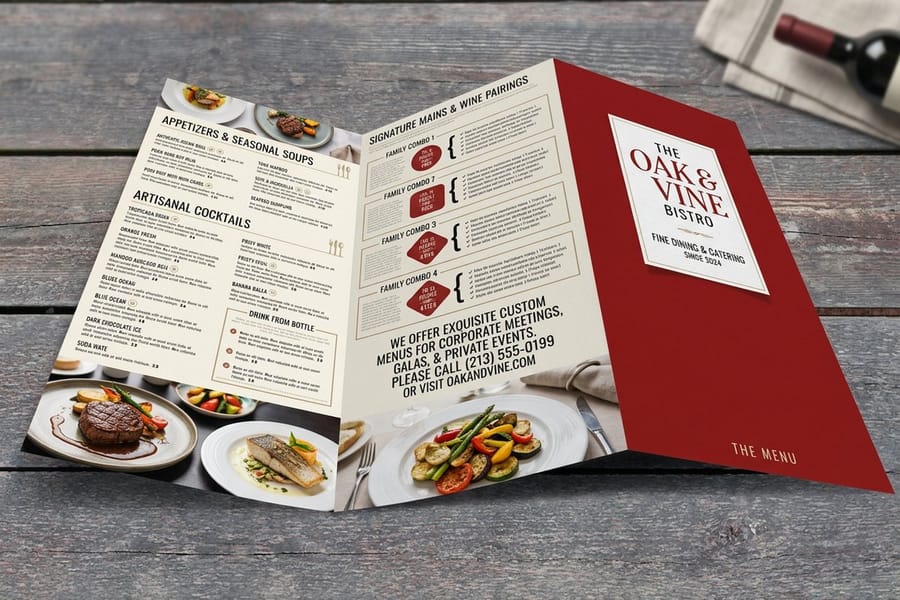
Menus get cleaned between guests in a lot of rooms now, which is the whole argument for a sealed surface. It also means a menu takes several hundred more chemical wipes a year than it used to, and that changes what fails first.
The routine that keeps menus in service: apply the cleaner to the cloth rather than spraying the menu, wipe the face, then dry it. Warm soapy water works. So does a quaternary ammonium sanitizer at the dilution the chemical maker prints on the bottle, and so does an alcohol wipe. None of them attack the film itself.
What kills menus is liquid dwelling where the paper is exposed. Sprayed cleaner runs to the edge and sits in the trim seam; an alcohol wipe left folded against a corner does the same thing for longer. Three habits to ban outright: soaking menus in a bus tub, running them through a dish machine, and stacking them wet. Heat and standing water both separate film from paper, and stacking wet transfers the problem to every menu underneath.
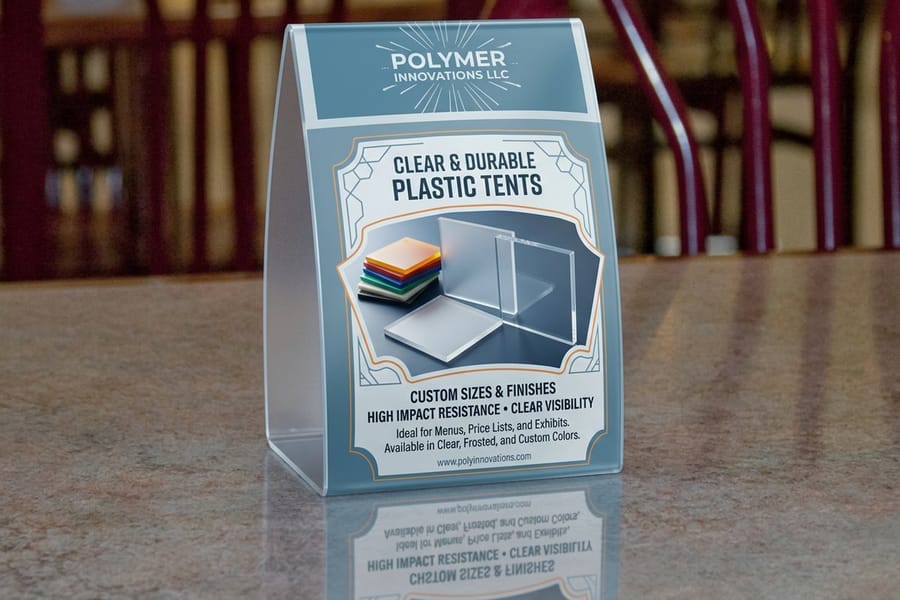
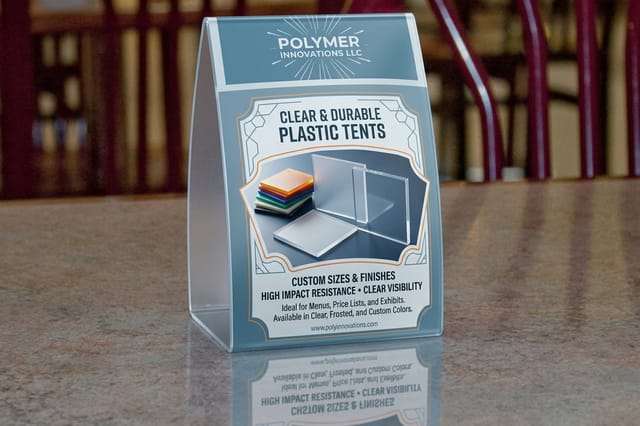
The menus that survive longest in busy rooms are the ones with the least exposed paper and the least handling. That is also the case for putting the specials somewhere else entirely. Plastic table tents finish at 4 x 6 in from a 4 x 16.25 in flat, on 14pt Gloss Cover under a hard High Gloss UV coating, and they stand on their own with no holder. Changing them is a reprint of one small piece rather than the whole menu, and it keeps hands off the menu you want to last. The rest of the front-of-house lineup sits in the restaurant printing collection.
Which Menu to Order for Which Room
Match the construction to how the piece is handled, and the ordering decision makes itself.
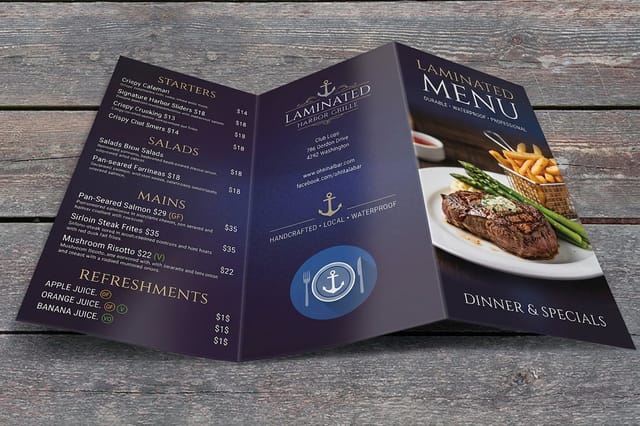
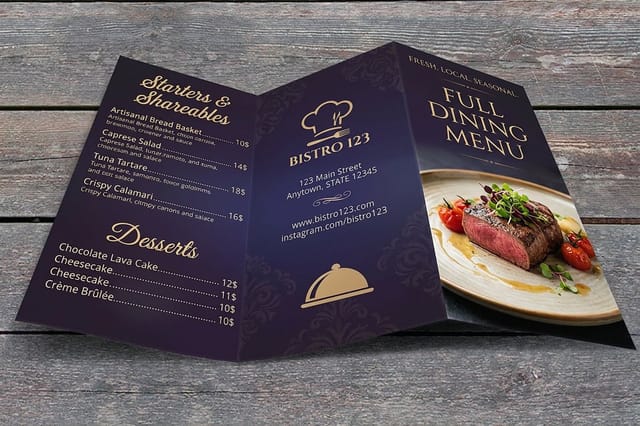
- Dine-in, handed to every table: laminated menus, from $57.11 for 50, on 100# Gloss Text if the food photography matters or 70# Uncoated Text if the menu is typographic. Half fold or trifold if the list runs long.
- Dine-in with seasonal pricing: restaurant menus, also from $57.11 for 50, with the High Gloss UV coating instead of lamination and a same-day rush available when a supplier price moves on a Friday.
- Takeout and delivery: standard menus, flat or folded, printed to leave the building and not come back. Spend on quantity, not on durability.
- Specials, wine flights, table numbers: plastic table tents at a finished 4 x 6 in, so the thing that changes weekly is not the thing every guest holds.
- Rooms with a handmade look: kraft menus on 18pt recycled kraft uncoated cover from $166.04 for 100, with a CMYK plus white option so pale colors read on the brown sheet. No film, so treat them as consumable.
Size before finish. Our rundown of common restaurant menu sizes covers which format fits a two-top without hanging over the edge, and the seven stock sizes plus custom sizing up to 11 x 26 in are all configurable on the product pages themselves.
Wally explains plastic menus
Paper on the inside, plastic on the outside, and the edge is what matters
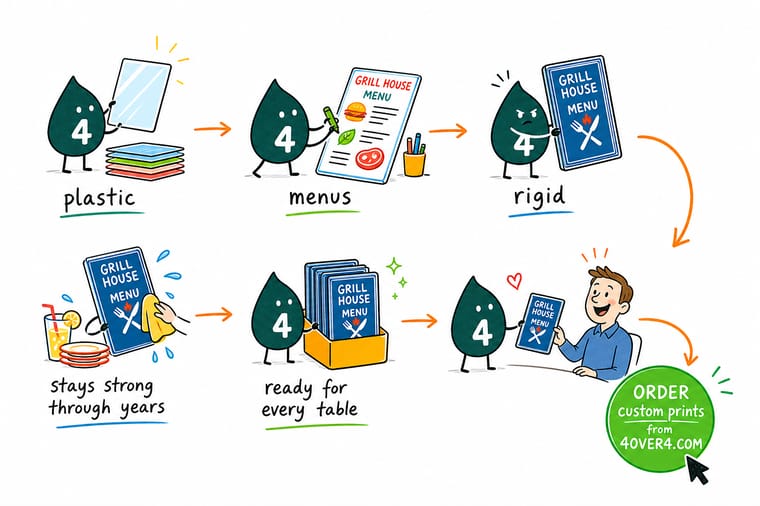
Wally prints your menu on real stock, then seals a clear film onto both faces. The film is what makes it stiff and what lets a server wipe a spill straight off. Cut it flush and the paper edge is open, so wet wiping creeps in at the corner over a few months. Leave a thin border of film past the sheet and the two films weld together, closing it. Wipe the face, dry it, never soak it, and one set of menus outlasts several seasons of specials.
Order laminated menus →Specs and pricing
Menu sizes, stocks and starting prices
Compare the three menu builds side by side, with live sizes, folds, coatings and starting prices straight from the 4OVER4.COM configurator.
Print it
Order a menu built for a working table
Explore more
Where to go next
By the numbers
Rigid plastic, laminated and kraft menus
Common Questions
Your plastic menu questions, answered
Are plastic menus and laminated menus the same thing?
In practice, yes. When a restaurant supplier says plastic menu it almost always means a printed sheet sealed between two clear plastic films, which is what our laminated menus are. A true solid plastic menu is printed directly on a vinyl or polyester sheet with no paper inside, the way our rigid plastic business cards are printed on 20pt vinyl. That construction costs several times more per piece and cannot be reprinted cheaply, so kitchens that change prices seasonally rarely use it.
Can I clean a laminated menu with alcohol wipes or bleach?
You can wipe with either as long as you wipe it dry and keep liquid away from the cut edges. The film face itself is unbothered. What does the damage is solvent sitting in the seam at a trimmed edge, where it softens the adhesive holding the film to the paper and starts a lift you cannot push back down. Soap and water or a quaternary ammonium sanitizer at the dilution the manufacturer prints on the bottle, applied to the cloth rather than sprayed at the menu, is the routine that keeps menus in service longest.
How thick should a plastic menu be?
Think about the whole sandwich rather than the paper alone. Our laminated menus use 100# Gloss Text or 70# Uncoated Text under film, which lands stiff enough to hold flat in one hand at sizes up to 11 x 17 in. Go bigger than that, or hand menus to guests who hold them at one corner, and you want either a folded format so the fold carries the load or a heavier cover stock with a UV coating instead. A menu that flops in the hand reads as cheap no matter how good the printing is.
Can I reprint one page instead of the whole menu?
Yes, and it is the main reason multi-panel menus are laid out the way they are. Keep the volatile content, usually the entrées and the wine list, on its own sheet or its own panel and keep the story pages separate. When beef moves, you reprint 50 of one sheet instead of the full set. Laying that out deliberately is covered in our guide to menu design that sells, and it is worth doing before the first print run rather than after.
Do laminated menus curl?
They curl when the two sides are not balanced. Film on one side only, or a heavy ink coverage on the front against a bare back, leaves the sheet pulling toward the wetter side as it settles. Sealing both faces with the same film and printing full color on both sides, or at least a flood of color on the back, keeps the tension even. Storing them stacked flat under a little weight rather than fanned in a rack does the rest.
What does a plastic menu cost?
Laminated menus start at $57.11 for a set of 50, which is about $1.14 a menu, and the per-menu price falls as the run climbs toward 25,000. Standard menus and restaurant menus also start at $57.11 for 50 without the lamination. Kraft menus, printed on 18pt recycled kraft cover, start at $166.04 for 100. The gap between a laminated menu and a plain one is small enough that any menu living on a table full time should be laminated.
Get Started
20 point rigid vinyl runs 250 for $125.22
Pick your size, choose 100# Gloss Text or 70# Uncoated Text, seal it under lamination, and we print menus a server can wipe clean and hand straight to the next table.
Legal Disclaimer
Gold Standard guarantees apply to all standard orders placed through 4over4.com. Price match requires verifiable proof of a competitor's published price for an equivalent product with matching specifications and turnaround time. Satisfaction guarantee covers manufacturing defects and print quality issues. Contact support with order number and documentation. On-time delivery rate based on tracked orders 1999 to 2026. Individual results may vary based on shipping carrier performance.
