
5 Print Picks That Protect Profit on Every Online Store Order
Profit in an online store is not decided by the number on the listing. It is decided by what survives the product cost, the platform fee, the packaging and the returns. These five printed pieces each defend one of those lines, from $16.48 for 50 postcards.
Raising a price is one lever, and it is the one most stores pull first. The cheaper lever is spending a little on print so each order gives up less. An insert card buys the second sale inside a parcel you already ship. A label takes your product out of a price comparison. A hang tag gets returns back on the shelf. Tissue and tape raise what the box is worth without touching what the product costs.

The picks
The 5 picks, in the order to buy them
Every price below is the lowest catalog price for that product, and it moves as you change size, stock and quantity in the configurator. The order matters. The first three cost less than a week of paid traffic and act on orders you are already packing, so they start working immediately. The last two carry a higher floor price and only earn it back once your daily order count is steady. Each piece can be laid out in the free online designer or started from a design template.
- 1. Flat Thank You Cards from $19.77 The only piece here that reaches a buyer who already paid you in full. It buys the second order inside a parcel you are shipping anyway.
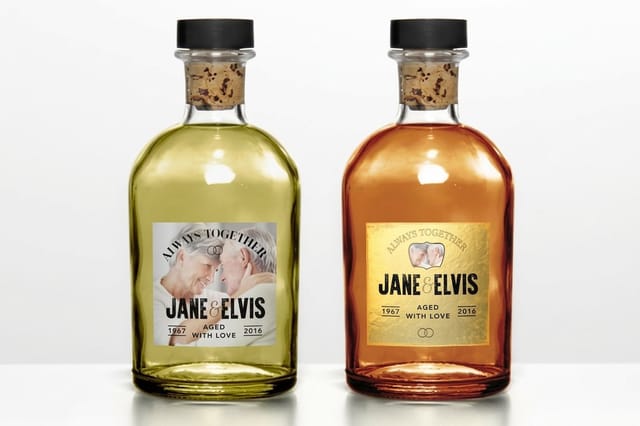
- 2. Custom Labels from $25.00 A generic item with your label on it stops being a listing a shopper can line up against four cheaper ones. That is the whole margin argument.
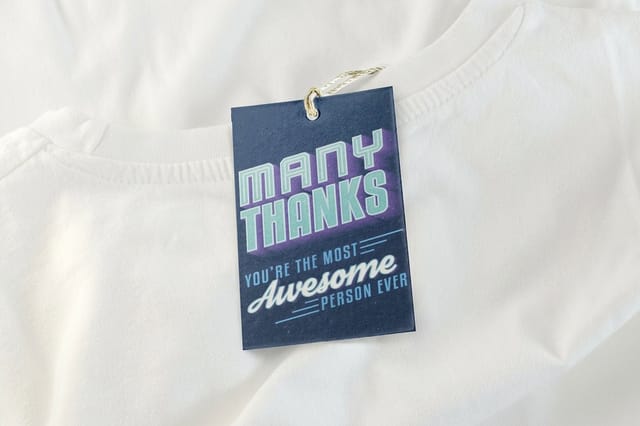
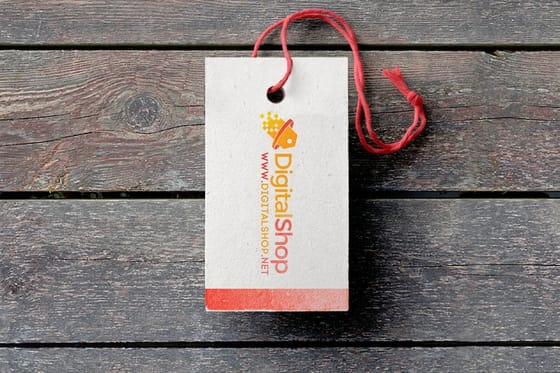
- 3. Standard Hang Tags from $25.27 Size, SKU and care printed on the tag decide whether a returned item goes back on the shelf or into the write-off pile.
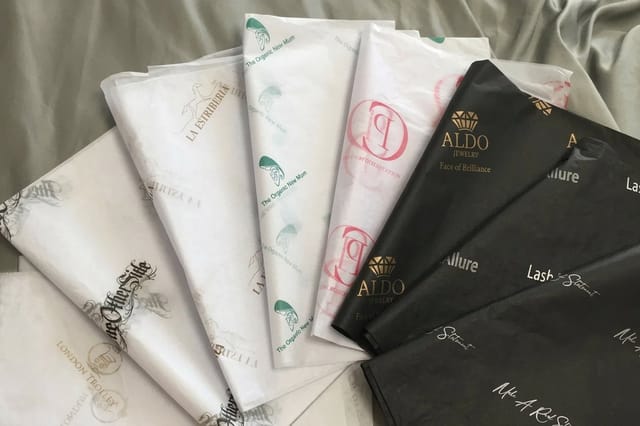
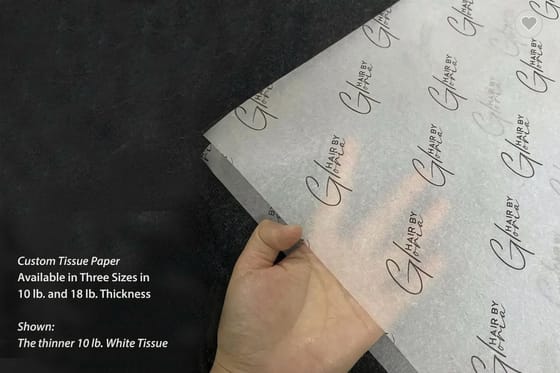
- 4. Tissue Paper from $126.32 The cheapest change to what the box feels like when it opens. It adds nothing to the product and everything to the price a buyer accepts.
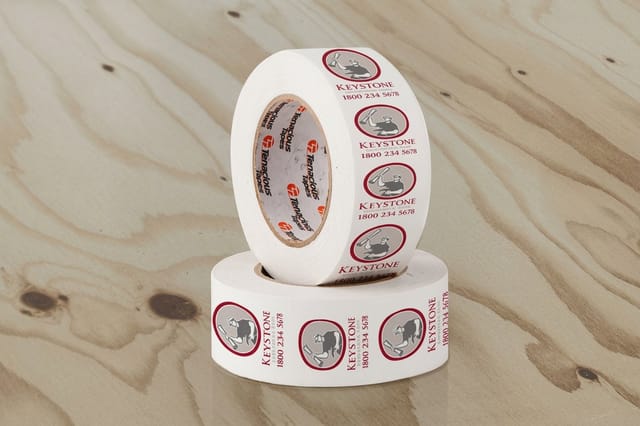
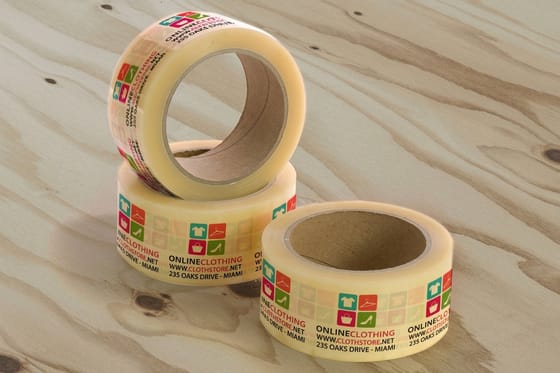
- 5. Packaging Tape from $347.11 Brands every box size you ship for one artwork setup instead of one printed box per size. Highest floor price in the kit, so buy it last.

What each pick does
Five margin moves, and where each one stops working
Each piece here acts on a different line of the order, and each one has a point past which it costs more than it returns. Read the row, tap the piece to jump to its section, then buy against the leak you actually have rather than the one that is easiest to fix.
| Piece | What it changes about the margin | Where it stops working |
|---|---|---|
| 1. Thank you cards | Adds a second order without a second acquisition cost, because the card ships inside a parcel already paid for | An open ended code keeps costing you margin years later, so tie it to one product or a minimum spend rather than a date |
| 2. Custom labels | Takes your item out of a side by side price comparison, so the number you charge is not judged against a commodity listing | Putting your name on a product you did not make also moves the complaints, the recalls and the compliance copy onto you |
| 3. Hang tags | Keeps returns identifiable, so a sent back item is restocked instead of written off | A tag is only worth printing if somebody attaches it, and attaching several hundred by hand is real labor you have to price in |
| 4. Tissue paper | Raises what the unboxing feels worth without touching the cost of the product itself | It protects nothing, so a fragile item still needs real void fill and you end up paying for both |
| 5. Packaging tape | Brands every box size from one setup instead of one printed corrugated run per size | It needs a kraft or corrugated surface to grip and print against, so poly mailer orders get nothing out of it |
The arithmetic behind these rows, without the print specs, is in our guide to price and profits of online stores. If the problem is the number itself rather than the cost around it, start with pricing strategies for online businesses instead.
1. Flat thank you cards: the second sale you do not pay to acquire

The first order is the expensive one. You paid for the click, the platform took its cut, and whatever is left is your margin on a customer you now have to win again. A flat thank you card from $19.77 at 4OVER4.COM is the cheapest way to work on order two, because it rides inside a box whose postage you have already bought.
Give the card one job and one destination. A code for the refill, the matching size, or the item people buy second beats a blanket percentage off everything, because it names the next purchase instead of asking the customer to invent one. Run a code that belongs to that card run alone and your own order export tells you how many came back through it. No survey, no attribution model, just a count.
Stock is where this pick is usually specified wrong. If you want a staff member to write a name or a line by hand, order uncoated: a ballpoint slides off a gloss laminate and smears for hours on a gloss aqueous coat. 14pt uncoated takes ink and still feels like a card rather than a receipt. Order it coated only if nobody is writing on it and you want the photo on the front to hold its color.
The limit is the expiry. A card with no end date keeps pulling orders out of a kitchen drawer months later, and it also keeps costing you that margin indefinitely. Bound it with a minimum spend or a single eligible product instead of a date, so the offer stays alive but never gets used on the order you least want discounted. Our guide on how to design a thank you card covers what belongs on the front, and how to use packaging inserts covers where it sits in the parcel.
2. Custom labels: take the product out of a price comparison

If you resell an item anyone can buy from the same supplier, your price is judged against every other listing of that same item, and the cheapest listing sets the ceiling. Custom labels from $25.00 change what is being compared. The jar is the same jar, but it is now your SKU, with your name, your scent, your directions and your batch code on it, and there is no identical listing to sit beside it.
Be clear about what you are taking on. Once your name is on the container you are the brand of record: the complaints, the ingredient and net weight statements, the recall if one ever happens. That is a real cost of the higher margin, and it is the part most stores skip past when they decide to private label.
Pick the face stock for where the container actually lives. Paper is cheapest and correct for a dry shelf product. Anything that goes in a fridge, a bathroom, or a cooler needs a synthetic face stock, because a paper label lifts at the edges the first time the surface sweats and a lifted label reads as a cheap product no matter what you charge. Measure the container and its curve before you design, using how to choose the correct label size.
Quantity is the other margin lever here, and it works against you if you guess. Label printing has a real setup cost baked into the first units, so five hundred labels rarely costs five times what a hundred costs. Order to a season rather than to a week, but not so far ahead that a formula change turns the surplus into recycling. The mechanics of that curve are explained in how price breaks work, and run planning in how to order bulk labels.
3. Hang tags: what decides whether a return goes back on the shelf
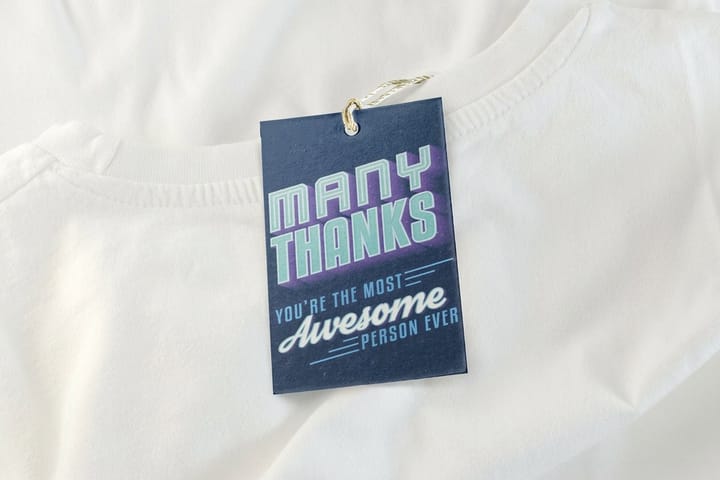
Returns are where online store profit leaks without ever showing up as a line you can see. The refund is obvious. The part that hurts is the unit that comes back, cannot be identified quickly, and sits in a bin until somebody has an afternoon to sort it. A standard hang tag from $25.27 carrying the size, the SKU and the care line means a returns desk restocks the item without opening the packet or guessing.
Print the things that make it resellable, not the things that expire. Fiber content, size, care symbols, SKU and a short brand line all stay true for the life of the product. A promotional price, a season name, or a dated campaign turns the rest of the run into dead stock the day the promotion ends, and a tag run outlives most promotions by a wide margin.
Attachment is the cost nobody budgets. String has to be threaded, which is slow but leaves no mark. A plastic barb fastener is fast and holds well, but it needs a tagging gun and it punches through the fabric, so it belongs in a seam allowance or a label, never through the face of a knit. Whichever you choose, several hundred tags is an afternoon of somebody's time, and that labor is part of what the tag really costs you.
On stock, 16pt or heavier keeps its shape when a shopper pushes past a rack, and a matte or uncoated finish lets a staff member write a size or a repair note on the back. Sizes and the job each one is normally used for are set out in our hang tag size guide, and the wider case for tags in a small catalog is in what hang tags are.
4. Tissue paper: the cheapest change to what the box feels like
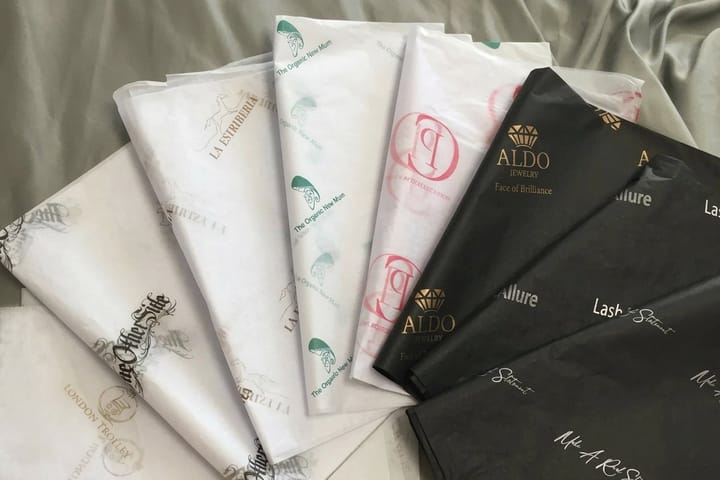
Two identical products at two different prices are separated by the two seconds after the flaps come open. Printed tissue paper from $126.32 buys those two seconds. The product costs you exactly what it cost before, but the parcel now reads as something that was packed on purpose rather than dropped in a carton, and that is what makes a higher price feel reasonable rather than cheeky.
Tissue is not protection, and treating it as protection is the expensive mistake. It will not stop a mug from breaking or a bottle from chipping against a corner. Fragile items still need real void fill or a moulded insert underneath the tissue, so on those SKUs you are paying for both, and the packaging line on your cost sheet goes up twice.
Two more things worth knowing before you order. Printed tissue can transfer a little ink onto pale fabric if the parcel gets damp in transit, so wrap light garments in unprinted tissue and use the printed sheet as the outer layer. And size the sheet to the box you use most, not to the largest one, because a sheet that has to be folded three times to fit hides most of the artwork you paid for. Our guide to measuring a box for shipping gives you the dimensions to order against.
This is the fourth pick for a reason. Tissue arrives as a run, and a run only earns its keep when you use it up at a steady rate. If you ship a handful of orders a week, the same money is better spent on the three picks above it. The rest of the unboxing options, including inserts and wraps, are compared in nine ecommerce packaging solutions.
5. Packaging tape: brand every box size from one setup
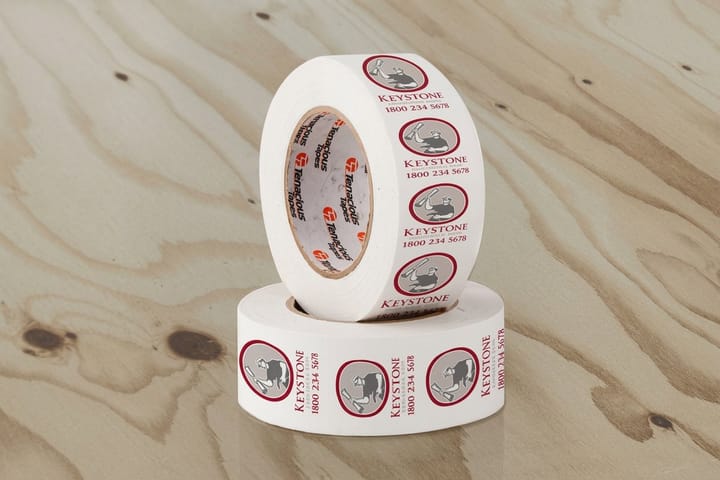
Printed corrugated is priced per box size. Ship in five sizes and you are buying five separate print runs, five minimums, and five stacks of inventory you have to store and forecast. Custom packaging tape from $347.11 sidesteps that: one artwork setup, one run, and every plain kraft carton you already buy in bulk comes out looking like yours.
It has a surface requirement. Tape needs a kraft or corrugated face to grip and to print against, so a store that ships mostly in poly mailers gets very little from this pick and should stay with a printed label on the mailer instead. Check what you actually ship in before you order, not what you plan to ship in next year.
Design for a moving strip, not a poster. The tape is read in a band about two inches wide while somebody is carrying the box, so a logo with a short repeat and high contrast survives; a full lockup with small type and a tagline turns into a blur. Keep the repeat short enough that a single seal on a small carton still shows a complete mark rather than half a word.
The application detail that wastes the print is overlap. A hand dispenser run twice along the same seam buries the second pass, and a heavy H tape job on a small box covers the mark you paid for. One clean strip along the seam and short tabs down the sides is enough. There is more on stock, width and adhesive choice in custom package tape explained and in print for ecommerce brands.
Specs and pricing
The two lines you will reorder every quarter
Cards go in every parcel and labels go on every unit, so those two come back on the order form long after the tissue and the tape are settled. Here are the live specs and price ladders for both, straight from the configurator.


| Quantity | Price Per Unit | Total |
|---|---|---|
| 25 | 79.1¢ | $19.77 |
| 50 | 50.5¢ | $25.27 |
| 100 | 42.8¢ | $42.84 |
| 200 | 25.8¢ | $51.62 |
| 300 | 20.1¢ | $60.42 |
| 400 | 17.3¢ | $69.20 |
| 500 | 15.6¢ | $77.99 |
| 600 | 15.4¢ | $92.26 |
| Quantity | Price Per Unit | Total |
|---|---|---|
| 1 | $25.00 | $25.00 |
Wally packs the profit back in
Five pieces, five leaks closed
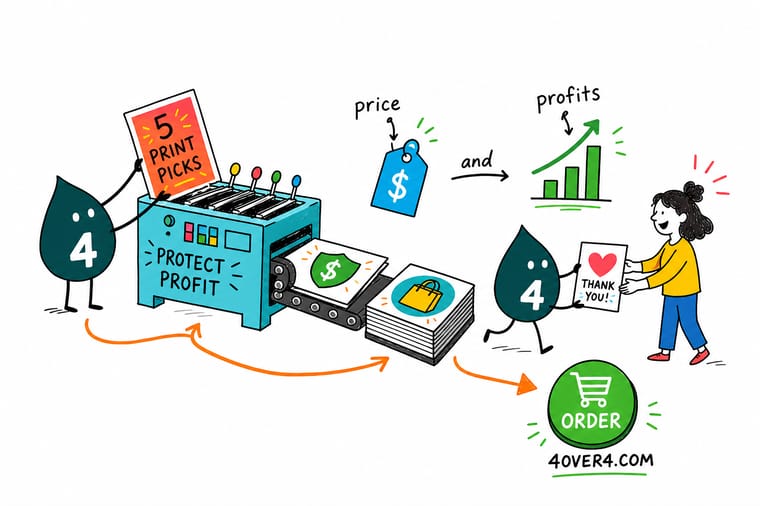
Wally does not touch your listing price. He drops a coded card in the box so the next order costs nothing to win, puts your label on the jar so nobody can price-match it, ties a tag with the size and the SKU so a return goes straight back on the shelf, wraps the item in printed tissue so the parcel is worth what you charged, and seals every carton with your own tape instead of five printed box runs. Print the set at 4OVER4.COM and the margin stays where you left it.
Shop ecommerce printing →See it in use
Labels and seals shops have printed
Explore more
Where to go next



By the numbers
What a packed order can be printed with
Common Questions
Common questions about price and profit in an online store
Which printed piece improves an online store margin fastest?
The insert card, because it costs the least and travels for free. Flat thank you cards start at $19.77 at 4OVER4.COM and ship inside a parcel whose postage is already paid, so the only new cost is the card itself. A label or a tag improves margin too, but both add a step in packing or a cost per unit, while a card is dropped into a box a worker already has open.
Does private labelling a product really let me charge more?
It lets you charge a price that is not measured against an identical listing, which is a different thing from charging more for free. Custom labels start at $25.00 and take a commodity item out of a side by side comparison. In exchange you become the brand of record, which means the customer questions, the ingredient or net weight statements and any recall land on you rather than on the manufacturer.
How do hang tags affect returns?
A tag that carries the size, the SKU and the care line lets a returns desk identify and restock an item without opening the packet or asking the warehouse. Without it, a returned unit joins a pile that gets sorted whenever somebody has the time, and slow sorting is what turns a return into a write off. Standard hang tags start at $25.27 at 4OVER4.COM.
Is printed tissue paper worth it for a small store?
Not at first. Tissue paper starts at $126.32 and arrives as a run, so it earns its keep when you are packing enough orders to use that run at a steady rate. If you ship a handful of orders a week, the same budget does more in cards, labels and tags. Add tissue when the daily order count is consistent and the unboxing is what people mention in reviews.
Should I buy printed boxes or printed tape?
Tape, if you ship in more than one box size. Printed corrugated is priced and stocked per size, so five sizes means five runs and five stacks of inventory, while packaging tape from $347.11 brands all of them from a single setup. Printed boxes win when you ship a single size in high volume and want the whole exterior working, not just the seam.
How much of each order should go to packaging?
There is no universal figure, and any page that gives you one is guessing at your category. Work it the other way: add the box, the void fill, the label, the tape and the insert to your cost per order, then check what is left after the platform fee, the payment fee and your average return rate. If the packaging line is bigger than the margin the insert card wins back, it is too rich for the product.
What is the cheapest way to make a repeat customer without ad spend?
Put a coded offer in a parcel you are already shipping, then measure it in your own order export. Cards do it inside the box, and mailed standard postcards from $16.48 do it later, to a list of people who bought once and went quiet. Both cost less than buying that same customer back through paid traffic, and both give you a number you can count rather than an attribution estimate.
Can I order all five picks with matching artwork?
Yes. All five are set up from the same brand file, and you can lay each one out in our free online designer or start from a design template and swap the logo and the copy. Ordering them together also keeps the color consistent, because a card, a label and a tag printed in one window sit closer to each other than the same three ordered months apart on different stocks.
Get Started
Print the pieces that keep the margin
Order the five picks at 4OVER4.COM and every card, label, tag, wrap and tape leaves the press matching. Pick your sizes, stocks and finishes, and watch each price update live as you build the order.
Legal Disclaimer
Gold Standard guarantees apply to all standard orders placed through 4over4.com. Price match requires verifiable proof of a competitor's published price for an equivalent product with matching specifications and turnaround time. Satisfaction guarantee covers manufacturing defects and print quality issues. Contact support with order number and documentation. On-time delivery rate based on tracked orders 1999 to 2026. Individual results may vary based on shipping carrier performance.
