
Find Your Niche Print Kit, 5 Picks That Stand Out
Narrowing is only half the job. The other half is putting the claim somewhere a buyer can hold it, in the same words, on every piece you hand out. Here are the five, in the order you should buy them, starting at $16.48 for 50 postcards.
You find a niche by naming one buyer and one recurring problem, and you stand out by putting that exact claim on something the buyer can hold. The claim is the hard part. Print is how you test it cheaply and then repeat it until people recognize it, which is why the order below starts with a $16.48 postcard mailed to one narrow list and only then commits to tags, cards, brochures and a shape of your own.

The picks
Five pieces, from $16.48 postcards to $93.37 die-cut stickers
Buy them in this order, because each one depends on the wording the one before it proved. Prices come straight from the configurator and fall as the quantity climbs, so treat every figure below as the bottom of a ladder. Start any piece from a design template if you would rather not build artwork from scratch.
-
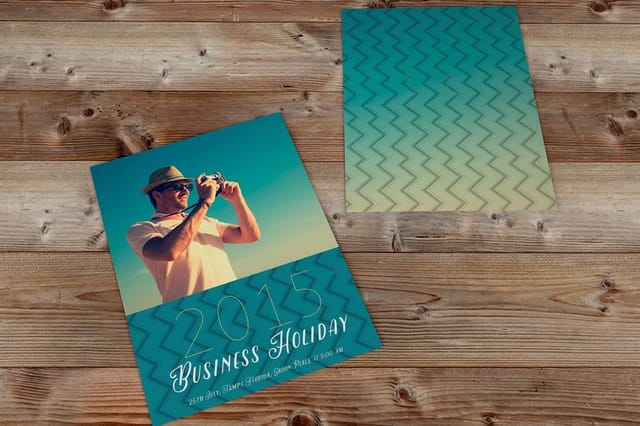
1. Standard Postcards from $16.48
The cheapest honest test of a niche claim. Mail one message to one narrow list, print a code that appears nowhere else, and the replies tell you whether strangers describe their problem the way you just described it.
-
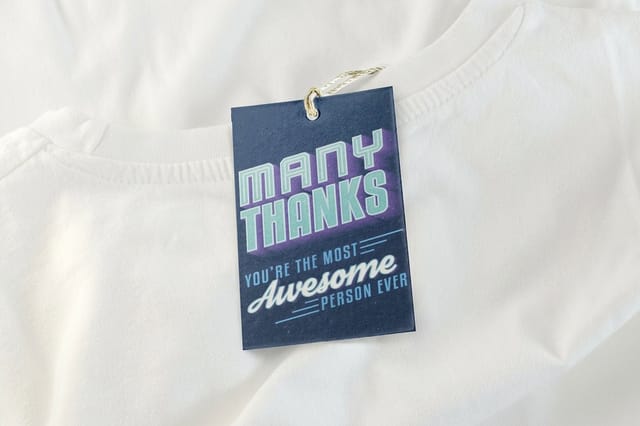
2. Standard Hang Tags from $25.27
The claim lands where the buyer is already holding the product. A tag has room for the one sentence that separates you from the rack next to you, and it travels home in the bag whether or not anyone reads the website.
-
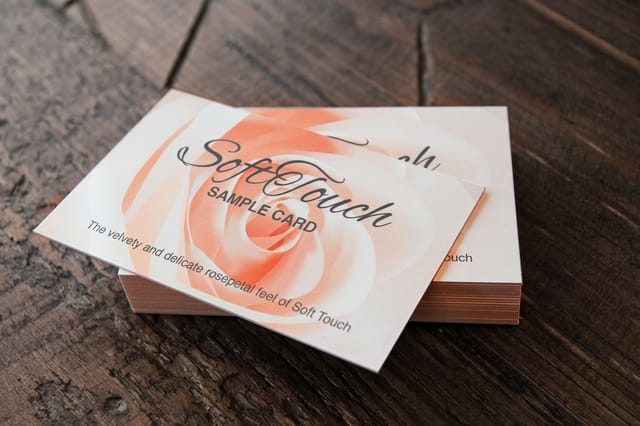
3. Soft Touch Business Cards from $40.28
A specialist gets remembered by the line under the name, not by the logo above it. The soft touch laminate is the finish people turn over in their fingers, which buys you the two seconds it takes to read that line.
-
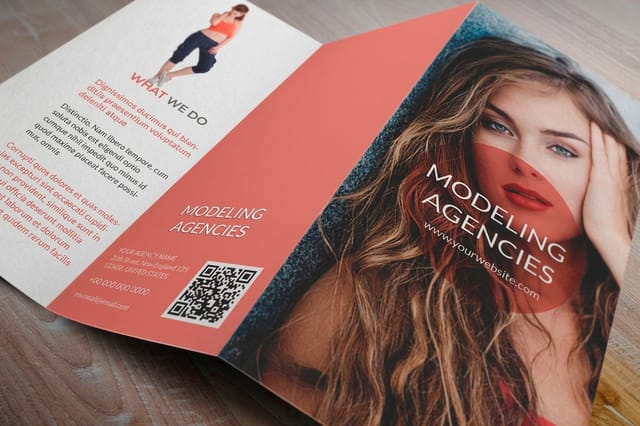
4. Standard Brochures from $57.11
Written for the person who recommends you rather than the person who hires you. Niche work arrives by referral, and a referral needs something to hand across a desk that says exactly what you do and who you do it for.
-
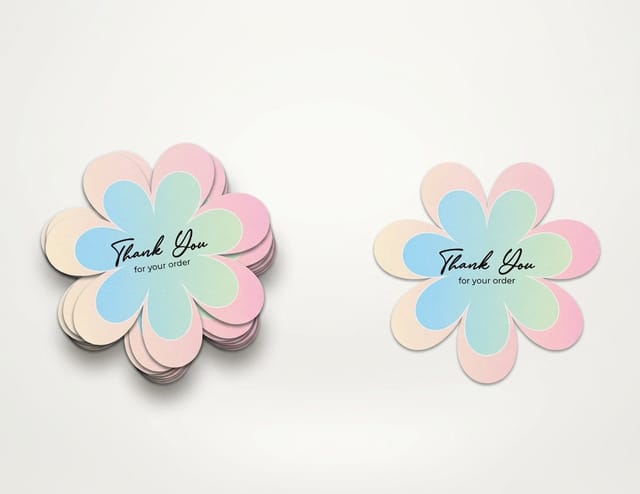
5. Die-Cut Stickers from $93.37
One shape, used everywhere, gets recognized before it gets read. A cut outline turns a logo into an object people stick on a laptop or a toolbox, which is free display space you cannot buy any other way.
The chain
What each piece proves, and where it does the proving
Each printed piece answers a different objection at a different moment, which is why a niche business that owns only business cards keeps stalling in the same place. Read the row, tap the piece to jump to its section, then buy the one your chain is missing rather than reprinting the one you already have.
| Piece | What it proves | Where it does the work |
|---|---|---|
| 1. Postcards | That real strangers answer to your description of their problem | One rented or built list, one offer, one trackable code |
| 2. Hang tags | That the niche claim survives contact with the product itself | On the garment, the jar, the bouquet, the gift box |
| 3. Soft touch business cards | That you are a specialist and not a general contractor of everything | The pocket, the trade show table, the invoice envelope |
| 4. Brochures | That someone else can explain your niche accurately without you there | The referrer, the front desk, the leave-behind after a meeting |
| 5. Die-cut stickers | That the niche has a look people can recognize at a distance | Laptops, toolboxes, shipping cartons, the counter jar |
Start here
Why this order and not the usual one
Most people buy business cards first and a mailing list last, which is backwards. Cards, tags and brochures all repeat one sentence, so ordering them before that sentence has been tested on strangers means reprinting three items instead of one. Mail the postcard, read the replies, fix the wording, then commit. The method for arriving at the sentence in the first place, including the test for whether a niche is countable, sits in our guide to finding your niche and standing out, and the difference between the claim and the look is unpacked in marketing versus branding.
1. Test the niche on a mailing list before you print an identity
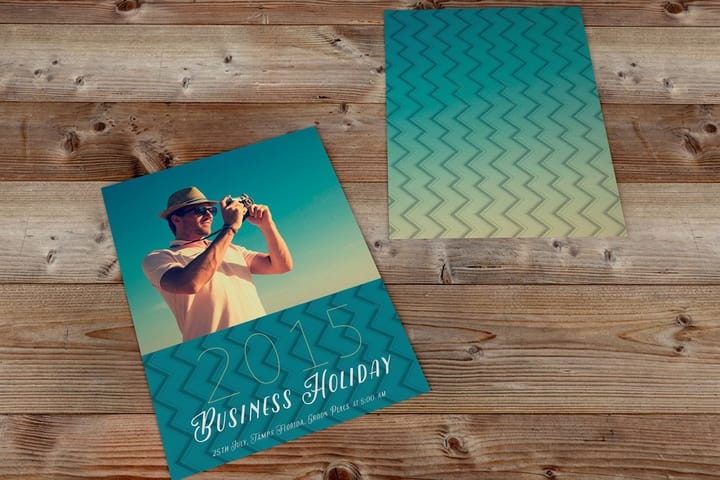
A niche is a guess until somebody who has never met you responds to it. That is what makes a standard postcard the right first purchase: at $16.48 to start, it is cheap enough to be wrong with. Write the problem in the buyer's own words, mail it to one narrow list, and read what comes back before you commit to a logo, a website or a box of cards.
Keep the card to one idea. A 4 by 6 postcard gives you a headline, about three lines of body and a call to action on the front, and the address side has to leave the lower right clear for the postage and the barcode, which takes a third of that face out of play. Print an offer code used on nothing else and the responses are attribution nobody can argue with.
Two limits are worth naming. The list decides the outcome more than the design does, so a sharp card to the wrong five hundred names dies quietly and teaches you nothing. Standard mail also takes days to land and days more to produce replies, so nothing happens for a week and a half after the drop and that silence is not a result. Our postcard sizes guide covers what fits at each size, and the postcard examples for small businesses show layouts that leave the mandatory areas alone.
If the wording lands, keep it word for word on everything that follows. If it does not, the fix is upstream in how the niche is defined, and the full narrowing method sits in our guide to finding your niche.
2. Put the claim on the product, where a buyer is already holding it
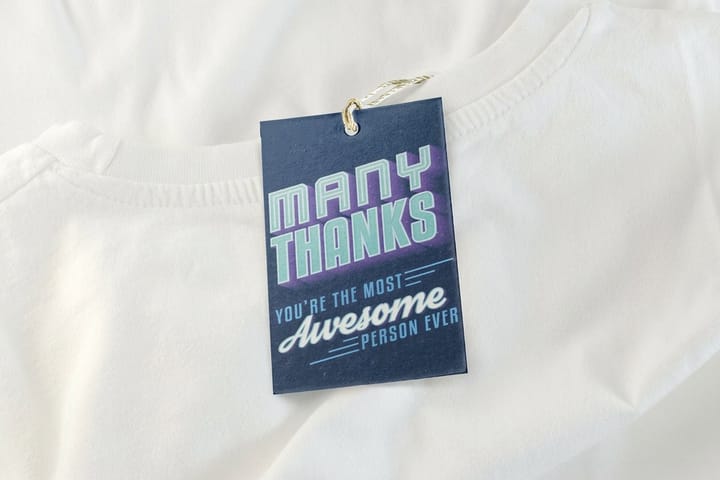
Shelves flatten everything. A rack of jars or shirts reduces every maker to the same silhouette, and the one line that separates you has to be on the item, not on a page somebody will visit later. A hang tag from $25.27 is the smallest piece that can carry it: who this is for, what it is made of, and the one thing the item next to it cannot say.
Stock is the real decision. Kraft reads as handmade and takes a rubber stamp beautifully, but its brown fiber softens small type and dulls anything printed in a light color, so 6pt copy that looked fine on screen goes fuzzy on the tag. A coated stock holds fine type and a scannable code cleanly, and it also looks manufactured, which is the wrong signal for a maker at a farmers market. Match the stock to the room the product sells in.
Hole or slit matters more than people expect. A punched hole with a reinforcing ring survives being pulled off a rail and pushed back on; a plain slit tears on the third handling. Sizes and their normal uses are laid out in our guide to standard hang tag sizes, and custom branding tags covers what belongs on the face and what belongs on the back.
The honest limit: a tag does nothing for a service business. If you sell hours rather than objects, skip this piece entirely and put the budget into the card and the brochure below.
3. Make the handshake say specialist, not owner

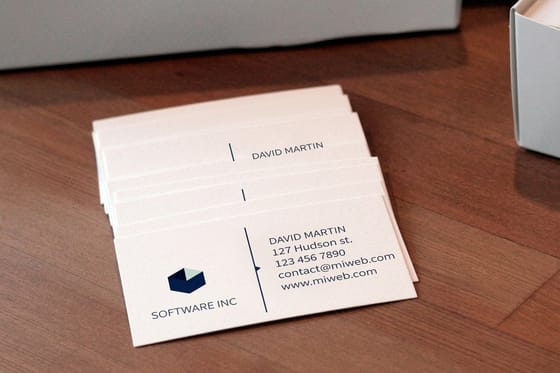
Most cards waste their best line. Under the name goes "Owner" or "Founder", which describes your relationship to the company and tells the person holding it nothing about what you do for them. Put the niche there instead. "Bookkeeping for dental practices" beats "President" on a soft touch business card every time, and the card starts at $40.28.
Soft touch is the finish people notice with their hands before they read anything, which is exactly the pause you want. It has one real drawback: the velvet laminate resists pen ink, so if your habit is writing appointment times or a cell number on the back, either leave one uncoated panel or choose a different finish. Nobody mentions this until the pen skids.
The two upgrades earn their money differently. Raised foil business cards from $86.78 put a physically raised, reflective element on the card, and that texture survives months in a wallet where a flat matte finish scuffs gray along the edges. Spot UV from $76.88 gives you gloss against matte with no height, which suits a logo built on thin lines that foil would thicken. Compare the whole range at business cards printing before you decide.
Whatever you choose, keep the wording identical to the postcard that worked. Our guide on business card slogans gets into how short that line has to be to survive a glance.
4. Give the person who recommends you something to hand over
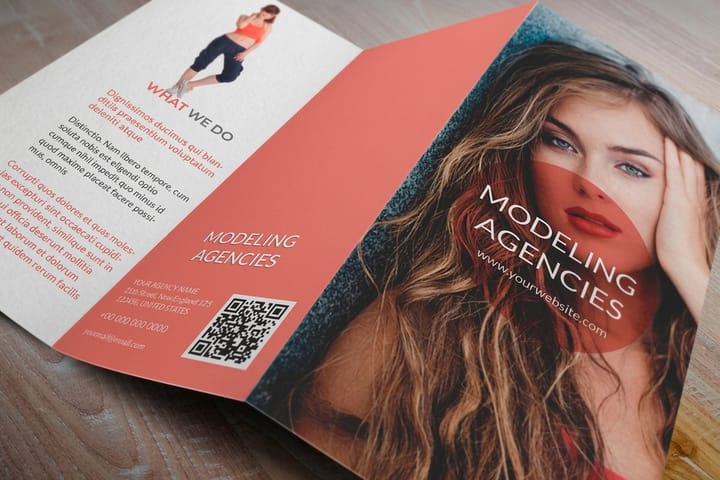
Niche businesses grow sideways. The work arrives because an accountant told a client, or a supplier mentioned you to a buyer, and that third person has to explain your specialty accurately without you in the room. A brochure from $57.11 is the piece written for them rather than for the customer.
Write it in panels, not in paragraphs. A tri-fold on a letter sheet gives you six panels a shade over 3.6 inches wide, and one idea per panel is the whole discipline: who you serve, the problem, how the work runs, what it costs to start, proof, how to reach you. The moment a panel lists every service you are capable of, you are back to being a generalist on paper.
Print short runs on purpose. Prices, staff and case examples move, and a box of 2,500 brochures with last year's numbers is a box you keep using because you paid for it. Stock choice does real work here too: a matte coated sheet reads well under office fluorescents where a high gloss throws glare across the panel a reader is holding. Our guide to choosing paper for printed marketing materials covers the weights that fold without cracking.
Fold the brochure into a plan rather than leaving it as an object. The sequence of who gets one and when is the useful part, and that sits in our small business marketing plan guide alongside the rest of the calendar.
5. Own one shape so people recognize you before they read you
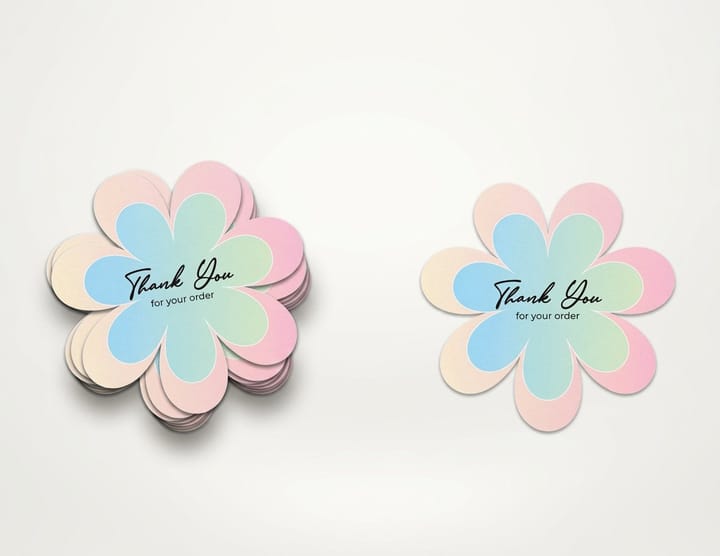
Recognition beats explanation at a distance. Once a niche audience knows your outline, a die-cut sticker on a laptop lid or a toolbox does the introducing for you, and it does it in rooms you were never invited to. Die-cut stickers start at $93.37 and the cut follows any outline you supply rather than sitting inside a square.
Design for the cut, not for the screen. Thin limbs, narrow tails and sharp inside corners are where a sticker lifts first, because the edge has less surface holding it down and a fingernail finds it within a week. Keep the outline fat and simple, and remember that the shape has to still be readable at two inches, which is where most laptop-sized stickers actually land.
Match the material to the place it will live. Vinyl handles weather, a wash and sunlight on a truck or a water bottle; a paper face is cheaper and belongs indoors on packaging and stationery. Then use the shape everywhere else too, on the tag, the brochure cover and the card, because a shape only becomes a shortcut through repetition. The reasoning behind that consistency is in what branding actually is for a small business.
Stickers are the cheapest piece here per impression and the easiest one to overspend on. Order a modest first run, hand them out in the one place your niche gathers, and watch whether they show up on anything. If they do not, the shape is decoration, and more of them will not fix that. There is a wider list of low-cost moves in our affordable small business branding strategies.
Specs and pricing
The two pieces you will reorder most
Cards and postcards are the pieces a niche business burns through, because one goes out with every conversation and the other goes out with every campaign. Here are the live specs and the price ladders for both, straight from the configurator.

| Quantity | Price Per Unit | Total |
|---|---|---|
| 50 | 33.0¢ | $16.48 |
| 100 | 24.2¢ | $24.16 |
| 200 | 15.9¢ | $31.86 |
| 300 | 12.8¢ | $38.45 |
| 400 | 11.3¢ | $45.04 |
| 500 | 10.3¢ | $51.62 |
| 600 | 9.89¢ | $59.31 |
| 700 | 9.57¢ | $67.00 |
| Quantity | Price Per Unit | Total |
|---|---|---|
| 50 | $1.14 | $57.11 |
| 100 | 82.4¢ | $82.38 |
| 200 | 53.3¢ | $106.55 |
| 300 | 41.0¢ | $123.02 |
| 400 | 34.9¢ | $139.49 |
| 500 | 31.2¢ | $155.97 |
| 600 | 26.7¢ | $160.36 |
| 700 | 23.5¢ | $164.75 |
Wally narrows it down
One claim, five pieces, same five words
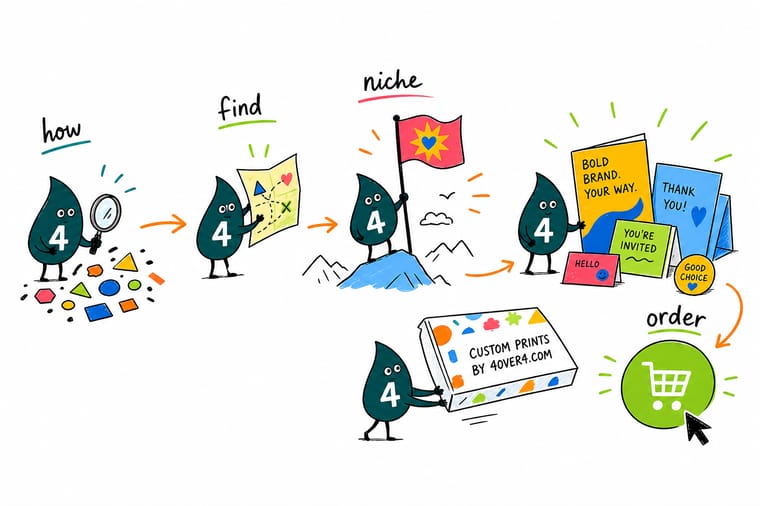
Wally works the chain the way a small shop does. The postcard goes out to one narrow list and tells you whether strangers recognize their own problem in your wording. The hang tag carries that wording to the shelf. The card carries it into a handshake, the brochure lets somebody else repeat it accurately, and the sticker turns it into a shape people spot across a room. Print the test first, keep the words identical, and let 4OVER4 handle the rest of the set once the wording holds.
Shop business basics printing →See it in use
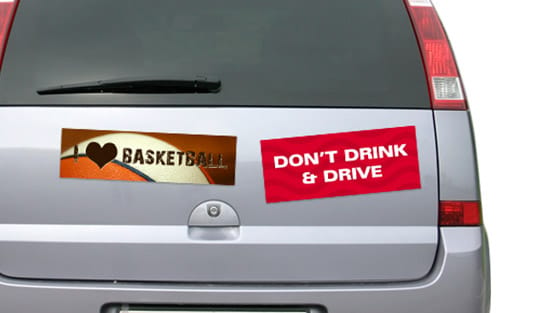
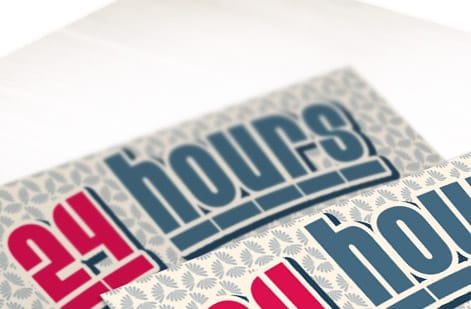
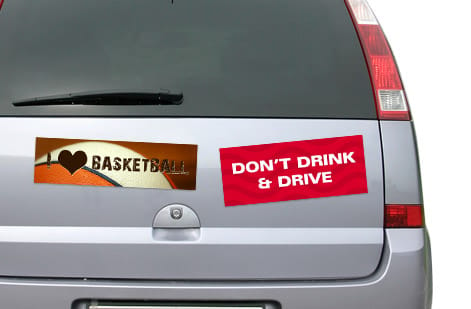
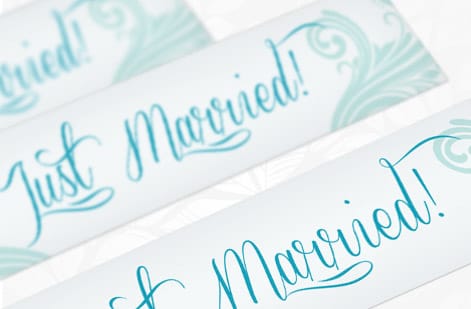
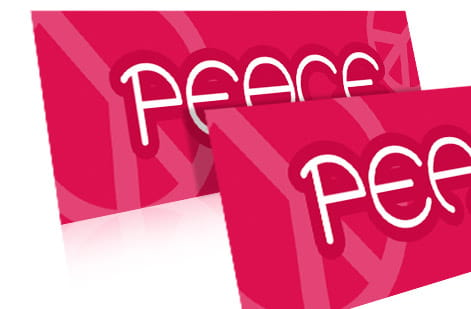
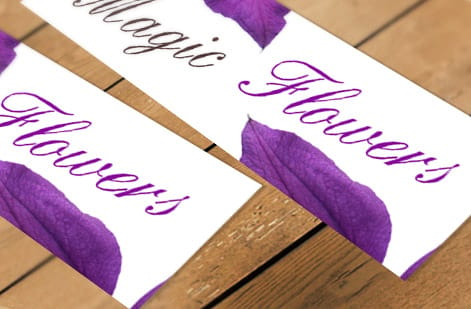
Die-cut stickers other small brands ordered

Explore more
Where to go next

By the numbers
Sixty stocks and a thousand products to narrow from
Common Questions
Common questions about narrowing a niche and printing for it
How do I know my niche is narrow enough?
Try to name the list. If you can point to an association directory, a trade paper, a rentable mailing list or a conference attendee list that reaches a few hundred of these buyers, the niche is real and reachable. If no such list exists, you have described a mood rather than a market. If the list you find has forty names on it, you have gone too far and a print run cannot pay for itself against that many prospects.
What should I print first when I pick a niche?
Postcards, before anything with a logo on it. Standard postcards start at $16.48 at 4OVER4.COM, which makes them cheap enough to be wrong with, and a mailed card to one narrow list answers the only question that matters early: do strangers recognize their own problem in your wording. Cards, tags and brochures all repeat that wording, so ordering them first means reprinting all three if the wording is off.
Should my business card say the niche or the job title?
The niche. The line under your name is the most valuable real estate on a business card and "Owner" spends it describing your relationship to the company rather than what you do for the reader. "Payroll for restaurant groups" or "Wedding florals only" gives a stranger a reason to keep the card. Save the title for the email signature, where nobody is deciding in two seconds whether you are relevant.
Can one set of printed material serve two niches?
One card and one brochure cannot, because both are read in seconds and a split claim reads as no claim. What works is a shared visual system with separate copy: same colors, same shape, same stock, then two versions of the card and two versions of the brochure. Short print runs make that affordable, and 4OVER4.COM has no minimum order, so a hundred of each is a normal order rather than a special favor.
What if a competitor already owns my niche?
That is usually good news. Somebody already paying somebody proves there is a budget, which is more than an empty niche ever proves. Read what the competitor does not cover: a size of client they will not take, a turnaround they cannot hit, a region they ignore, a guarantee they will not put in writing. Price is the one difference they can copy by Friday, so build the difference on something that costs you to keep.
How long should I wait before judging a postcard test?
Give it about three weeks from the drop. Standard mail takes several days to land, recipients sit on a card for a while, and the first replies usually arrive after the piece has been on a desk for a few days. Judging at day four tells you only that mail is slow. Use one unique offer code per drop so that a second mailing never gets credit for the first one.
Do stickers actually help a niche business or are they just merchandise?
They help when the audience gathers somewhere physical, like a trade show, a workshop, a maker market or a jobsite, and they do nothing when the audience is scattered and remote. A die-cut sticker earns its keep by turning a laptop lid or a toolbox into display space you did not pay for. Order a small first run, hand them out in the one place your buyers actually meet, and see whether they appear on anything. If they do not, the shape is decoration.
How much does the full five-piece set cost to start?
At the starting quantities shown on each product page at 4OVER4.COM, standard postcards begin at $16.48, hang tags at $25.27, soft touch business cards at $40.28, standard brochures at $57.11, and die-cut stickers at $93.37. Every figure moves with size, stock, finish and quantity, and each configurator updates the price live as you change those options, so treat these as the bottom of a ladder rather than a fixed cost.
Get Started
Print the claim, then repeat it everywhere
Postcards, hang tags, soft touch cards, brochures and die-cut stickers, ordered as one matched set at 4OVER4.COM. Pick your sizes, stocks and quantities and watch every price update live before you commit.
Legal Disclaimer
Gold Standard guarantees apply to all standard orders placed through 4over4.com. Price match requires verifiable proof of a competitor's published price for an equivalent product with matching specifications and turnaround time. Satisfaction guarantee covers manufacturing defects and print quality issues. Contact support with order number and documentation. On-time delivery rate based on tracked orders 1999 to 2026. Individual results may vary based on shipping carrier performance.
