
Wholesale Canvas Printing for Resellers and Studios


Trade pricing, unbranded boxes, and the wrap math behind a repeatable canvas order. Written for photographers, galleries, framers and print on demand shops buying to resell.
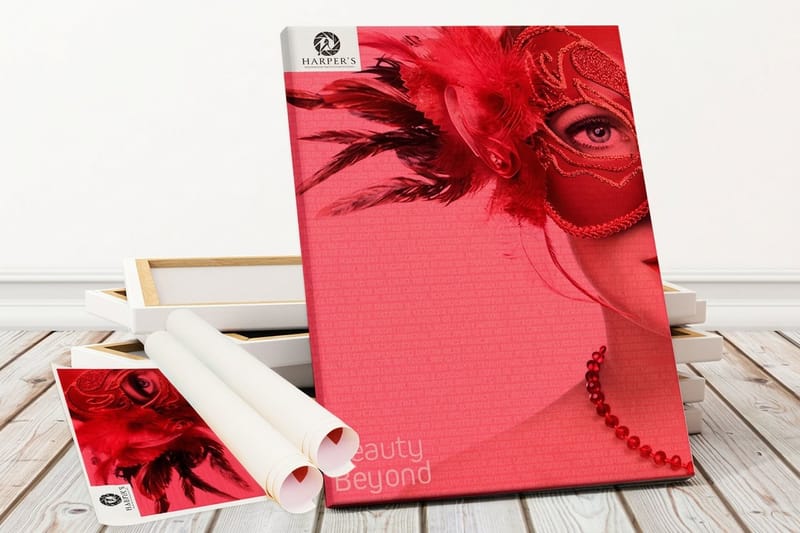
Wholesale canvas printing is buying canvas prints at volume pricing from a production printer, under your own brand, to resell. At 4OVER4.COM that means Rolled Canvas from $25, Framed Canvas from $50.33, and Stretched Canvas from $59, with the per-unit price falling as quantity rises and blind shipping available so the box carries no printer branding. The catch worth knowing early: canvas is finished piece by piece, so the volume curve is flatter than it is on paper.
Quick answer
Trade pricing, an unbranded box, and a flatter discount curve
Wholesale canvas printing gives you volume pricing and a shipment your customer cannot trace back to the printer. The per-unit price drops as quantity climbs, blind shipping keeps 4OVER4 off the carton, and rolled stock lets a studio stretch and frame at its own margin. The limit to plan around is that every canvas is finished by hand, so quantity does not collapse the unit price the way it does on business cards. Wrap depth is the other thing that catches people out, because it changes the size of every file in the batch.
What Wholesale Canvas Printing Actually Means
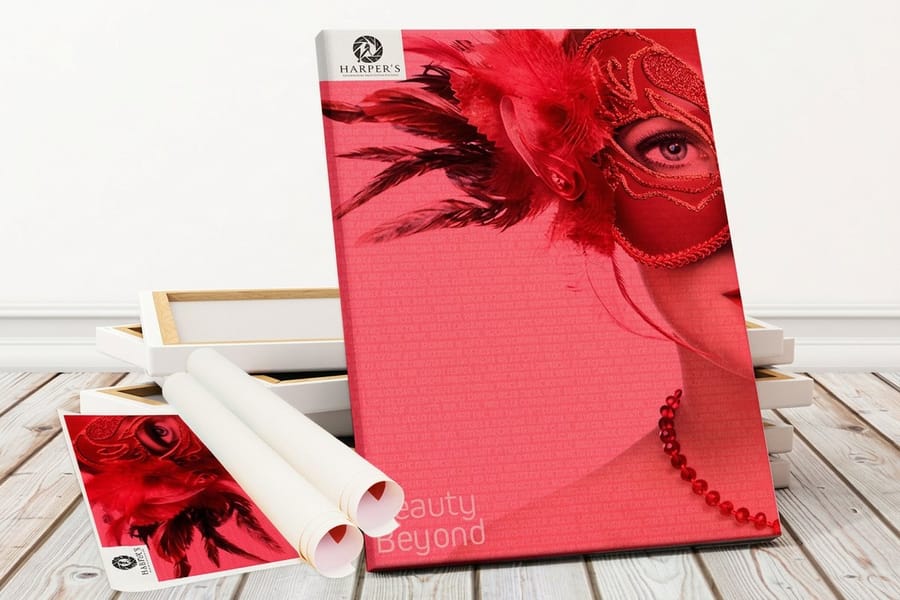
Wholesale canvas printing is a supply arrangement, not a product. You send artwork, a printer produces the canvas on its own equipment, and the piece reaches your customer with your name on it rather than the printer's. The price sits on a volume curve instead of a retail sticker.
Three things have to be true before the word wholesale means anything. The per-unit price has to fall as quantity rises. The order has to be repeatable, so the same size and wrap comes back identical in March and in September. And the shipment has to be able to leave unbranded, because a gallery that ships a print in a box stamped with another printer's logo has just handed over its supplier.
What it is not: a coupon code. Plenty of consumer canvas sites run a permanent sale and call the result wholesale. The test is whether the price keeps moving as the quantity climbs, and whether you can put your own paperwork in the box. Our bulk discounts and blind shipping pages cover both halves, and the reseller program is where an ongoing account starts.
Who Buys Canvas in Bulk, and What Each One Needs

The buyers look different but the requirement splits cleanly in two: people who want the canvas finished, and people who want it flat so they can finish it themselves.
| Buyer | Typical order | What matters most | Format that fits |
|---|---|---|---|
| Photographers | Small batches, many sizes, repeat clients | Color that matches the proof every time | Stretched, ready to hang |
| Galleries and framers | Steady volume, one or two house sizes | Flat stock they can stretch and frame in house | Rolled, stretched locally |
| Interior designers | Large pieces, project by project | Oversized dimensions and a delivery date | Stretched or framed |
| Print on demand shops | One piece at a time, high frequency | Blind drop ship straight to the buyer | Stretched, unbranded box |
| Corporate and hospitality | One big install, then nothing | Consistency across a room, on a fixed date | Framed or premium |
Read the last column before the price. A print on demand shop that buys rolled canvas to save money has just given itself a stretching department it did not want, and a framer buying stretched canvas is paying for labor it already has staff to do. Pick the format that matches your workflow, then negotiate the price. Premium Canvas Prints at $59 suit the gallery and hospitality end, while Square Canvas Prints at $59 cover the social-format sizes that sell steadily to consumers.
How Volume Pricing Works on Canvas, and Where It Stops

Canvas discounts are real, but they are shallower than the ones you know from paper, and understanding why keeps you from chasing a number nobody can quote.
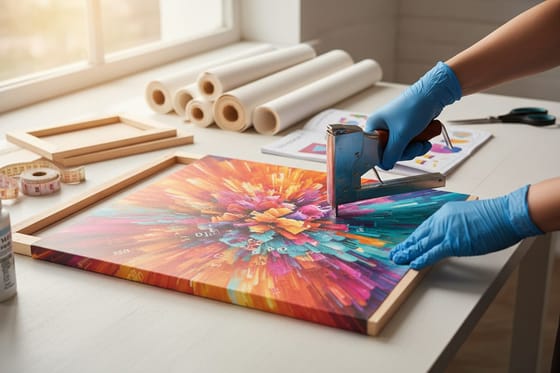
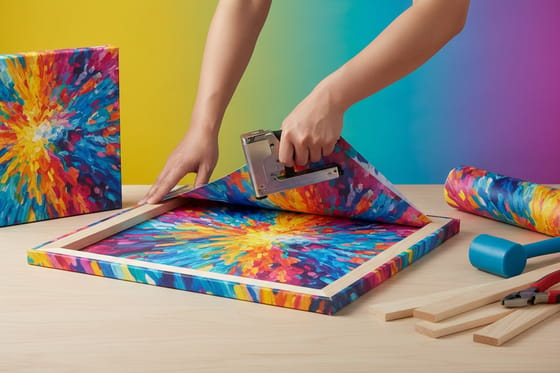
On business cards or flyers, many jobs share a single press sheet. A bigger run spreads one setup across far more pieces, so the unit price drops steeply and keeps dropping. Canvas does not work like that. Each piece is printed on a roll, cut, pulled over a wooden bar, stapled, squared, and finished by hand. Double the order and you roughly double that work. What you do save on is setup, on file handling, on shared freight for one consolidated shipment, and on the handling cost of a single order instead of twelve.
So the practical move is to read per-unit prices off the configurator rather than ask for a percentage. Open a product page, set the size, then step the quantity up and watch the per-piece figure. That number, not the order total, is what your retail price has to clear.
| Product | Starts at | Arrives | Best for |
|---|---|---|---|
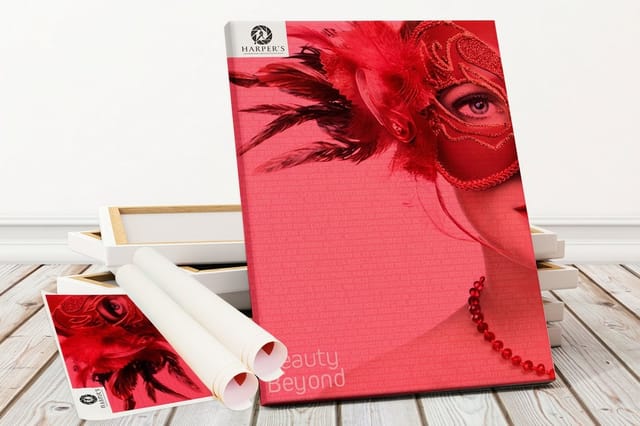
| Rolled Canvas | $25 | Flat, in a tube | Studios that stretch and frame in house |
| Framed Canvas | $50.33 | Stretched and framed | Finished pieces with no work on your side |
| Stretched Canvas | $59 | Ready to hang | Drop ship straight to the end customer |
| Premium Canvas Prints | $59 | Ready to hang | Gallery and hospitality installs |
| Square Canvas Prints | $59 | Ready to hang | Social-format sizes that resell to consumers |
Each product sets its own entry size, which is why the starting prices do not form a tidy ladder. Framed Canvas opens lower than Stretched Canvas because the two start from different dimensions, so compare like for like at the size you actually sell. If you find a lower quote for the same specification elsewhere, the price match guarantee is the faster route than a negotiation thread.
Sizes, Wrap Styles, and the File Math Behind Them
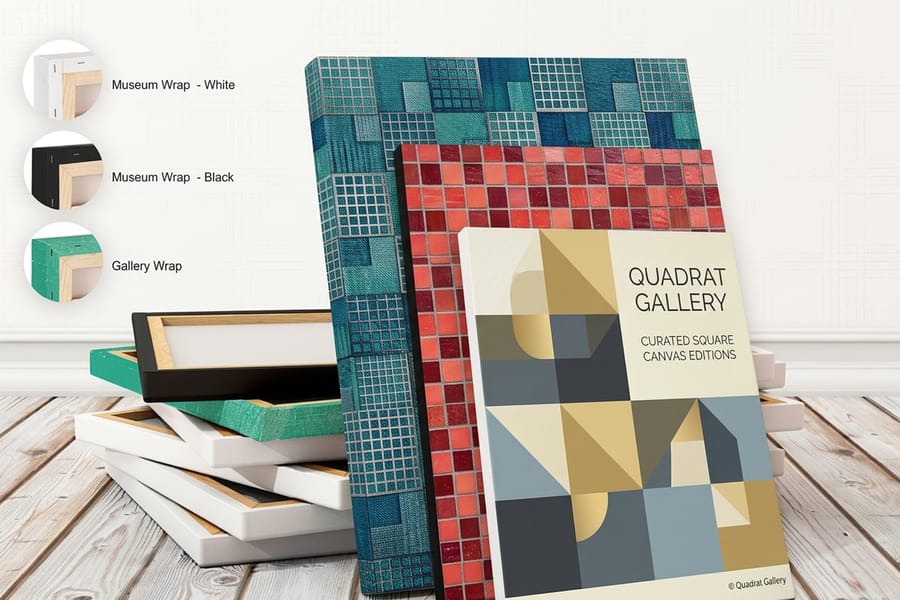
The wrap style decides what your customer sees on the front, and the bar depth decides how big every file has to be. Get these two wrong at volume and you reprint the whole batch.
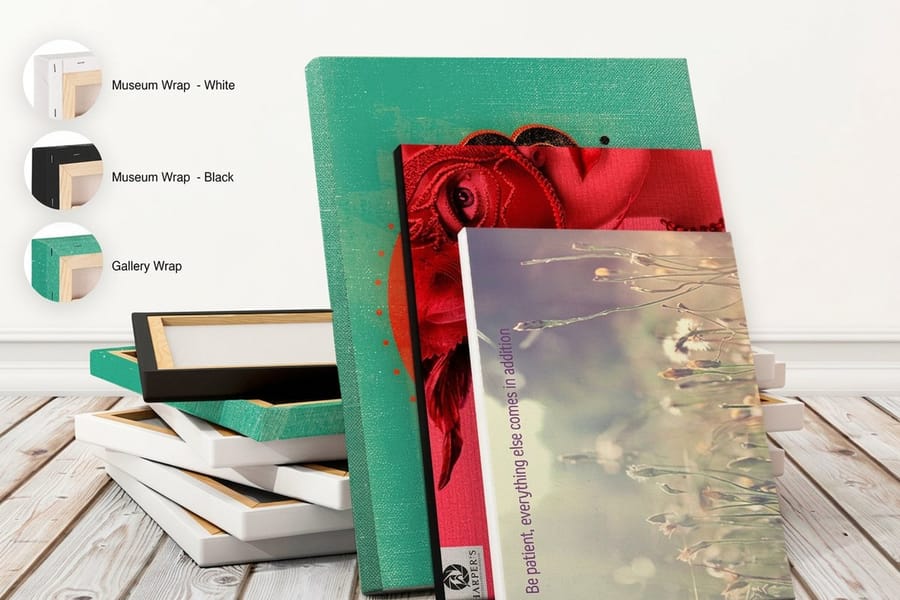
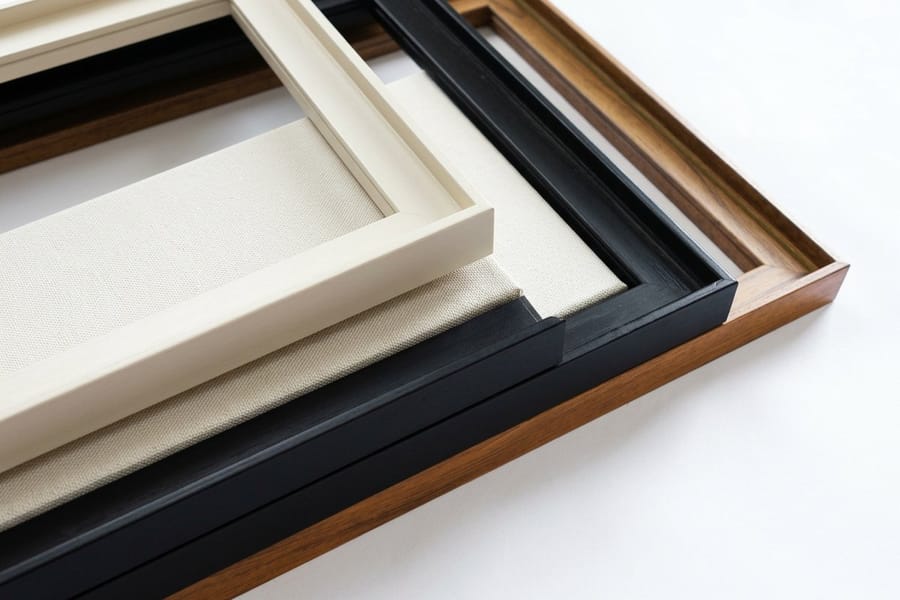
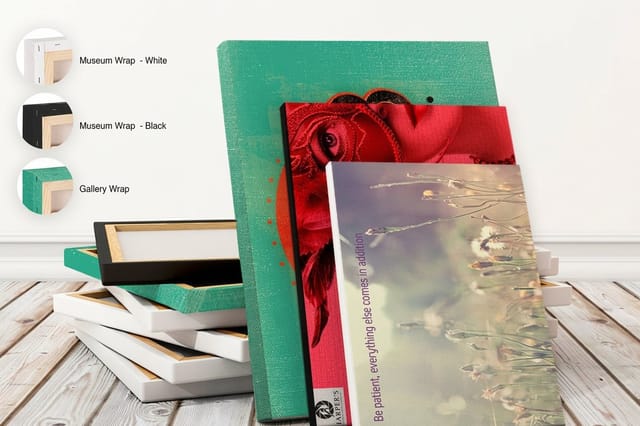
Four wrap treatments cover almost every order. A gallery wrap carries the image itself around the sides, which looks the most finished and costs you image at every edge. A mirror wrap reflects the outer band of the image onto the sides, so nothing important is lost, and it is the safe default when the artwork is tight to the edge. A solid color wrap runs black or white down the sides, which keeps the front intact and reads as deliberate on photography. A stretched print with a floater frame leaves a visible gap around the canvas and sells at a higher retail price with very little extra work.
The math is the part that bites. File size equals the face size plus twice the bar depth, plus a quarter inch of bleed on each side. A 16 by 20 inch face on a 0.75 inch bar needs an 18 by 22 inch file; the same face on a 1.5 inch bar needs 19.5 by 23.5. That is why a reorder on a different depth is not a reorder at all, it is a new set of files. Keep signatures, logos, and anything with text at least half an inch inside the fold line, because the corner of a wrap is where detail goes to die.
Resolution matters more on canvas than on paper. The weave breaks up fine detail, so aim for 150 dpi at final size or better and never upscale a phone photo to fill a 24 by 36. Start from a correct layout in the blank template library, and if you are new to the substrate, our guide to printing on canvas walks the file prep end to end.
White Label and Blind Shipping, Done Properly
White label is the reason a reseller uses a trade printer at all. If the box teaches your customer who really printed the piece, you have paid to introduce them to your supplier.
Blind shipping handles the visible half: the parcel leaves without 4OVER4 branding on it, so what lands on the doorstep looks like it came from you. Do one thing before your first drop-ship run. Send a single piece to your own address, open it the way your customer will, and look at the outside of the carton, the tape, and the paperwork inside. Anything that carries the wrong name gets fixed once, on one test piece, instead of on forty live orders.
The rest of white label is yours to build. Your own insert card, your own care instructions, your own hanging hardware note if you supply one. A canvas arriving with a printed card explaining how to hang it is a small cost that turns a shipment into a brand. Keep the piece itself consistent too: the same wrap style and bar depth across your catalog means a customer who buys twice gets two pieces that hang like a pair.
One honest limit. Blind shipping hides the printer, it does not hide the shipping origin, so a customer who reads a label closely can see where the parcel started. That has never been a problem for the galleries and print on demand shops we ship for, but it is worth knowing before you promise a client something absolute.
Getting a Wholesale Canvas Quote Without the Back and Forth
Most quote threads stall because the first message described a project instead of a specification. Five numbers close that gap.
- Face size, per piece. The finished visible dimensions, not the file size. List every size in the order, not just the biggest one.
- Wrap style and bar depth. Gallery, mirror, or solid color, and 0.75 inch or 1.5 inch. This changes the price and every file you send.
- Quantity per size. Forty pieces split across five sizes prices differently from forty of one size. Break it out.
- Frequency. One install, or thirty pieces a month for a year. A repeating account is a different conversation from a one-off.
- Delivery. One consolidated shipment to you, or blind drop ship to individual addresses. Freight is a real line on canvas because the cartons are bulky.
Two habits save the most time after that. Order one sample of the exact specification before the first production run, because a color shift you can live with on screen is a different judgment on a textured white substrate. And ask for the per-unit price at two quantities, not one, so you can see the shape of the curve and decide whether ordering ahead is worth the storage.
If you want to price a job yourself first, every size and option is live in the configurator on Stretched Canvas and across the canvas printing collection. For an account with recurring terms, start at the reseller program, and check our guarantees for what happens if a piece arrives wrong.
Wally explains wholesale canvas
Trade price on the invoice, your name on the box
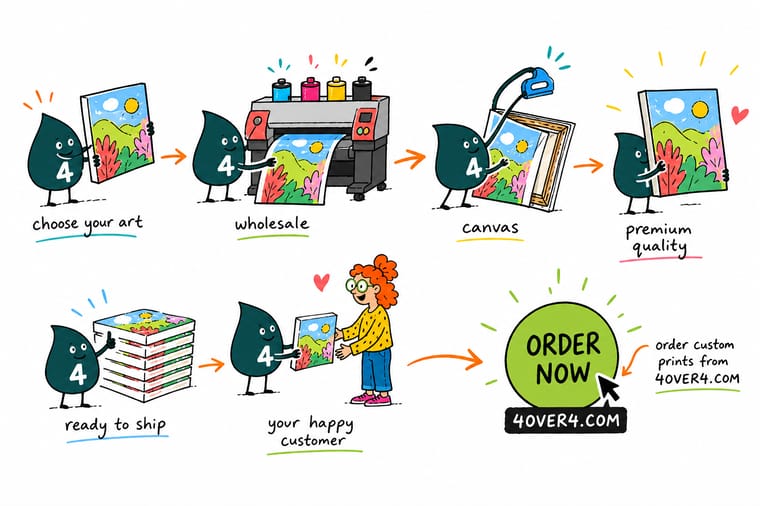
Wally prints the canvas on a roll, cuts it oversize, pulls it over a wooden bar and staples the back. Then he packs it in a plain box with your paperwork inside, not his. That is wholesale canvas: your brand on the outside, his press on the inside. He will tell you the honest part too. Every piece is stretched by hand, so a bigger order saves you real money on setup and freight, but it will never fall away the way a business card run does.
Shop the canvas printing collection →Specs and pricing
Canvas formats, sizes, and starting prices
Compare rolled, stretched and framed side by side, with live configuration choices and starting prices straight from the 4OVER4.COM configurator.



Print it
Order canvas you can put your own name on

Explore more
Where to go next
By the numbers
A trade printer resellers can plan around
Common Questions
Your wholesale canvas questions, answered
What is wholesale canvas printing?
Wholesale canvas printing is ordering canvas prints at volume pricing from a production printer who makes them for you to resell. The print is produced on the printer's equipment, priced per unit on a curve that drops as quantity rises, and can ship blind so no printer branding reaches your customer. The buyer is a business rather than an end consumer, which is the real dividing line. A photographer selling one 16 by 20 to a client is a retail order. That same photographer ordering thirty pieces a month across four sizes is a wholesale relationship, and the pricing, the file handling, and the shipping all change to match.
How much does canvas cost at wholesale quantities?
At 4OVER4.COM the starting prices are $25 for Rolled Canvas, $50.33 for Framed Canvas, and $59 for Stretched Canvas, Premium Canvas Prints, and Square Canvas Prints. Those are entry prices at the smallest size, and each product sets its own entry size, so the numbers do not line up in a neat ladder. Quantity pricing is live in the configurator on each product page: set the size, set the quantity, and the per-unit price recalculates. Read the per-unit figure rather than the total, because that is the number your retail price has to clear.
Why do canvas prints not get much cheaper in bulk?
Because the cost is mostly labor, and labor does not gang. On business cards, hundreds of jobs share one press sheet, so a bigger run spreads a fixed setup across more pieces and the unit price falls hard. A stretched canvas is printed on a roll, cut, stretched over a wooden bar, stapled, and finished individually. Doubling the order doubles most of the work. You still save on setup, on shared freight, and on handling, but a canvas discount curve is gentler than a paper one, and any supplier promising a paper-shaped discount on stretched canvas is quoting something else.
Can canvas prints be shipped blind to my customer?
Yes. Blind shipping sends the parcel without 4OVER4 branding on it, so the box arrives looking like it came from you. It is the piece that makes a wholesale canvas program work for a gallery or a print-on-demand shop, because the end customer never learns who produced the piece. Confirm the exact packing arrangements on the blind shipping page before your first drop-ship run, and send one test piece to your own address so you see what your customer will see.
Should a studio buy rolled canvas or stretched canvas?
Buy rolled if you already stretch in house, buy stretched if you do not. Rolled Canvas starts at $25 and ships in a tube, which cuts both the unit cost and the freight, and it leaves the framing margin with you. It also passes the risk to you: a badly stretched canvas is scrap, and stretching well takes practice and a decent set of pliers. Stretched Canvas at $59 arrives ready to hang with no labor on your side, which is the right call for drop-ship orders where nobody is going to touch the piece before the customer does.
What files should I send for a bulk canvas order?
Send a flattened file per piece at the full wrap size, not the face size, at 150 dpi or better at final dimensions. Name each file so the size and the wrap style are readable without opening it, because a batch of forty files called final_v3 is how mixups happen. Keep anything you cannot lose, such as a signature or a logo, at least half an inch inside the fold line. Canvas is a textured substrate and a low resolution image looks worse on it than on paper, so an upscaled phone photo that passes on a 5 by 7 will not pass at 24 by 36.
Get Started
Price a canvas run in the wholesale configurator
Set the size, the wrap and the quantity in the configurator, watch the per-unit price move, and ship it blind under your own brand.
Legal Disclaimer
Gold Standard guarantees apply to all standard orders placed through 4over4.com. Price match requires verifiable proof of a competitor's published price for an equivalent product with matching specifications and turnaround time. Satisfaction guarantee covers manufacturing defects and print quality issues. Contact support with order number and documentation. On-time delivery rate based on tracked orders 1999 to 2026. Individual results may vary based on shipping carrier performance.
