
What Soft Touch Coating Is and How the Velvet Finish Works


Emma is our prepress and print production voice, built from the knowledge of our production team, with over 20 years in printing.
Soft touch coating, also sold as a soft touch finish, is the velvet finish on premium cards: a laminate that scatters light, and a different finish from a gloss UV coating. It goes on as a film, changes both color and feel, and carries three limits worth planning around.
Soft touch coating is a matte laminate with a micro textured surface that scatters light instead of reflecting it, so the card has zero glare and feels like suede under a thumb. Dark colors read deeper, fingerprints stop showing, and the film protects the sheet better than bare stock. In exchange, bright colors lose a little pop, scuffs can show on heavy dark coverage, and pens smear on the surface, which is why the finish belongs on cards that get handed over, not written on.

Quick answer
A film that scatters light, and a card that feels like suede
Soft touch is a matte laminate bonded over the printed sheet, and its micro texture does all the work. The texture scatters light, which removes glare at every angle and deepens dark colors, and the same bumps are what a fingertip reads as velvet. It protects the card against moisture and fingerprints better than bare stock, costs more than a gloss or matte coat, shows scuffs on dark floods, and refuses ballpoint ink. Order it for cards that get handed over; skip it on anything that needs writing.
Soft Touch Coating and Finish, Product by Product
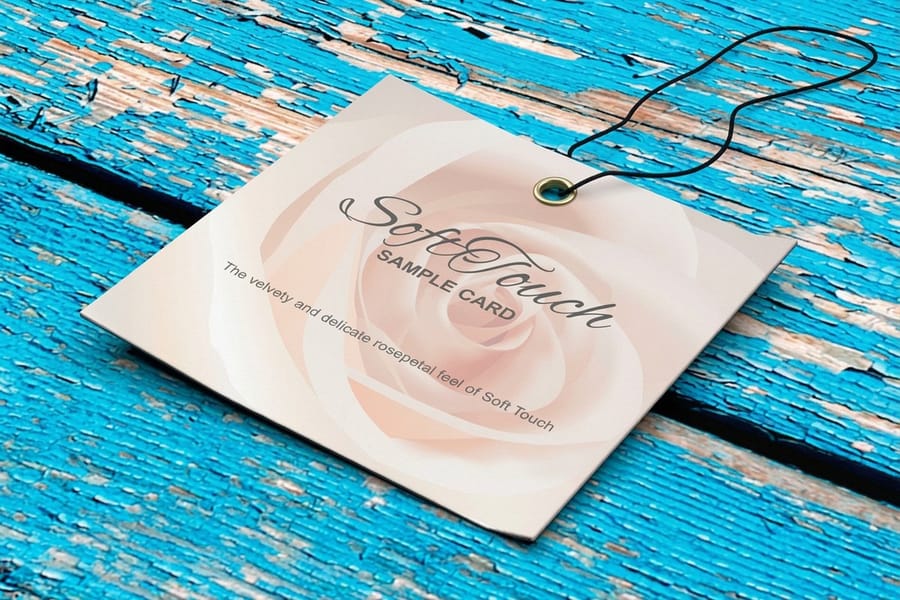
Soft touch coating is a matte finish with a micro texture that makes a printed piece feel like suede. On premium cards it goes on as a laminate film after printing; a thinner aqueous soft touch coating exists for high volume work. Soft touch finish is the name the order form uses for the same velvet surface. If you are after a soft touch UV coating, you want two opposite effects on one piece: UV coating cures into a high gloss shine, so the way to get both is a soft touch base with raised spot UV on the logo.
These are the soft touch products you can order and what each one runs on:
| Product | Stock | Sizes | First run | Standard turnaround |
|---|---|---|---|---|
| Soft touch business cards | 32pt, 48pt, 64pt or 80pt soft touch uncoated | 2 x 3.5, 2 x 2, 1.5 x 3.5 in | 50 | 5 business days |
| Soft touch postcards | 32pt, 48pt, 64pt or 80pt soft touch uncoated | 14, from 2.5 x 2.5 to 6 x 11 in | 50 | 5 business days |
| Suede business cards | 16 point suede laminated, spot UV optional | 4, including 2.125 x 3.375 in | 250 | 4 business days |
| Velvet business cards | 16 point soft velvet laminated, spot UV optional | 4, including 2.125 x 3.375 in | 250 | 4 business days |
What Soft Touch Coating Actually Is
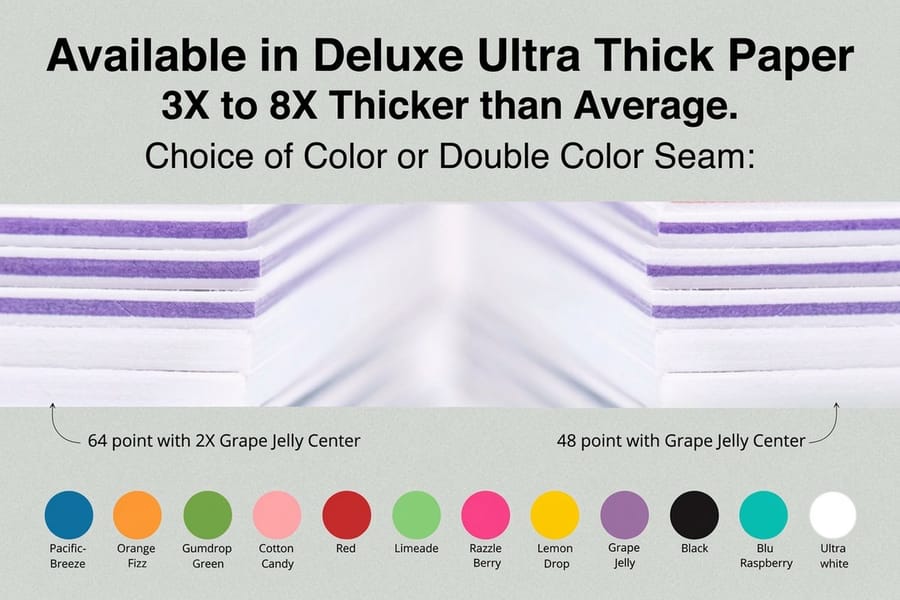
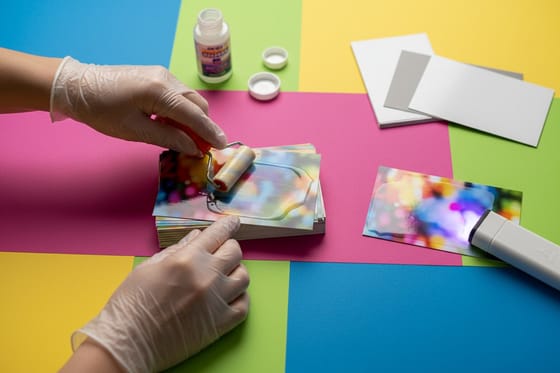
Soft touch is a finish you add after the ink, and on premium cards it is almost always a laminate: a thin plastic film with a micro textured matte surface, bonded to the printed sheet under heat and pressure. The press prints the card normally, the laminator seals the film over it, and the die cutter trims the finished sandwich to size. Nothing about the printing itself changes, which is why any layout that prints well flat can be soft touched.
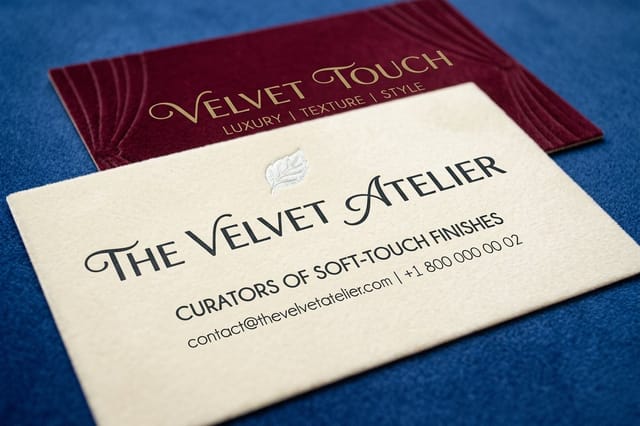
The trade sells the same feel under several names. Soft touch, suede, velvet and peach skin all describe one idea: a matte surface with enough texture to drag against a fingertip instead of sliding under it. At 4OVER4.COM, soft touch business cards carry the film on regular card stock, while suede business cards wrap a thicker laminate around heavier stock for a card that feels padded as well as soft.
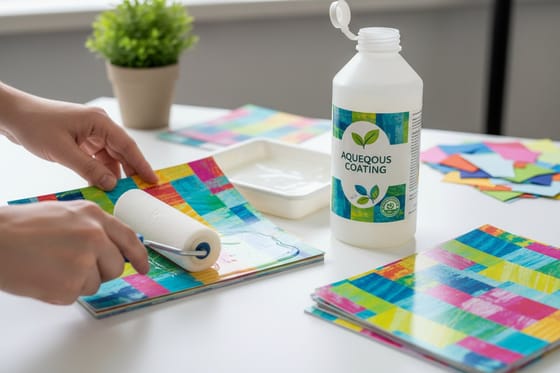
There is also a cheaper cousin worth knowing about: soft touch aqueous coating, a liquid applied in line on press and dried before the sheet leaves the machine. It gives a hint of the same feel at high volume, but it is thinner, less velvety and less protective than the film. If a quote seems too good for a soft touch job, ask which of the two you are actually getting. Our aqueous coating guide covers that whole on-press family.
What It Does to Color, Glare and Feel
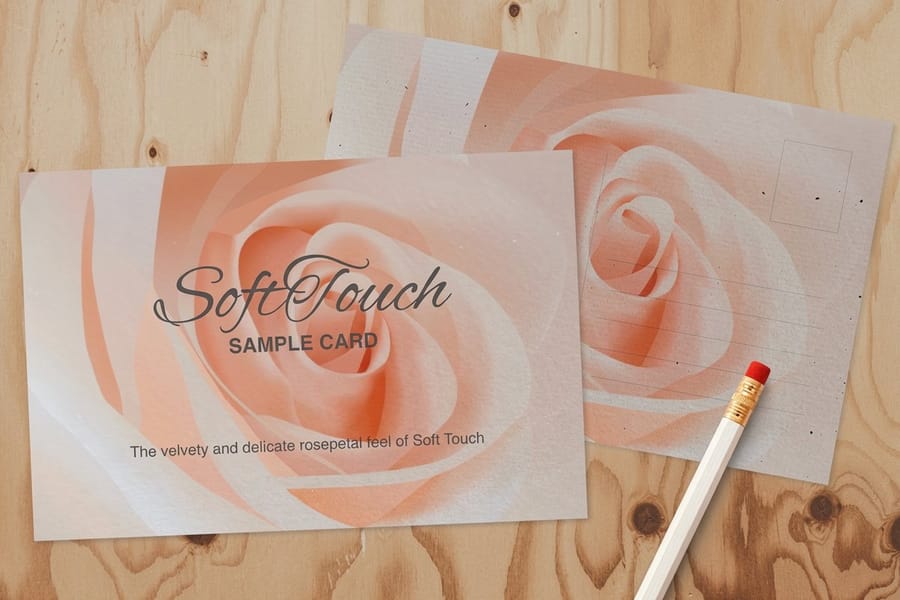
Every visual effect of soft touch traces back to one physical fact: the micro texture scatters light instead of reflecting it in a single beam. You see it on a 2 by 3.5 inch business card and on a 6 by 11 inch postcard alike, since both carry the same soft touch finish over uncoated stock from 32pt up. A gloss card bounces the room's lighting straight into the reader's eye, which is the shine and also the glare. A soft touch card sends that light in a thousand directions, so there is no hot spot at any angle, and no glare washing out the ink underneath.
That is why dark colors gain the most. A black flood under soft touch reads deep and calm, closer to velvet cloth than to printed paper. The same scattering costs you a little at the bright end: saturated brand colors lose some punch, and shimmering gradient effects go quiet. The common finishes differ on a short list of choices.
| Finish | Feel | Light and glare | Watch out for |
|---|---|---|---|
| Soft touch laminate | Suede drag under the thumb, the card feels padded. | Zero glare at any angle, dark colors deepen. | Bright colors mute a little, scuffs can show on dark solids. |
| Matte coating | Smooth, like ordinary coated paper. | Low shine, mild glare under direct light. | Looks flat but feels unremarkable in the hand. |
| Gloss UV | Slick and cool, fingers slide. | Maximum shine and color pop, real glare under lights. | Shows fingerprints, feels like every other gloss card. |
| Uncoated | Raw paper tooth, easy to write on. | No shine, colors sit soft and absorbent. | Picks up moisture, smudges and edge wear fastest. |
The strongest designs treat the muting as a feature and buy the contrast back deliberately: a soft touch base with raised spot UV or foil on the logo puts a glossy island on a velvet field, and the finish difference does the work a second color would. The seven best print finishes guide walks through those pairings one by one.
Durability, Scuffs and the Honest Limits
As protection, the film earns its keep. A laminated card shrugs off moisture, fingerprints and pocket wear that would stain or scuff an uncoated sheet, and it will not pick up the greasy shine that gloss cards collect after a week of handling. For a card that gets passed around at counters and job sites, soft touch outlasts bare stock comfortably.
It has three limits worth planning around. First, scuffing on dark solids: a hard scrape can burnish the micro texture and leave a lighter mark, and on a black flood that mark shows. Light and mid tone layouts hide it entirely. Second, handwriting: ballpoint ink sits on the film and smears before it dries, so a card whose back needs a written appointment time should skip the finish on that side or skip it altogether. Third, heat: never feed laminated stock through an office laser printer, because the fuser is hot enough to attack the film.
None of these are reasons to avoid the finish. They are reasons to match it to the job. A dark, type driven identity that lives in a card holder is the perfect candidate. A card that doubles as a writing surface is the wrong one, and the matte, glossy or soft touch comparison sorts out which finish fits when soft touch does not. If glare resistance is the main draw but budget rules out lamination, the UV coating guide covers the cheaper coated routes.
Where Soft Touch Earns Its Cost
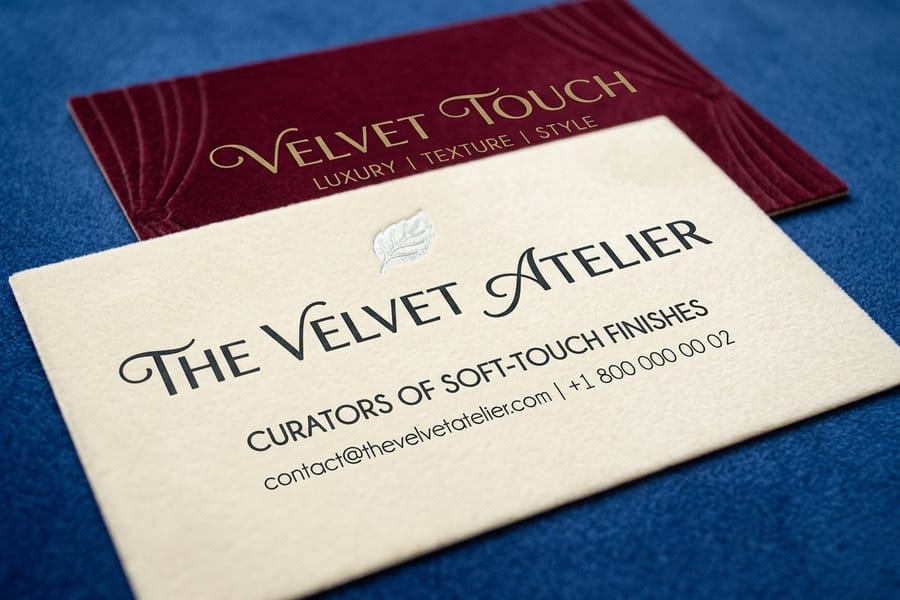
Soft touch is a handshake finish, so it pays off wherever the piece is handed over rather than mailed in bulk. Business cards are the obvious case. Soft touch business cards start at $40.28 against $17.57 for standard business cards, and the box lasts months, so the premium works out to pennies per impression that gets held twice as long.
One step up sit the thick laminate builds. Suede business cards and velvet business cards both start at $87.15 and wrap the film around heavier stock, producing a card that announces itself by weight before the texture registers. They are the right order for professions that trade on trust: law, finance, medicine, high end trades. The velvet business cards and Suede Postcards videos show both builds up close. For a mailed piece that still needs the feel, soft touch postcards start at $29.44 and survive the mail stream better than uncoated stock does.
Where it does not earn its cost: bulk flyers that get skimmed and binned, anything that needs handwriting on it, and neon bright artwork that wants gloss. For those, put the money into stock weight or a different coating. The soft touch collection and the suede collection list every product that carries the finish, and the wider business cards category shows how the soft touch options sit against every other card we print.
Wally explains soft touch
A textured film goes over the ink, and the card turns to velvet
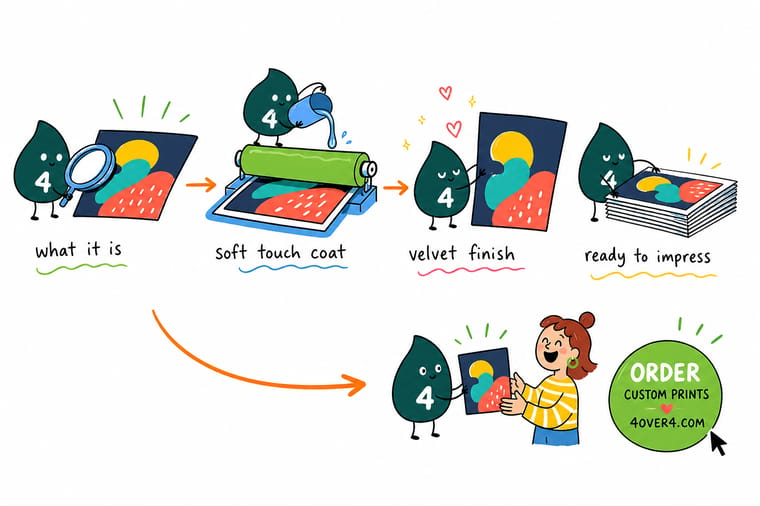
Wally prints the card, feeds it through the laminator, and out comes a sheet wearing a thin matte film full of texture too fine to see. Light hits those bumps and scatters, so the glare is gone and the blacks go deep. Run a thumb across it and the drag feels like peach skin. He will warn you about the two things the film hates: ballpoint pens, which smear on it, and hard scrapes across a black flood, which leave a lighter mark. Hand the card over instead of writing on it, and it is the best feeling finish we laminate.
Order soft touch business cards →
Specs and pricing
Soft touch products, sizes, and starting prices
Soft touch postcards run 50 for $29.44 on 32pt uncoated, while velvet laminated cards run 250 for $87.15 on 16 point stock.


Print it
Order a card people hold on to
Soft touch business cards start at 50 on 32pt to 80pt stock, while suede and velvet cards start at 250 on 16 point laminated stock with spot UV as an option on one or both sides.

Explore more
Where to go next
The finish comparison sets soft touch against matte and gloss, the UV guide covers the high gloss opposite, and the aqueous guide explains the thinner on press soft touch coating.


By the numbers
Twenty five years of laminating, in four numbers
Common Questions
Your soft touch questions, answered
What is soft touch coating?
Soft touch coating is a matte finish with a fine surface texture that makes a printed piece feel like suede or peach skin. On most premium cards it is a laminate film bonded over the printed sheet with heat and pressure; a thinner aqueous soft touch coating applied on press exists for high volume jobs. The texture scatters light, so the piece has no glare at any viewing angle, dark colors read deeper, and the surface drags against a fingertip instead of sliding.
What is the difference between soft touch and regular matte?
Both kill gloss, only one changes the feel. A standard matte coating or matte laminate is smooth: it looks flat but feels like ordinary coated paper. Soft touch adds a micro texture on top of the matte effect, and that texture is what your thumb reads as velvet. Side by side the two look similar in a photo. In the hand they are unmistakably different, which is why soft touch costs more and matte does not get mistaken for a premium card.
Does soft touch coating change how colors look?
Yes, in two directions. Dark solids and blacks read deeper and calmer because no reflected shine washes them out. Bright saturated colors and fine metallic effects lose a little vibrance, since the same light scattering that removes glare also removes sparkle. Rich, dark, type driven layouts gain the most from the finish. A design that depends on neon brightness or glittering gradients keeps more punch under gloss UV.
Can you write on a soft touch card?
Barely, and you should not plan on it. Ballpoint ink sits on top of the film and smears before it dries, and pencil hardly marks it. If the back of the card needs a handwritten appointment or note, order the piece without soft touch or ask about leaving the writing side uncoated. The same warning applies to running laminated cards through an office laser printer: the fuser heat and the film do not mix.
Does soft touch scratch or scuff?
The film protects the card well against moisture, fingerprints and everyday handling, better than an uncoated sheet. Its one weakness is visible scuffing on heavy dark coverage: a hard scrape can burnish the texture and leave a lighter mark that shows against a black or navy solid. Light layouts hide this completely. If your design is a full black flood and the cards will live loose in pockets and toolboxes, expect some wear, or pair the dark areas with raised spot UV, which takes the abrasion first.
How much does soft touch add to the cost?
At 4OVER4.COM, soft touch business cards start at $40.28 and standard business cards at $17.57, so the finish roughly doubles the entry price of a box. Soft touch postcards start at $29.44. The thick laminate builds, suede and velvet business cards, start at $87.15 because the film wraps both sides of a heavier stock. Against what a lost impression costs, a card that gets kept instead of binned is cheap insurance.
Get Started
Soft touch cards run 50 for $40.28, velvet 250 for $87.15
Pick your stock, add the soft touch laminate, and we print cards with zero glare, deep color, and a surface that gets held twice as long.
Legal Disclaimer
Gold Standard guarantees apply to all standard orders placed through 4over4.com. Price match requires verifiable proof of a competitor's published price for an equivalent product with matching specifications and turnaround time. Satisfaction guarantee covers manufacturing defects and print quality issues. Contact support with order number and documentation.