
What a Gift Certificate Is and How to Make One That Sells


What a gift certificate is, how it differs from a gift card and a voucher, the seven things that belong on the face, and how to get a numbered run printed before your busiest week.
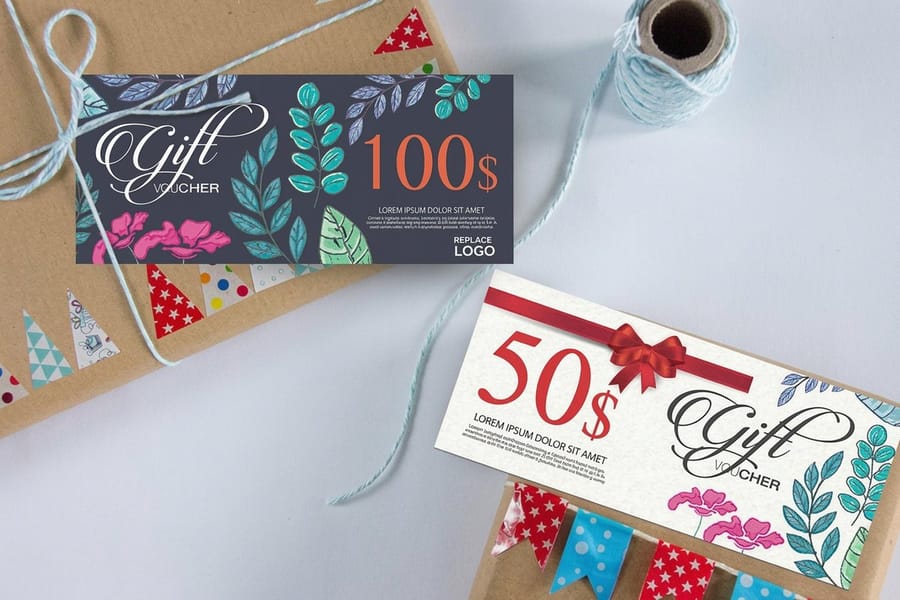
A gift certificate is a printed document that entitles the holder to a stated dollar amount or one named service at the business that issued it, tracked by a serial number rather than by a balance in a computer. A gift card is the same promise on plastic, tied to your point of sale by a barcode or magnetic stripe, which is what lets it handle partial redemption automatically. To make one, put seven elements on the face, set the numbering to continue from your last run, and order at least a season of stock at once.
Quick answer
Paper promise, serial number, and a five year floor on the date
A gift certificate carries its value on the paper, and your records carry the accounting. It states one amount or one named service, it is redeemed by hand, and the serial number printed on the face is the only thing standing between a sold certificate and a photocopy. A gift card moves that value into your point of sale so the register can take $30 off a $50 balance without anyone writing on anything. Federal law bars an expiration date earlier than five years from the day funds were loaded, and several states go further, so check yours before that date reaches artwork.
What a Gift Certificate Actually Is

A gift certificate is a document you print, sell, and honor yourself. It names your business, states either a dollar amount or one specific service, and carries a number that lets you match it back to a sale. When the holder brings it in, a person reads it, rings the sale, and keeps the piece. There is no database in the middle.
That simplicity is the reason a salon, a restaurant or a two-chair barbershop can sell certificates the week it decides to. Nothing has to be configured in the register. The cost of entry is the print run and a notebook or spreadsheet with two columns: number sold, number redeemed.
The weakness is the mirror image. Paper has no memory. If a customer redeems $30 of a $50 certificate, someone has to write the remaining balance on the piece and initial it, or issue a second certificate for the difference. Do that badly for a season and you will not know what you owe. Businesses that expect a lot of partial redemption outgrow paper and move to plastic gift cards, where the register does the arithmetic.
One more thing worth being clear on. A gift certificate you sell for money is a liability on your books until it is redeemed or legally forfeited. It is not revenue on the day it sells. That accounting fact is why the numbering matters far more than the artwork.
Gift Certificate vs Gift Card vs Voucher
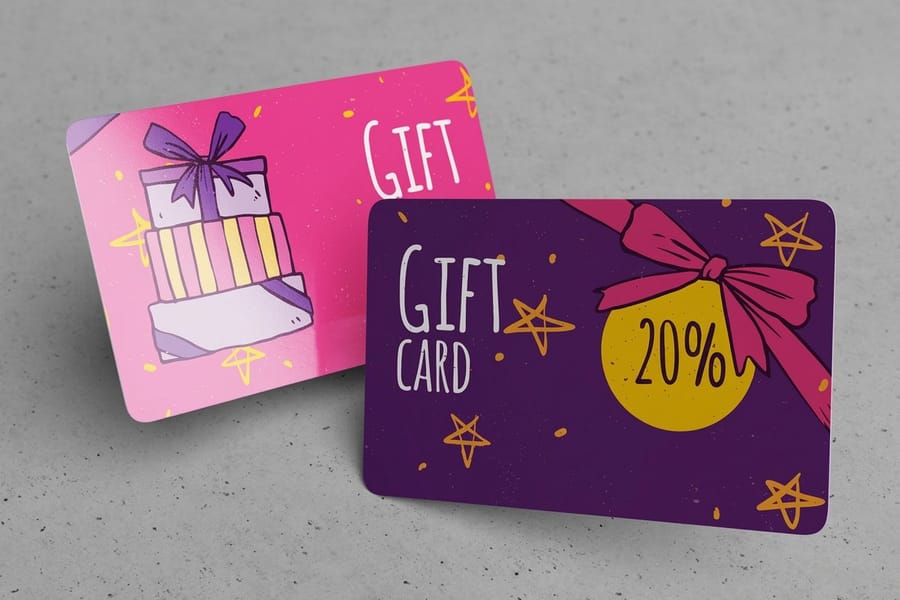
These three words get used as if they were the same thing, and quotes go wrong because of it. They differ in what carries the value and in who does the counting.
| Format | What holds the value | Partial redemption | Best for |
|---|---|---|---|
| Gift certificate | The printed paper itself, tracked by serial number in your own records. | Manual. Someone writes the remaining balance on the piece or reissues. | Service businesses, low volume, starting this week with no system changes. |
| Gift card | A balance in your point of sale, linked to the card by barcode or magnetic stripe. | Automatic, and the card can usually be reloaded. | Retail with a register that scans, and any business selling year round. |
| Voucher | The paper, but it names a thing rather than an amount. | None. It is redeemed once, in full, for what it names. | One free service, a two-for-one offer, a package worth a fixed retail price. |
The voucher row is the one people miss. Writing "one 60 minute massage" instead of "$95" changes the economics: if your price rises next year, the voucher still costs you one appointment rather than a stale dollar figure, and in many states a voucher for a service is treated differently from stored value. It also reads as a gift rather than as cash, which is often what the buyer wanted. The same paper does both jobs, so gift certificates can carry a printed amount, a blank amount line, or a named service.
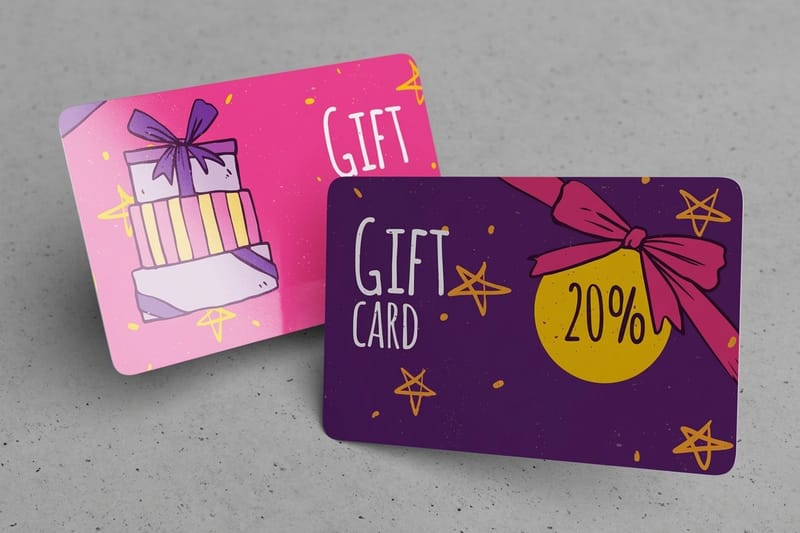
If your register scans, plastic wins on everything except speed to launch. A run of 250 plastic cards starts at $226.11 and takes 15 business days because the cards are manufactured, encoded and finished. Fifty paper certificates start at $42.84 and ship in 5 business days. Plenty of businesses run both: paper at the counter for walk-ins, holographic gift cards for the holiday display where the shelf presence pays for itself.
Why Gift Certificates Grow Sales, and When to Push Them
A gift certificate brings you a customer you did not have to find. The buyer already knows you, and the person redeeming it is usually new. That is the whole argument, and it holds without any invented percentages.
Three practical effects follow. You collect cash now for work you deliver later, which smooths a slow January. The holder almost always spends over the face value, because a $50 certificate rarely matches a $50 basket exactly. And a certificate sitting in a drawer is a standing reason to come back, which is more than a discount flyer ever earns.
Timing is not evenly spread. The heavy weeks are the ten days before Christmas, the week before Mother's Day, the week before Father's Day, and mid-February for Valentine's Day. Graduation season carries service businesses through May and June. Corporate buyers move earlier than consumers, so a restaurant or spa that emails local offices in the first week of November catches bulk orders that the December counter rush never sees.
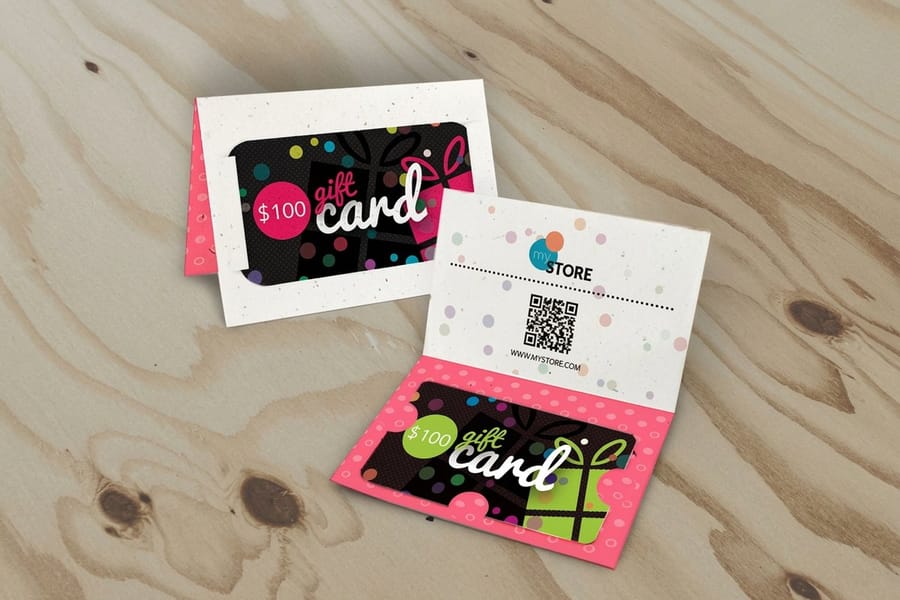
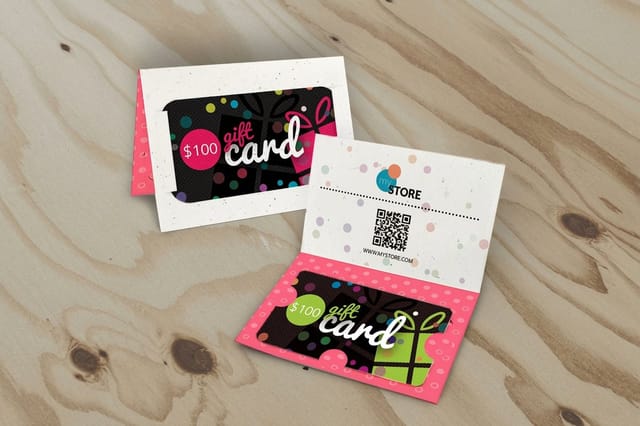
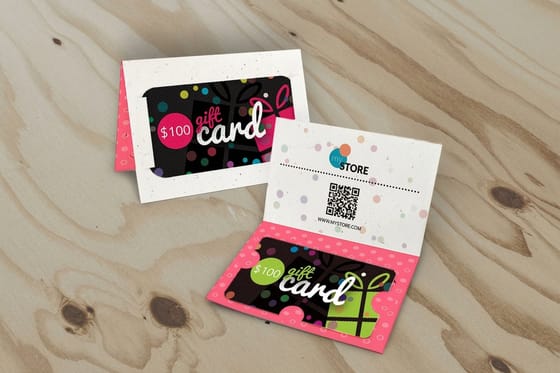
Have stock before the rush, not during it. Standard production is 5 business days, and every printer in the country is busy in the second week of December. Print in early November, and put the certificates in gift card holders so the thing you hand over at the counter looks like a gift rather than a receipt. Holders start at $170.03 for 25 and fall toward roughly 16 cents each at 10,000.
What to Print on a Gift Certificate
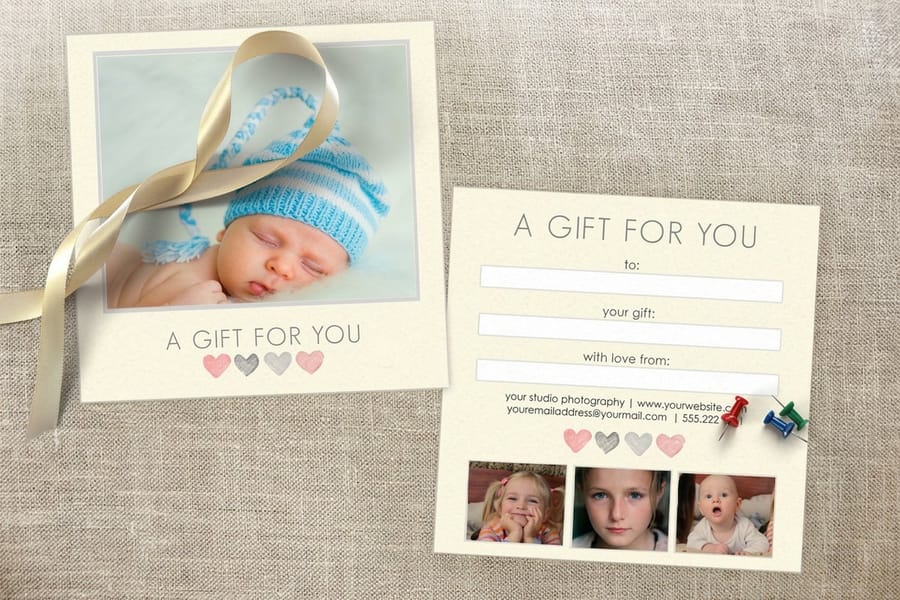
Seven things belong on the face. Miss one of the last three and you have a nice piece of card that your bookkeeper cannot reconcile.
- Your business name, logo, address and phone. The recipient may never have heard of you. Make it obvious where this is spent.
- The words "Gift Certificate". Obvious, and left off surprisingly often on design-led layouts.
- The value, or the named service. A printed amount, a blank line for handwriting, or a service description. Pick one and be consistent across the run.
- To and From lines. Filled in at the counter. They cost you nothing and they turn the piece into a gift.
- A unique serial number. The control. Without it you cannot tell a sold certificate from a photocopy.
- Issue date and the date it stops being valid. Federal law puts the floor at five years from the day funds were loaded, and your state may forbid expiry entirely.
- Terms and an authorized signature line. Short and plain: not redeemable for cash, treat as cash if lost, one per visit if that is your rule.
Keep terms to two lines on the front, or move them to the back and print double sided. A wall of small print on the face of a gift undercuts the thing you are selling. If you need help with the exact wording around dates, the gift certificate expiration rules guide covers the federal floor and the state exceptions.
Design and Stock Choices That Make It Feel Like Money
A gift certificate has an odd design problem. It has to look valuable enough that someone pays $50 for it, and plain enough that a staff member can write on it with a ballpoint at a busy counter. Those pull in opposite directions.
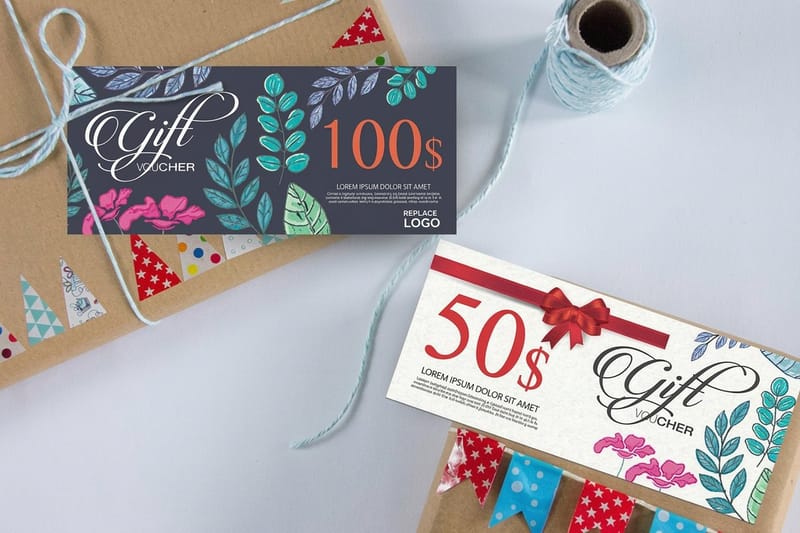
Resolve it by splitting the surface. Give the top two thirds to the brand: name, mark, a photograph if you have a good one, and the value box. Leave the bottom third mostly quiet, with the To, From, number and date lines on a light or uncoated area. A full gloss coating over a handwriting zone is the classic mistake, because ballpoint ink beads on it and smears when the piece goes into a pocket.
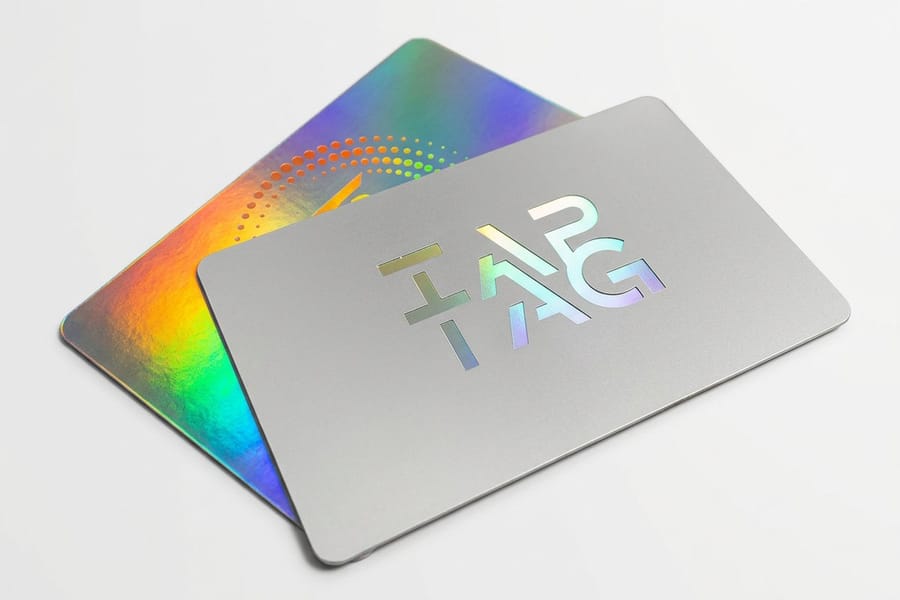
Stock does more work here than layout. 14pt Gloss Cover is the default and holds photography well. White linen carries a texture your fingers read as formal, which suits spas and restaurants. Metallic pearl in ice, champagne, silver or gold is the closest thing print has to the look of currency, and it is the one customers comment on. If certificates sit in wallets for months, the synthetic plastic option survives that far better than any paper. For a step further, adding foil to certificates puts a genuine metallic layer on the number or the crest.
Build the file the way you would any print job: artwork at full size, fonts converted to outlines, and a proper bleed if color runs to the edge. Our bleed and trim guide covers the margins, and the blank template library gives you a correctly sized document to start from. Leave the serial number position clear of any dark artwork, because the number prints after the color and needs contrast to stay readable.
How to Make and Print Your Gift Certificates
Six steps, start to finish. None of them takes long, and the order matters because two of the decisions cannot be reversed after the sheets are cut.
- Decide amount or service. Fixed denominations of $25, $50 and $100 are easy to sell and easy to count. A blank amount line is flexible but forces neat handwriting on every sale.
- Check your state on expiry. Five years is the federal floor. Some states are stricter. Print the date only once you know.
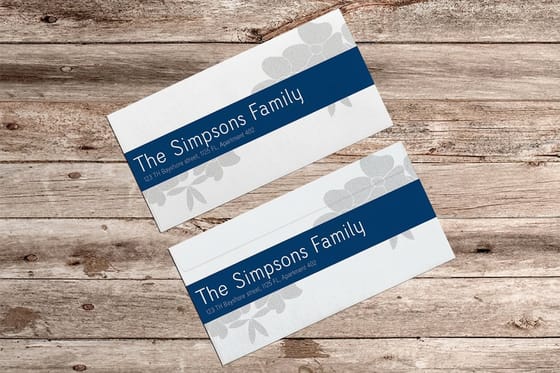
- Pick the size and stock. 3 by 7 inches is the default and fits a White #9 envelope. 3.5 by 8.5 inches reads as more formal. Custom sizing runs up to 4 by 9 inches.
- Lay out the seven elements from the section above, starting from a blank template or one of the free gift certificate templates if you are not working with a designer.
- Set the numbering. Choose where the number sits and, more importantly, which number the run starts from. Continue from your last run. Never restart at 1.
- Order the run and read the proof. Configure at gift certificates, add matching White #9 envelopes if you hand them over at the counter, and check the free online proof for the start number as well as the artwork.
On quantity, do the arithmetic once. Fifty certificates start at $42.84, which is about 86 cents each. At 5,000 the per-piece cost falls under 8 cents. Since the artwork changes rarely and only the numbers advance, one large annual run costs less than four seasonal ones and leaves you stocked in December. Browse everything in the gift certificate printing range, or compare it against the plastic side in gift card printing before you commit.
Wally explains gift certificates
One number per certificate, and everything else is design
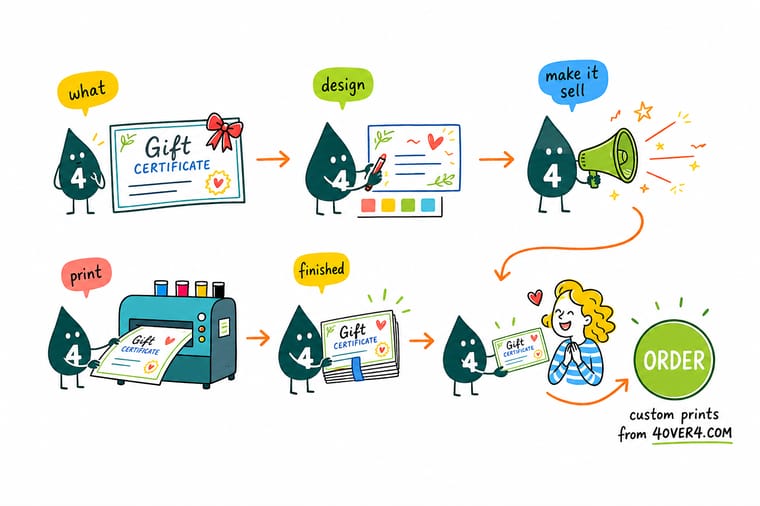
Wally prints a stack of certificates, each with its own serial number continuing from where the last run stopped. He writes the amount, the To and the From at the counter, drops it in a White #9 envelope, and ticks the number off in his book. When someone spends thirty dollars of a fifty dollar certificate, he writes the balance on the piece and initials it. The day that gets tiring is the day he moves to plastic gift cards and lets the register count.
Order numbered gift certificates →Specs and pricing
Sizes, materials and starting prices
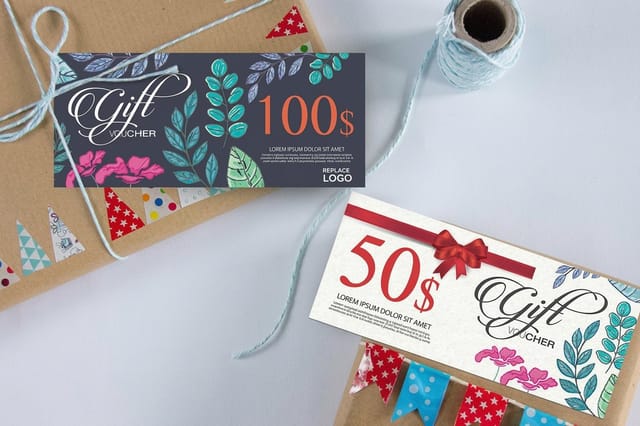
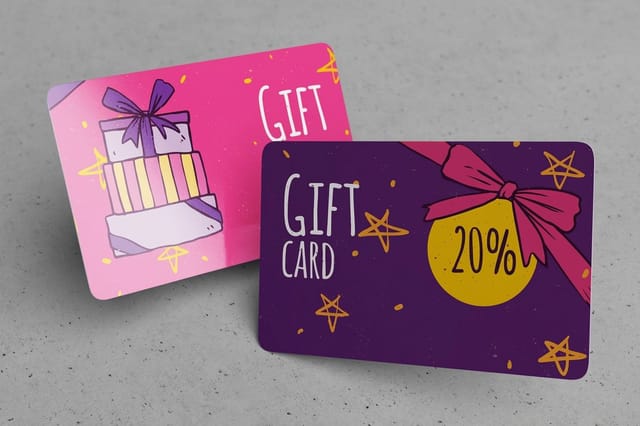
Paper certificates, plastic gift cards and the holder that presents them, with live configuration choices and starting prices straight from the 4OVER4.COM configurator.
Print it
Order a numbered run before the season starts
Explore more
Where to go next

By the numbers
Paper certificates, plastic gift cards and holders
Common Questions
Your gift certificate questions, answered
What is a gift certificate?
A gift certificate is a printed document that entitles whoever holds it to a stated dollar amount or one named service at the business that issued it. It is paper, it is redeemed by hand at the counter, and the business tracks it by the serial number printed on the face. That is the practical difference from a plastic gift card, which stores a balance electronically in your point of sale system.
Do gift certificates expire?
Under the Credit CARD Act of 2009, a gift certificate or store gift card sold for money cannot carry an expiration date earlier than five years from the day the funds were loaded, and inactivity fees are restricted. Several states are stricter than the federal floor, and California prohibits expiration on most gift certificates outright. Certificates given away as a promotion or an award sit outside those rules if they are clearly labeled as promotional. Confirm your own state before you print any date, and see the rules in detail in our guide to gift certificate expiration.
Can each certificate carry its own number?
Yes, and it is the single option worth paying attention to. Sequential numbering runs as variable data, so every piece in the run gets a different number, and you choose both where the number sits on the design and which number the run starts from. Pick a starting number that continues from your last run rather than restarting at 1, otherwise two certificates in circulation share a number and your register cannot tell them apart.
What size are gift certificates printed at?
The default is 3 by 7 inches, which fits a standard White #9 envelope and sits flat in a till drawer. There is a larger 3.5 by 8.5 inch format, and custom sizing is made to order up to 4 by 9 inches. Bigger reads as more formal and gives room for terms on the front, smaller is easier to store and hand over. Our gift certificate sizes guide walks through the trade-off with each format side by side.
Which paper should I choose?
There are 15 materials on the configurator. 14pt Gloss Cover is the sensible default and keeps photography and brand color sharp. White linen adds texture that reads as formal for spas and restaurants. Metallic pearl in ice, champagne, silver or gold gives the piece the look of something with value, which matters because a customer is paying real money for it. Synthetic plastic is the one to pick when certificates live in a wallet for months before anyone redeems them.
How long does printing take before a holiday rush?
Standard turnaround is 5 business days, with rush options down to same day, and a free online proof comes before the run. Use that proof to confirm the starting serial number as well as the artwork, because a wrong start number is the one error that cannot be corrected after the sheets are cut. Order in early November if you want certificates on the counter for the whole December season.
Get Started
Gift certificates run 50 for $42.84, holders 25 for $170.03
Pick a size, choose gloss, linen, metallic pearl or synthetic plastic, set the starting serial number, and we print a numbered run with a free online proof before it goes to press.
Legal Disclaimer
Gold Standard guarantees apply to all standard orders placed through 4over4.com. Price match requires verifiable proof of a competitor's published price for an equivalent product with matching specifications and turnaround time. Satisfaction guarantee covers manufacturing defects and print quality issues. Contact support with order number and documentation. On-time delivery rate based on tracked orders 1999 to 2026. Individual results may vary based on shipping carrier performance.
