
Menus, Table Tents and Flyers Compared for Restaurant Marketing


Three formats, three different moments in a guest's evening. Each one changes something different, fails somewhere different, starts at a different price, and belongs at a different point in a small restaurant's buying order.
Flyers bring people in, menus decide what those people spend, and table tents add one more item to a table you already have. If you can only print one, print the menu, because it is the only piece every paying guest is guaranteed to read. Restaurant menus start at $57.11, restaurant flyers at $39.54, and table tents at $554.39, which is why the tents come last and only after an offer has proved itself.
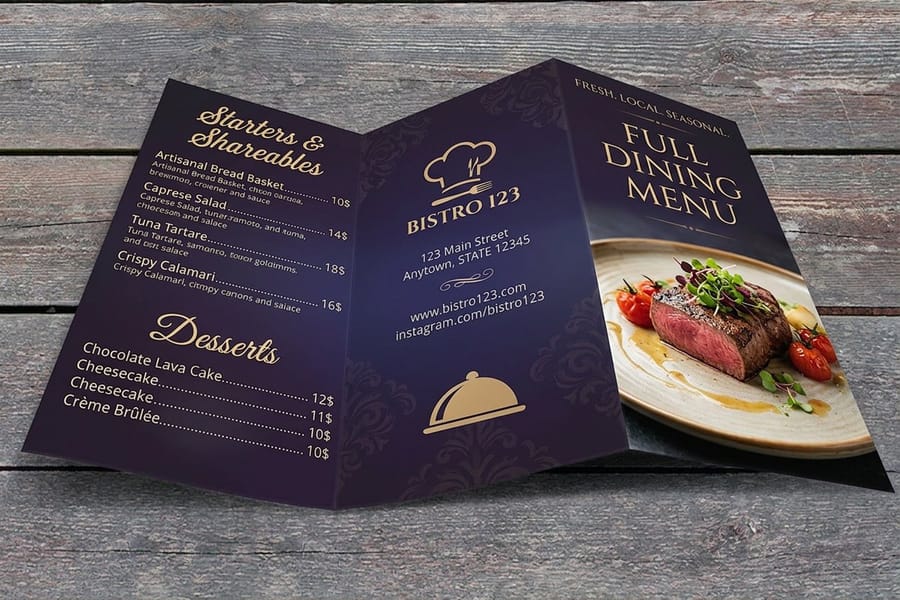
Quick answer
Different moments, different jobs, different bills
The three formats are not competitors, they are stages. A flyer is the only one that can reach a person who has never eaten with you. A menu works on a guest who is already seated and about to choose a number. A table tent works on that same guest ten minutes later, when the decision is whether to add a drink or a dessert. Buy the menu first because everyone reads it, buy flyers second because they are the cheap way to test an offer, and buy table tents last because the run starts at $554.39 and deserves a proven promotion rather than a guess.
What Each Piece Is Actually For
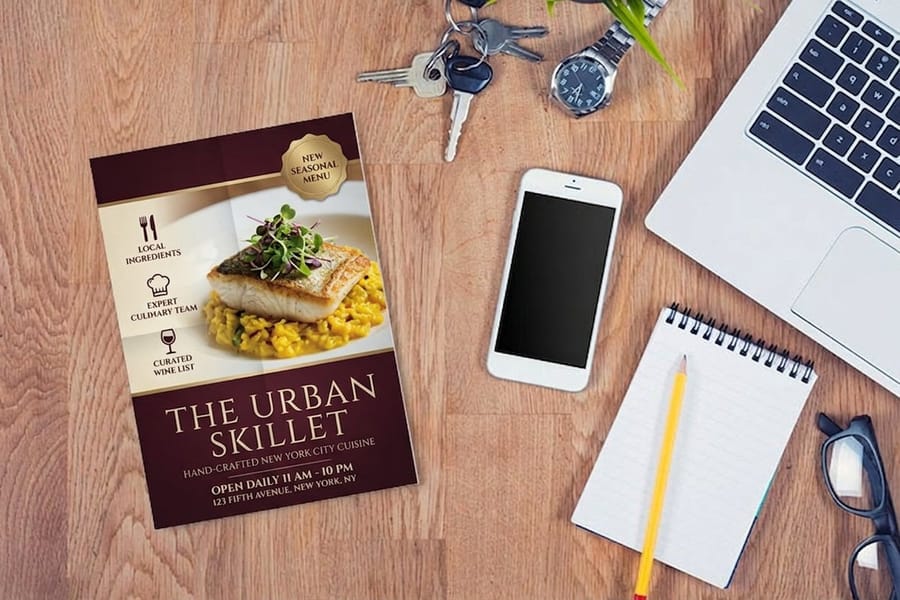
Start with who sees it, because that decides everything else. A flyer reaches somebody standing on a sidewalk, opening a mailbox, or picking one off the counter of a shop three doors down. A menu reaches a guest who is already seated and has already decided to spend money tonight. A table tent reaches that same seated guest during the one stretch of the evening when they are looking around the table instead of at each other.
Three different audiences, three different moments. That is why the formats are not interchangeable, and why comparing them on price per piece leads people to the wrong answer.
The flyer is the only one of the three that can grow your customer count. Menus and table tents can only grow what a customer you already won decides to order. Both are worth money. They are not the same money, and a night with empty tables is not a menu problem.
Everything below assumes a small independent room rather than a chain with a marketing department. If you are working out where the first hundred dollars goes, our guide on getting more people into a family restaurant covers the wider plan, and the restaurant printing collection lists every piece we print for food service.
Menus, Table Tents and Flyers Side by Side

Read the last column first. Every one of these formats fails in a specific, predictable way, and the failure is usually what decides the order you buy them in.
| Format | Who sees it | What it changes | Starts at | Where it fails |
|---|---|---|---|---|
| Restaurant flyers | People who have never been in. | How many bodies come through the door. | $39.54 | Poor distribution. The print is cheap, the wasted handout is not. |
| Restaurant menus | Every paying guest, without exception. | What each table orders and what the check adds up to. | $57.11 | Price changes. A long cheap run goes stale the day the kitchen adjusts. |
| Table tents | Seated guests, mid-meal. | Whether one more drink or dessert gets added. | $554.39 | Clutter and small tables. Too many messages, or no room beside the plates. |
The gap in the fourth column is the part most people are not ready for. A table tent run starts at more than nine times a flyer run because tents print on heavier stock, get scored and folded, and come in quantities built for a whole dining room rather than a test. That is not a reason to skip them. It is a reason to settle your offer before you order them.
Flyers: The Cheapest Way to Be Wrong
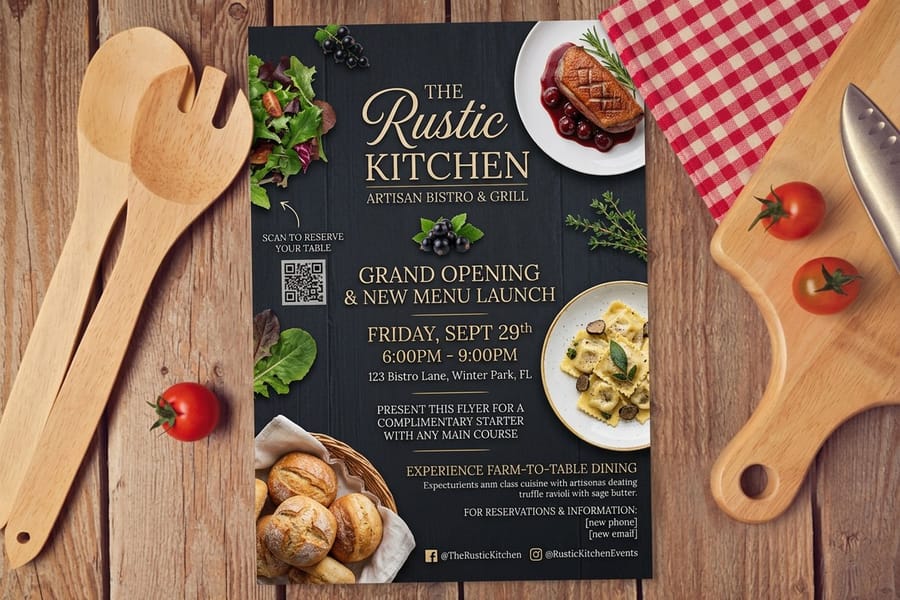
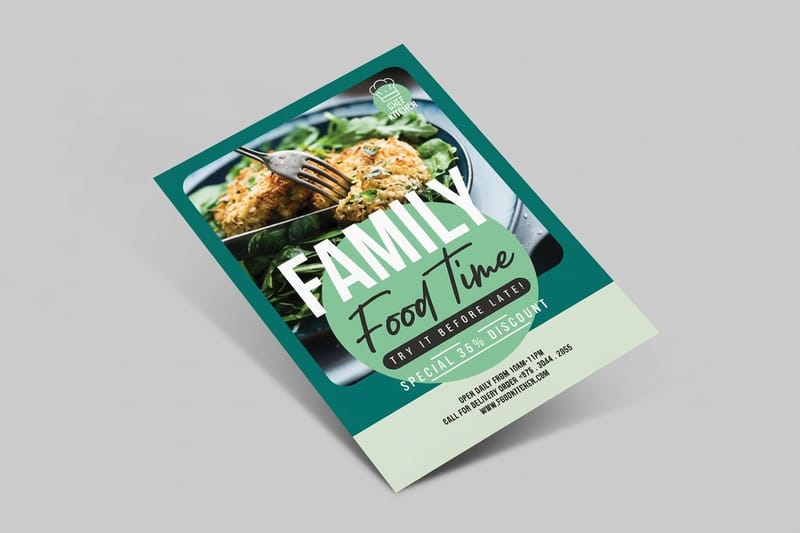
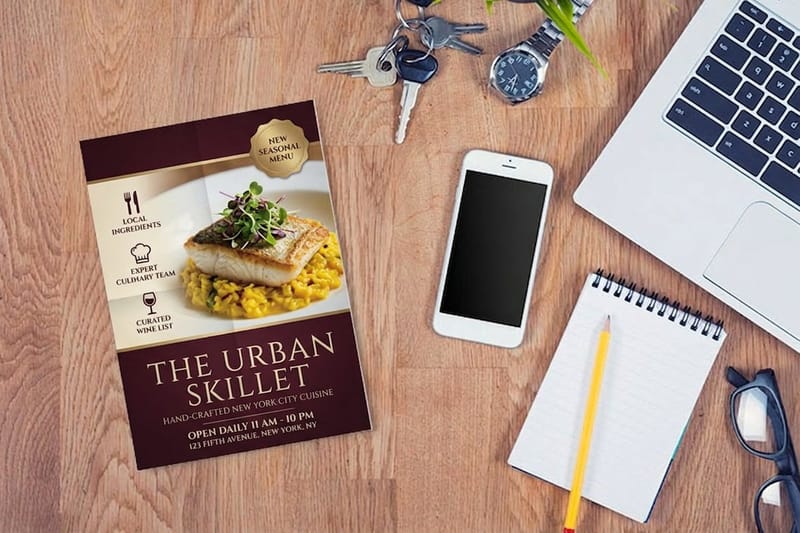
Restaurant flyers start at $39.54, which makes them the only piece on this page cheap enough to guess with. Print an offer, put it in front of a few hundred people, and find out whether anybody cares before you commit that offer to anything folded or laminated.
The catch is that almost nobody wastes money on flyer printing. They waste it on flyer distribution. Dropping five thousand sheets across a whole zip code when your realistic catchment is a ten minute walk burns four thousand of them for nothing. Hand them to the office building at the corner, the gym two blocks down, the hotel front desk that sends people out for dinner every night. Our guide on flyer distribution best practices covers the placements that actually return, and where to hand flyers out goes deeper on the same ground.
Two practical rules. Put one offer on it, with a deadline, because a flyer listing your whole menu is a menu somebody throws away. And put something on it that has to come back to you, whether that is a code, a tear-off strip, or a phrase they say at the register. Without that you will never know if the run worked, and you will argue about it for a year.
On stock: if flyers are going under windshield wipers or into outdoor racks, a coated sheet survives a rain shower and an uncoated one turns to pulp. Flyer size and dimensions walks through the standard cuts, and you can start from a correctly built layout in the blank template library instead of guessing at bleed.
Menus: The Piece Everyone Reads and Nobody Budgets For
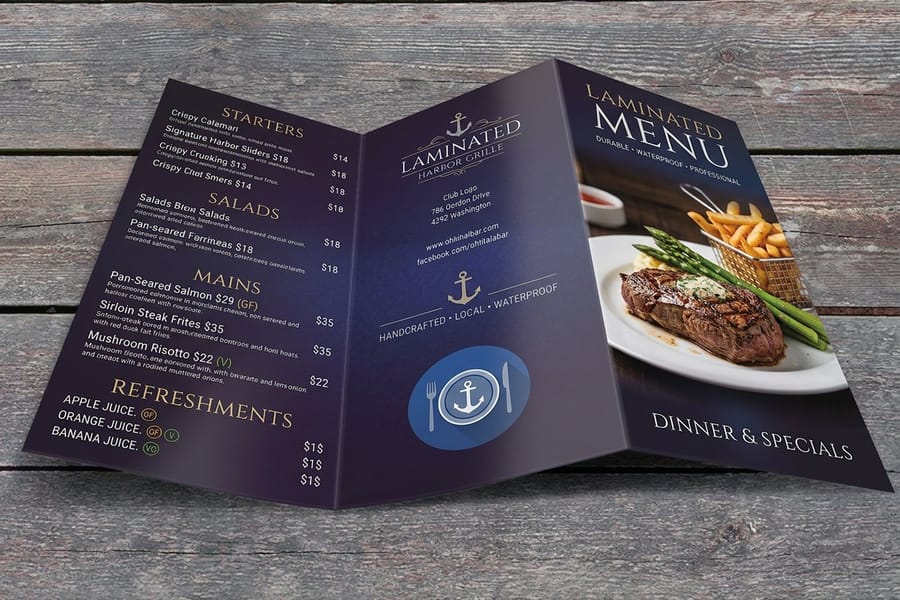
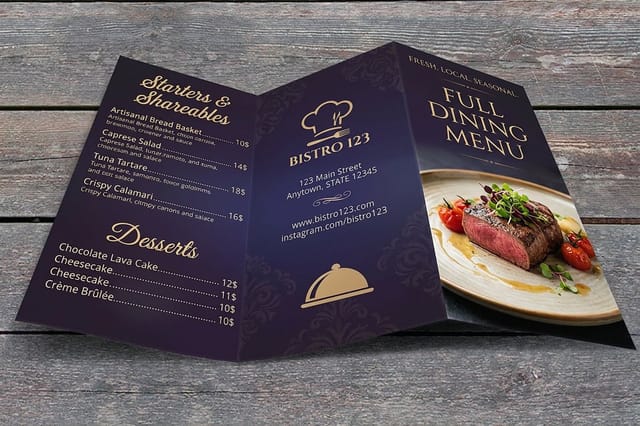
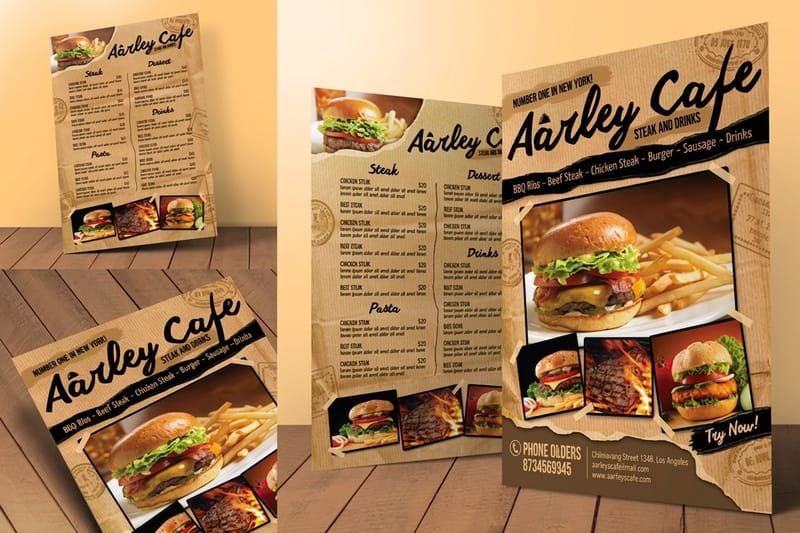
The menu does more work than any other print job a restaurant owns, and it is routinely the one that gets the leftover budget. Every guest reads it, front to back, at the exact moment they are choosing a number to spend. Restaurant menus start at $57.11. Nothing else you print gets that much attention for that little.
The trade-off is reprint exposure. Every price change on the sheet means the whole run is wrong. If your kitchen adjusts prices with produce costs, order short runs more often, or keep the dish descriptions on the printed menu and the prices on a cheap insert you can redo alone. A large economical run that goes stale in six weeks is more expensive than three small ones.
Durability is the second decision. A dine-in menu is a handled object: greasy fingers, condensation off water glasses, a hundred openings a night. Uncoated stock absorbs all of it and starts curling at the corners fast. Laminated menus start at $57.11 and wipe clean between covers, with two honest costs: lamination adds a step to turnaround, and you can never write tonight's special on the surface. Waterproof and wipeable menus covers where that pays back.
Size matters more than people expect. A menu that cannot sit flat next to a water glass gets folded, put on a chair, and forgotten halfway through the order. Check standard restaurant menu sizes against your actual table before you commit, and use menu layout that sells to put your best margin where the eye lands. Takeout is a separate build entirely, since the sheet leaves the building and has to carry the phone number and the ordering link: takeout and delivery menu printing handles that one.
Table Tents: One Offer, One Quarter, One Table
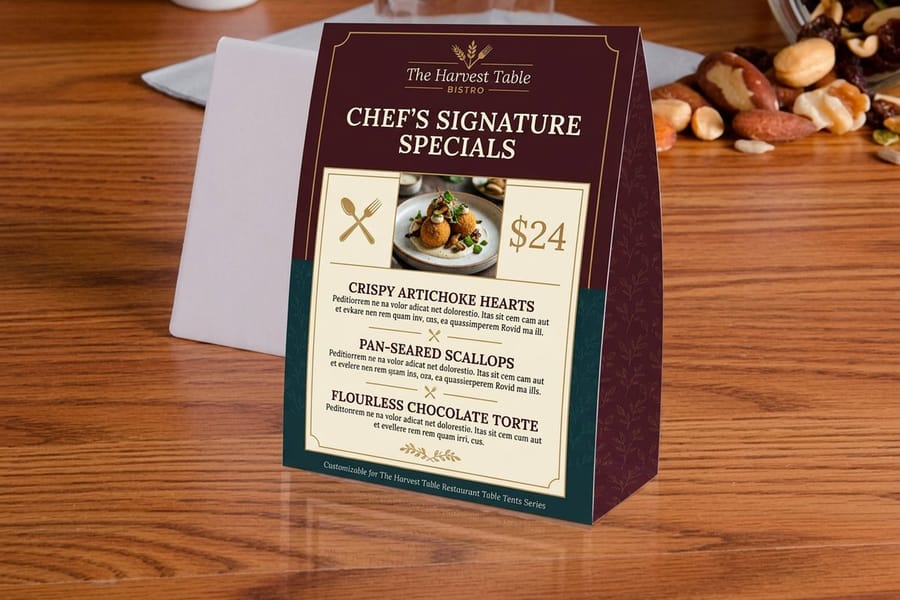
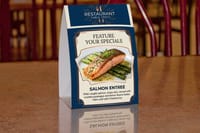
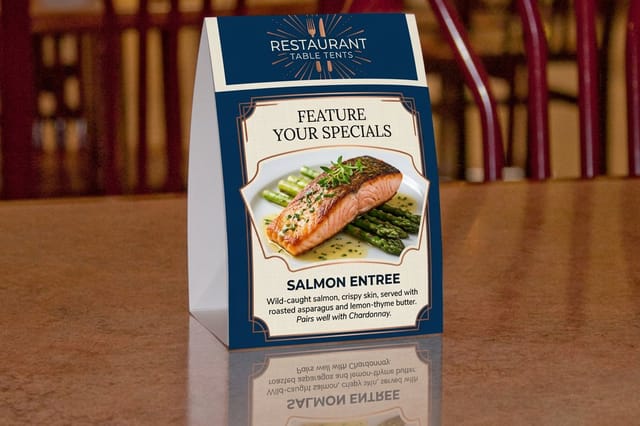
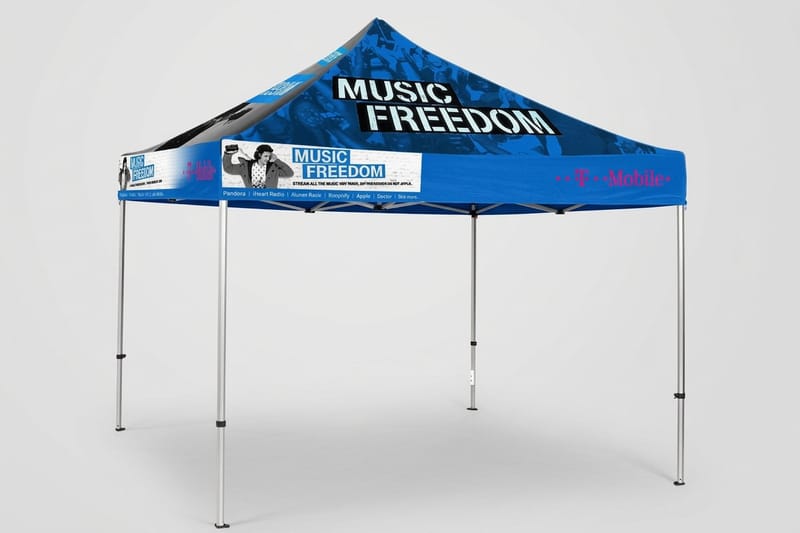
Restaurant table tents start at $554.39, the largest starting figure of the three, and the reason is physical rather than fancy. A tent prints on stock heavy enough to stand up on its own, then gets scored and folded, and it comes in a run sized for every table in the room rather than for a test. You are buying a fixture, not a handout.
Buy it that way. A tent should carry one offer that stays true for a whole season: the house cocktail, the dessert the pastry station can fire in four minutes, the Tuesday deal that runs every Tuesday. Printing tents for a weekly special means throwing away a $554.39 run every week, which nobody does twice.
The two ways tents die are worth saying plainly. The first is clutter: a tent with four messages on it reads as noise, and the server clears it to make room for plates. One offer, one price, one image. The second is footprint. On a crowded two-top with two plates, two glasses and a bread basket, an oversized tent gets moved to the windowsill within a minute of the food arriving. Match the tent to your smallest table, not your largest, and the table tent size guide lists what actually fits. If you want a starting layout, free table tent templates gives you the fold and bleed already set, and menus versus table tents compares the two on-table pieces head to head.
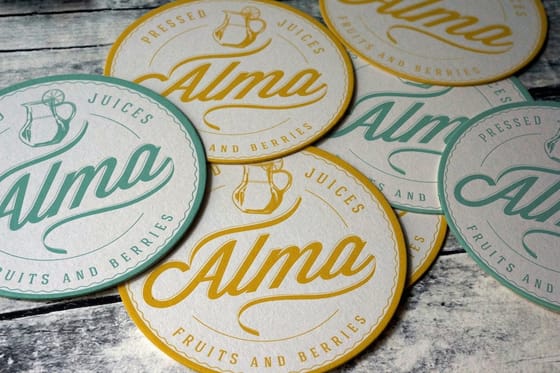
If a full tent run is too much for where you are, drink coasters start at $10.98 and put a printed message in front of a guest who already has a drink in their hand. It is a smaller message on a smaller surface, but it lands at the right moment and it costs a fraction of the tents.
The Verdict: What to Print, In What Order
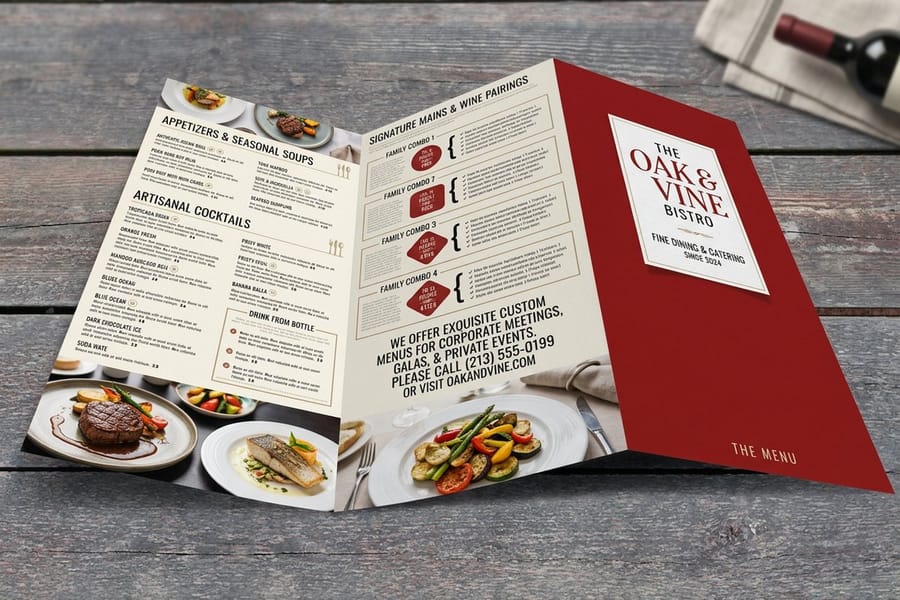
If you can print exactly one thing, print the menu. It is the only piece guaranteed to reach every person who gives you money, and it is the only one that changes what they spend once they are sitting down.
If you can print two, add flyers. Menus decide the size of the check, flyers decide how many checks there are, and at $39.54 to start you can run a small test, read the result, and run a better one. A menu run and a flyer run together start under $100, which is the practical floor for a restaurant that wants both jobs covered.
Print table tents third, and only after an offer has proved itself. The $554.39 starting run is worth it for a promotion you already know converts, and it is a painful bill for a guess. Let the flyers find the offer, let the menu carry the everyday listings, then commit the tents to the winner.
One last note on sequence: order the menu and the flyers together if the design work is happening at the same time, since a single round of file prep across both keeps the type and the photography consistent, and a guest who saw the flyer recognises the menu. Everything for food service sits in the restaurant printing collection, and menu printing services explained covers what to ask a printer before you send the file.
Wally runs the room
Flyer at the door, menu at the table, tent between the plates
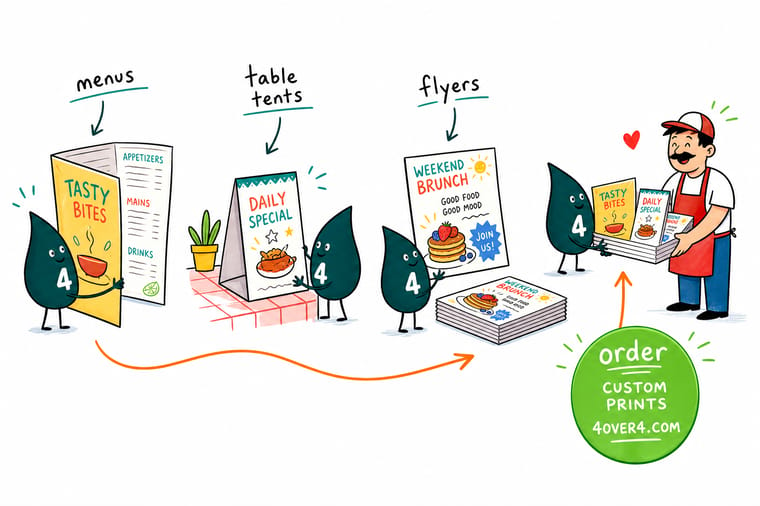
Wally hands the flyer to somebody walking past, because that is the only piece that reaches a person who has not come in yet. Inside, he gives the menu to a guest who has already sat down and is choosing what to spend. Then, once the order is in, he sets a table tent between the plates with one drink on it and one price. Same guest, three different minutes. Print them in that order and you spend nothing twice.
Print restaurant menus →Specs and pricing
Sizes, stocks and starting prices for all three
Configure each format live and watch the quantity, size and stock move the price. These are the same configurators used on the product pages.

Print it
Order the three pieces that fill a dining room

Explore more
Where to go next
By the numbers
Restaurant printing you can plan a season around
Common Questions
Restaurant print questions we get asked at the counter
A new restaurant with one small budget: menus or flyers first?
Menus, and it is not close. You cannot open the doors without something for a seated guest to read, and the menu is the only printed piece that touches every single paying customer. Print the menu first, keep the run short so a price change does not hurt, then put whatever is left into a flyer run. Restaurant menus start at $57.11 and restaurant flyers start at $39.54, so both together still start under $100. Table tents come later, after you know which dish or which drink is actually worth promoting.
How often should a restaurant reprint its menus?
Reprint whenever the printed prices stop matching the register, and plan the run size around that instead of around the unit price. A kitchen that changes prices twice a year can order a long run and save. A kitchen that moves prices with produce costs should order short runs more often, or keep the dishes on the printed sheet and the prices on a separate insert that costs almost nothing to redo. The expensive mistake is a large cheap run that becomes wrong in six weeks.
Do table tents actually raise the average check?
They can, and we will not hand you a percentage, because the number depends entirely on your offer and your room. What we can tell you is what separates a tent that works from one that gets moved to the windowsill. One offer, not three. A price on it. A dish or a drink the kitchen can push out fast at any hour. And a footprint small enough to live beside a water glass and two plates on a two-top. A tent carrying four messages reads as clutter and the server clears it.
What paper should a dine-in menu be printed on?
Coated stock, because a dine-in menu is a handled object. Every guest holds it, some of them with greasy fingers, and condensation runs off glasses onto the table. An uncoated sheet absorbs all of it and starts curling and staining within weeks in a busy room. If the menu stays in circulation for months, laminated menus start at $57.11 and wipe clean between covers, with the trade that lamination adds a step to turnaround and you can never write a special on the surface.
Can one design work as both a flyer and a takeout menu?
Rarely, because they are read in opposite conditions. A flyer has about two seconds to land one idea on somebody who is walking, so it wants a big headline, one offer and a lot of empty space. A takeout menu is read at a kitchen counter by somebody deciding between eleven dishes, so it wants dense, legible listings and a phone number that is findable at arm's length. Sharing a color palette and a logo is fine. Sharing a layout produces a flyer nobody reads and a menu nobody can order from.
What is the cheapest way to test a restaurant promotion in print?
A short flyer run with something on it that has to come back to you. Print the offer with a code, a tear-off, or a line the guest has to say at the counter, hand them out where your actual customers already walk, and count what returns. At $39.54 to start, a flyer run costs less than a slow lunch service. Drink coasters are the other cheap test at $10.98 to start, and they sit on the bar in front of somebody who is already drinking, which is a better audience for a second-round offer than a sidewalk is.
Get Started
Print the menu first, then the rest of the room
Pick your size, choose coated or laminated stock, and we print menus, flyers and table tents that survive a full service instead of a single night.
Legal Disclaimer
Gold Standard guarantees apply to all standard orders placed through 4over4.com. Price match requires verifiable proof of a competitor's published price for an equivalent product with matching specifications and turnaround time. Satisfaction guarantee covers manufacturing defects and print quality issues. Contact support with order number and documentation. On-time delivery rate based on tracked orders 1999 to 2026. Individual results may vary based on shipping carrier performance.
