
How to Get More People Into Your Family Restaurant


A printer's version of restaurant marketing: what to mail, what to put in the window, what goes in the check presenter, and which of those actually brings somebody back.
Fill a family restaurant by working three distances at the same time: the sidewalk outside the door, the postal carrier routes around you, and the table a guest is already sitting at. Mailed postcards buy the first visit, a window that reads like a menu catches the people already walking past, and a certificate or punch card handed over with the check buys the second visit for a few cents. Restaurants that only mail end up renting a crowd once a quarter instead of building a regular one.
Quick answer
Three rings, three pieces, one budget
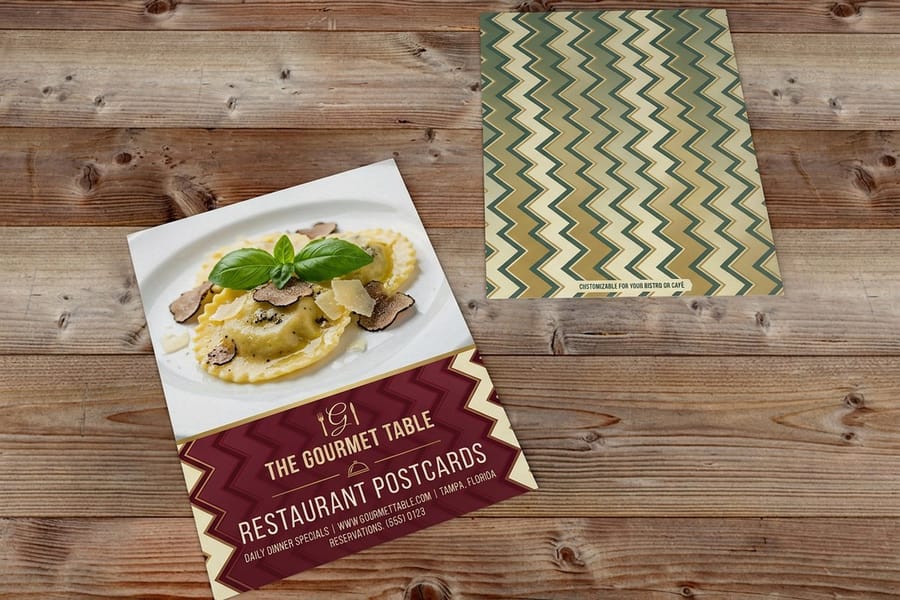
New guests come from outside the building and repeat guests are made inside it. Mailed postcards cover the carrier routes that feed your parking lot, window clings and a sidewalk board catch the traffic already passing the door, and a certificate or punch card in the check presenter converts a first visit into a habit. Menus sit underneath all of it, because every one of those pieces sends somebody toward a menu, and a menu with stale prices undoes the whole chain.
Start With the Fifty Feet Outside Your Door
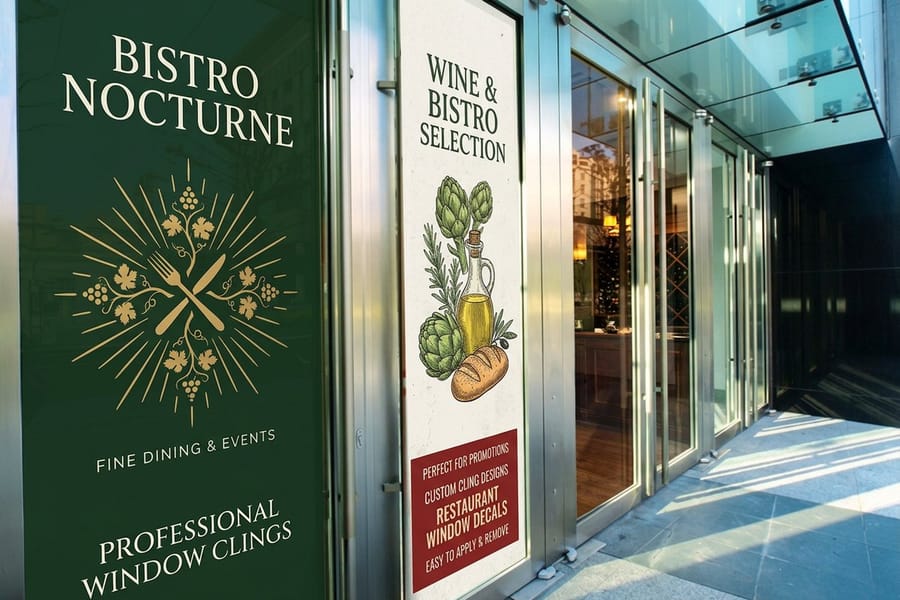
The cheapest customers a family restaurant will ever get are the ones already walking past. They are not deciding between you and a chain across town. They are deciding whether to look up.
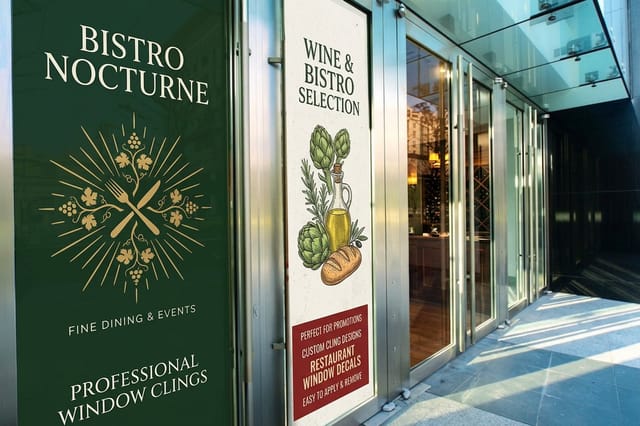
Three things earn that glance. A menu in the glass, at a height somebody reads without stopping, answers the only question a stranger has: what is this and can I afford it. Restaurant window clings start at $30 and swap out in a minute, which is what makes them useful for a seasonal message, a new lunch price, or a holiday closing notice. A sidewalk board catches the foot traffic that never turns its head toward the building at all.
Clings and decals are not the same thing and shops sell them interchangeably. A cling is static and holds to glass with nothing but surface tension, so it peels off clean and can be reused across a season. A decal is adhesive, survives weather and repeated cleaning, and takes real effort to remove. Put the message you will change every eight weeks on a cling. Put the hours, the phone number, and the delivery logo on a decal.
Whatever you put in the window, print it at reading distance rather than driving distance. Type that is legible from across the street is usually so large that the actual detail, the prices and the dish names, gets cut for space.
Mail the Carrier Routes That Feed Your Parking Lot

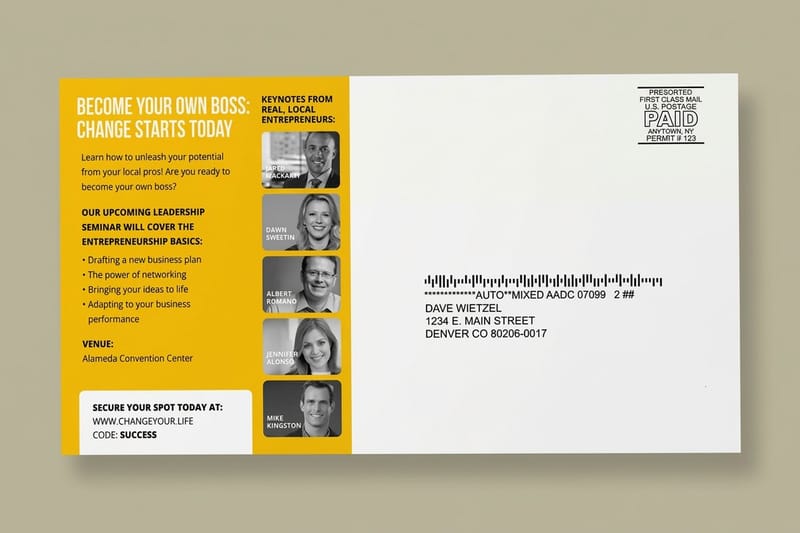
Every Door Direct Mail is the piece of the puzzle most family restaurants skip, usually because they assume mailing requires a list. It does not. You open the USPS route map, click the carrier routes around your restaurant, and every address on those routes gets a card. No names, no list rental, no data cleanup.
That makes it a good fit for food and a bad fit for almost anything specialized. A restaurant wants everyone within a mile and a half. A prosthodontist does not.
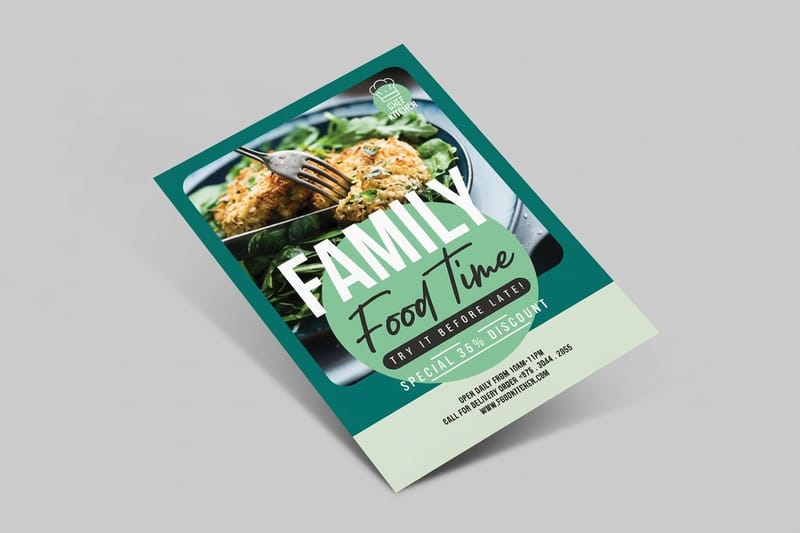
The size rules trip people up more than the paperwork does. To qualify, the mailpiece has to be larger than a normal postcard in at least one dimension: more than 6.125 inches high, more than 11.5 inches long, or more than 0.25 inches thick, and no bigger than 15 by 12 by 0.75 inches. Most restaurants settle on a 6.5 by 9 inch card because it clears the height rule with room to spare and still lies flat in a mailbox. Restaurant postcards start at $16.48 for the printing, and the Post Office bills the per piece EDDM Retail rate separately when you drop the bundles.
| Piece | Starts at | What it is actually for | Where it fails |
|---|---|---|---|
| Restaurant postcards | $16.48 | Reaching every household on a carrier route with one dated offer. | Routes cut by a highway or a river waste half the drop. |
| Restaurant flyers | $39.54 | Hand distribution at offices, hotels, and events near you. | No delivery system, so it depends on somebody walking them out. |
| Restaurant window clings | $30.00 | Turning a glass front into a menu board that changes with the season. | Only reaches people who already pass the door. |
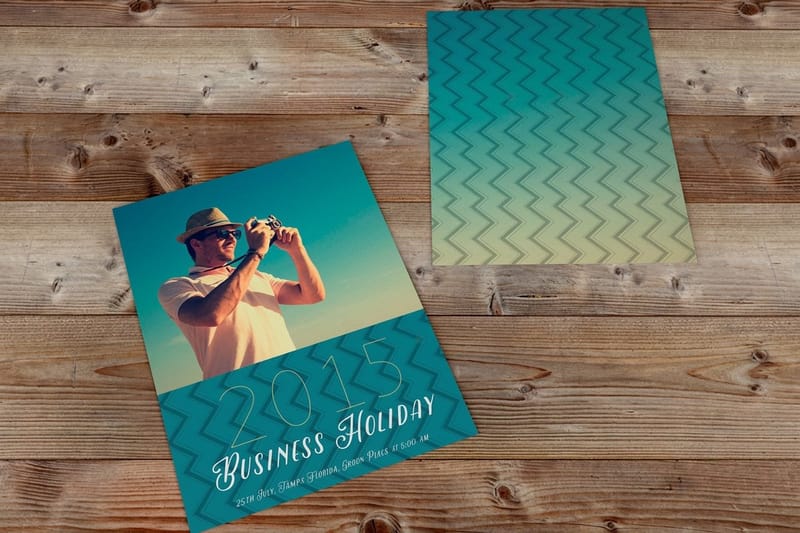
| Gift certificates | $42.84 | Sending a new guest in, paid for by an existing one. | State expiration rules vary and several states forbid an expiry. |
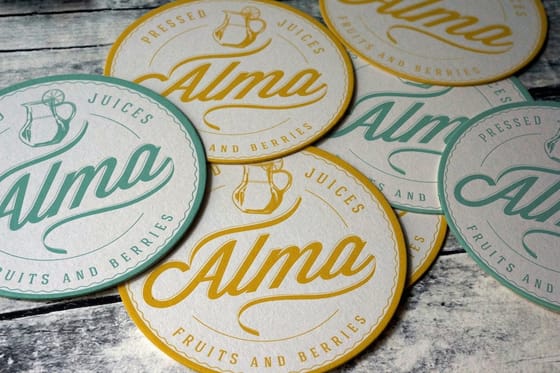
| Drink coasters | $10.98 | Putting the handle, the hashtag, or the happy hour under every glass. | Nobody takes one home, so the message dies at the table. |
| Restaurant business cards | $17.57 | Punch cards, delivery numbers, and something to leave with the check. | Too small to carry an offer with any detail. |
Read the last column before the price column. Every one of these pieces has a distance it works at, and buying more of the wrong one is how marketing budgets disappear. Our breakdown of direct mail cost per piece puts the printing and postage side by side, and EDDM pricing explained covers the postal side in detail.
Convert the First Visit Into a Second One Before They Leave
A mailer that fills the dining room on a Friday and produces nothing on the following Friday has not grown the restaurant. It has rented a crowd. The pieces that turn a first visit into a habit all live inside the building, and they cost cents against dollars.
The check presenter is the highest value square inch in the restaurant, because the guest is holding it, has already decided the food was good, and has nothing to do for ninety seconds. Something goes in there every time: a punch card, a certificate toward the next visit, or a takeout menu. Restaurant business cards at $17.57 make workable punch cards, and the practical rule is to keep the punch count reachable. Six visits to a reward feels earnable. Twelve gets abandoned, and an abandoned card is a small daily reminder that the reward was never really on offer.
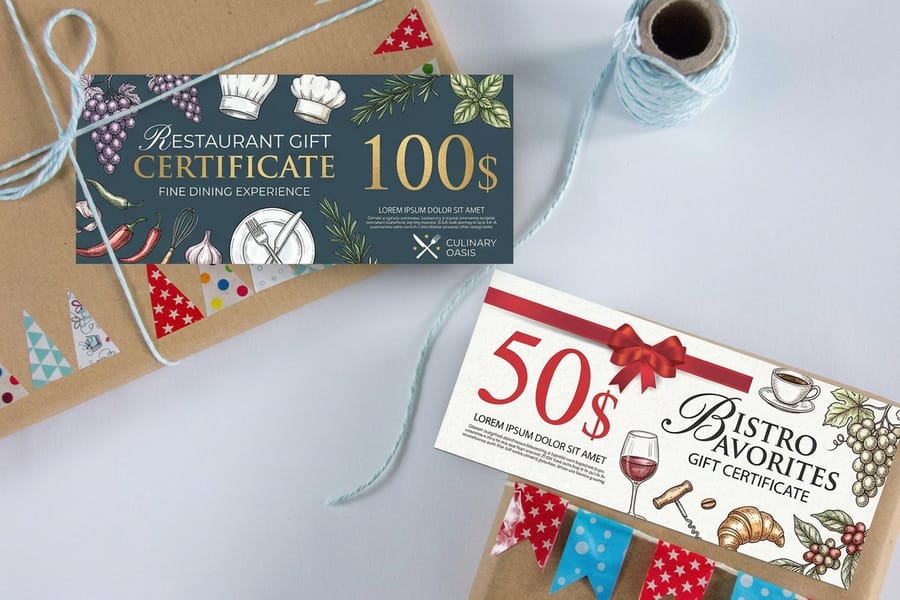
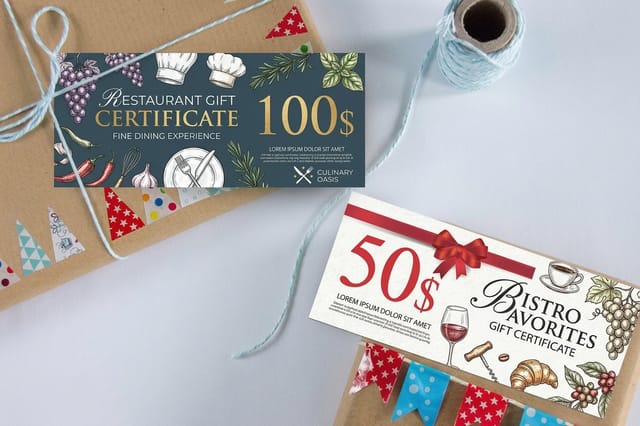
Restaurant gift certificates do something none of the other pieces manage: they bring a stranger in on somebody else's recommendation, prepaid. They are the strongest thing on this list in December and quiet in March. Print a run before the holidays and hold the rest. Before you print an expiration date, read the rules, because several states prohibit expiring the value and others regulate the disclosure wording; our gift certificate expiration rules guide has the detail.
Restaurant table tents sell to the table rather than to the street. Dessert, a drink special, a slow weeknight promotion. Order short runs of them deliberately, because the tent has to come off the table the day the promotion ends, and a large cheap run is exactly what makes a restaurant leave a stale offer standing for three months. If you want to see how one is laid out first, start from a free table tent template.
Treat the Menu as the Piece That Sells, Not the Piece That Lists
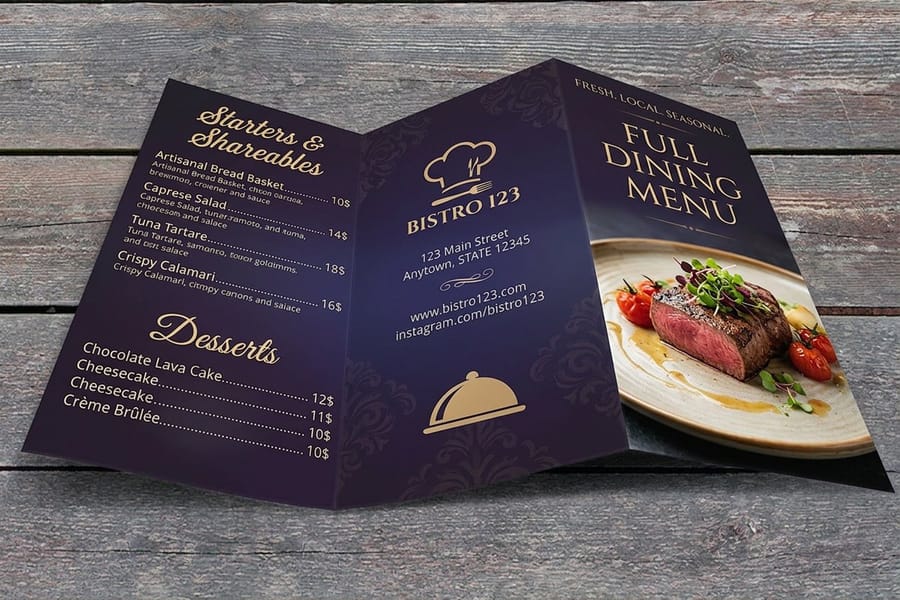
Every guest reads the menu. No other printed thing in the restaurant gets that attention, which makes it strange how often it is the last item ordered and the cheapest one bought.
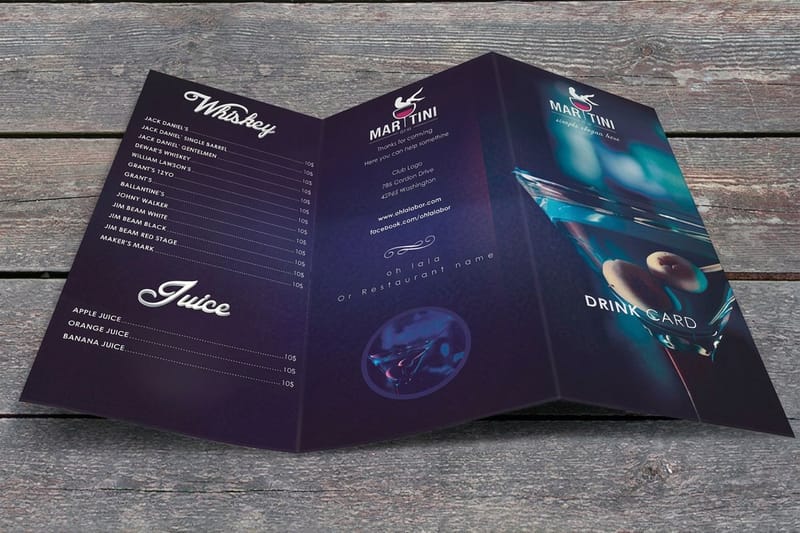
Two decisions matter more than the design. The first is lamination, and it is a genuine trade-off rather than an upgrade. A laminated dine-in menu wipes clean, survives grease and a spilled drink, and lasts through hundreds of hands. It also fixes your prices in plastic. The day the kitchen raises the price of a burger, every laminated menu in the building is wrong, and the usual fix is a sticker that tells guests the restaurant is cutting corners. Restaurant menus on standard stock start at $57.11, which is low enough to reprint on a schedule instead of patching.
The second is the takeout menu, which most restaurants treat as a photocopy of the dine-in one. It is doing a different job. It goes into a bag, gets stuck on a refrigerator, and has to survive there for a month with the phone number and the ordering link readable from four feet away. Print it separately, print it smaller, print more of them, and let them go. Menu size affects both jobs more than people expect, and common restaurant menu sizes covers what fits a two top and what fits a delivery bag.
If you are producing the artwork yourself, set the file up at final size with bleed before you start designing, not after. Grab a correctly sized layout from the blank template library, and the how online printing works guide covers the handoff from your file to a finished box.
What to Print First When the Budget Is Small

Order in this sequence and each piece pays for the next one.
- Menus first. Correct, current, and split into a dine-in version and a takeout version. Everything else drives people toward a menu, so a wrong menu wastes the whole chain.
- The window second. A cling with the hours, the delivery options, and one dish worth stopping for. It is the cheapest reach you own and it runs every day without you.
- The check presenter third. Punch cards or certificates toward a return visit. This is where the guests you already have become regulars, and it is nearly free per head.
- One carrier route fourth. A single complete route, one dated offer, mailed once. Do not spread it thin across five routes, because you will not be able to read the result.
- Table tents fifth, and only when you have a specific promotion with a start and an end date. No promotion, no tents.
Track redemptions rather than impressions. Print a different code, a different dish, or a different expiry on each drop, and count what comes back over the till. That is the only number a family restaurant needs, and it makes the second campaign obviously better than the first. When you are ready to mail, how to improve your direct mail results and the five steps to send direct mail postcards cover the mechanics. Browse the full ranges in menu printing, postcard printing, and flyer printing.
Wally explains a full dining room
Postcards bring them in, the check presenter brings them back
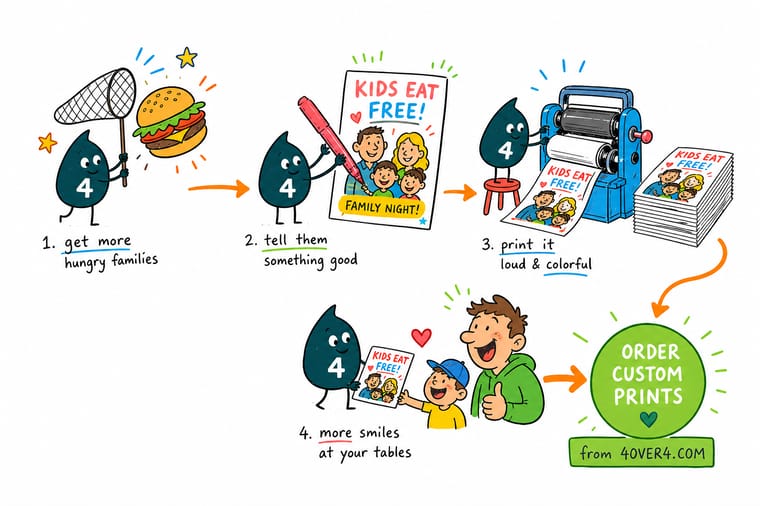
Wally mails one carrier route with a dated offer, puts a cling in the window so the people already walking past can read the menu, and slips a punch card into the check presenter on the way out. The mailer fills the room once. The card is what makes Friday happen again next month. He prints menus first, because everything else points at one, and a menu with last year's prices on it wastes the whole run.
Order restaurant postcards →Specs and pricing
Sizes, stocks, and starting prices
Configure the three pieces a family restaurant orders most, with live size and stock choices and starting prices straight from the 4OVER4.COM configurator.
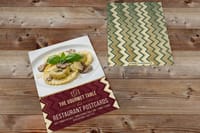
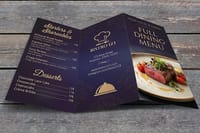
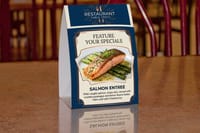
Print it
Order the pieces that fill tables

Explore more
Where to go next

By the numbers
Restaurant printing you can plan around
Common Questions
Your restaurant traffic questions, answered
What is the fastest way to get more people into a family restaurant?
Mail the streets closest to you. Every Door Direct Mail lets you pick postal carrier routes on a map and drop a card on every address along them, without buying a mailing list or knowing a single name. For a neighborhood restaurant that is the shortest distance between spending money and having strangers walk in, because the people you are reaching already drive past your sign. Print restaurant postcards with one clear offer and a date it expires, choose the two or three routes that feed your parking lot, and hand the bundles in at the Post Office.
How many postcards should a small restaurant mail?
Mail one full carrier route rather than a thin slice of several. A route is roughly a few hundred to about a thousand addresses depending on whether it is city delivery or rural, and covering one completely tells you something the next time you mail: whether that route responds. Spreading the same quantity across five routes gives you five results too small to read. Every Door Direct Mail Retail also caps you at 5,000 pieces per ZIP code per day, which is far above what a single family restaurant needs.
What size does a restaurant postcard have to be for EDDM?
It has to be bigger than a standard postcard. To qualify for Every Door Direct Mail Retail a piece must exceed at least one of these: 6.125 inches high, 11.5 inches long, or 0.25 inches thick. It cannot be longer than 15 inches, taller than 12 inches, or thicker than 0.75 inches. A 6.5 by 9 inch card is the size most restaurants land on because it clears the height rule, holds a photograph and a menu excerpt, and still fits a mailbox flat. Our guide to EDDM size requirements walks through the whole envelope of legal sizes.
Do table tents actually work?
They work on one narrow job: selling a second thing to somebody already seated. A tent that pushes dessert, a drink special, or Tuesday kids-eat-free raises the check of a table that was going to order anyway. What a tent cannot do is bring anybody through the door. The failure mode is leaving them out after the promotion ends, because a tent advertising a February special in June tells every guest that nobody at the restaurant is paying attention.
Are gift certificates worth printing for a small restaurant?
They are one of the few pieces that arrives with a new customer attached. Somebody who already likes your food buys the certificate, hands it to a person who has never been in, and that person shows up carrying money you were paid for weeks ago. Restaurant gift certificates start at $42.84. The catch is legal rather than practical: expiration and dormancy rules vary by state and several states prohibit expiration dates on the value entirely, so check the rules before you print a date on the face.
How do I get people to come back a second time?
Give them a reason before they leave the building. A punch card in the check presenter, a certificate toward the next visit, or a takeout menu in the bag all cost a few cents per guest and reach somebody who has already decided the food is good. Keep the punch count low enough to be reachable inside a month or two, because a card that needs ten visits before anything happens gets thrown away at visit two.
Should I laminate my menus?
Laminate the ones that stay on the table, print the ones that go out the door. Lamination adds a plastic film that wipes clean and survives grease and spills, which is what you want on a dine-in menu handled forty times a week. It also welds the prices in place, so a laminated menu becomes waste the day the kitchen raises anything. Takeout and delivery menus should be plain stock, printed in smaller runs, and treated as disposable.
Get Started
Order 50 restaurant flyers from $39.54
Pick one carrier route, print a dated offer on a restaurant postcard, and put a punch card in the check presenter so the people it brings in have a reason to come back.
Legal Disclaimer
Gold Standard guarantees apply to all standard orders placed through 4over4.com. Price match requires verifiable proof of a competitor's published price for an equivalent product with matching specifications and turnaround time. Satisfaction guarantee covers manufacturing defects and print quality issues. Contact support with order number and documentation. On-time delivery rate based on tracked orders 1999 to 2026. Individual results may vary based on shipping carrier performance.
