
Menus vs Table Tents and When to Print Each One


One piece lists everything you sell. The other argues for a single item in front of a guest who is already seated. They differ in size, build and price, and one of those three usually settles it.
Print a menu when the guest has to choose from everything you sell, and a table tent when you want to sell one specific thing to a guest who is already seated. The menu is the ordering document; the tent is a two-faced standing ad. Standard Menus finish at 4.25 by 11 inches from $57.11, with three folding choices, scoring and perforation. Table Tents finish at 4 by 6 inches from $554.39, printed as one 4 by 16.25 inch flat strip that is scored three times and glued.
Quick answer
One lists the offer, the other sells one item
A menu has to be complete. A table tent has to be single-minded. Standard Menus run 4.25 by 11 inches on two paper stocks with three folding choices, scoring and perforation, from $57.11. Table Tents finish at 4 by 6 inches, come off the press as a 4 by 16.25 inch strip that is scored three times and glued at a quarter inch tab, and start at $554.39. Print the menu first because it is the piece that must exist. Add tents when there is one item worth arguing for all season.
What Each One Is Actually For
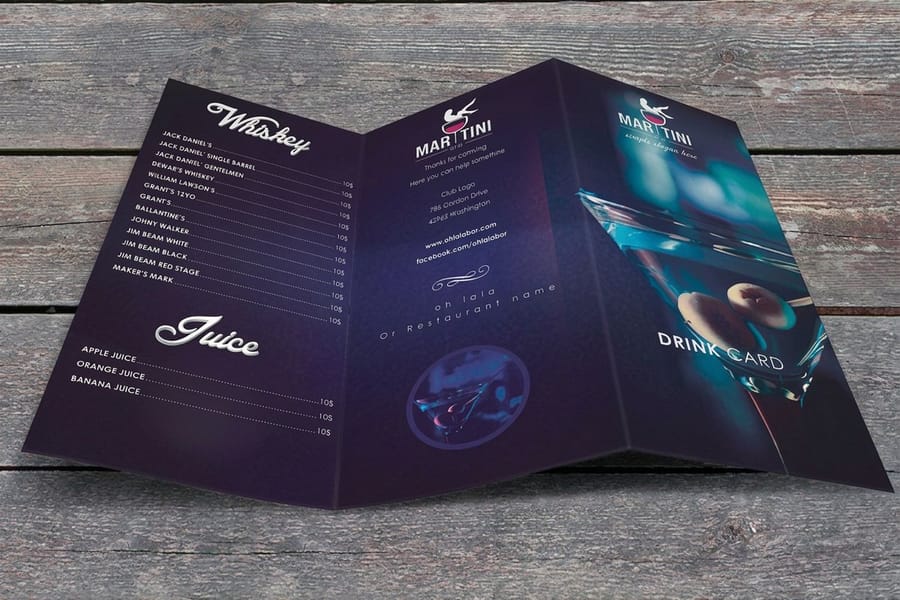
A menu is a reference document. The guest picks it up, scans for the thing they came in for, checks a price, and puts it down. It has to be complete and it has to be legible, and those two demands fight each other on every menu ever designed.
A table tent is an argument, and it only gets to make one. It sits in front of somebody who has already sat down, already decided to spend money, and is now waiting. That is the cheapest attention in the building, and it is wasted on a second copy of the menu. Put the dessert on it. Put the second round on it. Put the loyalty sign-up on it. One message, in type big enough to read from across the table.
The mistake that costs the most is loading a promotion into the menu itself. On a menu page the special sits next to thirty other items, all of which the guest is comparing against it. On a tent it sits alone. That is the whole difference, and it is why a restaurant that prints Standard Menus for the offer usually also prints Table Tents for the one thing it wants to move this quarter.
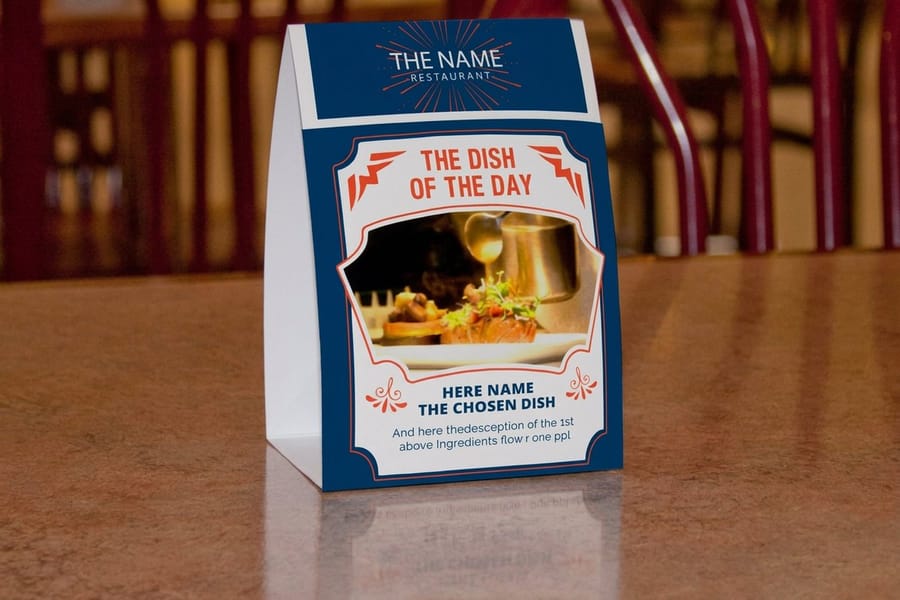
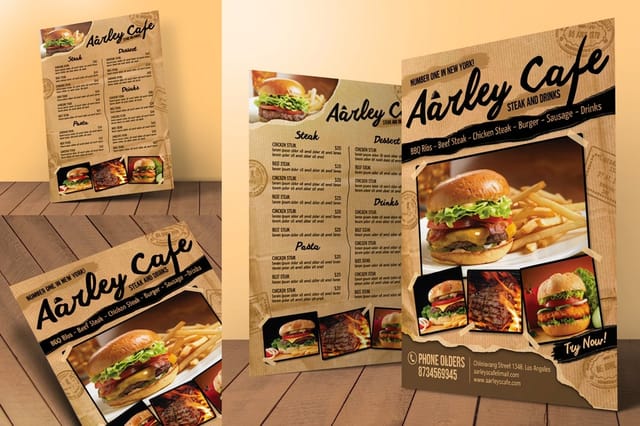
Size follows the job. Our Standard Menus default to 4.25 by 11 inches, tall and narrow so it fits beside a place setting; the menu size guide covers the other formats and where each one belongs. Table Tents finish at 4 by 6 inches, which reads across a two-top without hiding the person opposite.
Size, Stock and Folding, Side by Side

Four pieces cover almost every table in a restaurant. Each one is priced from the configuration below.
| Piece | Finished size | How it is built | Options that matter | Starts at |
|---|---|---|---|---|
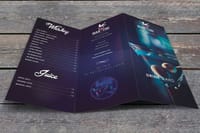
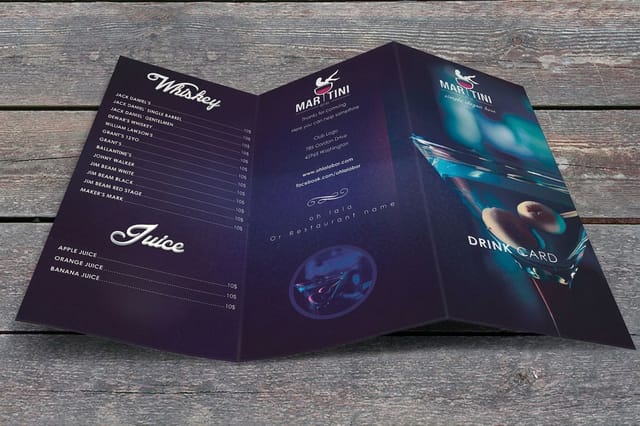
| Standard Menus | 4.25" x 11" | One flat sheet, folded if you choose. | 2 paper stocks, 2 finishes, 3 folding choices, scoring, perforation. | $57.11 |
| Kraft Menus | 8" x 10" | One uncoated kraft sheet. | 4 ink colors on kraft stock. | $166.04 |
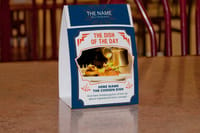
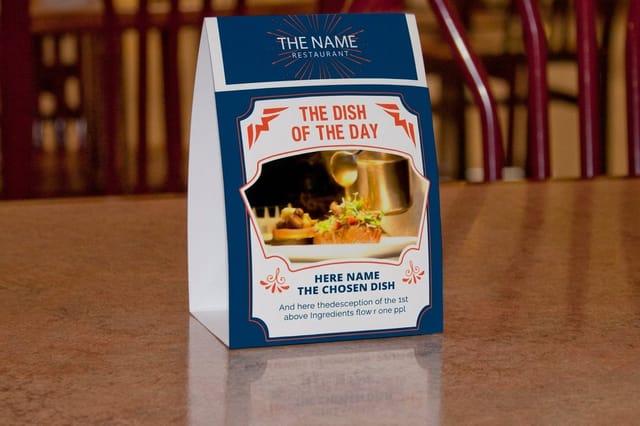
| Table Tents | 4" x 6" standing | A 4" x 16.25" flat sheet, scored three times and glued. | One stock, one build, two printed faces. | $554.39 |
| Counter Cards | 8.5" x 11" | One rigid sheet with an easel back. | 3 paper stocks, easel attached. | $21.97 |
The third column is the one that catches people. A table tent is not a small card. It is a strip more than a foot long, scored in three places, that becomes a triangle. Two of its panels are 6 inch faces, one is the 4 inch base, and the last quarter inch is the tab that glues the whole thing shut. Your artwork has to be built at that flat length, with the scores in the right places, or the headline lands on a fold.
The menu is the flexible one. Three folding choices, plus scoring so a heavier stock creases without cracking, plus perforation if you want a tear-off coupon at the foot of the page. That flexibility is exactly what the tent trades away for a shape that stands up on its own. If you would rather not calculate the flat size yourself, the blank template library has the layouts already built.
Why the Starting Prices Sit So Far Apart

Standard Menus start at $57.11. Table Tents start at $554.39. That looks like a ten-to-one difference in what the pieces are worth, and it is not.
Read those numbers as the cheapest complete configuration of each product, not as the price of one item. A menu can be configured down to a short run on a single flat sheet with no finishing at all. A tent cannot: every unit needs a sheet nearly four times the area, three scores, a fold and a glued seam, and that finishing line runs at a production quantity rather than a handful. You are buying a different amount of work, at a different scale, in the same click.
The number that should drive the decision is cost per week of service. A menu is replaced when a price changes, which for most kitchens is once or twice a year. A tent is replaced when the promotion changes. If your promotion is seasonal, the tent is cheap. If your special moves every Monday, the tent is the most expensive piece of paper in the building, and Counter Cards at $21.97 with an easel back do the same job for a week at a time.
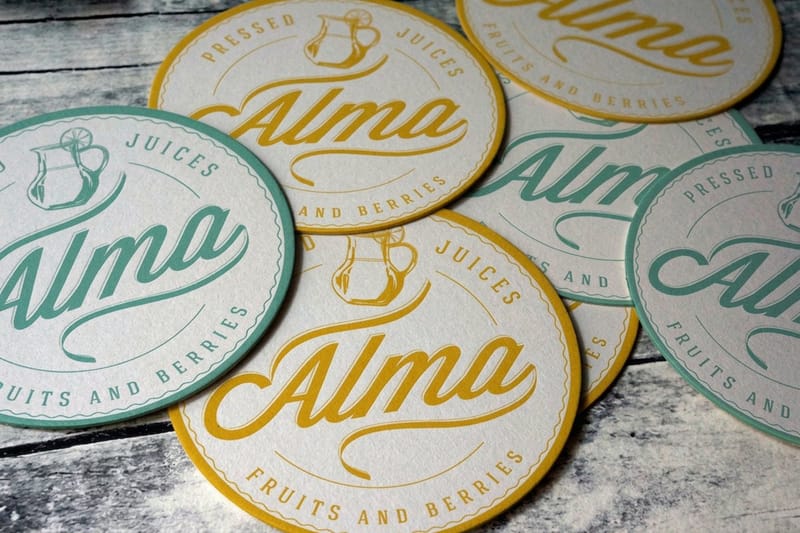
There is a third option people forget. Drink coasters put a printed surface under the glass for the length of the visit, and they cost less than either. They will not carry a paragraph, but a QR code and six words is often the entire message anyway. The restaurant printing collection lists everything that fits a table in one place.
The Verdict, and When You Need Both
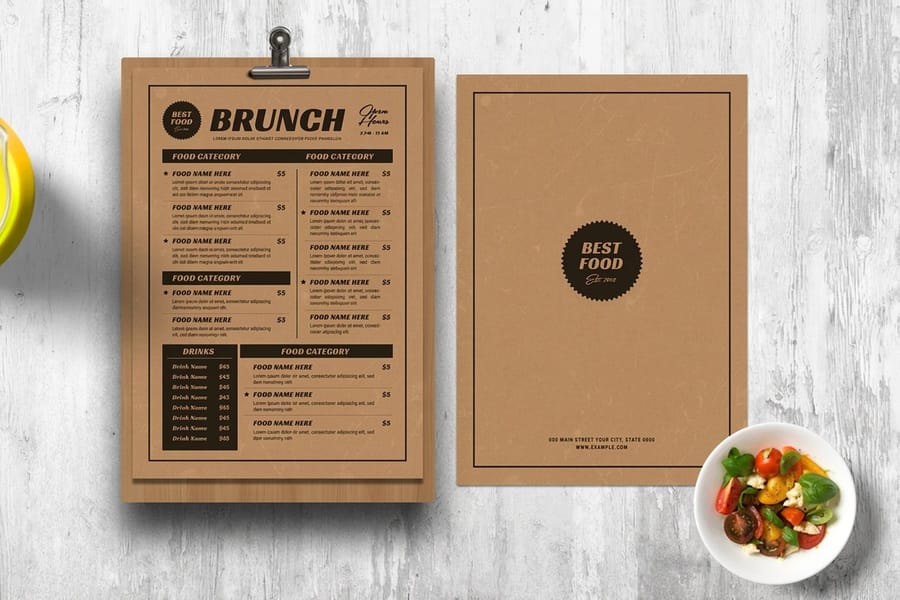
Print menus first. Always. A guest who cannot find out what you sell will not be rescued by a tent, and the menu is the only piece that has to exist. Get it right, at the size that fits your table, on a stock that survives your service.
Add table tents when there is one thing you want to sell more of, that thing will still be on the list in three months, and you have counted enough seated guests to justify the run. Dessert, a signature cocktail, a happy hour window, a catering line, a loyalty program. Those are all seasonal at worst, and they are all sold to somebody already at the table.
Skip the tent when the message changes weekly, when the table is small enough that a tent competes with the plates, or when you have not yet fixed the menu itself. And if the room is a bakery, a taproom, or anywhere the paper is part of the atmosphere, look at Kraft Menus before a coated sheet: 8 by 10 inches on uncoated kraft with four ink colors reads warmer than lamination ever will. For laying out the menu page itself, the menu card guide and the table tent template guide cover both files.
The trade-offs
What you gain and give up with each
Read these two blocks against your own room. If the menu column reads like your problem, fix the menu before you buy anything else.
Standard Menus
Where a menu wins
- Carries the whole offer, so nothing has to be explained by a server.
- Three folding choices plus scoring and perforation on Standard Menus.
- Two paper stocks and two finishes, so you can match a coated wipe-clean sheet or an uncoated one that takes pen.
- Starts at $57.11, the cheapest way to put printed matter in every guest hand.
Where a menu costs you
- Reprints the moment one price moves, unless you leave the prices off.
- A guest reads it once, then puts it down and stops looking.
- A promotion buried inside a menu competes with every other item on the page.
Table Tents
Where a tent wins
- Stands in the sightline of a seated guest who has already decided to spend.
- Two faces, so the message reads from both sides of the table.
- Sells the add-on the menu cannot argue for: dessert, a second round, the loyalty sign-up.
- Survives the whole service without being handed around.
Where a tent costs you
- One paper stock and one build, so there is no cheap version.
- Starts at $554.39, well above a menu run.
- Needs a flat 4 by 16.25 inch file with the scores marked, which trips up first-time artwork.
- Takes up table space you may want for plates.
Wally explains menus vs table tents
One lists everything, one sells one thing
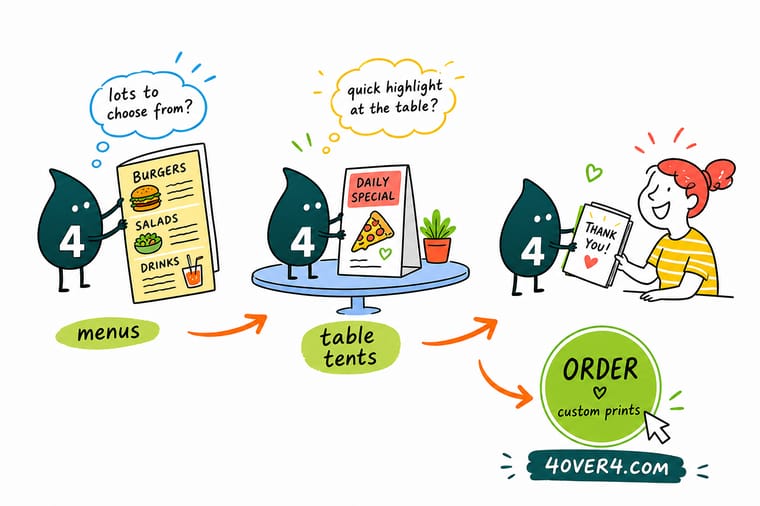
Wally hands the guest a menu because that is the piece that has to be complete. Then he sets a table tent in front of them, because the guest is already seated and there is one dessert he wants to move. He builds the tent file at the flat 4 by 16.25 inch length with the three scores marked, not at the finished 4 by 6, which is the setup mistake he sees most. Menu first, tent second, and if the special changes every Monday he prints a counter card instead.
Configure table tents →Specs and pricing
Menus, tents and counter cards, with live options
Sizes, stock counts and starting prices straight from the 4OVER4.COM configurator, so you can see what each product actually lets you change.

Print it
Order the piece your table is missing
Explore more
Where to go next


By the numbers
Menus, tents, coasters and counter cards
Common Questions
Menu and table tent questions, answered
Can a table tent replace a menu in a small cafe?
It can, and it often does, but only when the whole offer fits on two 4 by 6 inch faces. A counter-service cafe with eight drinks and four pastries fits. A dine-in kitchen with appetizers, entrees, sides and a wine list does not, and squeezing it in produces type nobody over forty can read. The honest test is to set the type at 9 point and see whether it fits. If it does not, print Standard Menus and use the tent for the one thing you want to sell twice.
What size should a table tent be?
Our Table Tents finish at 4 by 6 inches, which is the size that reads across a two-top without blocking the person opposite. It is printed from a 4 by 16.25 inch flat sheet: two 6 inch faces, a 4 inch base and a quarter inch glue tab. Larger tents exist, but on a table set for food anything much taller starts getting moved by the guest, and a tent lying on its side sells nothing.
How do I set up the artwork for a table tent?
Build the file at the flat size, 4 by 16.25 inches, not at the finished 4 by 6. Mark where the three scores fall so the artwork does not run a headline across a fold, and remember the second face is upside down relative to the first when the sheet is flat. Keep anything you want read at least a quarter inch off each score line. If you would rather start from a correct layout, take one from the blank template library.
Should a menu be coated or uncoated?
Coated if it stays on the table between services and has to survive a wipe, uncoated if guests write on it or if you want the paper to feel like part of the room. Standard Menus offer both finishes. Kraft Menus go the other way entirely, printing on uncoated kraft at 8 by 10 inches with four ink colors, which suits a bakery or a taproom better than a laminated sheet would.
How many table tents does one table need?
One, positioned facing the seat with the clearest sightline from the door side. A four-top only needs a second when the table is long enough that the far pair cannot read the first. Adding a tent per cover looks like clutter and guests start stacking them against the wall, which ends the promotion early.
What is cheaper for a special that changes every week?
Neither of these. A tent is built and glued for a run, and a menu reprint for one dish is waste. Counter Cards start at $21.97 at 8.5 by 11 inches with an easel back and three paper stocks, so you can print a short stack, swap the card on Monday and keep the menu and the tents doing the jobs they are good at.
Get Started
Counter cards start at $21.97 each
Pick your menu size and stock, add table tents for the one item worth arguing for, and we print both on the same schedule.
Legal Disclaimer
Gold Standard guarantees apply to all standard orders placed through 4over4.com. Price match requires verifiable proof of a competitor's published price for an equivalent product with matching specifications and turnaround time. Satisfaction guarantee covers manufacturing defects and print quality issues. Contact support with order number and documentation. On-time delivery rate based on tracked orders 1999 to 2026. Individual results may vary based on shipping carrier performance.
