
How to Sell Wall Art on Etsy and Keep the Margin


What an Etsy shop really costs, what each fee takes out of a print sale, and how to price canvas and posters so the margin survives shipping and Offsite Ads.
Opening an Etsy shop costs $0.20 per listing and nothing else up front. Etsy then takes 6.5% of the whole order total, shipping included, plus 3% and $0.25 to process the card in the US, so on a $65 print you keep about $58 before you have paid for the print. Deduct a $25 rolled canvas and roughly $9 of tube and postage and you are at $24 on the order, which drops to about $15 if the sale came through Offsite Ads at 15%. Price the print so it still works at that lower number.
Quick answer
Where $65 goes when a print sells
Etsy costs almost nothing to start and a predictable amount to sell. A $0.20 listing, 6.5% of the order total including shipping, and 3% plus $0.25 in card processing. The fee that decides whether your price works is Offsite Ads at 15%, or 12% and unavoidable once you pass $10,000 in trailing sales. Subtract print cost and packaging from what is left and you have your real margin, which is why the size ladder and the substrate matter more than the artwork budget.
Why Wall Art Works on Etsy and Where Beginners Lose Money

Etsy sends you buyers who are already shopping for something to hang. You are not persuading anyone that they want art. You are competing on which piece, at which size, at which price.
That is the good part. The part that catches new sellers is physical: wall art is large, rigid or rollable, and easy to damage, so the cost of getting it to a doorstep is a bigger share of the sale price than it is for a t-shirt or a sticker. A print that costs you $25 can cost $9 to pack and mail, and Etsy will charge its percentage on that $9 as well.
The second trap is size sprawl. A shop with four designs in three sizes each is twelve listings and twelve sets of photographs, which is manageable. The same four designs in nine sizes each is thirty-six listings, most of which will never sell, all of which cost $0.20 every four months and all of which need a photo you have to produce. Pick sizes deliberately. The canvas versus posters comparison is the fastest way to decide which substrate each design belongs on before you commit to a size ladder.
The third is treating a print like a commodity. A $25 matte poster and a $59 stretched canvas of the same image are different products with different buyers, and pricing them as if they were the same image on different paper is how shops end up with everything at the low price and nothing at the profitable one.
Etsy Fees and What an Etsy Shop Actually Costs

Opening the shop costs nothing. Publishing a listing costs $0.20 and that listing stays live for four months. Everything else is taken out of orders after they happen, which is why a beginner can feel like the shop is free right up until the first payout lands smaller than expected.
| Fee | What it is | When it hits you |
|---|---|---|
| Listing | $0.20 per listing, four month term. | On publish, on renewal, and again each time an item sells. |
| Transaction | 6.5% of the full order total. | Every sale, and it includes the shipping the buyer paid. |
| Payment processing | 3% plus $0.25 for US sellers, varies by country. | Every sale paid through Etsy Payments. |
| Offsite Ads | 15% of the order, or 12% and compulsory above $10,000 in 365 days. | Only when Etsy's off-platform ad brought that buyer back. |
| Currency conversion | 2.5% of the converted amount. | When your listing currency and your bank currency differ. |
| Etsy Plus | $10 a month, optional. | Monthly, whether or not you sell anything. |
Read the Offsite Ads row twice. It is the only fee large enough to turn a working price into a loss, and it is the one nobody models. Under $10,000 in trailing sales you can switch it off. Above that threshold you cannot, and the rate settles at 12%. Any price you set should still leave a margin when 12% or 15% comes off the top, because you do not get to choose which orders arrive that way.
Etsy revises its fee schedule periodically, so treat these as the shape of the cost rather than a permanent quote and check their current fee page before you publish. Then work out your side of the ledger the same way, using printing cost estimates before you order rather than a guess.
Sourcing and Printing the Art Itself

The file decides how large you can list. At 300 ppi a 24x36 print needs a 7,200 by 10,800 pixel file, which is 78 megapixels, and almost nothing you shot on a camera or generated in a design tool is natively that big. Wall art is viewed from several feet away, so 150 ppi is the honest working floor for large sizes: 3,600 by 5,400 pixels for that same 24x36. Below roughly 120 ppi the edges of type and fine linework start to look soft in person even though the file looks perfect on screen. Our image resolution guide has the arithmetic for every common size.
Substrate changes the image more than most sellers expect. Canvas has a woven texture that swallows fine detail and slightly mutes saturation, which flatters painterly and photographic work and punishes tight typographic designs. Smooth poster stock holds detail and crisp edges but reads as a poster, not as art, and buyers price it accordingly. Everything also prints a shade darker than a backlit monitor suggests, so bump the midtones before you send a dark image rather than after you have sold twenty of them.
Three formats cover almost every Etsy art shop:
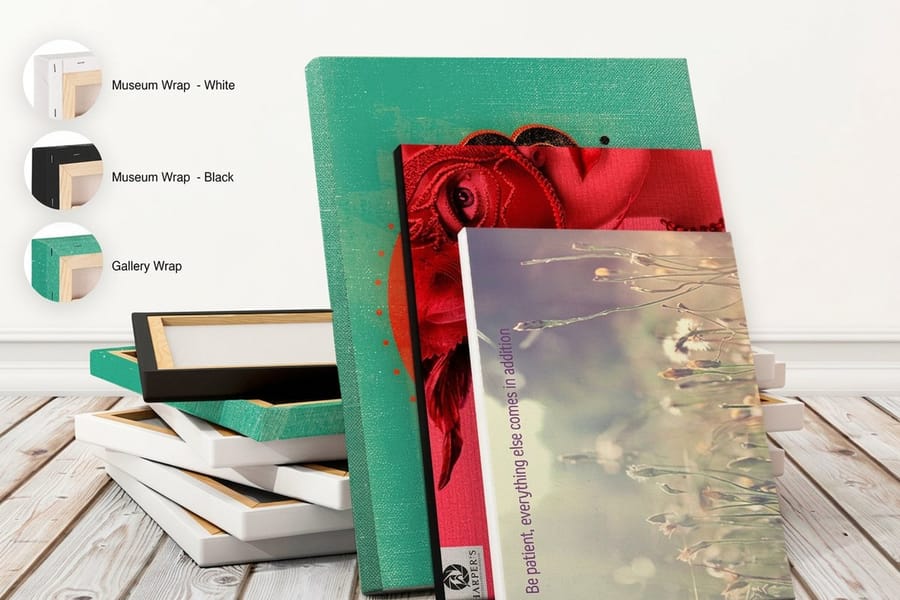
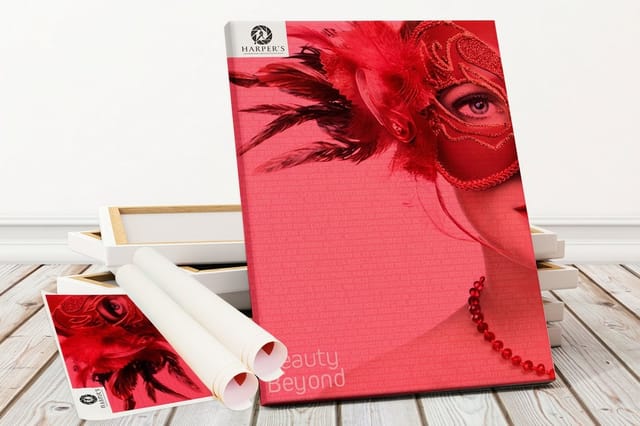
- Rolled Canvas from $25. Ships in a tube, survives anything, leaves stretching to the buyer.
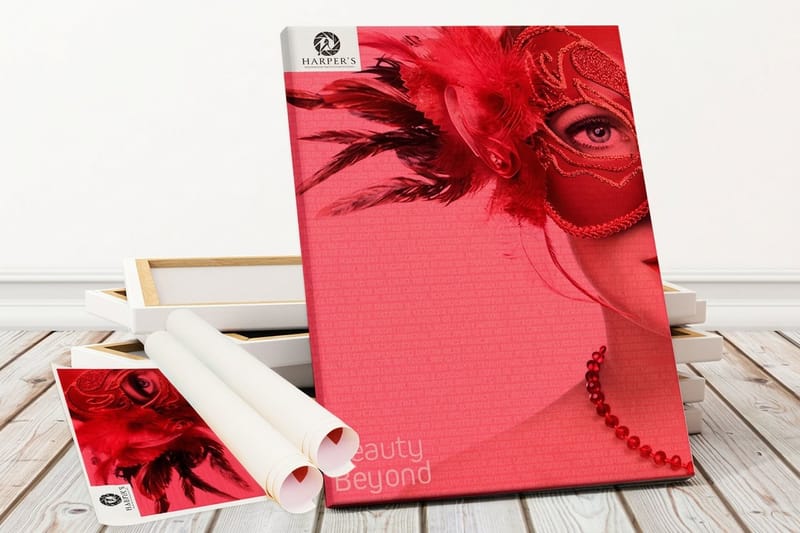
- Stretched Canvas from $59. Ready to hang, photographs beautifully in a room, costs more to box and mail.
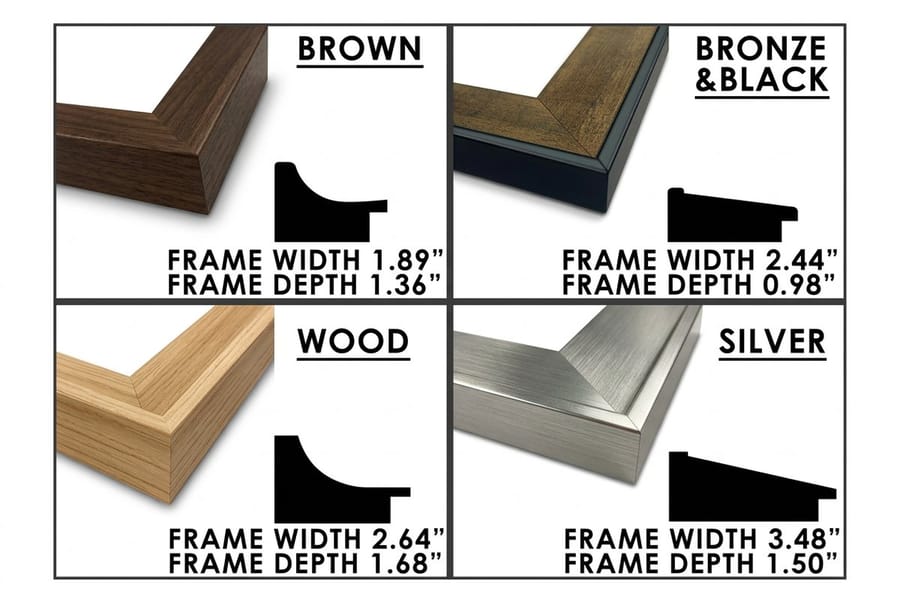
- Framed Prints from $73.57. The highest price point you can list, and the one that needs the most careful packing.
Order one of every size you plan to list before you list it. A sample is the only way to know whether your blacks went muddy, and it doubles as the subject of your listing photographs. If canvas construction is new to you, what canvas prints are covers the coating, the stretcher bars and the wrap options.
Pricing for Profit, With the Fees Already Subtracted

Price backwards from what you want to keep, not forwards from what the print cost. Take a 16x20 rolled canvas listed at $65 with shipping included:
- Print from 4OVER4.COM: $25.00
- Tube, glassine and postage: about $9.00
- Etsy transaction fee at 6.5% of $65: $4.23
- Payment processing at 3% plus $0.25: $2.20
- Listing renewal after the sale: $0.20
- Left for you: $24.37, or 37% of the sale.
Now run the same order as an Offsite Ads sale. Another $9.75 comes off, and you keep $14.62, which is 22%. That is still a profitable order, and it is the reason you set the price at $65 rather than $50. At $50 the same print leaves you $4.30 on an ad-attributed sale, and one damaged shipment wipes out four of them.
Two levers move that number reliably. The first is quantity: ordering four copies of a proven design instead of one at a time picks up a price break, and how bulk price breaks work shows where the steps fall. The second is the size ladder. A shop that only lists a $25 matte poster has to sell a lot of them to cover the same fixed costs a single framed print covers, so carry both and let the cheap listing bring people to the expensive one.
Resist the urge to price by copying the shop above you in search. You cannot see their print cost, their shipping arrangement or whether they are quietly losing money to make rank. Compare formats and starting prices in the canvas printing collection and build your price from your own numbers.
Listing Photos That Sell a Print Nobody Can Touch
The buyer is judging a physical object through a screen, so every photograph has one job: remove a specific doubt. There are only four doubts worth answering, and most shops answer none of them.
How big is it, really. A print floating on a white background could be any size. Shoot it on a wall above a sofa, a bed or a console table. Furniture is the ruler everyone already owns.
What does the surface look like. One close crop at an angle, with light raking across it, shows canvas weave or paper finish better than any description. This photograph prevents returns, which matters more than it converts.
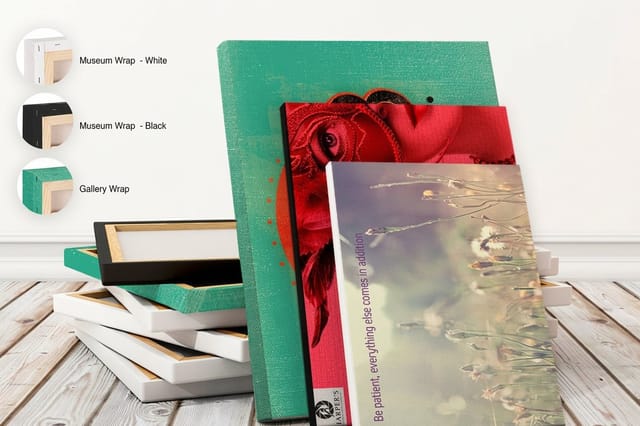
What do the edges do. On stretched canvas, show the wrap. Buyers want to know whether the image continues around the side or the sides are solid. On framed work, show the frame profile from an angle.
What arrives in the box. A shot of the tube or the packed box tells a nervous buyer that you have thought about the trip. It also reduces the messages you have to answer.
Pure digital mockups convert, and they also cause the returns that eat a month of margin, because a mockup cannot show texture and it always renders color perfectly. Use a mockup for the room scene if you must, then follow it with real photographs of the real print. The product photography guide covers lighting a flat, reflective object without blowing out the highlights, and if you are showing a canvas in a frame, framing canvas prints explains what fits what.
Fulfilling Etsy Orders Through 4OVER4.COM
There are two ways to run fulfillment and most shops end up doing both. Ordering per sale keeps your cash free and your risk near zero, at full unit price. Batch ordering a proven design gets you the quantity break and lets you ship the same day, at the cost of money tied up in inventory that might be the wrong size. Start with the first, and move a design to the second the moment it sells four times.
Either way, plan your Etsy processing window around real production plus real transit rather than optimism. Print turnaround and shipping transit are separate clocks, and the second one varies by zone; the transit times by service and zone breakdown is what you should be reading when you set that window. Promising three days and delivering in eight costs you a review, and reviews are how Etsy decides where you rank.
If you want the parcel to arrive with nothing on it but your brand, that is blind drop shipping, and it is a normal arrangement rather than a favor. How blind drop shipping works for print resellers covers what does and does not appear on the packing slip, and print on demand dropshipping covers the wider model if you are weighing it against holding stock.
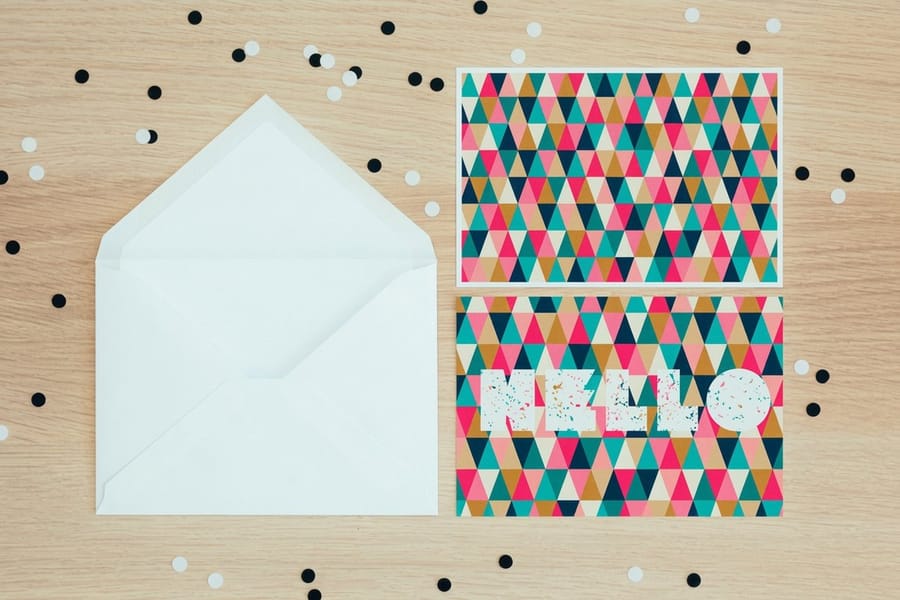
Two small things punch above their weight. Slip a printed thank you card into the tube: Standard Postcards start at $16.48 for a run that lasts you months, and a card with a hand written line on it is the cheapest repeat-purchase tool in the business. And when a buyer asks for something rigid rather than rolled, Mounted Posters from $39.99 give you a ready to hang answer without stepping up to a frame. If you are still building the wider shop around the art, starting an e-commerce business covers the parts that sit outside the listing itself.
Wally does the Etsy math
The listing is cheap, the order is where the money goes
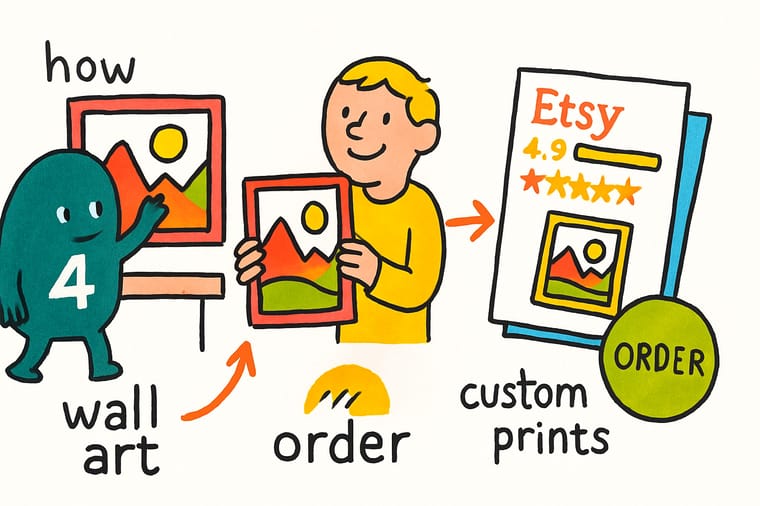
Wally publishes a listing for twenty cents and feels rich. Then a $65 print sells. Etsy takes 6.5% of the whole order, shipping and all, plus 3% and a quarter to run the card. The canvas costs $25, the tube and postage another $9, and Wally is left with about $24. If Etsy's off-site ad brought that buyer in, another 15% goes and he keeps $15. So he prices the print for the ad-attributed sale, not the lucky one, and lists sizes that fit frames people already own.
Price rolled canvas for your shop →Specs and pricing
Sizes and starting prices for the three formats
Configure the exact size you plan to list and read the real price before you set your Etsy number. These pull live options and starting prices from the 4OVER4.COM configurator.


Print it
The formats an art shop actually ships

Explore more
Where to go next

By the numbers
The print partner behind the listing
Common Questions
Your Etsy wall art questions, answered
How much does it cost to open an Etsy shop selling wall art?
Twenty cents. Etsy charges $0.20 to publish each listing and nothing to open the shop itself, so ten designs live in your shop for $2.00. Every listing runs four months and renews for another $0.20, and it also renews for $0.20 each time one sells. The real spending starts elsewhere: sample prints so your listing photos show the actual product, mailing tubes or corner-protected boxes, and postage. Budget for two or three sample prints before you budget for anything Etsy charges you.
What are the Etsy fees on a wall art sale?
Three land on every order in the US. The transaction fee is 6.5% of the order total, which includes the shipping the buyer paid or the shipping you built into the price. Payment processing is 3% plus $0.25. The listing renewal is $0.20. On a $65 print that comes to roughly $6.63. Then there is Offsite Ads, which only appears when Etsy advertised your item off the platform and the buyer came back and bought: 15% of that order, dropping to 12% but becoming mandatory once you pass $10,000 in sales in a 365 day window. Etsy adjusts its fee schedule from time to time, so confirm the current numbers on their fee page before you set prices.
Should I sell rolled prints or stretched canvas?
Start rolled and add stretched once you know which images sell. Rolled Canvas starts at $25 at 4OVER4.COM, ships in a tube that costs a few dollars to mail, and is almost impossible to damage in transit. Stretched Canvas starts at $59, arrives ready to hang, and photographs far better in a room shot, but it needs a rigid box with corner protection and it costs more to send. Rolled shifts the framing job and the framing cost onto the buyer, which some buyers like and others quietly abandon at checkout.
Do I have to buy inventory before I list anything?
No, and for a new shop you should not. List the design, and order the print when the order comes in. You pay full unit price instead of a quantity break, but you are not sitting on twenty copies of a size nobody wanted. Once a design sells three or four times in the same size, switch that one to batch ordering and take the price break. Keep one sample of every listed size on hand regardless, because you need it for photographs and for checking that the colors printed the way you approved them.
How do I ship a large print so it does not arrive bent?
Rolled goes in a tube with a diameter of at least three inches, art side in, with a sheet of glassine or kraft paper between the print and the tube wall. Anything flat and rigid, like a mounted poster, needs a stiffener on both faces and corner protection, because carriers crush corners far more often than they crush faces. Stretched canvas travels face in, wrapped, with foam corners, in a box that leaves at least two inches of clearance on every side. Add tracking on anything over about $50, since a wall art claim without tracking is a refund you fund yourself.
What sizes should I list first?
The ones that match frames people already own. In the US that means 8x10, 11x14, 16x20, 18x24 and 24x36. A 13x19 print looks great and then sends the buyer hunting for a custom frame that costs more than your art did. Three sizes per design is plenty to start: a small one that makes the price approachable, a mid size that most people actually buy, and one large size that lifts your average order value. Add more sizes only after the data tells you which ones move.
Get Started
Order one of every size before you list them
Order one sample of every size you plan to list, photograph the real thing, and scale the winners into batch orders with quantity pricing.
Legal Disclaimer
Gold Standard guarantees apply to all standard orders placed through 4over4.com. Price match requires verifiable proof of a competitor's published price for an equivalent product with matching specifications and turnaround time. Satisfaction guarantee covers manufacturing defects and print quality issues. Contact support with order number and documentation. On-time delivery rate based on tracked orders 1999 to 2026. Individual results may vary based on shipping carrier performance.
