
How to Print Professional Letterhead, From Stock and Ink to Matching Envelopes


Four decisions make a letterhead look printed rather than produced: the paper, the ink setup, whether anything is raised, and what else in the set has to match. Each one behaves differently, at a real price and with real limits.
Print letterhead at 8.5 by 11 inches on a letter-weight writing stock, keep live ink a quarter inch off every edge, and pick the ink setup before you design the header. Standard letterheads at 4OVER4.COM start at $99.95 for 50 sheets across five stocks, from a smooth 70# Uncoated Text to a 28# Royal Linen Bright White, with four ink setups and folding, perforation and three-hole punch built into the same order."hero__ctas"> Configure your letterhead Read the full guide
Quick answer
The sheet, the margin, and the fold that has to hit the window
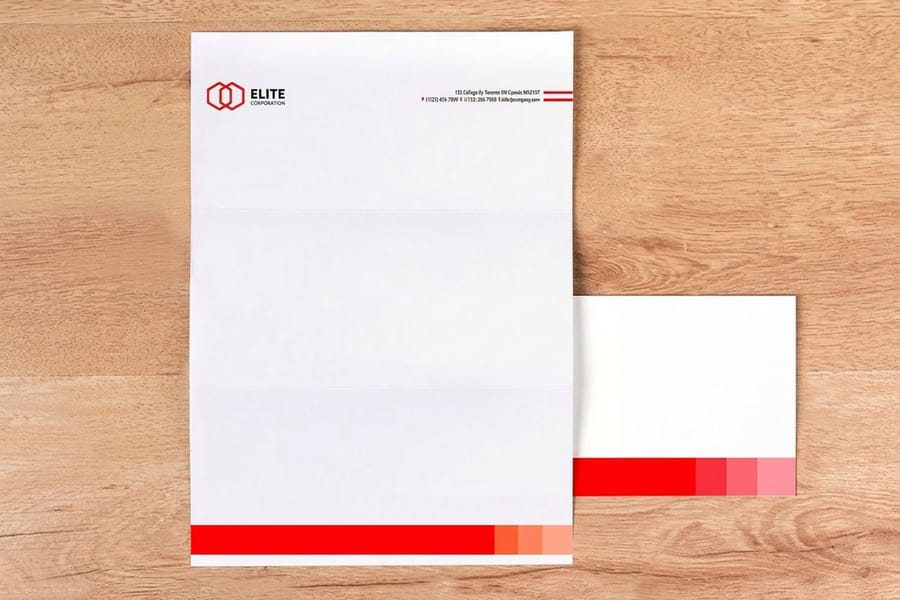
A professional letterhead is a letter-weight sheet at 8.5 by 11 inches with a header confined to the top two inches and a quarter inch of clear paper on every edge. The quarter inch is what an office printer grips. The two inch header keeps the date and the inside address where a reader expects them. If the letter goes out in a #10 window envelope, fold it at 3 11/16 and 7 3/8 inches from the top and lay the address block out so it lands inside the window after the fold.
Start With the Paper, Because It Decides How the Sheet Feels
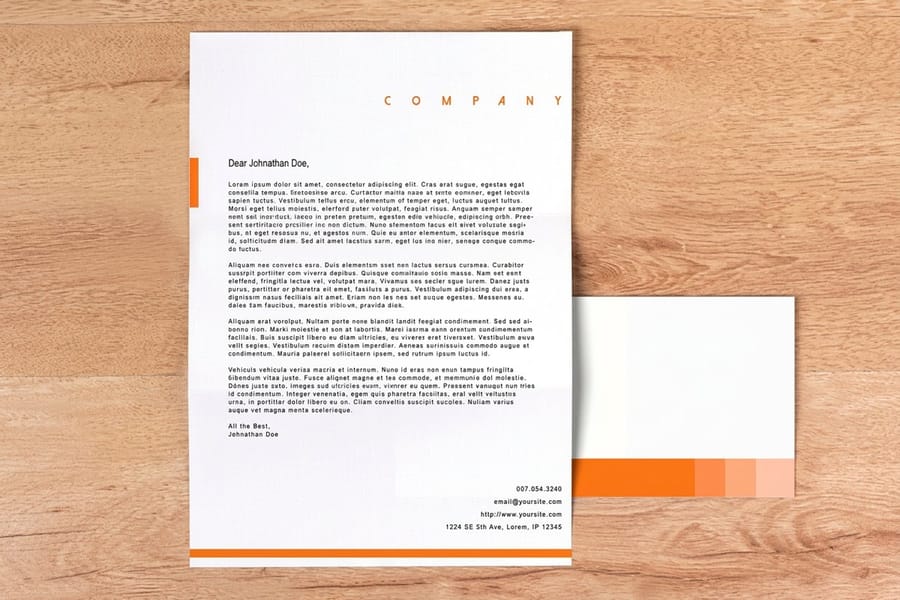
Five stocks, all letter weight, and the one you pick changes the sheet more than the ink does. The default is 70# Uncoated Text, a smooth writing paper with no tooth. Above it sit three 24# Royal Laid papers in Bright White, Natural White and Gray, each carrying a fine parallel ribbing you can see when you tilt the page toward a light. At the top is 28# Royal Linen Bright White, a woven cross-hatch that announces itself the moment somebody picks the sheet up.
| Stock | Surface | How it reads | Where it fits |
|---|---|---|---|
| 70# Uncoated Text | Smooth, no visible texture. | Neutral and current. | Working blanks that staff type on, sign, and feed through an office printer. |
| 24# Royal Laid Bright White | Fine parallel ribbing. | Crisp and traditional. | Proposals, engagement letters, anything a client keeps in a file. |
| 24# Royal Laid Natural White | Same ribbing, warmer tone. | Softer, more settled. | Law, accounting, family practices where a cool white reads clinical. |
| 24# Royal Laid Gray | Ribbing on a muted gray. | Restrained, design-led. | Studios and architects printing a black or single-color mark. |
| 28# Royal Linen Bright White | Woven cross-hatch, heaviest of the five. | Formal, substantial. | The top sheet of a pitch, a formal notice, a letter meant to be kept. |
Texture has a cost that nobody selling paper mentions. A pronounced laid or linen tooth breaks up fine halftone detail, so a logo built from a soft gradient or a photographic element looks slightly grainy on linen and perfectly clean on uncoated text. That same tooth can drag a fine-point pen when people sign by hand. If the letterhead is a working blank, the smooth 70# sheet is the safer default and the linen belongs on the cover letter.
Weight is the other trap. Letterhead is text weight on purpose, because it has to fold into an envelope and feed through office equipment without jamming. Reaching for cardstock because it feels more expensive produces a sheet that cracks at the fold. The split between text and cover paper is worth reading once in cardstock vs paper stock, and every stock we run is listed on letterheads printing.
Set the Ink and the Margins Before You Design the Header
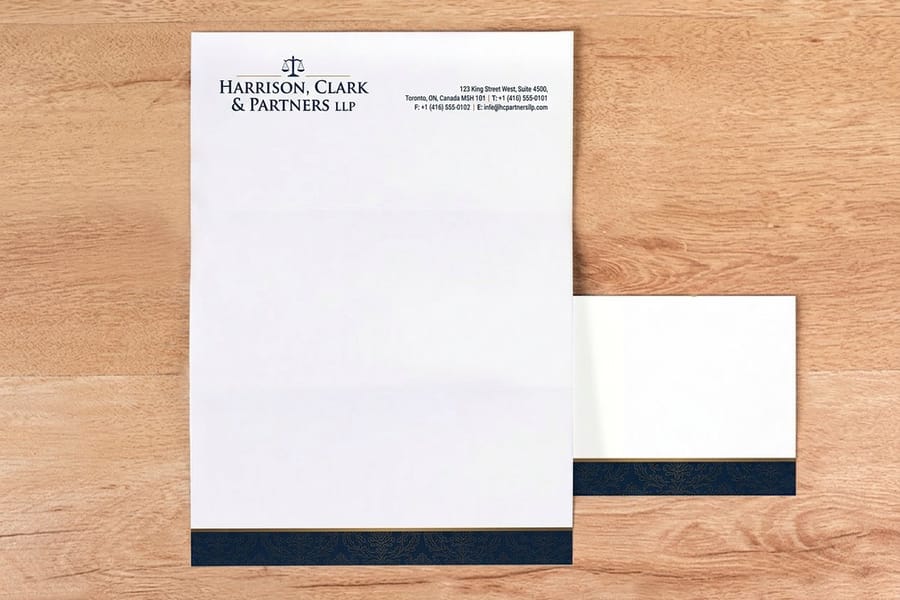
There are four ink setups: black on the front only, black on both sides, full color on the front, and full color throughout. Most letterhead never needs more than the first. The both-sides options exist for a real reason, which is terms and conditions, a fee schedule, or a continuation block printed on the reverse, and they are wasted money if the back of your sheet is blank.
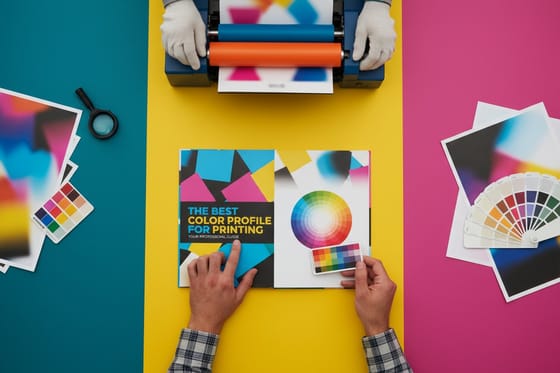
Full color earns its place when the logo is the brand. Watch what uncoated writing stock does to it. Uncoated paper absorbs ink rather than holding it on a coating, so a saturated brand color prints a shade duller and a touch softer at the edges than the same file looks on a coated sheet or on your monitor. Build the file in CMYK, judge the conversion rather than the RGB original, and nudge the value up if the color is carrying the identity. Our note on the best color profile for printing covers the conversion. Where an exact Pantone match is non-negotiable, the envelope is the piece that can carry a PMS spot ink, since printed envelopes run one to four colors including single and two-color spot, while letterheads run the four standard setups.
Then the margins, which cause more reprints than color ever does. Keep live ink a quarter inch clear of all four edges. That strip is what an office printer's rollers grip, and artwork that bleeds to the trim on a sheet you intend to feed yourself will clip, skew, or jam. Plan the header inside the top two inches and leave the body of the page open, because a header that creeps down the sheet collides with the date and the inside address on every letter after it.
Build the file at full size with fonts converted to outlines. Start from a correctly sized layout in the blank template library, and run through print-ready file setup before you upload. If you want to see the layout convention applied, the law firm letterhead and church letterhead versions of standard letterheads follow it closely.
Foil and Raised Upgrades, and the One Machine That Ruins Them
Reviews sit at 4.4 out of 5 across 10 for the foil line and 5.0 out of 5 across 63 for the standard sheet, which is roughly what you would expect from a specialty finish that gets ordered by people with a specific look in mind.
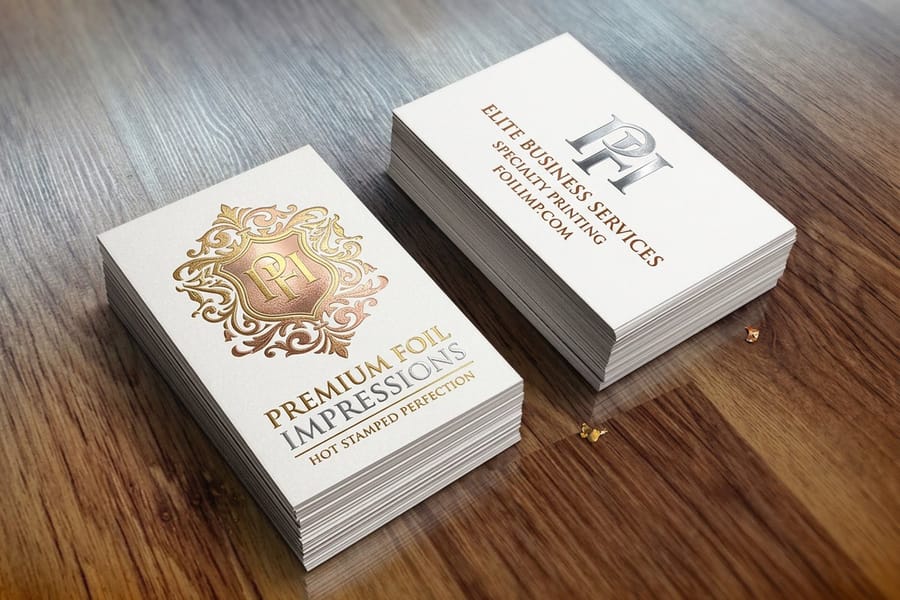
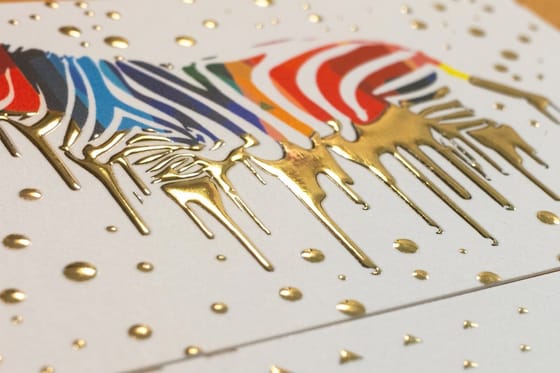
Here is the part that catches people out. Any finish that sits on top of the paper, whether that is foil or a raised thermographic layer, is a surface coating. A laser printer fuser runs hot enough to soften that coating, smear it, or lift it onto the roller. So the plan that seems obvious, ordering a box of beautiful branded blanks and printing your letters onto them in the office, is the one plan a raised or foiled header cannot survive. How raised ink actually works explains why the coating behaves that way.
Two honest ways around it. For a fixed piece that is written once, a formal notice, a welcome letter, an announcement, have the whole thing printed rather than the blank, and nothing ever meets a fuser. For reusable blanks, keep the sheet flat and move the premium finish to a piece that gets printed once and handed over, which is usually the envelope or the card. Inkjet is the milder case, because it lays ink without heat, though a heavy linen tooth can make inkjet body text look slightly feathered next to laser output.
One more restraint worth naming. A raised header, a foil rule, a colored edge and a linen stock on the same sheet cancel each other out. Pick the one element that carries the brand and let the paper do the rest.
Match the Envelope, or the Set Falls Apart at the Mailbox
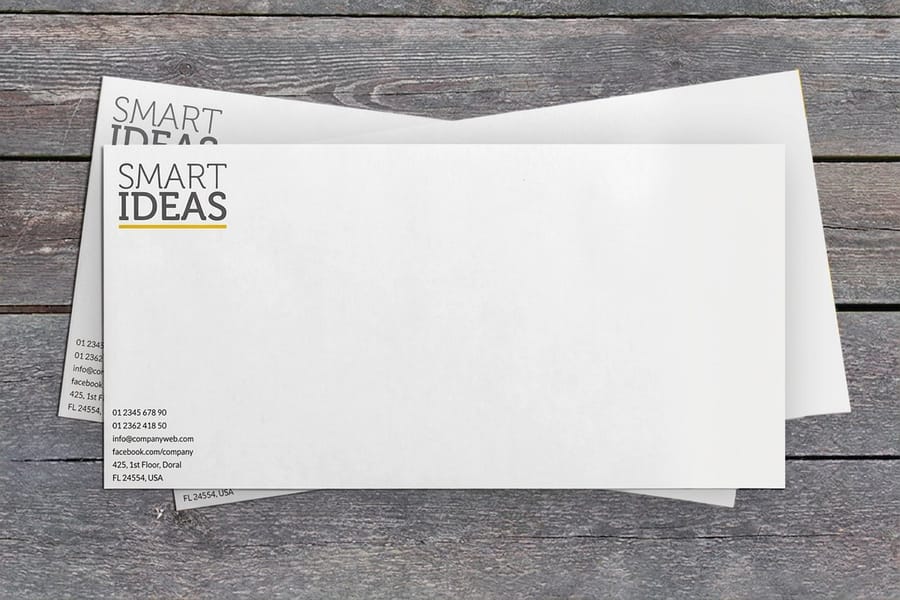
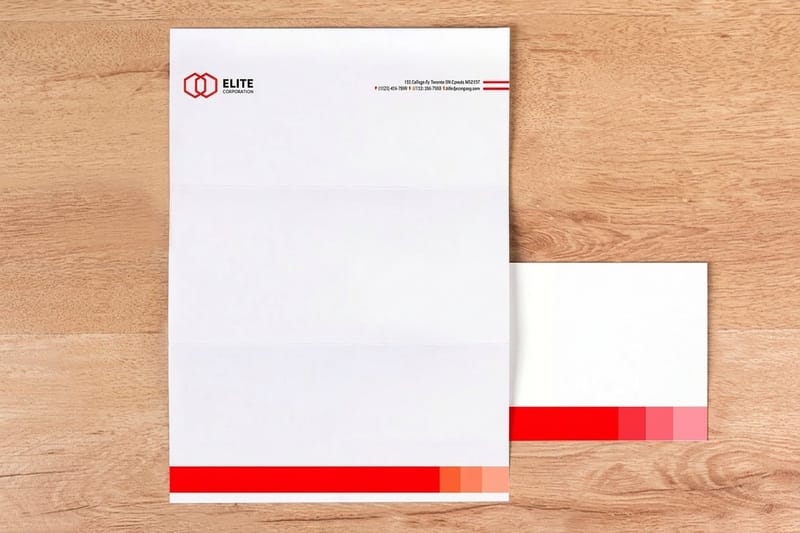
An expensive letterhead arriving in a plain white envelope is money half spent, because the envelope is the part the recipient sees first. Printed envelopes start at $142.99 for a run of 250, about 57 cents apiece, and 1,000 costs $153.87. That is roughly 11 dollars more for four times the count, and it is the single best value step anywhere in a stationery order. By 5,000 the cost is near 11 cents each.
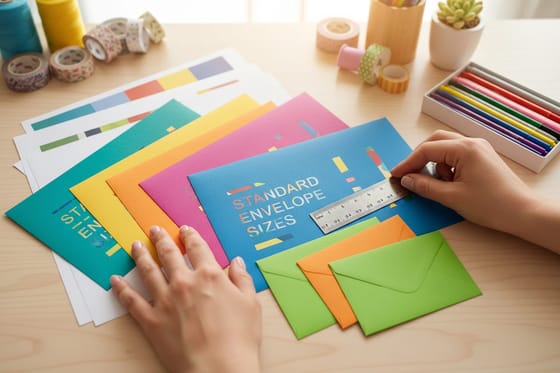
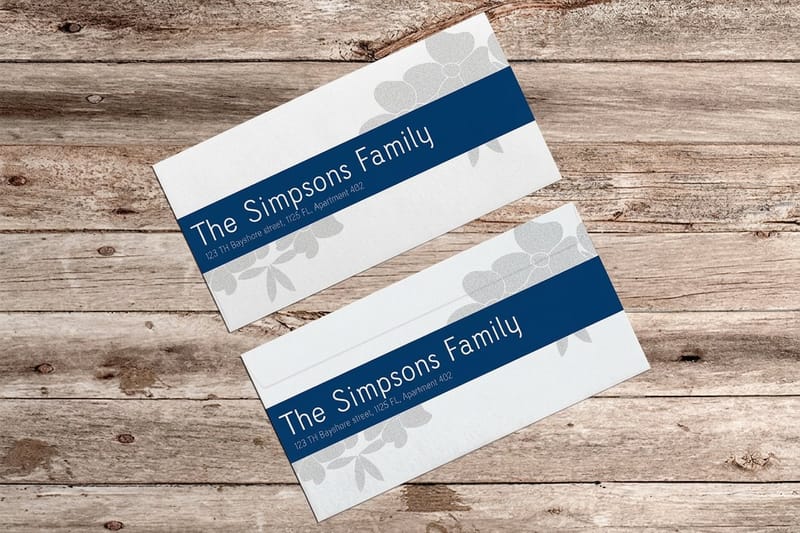
There are 41 sizes and styles, from a small #6 1/4 up to a 10 by 13 booklet, including #10 window, peel-and-seal and security-tint versions, on the same White Wove, Royal Laid and Royal Linen family the letterheads use. Matching the envelope stock to the sheet is the detail that makes a set look designed rather than assembled. Sizes and what folds into what are laid out in common envelope sizes, and the full range is on envelopes printing.
Window envelopes carry one rule that has to be solved in the layout, not at the mailroom. A standard #10 window measures 4.5 by 1.125 inches, sits 7/8 inch in from the left edge and 1/2 inch up from the bottom. Fold the letter at 3 11/16 inches and 7 3/8 inches from the top and the middle panel faces the window, which means the inside address block on your artwork has to be positioned so it lands inside that rectangle after folding. Print one, fold it, hold it against a real envelope. Doing that once is cheaper than hand-checking a thousand letters.
Plan the schedule around the slower item. Letterheads run a 5 business day standard turnaround with rush tiers down to same-day production out of the New York plant, while envelopes run 7 business days with rush tiers down to 1 day. Submitted together, they arrive together.
| Piece | Starts at | Opening run | What it is for |
|---|---|---|---|
| Standard letterheads | $99.95 | 50 sheets | The everyday 8.5 by 11 sheet, five stocks, four ink setups. |
| Printed envelopes | $142.99 | 250 envelopes | 41 sizes and styles, one to four colors on the front. |
| Standard notepads | $93.37 | Padded sets | Desk pads that carry the same header into meetings. |
| Direct mail letters | $238.73 | Volume run | Mailings, not desk stationery. Built for the run rather than the letter. |
Finish the set properly and the rest costs very little. Add matching blank second sheets so a three page letter does not start on Royal Linen and continue on office copy paper. Add perforation if you send invoices with a tear-off remittance stub. Then look at the pieces that sit beside the letter: notepads printing, presentation folders printing for anything you hand across a table, and hotel stationery at $99.95 if a whole front-desk set has to match.
Wally explains letterhead
Pick the paper, guard the margin, fold to the window
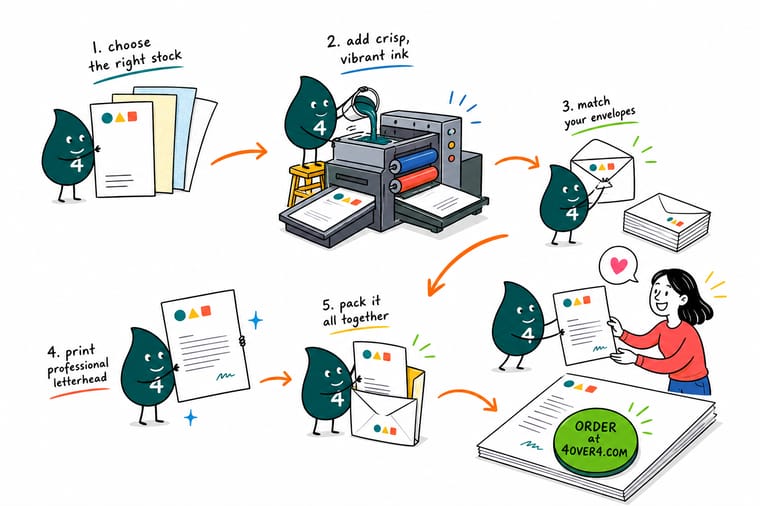
Wally picks the stock first, because that is what the reader feels. He keeps the header in the top two inches and leaves a quarter inch of bare paper all the way round, so an office printer has something to grip. Then he folds at 3 11/16 and 7 3/8 inches and the address drops neatly into the window. The one thing he will not do is send a foiled sheet through a laser printer, because the fuser heat smears the finish straight onto the roller.
Configure standard letterheads →Specs and pricing
Stocks, ink setups, finishing and starting prices, pulled live from the 4OVER4.COM configurator so you can price the whole stationery set in one place.
Print it
Order the sheet and the envelope together
Explore more
Where to go next
By the numbers
Stationery printing you can plan a date around
Common Questions
Your letterhead printing questions, answered
How much does it cost to print professional letterhead?
Standard letterheads at 4OVER4.COM start at $99.95 for 50 sheets, which works out near $2.00 a sheet, and the per-sheet cost keeps dropping across the quantity tiers all the way to 100,000. The practical lesson is that the run length, not the stock or the ink setup, is what moves your invoice.
What paper weight should letterhead be?
Text weight, not cover. The default is 70# Uncoated Text, and the step-ups are three 24# Royal Laid papers in Bright White, Natural White and Gray plus a 28# Royal Linen Bright White. All five are writing stocks, which matters because a letterhead has to fold into an envelope, feed through an office printer, and take a pen. Cardstock feels more expensive in the hand and then refuses to fold cleanly, which is why nobody prints letterhead on it.
Can I run printed letterhead through my own office printer?
A flat printed sheet, yes, as long as your artwork keeps a quarter inch clear of every edge so the rollers have something to grip. A raised or foiled header is the exception. A laser fuser gets hot enough to soften a surface finish, which can smear the header or transfer it onto the fuser roller. If staff will be printing letters onto these sheets, order them flat and put the premium finish on the envelope or the business card instead.
What size is a standard letterhead?
US letter, 8.5 by 11 inches, which is the size 4OVER4.COM prints. It fits a #10 envelope after a trifold, a 9 by 12 without folding at all, and every binder and file in a US office. International correspondence is the one case where it causes friction, because A4 is 8.27 by 11.69 inches, so a US letter sheet sits slightly short and slightly wide in an A4 filing system.
How do I make the address land in a window envelope?
Measure the window first. A standard #10 window is 4.5 by 1.125 inches, positioned 7/8 inch from the left edge and 1/2 inch up from the bottom. Fold an 8.5 by 11 letter at 3 11/16 inches and 7 3/8 inches from the top and the middle panel faces the window. Your inside address block has to be laid out so it falls inside that rectangle after the fold, which usually means starting it about 2 inches down from the top of the sheet. Print one, fold it, and check it against a real envelope before you commit to the run.
Should I print matching envelopes at the same time?
It is the cheaper and faster way to do it. Printed envelopes start at $142.99 for 250, about 57 cents each, but 1,000 costs $153.87, only around 11 dollars more for four times the quantity, and by 5,000 the cost is near 11 cents each. Envelopes also carry a 7 business day standard turnaround against 5 for letterheads, so submitting them together means one ship date instead of a set that arrives in pieces.
What finishing can go on a letterhead?
Half fold or trifold so the sheets drop straight into an envelope, perforation for a tear-off remittance or reply stub, and a 1/4 inch or 5/16 inch three-hole punch for binder filing. You can also add a run of matching blank second sheets, which is the detail most people forget: a three page letter that starts on Royal Linen and continues on office copy paper undoes the whole effect.
Get Started
Order 50 sheets of stationery from $99.95
Pick one of five writing stocks, set your ink and finishing, and add matching envelopes to the same order so the whole set ships on one date.
Legal Disclaimer
Gold Standard guarantees apply to all standard orders placed through 4over4.com. Price match requires verifiable proof of a competitor's published price for an equivalent product with matching specifications and turnaround time. Satisfaction guarantee covers manufacturing defects and print quality issues. Contact support with order number and documentation. On-time delivery rate based on tracked orders 1999 to 2026. Individual results may vary based on shipping carrier performance.
