
How to Print a Fabric Backdrop That Reads Clean on Camera


Fabric backdrops are printed by dye sublimation, not by laying ink on a surface. Here is the process, the size that actually fills a camera frame, and the hardware that keeps the panel flat.
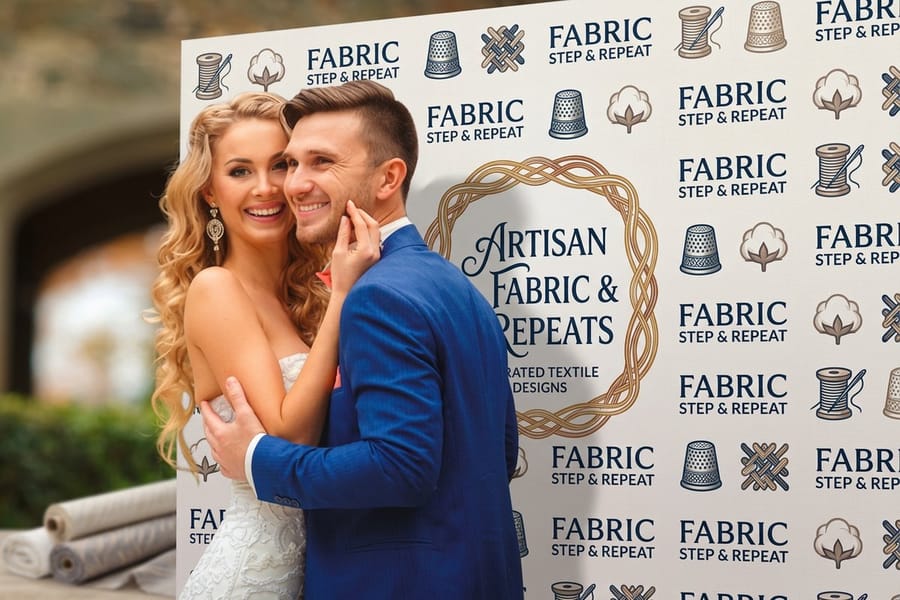
A fabric backdrop is printed by dye sublimation: the artwork goes onto transfer paper, then a heat press at around 400 degrees Fahrenheit turns the dye to gas so it bonds inside the polyester fibers. The color ends up part of the cloth instead of a coating on top, which is why the surface stays matte, folds without cracking, and can be washed. Order 8 by 8 feet for two people, 10 by 8 for groups, keep logos out of the bottom 24 inches, and steam creases from the back rather than ironing the printed face.
Quick answer
Dye in the fiber, not ink on a face
Dye sublimation colors the polyester itself, and that single fact is why fabric wins in front of a camera. Heat turns the dye to gas, the fiber opens, the gas bonds inside, and the panel cools with nothing sitting on the surface. No coating means no crack line along a fold, no gloss to bounce a flash into the lens, and a panel you can machine wash after a catering spill. The trade is weather: fabric flaps and soaks, so anything outdoors belongs on vinyl instead.
How a Fabric Backdrop Is Actually Printed
Nobody prints ink onto a backdrop and calls it done. Fabric goes through dye sublimation, and the process explains almost every rule that follows.
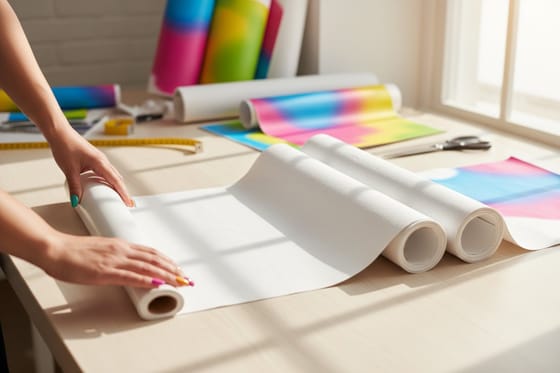
The artwork prints in reverse onto transfer paper. The press uses dye based inks rather than pigment, and at this stage the image looks dull and slightly wrong on the paper. That is expected.
The paper meets the polyester in a heat press. Around 400 degrees Fahrenheit, the dye skips the liquid stage and turns straight to gas while the polyester fibers open up.
The gas bonds inside the fiber, then the panel cools. The fiber closes around the dye. Pull the transfer paper away and the color is part of the cloth, with nothing sitting on top of it.
That last point is the one worth carrying into your file setup. There is no coating to crack, so the panel folds into a bag and comes back out with no ink damage along the crease. There is also no white ink and no opaque layer, which means the dye can only shift the color of what is already there. Sublimation works on polyester and on nothing else, so a cotton backdrop cannot be printed this way at all. Expect the finished color to sit a shade softer than the same file printed on vinyl banners, because you are looking at dyed fiber rather than ink on a white face. If a brand color has to be exact, ask for a printed swatch before the full fabric step and repeat goes to press.
Size the Backdrop for the Camera, Not the Room
The room will happily take a 12 foot wall. The camera only ever sees a rectangle behind someone's shoulders, and that rectangle is what you are actually buying.
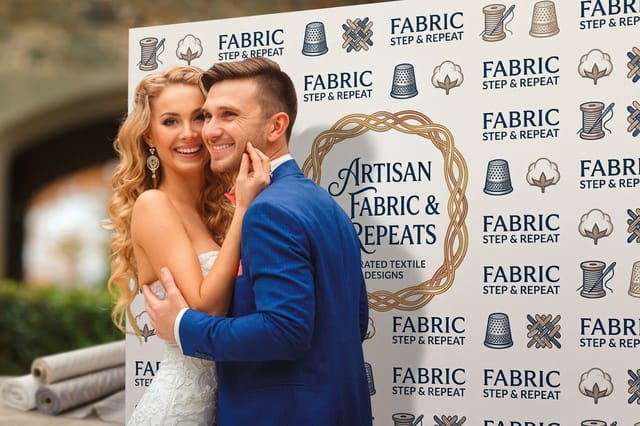
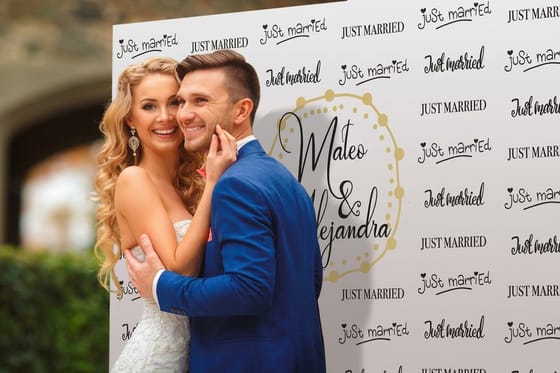
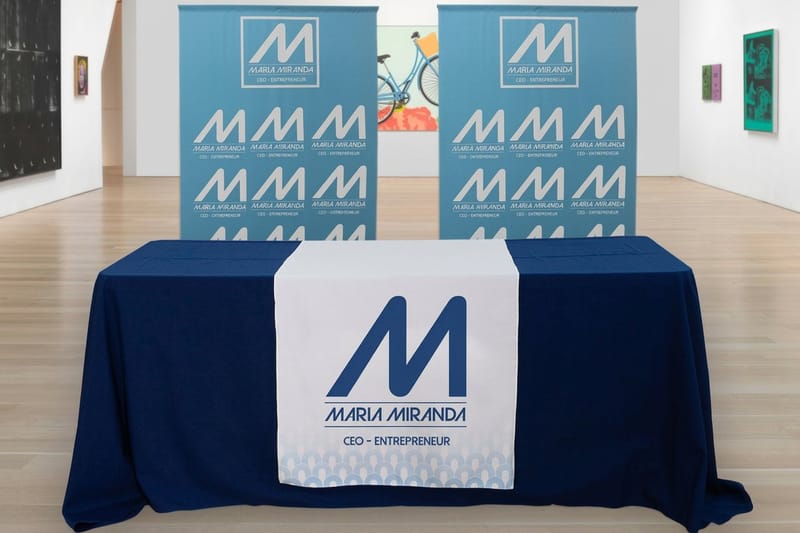
Eight feet by eight feet is the working minimum for two people at a chest up crop. Height is where most first orders go wrong: a 6 foot guest, normal headroom, and a lens tilted a little upward will use every inch of an 8 foot panel, and anything shorter starts putting ceiling tiles in the frame. Move to 10 feet wide once groups of four are likely, because a narrow panel forces people to bunch up and pushes half the logos out of shot.
| Backdrop size | Covers | What the camera gets |
|---|---|---|
| 8 ft x 8 ft | One or two people | Two to three whole logos behind the shoulders at a chest up crop. |
| 10 ft x 8 ft | Groups up to four or five | Room to spread out without the pattern running off the edge of frame. |
| Wall height panel | Full length shots and red carpet | Feet in frame, so the bottom of the artwork finally matters. |
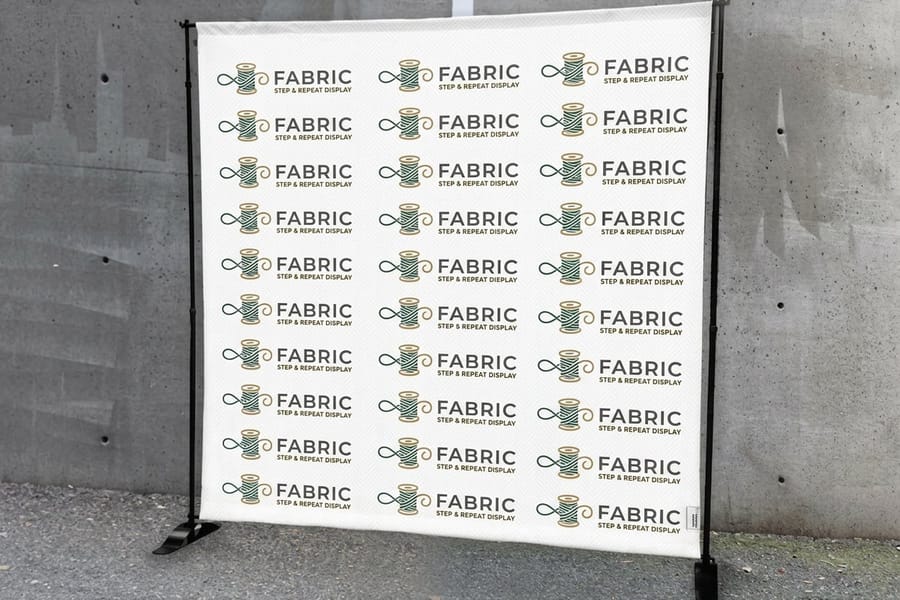
Two placement rules save the pattern. Keep sponsor marks out of the bottom 24 inches, since bodies cover that band in every single photo. Keep them out of the top 12 inches too, because a photographer crops there far more often than they crop at the sides. Set the repeat on a rotated grid so no logo lands in exactly the same spot twice, size each mark around 6 to 9 inches wide so it survives a social crop, and check the layout at the crop rather than at full size. The step and repeat design guide works through the grid maths, and a correctly sized starting file is waiting in the blank template library.
Glare, Wrinkles, and Where Fabric Loses
Two things ruin a backdrop in photos: a hot reflection across the logos, and a diagonal crease nobody noticed until the pictures came back.
The reflection is a material problem. A gloss vinyl face sends most of the key light back at the mirror angle, and event photographers stand near that angle constantly, especially with a flash mounted above the lens. Dye sublimated polyester has no surface film to bounce off, so the light scatters and the tone stays even from edge to edge. Scrim vinyl adds a second issue, since hard light rakes across the woven scrim and the weave itself shows up in the shot.
The crease is a handling problem, and it is fixable. Hang the panel the night before and most fold lines relax on their own. Steam the rest from the back of the fabric with a handheld steamer, kept moving and held a few inches off the cloth. Never put an iron face down on the print: polyester glazes under contact heat, and a glazed patch reflects light exactly like the vinyl you were avoiding. Tension solves it permanently, which is what the frames in our tension fabric frame guide are for.
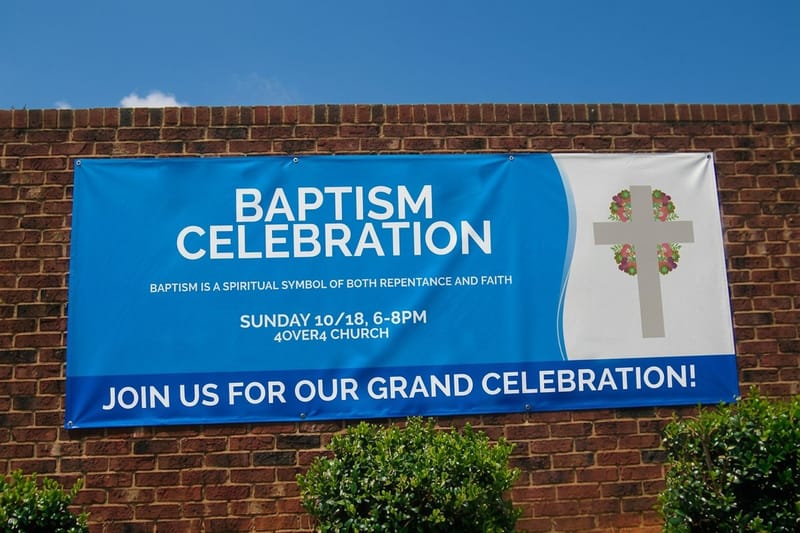
Now the honest limit. Fabric is semi opaque, so a bright window or a light stand behind the panel will glow through it and lift the artwork, and it flaps in any real breeze. Outdoors, in rain, or anywhere it can be soaked or splashed with mud, fabric loses to vinyl on every count. A vinyl banner starts at $79 and takes weather that would finish a printed polyester panel in an afternoon. Our banner material guide lays the options side by side if the venue is still undecided.
Hanging It: Pole Pocket, SEG Frame, or Retractable Stand

The panel and the hardware are separate decisions, and the hardware is what decides how flat your print looks under lights.
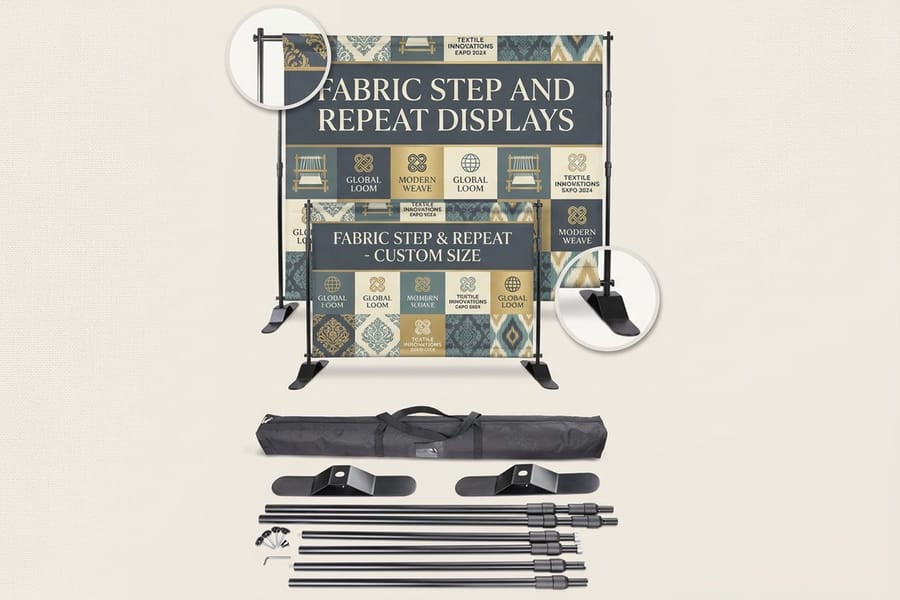
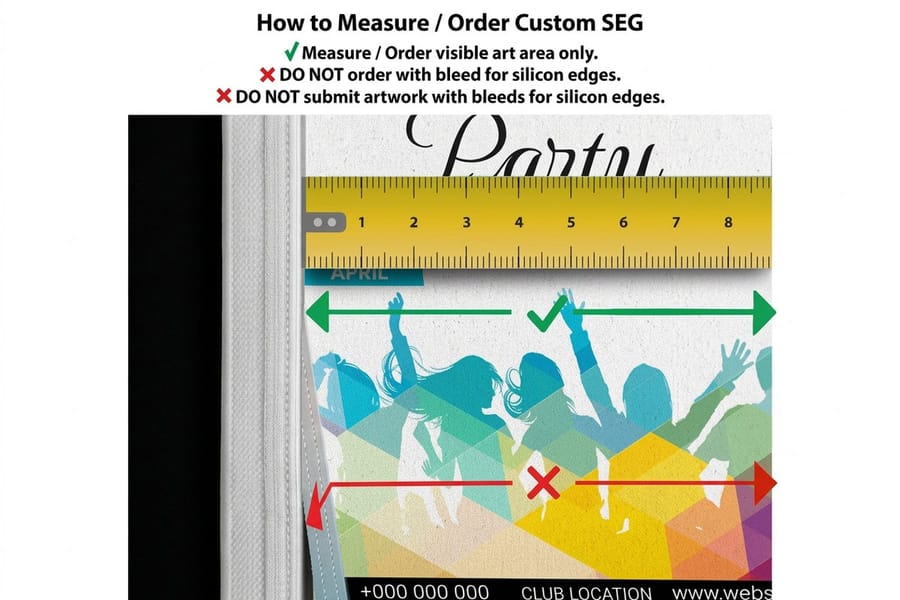
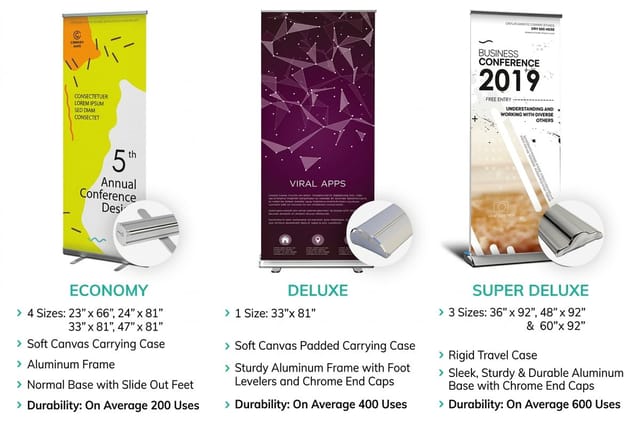
A pole pocket panel slides over a crossbar like a pillowcase and hangs from an adjustable upright. It is the cheapest way to get a big backdrop up and the easiest to travel with, but the corners stay a little soft. A silicone edge frame is the opposite: a thin silicone strip is sewn around the panel and pressed into a channel in the aluminum, which pulls the fabric drum tight and gives you square corners and no visible hardware. A retractable fabric banner stand at $159.85 winds the panel into its own base and sets up in under a minute, which is unbeatable for a single presenter, though the width tops out well below what a two person step and repeat needs.
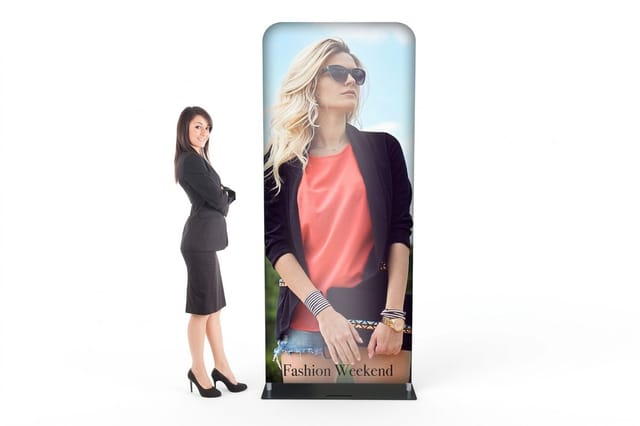
Cost sorts out quickly. A printed fabric step and repeat starts at $217.50 with the graphic and the hardware together. A replacement SEG fabric panel starts at $69, which is the number that matters most over time, because sponsors change and the frame does not. Fabric tube displays start at $163.67 for a curved booth wall, plain fabric banners start at $57.20 when you only need a hanging panel, and adhesive wall fabric starts at $25 for a permanent studio wall that peels off later without pulling paint. Everything dye sublimated sits together in the fabric printing collection, and the booth side of it lives in trade show printing.
Wally explains fabric backdrops
Heat the dye into the cloth, and the flash has nothing to bounce off
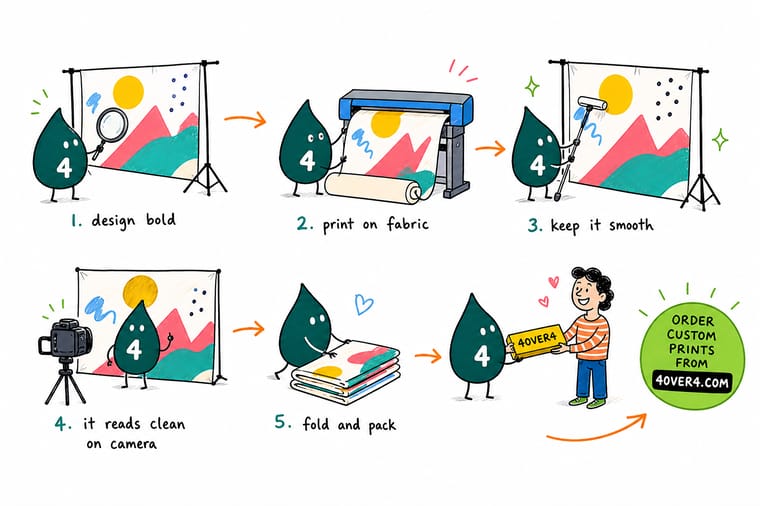
Wally prints the logos onto transfer paper, lays it on the polyester, and closes the heat press. The dye turns to gas, sinks into the fiber, and cools inside it. Nothing sits on the surface, so there is no shine for a photographer's flash to catch and no coating to crack when the panel folds into a bag. He orders 8 by 8 feet for two people, keeps the logos out of the bottom two feet where bodies block them, and steams the creases from the back. Ask him to hang it outside in the wind and he will hand you a vinyl banner instead.
Print a fabric step and repeat →Specs and pricing
Fabric backdrop sizes and starting prices
Compare the printed fabric options side by side, with live configuration choices and starting prices straight from the 4OVER4.COM configurator.



Print it
Order a backdrop that photographs the way you designed it
Explore more
Where to go next
By the numbers
The large format floor a fabric backdrop runs on
Common Questions
Your fabric backdrop questions, answered
How is a fabric backdrop printed?
By dye sublimation. The artwork is printed in reverse onto transfer paper using dye based inks, the paper is laid against the polyester, and a heat press brings both to roughly 400 degrees Fahrenheit. At that temperature the dye skips the liquid stage and turns straight to gas, the polyester fibers open, and the gas bonds inside them. When the panel cools the color is part of the fiber rather than a film lying on top of it. That is the whole reason a fabric backdrop can be folded into a bag, unfolded, and still show no cracked ink along the crease.
Why does fabric photograph better than vinyl?
Because of what the surface does with light. A gloss vinyl face behaves a little like a mirror and sends most of the key light back at the mirror angle, so if a photographer stands anywhere near that angle the picture comes back with a bright patch washing out whatever logo sits behind the subject. Dye sublimated polyester has no surface film to reflect, so the same light scatters in many weak directions and the tone stays even edge to edge. It is also why on camera flash, the hardest light at any event, is survivable on fabric and punishing on vinyl.
What size should a step and repeat backdrop be?
For two people photographed together, 8 feet wide by 8 feet tall is the practical minimum, and it is the size most event companies default to. Height matters more than people expect: a 6 foot guest plus normal headroom plus a lens tilted slightly up eats an 8 foot panel quickly, and a shorter backdrop puts the ceiling in the shot. Go to 10 feet wide once you expect groups of four, and keep the logo repeat out of the bottom two feet, because bodies cover it in every frame.
Can you wash a printed fabric backdrop?
Yes, which is the practical advantage over vinyl at a food or drink event. Cold machine wash on a gentle cycle, mild detergent, no bleach, then hang it to dry. Because the dye is inside the fiber there is no coating to lift, so a wash removes a spill without taking the artwork with it. Skip the dryer on high heat and skip the iron, and treat any stain quickly, since polyester holds oil marks better than it holds water marks.
How do I get the wrinkles out before a shoot?
Hang the panel the night before and most of the fold lines relax on their own. Anything left goes with a handheld garment steamer worked from the back of the fabric at a few inches distance, moving continuously. Do not press an iron onto the printed face, because polyester glazes under direct contact heat and a glazed patch reflects light exactly like the vinyl you were trying to avoid. A tensioned frame is the other answer: pull the panel taut and the fabric has nowhere to crease.
Can I reprint the graphic and keep the hardware?
That is the normal way to rebrand a booth. On a silicone edge frame the panel is the consumable and the aluminum is not, so a replacement SEG fabric panel starts at $69 while the complete display costs several times that. Sponsors change, logos get redrawn, a new campaign lands, and you order one printed panel instead of a whole display. Keep the frame dimensions written down somewhere, because the silicone edge is sewn to a specific finished size and a panel cut for another frame will not tension correctly.
Get Started
Order a fabric tube display from $163.67
Send your step and repeat artwork, pick a size that fills the frame, and we dye sublimate it onto polyester that stays matte, folds without cracking, and washes clean.
Legal Disclaimer
Gold Standard guarantees apply to all standard orders placed through 4over4.com. Price match requires verifiable proof of a competitor's published price for an equivalent product with matching specifications and turnaround time. Satisfaction guarantee covers manufacturing defects and print quality issues. Contact support with order number and documentation. On-time delivery rate based on tracked orders 1999 to 2026. Individual results may vary based on shipping carrier performance.
