
How to Choose a Stationery Manufacturer That Prints Your Brand Right


Four questions separate a stationery manufacturer from a reseller with a good website. Here they are, plus how to read the quote, test the first run, and keep every reorder matching.
Choose a stationery manufacturer on four answers: who owns the press your job runs on, the paper named as a weight and finish rather than as premium, whether envelopes are printed flat and then converted, and what the reprint policy says in writing. Price is the last filter, not the first, because the cheap quote is usually cheap for a reason you can name once you have those four answers. Verify with a paid test run of the piece carrying your hardest color, then keep that sheet as the control for every reorder.
Quick answer
Follow the sheet, not the sales page
The question that sorts stationery vendors fastest is who owns the press. A manufacturer runs your job on its own equipment and can name the stock, the proof and the reprint terms before you pay. A broker forwards the file to a plant it does not control, which is why the second order stops matching the first. Gang-run pricing is honest and cheap on standard stocks, and risky when a fixed brand color has to look identical across letterhead, envelope and folder. Decide which of those three you are buying, then compare price.
What a Stationery Manufacturer Is, and What a Broker Is
A stationery manufacturer prints and converts the paper a business runs on: letterhead, envelopes, notecards, notepads, folders. The second half of that sentence carries the weight. Converting is the folding, die cutting, gumming and padding that turns a flat printed sheet into a finished piece, and plenty of companies selling stationery online do neither operation themselves.
That matters the day something goes wrong. Four supplier types show up in the same search results and they behave very differently once a job is in trouble.
| Supplier type | Who runs the press | What you can proof | Who fixes a bad run |
|---|---|---|---|
| In-house manufacturer | Owns the presses and the converting equipment. | PDF proof, and a physical proof on the real stock for critical work. | The plant that printed it, against a published policy. |
| Broker or reseller | Nobody it controls. The job is placed with rotating plants. | Whatever the current plant happens to offer. | Negotiated between broker and plant while you wait. |
| Gang-run printer | Owns presses, but your job shares a sheet with other jobs. | PDF proof on standard stocks only. | The printer, though color is balanced for the whole sheet. |
| Local quick printer | Owns digital equipment, usually no converting. | A printed sample you can hold before the run. | The person you handed the file to. |
None of these is wrong. A broker can be the right answer for a one-off job where price is the only variable. But for stationery, which by definition gets reordered, the column that predicts your experience is the third one. If nobody can tell you which plant runs the sheet, nobody can promise the next run will match the last. Our breakdown of how a wholesale trade printer works covers the reseller side of that arrangement in more detail.
Five Checks Before You Place the First Order
Every one of these is a question you can ask in an email, and the answers separate real manufacturers from resellers within a day.
- Who owns the press, and where does my job physically run? A manufacturer answers with a location. A reseller answers with a description of their quality process. Follow up with what happens when that plant is backed up, because the substitute plant is where reorder color drifts.
- Name the stock, in a number. Premium and luxury describe nothing. Letterhead is typically 70 lb or 80 lb uncoated text, or 24 lb bond if staff will run it through an office laser printer. Coated stock is a poor choice for that job because toner sits on top of the coating and can flake at the fold. Cards run 14pt or 16pt, and 16pt is noticeably more rigid in the hand.
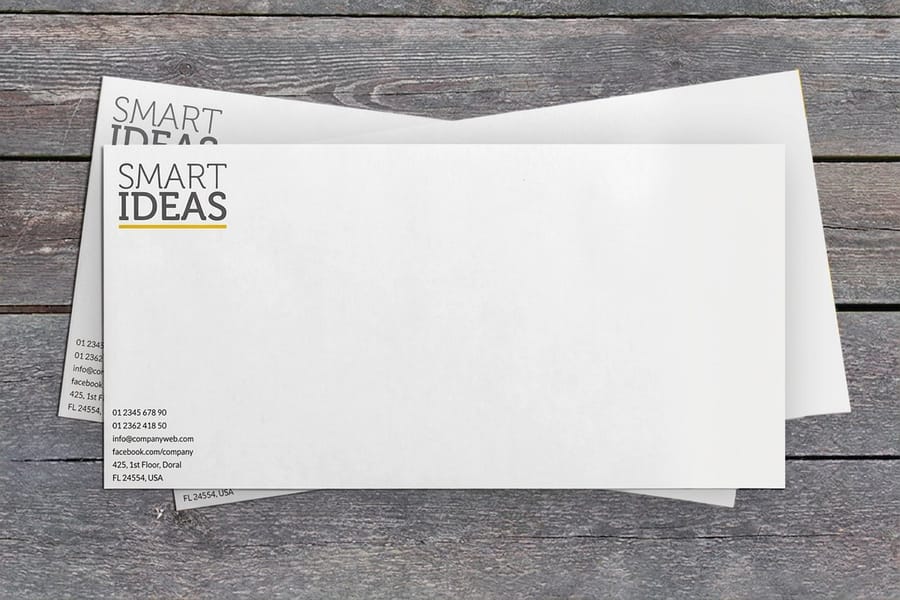
- Are envelopes printed flat and then converted, or printed on a finished envelope? Flat-sheet printing lets ink run to the edge and gives an even surface. Printing onto an already made envelope means ink crosses the glued seam and the flap, so heavy coverage shows a ridge and the safe area shrinks. Ask before you design an envelope with a full-bleed color band.
- Does turnaround start at order or at proof approval? Production days almost always start when you approve the proof. If you submit at 4pm Friday and approve the proof Monday, a three-day turnaround ships Thursday. A vendor who lets you assume otherwise will be late and technically on schedule.
- What is the reprint policy, in writing, before the first order? Ask what counts as a defect, who pays return freight, and how long you have to report it. Getting this in an email costs five minutes and settles the only conversation that ever gets expensive.
Two of those checks are really file questions in disguise. Supply artwork at full size with 0.125 in of bleed, keep live text 0.125 in inside the trim, and build color in CMYK so nothing gets converted twice. The blank template library has correctly sized layouts for each piece, and choosing the right color profile prevents the shift that makes a reorder look off.
Match the Manufacturer to the Set You Actually Need
Stationery is not one product, and few plants are equally good at all of it. Sort your list by what each piece demands from the equipment, then judge a vendor on the hardest item rather than the easiest.
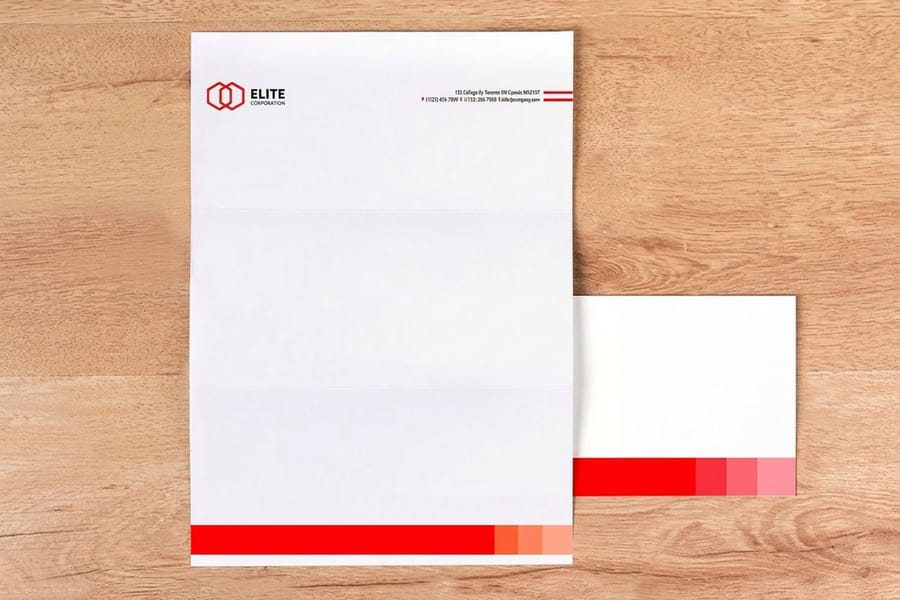
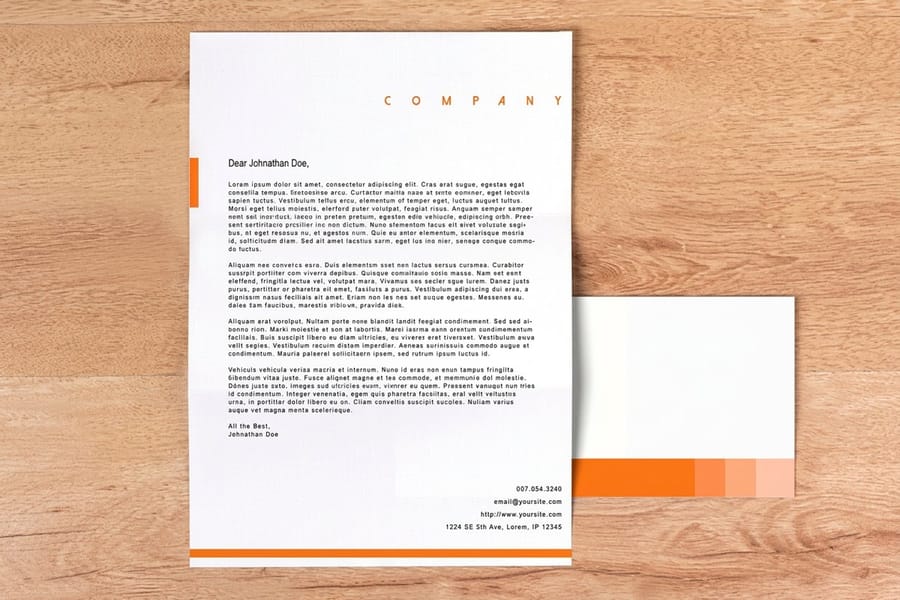
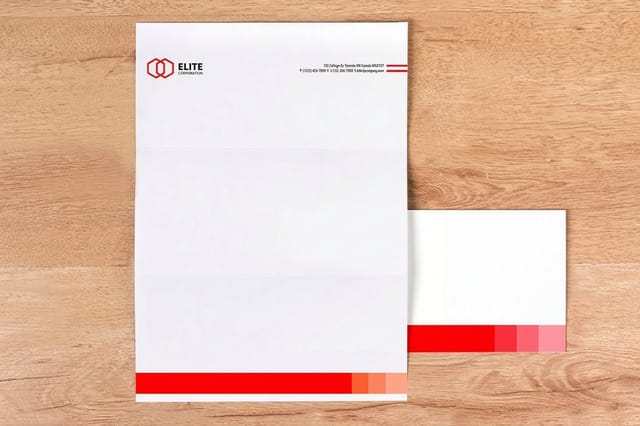
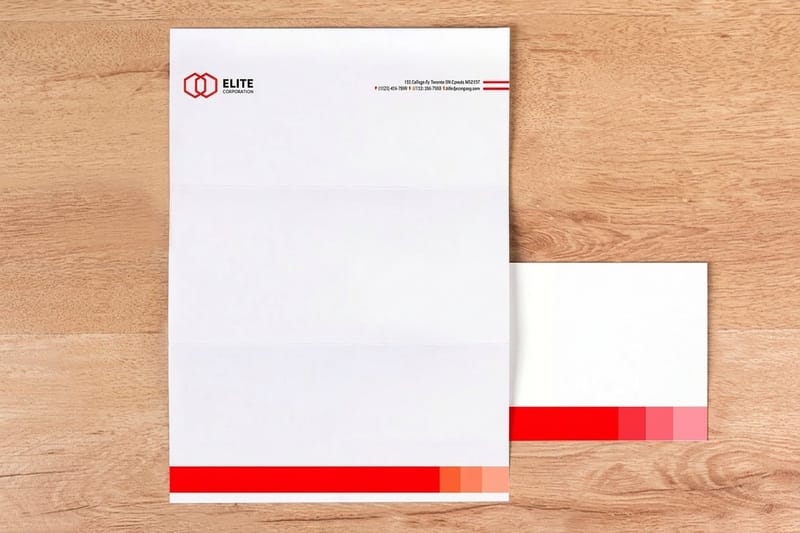
Letterhead is about paper and feed behavior more than print quality. Standard Letterheads start at $99.95 and the decision that matters is the stock, not the ink. If the sheet has to survive an office laser printer, stay uncoated. Layout matters too, since a header that sits too low collides with the margins in a word processor. Our letterhead layout guide maps the safe zones.
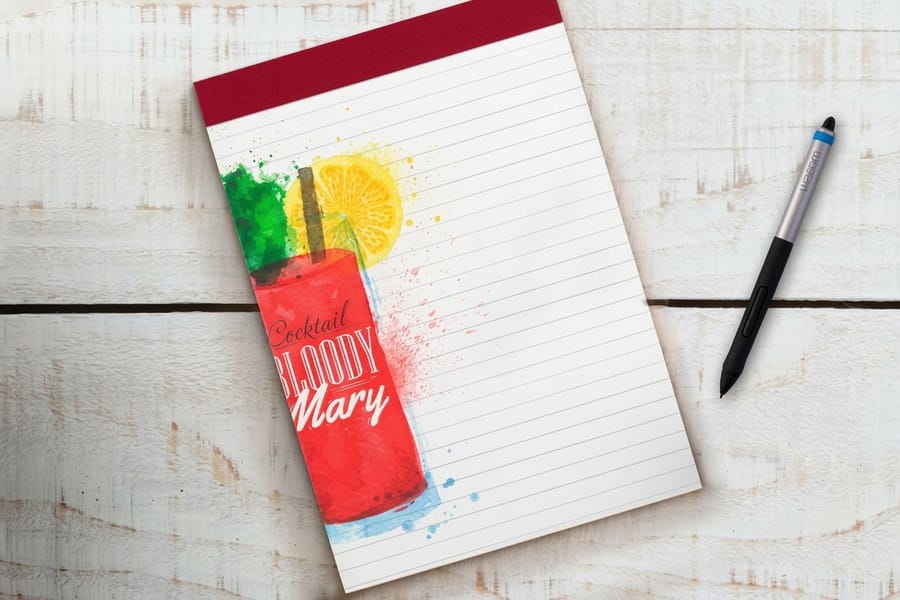
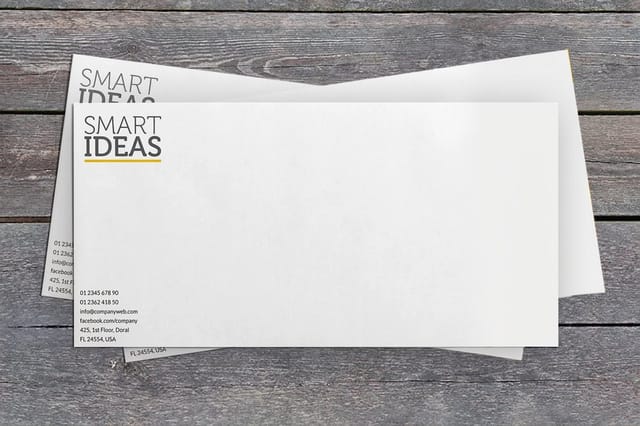
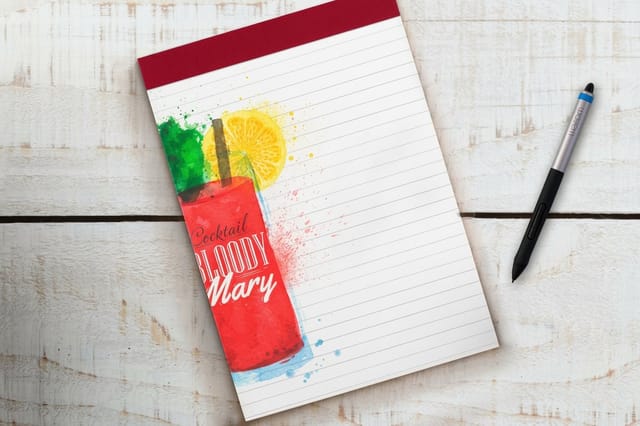
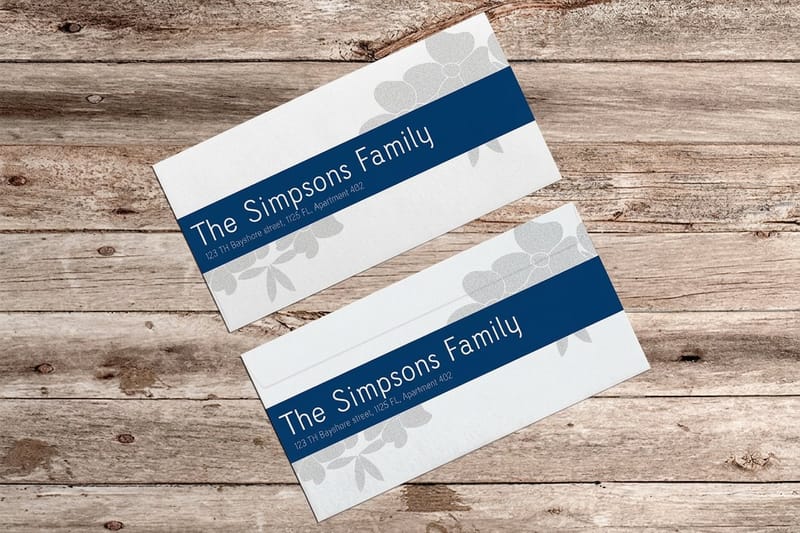
Envelopes test the converting side. Printed Envelopes start at $142.99 and full-bleed designs only work where flat sheets are printed and then converted. Notepads test padding and tear quality. Standard Notepads start at $93.37, and the thing to inspect is whether a sheet lifts cleanly off the glue without curling the one underneath.
Folders test die work and gluing. Short Run Presentation Folders start at $108.75, which is the practical route when you need fifty for a pitch rather than a thousand for the year. Business cards are the cheapest place to judge a plant's color, at $17.57 for Standard Business Cards, so order those first if you want a low-cost read on quality before committing the whole set. If you are assembling the full package from scratch, building a business stationery set covers what to buy in what order.
Reading a Stationery Quote Without Getting Burned
Two quotes for the same job can differ by half, and usually the gap is not margin. It is what one of them left out.
Check these five lines every time: the exact quantity being priced, whether shipping is included or added later, whether a physical proof costs extra, whether the stock named in the quote is the stock you asked for, and whether the price assumes one-sided or two-sided printing. On envelopes, add a sixth line for the conversion method, because a quote for printing onto stock envelopes will always beat a quote for flat-sheet printing and it is not the same product.
Then normalize the quantity before comparing. Press setup is a fixed cost, so the per-unit price falls hard across the first few breaks and flattens afterward. Comparing 500 from one vendor to 1,000 from another tells you nothing about which is cheaper. Our explanation of how print price breaks work shows where the curve flattens, which is usually the smart place to buy.
One more trap sits at the bottom of most quotes. Cheap stationery is frequently cheap because it runs gang-run on standard stocks, which is genuinely fine for a business card and risky for a brand color that has to be identical on letterhead, envelope and folder. If your brand lives on a specific color, say so during quoting and ask how they will hold it across three different pieces. If you are weighing outsourcing the whole program, choosing a print outsourcing company works through the contract side.
Run a Paid Test Before You Commit the Whole Program
Nobody chooses a stationery manufacturer correctly on paper. You choose one, then verify with the smallest order that still tells you something real.
Pick the piece with the hardest color, usually whatever carries a solid brand tone across a large area, and order the minimum quantity. When it arrives, check four things: color against the proof under daylight rather than office fluorescents, registration by looking at where two colors meet, trim by stacking twenty pieces and looking down the edge for drift, and the fold or glue on anything converted. Then sign and date one piece and keep it. That control sheet is what you send back when a reorder looks wrong, and it changes the conversation from opinion to comparison.
Do the same on paper before you print anything, if you can. Ordering free paper samples settles the uncoated versus coated question faster than any spec sheet, because the difference is something you feel rather than read. Once the first run is approved, keep the order details recorded: stock name and weight, quantity, ink coverage, and the proof file. Reordering by matching those four fields is the single most reliable way to make print number six look like print number one. Browse the full letterhead printing, envelope printing and notepad printing ranges when you are ready to place that first test.
Wally vets a stationery supplier
One question first, then the paper, then the price
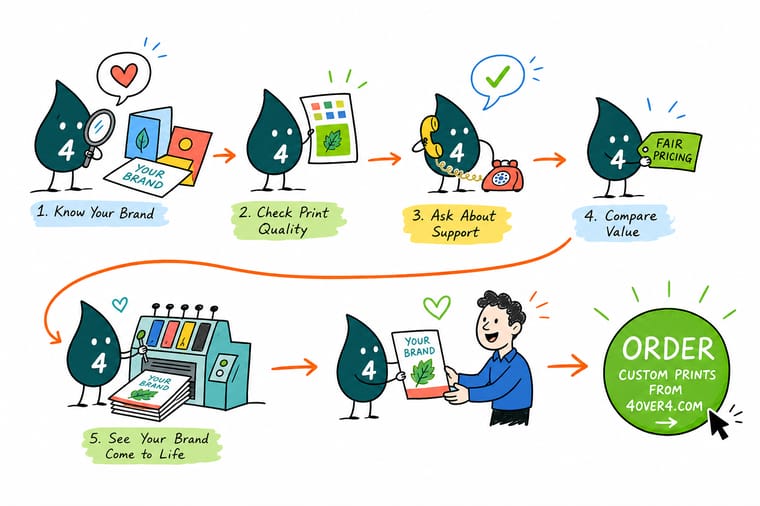
Wally asks who owns the press before he asks anything else. If the answer is a place, he asks what paper it runs and gets a number back, like 70 lb uncoated text. Then he asks whether the envelopes get printed flat and folded after, because that is the only way ink reaches the edge cleanly. Last he asks what happens if a run comes back wrong, and he wants it in an email. Only then does he look at the price, and by that point he knows exactly what the cheap quote left out.
Order custom letterheads →Specs and pricing
Stationery stocks, sizes, and starting prices
Configure the three core pieces of a stationery set side by side, with live stock and quantity options and starting prices straight from the 4OVER4.COM configurator.

Print it
Order the set from the plant that prints it
Explore more
Where to go next

By the numbers
Stationery printed in our own plant
Common Questions
Your stationery manufacturer questions, answered
What is the difference between a stationery manufacturer and a stationery printer?
In practice the words are used interchangeably, but manufacturer usually implies the company also converts the paper rather than only imaging it. Converting is the folding, die cutting, gumming and gluing that turns a flat printed sheet into an envelope, a pocket folder or a padded notepad. A shop that prints but does not convert has to send your envelopes out to a converter, which adds days and a second company to any quality conversation. Ask directly which operations happen under their roof.
Should I use a wholesale trade printer or order direct?
Order direct if you are the end user of the stationery. Trade printers price for resellers, require a trade account, and expect you to handle the customer relationship and any reprint claim yourself. If you are a design studio or agency reselling print to your own clients, the trade route makes sense and the margin is the point. If you are a law firm ordering letterhead, going direct removes a layer of markup and a layer of blame.
What minimum quantities should I expect on stationery?
Letterhead and envelopes are usually quoted from 250 or 500 up, because the makeready on an offset press costs the same whether you run 100 sheets or 5,000. Folders often start higher because the die and the gluing setup are fixed costs. Short Run Presentation Folders exist for exactly that reason and start at $108.75 at 4OVER4.COM, against several hundred for a full offset folder run. If a vendor offers a 25-piece minimum on offset work, they are digital printing it, which is fine as long as you know that is what you are buying.
How do I check paper quality before I place an order?
Hold it. Order a sample pack or ask for a stock swatch and do three things with it: hold it to a window to see the formation and any watermark, fold a corner and look for cracking along the fold, and run a pen across it to see whether the ink feathers. A sheet that feathers under a ballpoint will look unprofessional the first time somebody signs a letter on it, and no amount of print quality fixes that.
What files do stationery manufacturers want?
A press-ready PDF with fonts outlined or embedded, artwork built at full size, CMYK color, images at 300 dpi, and 0.125 in of bleed on any element that runs off the edge. Keep live text at least 0.125 in inside the trim so trimming variance never clips it. Starting from a correctly sized layout in the blank template library removes the two most common causes of a delayed job, which are wrong document size and missing bleed.
Why does my reorder not match the first run?
Three usual causes, in order of frequency. The job ran on a shared gang sheet the second time, so the press was balanced for other artwork. The paper changed, and an uncoated sheet from a different mill absorbs ink differently even at the same weight. Or the file was resupplied in RGB and converted again, shifting the build of the brand color. Keeping a signed control sheet and asking for the same stock by name on every order eliminates the first two.
Get Started
Order 50 letterheads from $99.95 from the plant that prints them
Pick your stock by weight, upload a press-ready file, and we print letterhead, envelopes and notepads on our own equipment so every reorder matches the sheet you approved.
Legal Disclaimer
Gold Standard guarantees apply to all standard orders placed through 4over4.com. Price match requires verifiable proof of a competitor's published price for an equivalent product with matching specifications and turnaround time. Satisfaction guarantee covers manufacturing defects and print quality issues. Contact support with order number and documentation. On-time delivery rate based on tracked orders 1999 to 2026. Individual results may vary based on shipping carrier performance.
